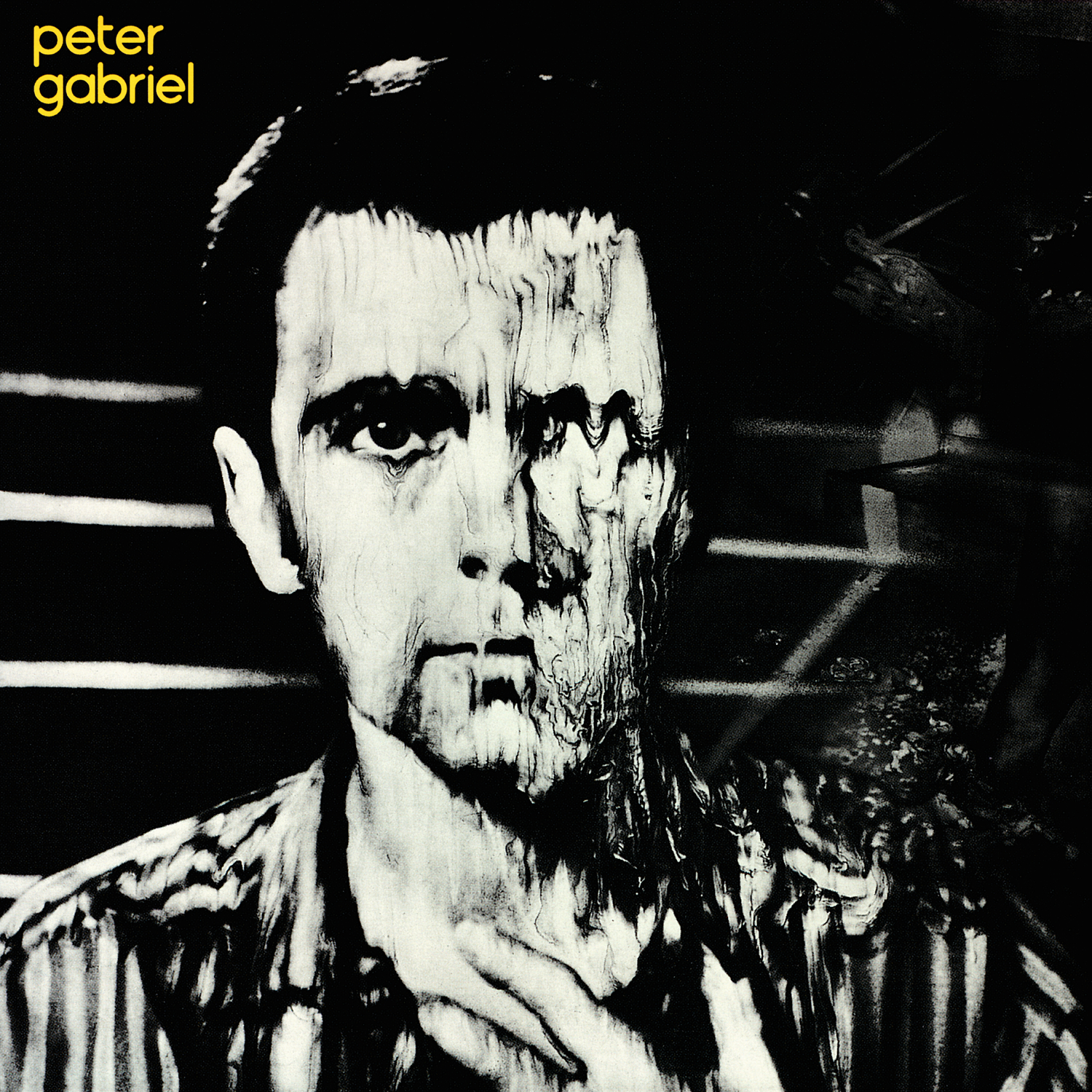
Weird sounds inside the gold mine. Those are the words that come to mind when I listen to the fractured, “rhythm first” art rock of 1980’s Peter Gabriel, the third in Gabriel’s quartet of self-titled albums. It’s world music-influenced sound and heavy reliance on studio innovation might lead you (naturally enough) to think the ubiquitous Brian Eno was at the helm, but it was actually Steve Lillywhite in the producer’s booth, and Lillywhite who had a major influence on the album’s unique sonic textures.
“Rhythm first” was Gabriel’s credo, and when it came to the drums that drive the LP, he had rules. “Artists given complete freedom die a horrible death” was the law he laid down to drummers Phil Collins and Jerry Marotta. No cymbals were rule Number One. To give the drums a unique sound, Lillywhite employed a “gated reverb” sound he first employed while producing Siouxsie and the Banshees. I’m not technically qualified to describe this innovation. You’ll have to Google it.
The results give Peter Gabriel as unique a sound as the Talking Heads’ Remain in Light, which was released some five months later. Strange rhythms were obviously in the air. If Peter Gabriel isn’t as iconic as Remain in Light, it’s still a remarkable LP, and for the same reasons—sonic experimentation doesn’t mean diddly-squat if you don’t have great songs. Remain in Light just happens to have more of them. It also doesn’t help that Gabriel’s third LP is, let’s face it, a big fat bummer.
Dark, darker, darkest—Peter Gabriel mustn’t have been in a sunny mood when he put together the songs for Peter Gabriel. Atlantic Records head honcho Ahmet Ertegun is said (by Gabriel) to have asked, “Has Peter been in a mental hospital?” And Atlantic Records A&R John Kalodner ultimately deemed the album “not commercial enough” for release, forcing Gabriel to look to Mercury Records to get the LP into US record stores, where (the joke was on them) it sold well. And to think people were always calling David Byrne crazy.
But war, insanity, an attempted political assassination, amnesia, stalking, generalized alienation, “barbeque parties on blood-red sands” and a real-life South African martyr do not party rock make, and while I must have played this LP some five hundred times over the course of the year it came out I don’t remember anyone dancing to it, “rhythm” record or not. I doubt Peter Gabriel had dancing on his mind. I get the sense he wanted to make us uncomfortable. He succeeded.
A cast of hundreds (okay dozens) including Collins, Kate Bush, Robert Fripp, Paul Weller (!), XTC’s Dave Gregory, synthesizer guru Larry Fast, an assortment of jazz types and a guy whose only job was to screech during “Biko”—Gabriel was obviously looking far and afield when he put Peter Gabriel out. As for the cymbals guy, Gabriel had him marched outside and shot. But the sound is consistent, which is to say both state-of-the-art and disquieting, and you’ll spend the bulk of your time appreciating the album’s textures in a state of high anxiety, relieved only by the album’s moving closer.
The queasy-making stalker ode “Intruder” features the gated drum sound that heavily influenced later musicians (Collins famously employed it in “On the Air Tonight”), and the drums kick the song into gear. Personally, I’m more impressed by the weird creaking noise David Rhodes makes by scraping the lowest string of an acoustic guitar, but the important thing to be said about this creepy-crawler of a song is that it’s all menace, with Gabriel practically whispering as he describes his uninvited last night traipse through your place of residence. The synthesizer line brightens things a bit, you get some weird vocal noises and a rousing “Hey, hey, hey, hey,” but it’s the scraping noise and Gabriel’s whistling that will really put the frighteners on you.
“No Self-Control” is a more upbeat, marimba-flavored (musically, anyway) number that has Gabriel repeating the lines “I don’t know how to stop,” and while he doesn’t explicitly tell you what he’s doing, you get the idea he’s been up to bad things. The strange noises that open the song are Gabriel making wah-wah noises by speaking into a cheap Radio Shack transistor radio, both Fripp and Rhodes contribute on guitar, Kate Bush provides backing vocals, and overall it’s hard to know which is more impressive—the melody or the song’s instrumentation. Once those marimbas get their hooks in you, they never let go, and Phil Collins’ work dispels any doubts that the guy is one hell of a drummer. Never has pure menace been so alluring.
The brief instrumental “Start” is a rather regal affair, with Dick Morrissey playing saxophone over a Larry Fast synthesizer, but it works best as an introduction to the pounding and upbeat anthem to amnesia “I Don’t Remember,” which I can’t hear without thinking of the Talking Heads. It strikes me as a sort of mash-up of “Psycho Killer” and “Life During Wartime,” but it works. Some wordless vocals (Peter dubbed them “Gabrielese”) open the song, Rhodes, Fripp, and Dave Gregory constitute a veritable Lynyrd Skynyrd guitar army, and Tony Levin plays Chapman stick bass, and the sound is gorgeous, both driving AND disquieting. Levin’s bass and Marotta’s drums are high in the mix, and good thing too, because Levin’s bass line is a thing of beauty. An amazing piece of work.
“Family Snapshot” is about Arthur Bremer’s 1972 attempted assassination of George Wallace, although Gabriel tinkers with history—Wallace wasn’t in a motorcade when Bremer shot him; he was on his feet at a rally. But musicians get to tinker with the facts, and Gabriel does a wonderful job of capturing Bremer’s fame-seeking state of mind. The song starts slowly, with Bremer/Gabriel repeating “I’ve been waiting for this” as the motorcade approaches. Then the pace quickens and Gabriel/Bremer sings “We were made for each other, me and you.” Then things stop as the bullets fly, and Bremer has a vision of his childhood and “his toy gun on the floor.” “Come back mom and dad” he sings sadly, before ending the song with the words “I shoot into the light.” It’s an amazing song—you get both Bremer the immortality-seeking psychopath, and the child that he once was, and it’s quite poignant.
Gabriel tapped Paul Weller to play guitar on the driving “And Through the Wire,” which comes as close to a conventional rock song (at least when the tempo is fast) as Gabriel has ever written, perhaps because he keeps things simple. Weller’s guitar is all muscle, Gabriel pulls no punches on vocals, Marotta really throws down on drums, and that’s it, except for a characteristic slow interlude that frankly I wish wasn’t there. Still, an album highlight, although I don’t think it gets the appreciation it deserves because it’s largely devoid of the studio innovations that are the album’s stock in trade.
“Games Without Frontiers” opens with a count-off accompanied by acoustic and electronic percussion, then in comes Kate Bush repeating “Jeux sans frontières,” the name of a European TV show in which people dressed in bizarre costumes competed in games of skill. (The English title of the show was “It’s a Knockout,” a line Gabriel also repeats in the song.) But the game Gabriel is singing about is war, and he looked to Michael Herr’s Vietnam War chronicle Dispatches and Evelyn Waugh for inspiration.
But what people remember about the song, which has an almost childlike melody and rhythm, is its cool synth line, the merry whistling and Gabriel’s light-hearted delivery of the nursery rhyme lyrics, which he undercuts with a repeated “If looks could kill, they probably will/In games without frontiers, war without tears.” This is probably the catchiest song Gabriel ever wrote, or will write, and it’s a knockout.
“Not One of Us” opens with some laughter and Gabriel speaking some Gabrielese, and it’s all rhythm from there on in, and the least compelling song on the album. The chorus isn’t particularly catchy, and even the musical textures, which are what the album is all about, aren’t that fascinating. The album’s low point. The quieter “Lead a Normal Life,” which dispels with drum pound in favor of some pretty percussion and what sounds to me like a synthesizer (the album credits are silent on the issue) is hardly a highlight either. It reminds me a lot of Bowie/Eno’s Low period, and has an undeniable hypnotic feel, but like much of the music Bowie and Eno, it’s recommended only to listeners who enjoy aural wallpaper.
The LP closes with the moving eulogy to South African anti-apartheid activist and martyr Steven Biko, and it’s marvelous. The song begins and ends with songs recorded at Biko’s funeral, the Brazilian drum two-tone beat and vocal percussion add to the world music feel, and even the synthesized bagpipe works. But it’s Gabriel’s clipped storytelling that wins the day, from the menacing opening lines, “Port Elizabeth weather fine/It was business as usual/In police room 619” to the majestic and moving chorus:
“Oh Biko, Biko, because Biko
Oh Biko, Biko, because Biko
Yihla moja, yihla moja
The man is dead
The man is dead”
Those are powerful words, and the ones that follow are inspiring, incendiary, prophetic even:
“You can blow out a candle
But you can’t blow out a fire
Once the flames begin to catch
The wind will blow it higher”
And the song reaches its peak when Gabriel sings, “And the eyes of the world/Are watching now/Watching now.” “Biko” is truly one of the most emotional protest songs ever written, and a musical triumph as well.
I was never much of a Genesis fan (although I was forced to listen to them a lot during my heavy stoner years) and the Gabriel of “Sledgehammer,” “Big Time,” and “In Your Eyes” leaves me cold, but on his third outing he nailed it and came as close as he ever will to creating a masterpiece. The story of the album is one of a group of tech geeks working overtime to create new sounds, and you almost get the idea that innovation was the end-all and be-all of the LP. But none of it would have mattered much if Gabriel hadn’t put together a collection of great songs.
As it is, you get the best of both worlds. The textures of the album—the SOUND of the album—will amaze you. But it’s songs like “Games Without Frontiers,” “I Don’t Remember,” and “Biko” that will keep you coming back to Peter Gabriel. Hell, if you were to put “Solsbury Hill” on the LP, I’d never listen to anything else by the guy. Peter Gabriel is that good.
GRADED ON A CURVE:
A