
There was a time in the early to mid-’70s when Glam was the hottest trend in music. Also referred to as Glitter rock, it had been brewing for a while and often encompassed groups or artists from other musical genres.
The dominant artists, who were all British, were David Bowie, Mott the Hoople, and T. Rex. By the time Glam was at the red-hot center of pop, T. Rex was, for the most part, the primary musical vehicle for Marc Bolan. Bolan had been on the scene for years before he hit big, starting with the short-lived John’s Children in the late 1960s.
Initially called Tyrannosaurus Rex, the group was, in their early days, primarily a duo comprised of Bolan and Steve Peregrin for their first three albums, with Mickey Finn replacing Peregrin for the fourth. The group played a distinctively trippy and heady brand of folk-inspired psychedelia on their first four albums. Two were released in 1968, one in 1969, and one in 1970.
The group became T. Rex in 1970 (thanks to some studio log-sheet shorthand by producer Tony Visconti) with their self-titled debut, which showed a funkier, flashier, more rock-oriented style, although Bolan and Finn were still the two main members. It wasn’t until 1971 with Electric Warrior that the group exploded and became truly a group with the addition of Steve Currie on bass and Bill Legend on drums, and with guests including Ian McDonald on sax, Howard Kaylan and Mark Volman on backing vocals, and Rick Wakeman supplying the keyboards on “Get in On.”
Adi Newton is a founding figure of British experimental music whose work has shaped the genre for nearly five decades.
Before founding Clock DVA and TAGC/The Anti Group in 1978, he was an original member of The Future, the project that evolved into The Human League. Clock DVA stands alongside Throbbing Gristle and Cabaret Voltaire as a pioneer of late-’70s and ’80s experimental sound, with releases like the 1980 debut Thirst on Fetish, named by Paul Morley in his NME review as one of the best debut albums of the decade, and the 1988 electronic landmark Buried Dreams.
Through TAG, a shifting collective working under his direction, Newton has pushed into extreme electronic territory with works like the ambisonic Digitaria and the Test Tones series. His art has been presented at ARS Electronica Linz, the V&A London, and the Reina Sofía in Madrid. He describes music-making as research, guided by intuition and arcane, occult, and futuristic knowledge.
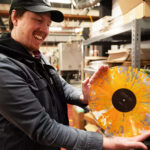
Adi remains very busy working in all these projects and performing live with Clock DVA and TAG. Clock DVA recently released the 45th Anniversary reissue of Thirst, remastered and out on double “thirst-red” vinyl, CD, and digitally via The Grey Area of Mute.
The Handover is the trio of Aly Eissa on oud, Ayman Asfour on violin, and Jonas Cambien on vintage organ and synth. Eissa and Asfour are from Egypt, while Cambien is Belgian, currently based in Norway. They deliver longform excursions into Egyptian trance music, infused with a beautiful, slow-building psychedelic thrust. Naturally rhythmic without the use of percussion instruments, The Handover’s music is a wonderfully enveloping experience.
Their latest release after an eponymous debut in 2024 is New Old Medicine, freshly out via Sublime Frequencies. It offers one piece that’s only break is to allow its brilliance to fit onto opposing sides of vinyl.
New Old Medicine’s long track gives the record its title. Recorded in Berlin at Morphine Studios by Rabih Beain, the music’s shared progression (between the players and the audience), the twists and turns, and ebbs and flows of the journey, the sheer movement that shapes the piece, is captivating as the trio never sets a foot wrong.
The folkloric Egyptian root is discernible straightaway. It’s a natural foundation, nothing forced or fake or exotic. Likewise, the gradually mounting psychedelic qualities are utterly lacking in elements of the retrograde. The Handover collectively develops an atmosphere of psychedelia without premeditation. There are no calculated attempts at the trippy or outlandish. Never do they sound out of control or even on the brink of the same.
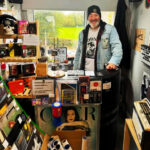
Ypsilanti, MI | Local record shop Wyrd Byrd strengthens music-loving community in Ypsilanti: Since opening in October 2022, Wyrd Byrd has grown from just a record store to a community space dedicated to uplifting music lovers. Wyrd Byrd is an independently owned record store in Downtown Ypsilanti. The store, located at 9 S. Washington St., is open 12 to 4 p.m. Sundays, closed Mondays and Tuesdays, and open from 12 to 8 p.m. Wednesday through Saturday. “I always wanted to have a record store. It’s just something, for some reason, since I was a kid, I always wanted to do. As I got a little older I got more into books, role-playing games, that sort of thing. So the idea kind of turned into all of these things. I get sort of obsessed about a lot of different things,” said store owner Shawn Gates.
Denver, CO | A new Wax Trax Records is opening in Stanley Marketplace: A 1,000-square-foot storefront will replace the record shop’s experimental pop-up kiosk. Wax Trax Records will open a 1,000-square-foot storefront in Aurora’s Stanley Marketplace, where it has run a kiosk in the hallway since 2024. The new space—the fourth permanent Wax Trax in the metro—will allow the record store to expand its offerings and create a hub for vinyl, occasional live music and community. Wax Trax will move from its kiosk into a nearby storefront previously occupied by the local streetwear company Abstract. That store, meanwhile, has moved to a different space at Stanley Marketplace. The store’s owners decided to sign the lease after the company’s best Record Store Day sales ever.
Milwaukie, OR | Police investigating record, vintage store burglary in Milwaukie: Police are searching for FOX 12’s Most Wanted after a burglary at a family-owned record and vintage store was caught on camera early Monday morning. “Broken glass, and inventory pieces, and empty trays, it’s a horrible feeling,” said co-owner Rebecca Stavenjord. A burglary was caught on camera at B-Side Records and Vintage in Milwaukie early Monday morning. “He was in and out in less than 10 minutes, and now we’re cleaning it all up,” said Stavenjord. Stavenjord said the burglar broke a door, stole cameras, jewelry, and cash that could cost the business more than $5,000.
Auckland, NZ | Business owners on Auckland’s K’ Rd feeling the pinch amid closures: Business owners in one of Auckland’s most colourful spots are feeling the pinch as some institutions are forced to close. Karangahape Rd has long been a vibrant counterculture pit stop with a mix of shops, eateries and music venues. But in the last two days, two businesses in the area have announced they’re shutting down. On Thursday, live music venue Neck of the Woods took to social media to announce it would be closing next week after 11 years. “Like a lot of music venues, we’ve been struggling since Covid, and this year has just gotten harder. We see sold out shows and think a club is doing well, but we live or die by our bar sales. That’s fine when the economy is up, but unsustainable in the current climate and as people are drinking and spending less,” the venue said.
VIA PRESS RELEASE | Though separated by nearly three decades and rooted in different musical traditions, The Band’s Music From Big Pink and D’Angelo’s Brown Sugar share a common distinction: both debut albums fundamentally reshaped the course of American music. The latest additions to UMe’s Vinylphyle series exemplify its mission to present essential albums across genres with uncompromising sound quality and packaging.
Available to order today exclusively via uDiscover Music, both albums have been meticulously mastered by Joe Nino-Hernes and pressed at RTI on 180-gram black vinyl. Similar in presentation and execution to Blue Note’s acclaimed Tone Poet series, the production and packaging seek to honor the stature of these recordings and include tip-on wrapped gatefold jackets in satin matte finish, printed on clay-coated board, with archival poly sleeves and four-panel inserts featuring newly commissioned liner notes.
Music From Big Pink was cut all analog from the 1968 original album master and features new liner notes by veteran music writer Rick Florino alongside original tape box scans. Brown Sugar features a unique all-analog mastering chain. While each song was originally mixed to analog tape, the album was digitally assembled for final mastering upon its 1995 release.
For this Vinylphyle edition, new all-analog, machine-to-machine ½” 30 IPS production masters were created for each album side directly from the songs’ original individual analog mix reels. Those newly created tapes were then used by Nino-Hernes to cut the lacquers, resulting in a definitive all-analog presentation of D’Angelo’s landmark debut. The 2LP set also features new liner notes by acclaimed music scholar, journalist, and USC Thornton School of Music Dean Jason King.
VIA PRESS RELEASE | The Decemberists have announced Live Home Library Vol. 2, the second installment in the band’s live series, to be released September 25, 2026 via the band’s own label, Youth and Beauty Brigade.
Recorded over three nights at Brooklyn Steel in Brooklyn, NY on April 17, 18, and 19, 2017, Live Home Library Vol. 2 captures the band in expansive, full-flight form at a particularly vivid moment in their history. At the time, Brooklyn Steel had been open for only a few weeks, reassembled from the bones of a former steel manufacturing plant in Brooklyn. The Decemberists’ three-night run was among the venue’s first shows.
Over the course of those three nights, The Decemberists covered every era of the band’s music up to that point, playing a total of 62 songs and repeating only nine of them on consecutive nights. This 2LP set collects fourteen tracks recorded across the full run, including “The Crane Wife 3,” “We Both Go Down Together,” “Red Right Ankle,” “Down By The Water,” “Los Angeles, I’m Yours,” “The Tain,” and “O Valencia!” “These shows, to my ears, are the band at its very best with this lineup,” writes Colin Meloy in the album’s liner notes. “There’s a looseness, here, a kind of swaggery suredness.”
Mixed by longtime collaborator Tucker Martine, Live Home Library Vol. 2 will initially be available as a vinyl-exclusive double LP on two limited edition variants—a “Shiny Clear” vinyl, available directly from the band’s online store, and a “Ruby Red Right Ankle” vinyl, available at independent record stores, housed in a custom wide-spine jacket.
Remembering Alan Vega, born on this day in 1938. —Ed.
Although he’s departed this mortal coil, the spirit of Alan Vega remains vital to contemporary music, mainly through his work as the vocal half of the groundbreaking unit he formed in the early ’70s with keyboardist Martin Rev. Today, Suicide is justly celebrated as one of punk’s most beautifully twisted and truly sui generis outfits, but the appreciation hasn’t really spilled over to the solo careers of either member. Out of print for decades, the contents of Vega’s self-titled 1980 debut highlight a ’50s rockabilly-ish approach that’s loose, non-studious, and yet thoroughly sincere.
Solo albums generally work best when they provide some sort of departure from the artist’s main gig, and Alan Vega surely fits that bill. Suicide’s second album (titled Suicide: Alan Vega and Martin Rev), illuminates the duo’s connection to synth-pop and electronica; Alan Vega was released shortly afterward, and is succinctly described as an off kilter early rock ‘n’ roll experience, landing halfway between revamp and throwback.
How so exactly? Well, the record’s opener gets right down to business, with “Jukebox Babe” clearly indebted to the hip-swiveling swagger and vocal affirmations (i.e. a whole lot of “uh-huh”s) of Elvis in his spring chicken days. Overall, the results sport an unserious vibe, and it’s easy to imagine it pissing off more than a few purists, but simultaneously, the formally recognizable nature of the tune scored Vega an unlikely hit in France. Or maybe not so unlikely, as the region has been a reliably enthusiastic locus of rockabilly and roots fandom for a long fucking time.
Over the course of eight albums, John MOuse has carved out a singular space where surreal humour, everyday observations, and deeply Welsh storytelling collide. Now, as he approaches the release of his eighth studio album, Ynys Parc Memorial 1854–1976, The Welsh John MOuse finds himself at his most reflective yet.
Produced by Sweet Baboo and featuring guest appearances from Gruff Rhys and Miki Berenyi, the album explores themes of loss, aging, and identity while remaining unmistakably MOuse. The result is a record that balances melancholy with absurdity, drawing inspiration from the people, places, and landscapes of Wales that have informed his songwriting throughout his career.
One minute he’s writing about troublesome neighbours and failed relationships; the next he’s contemplating mortality, memory, and the communities that have shaped him. It’s a record that embraces reflection without nostalgia, humour without gimmickry and Welsh identity without cliché.
The album’s recent single, “20 Summers Left,” offers a poignant glimpse into this more contemplative side. Written as MOuse reaches his fiftieth year, it reflects on the passing of time and the finite nature of life without ever losing the warmth and wit that define his work. It’s a song that feels both personal and universal, confronting mortality with honesty rather than despair.
The sheer amount of high-quality old-time music that’s been preserved and released by numerous archival record labels is voluminous to the point of being forbidding to the curious neophyte. It’s okay just to plunge right in, but those seeking a thoughtfully curated point of entry need look no further than Dick Spottswood & Tompkins Square Present…1925 Songs. As the cover of this beaucoup 2CD collection details, the contents offer, per the cover, Blues, Country, Jazz & More. The ride is fascinating and delightful from start to finish.
As the promo text for this release succinctly states, 1925 was the dawn of electrical recording. The record companies in their bloom were grooving into shellac any act, solo, duo, or group, they could plant in front of a microphone. There was no shortage of brilliance in a range of artistry that had yet to be rigidly defined, and musicologist Dick Spottswood, whose radio shows on WAMU over the years never sat stylistically still for very long, is the perfect guide to an eventful year of recording.
Dora Carr’s “Cow Cow Blues” opens the set, Carr belting it out while the track’s credited composer Charles “Cow Cow” Davenport brings the rollicking boogie-woogie piano, getting the collection off to a lively start. Rosa Lee Carson’s “The Drinker’s Child” follows, an early country lament with Rosa Lee singing and playing guitar, accompanied by her father, Fiddlin’ John Carson, on the instrument that brought him considerable success. The despair is palpable.
The Wheat Street Female Quartet’s “Go Down, Moses” swings the proceedings into gospel territory, the emotionally resonant root of a collective vocal style carried forward by groups like the Golden Gate Quartet, the Swan Silvertones, and Sweet Honey in the Rock. Next is fiddler William B. Houchens and guitarist J. M. Houchins with the fleet dance mover “Fisher’s Hornpipe and Opera Reel,” and then comes the Old Southern Jug Band (reportedly the pseudonymous Dixieland Jug Band) with the spirited and lithe “Hatchet Head Blues.”
Manchester, UK | Altrincham record store owner says shop ‘isn’t dead, only sleeping’ as update given on closure: The beloved independent vinyl shop on Regent Road has closed its doors. The owner of a Greater Manchester record store has confirmed its closure, prompting a huge outpouring of sadness. One of Altrincham’s best-loved independent businesses, Tasty Records is closing its doors after eight years of trading. Ben Molesworth, owner of the store Regent Road in the town centre, confirmed the news via social media, describing the decision as ‘complicated.’ In the update, he said the store “deserves more than [he] can give it.”
Auckland, NZ | ‘Unpleasant, perfect storm’: Akl record store to close after tough trading years. A well-established Auckland record store is closing down, with its managing director saying a confluence of factors had created an “unpleasant, perfect storm” for the business. Matthew Davis and co-director Ben Howe opened their brick-and-mortar shop Flying Out on Pitt St in 2015, building off the rapid success of an online music store they launched 18 months earlier. But the popular haunt for music-lovers and collectors had reached its end, Davis announced this morning, telling customers it was “the hardest thing we’ve ever had to write.”
Yamaguchi Prefecture, JP | Japanese Shop Lists 80,000 Vinyl Records for 8 Million JPY, “Pick-Up Only” Sparks Wild Debate: “Who Can Even Move That?!” A legendary listing has popped up on a Japanese auction site, sending shockwaves through the collecting community. Nandemoya, a second-hand shop in Yamaguchi Prefecture, is selling a mind-boggling collection of 80,000 vinyl records and CDs as a single lot for a cool 8 million JPY (approximately $51,000 USD). The catch? It’s “pick-up only.” This insane deal immediately sent ripples across Japanese X (formerly Twitter). The buzz started when a user posted about the 8 million JPY listing, highlighting that the entire shop’s inventory—nearly 80,000 vinyl records, CDs, and other collectibles—was up for grabs in one go, but only for self-pickup.
Minneapolis, MN | Minneapolis salon mixes rock and roll with haircuts: Inside HiFi Hair and Records. HiFi Hair and Records sits on the edge of downtown Minneapolis, marked by a leopard print awning and a vibe that’s all about community through music. “I tried to model it after a barbershop,” said Jonny Clifford, owner of the salon. Clifford opened the shop in 2011, inspired by his father who introduced him to music and was battling terminal cancer at the time. The salon brings together the hum of blow dryers and the sounds of rock and roll, with Clifford saying, “Music is the uniter. Most everyone who is alive today grew up on rock and roll.” He added a record store the following year, letting customers browse new and used vinyl and CDs while waiting for their appointment. “I jokingly refer to it as the coolest waiting room in the city…”
VIA PRESS RELEASE | M.U. – The Best of Jethro Tull is to be released on half-speed remastered vinyl on 31 July. Part of Warner’s “Spirit of ‘76” campaign, this reissue, overseen by Ian Anderson, gives a greater depth of sound to what was the band’s first Greatest Hits album.
The “Spirit of ‘76” campaign, celebrates the best music released from that year. M.U. – The Best of Jethro Tull was originally released in the January and has been certified Gold in the UK and Platinum in the US. With the artwork true to the original release, it features recordings made between 1969 and 1975, including “Teacher,” “Aqualung,” “Locomotive Breath,” and “Living In The Past,” it also includes the non-album song “Rainbow Blues.”
This special edition has been cut at a half-speed by Miles Showell at Abbey Road from the source master. As with all releases in the “Spirit Of ‘76” campaign, it will be available exclusively through independent record stores only.
The “Spirit Of 76” campaign will launch on July 17 rolling out records originally released in 1976 in weekly waves. The 23-album lineup spans the 1976 musical landscape, as well as Jethro Tull, it will bring together artists such as Bootsy Collins, Black Sabbath, ZZ Top, Ramones, Linda Ronstadt, and more.
VIA PRESS RELEASE | ‘80s American Indie-rock band Absolute Grey, whose original songs echoed early REM with female vocals while blending Fairport Convention with Echo & The Bunnymen confirmed the release of a new album of previously unreleased live recordings, Live at CBGBs 1985 (Heyday Again Records) on August 7. The album is released on compact disc and all digital music platforms.
Live at CBGBs 1985 consists of ten tracks from the band’s original line-up of Beth Brown, Mitchell Rasor, Pat Thomas, Matt Kitchen. It features extensive liner notes, rare photographs, gig flyers, set lists and more in the CD version plus new essays from early supporters—music journalists Jim DeRogatis and Karen Schomer as well as a teenage, obsessed Rochester fan turned musician/record executive Luke Wood (Girls Against Boys, Beats Electronics). A three-song teaser of the album can be found here.
“Worthy art stands the test of time, remaining as vital in the present as it was in the moment,” said music journalist Jim DeRogatis of the band’s live sets and debut album. “And that Absolute Grey set forty Easters ago, as well as the debut album Greenhouse, move me as much today as they did then.”
“Long before self-reflective female singers became the hip trend on the alternative music scene, Beth Brown of Rochester, New York’s Absolute Grey was writing and singing about loneliness and the challenge of independence,” said Karen Schomer in Trouser Press Record Guide.
Celebrating Bobby Gillespie on his 65th birthday. —Ed.
The year: 1992. The place: a rave in a field outside Manchester. I’d taken enough e to send Hannibal’s 37 elephants into the stratosphere and I said to the geezer I was dancing next to, “This is the most beautiful thing that’s ever happened to me.” He replied, “This whole deal’s a hallucination, mate. You’re in your apartment in Philadelphia listening to Primal Scream’s Screamadelica. It’s the next best thing to being here.”
And he was right. It was one of most beautiful things to ever happen to me. But youth are fickle, and there came the day when raves went the way of the Acid Tests and youth moved on to other things, in my case rehab. But on occasion I still dig into my closet and put on my baggy pants, orange Kangol hat and pacifier, and hold my very own one-man rave.
And speaking of “Movin’ on Up,” it’s one of the premier tracks (alongside ”Loaded” and “Come Together”) on Primal Scream’s 1991 landmark Screamadelica. The LP captures the good vibrations that came with taking MDMA and dancing with thousands of stoned strangers at an illegal rave in some rural field in the outer reaches of Manchester. All three stand alongside the Happy Mondays’ “Step On” and “Kinky Afro,” and the Stone Roses’ “I Wanna Be Adored” and “Fools Gold” as iconic souvenirs of a time when the Hacienda became Manchester’s very own Studio 54—and you didn’t have to be Bianca Jagger to get in.
“Movin’ on Up” is everything a rave song should be–the nonstop drum beat is impossible not to dance to, the acoustic guitar and piano add coloring, and the female backing vocals contribute a gospel feel to let you know that raves were the new religion. On “Loaded” the same gospel singers take front and center, and the looped drums, recurrent piano riff, and horns constitute trance music at its best.”Come Together” is a call for youth unity, and yet another gospel-heavy, crash course for the ravers on which Bobby Gillespie wants you to touch him, because e makes you want touch people even when fucking them isn’t on the agenda.
PHOTOS: MATTHEW BELTER | Some records you outgrow. Others grow up right alongside you. For more than forty years, Haircut 100 has been the second kind for me—the sound of a certain light, a certain feeling, the kind of song that quietly turns an ordinary afternoon into a memory you keep.
“Love Plus One” has been a soundtrack of my life for as long as I can remember, and I’m hardly alone in that; I felt it again last September in Anaheim, camera in hand, watching faces in the crowd light up, watching people cry over memories they’d carried in their pockets for decades. You don’t shoot a show like that so much as get swept up in it. I came away thinking the same thing I’d just been talking over with Richard Blade—that there’s a rare kind of music that refuses to age, and Nick Heyward has spent a career making it.
So, when the chance came to sit down with him ahead of Boxing the Compass—only the second album the classic lineup has made since 1982, and, fittingly for this publication, arriving on vinyl the way it was always meant to—I’ll confess my heart was in it every bit as much as my notebook.
What I found on the other end of the line wasn’t nostalgia. It was a man still chasing the magic, still talking about turning up to the studio like it’s the best job in the world, still steering by the same compass that first pointed him out to sea all those years ago. We covered the reunion, the records that shaped him, the strange arithmetic of keeping a promise the universe seemed to make to him when he was barely out of his teens—and where, after the whole long voyage, the needle finally settles. Here’s how it landed.
I read that the band reconvened for what was meant to be a business meeting that ended up feeling more like a reunion of old friends. Can you take us into that room—was there a specific moment you realized this wasn’t going to be a meeting; it was going to be a band again?
It was never that definite, because we didn’t want to get our hopes up—we always hope the band is going to stay together. The key position is manager, and that’s the one we lost back in 1982; it had never been filled since. So, we could get back together, but staying together was the hard part. Even after we played Shepherd’s Bush Empire, I was still wondering, is this going to last?
But it started to build—the 40th anniversary, then the gig, and then the BBC Piano Room invited us on, which is a big deal over here. When the BBC wants to help you, you think, wow. Then a manager who’d looked after Wet Leg and the Manic Street Preachers rang up and asked if we needed any help. That seemed to be the feeling around that time—people actually wanting us to stay together, which felt different from every other time. We wanted it, and so did everyone around us. And honestly, we’re too old to split up now.
You left after Pelican West, and the band went on to make Paint and Paint without you in ’84. More than forty years later, you’re writing and recording with Graham and Les again. What did it take—in yourself, not just on paper—to walk back toward something you once chose to walk away from?
It wasn’t really a return, because we’ve known each other all along and we’ve always been friends—old friends just slot straight back into the same position. Les, Graham, and I have so much history—the band years, but also before that, when we lived together, and all the good times since. We’re a real band—it was our dream, and it happened. That goes beyond everything else, and the truth is everything else just gets in the way. We let that stuff get in the way before, which is why we didn’t stay together. So now we just keep having to let go, and because we let go, it keeps going.
It’s too easy to get bogged down in the reasons not to do it—the music business has changed, there’s no money in touring, no money in records. But none of that is a reason not to do it. We’re a band, so we get on with it. Every time the four of us—Les, Graham, Blair and me —play, I can’t think of anything better to do with my life. It’s the best job in the world. We’re foolhardy enough to think there are more albums in us, because we just keep turning up, the way we did when we were young. We didn’t get to turn up and do our thing for forty-four years. Now we can, and it’s precious. We’re not going to give it away.
Celebrating Todd Rundgren on his 78th birthday. —Ed.
The words “studio genius” get flung about willy-nilly, but Todd Rundgren, the guy who gave us “Hello, It’s Me,” is the real thing. Oh, I know, his prog explorations with Utopia are largely unlistenable, but I would ask you to look at Exhibit A, the 1972 double LP Something/Anything?, as proof of his, er, geniusitude. It was one of the greatest gifts (along with Mott the Hoople’s All the Young Dudes and Rod Stewart’s Every Picture Tells a Story) my older brother bequeathed to me when he took off to see the country in the mid-seventies, and I loved (and played) it to death.
Studio savant that he is, Rundgren recorded three of the LP’s four sides all by himself, and brought in a gaggle of studio musicians, including Rick Derringer, Randy and Mike Brecker, Hunt and Tony Sales, and Ben Keith to record side four. All four sides have titles, which we needn’t worry about, and side four purports to be a “pop operetta,” to which I can only say, okay, Todd, it’s your LP. The critic Robert Christgau said of Something/Anything?, “I don’t trust double albums” before changing tracks and saying, “But this has the feel of a pop masterpiece, and feel counts.” He’s right about double albums: some of the tunes on Something/Anything? It does nothing for me and has the distinctive smell of filler. That said, there are more than enough timeless tunes on Something/Anything? to justify that other overused word, “masterpiece.”
Stirring ballads (“It Wouldn’t Have Made Any Difference”), dizzyingly marvelous power pop numbers ala The Raspberries (“Couldn’t I Just Tell You”), flat-out screamers (“Some Folks Is Ever Whiter Than Me”), great horn-driven hard rockers (“Slut”), Steely Dan soundalikes (“Piss Aaron”), utterly sublime pop confections (“Hello, It’s Me,” “I Saw the Light”) and oddball novelty tunes that nevertheless rock (“Wolfman Jack”)—that “anything” in the album’s title is Todd’s way of telling us he can do it all, and does.
Why, I didn’t even mention his soulful turns on the piano (“I Went to the Mirror,” “Torch Song”), maniacal metal contraptions (“Little Red Lights,” the big-hooked “Black Maria”), big, bad gospel- AND Steely Dan-tinged tunes (“Dust in the Wind”), ironic Harry Nilsson numbers (the happy-go-lucky sad song, “You Left Me Sore”), and brief lo-fi studio jams (“Overture—My Roots: Money (That’s What I Want)/Messin’ with the Kid”).