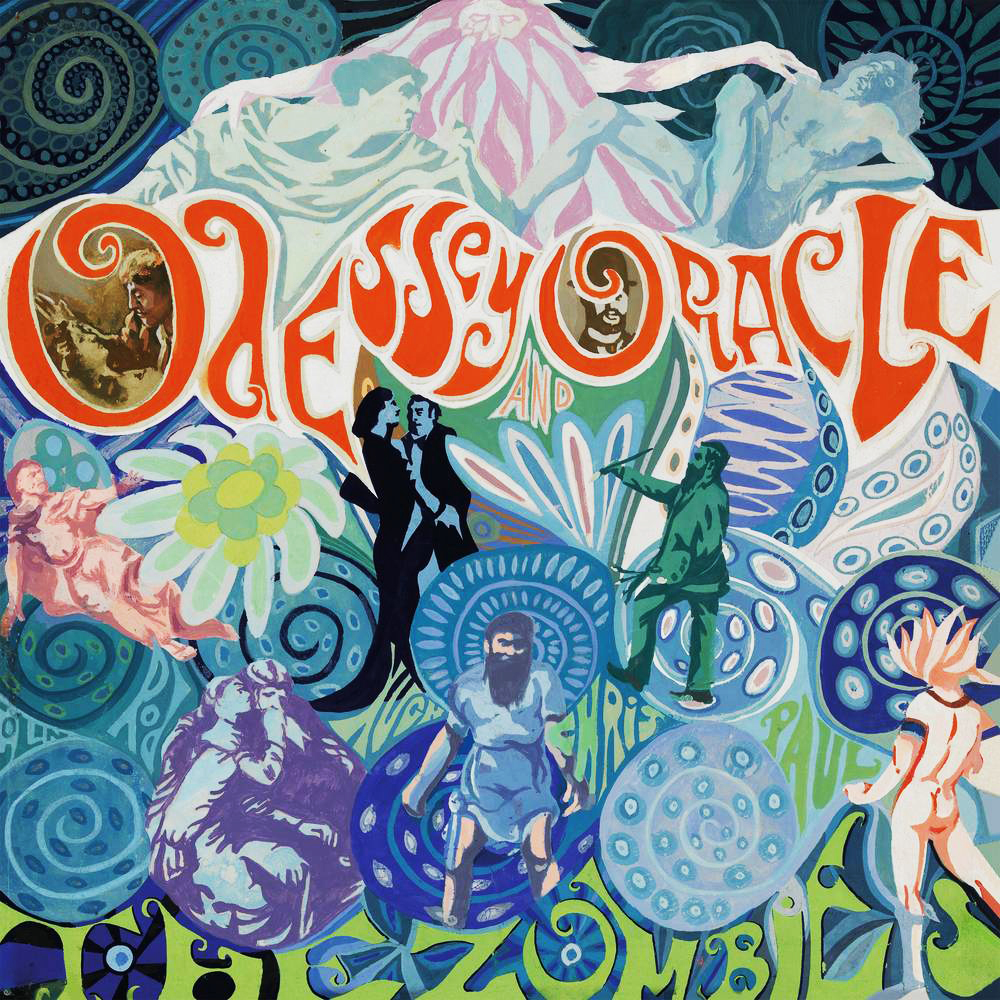
The Zombies are primarily known for their British Invasion hits of the 1960s, such as “Tell Her No” and “She’s Not There.” Rock critics, pop music historians, and those who are deeply in the know about the key albums of the 1960s likely know about the group’s second album, Odessey and Oracle, with Odyssey misspelled.
Released in the UK in April 1968, it comprised the original lineup of singer Colin Blunstone, keyboardist Rod Argent, guitarist Paul Atkinson, bassist Chris White, and drummer Hugh Grundy. It isn’t a stretch to say that the album shares much with the Pretty Things’ album SF Sorrow, also released in 1968, in that it is an obscure, underrated gem from the ’60s. However, it is more of a seminal rock opera than a psychedelic pop masterpiece. Odessey and Oracle is also an album that can easily be mentioned in the company of Pet Sounds by The Beach Boys and The Beatles’ Sgt. Pepper’s Lonely Hearts Club Band. Pepper’s Lonely Hearts Club Band. In fact, the album was recorded at Abbey Road Studios, where The Beatles had recorded Sgt—Pepper’s Lonely Hearts Club Band. Pepper, and was very much influenced by that album.
While all those kudos are merited, the album was nearly not released in America and effectively marked the end of the group’s ’60s run. If it wasn’t for Al Kooper (Blues Project, Blood Sweat & Tears) working in a somewhat A&R and staff producer role with Columbia Records at the time, it’s hard to say what the fate of the album might have been. It was his suggestion to the top brass at the company to release the album, which, by the way, contained perhaps the group’s biggest hit, “Time of the Season,” the last song written for the album and one that in some respects has more in common with the group’s earlier hits.
The group now holds full rights to the album, and their label has just reissued it in mono for the first time in the US. The group produced the album themselves for a mono release. Throughout 1965 and 1966, the band primarily released singles on Decca that they did not produce. Their time with CBS in the UK was no better, and when the group finished Odessey and Oracle, the label told them to remix it in stereo. It was the last straw for the frustrated group, and only a month before the album’s release, they broke up. Even though the group had broken up, Kooper’s advice to release the album in the States paid off, as the last track on the album, “Time of the Season,” eventually became a hit, peaking at number three in February 1969.
While the album is considered a pop psychedelic masterpiece, with a fittingly ornate cover, it avoids all the clichés and overwrought tendencies of that beloved, yet sometimes bedeviled, genre. The album is concise, tuneful, often deceptively simple, and, for a classic of the psyche genre, uncluttered and unpretentious, and doesn’t sound dated.
The opening track, “Care of Cell 44,” has more in common with Pet Sounds than Sgt. Pepper. The song’s poppy and sunny, and the quirky melodies are infectious. While not as Brian Wilson-influenced as “Care of Cell 44,” the lovely “A Rose for Emily” is just as poppy. “Maybe After He’s Gone” is an infectious pop track and features magnificent bass lines. “Beachwood Park” is sly and filled with intricate vocals and is an overtly psychedelic track on the album, which is also the case for “Brief Candles.” Side one closes with the baroque “Hung Up On A Dream,” which features the Mellotron John Lennon was using at Abbey Road at the time.
Side two opens with “Changes,” which also features Lennon’s mellotron and has lush harmonies and an almost raga feel. “I Want Her And She Wants Me” is breezy sunshine pop with deft and subtle touches. “This Will Be Our Year” is the most overtly Sgt. Pepper-influenced track on the album. “Butcher’s Tale” is a historical song that, in some ways, oddly fits more into the lyrical themes of 1968 and has, along with a John Lennon influence, a Syd Barrett influence. “Friends of Mine” is very poppy, and the album closes with “Time of the Season.” Oddly, the group chose to close the album with a track that has the most commercial potential, which is easily the strongest composition and one that is well-produced.
The album features five Argent compositions and seven White compositions. Argent’s melodic keyboards are also a significant foundation of their sound, setting them apart from the strictly guitar-based British Invasion-era pop groups of that time. But it’s Blunstone’s often delicate and always pure vocals that give these songs the vocal vehicle they deserve.
This reissue has been lauded for being available in mono for the first time in the US, but some have also suggested that it may lack some of the dynamics of the stereo version. Stereo was still not the format of choice at this point, particularly in England, but an album like this seems more suited to stereo. This reissue is a nice package and includes new liner notes by David Fricke, along with an insert with a wonderful shot of the band working on the album at Abbey Road, and the original liner notes on the other side. Poly-lined sleeves would have been welcome, but that’s a minor quibble.
The Zombies’ initial run was short-lived. Rod Argent formed the highly successful Argent in 1969, and the other members tackled new projects. The group, in various configurations, has reunited over the years, often with great success. Rod Argent has retired from the road, and Blunstone is the only original member still actively involved with the group. It appears that over the past 25 years, there has been a consistent rediscovery of the group, accompanied by a deeper appreciation for just how exceptional they are. This reissue will only further solidify their place in music and gain them yet another legion of new fans.
GRADED ON A CURVE:
A+