Nasty, brutish, and short—the ever chipper Thomas Hobbes could have been talking about New York City’s late Seventies/early eighties No Wave scene. He might have said “blessedly short,” because let’s face it, how much horrible noise (the phrase that Lester Bangs used to describe such short-lived No Wave bands like DNA, Mars, and Teenage Jesus and the Jerks) can anyone take?
No Wave was a scene that destroyed itself.
And luckily, the whole No Wave thing was largely (thanks to a military quarantine) confined to Downtown Manhattan, although I’ve heard scary rumors that outbreaks also occurred in Chicago (figures) and Japan (of course).
No Wave was all about making a dissonant, atonal racket, and some of it was produced by people who didn’t know how to play chords on their guitars, and what’s more, they thought chords sucked. Oh, and they liked to scream a lot. Much of it is funny, either on purpose or by accident, which is the only thing that attracts me to it. I like noise, but I like songs too, and good lyrics. No Wave was also (in most cases) about forming and breaking up in a real hurry, and not leaving much of a recorded legacy. The most important recording of the short-lived scene was the 1978 compilation No New York, “curated” by some producer named Brian Eno.
Deliberately primitive and defiantly nihilistic, No Wave was, but some of its bands were more listenable than others—James Chance and the Contortions weren’t exactly easy listening, but they played recognizable songs that fused free jazz and James Brown. And Glenn Branca’s Theoretical Girls don’t sound No Wave to me at all—sure, there’s a lot of dissonance and frayed nerves, but they played songs, cool songs with cool drones and lots of pounding drums. At times (listen to “Mom & Dad”), they sound like a wonderful fusion of garage rock and the early Talking Heads.
Noise and nihilism make for a great team, but your absolutists and no-concessions types, by which I mean DNA, Mars, and (to a lesser extent) Teenage Jesus and the Jerks, could be accused of taking things too far. (I don’t, but YOU could.)
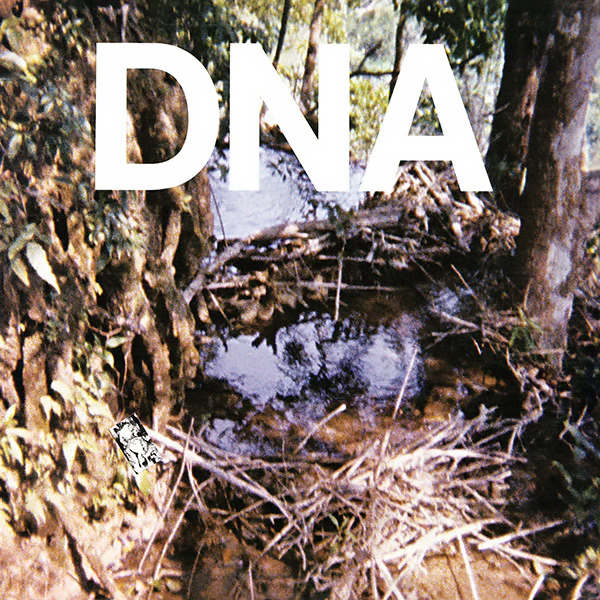
Somebody once said that your hip types made a point of examining fellow hipsters’ copies of Lou Reed’s “No Wave, No Music, No Instruments” Metal Machine Music to see if it had ever been played, and I suspect the same is true of DNA’s 1981 “A Taste of DNA” EP—I’m sure there are legions of human beings who feel obligated by hipster code to own the thing, but would never think of pulling album from sleeve and placing said album on turntable and plunking down stylus except to impress fellow hipster house guests. Giving them all 16 minutes and change to collectively regret their choices in life, and wonder why they can’t enjoy Journey like healthy people.
Arto Lindsay fronted DNA on guitar and vocals, Tim Wright (formerly of Pere Ubu) on bass, and Ikue Mori on drums, although a few members came and went (including keyboardist Robert Crutchfield, Gordon Stevenson, and Exene Cervenka’s sister Mirielle) before the band got around to recording “A Taste of DNA.”
Stevenson and Cervenka famously called it quits after the band’s first live show, which tells you something about the band’s first live show. Generally, it’s the people in the audience who walk out, not the band members. The final iteration of Pere Ubu was a radically different proposition than the earlier line-ups, in large part because Wright knew his way around the bass and helped to give them a more coherent sound. They make me think of the Minutemen on a bad belladonna trip.
DNA didn’t stick around for long. “A Taste of DNA” is the only music they released during their short lifetime, with the exception of a 1978 single and four tracks on Eno’s No New York compilation. Oh, and Lindsay and Mori collaborated with Mars on the legendarily annoying (and very, very funny) No Wave opera John Gavanti. A couple of LPs (including a live one) were released later, but it speaks volumes about DNA’s commitment to saying their piece and shutting up that their entire recorded output is not that much longer than Canned Heat’s “Refried Hockey Boogie.”
The Village Voice’s Robert Christgau put it nicely when he wrote of “A Taste of DNA,” “Five “songs” lasting nine minutes in which Arto Lindsay, who refuses to corrupt his talent by learning chords, beats his guitar about the neck and body while yelping and ululating and just plain screaming the incomprehensible urban blues.” Lester Bangs had good things to say about Wright’s bass, wrote that Mori could “cut” jazz drummer Sonny Murray, and wished Albert Ayler could have played with them. I share his sentiment. A great horn player—or even a decent one—would have filled out their sound quite nicely.
The best thing about “A Taste of DNA” is that it gets better, by which I mean less seemingly formless and more aurally entrancing, every time you listen to it. It’s all frantic clamor, fractured guitar, and great jarring rhythm, and I don’t know about the incomprehensible urban blues, but I love the way Lindsay crows, “Too much sun/So much character/Don’t duplicate my rhythm” on EP opener “New Fast” because hey, you couldn’t duplicate its rhythm if you wanted to. Lindsay’s guitar sounds like a mimeograph machine gone mad, Wright’s bass is bona fide funky, and Mori is a maniac.
“5:30″ is all repetitive stutter with great pounding drums, and the awful indignities Lindsay inflicts on his instrument probably constitute cruelty to the electric guitar and are most likely illegal, but we’re talking NYC in the late seventies here, when you had to murder somebody (twice) to get arrested. Mori goes at the drums like he’s messing around with a Gatling gun, Lindsay sings like James Chance’s institutionalized brother, while Wright sounds like a telegraph machine tapping out an SOS because the USS Manhattan is going down. It’s exhilarating, it’s hard to take, and this is truly new music.
“Blonde Red Head” opens with some drum gallop and a steady-as-she-goes bass line that actually opens up into a real melody, while Lindsay plays fingers-on-chalkboard guitar and finds startling ways to sing a very simple set of lyrics:
“Hit me big head
Dance with me big face
Blonde red head
I’ve got a snake in my mind
And it’s not my spine.”
It’s a funky number, and Wright and Mori really hold down the fort while somehow managing to invest the seeming chaos with real swing. And how often do you get to hear someone sing “Dance with me big face”?
“32121” is a stagger-stop, bass-driven number with lots of inchoate guitar scrawl and scribble. You can forget about melody, unless you count Lindsay’s eerie warble in the middle, and have I mentioned Mori’s snazzy rat-a-tat-tat drumming? Doesn’t do much for me, this one; it’s a bit too spartan and formalistic for my taste, but hey, I like The Pooh Sticks.
The amusingly titled “New New” opens with Lindsay unleashed, free to make a horrible din with his guitar. Then the bass and drums come in, and everything’s very staccato and frenetic, while Lindsay makes astounding cartoon noises with his mouth. It kind of sounds like he’s wrestling Bugs Bunny. Then it all comes together, all flayed-alive guitar and rapid-fire bass and drumming, and this one is strangely satisfying.
Closer “Lying on the Sofa of Life” is slow, lazy, and yet still incredibly annoying. Things seem to happen in slow motion, like people dropping heavy objects at random intervals, then Lindsay shreds his guitar for a second or two before singing random lines that make him sound like a more lisp-happy Darby Crash. God forbid you should understand a word he’s saying, and you get the strange impression he’s singing with the microphone in his mouth. And you get these sudden, rapid-fire epileptic drum seizures, before the whole thing ends with a random noise and everybody goes home to drink tea and read Louis-Ferdinand Celine’s Death on the Installment Plan.
I sometimes ask myself whether No Wave was better than no wave at all, but the answer is always yes—abrasive and unpleasant as much of this music is to your average human ear, something had to come along and save us from much of the New Wave that was being foisted upon us.
Although, of course, something else did. It was called hardcore, and personally, I prefer it to No Wave, but it seemed your New Yorkers never got right with hardcore—its nihilism wasn’t Big Apple nihilism, not arty enough, I guess. No Wave could have only emerged in a city with a vibrant avant-garde art scene, and no way or wave was Black Flag part of any avant-garde art scene.
DNA was lightning in an empty .40, art rock deconstructionists playing a deceptively sophisticated caterwaul to sparse crowds of avants in small spaces in a Manhattan that I doubt DNA (or any of their listeners) ever left. DNA undoubtably made an impression, but they left no impression. To 99.99 percent of the world, they never happened, but I suspect that was okay with them. I never listen to DNA, you most likely never listen to them, but they mattered. Music this fucked up always matters. It encourages other fucked-up people to make their own fucked-up music.
It’s called tradition. This shit is Manhattan folk music. As in Joan Baez, who once said, “I am a noise.”
GRADED ON A CURVE:
B+