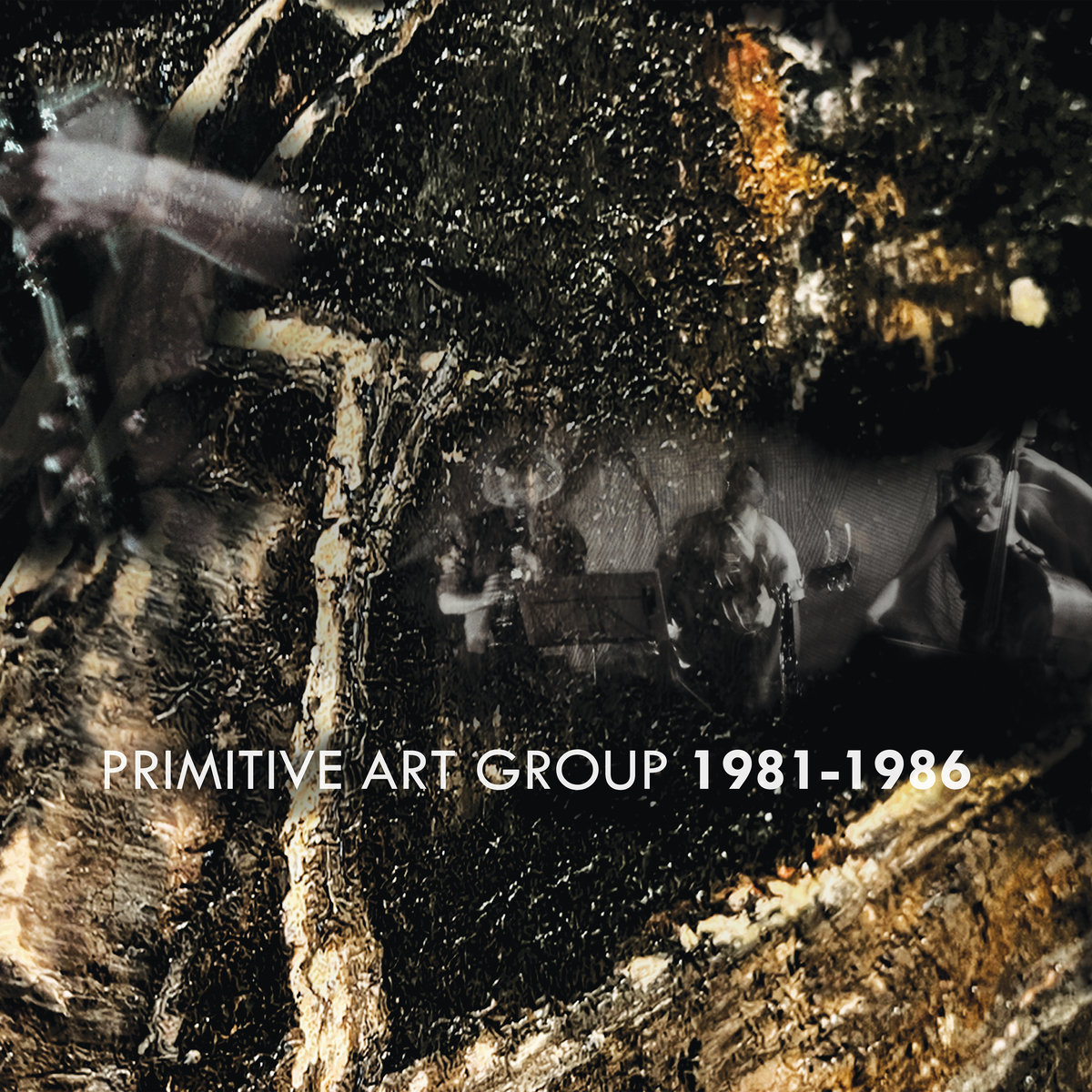
The Primitive Art Group was formed in 1981 and lasted until 1986. The locale: Wellington, New Zealand. In the midst of the burgeoning Flying Nun scene, this collective stood far apart stylistically, taking influence from the titans of avant jazz and specializing in a wild and varied strain of often Euro-tinged free improvisation on their two studio albums along with dishing impressively inspired interpretations of Fire Music classics in a live setting.
The group’s studio records are paired with one bonus live track on the 2LP set 1981–1986. A sweet batch of performance stuff gets compiled on the cassette Live Cuts 1981–1983. Both collections are available now through Amish Records separately and in a Bandcamp bundle. The retrieval and wide dissemination of this material is, simply put, cause for celebration.
To shed light on this situation of immense and unexpected excellence, these reissues aren’t brand-spankin’ new. 1981-1986 came out in late October 2024, and Live Cuts 1981–1983 was released in February of last year. But this is a time where the lurching ugliness of fascism overtakes good news discoveries such as these beautiful bursts of freedom on a regular basis. And so, spreading the word is imperative.
There is also a book, Future Jaw-Clap: The Primitive Art Group and Braille Collective Story, that will provide a fuller historical picture for anyone interested. This writer has yet to read it but is eager, indeed positively salivating, to inhale its contents. The author is Daniel Beban, and it was published by Te Herenga Waka Press in November 2024.
Across their lifespan, the Primitive Art Group consisted of Anthony Donaldson on drums and percussion, his brother David Donaldson on double bass, bass banjo, and bass drum, Neill Duncan on tenor sax, soprano sax, and bass clarinet, Stuart Porter on sopranino sax, alto sax, baritone sax, and clarinet, David Watson on guitars, preparations, organ, and banjo and early in their existence, Pam Grey on cello and vocals.
As detailed above, the Primitive Art Group had an insatiable itch for free jazz in a country and era where the youth underground was far more inclined toward post-Velvets melodic rock, psych-imbued post-punk, and discerning proto indie pop. The roots of the eventual Kiwi experimental rock (and noise) scenes that continue to be justly renowned are tied to this era, but that stuff didn’t start coming into focus, at least internationally, until later in the decade, and when it did, little of it was explicitly rooted in avant jazz.
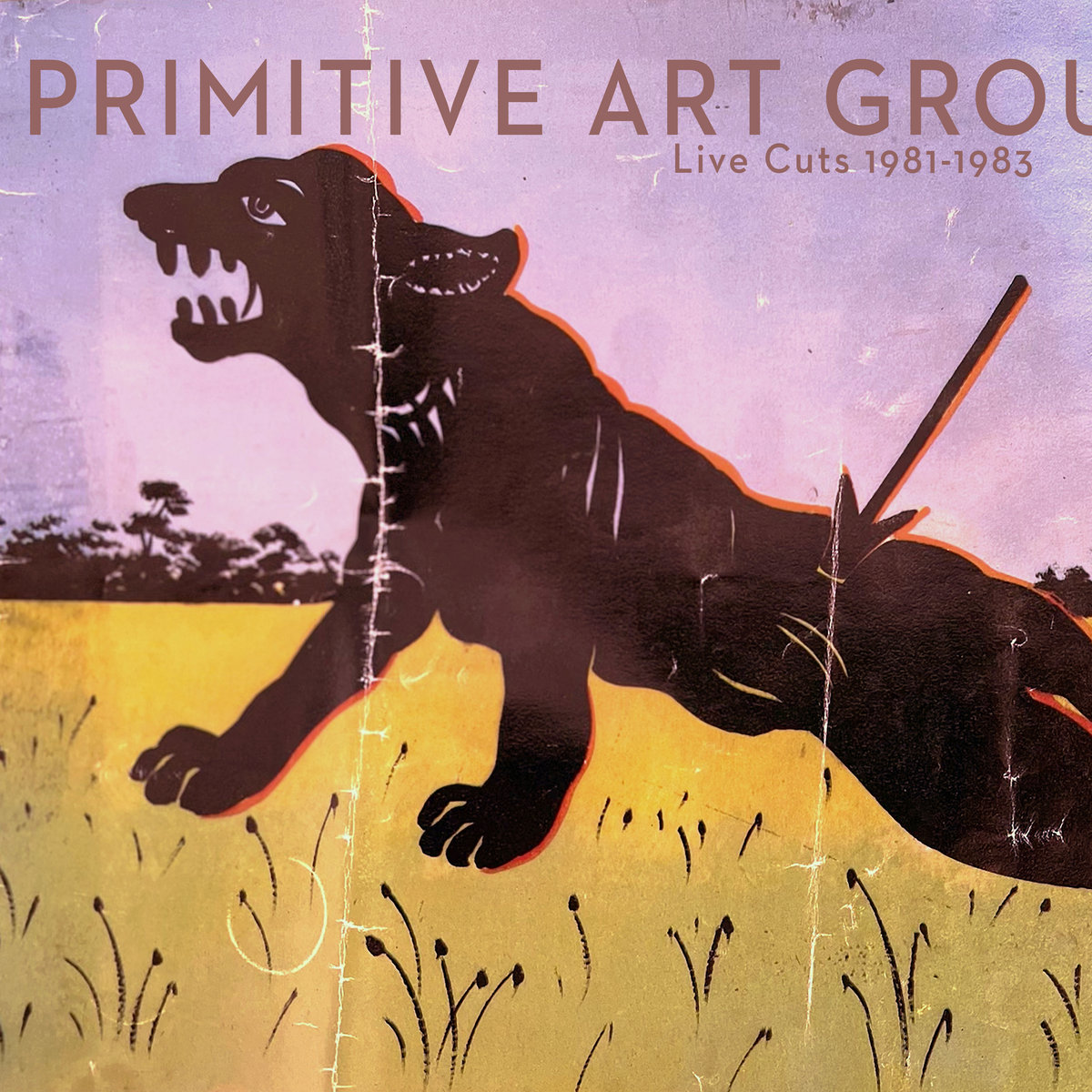
As its content captures the group at their earliest and free jazziest, it makes sense to start with Live Cuts 1981–1983. The cassette’s first four selections include Grey’s contribution (circa ’81–’82), with her cello deepening the ESP-Disk/Impulse vibe on the Ayler compositions “Ghosts” and “Bells,” and specifically, the ’66–’67 Ayler period with Joel Friedman on cello and Michael Sampson on violin.
There’s also a version (or as Amish Records describes it, an “homage reworking”) of Cecil Taylor’s “Unit Structures,” an interesting choice in the absence of piano. Not that anybody was going to match Taylor’s inventiveness. Rote copying wasn’t the intention. Although the Ayler tracks do tap into a bit of the source’s melodic ache, there’s never an instance where it’s not clear the Primitive Art Group was springboarding, not striving to imitate. The two group improvs and the three original compositions on the tape reinforce this notion.
The first LP of 1981–1986 pulls three cuts from the band’s debut recording, the Five Tread Drop Down double set that came out in 1984 on Braille Records. Completing disc one is an unreleased live recording of “Cecil Likes to Dance,” a track included on Five Tread Drop Down in a studio version.
There is a spaciousness to the studio cuts on LP one that recalls European free improvisation, but LP two, which is the entirety of the group’s 1985 Future Jaw-Clap album, is at times much closer to the sort of art-avant goings-on heard in big 1980s burgs like New York City. The early jazz throwback “Pickpocket Rag” can suggest the nods to the classic form of a sort associated with the Art Ensemble of Chicago and other branches of the AACM. However, similar to the work on the cassette, this isn’t an attempt at replication.
Bruce Russell and Thurston Moore lend some liner notes to 1981–1986. It should be made clear that this collective didn’t exist in a vacuum. Kiwi ears did hear the Primitive Art Group at the time, although their existence was certainly underground on home shores. It should be noted that all the musicians involved have subsequent recording credits and often extensive discographies.
It’s also important to understand that hardly anybody at all was championing Albert Ayler during the very conservative decade of the Primitive Art Group’s existence. That alone makes these recordings of interest, but the contents are ultimately worth so much more than that.
GRADED ON A CURVE:
1981–1986
A-
Live Cuts 1981–1983
A