Verve Records was primarily a jazz label that eventually dabbled in folk, rock, and some other genres. In many respects, the label’s heyday was in the 1960s. Blue Note is often applauded as being perhaps the premier jazz label of all time, and under the recent leadership of Don Was, it has been leading the way in bespoke jazz reissues. In terms of quantity, Verve may not have reissued as many classic jazz albums as Blue Note recently. Still, with several reissue imprints, it is releasing both popular titles and rare gems that at times rival the quality of the Blue Note Tone Poet and Classic Vinyl series.
While there have been some fine Brazilian and Bossa Nova jazz releases from Verve, the label continues to boast one of the strongest back catalogs in these genres, exemplified by recent reissues of Astrud Gilberto, Antônio Carlos Jobim, and Marcos Valle. Vocalist Astrid Gilberto was a key figure of the runaway success of the Getz/Gilberto album released in 1964, and that same year, she was also part of the live album Getz Au Go Go. Getz/Gilberto launched her as a major international star and the de facto voice of the new Bossa Nova Brazilian music sound that captured the world.
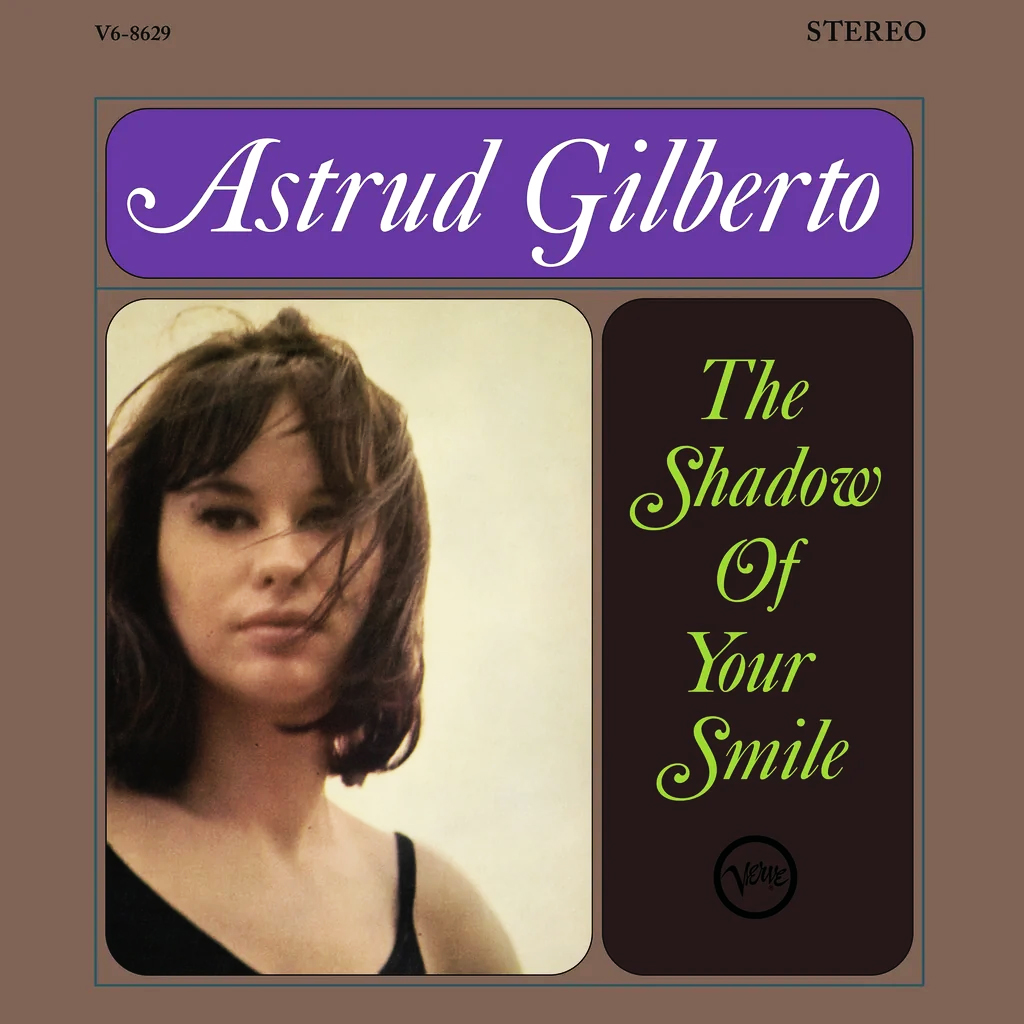
She released her debut album, The Astrid Gilberto Album, in 1965, produced by Creed Taylor, and quickly followed up the same year with The Shadow of Your Smile, which we will cover here. This Verve release has been given the full audiophile treatment with an Analogue Productions release from the Acoustic Sounds Series. This is a bespoke reissue mastered from the original analog tapes by Matthew Lutthans, pressed on 180-gram vinyl at Quality Record Pressings (QRP) and packaged in high-quality tip-on gatefold jackets.
Jazz audiophile releases don’t get any better than this. Gilberto’s warm, understated vocals are bolstered by two of the best jazz arrangers of the period: Claus Ogerman and Don Sebesky. It’s interesting to note that Gilberto is clearly looking to expand her musical palette, with more standards and not one Antonio Carlos Jobim composition in sight. While the Bossa Nova releases in this period featuring Stan Getz rightfully receive their fair share of adulation, do not sleep on these Gilberto releases.
 Speaking of Antonio Carlos Jobim, The Composer of Desafinado, has recently been reissued. Primarily heralded as the most important composer of Brazilian and Bossa Nova music, Jobim released various solo albums over the years and collaborated with other musicians. This, his solo debut album, was released in 1963, a year before the breakthrough Getz/Gilberto album.
Part of the Verve Straight From the Vault Series, the album was mastered from analog tapes by Ryan K. Smith at Sterling Sound and pressed on 180-gram vinyl at Optimal. It comes in a poly-lined paper sleeve, and the original gatefold packaging is replicated. Like the Blue Note Classic Series, it does not include tip-on gatefold jackets or any other packaging enhancements.
The album is more acoustic and sparser than the Astrid Gilberto album, and though Jobim may not be your typical vocalist, to hear him sing these iconic songs from his own pen in such an uncluttered setting is revelatory. This is another one of those Bossa Nova records of the period that can get overshadowed by the Getz releases, but that is a linchpin release of any serious Bossa Nova music collection.
 Samba ’68 was an album from Marcos Valle. It was his only Verve release during a long period when Odeon released his albums. Eumir Deodato produced the album. It’s good that this album is getting such a bespoke reissue, as it’s one of those releases that could have easily been forgotten.
Valle is an inviting singer who can go from hushed romantic longing to more fun, upbeat material. He also wrote or co-wrote all but one of the 11 tracks here, including “So Nice (Summer Samba),” which was a Bossa Nova staple of that period. While he was obscure at the time, his growing following during this era drew the attention of talk show host Merv Griffin, who contributed an effusive blurb for the back cover.
From the Verve Straight From the Vault Series, the vinyl was cut from the original analog tapes by Ryan K. Smith at Sterling Sound and includes a poly-lined paper sleeve. It is important to note that this album replicates the rare blue Verve label, which appeared more often, for a very brief time, on non-jazz Verve releases. This is another somewhat rare release that is a must-have for a growing Bossa Nova music collection.
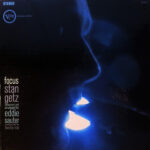 Moving away from Brazilian music are recent reissues from Stan Getz and Cal Tjader. Casual music fans may only know Stan Getz from his Bossa Nova records, but his career was vast, spanning the 1940s to the 1990s, varied, and, unfortunately, troubled at times. While another sax player with a beautiful tone, Paul Desmond, made music from a place of joy and fun, Getz derived his singular sound from pain and heartbreak.
From the Verve Straight From the Vault series comes Focus, a collaboration with Eddie Sauter. The two also collaborated on the iconic soundtrack to the film Mickey One. This is easily one of the most important albums Getz ever recorded and was one of his favorites. It’s expansive and at times experimental and reflected the range and dexterity Getz had at the time, to go with the sheer beauty of his tone.
Sauter wrote all the songs and provided the music arrangements that Getz recorded to get him out of his substance abuse slump. The sound was largely inspired by the innovations of the likes of Miles Davis and John Coltrane and the music they were making in the late 1950s and early 1960s. Along with a string trio and a harp, the core group assisting Getz consists of Steve Kuhn on piano, Roy Haynes on drums, and John Neves on bass. Hershy Kay conducted the orchestra.
This is one of Getz’s most accomplished and best-selling catalog releases. From the Verve Straight From the Vault Series, this reissue faithfully replicates the original gatefold package and was pressed on 180-gram vinyl at Optimal, with a poly-lined paper sleeve. The vinyl was cut from the original analog tapes by Ryan K. Smith at Sterling Sound.
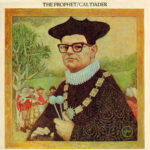 Cal Tjader was one of the key artists of not only West Coast jazz, but also Latin jazz and popularizing Mambo music. Tjader recorded quite a bit for the Northern California Fantasy label, and also for Verve. Of all his Verve releases, The Prophet was his last and doesn’t easily fit into the Mambo or Latin jazz sub-genre. It’s an ambitious, meticulously recorded album and shows just how accomplished he was on vibes. While artists like Ramsey Lewis and Milt Jackson get their due on the instrument, Tjader’s talents on it sometimes get overshadowed.
He was a prolific artist who brought joy and ease to his sound, but beneath that inviting surface was an extraordinary and versatile player. Most associated with the Bay Area, this album was actually recorded in Los Angeles and New York in 1968. Like some of the other releases here, it has an expansive, sometimes almost experimental approach (as in the Getz reissue), but also uses lush orchestrations and the arranging talents of Don Sebesky (as in the Gilberto reissue).
Tjader wrote four of the eight songs. There are some like-minded players here, who are clearly up for the challenge of some of the material, including Red Mitchel, Ray Brown, Ed Thigpen, Hubert Laws, and Marvin Stamm. Check out the original liner notes from the legendary San Francisco jazz writer, educator, and radio host Herb Wong.
From the Verve Straight From the Vault Series, the record was pressed on 180-gram vinyl at Optimal, and cut from the original analog tapes by Ryan K. Smith at Sterling Sound and includes a poly-lined paper sleeve. It would be welcome to see Verve reissue some of Tjader’s more popular Latin and Mambo recordings, as they are beautiful and essential West Coast jazz releases and cornerstones of Latin jazz.
GRADED ON A CURVE:
Astrid Gilberto, The Shadow of Your Smile
A+
Antonio Carlos Jobim, The Composer of Desafinado Plays
A
Marcos Valle, Samba ‘68
A-
Stan Getz, Focus
A
Cal Tjader, The Prophet
B+