
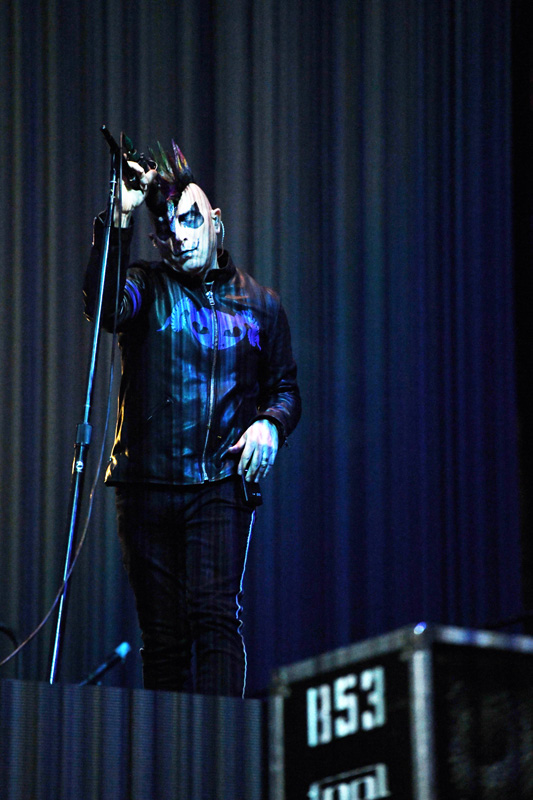
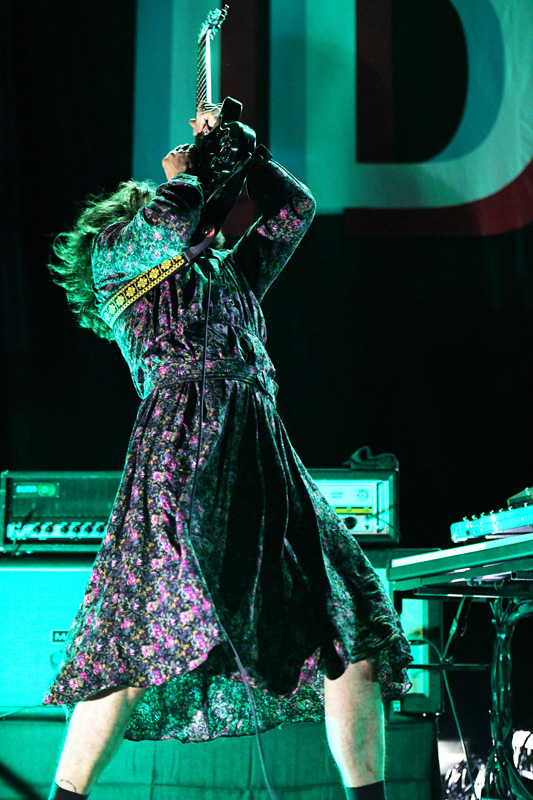
PHOTOS: JULIA LOFSTRAND | In the Melvins’ documentary The Colossus of Destiny: A Melvins Tale, Jello Biafra of Dead Kennedys said of the band, “the fact that they get to be the Melvins and do what they want to do and get paid off of it is very rare.” Faith No More’s Mike Patton underscored, “They are a force of nature.”
Doing what one wants and being a force of nature is precisely what the Industrial Strength Tour featuring Ministry, Melvins, and Corrosion of Conformity is all about. Innumerable albums later—Ministry released their 15th studio album last year while Melvins are up to their 25th release—the fact that these bands play for their own headspace and can pack a venue of fans spanning generations is remarkable.

For many at this show, the subculture these bands have created was never a passing phase but vessels for their dark emotions and an extension of themselves that they’ve carried far into adulthood. A recently retired woman next to me explained she was going to spend her freedom following Ministry wherever they play, as she intermittently screamed lead singer Al Jourgensen’s name from the crowd. A salt-and-pepper father with his teenage son hung over a railing appreciating together the sound of musicians who are dedicated to their craft. And mixed in with the current wave of the SoCal industrial scene was a much older woman with neon yellow-green hair. She looked inspiring.
The bands on this bill are inventors of their genres, making this event not only a seriously amazing rock show but an educational history. Ministry is at the inception of industrial music. The versatile Melvins, although not fully aligned with grunge, are held directly responsible for it, and Corrosion of Conformity is thought to be one the first punk-metal bands. And how is everyone sounding at this stage of their game? Pretty fucking fantastic if you ask me.














 Unknown Pleasures was released on June 15, 1979. Shoulder-to-shoulder with Siouxsie and the Banshees, Joy Division are considered to be pioneers of post-punk and their music was unlike anything heard at that time. The album is a marriage of two genius individuals—lead singer Ian Curtis, author of inwardly perceptive and melancholy lyrics, and studio maven Martin Hannett behind the production console.