
Author Archives: Joseph Neff

Graded on a Curve:
Aziza Brahim,
Abbar el Hamada

Singer and percussionist Aziza Brahim belongs to the Sahrawi people of the Western Sahara, though for more than two decades she’s lived in exile. The recordings she’s released since 2008 have deftly blended the desert blues of her Saharan background with elements of contemporary rock and Spanish influences as she’s served as a spokesperson for her people in the face of ongoing oppression. Brahim’s new album and second for Glitterbeat is Abbar el Hamada; it wields bright performances and on one tune welcomes the electric guitar of Samba Touré. It’s out March 4 on compact disc, digital, and 180gm vinyl.

Aziza Brahim’s profile has risen steadily over the last decade, but she’s been active for considerably longer; in 1995, shortly after returning to the Sahrawi refugee camps to begin her musical career following years of study in Cuba, she won the 1st National Song Contest of the National Culture Festival as sponsored by the Sahrawi Arab Democratic Republic.

A whole lot of activity has taken place since, including touring with the Sahrawi group Leyoad, and although she’s returned home on numerous occasions, Brahim has lived in Barcelona from 2000; subsequently, she collaborated with the Spanish outfit Yayabo in ’05 and two years later formed the Sahrawi/Spanish group Gulili Mankoo.

The “Mi Canto” EP emerged in 2008 via the Reaktion label, its five selections utilizing guitar, percussion and voice to agreeably interweave roots potency with aspects of melodicism, particularly on the gorgeously catchy “Alli Nahuah.” There are also rock trappings, notably in the plugged-in solos of the title cut and the psychedelic opening to “Hijo de las nubes.”

Read More »

Posted in The TVD Storefront | Leave a comment

Graded on a Curve: New Singles from Emotional Response Records

Emotional Response is run out of Flagstaff, AZ by the married team of Jen Turrell and Stewart Anderson. Over the last few years they’ve amassed a considerable amount of quality product, much of it on 7-inch vinyl and often with bonus tracks on the accompanying downloads, the vast majority landing betwixt the stylistic poles of punk and indie pop. The mailbox of this correspondent was recently brightened with a batch of Emotional Response platters featuring Ginnels, Cougar Vox, The Aislers Set, Primitive Calculators, Shark Toys, and more, and rather than focus on just one slab it felt appropriate to inspect and report on the entirety; the rundown is below.

Here it is six years into the second decade of the millennium and record labels are as necessary as ever in wading through the constant flow of new sounds and weeding out the prime movers from the also-rans. Of course, not all enterprises are equally successful at developing a distinct voice based upon enduring value and a resistance to faddishness, so it makes total sense to spotlight and salute those of commendable taste.

On occasion promising imprints can begin to register as increasingly finessed by committee, and in turn their discographies get burdened by varying levels of the humdrum. However, to this point the roster of Emotional Response happily connects as the byproduct of a pair of musician-fans. Although he’s participated in a long list of bands/projects, Stewart Anderson is probably best known for Boyracer, where he played beside his wife and label co-operator Jen Turrell.

It’s been a decidedly Brit-centric ride, unsurprising as Anderson originally hails from the UK, forming Boyracer in the Yorkshire town of Wetherby in 1990; together with that group’s “Pete Shelley EP,” the Sleaford Mods’ “A Little Ditty” b/w “I’m Shit at It” 7-inch goes a long way in establishing Emotional Response’s vibrations of punkish England.

Read More »

Posted in The TVD Storefront | Leave a comment

Graded on a Curve:
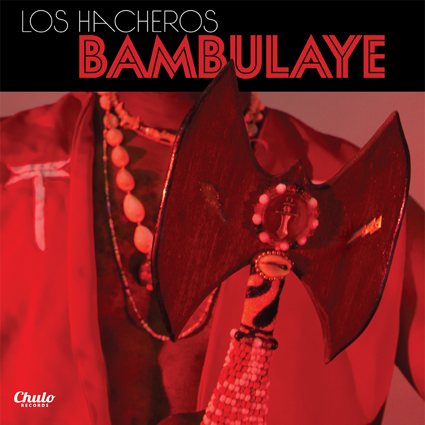
Los Hacheros, Bambulaye

Those wishing to soak up vibrant Latin roots in a contemporary context have a prime opportunity right in their midst, for the second LP from Brooklyn’s Los Hacheros is complete and on the cusp of release. A five-piece band deeply informed by tradition yet infused with verve only possible by routinely ruling bandstands in the here and now, Los Hacheros transfer this knowledge and experience into the grooves of Bambulaye with uncommon success. It’s a record of astounding assurance and power out February 26 on the Chulo label as distributed by the discerning ears in charge at Daptone.

Bambulaye is simultaneously a trove of Latin musical history and a vessel of sweat-inducing grooves; beyond slapping the record onto a turntable, perhaps the easiest way to relate Los Hacheros’ duality of insight and energy is to report on gigs spanning from the Museum of Modern Art and the Lincoln Center to performances at quincañeras (birthday parties for Latin American girls turning fifteen years old) and Bronx strip clubs.

The assortment of venues says much about Los Hacheros’ sheer utility, while the breadth of their approach underscores their music’s importance without making any fuss over legitimacy; son montuno, guaracha, and salsa, all described in Bambulaye’s promo notes as “folkloric” styles, get combined with Bomba, a highly intense rhythm harkening back to the mountains of Puerto Rico.

Unsurprisingly there is mention of the great Cuban musician and bandleader Arsenio Rodriguez, Latin jazz behemoth Ray Barretto, and the long-serving record label Fania as Los Hacheros present a truly organic hybrid of classic and modern. No chasing after trends is in evidence, however; instead, the program is built to last and even more than its predecessor Pilon exudes musicality that’s respectful yet unhampered by orthodoxy and on occasion is borderline awe-inspiring.

Read More »

Posted in The TVD Storefront | Leave a comment

Graded on a Curve:
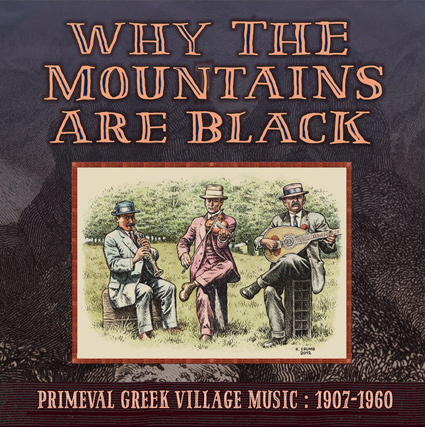
Why The Mountains Are Black: Primeval Greek Village Music: 1907-1960

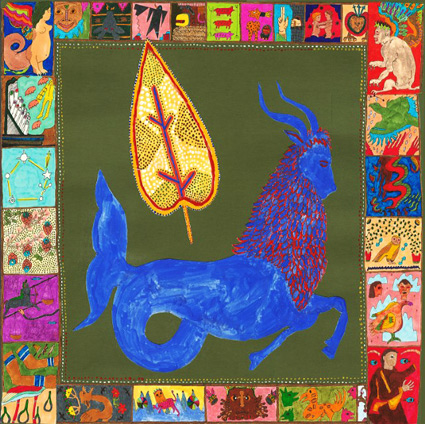
Third Man Records’ Why the Mountains Are Black: Primeval Greek Village Music: 1907-1960 offers 28 cuts on either compact disc or superbly designed double vinyl with a triple gatefold sporting a typically fine R. Crumb cover illustration. And if that were all, the modern listener would easily be engulfed in the enigmatic, but thanks to the indefatigable research and perspective of Grammy-winner, writer, and all-around record man Christopher King, the contents come into focus with an air of mystery remaining; rarely does the oft-ineffable sonic creativity of a bygone world get elucidated with such keen, welcoming intellect. For folks cultivating adventurous pre-rock shelves this release is absolutely mandatory.

Though this set will surely appeal to similar clientele, it’s important to recognize Why the Mountains Are Black as distinct from the “old-time” canon of the USA; obviously Greek folk music, or demotika as it’s called, derives from unique cultural circumstances, and unlike those of Africa and other European regions, its traditions and methods haven’t tangibly impacted modern music.

And yet, to quote King’s notes: “Most scholars of antiquity can confidently assert that no ancient Western culture valued music more highly than the ancient Greeks. Practically every social event, no matter how small or large, was accompanied by live music, both vocal and instrumental.” Today music may give the impression of being widespread (perhaps too much so), but seldom does it produce catharsis, i.e. the Greek terminology for emotional release by an audience in direct response to a work of art.

Music may seem to be everywhere today, but it’s often experienced individually and with increasing frequency in easily digestible chunks serving more as a distraction than in a cathartic role. It’s a tendency extending to art in general; to elaborate, it’s become quite common to hear or read advance apologies when some shared item is in danger of being assessed as “long.”

Read More »

Posted in The TVD Storefront | Leave a comment

Graded on a Curve:
The Pop Group,
“We Are All Prostitutes,” For How Much Longer
Do We Tolerate Mass Murder?

The recent vinyl landscape has been positively loaded with quality post-punk reissues, and in a fine development the politically raucous experimentalism of The Pop Group’s second 45 “We Are All Prostitutes” and ensuing LP For How Much Longer Do We Tolerate Mass Murder? are getting added to the pile, with the latter offering reproductions of the original release’s four double-sided posters. Both were part of Rough Trade’s glorious amassing of post-punk vitality at the dawn of the 1980s, and they return to the racks on February 19 courtesy of the Freaks R Us label.

Initially composed of Mark Stewart on vocals, Gareth Sager and John Waddington on guitars, Simon Underwood on bass, and Bruce Smith on drums, The Pop Group commenced activity in Bristol, England in the year 1977. Formed in opposition to punk’s tenet of simplicity and inevitable drift into orthodoxy and formula, The Pop Group set to work embodying an alternative to what they identified as a musically if not necessarily ideologically conservative movement.

They achieved this goal by embracing free jazz, dub, funk and general experimentalism as punk’s intensity and usefulness as a vessel of socio-political dissatisfaction were retained. Befitting the non-rudimentary approach, their debut single “She Is Beyond Good and Evil” didn’t appear until March of ’79, but once the ball of wax was set in motion it rolled hard and heavy.

Y, The Pop Group’s first full-length, arrived a month later, and like its 7-inch predecessor it was produced by long-serving reggae figure Dennis Bovell; both were put out by Radar Records, a prominent if fairly unglamorous imprint of the new wave era, and they effectively established the parameters of a unit that grew more uncompromising as it hurdled toward dissolution in ’81.

Read More »

Posted in The TVD Storefront | Leave a comment

Graded on a Curve:
Love,
Reel to Real

Circa the mid-’70s Arthur Lee was in the midst of tough times; never a marketplace powerhouse, his critical reputation took a long nosedive post-Forever Changes as his album Black Beauty was languishing in the can. Offered a contract by Robert Stigwood’s RSO Records, Lee reassembled his band and set to work. Detouring from the hard rock of his preceding releases, Reel to Real disregarded familiar garage or psychedelic territory for an unexpected and for some perplexing soul/rock milieu. Few heard the final product, but on February 19 its underrated contents are available again on vinyl and compact disc with bonus tracks through High Moon Records.

A little punkish and considerably Byrds-like, Love’s self-titled arrival from March of ’66 endures as one of the stronger debuts of its decade; opening with the emo-purge throttling of Bacharach and David’s “My Little Red Book” and following with over half a dozen gems and no clunkers, the LP consistently wields aspects of Los Angelino garage beginnings as an advantage. For evidence, look no further than “Hey Joe,” a burner arguably on par with the ’65 version by the Leaves and the famous slowed-down take that introduced the world to the Jimi Hendrix Experience in ‘66.

Roughly eight months after Love appeared Elektra unleashed Da Capo, an expanded lineup pursuing psychedelia and baroque pop while retaining the punk edge on “7 and 7 Is,” though it bears noting that particular song, issued as a classic single in July of ’66, derived from an earlier session. Its second side taken up with a 19 minute blues jam (working title: “John Lee Hooker”), many peg Da Capo as half great; irrefutably an indulgence, “Revelation” is nowhere near the blunder its biggest detractors claim it to be, instead illuminating the breadth of the group’s rapid-fire metamorphosis.

A year did elapse before the emergence of Love’s consensus masterpiece, and given its level of ambition, it’s not difficult to see why; Forever Changes ranks amongst the most vivid and boldly scaled epics produced by the ’60s pop-rock renaissance, and if a commercial failure in relation to expectations, it’s become an undying cult item and a frequent entry on lists of the Greatest Records of All Time.

Read More »

Posted in The TVD Storefront | Leave a comment

Graded on a Curve: Josephine Foster,
No More Lamps in the Morning

Coloradoan singer-songwriter Josephine Foster is most often categorized as a folk artist, but while rich in tradition her work exudes consistent individualism that’s far from conventional. For a stretch she was averaging a record a year, but No More Lamps in the Morning is Foster’s first since 2013, and it finds her not with a cache of fresh stuff but reinterpreting material from her ample discography. Foster is in fine voice and her nylon string guitar terrific, as is the Portuguese guitar of her husband Victor Herrero and on two tracks the cello of Gyða Valtýsdóttir; it’s out now on vinyl, compact disc, and digital through Fire Records.

Many fringe-leaning neo-folkies strike the consciousness like Johnny and Janet come latelies knocked sideways by Harry Smith’s Anthology, John Jacob Niles, and/or The Basement Tapes, but Josephine Foster’s profile registers as sincerely bohemian. Performing as a funeral and wedding singer in her youth, she desired to become an opera singer but ended up traveling a different path, reportedly working as a vocal teacher in Chicago and eventually amassing output both solo and in collaboration.

Foster cut albums backed by the Cherry Blossoms and the Supposed while playing in The Children’s Hour and as half of the duo Born Heller with avant-jazz bassist Jason Ajemian. And although her recordings span over 15 years, she’s frequently been lumped into the New Weird America bag. But in fact Foster’s reliably sounded quite Old, and not in a precious way; that her 2001 EP of children’s songs “Little Life,” reissued by Fire on CD and 10-inch vinyl in ’13 (and still available) manages to lack affectation as it brandishes a boatload of ukulele is a feat worth considering.

In 2004 the psych-rock flavored All the Leaves Are Gone (with the Supposed) emerged on Locust and was followed by a pair of solo discs for the label, ’05’s Hazel Eyes, I Will Lead You, and ’06’s A Wolf in Sheep’s Clothing, wherein she freely adapted the German Lieder of Brahms, Schubert, Schumann, and Hugo Wolf and combined them with texts based on the writings of Goethe, Mörike, and Eichendorff.

Read More »

Posted in The TVD Storefront | Leave a comment

Graded on a Curve:
David Sylvian,
Brilliant Trees

When UK new wavers Japan broke up in 1982, the members predictably splintered off into various directions, and the highest profiles belonged to Mick Karn and David Sylvian. Over the decades the latter has amassed a solo and collaborative discography of unlikely reach and impressiveness; however, giving a fresh listen to ‘84’s Brilliant Trees makes abundantly clear Sylvian’s career trajectory isn’t as surprising as it might initially seem.

Upon consideration, very few musicians who made their name in the pop sphere have aged as well as David Sylvian. Of course, this is mainly due to his choice after Japan’s dissolution (they briefly reunited for one self-titled ’91 album under the name Rain Tree Crow) to gradually leave the milieu that fostered his initial reputation. The subsequent journey led him into the outlying territories of experimentation and the avant-garde, though this shouldn’t give the false impression that Sylvian’s post-Japan oeuvre is devoid of pop elements.

As a youngster of the ‘80s, I knew little of Japan, my discovery of Sylvian supplied by his ’87 collaboration with Ryuichi Sakamoto, Secrets of the Beehive. The introduction was made through the frequent play and promotion of said disc by my hometown Mom & Pop record mart, an enterprise also involved in the sale of high end stereo equipment.

To my teen mind any system comprised of separate components was high end, and at the time Secrets of the Beehive basically eluded me, as did much “deep-listening” material attached to ambient, new age, minimalism, art-pop etc. Reengaging with Sylvian as a mature adult provided, if not an epiphany than another instance aiding the realization that artistic assessments work in tandem with personal growth, therefore flouting finality.

Read More »

Posted in The TVD Storefront | Leave a comment

Graded on a Curve:
Low Flying Hawks,
Kofuku

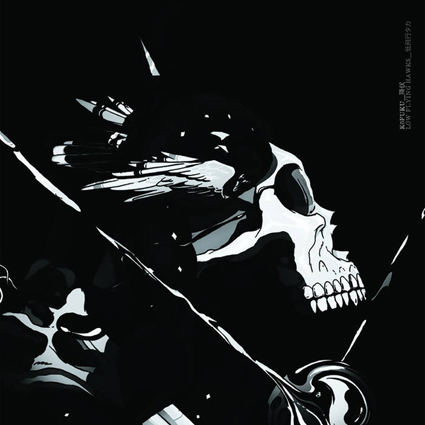
Hailing from Mexico, Low Flying Hawks specialize in a dark-toned, art-imbued, and indisputably heavy style of contempo metal, and it’s fair to add enigmatic to the description; composed of two dudes sporting the handles EHA and AAL, they share guitar, bass, and vocal duties and fill out their sound with contributions from Trevor Dunn on bass and Melvin Dale Crover on drums. Produced by Toshi Kasai, formerly of Seattle sludge maulers Big Business, Kōfuku is an unusually confident debut album, and it’s available February 12 on Magnetic Eye Records.

As they emerge, some outfits tend to go a smidge overboard in the biographical department. Low Flying Hawks, or as the name is occasionally stylized, Lowflyinghawks, fall on the opposite side, obviously preferring the air of mystery. As stated above, they are from Mexico, which the last time I checked was a rather sizable slab of real estate, and I’ve unturned no further geographical enlightenment. Moreover, the use of what seem to be initials helps to cultivate anonymity, though the duo isn’t averse to credit (or for that matter, photos); EHA is the songwriter and primary vocalist.

They’re also not shy about detailing a batch of wide-ranging influences, name-checking Richard D James (a.k.a. Aphex Twin), Black Sabbath, the Estonian composer Arvo Pärt, and My Bloody Valentine and citing the impact of drone, noise-rock, psych, shoegaze, post-rock, and least surprisingly metal as part of Kōfuku’s overall equation.

Considering the breadth of that list, Low Flying Hawks have cultivated a cohesive, disciplined attack right out of the gate. Those not smitten with the doom subgenre aren’t likely to be goosed by the contents here, as the disparate interests are best described as seasoning on an assured, and based on the ambiguous narrative of the song titles, possibly conceptual first outing.

Read More »

Posted in The TVD Storefront | Leave a comment

Graded on a Curve:
3rd Bass,
The Cactus Album

As Pitchfork recently commissioned select retrospective reviews of David Bowie’s catalog after his passing, here in the office we looked at each other and thought, “Well, way to catch up with what we’ve been up to lo these 9 years.”

Not lost on us is that record reviews—new releases—serve their purpose, but if you stop by TVD with any regularity or fire up our (free) Record Store Locator App, you’re bound to uncover both old and new records in record shops that should (or shouldn’t–let’s face it) be in your collection.

Our recurring job henceforth, tipped to you via that nifty icon lower left, is to inform your crate digging via our archives. Go forth, buy records, and be nice to people. —Ed.

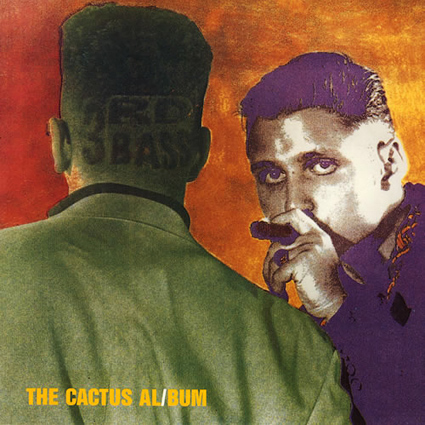
Released a quarter century ago by the Def Jam label, Brooklyn trio 3rd Bass’ The Cactus Album stands as a hip-hop classic. Due to this stature one might assume the full story behind its creation has long resided in the historical record, but that’s not the case. To get the complete scoop on this and assorted other hip-hop achievements one needs seek out the books of Brian Coleman. Aptly subtitled “more liner notes for hip-hop junkies,” Check the Technique Vol. 2 is freshly available from Wax Facts Press.

Anybody having spent hours inspecting the treasures in a jazz-centric record shop knows LPs in the multifaceted style regularly came adorned with notes (Hentoff! Williams! Jones!) on the back of the sleeve. And folks devoting time, energy and dollars to keeping up with deluxe reissues and box sets in multiple genres understand that extensive annotation of and commentary upon background specifics was/is an expected component in the retail price.
As a relatively young art form, hip-hop has suffered from experiencing its burgeoning stylistic era(s) in a business setting that wrongly assumed buyers of contemporary music (as opposed to those dropping cash on older material) cared about little more than the sounds, the labels mostly throwing context and packaging to the wayside.

This was an easy assumption to arrive at if one’s only concern was making money. But those spending it were reliably left at mysterious loose ends. Producer credits, thank you lists, and cleared samples were a start, and interviews and articles in Spin, Vibe and The Source brought a modicum of enlightenment, but the deep investigation, which often simply entails sincere interest and respect for the subject, becoming comfortable with the artists and then asking the right questions, was lacking for years.

Read More »

Posted in The TVD Storefront | Leave a comment

Graded on a Curve:
The Hateful Eight OST

Ennio Morricone’s credits span far beyond the role of film composer, touching upon pop-song arrangement and avant-garde free improvisation. But it’s indeed his scores for the movies, now totaling deep into the hundreds, which have brought him his highest acclaim; if one desires to absorb the possibilities of cinematic composition as art, engagement with Morricone’s oeuvre is a prerequisite, and that one would not err in choosing the soundtrack to The Hateful Eight is testament to his greatness. It’s out now in a splendid 2LP gatefold edition exclusively through Third Man; folks in Nashville and Detroit can scoop up the ludicrously elaborate box set.

The critical response to The Hateful Eight, the final entry in Quentin Tarantino’s bloodily ambitious historical trilogy following Inglorious Basterds and Django Unchained, has been fairly wide-ranging; one area of general consensus is Ennio Morricone’s soundtrack, his first for Hollywood since 2002’s Ripley’s Game. It’s already won a Golden Globe and will be competing for Best Original Score in this year’s Academy Awards, where many have it favored; improbably (though not really), the composer’s never won an Oscar.

Morricone’s finished work eschews the twang-filled atmosphere of his defining contributions to the spaghetti westerns of Sergio Leone in favor of the darker environments of his giallo and horror scores, particularly his collaboration with John Carpenter on his classic The Thing, of which three themes were reused for The Hateful Eight.

“Eternity,” “Bestiality,” and “Despair” surface alongside “Regan’s Theme (Floating Sound)” from John Boorman’s wonderfully wacko Exorcist II: The Heretic, though none are on the soundtrack. As Tarantino borrowed Morricone’s stuff on all of his films since and including both halves of the Kill Bill saga, the reuse of extant material falls squarely into place.

Read More »

Posted in The TVD Storefront | Leave a comment

Graded on a Curve:
The Boston Creative
Jazz Scene 1970-1983

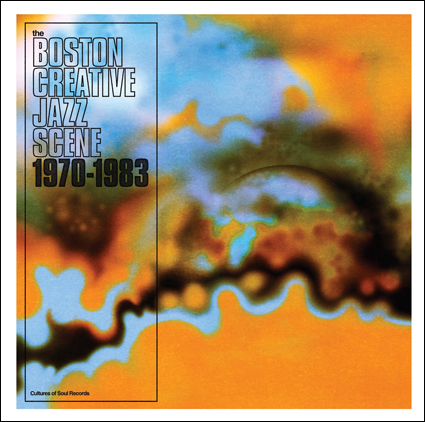
The history of jazz is dominated by events transpiring in New Orleans, Kansas City, Chicago, California, and of course New York, but all the while the music was thriving elsewhere in a variety of styles. As evidence one need only inspect the outstanding new compilation The Boston Creative Jazz Scene 1970-1983; collective improvisation, full-bodied fusion, post-Fire Music free wailing, consciousness raising spoken word, and advanced composition for large ensembles all helped shape the scene. It offers an exhaustive amount of info in an 80-page book, and is available now on 2LP and CD from Cultures of Soul.


Many thousands undertook the migration to well-ensconced cultural centers in hopes of adding to the jazz discourse and achieving something immortal; a few did, the vast majority did not, and yet their accumulated sonic narrative is still a formidably mountainous accumulation of sound. A percentage of those in the early navigation stages of the established jazz canon might find Cultures of Soul’s latest compilation a daunting item to be soaked up only after contending with a few hundred records of higher profile.

This is a questionable approach. For starters, the canon isn’t going anywhere, and The Boston Creative Jazz Scene 1970-1983’s standard of quality is likely to get absorbed into the annals of important jazz recordings anyway. Furthermore, Mark Harvey’s extensive notes do a fine job of illuminating the specifics of the city’s jazz environs (particularly venues and educational avenues) and relating them to the East Coast and Midwest scenes while providing background into the larger avant-garde and pinpointing a succession of noteworthy Boston players in the style.

Admittedly a wide field, Harvey details the early Boston avant motions of pianist Cecil Taylor and multi-instrumentalist Makanda Ken McIntyre, moves into groundbreaking work of pianists Lowell Davidson and Ran Blake (both of whom cut albums for ESP-Disk in 1965), bassist John Voigt (sessions with guitarist Joe Morris, saxophonist Jameel Moondoc and more), and The Fringe, a trio formed in the early ‘70s comprised of saxophonist George Garzone, bassist Rich Appleman, and drummer Bob Gullotti (their self-titled debut emerged in 1978).

Read More »

Posted in The TVD Storefront | Leave a comment

Graded on a Curve: African Head Charge, The On-U Sound
Records Collection

Co-founded at the start of the ‘80s by percussionist Bonjo Iyabinghi Noah and UK producer Adrian Sherwood, African Head Charge constitutes a particularly successful chapter in the story of On-U Sound. The project’s early work, four albums combining post-punk-derived experimentation with dub and African ingredients, shapes up the latest installment in On-U Sound’s deserved retail retelling. They’re available now on vinyl and digital separately and as a bundle directly from the label.

Gradually returning a vital hunk of ’80s musical history to print, the ongoing string of On-U Sound reissues and compilations provides lovers of way-out dub, edgy post-punk, and specifically recent converts to the achievements of Adrian Sherwood with numerous reasons for celebration. Revealing striking consistency amongst steady growth, the emergence of African Head Charge’s ’81-’85 output deepens the scenario considerably as it illuminates an especially fertile collaboration.

Bonjo Iyabinghi Noah, or Bonjo for short, had studied in the Rasta drumming camp of Jamaican bandleader Count Ossie. After time spent on the UK scene he joined the Sherwood-produced group Creation Rebel and like many of his bandmates ended up in the credits of numerous On-U Sound releases including those by New Age Steppers, Dub Syndicate, Singers and Players, and Mark Stewart. However, African Head Charge stands as Bonjo’s deepest contribution to the label.

Indeed, what essentially started as a joint Sherwood-Bonjo effort (with assistance from Style Scott, Crocodile, Deadly Headley, Crucial Tony, Bruce Smith, Steve Beresford, Mus’come a.k.a. Charlie “Eskimo” Fox, Doctor Pablo, Public Image Limited’s Jah Wobble, Sugarhill Gang/Tackhead member Skip McDonald and others) slowly became an actual band led by the percussionist; the four records reviewed here represent African Head Charge’s collaborative, studio-based period.

Read More »

Posted in The TVD Storefront | Leave a comment

Graded on a Curve:
Matt Kivel, Janus

Matt Kivel has been on the scene for a while in a handful of bands, but the profile of the Los Angeles-based singer-songwriter and guitarist was effectively boosted by a pair of recent solo efforts documenting a progression from folky individualism toward a more pop and rock-tinged milieu; the experimentation-flecked Janus combines aspects of each and exhibits tangible growth to produce his best album thus far. It’s out on LP February 5 via new label Driftless Recordings.

Before stepping out solo Matt Kivel was in the group Princeton alongside his twin brother Jesse; additionally, he played guitar in the garage pop outfit Gap Dream. His debut Double Exposure, the byproduct of a couple of years of work, arrived in 2013 on cassette through Burger Records and on vinyl courtesy of Olde English Spelling Bee.

Aptly described as folky, Double Exposure has been compared at least once to Nick Drake, though Kivel’s no copyist, his occasional falsetto distinct for starters. A big similarity is purity of conception, the record having emerged without much in the way of expectations and finding a label home only after completion. But it wasn’t entirely like that; the title track was a sleepy-lidded post-shoegaze pop nugget foreshadowing Kivel’s follow-up Days of Being Wild.

Swiping a title from Wong Kar-wai’s classic film from 1990 (this cinephile hypothesis is reinforced by Double Exposure’s final entry “Days of Heaven” sharing a moniker with Terrence Malick’s ’78 masterpiece), Days of Being Wild was issued in 2014 through the Woodsist label and revealed a considerable move into the light.

Read More »

Posted in The TVD Storefront | Leave a comment

Graded on a Curve:
Bert Jansch, Avocet

By its very nature instrumental music is a study in form, and frequently to such an extent that listeners nurturing vocally focused comfort zones can feel left out in the cold. Bert Jansch’s non-vocal debut Avocet is well-poised to overcome this obstacle; a trio effort of welcoming beauty devoted to the glory of British birds, the whole stands amongst the lauded Scottish guitarist’s most fully realized achievements. On February 5, Earth Recordings reissues the album, its vinyl edition featuring lithograph art-prints by UK illustrator Hannah Alice depicting the six birds titling Avocet’s tracks as the compact disc is tucked into a hardback book with 24 pages of notes and artwork.

The making of Bert Jansch’s twelfth LP transpired in February of 1978, a point on the calendar roughly coinciding with the nasty storm of punk rock, and wherever the eye of the squall traveled across the landscape of the UK, it can be safely surmised Avocet was elsewhere. Over time the guitarist would come to be revered by a heaping dog-pile of alternative-indie figures with creative DNA directly traceable to the punk upheaval, but it’s well-established that the late ‘70s proved to be a tough stretch for practitioners of non-clamorous sounds not limited to veterans of the Brit-folk scene.

Of course it’s not all so simple. As related in Colin Harper’s excellent notes for Avocet’s reissue, Jansch’s prior set A Rare Conundrum, released in the UK in ’77 on Charisma, had been well-received by the Brit music press in part because it was viewed as a sort of homecoming affair after two full-lengths cut out California way (those would be ‘74’s L.A. Turnaround and ‘75’s Santa Barbara Honeymoon).

Avocet also soaked up positive coverage in the weeklies, but didn’t appear in the UK until 1979; its initial ’78 pressing came via the Ex-Libris label of Denmark, the enterprise of Jansch’s Danish manager Peter Abrahamsen having additionally brought out A Rare Conundrum (as Poormouth) a year ahead of its emergence in British record shops.

Read More »

Posted in The TVD Storefront | Leave a comment
  • SUPPORTING YOUR LOCAL INDIE SHOPS SINCE 2007


  • Alternative Text Alternative Text Alternative Text Alternative Text Alternative Text Alternative Text Alternative Text Alternative Text Alternative Text Alternative Text Alternative Text Alternative Text Alternative Text Alternative Text Alternative Text Alternative Text Alternative Text Alternative Text Alternative Text Alternative Text Alternative Text Alternative Text
  • Alternative Text Alternative Text Alternative Text Alternative Text Alternative Text Alternative Text Alternative Text Alternative Text Alternative Text Alternative Text Alternative Text Alternative Text Alternative Text Alternative Text Alternative Text Alternative Text Alternative Text Alternative Text Alternative Text Alternative Text Alternative Text Alternative Text Alternative Text Alternative Text Alternative Text