Author Archives: Joseph Neff

Graded on a Curve:
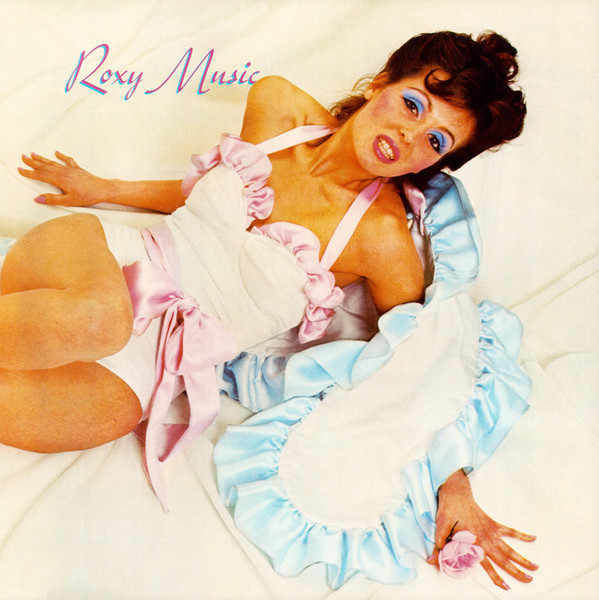
Roxy Music,
Roxy Music and
For Your Pleasure

Celebrating Bryan Ferry on his 79th birthday.Ed.

Bursting onto the scene 50 years ago, Roxy Music’s blend of glam rock and art rock proved highly influential while being impossible to imitate, as the music of singer Bryan Ferry, synthesist Brian Eno, saxophonist Andy Mackay, guitarist Phil Manzanera, and drummer Paul Thompson was simply drenched in personality. Virgin/UMe’s vinyl reissue program of the band’s eight studio albums began with debut Roxy Music and its 1973 follow-up For Your Pleasure, both half speed mastered at Abbey Road Studios by the engineer Miles Showell. Bluntly, these four sides of wax are indispensable to any collection of 20th century rock music.
Looking back on it, it feels wholly appropriate to describe Roxy Music as coming out of nowhere in 1972. Their debut LP arrived sans any pre-release singles, with “Virginia Plain” b/w “The Numberer,” the band’s first 45, cut just short of a month after Roxy Music’s release, a short enough span that its hit A-side was added to nearly all later pressings of the album (on the subject, please note that Virgin/UMe’s release retains the sequence of the UK first edition).

The nature of the band’s arrival is nicely encapsulated by Roxy Music’s opening track “Re-make/Re-model.” After a passage of what might be intended as dinner party ambiance (shades of Ferry the pure sophisticate to come), Roxy explodes forth, maximally but methodically, and by song’s end it’s clear that in this particular outfit at this point in time, nobody was taking a back seat (well, except maybe bassist Graham Simpson, who exited after the LP’s release, with Rik Kenton stepping in for “Virginia Plain,” only to be quickly replaced on For Your Pleasure by John Porter).

This is not to suggest that Roxy Music lacked in restraint; “Ladytron” on side one of Roxy Music and “Chance Meeting” on the flip offer solid evidence of such, even amongst flare-ups of experimentation. However, Roxy’s reality during this era was much more inclined toward the audacious. In its own way, Roxy Music is as much a line in the sand as The Stooges’ Funhouse before it or The Ramones after.


Read More »

Posted in The TVD Storefront | Leave a comment

Graded on a Curve:
Mouse,
Lady Killer

The name of the band was Mouse, and their sole album, quite rare and therefore terribly expensive in original form, was Lady Killer, released in 1973 by EMI’s prog-rock imprint Sovereign. The members were vocalist-keyboardist Alan “Al” Clare, bassist Jeff Watts, drummer Al Rushton, and most famously, the insanely prolific guitarist Ray Russell. The band’s sound is diverse but not schizophrenic, and there’s discipline in their execution. Guerssen Records own subsidiary Sommor gave the album its first vinyl reissue in 2013, and now the same label has brought out a fresh edition, available right now.

Not to slight the other cats in Mouse, but Ray Russell is Lady Killer’s main point of interest. The album, which sports sleeve art by Glenn Pierce that suggests a pop art appropriation of a late 1950s cigarette company billboard (or the femme fatale on the front cover of a paperback crime novel from the same era), is a well-rounded and largely likeable band effort, but it’s also not a mind melter.
The Ray Russell core collection includes two by his quartet, Turn Circle and Dragon Hill (1968-’69, CBS) and the three that follow, Rites & Rituals (’71, CBS), June 11, 1971: Live at the ICA (’71, RCA Victor), and Secret Asylum (’73, Black Lion). Other records make the cut, but Russell’s own records are only a portion of what makes him such an interesting musician.

For starters, he was an era-spanning session ace, adding value to works by names ranging from Dionne Warwick to Van Morrison to Julio Iglesias to Tina Turner to Scott Walker to Heaven 17. His early career found him in the bands of Georgie Fame, Graham Bond, and most importantly John Barry, replacing guitarist Vic Flick to establish the final incarnation of the John Barry Seven.

Read More »

Posted in The TVD Storefront | Leave a comment

Graded on a Curve:
claire rousay,
sentiment & sentiment remixed

Earlier in 2024, claire rousay made a considerable splash with sentiment, an LP that expanded her experimental approach to include vivid strains of melancholic pop, a development she tagged as emo ambient. Released by Thrill Jockey, the album registered as the start of something big. Supporting this notion is a remix album that’s freshly available on vinyl right now (in a limited edition of 250 copies) with a digital release coming on November 6. A striking compendium, sentiment remixed serves both as a wide ranging yet cohesive extension of its source material and a fully realized standalone work.

claire rousay has amassed a sizeable body of work since hitting the scene in 2017, and on a variety of formats. There’s vinyl and compact disc and even a flexi disc in there, but predominate are digital releases and cassettes. The last of these formats is fitting as her early work extends from an experimental tradition that embraced spindles and spools of tape as a cost effective mode of (often self) distribution.

It really only takes a listen to the 2021 LP a softer focus to apprehend that rousay is the real deal as an experimentalist. Incorporating field recordings into pieces that extend from ambient and musique concrète traditions, rousay’s work retains a contemporary feel that has only increased as she has chosen to explore the possibilities of song form.

rousay’s tendency toward pop predates sentiment by a bit, and eclectically. There’s an Elliott Smith cover in her oeuvre amongst a handful of one-off digital singles leaning into song structure over abstraction as she’s honed her skills as a guitarist. There’s also a predilection for Auto-Tune that really comes to the fore on sentiment in an appealingly non-gimmicky manner.

Read More »

Posted in The TVD Storefront | Leave a comment

Graded on a Curve:
Mal Waldron,
The Quest

The discography of pianist Mal Waldron is extensive, broad of scope and consistently rewarding in support roles (ranging from Billie Holiday to Kenny Burrell to Charles Mingus to John Coltrane) and as the caller of the shots. Recorded in 1961 and released the following year on Prestige Records’ New Jazz imprint, The Quest is amongst the best of Waldron’s albums as leader, featuring a sextet that includes Eric Dolphy on alto saxophone and clarinet, Booker Ervin on tenor sax, and Ron Carter on cello, taking seven Waldron compositions to the crossroads of advanced bop and the nascent avant-garde. A fresh 180 gram edition arrives September 27 as part of Craft Recordings’ Original Jazz Classics reissue series.

Double bassist Joe Benjamin and drummer Charlie Persip complete the band on The Quest, an album that was reissued by Prestige in 1969 with the titling reversed, obviously to capitalize on Dolphy’s higher profile. Eric Dolphy and Booker Ervin with the Mal Waldron Sextet isn’t inaccurate exactly, but it does misrepresent the album’s compositional focus, as it was the first Waldron album sourced entirely from the pianist’s songbook.

To dig a little deeper, The Quest is part of a spate of albums with partially interchanging personnel that begins by chronology of session date with the Dolphy album Far Cry, cut in December 21, 1960 with trumpeter Booker Little, pianist Jaki Byard, drummer Roy Haynes, and Carter on bass. Next is Where?, Carter’s debut as leader, recorded on June 20, 1961 with Dolphy, Waldron, Persip, and bassist George Duvivier. The session for The Quest was held seven days later.

The following month, performances by Dolphy, Little, Waldron, bassist Richard Davis, and drummer Ed Blackwell were taped and released as Eric Dolphy at the Five Spot across two volumes, with bonus tracks added to the CD editions. Two of those bonus cuts were issued after Dolphy’s passing on the 1965 LP Memorial Album.

Read More »

Posted in The TVD Storefront | Leave a comment

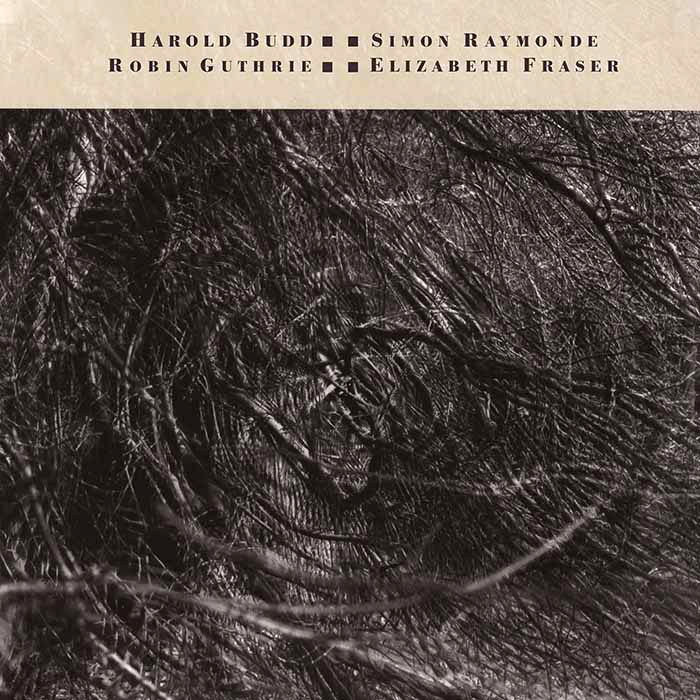
Graded on a Curve: Cocteau Twins and Harold Budd,
The Moon and the Melodies

The 1986 collaboration between dream pop cornerstone Cocteau Twins and ambient music innovator Harold Budd established a comingling of approaches that endures as a stylistic signpost for countless listeners who remain enchanted by the ethereal. That record, The Moon and the Melodies, has been remastered by Cocteau Twin Robin Guthrie from the original tapes for its first vinyl reissue since its initial release; then and now, the label responsible is 4AD.

Well received in the music press when first released, The Moon and the Melodies was a solid seller for what was essentially a hybrid of Budd’s avant-garde sensibility and Cocteau Twins’ post-punk lushness (dream pop as a genre didn’t exist yet). As 4AD has observed, the record has subsequently (and understandably) gathered a passionate following (it doesn’t seem to have ever been out of print on compact disc) as it essentially cleaves Cocteau Twins’ full-length output into two halves. It’s safe to claim it’s Budd’s highest profile work.

More interesting perhaps is that over time, critical viewpoints on The Moon and the Melodies have often settled into polite acceptance, with assessments that the album is fine but not amongst the highpoints in either Budd’s or Cocteau Twins’ catalogs. Some of this modest esteem possibly extends from the feelings of Guthrie himself, who said “it turned out more like four songs that sounded like us and four songs that sounded like him, which wasn’t really the plan” (it’s important to add that’s he’s not knocking the LP).

But so what if the two sides of this collaboration don’t gel seamlessly and flow forth as one entity across the set’s eight pieces. The Moon and the Melodies is still engaging from start to finish as it turned on a bunch of ’80s whippersnappers in Bauhaus t-shirts to Budd (in turn providing a gateway into ambient) and informed just as many high-end stereo snobs, who in the mid-’80s were devouring the work of Budd and Eno and Hassell, etc. for breakfast, that the Cocteau Twins should be taken seriously.

Read More »

Posted in The TVD Storefront | Leave a comment

Graded on a Curve: Kaleidoscope, Kaleidoscope

Although the one and only album recorded by the late-’60s Boricuan-Dominican outfit named Kaleidoscope has been reissued over a dozen times, the eponymous LP’s psychedelic comportment is diverse and solid enough to handle another pressing; this one’s due from the reliable folks at Guerssen on September 20. The limited kaleidoscopic color vinyl pressing of 207 copies has sold out during preorder, but the black wax is still available. Those attracted to the many manifestations of the global psych impulse who are unfamiliar with its grooves should contemplate grabbing copy of the standard edition before it’s gone as well.

Given the era’s fleeting but fervent preoccupation with the trappings of psychedelia, it really no surprise that numerous late-’60s bands took up the handle of Kaleidoscope. The band under review here shouldn’t (and once heard, won’t) be confused with the Los Angeles-based Kaleidoscope that featured David Lindley and Chris Darrow, nor will they be mistaken for the Kaleidoscope that was formed in London and later became the Fairfield Parlour.

This incarnation of Kaleidoscope came together from the dissolution of several prior rock acts, starting out in Puerto Rico with Frank Tirado on bass and vocals and Orly Vázquez and Pedrín García (a transplant from Spain) on electric guitars. Theirs is a story of multiple twists that’s well told by Enrique Rivas in the notes for Guerssen’s reissue, but in short, Dominicans Rafael Cruz and Julio Arturo Fernández joined on drums and organ, respectively.

The album was cut in the Dominican Republic in 1967 at Fabiola Studios, but it was the Mexican label Orfeon that released the record, or more precisely, pressed a tiny promotional edition in 1969 that’s become insanely expensive on the collector market in the decades since. The delay in release saw the band splinter, but Tirado and Cruz recruited new members and traveled to Mexico to promote the release, which has led to the occasional inaccuracy that Kaleidoscope is a Mexican band.

Read More »

Posted in The TVD Storefront | Leave a comment

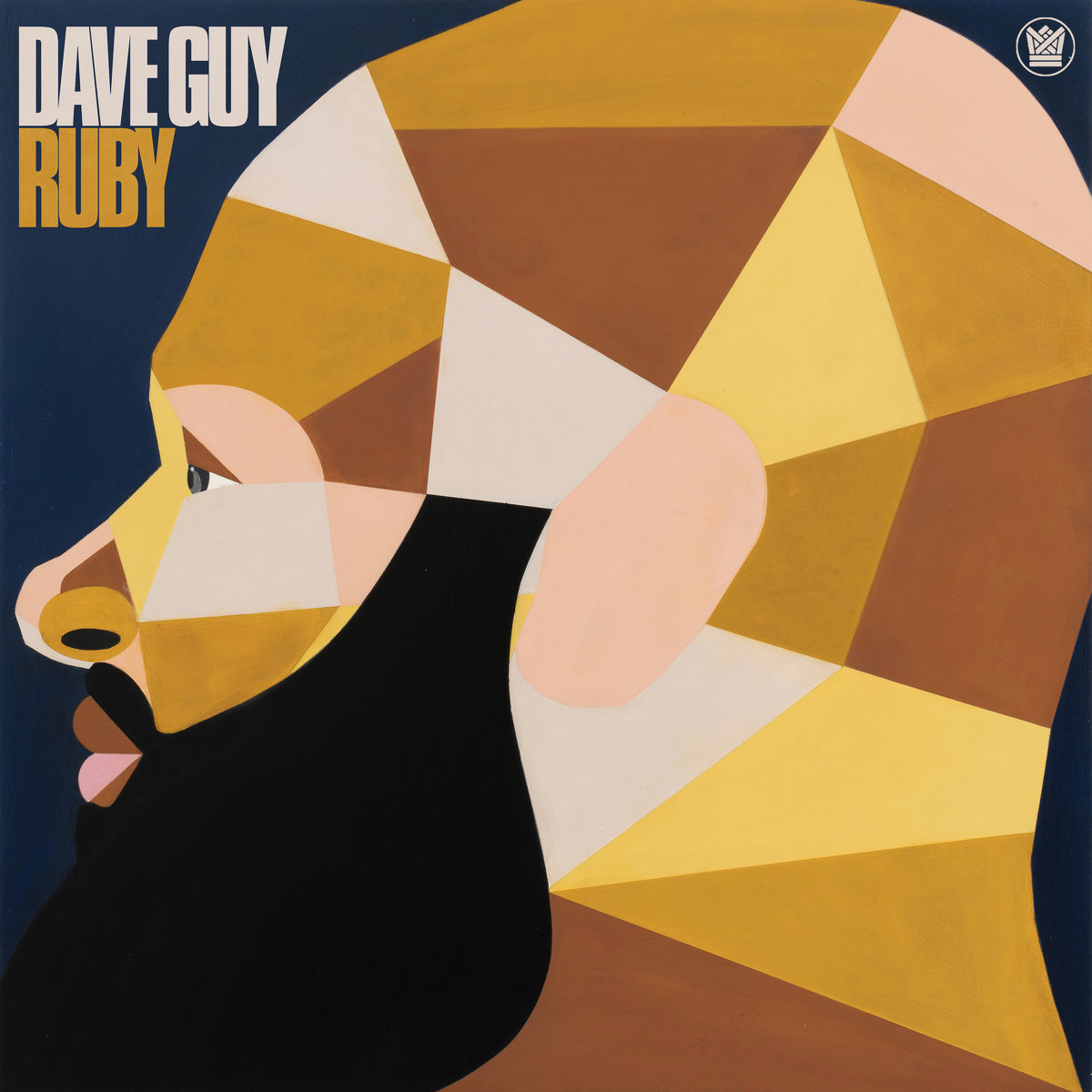
Graded on a Curve:
Dave Guy,
Ruby

Trumpeter Dave Guy is known for his session work (Amy Winehouse, Lee Fields, Al Green, numerous Mark Ronson productions) and as a member of The Dap-Kings. Currently, he plays in The Roots, but with the release of Ruby he steps into the spotlight on his own with a vibrant blend of jazz and soul. Savvy infusions of hip hop expand the already potent sound of a debut that’s historically rich as it delivers a contemporary punch. Ruby is available September 20 on vinyl (red or black), compact disc, cassette, and digital from Big Crown Records of Brooklyn, NY.

That Dave Guy has extensive music school experience (LaGuardia Performing Arts High School, Manhattan School of Music, the New School) is quickly discernible, as his playing possesses an abundance of sharpness that can really only be the byproduct of constant practice, along with an openness to learn and to make mistakes. Most of all, there’s the love of doing it.

But these qualities, while integral to Guy’s approach, need be accompanied with astute taste and solid decision making, particularly in regard to restraint. That’s is, Guy clearly has the chops, but he’s not about flash. Instead, he’s focused on sweetness of groove and mood. Nothing here is too smooth as hip hop is an obvious influence (Guy was playing in the live hip hop group Dujeous while attending LaGuardia) but not an outright style.

Opener “7th Heaven” has the slamming beats that have long been something of a Big Crown trademark. Guy’s jazzy trumpet lines are front and center, enhanced by pulsing synth, cascades of piano, and a supple but sturdy foundation of electric bass. Guy’s playing can at times insinuate a one-off 45 Art Farmer might’ve recorded for Mainstream in the early 1970s, but there is just as much that isn’t easily comparable to anything else, e.g. the crescendos of trumpet and wordless vocals.

Read More »

Posted in The TVD Storefront | Leave a comment

Graded on a Curve: The Temptations, Meet the Temptations, Diana Ross & the Supremes, Love Child, Marvin Gaye, In the Groove

Elemental Music Motown Sound Collection extends into September with three releases available on the 13th: a mono edition of Meet the Temptations, Diana Ross & the Supremes’ Love Child, and Marvin Gaye’s In the Groove, all on 140 gram virgin vinyl. Considerations of all three follow below.

After three years of trying, The Temptations finally scored a sizable hit. Side one of Meet the Temptations opens with that hard earned success, “The Way You Do the Things You Do”; side two begins with the song’s B-side “Just Let Me Know.” Filling out the rest of LP is nearly everything they released prior to that commercial breakthrough.

It’s worth noting that “(You’re My) Dream Come True,” written and produced by Barry Gordy, was a minor R&B hit for the group in 1962. Had Billboard not disbanded the R&B chart (apparently due to Motown’s haywire crossover success) from late November ’63 to January ’65, it’s very likely “The Way You Do the Things You Do” would’ve climbed to the top spot (it did hit #1 on the Cash Box R&B chart).

In large part due to the inclusion of that first sizeable hit single, and with the A-side marking the entrance of David Ruffin to the group (as Elbridge “Al” Bryant made his departure), the mono release of Meet the Temptations is an essential acquisition for any serious Motown shelf. But any assumptions that the rest of the LP is primarily of interest to vinyl fans with a heavy-duty Motown jones is off the mark, even if the more rudimentary material included does lack the consistency and refinement that marks The Temps’ sound moving forward.

Read More »

Posted in The TVD Storefront | Leave a comment

Graded on a Curve: Satoko Fujii Quartet,
Dog Days of Summer

In various configurations, from solo to duo to orchestra, pianist Satoko Fujii has amassed a prodigious and voluminous output, hitting the 100-album mark in 2022, and that’s only counting her work as a leader. Amongst all that achieving is the output of the Satoko Fujii Quartet alongside trumpeter Natsuki Tamura, bassist Takeharu Hayakawa, and drummer Tatsuya Yoshida. Jazz-rock is the group’s specialty, avant-garde friendly in its explorations as it avoids leaning too heavily into familiar aspects of fusion. After a long dormant stretch, they have reconvened for studio record number six, Dog Days of Summer, available on CD and digital September 13 through Libra Records.

When a band resumes activity after a lengthy break, it is often discovered that the spark of interactive creativity, i.e. the “magic,” is gone. The reasons vary, but a recurring issue is a desire, frequently unconscious, to recapture something comparable to what came before rather than breaking free of expectations in the true spirit of what made the endeavor worthwhile in the first place.

To be sure, the reunion blues are a rock-centric malady, but as the Satoko Fujii Quartet is a jazz-rock affair, and one that has returned to recording after a considerable layoff, the scenario applies. Of course, the opposing sides of the hyphen in the band’s formal hybrid are fairly pinpointed as avant-jazz and art rock, but the dangers of diminishing returns are still relevant.

Fujii is on the record as disinclined to recreate the Quartet’s earlier sounds. But understanding that saying and doing aren’t the same thing, Fujii’s aim is true, as Dog Days of Summer expands upon the band’s prior brilliance, establishing fresh possibilities from a familiar framework. Like many successful recommencements, Fujii and crew got back into the groove through live performance, playing first at the Shinuku Pit Inn in Tokyo and following with a four-city tour of Japan. Then, to the studio, as this album was recorded on April 8 of this year.

Read More »

Posted in The TVD Storefront | Leave a comment

Graded on a Curve:
BASIC,
This Is BASIC

BASIC is a fresh project featuring Chris Forsyth on guitar, Nick Millevoi on baritone guitar and drum machine, and Mikel Patrick Avery on percussion and electronics. Dispensing with vocals, the trio takes inspiration from a specific and fleeting strain of 1980s art-rock where creatively restless guitarists embraced technological advances that were generally associated with the new wave. There are elements of homage in BASIC’s sound but the emphasis is largely on intricate and precise weaves that are imbued with energy levels substantial and rocking. This Is BASIC is available now on vinyl, compact disc, and digital from the No Quarter label of Philadelphia, PA.

Amongst the outfits cited as influential to BASIC’s approach is the duo of Robert Fripp and Andy Summers. They cut a pair of albums, I Advance Masked in 1982 and Bewitched in ’84 that offer a solid baseline for the “prog-rock-gone-new-wave” sensibility that was extant for a good portion of the decade. Bill Bruford is also mentioned, which brings the ’80s incarnation of King Crimson front and center. While Adrian Belew’s Lone Rhino isn’t name checked in the text accompanying BASIC’s debut, that 1982 album is still quite relevant to BASIC’s mode of operation.

The thinking person’s supergroup French/Frith/Kaiser/Thompson gets listed as part of BASIC’s constellation of precedent, and surely some of the ’80s solo work of Fred Frith and Henry Kaiser is part of the equation as well, especially the former’s The Technology of Tears (1988) and the latter’s Devil in the Drain (’87), records both released in the USA by SST on which Frith and Kaiser both play the Synclavier.

One of Frith’s many bands was Massacre, the first incarnation of which featured Bill Laswell on bass and Fred Maher on drums. In 1984, Maher and guitarist Robert Quine recorded Basic, the album that provided this BASIC with its moniker, along with a groundbreaking and once ubiquitous computer coding language (hence the all caps).

Read More »

Posted in The TVD Storefront | Leave a comment

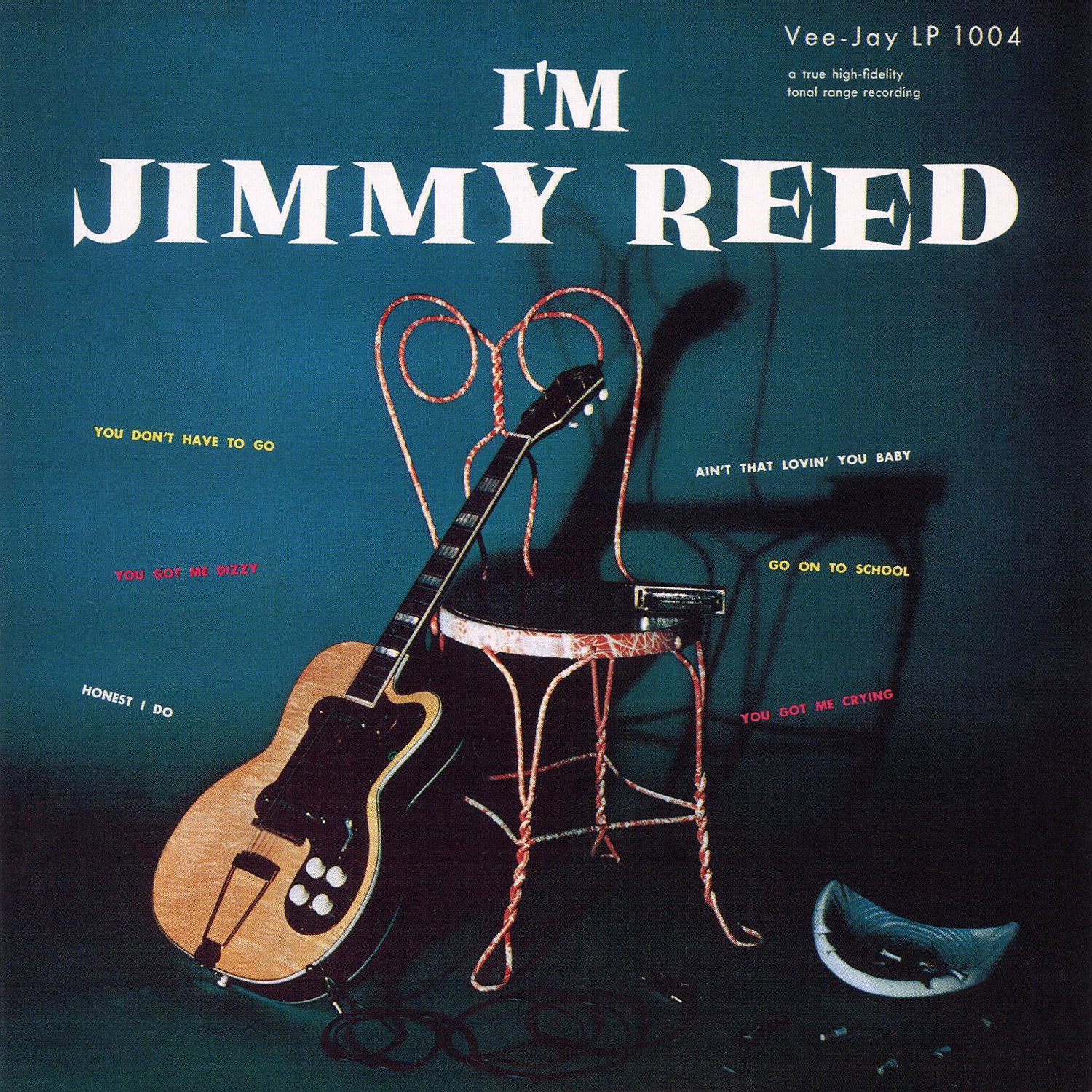
Graded on a Curve: Jimmy Reed,
I’m Jimmy Reed

Remembering Jimmy Reed, born on this day in 1925.Ed.

One of the first great electric blues LPs is titled I’m Jimmy Reed, and it’s loaded with twelve songs from one of the 1950s only true blues crossovers. Over half a century later it still holds up spectacularly well and additionally provides a solid contrast to the electrified delta sounds that poured out of the studio Chess during the same period.

Jimmy Reed’s blues is amongst the most accessible ever recorded in either the acoustic or electric permutations of the form. Master of a relaxed, natural style lacking in the rough edges that his contemporaries Muddy Waters, Howlin’ Wolf, and John Lee Hooker utilized with prideful relish, Reed’s stellar run of sides for the Vee-Jay label displayed how in the bustling post-WWII urban environment the blues could represent more than the power of the plantation transmogrified after traveling up the Mississippi River (Muddy, Wolf, etc.) or the horn-laden high strains of citified sophistication (Louis Jordan, Charles Brown, Tiny Bradshaw, Willie Mabon).

In contrast to Muddy, who instigated a booming ensemble sound that while impressively groundbreaking completely on its own terms would also prove an essential component in rock music’s ‘60s growth spurt, Reed was somewhat closer to the norm of a “folk-blues” player, offering up simple and often insanely catchy guitar figures and an unfussy, plainly sung (some might say sleepy) vocal approach with accents of trilling rack harmonica.

This shouldn’t infer that Reed engaged in any forced gestures of aw-shucks down-home authenticity, at least not in what’s considered his prime. Hell, one glimpse at the picture on I’m Jimmy Reed’s back cover presents a man of top-flight refinement and truly choice threads, and his image intersected with the sound of his records extremely well.

Read More »

Posted in The TVD Storefront | Leave a comment

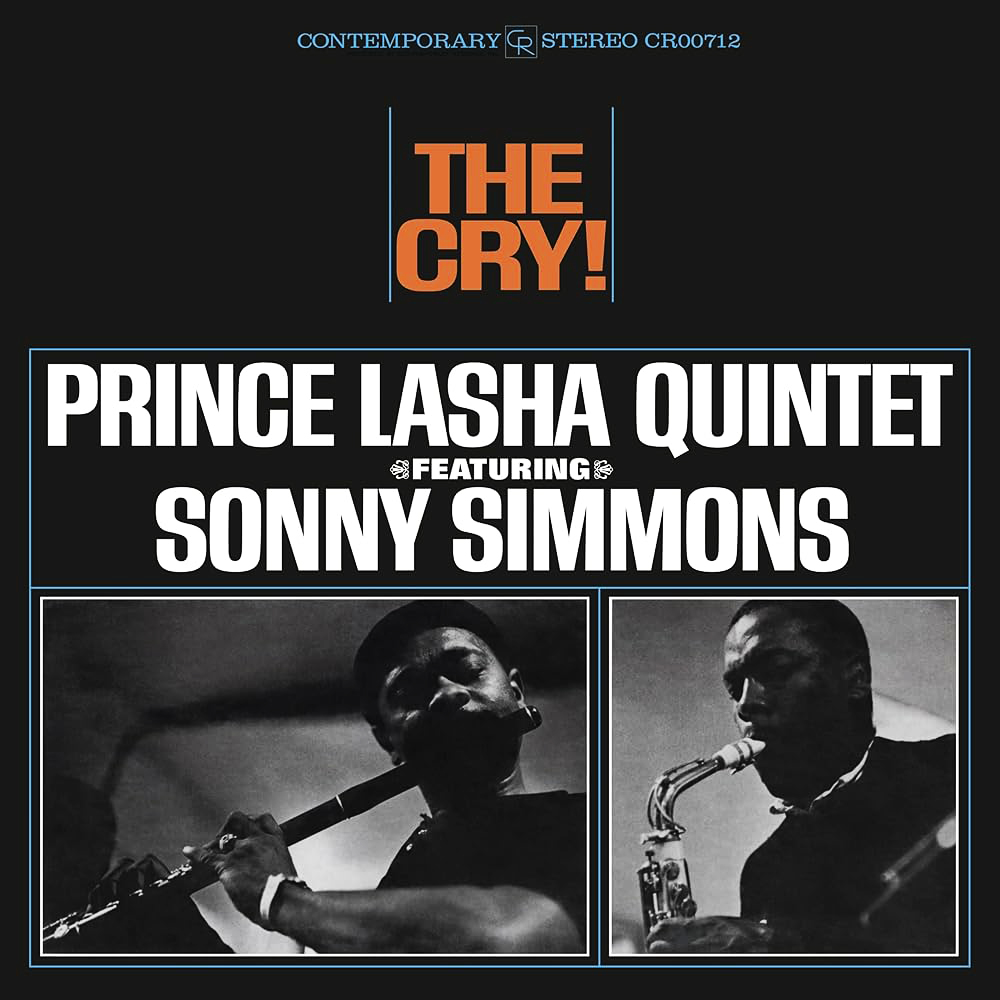
Graded on a Curve: Prince Lasha Quintet featuring Sonny Simmons, The Cry!

In the 20th century jazz discourse at it pertains to the West Coast of the USA, it’s the Cool sound that dominates. But what about the avant-garde? Freeform improvisational sparks did emanate from the Pacific Time Zone; a fine and occasionally overlooked example is The Cry! by the Prince Lasha Quintet featuring Sonny Simmons. Used copies aren’t frequent in the bins, so the fresh 180 gram edition due out September 6 is very welcome. It’s the latest entry in Craft Recordings Contemporary Records Acoustic Sounds Series.

Although the label’s primary focus was on recordings from inside the bebop continuum, Lester Koenig’s Contemporary Records has a sturdy if not extensive association with the jazz avant-garde, the label having released the first two LPs by saxophonist Ornette Coleman (Something Else!!!! from 1958 and Tomorrow Is the Question! from the following year) and a major early statement from pianist Cecil Taylor (Looking Ahead! from ’59).

Recorded in November 1962 and released the next year, The Cry! by the quintet of William Prince Lasha (pronounced La-shay) is a less celebrated entry in the avant corner of Contemporary’s catalog, but that’s easily attributed to the modest name recognition of Lasha and Simmons. The record is a fine example of how avant-jazz was reacting to Coleman’s innovations in the moments prior to Fire Music (as exemplified by Taylor, late period John Coltrane, Archie Shepp, Pharoah Sanders, and Albert Ayler) fully taking hold.

Lasha was a childhood friend of Coleman’s, so the influence runs deep. And while the relationship isn’t difficult to detect, the music on The Cry! is still quite distinguishable from what’s heard on Coleman’s Atlantic albums. This is in part due to a unique instrumental configuration. Multi-instrumentalist Lasha is heard exclusively on flute here, Sonny Simmons handles the alto sax, Gary Peacock and Mark Proctor are a double bass tandem (Proctor does lay out for three of the set’s eight selections), and Gene Stone is on drums.

Read More »

Posted in The TVD Storefront | Leave a comment

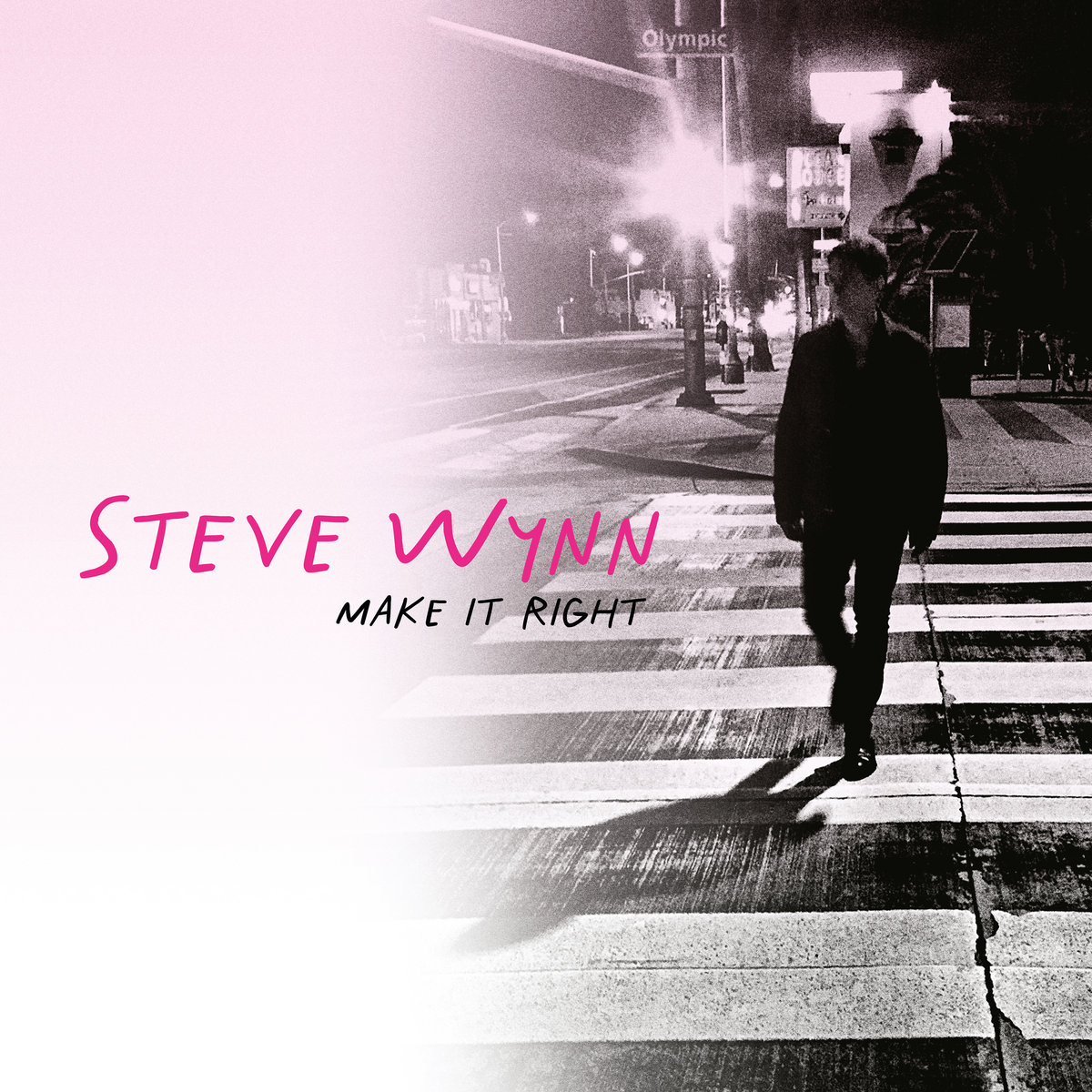
Graded on a Curve:
Steve Wynn,
Make It Right

Deservedly celebrated as a founding member of The Dream Syndicate, guitarist-vocalist-songwriter Steve Wynn’s solo output is extensive. Fresh out through Fire Records, Make It Right his first solo disc in a decade, the set coinciding with the publication by Jawbone Press of his memoir I Wouldn’t Say It if It Wasn’t True. Completed with a bevy of Wynn’s friends old and new, the ten songs share an engaging depth that’s a little rootsy but never retrograde. The record is out now on clear vinyl as a standalone item or bundled with the book and a limited edition silver foil leather bookmark. Compact disc and digital options are also available.

Given the size of Steve Wynn’s solo discography and the high regard in which it’s held, it might register as a wee bit inappropriate (or perhaps just overly predictable) to begin this review with yet another mention of Wynn’s key role in shaping The Dream Syndicate. Except it’s surely worth noting that The Dream Syndicate recommenced activity in 2012 with three albums recorded since. And with Wynn the memoirist clearly in reflective mode, it’s impressive that Wynn was disinclined to rest on his laurels.

Instead, he added to his workload by cutting a new record, and one that’s intrinsically tied to the process of writing I Wouldn’t Say It if It Wasn’t True. The list of contributors for Make It Right include numerous individuals who figure prominently in the story Wynn has told, including Dream Syndicate members Dennis Duck, Mark Walton, and Jason Victor.

There’s also Mike Mills of R.E.M., Vicki Peterson of The Bangles, Scott McCaughey of Young Fresh Fellows and The Minus 5, Chris Schlarb of Psychic Temple, Chris Ekman of The Walkabouts, Emil Nikolaisen of Serena-Maneesh, Rob Mazurek of Exploding Star Orchestra, and Linda Pitmon of Filthy Friends and The Baseball Project alongside Mills, McCaughey, and her husband Wynn.

Read More »

Posted in The TVD Storefront | Leave a comment

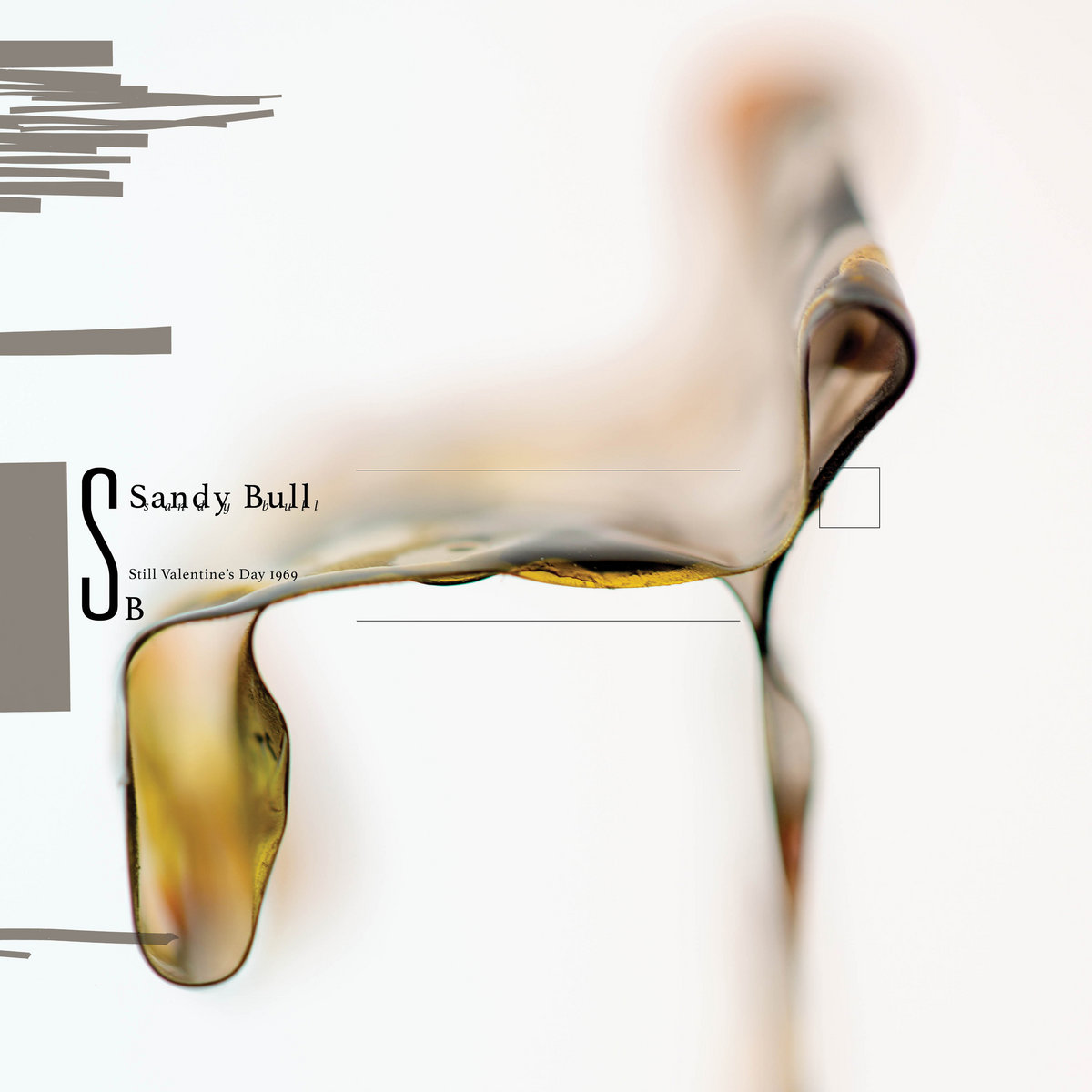
Graded on a Curve:
Sandy Bull,
Still Valentine’s Day 1969

Extending from a rich folky bedrock and influenced by classical, Middle Easten music and even rock & roll, Sandy Bull was an undersung master of the guitar and other stringed instruments including banjo, bass, oud, and pedal steel. Having passed in 2001 with a modestly sized but often masterful discography, his reputation has been boosted by posthumously issued live recordings. The first one to surface, Still Valentine’s Day 1969, documenting two shows at the Matrix in San Francisco, was initially released CD-only in 2006 but has just received a terrific new edition on 2LP with the original liner notes by Byron Coley. Fans of Bull’s Vanguard years who’ve pined to drop needle on this set have reason to rejoice.

Long rated as a player of exploratory brilliance who was unfortunately burdened with addiction problems, Sandy Bull is accurately assessed as an early fusioneer whose stylistic innovations steadfastly avoided exoticism; between his 1963 debut Fantasias for Guitar and Banjo and its ’65 follow-up Inventions (both issued by Vanguard), Bull contributed percussion to ’64’s Music of Nubia (also released by Vanguard), the first album by Nubian music master Hamza el Din of Egypt.

Inventions offers Bull’s first recordings on the Arabic stringed instrument the oud, but his inclination toward a raga synthesis is already pretty clear in “Blend,” a 22-minute piece extending across Fantasias’ first side. However, Bull’s approach was multifaceted and way ahead of the pack for the era, as the great jazz drummer Billy Higgins is the sole accompanist on Fantasias and Inventions.

As underscored by his instrumental version of “Memphis, Tennessee” (closing Inventions and serving as the penultimate track on Still Valentine’s Day 1969) Bull was averse to merely swiping a few formal moves in service of broadening his sound. Instead, he favored a transformational approach to Chuck Berry’s rock & roll staple while retaining a sense of familiarity. This extends to 1969’s E Pluribus Unum, a wonderful shift into extended psychedelic environments with a deeper emphasis on electric guitar (a part of Bull’s arsenal from the beginning) that’s never simply taggable as rock.

Read More »

Posted in The TVD Storefront | Leave a comment

Graded on a Curve:
Clark Terry Quartet
& Thelonious Monk,
In Orbit

Pairing the almost ludicrously prolific trumpeter-flugelhornist Clark Terry with sui generis piano master Thelonious Monk, In Orbit is an impressive and frequently overlooked album, particularly because it marks Terry’s debut on flugelhorn and is Monk’s only sideman credit for Riverside (the label that propelled him to jazz stardom). Bassist Sam Jones and drummer Philly Joe Jones complete the band. A fresh edition of the album adds yet another gem to Craft Recordings’ Original Jazz Classics series as it’s currently unfolding, available August 30 on 180 gram vinyl.

To absorb the entirety of Clark Terry’s discography is a herculean task; much more sensible is to simply begin with a highly regarded album, preferably from early in his career, and then just roll from there. Two big hunks of Terry’s recorded work capture him in support of celebrated bandleaders Count Basie and Duke Ellington; that’s where a lot of ears get hip to the guy and then branch out to Terry’s own smaller group stuff, which began with a self-titled septet album released by EmArcy in 1955.

It was reportedly Monk who recommended Terry to Orrin Keepnews at Riverside. Monk began recording for the label in 1955. Terry’s first Riverside LP, Serenade to a Bus Seat, followed two years later. As said above, Monk’s alliance with the company pulled him from the jazz margins to the forefront of the scene as that Time magazine cover loomed in the distance. In Orbit being Monk’s sole sideman date for Riverside isn’t unusual; given the nature of his style, it’s actually surprising Monk cut a sideman date at all, at least until Monk and Terry’s relationship, musical rather than personal, is contemplated.

For starters, there is Thelonious Monk Plays Duke Ellington, the pianist’s first album for Riverside. Released in 1955, it was the first of two LPs dedicated to standard material that Monk cut with the intention of building his reputation beyond and easing him into greater public awareness. It worked, as Monk’s playing is sublime.

Read More »

Posted in The TVD Storefront | Leave a comment
  • SUPPORTING YOUR LOCAL INDIE SHOPS SINCE 2007


  • Alternative Text Alternative Text Alternative Text Alternative Text Alternative Text Alternative Text Alternative Text Alternative Text Alternative Text Alternative Text Alternative Text Alternative Text Alternative Text Alternative Text Alternative Text Alternative Text Alternative Text Alternative Text Alternative Text Alternative Text Alternative Text Alternative Text
  • Alternative Text Alternative Text Alternative Text Alternative Text Alternative Text Alternative Text Alternative Text Alternative Text Alternative Text Alternative Text Alternative Text Alternative Text Alternative Text Alternative Text Alternative Text Alternative Text Alternative Text Alternative Text Alternative Text Alternative Text Alternative Text Alternative Text Alternative Text Alternative Text Alternative Text