Author Archives: Joseph Neff

Graded on a Curve:
Fred Schneider,
Just…Fred

Celebrating Fred Schneider in advance of his 71st birthday tomorrow.Ed.

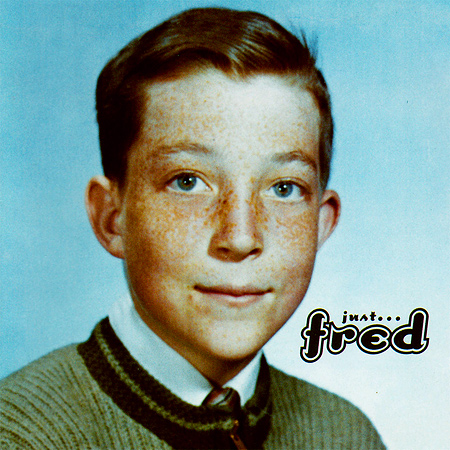
Fred Schneider is famous for his work in The B-52’s, but over the years he’s also released a pair of solo LPs, the second of which found him in some unexpected company and delivering a set of pumped-up, punked-out mania. But ‘96’s Just…Fred isn’t really an outlier in the man’s discography, standing instead as a brief manifestation of an alternate career possibility that also reinforces how the ‘90s produced all sorts of unusual musical documents. The record’s charms could easily encourage a little bit of the ol’ pogo and might even inspire a few appropriate laughs, so in the end it’s very much a part of Schneider’s MO.
I can still remember quite clearly the reaction of certain friends and acquaintances over the arrival of Just…Fred, the out-of-nowhere solo record from instantly recognizable vocalist Fred Schneider. The general idea expressed by these folks was that in deciding to record an LP with a certain highly opinionated and defiantly indie-minded producer and a bunch of oft-noisy underground rockers as his backing, Schneider had suddenly, out of the blue, gotten “hip.”

To put it kindly, that assessment only made any kind of sense if one’s historical perspective spanned back to around 1988 or so. To put it less kindly, it was simply malarkey, a belief wrapped up in denigrating The B-52’s mainstream breakthrough Cosmic Thing and its smash hit single “Love Shack” as unworthy of any serious consideration.

That song’s ability to cross nearly any kind of social lines in its soundtracking of celebrations of all sorts has almost turned it into a cultural inevitability. If you’ll be attending a wedding party any time soon, the smart money is on hearing “Love Shack,” and maybe more than once. The groom’s grandma might even start a conga line. In this writer’s perception the tune has become so associated with revelry that imagining a person listening to it while alone in their abode, simply sitting in a chair and perhaps eating an apple, seems rather ridiculous.

Read More »

Posted in The TVD Storefront | Leave a comment

Graded on a Curve: Psychic Ills &
Gibby Haynes,
FRKWYS Vol. 4.5: Nowhere in the Night

‘twas back in 2010 that Psychic Ills of NYC took part in Vol. 4 of RVNG Intl.’s FRKWYS series of intergenerational collaborations. The resulting three track EP offered remixes by Juan Adkins (pioneering Detroit House producer/DJ), Hans-Joachim Irmler (founding member of Krautrock kingpins Faust), and Gibby Haynes (founding member of Texas psychedelic punk maniacs Butthole Surfers). Released with the intention of honoring the life of Psychic Ills guitarist-vocalist Tres Warren, who passed in March of 2020, FRKWYS Vol. 4​.​5: Nowhere in the Night holds a full studio session between Psychic Ills and Haynes. It’s available now on vinyl in an edition of 400 copies.

The collaboration documented on FRKWYS Vol. 4​.​5 stems from solid roots, as Psychic Ills and Butthole Surfers were touring partners in 2009, a connection that went so swimmingly it spurred the request for that remix from Haynes for FRKWYS Vol. 4 (the track getting mixed; “I Take You As My Wife Again” from Psychic Ill’s second full-length, 2009’s Mirror Eye), with Haynes’ handiwork oozing an unsurprising and highly attractive fuckedness, so that a full-on studio shindig with the tape rolling was all but inevitable. The gathering took place in 2010 between 10pm on February 4 and 4am the next day.

Psychic Ills debuted in 2003, so by the six hour stretch that spawned Nowhere in the Night they were far from greenhorns, though RVNG Intl.’s intergenerational objective is fully realized on the recording, as those Buttholes released their first record in 1983, 20 years prior to Psychic Ills’ formation, when Tres Warren was roughly five years old.

But the connection between Haynes’ work in the Surfers, which helped to bring psychedelia into close contact with punk-era racket, and Psychic Ills’ own brand of heavy, at times experimental, and occasionally Krautrock-informed psych, is strong on Nowhere in the Night, and right away in the opening cut “No Way,” with its ominous pulse-throb, reverb drenched faux-Eastern guitar, and the spoken voice loop of the title phrase.

Read More »

Posted in The TVD Storefront | Leave a comment

Graded on a Curve: Arthur Brown,
Long Long Road

Arthur Brown…the very mention of the name conjures images of demonic bellowing and flaming headgear (see above). For those unfamiliar, ‘twas he who belted out “Fire,” one of the wildest leftfield hits of the 1960s as leader of The Crazy World of Arthur Brown. Often called a one hit wonder, he subsequently achieved much of interest, with Long Long Road his latest, out now on vinyl (red or black), in a 2CD set + hardback book, and in a limited box set that includes 180 gram vinyl (orange marble) in a gatefold sleeve, the 2CD + book, a bonus 7-inch, a wall flag, four art prints, and a numbered certificate of authenticity signed by Brown, all via Prophecy Productions and Magnetic Eye Records.

Released in 1968 on Kit Lambert’s Track Records in the UK and Atlantic Records in North America, The Crazy World of Arthur Brown’s eponymous debut LP is one of the stranger records of its era, but even more twisted is its 1969 follow-up Strangelands, so bent in fact that it didn’t come out until 1988, courtesy of the Reckless label of the UK.

Not long after, Brown split to form Kingdom Come and released three albums, Galactic Zoo Dossier (1971), its title the inspiration for the excellent psychedelic zine by Plastic Crimewave (aka Steve Krakow), Kingdome Come (1972), and Journey (1973), all compiled by Esoteric Recordings with plenty of bonus stuff into a 2021 CD box set Eternal Messenger (An Anthology 1970-1973).

Note that after Brown left The Crazy World, the rest of his band became Rustic Hinge, a mostly instrumental outfit influenced by Captain Beefheart. Their terrific sole recording, with Brown singing on one track, was issued long posthumously in 1988 by Reckless as Replicas (and with most of it added to the CD releases of Strangelands).

Read More »

Posted in The TVD Storefront | Leave a comment

Graded on a Curve:
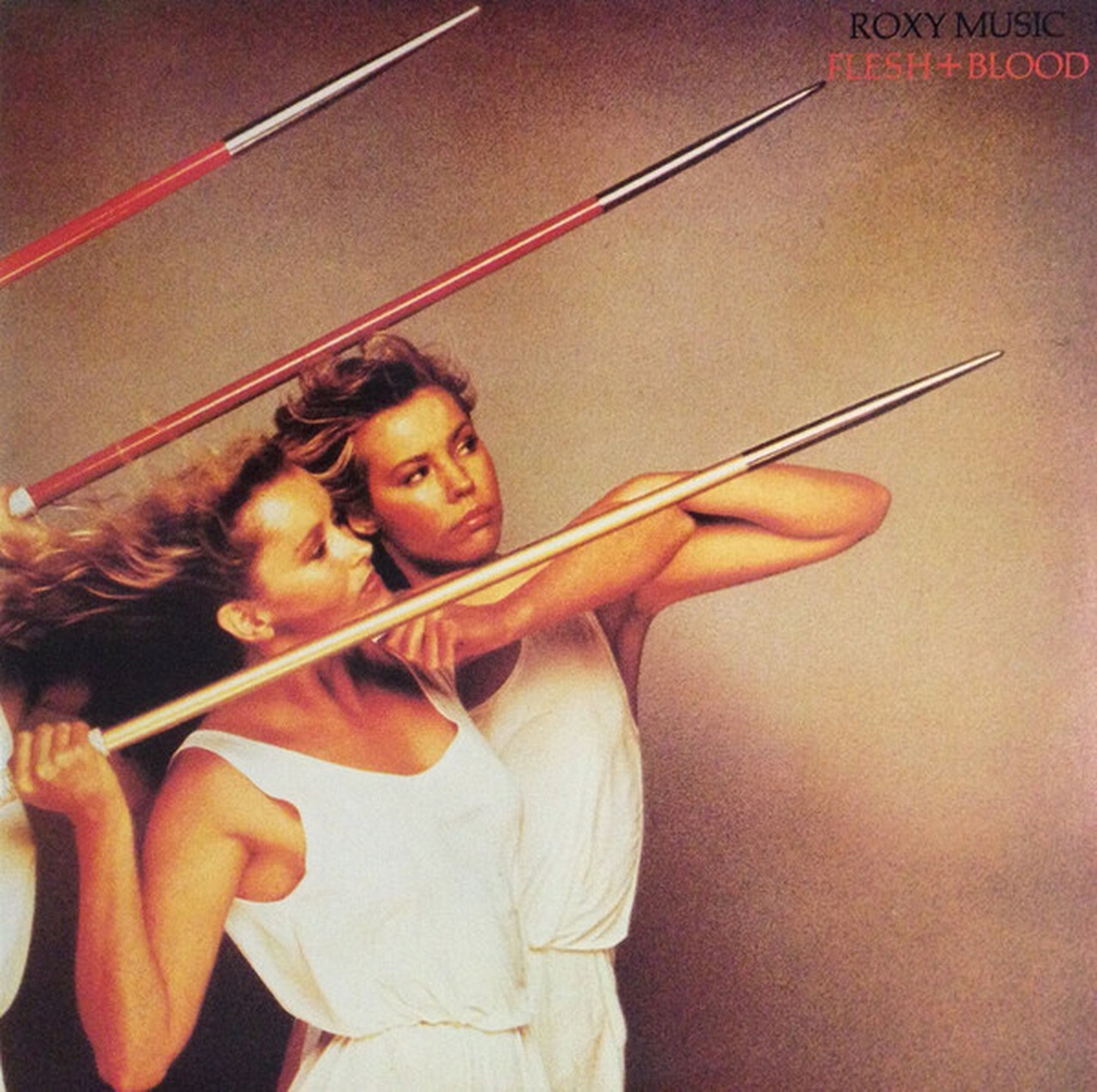
Roxy Music,
Flesh + Blood, Avalon

We conclude our series spotlighting Virgin and UMe’s fresh reissues of Roxy Music’s studio discography with the last two in the chronology, Flesh + Blood (1980) and Avalon (1982), both available July 1, and don’t forget; the entire run is offered as half-speed masters. Taken together, this final pair of LPs effectively represent the band’s late period, while simultaneously presenting a contrast in quality.

After dishing a remarkably consistent span of albums between 1972-’79, Roxy Music began the ’80s with something of a creative stumble. While acknowledging that the band’s studio work is often divided into three distinct phases- the S/T debut and For Your Pleasure (i.e. the Eno-era), followed by Stranded, Country Life and Siren (the only three with a stable lineup), and last, Manifesto and the two under review here (the post-hiatus LPs), it’s also useful to isolate the last two, largely because of the obvious streamlining alongside Roxy’s breaking away from a few of their established discographical patterns.

Foremost, Flesh + Blood opens with a version of Wilson Pickett’s “In the Midnight Hour,” the first of two covers on the album, additions that can’t help but suggest a scenario nearer to what Ferry was up to on his covers-dominated solo albums; please understand that no other Roxy studio LP features any material that wasn’t at least co-written by Ferry. It’s a development insinuating a shortage of ideas on the singer’s part, if not the band’s, as three of Flesh + Blood’s songs were co-penned by guitarist Phil Manzanera.

Roxy once made a habit of bursting forth energetically on their albums, but with drummer Paul Thompson gone, a departure that tightened the core lineup to a trio of Ferry, Manzanera and saxophonist Andy Mackay, the music became firmly rooted in the zone of pop refinement. That is to say, “In the Midnight Hour” is given a decent enough treatment, but it’s notably lacking in soul grit.

Read More »

Posted in The TVD Storefront | Leave a comment

Graded on a Curve: Horace Andy,
Midnight Rocker

With a career spanning back to the late 1960s and a creative breakthrough early in the decade following, vocalist and songwriter Horace Andy is one of reggae’s most respected figures, with his artistry persevering into the current moment largely in connection with UK trip hoppers Massive Attack. Well, Andy has a fresh album in the racks, and don’tcha know Midnight Rocker was realized with producer Adrian Sherwood? Released on the Prisoner’s label On-U Sound, the experience is fully up to snuff, it’s ten songs available now on vinyl, CD, and digital.

Having recently scored a major success in collaboration with the preeminent reggae survivor Lee “Scratch” Perry (two albums, Rainford and its dub companion Heavy Rain, both issued in 2019), Adrian Sherwood follows a similar path with Midnight Rocker, which has its own album of dub versions to come, hopefully released later this year.

Obviously, the vital component here isn’t Sherwood but Andy, who’s in fine voice throughout. To clarify, Sherwood’s presence is certainly felt across the album, adding value along the way, but his input serves the songs, or better said, Andy’s voice, rather than overtaking them, which is worthy of note given that dub techniques are already a significant part of the album’s scheme.

Midnight Rockers has a few fresh recordings of songs well-known from Andy’s repertoire, namely opener “This Must Be Hell” (from 1978’s Natty Dread a Weh She Want), side one’s finale “Materialist” (from a 1977 single), “Rock to Sleep” (from a 1976 single), and closer “Mr. Bassie” (from a 1972 single). While the impulse to re-cut established songs is largely considered a suspect maneuver inside the realms of rock and pop, there’s really no such danger in the reggae field, which (similar to the jazz scene) is simply versions galore.

Read More »

Posted in The TVD Storefront | Leave a comment

Graded on a Curve:
Noori & his Dorpa Band, Beja Power!

With the release of Beja Power! Electric Soul & Brass from Sudan’s Red Sea Coast, the track record of Vik Sohonie’s Ostinato Records remains unimpeachable, at 14 releases quite the impressive feat. This latest set, available June 24 on 180gm black vinyl and digital, features six highly pleasurable selections by Noori & his Dorpa Band, a contemporary outfit from the region of the title, and specifically Port Sudan, which is located on the eastern side of their home country. Like so much of the music released by Ostinato, it is a revelation made all the more powerful through its relationship to the present.

The reason the music on Beja Power! is so revelatory is directly political in nature. In short, the Beja people’s home territory in Eastern Sudan is rich in gold, with the rights having been long ago sold off to foreign companies. What’s more, numerous Sudanese governments have not just ignored Beja’s calls to right this injustice, but under leader Omar al-Bashir (ousted in 2019, though little has changed), there were calculated attempts at erasing Beja language, music and culture. In turn, this release is an act of political defiance.

The Dorpa Band, formed in 2006, consists of Naji on tenor sax, Gaido on bass, Tariq on rhythm guitar, Fox on congas, and Danash on tabla, with Noori the leader playing the Tambo-Guitar, a one-of-a-kind instrument, pictured on the album’s cover, that Noori made by fusing the neck of an standard electric guitar to an electric tambour, a traditional instrument found in East Africa.

The Beja people trace their ancestry back thousands of years, with some historians claiming they are descendants of Ancient Egypt and the Kingdom of Kush. And yet, there are hardly any recordings of the Beja that have survived. Ostinato’s release is indeed the first recording of the Beja sound that’s been made internationally available, issued in part to bring attention to Beja people’s insistent plight.

Read More »

Posted in The TVD Storefront | Leave a comment

Graded on a Curve:
Roxy Music,
Stranded, Country Life, Siren, Manifesto

Virgin/UMe’s reissue program covering all eight studio albums by Roxy Music is well underway. We covered the initial installments here, and below are hindsight considerations of Stranded (1973), Country Life (1974), Siren (1975), and Manifesto (1979), all out now. And hey, Flesh and Blood (1980) and Avalon (1982) are scheduled to arrive July 1 (separate review to come), with the entire bunch offered as half speed masters. Also of note: the first two are already sold out in the online store at the band’s website, so anybody perched atop the fence on whether to purchase should come to a decision with due haste.

After the release of For Your Pleasure in March of 1973, Brian Eno up and quit Roxy Music. It was Eddie Jobson, formerly of Curved Air, who filled the vacated synthesizer position. He additionally played keyboards and electric violin on the band’s third album, Stranded, which was released in November of 1973, hot on the heels of its predecessor.

I’m guessing many fans rued Eno’s departure at the time and for a long while after, but it was an essentially unavoidable circumstance in combination with another rising inevitability, specifically Ferry’s settling into the role of Roxy’s frontman (rather than merely their lead singer) hot on the heels of recording his debut solo record, These Foolish Things, which was released in October of ’73.

Stranded was a smash in the UK, hitting the top spot on the album chart as it initiated the rise of Roxy’s profile in the US (climbing to a modest 186 on the Billboard 200). The LP showcases Ferry’s utter confidence as a rocker straight away in the opener “Street Life,” and then follows it with a lighter touch in the piano-based balladry of “Just Like You.” Deeper in the sequence, the man gets his croon on in “Serenade” and “Mother of Pearl.”

Read More »

Posted in The TVD Storefront | Leave a comment

Graded on a Curve:
New Releases from
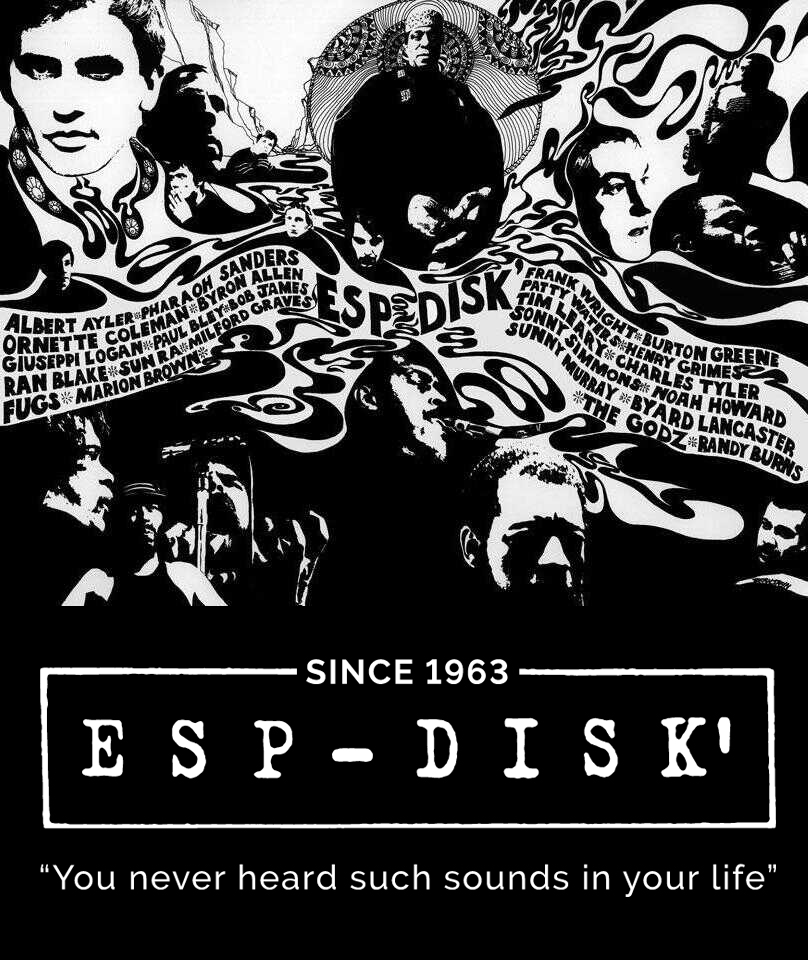
ESP-Disk

June 17 is new release day for ESP-Disk, the New York City-based label that has, with a few stops and starts, been specializing in free jazz, fringe folk, and twisted psychedelia since 1963. To get specific, the recordings are World Construct by the Matthew Shipp Trio (CD), Love in the Form of Sacred Outrage by WeFreeStrings (CD), and Bond Wire Cur by Raymond Byron (LP). All three are covered below, along with some words on Just Justice by Jones Jones (CD), which the label has staggered for release on June 24.

By 1963, a few noteworthy independent labels had already made their mark, but ESP-Disk, started by the late NYC lawyer Bernard Stollman (and currently managed by Steve Holtje), initially to issue music with connections to the international language Esperanto (no, ESP doesn’t stand for Extrasensory Perception), is the first underground label. ESP-Disk’s growth coincided with the emerging counterculture, but the output was far too uncompromising to ever be assimilated into the mainstream.

The ESP-Disk roster is almost entirely comprised of heavyweights, even on the folky side of the spectrum. And so it remains, as the label is admirably invested in releasing new music that extends the u-ground tradition set in motion by Albert Ayler, Marion Brown, Frank Wright, Charles Tyler, Frank Lowe, Patty Waters, The Holy Modal Rounders, Pearls Before Swine, The Fugs, Godz, and Erica Pomerance.

It signifies ESP-Disk’s continued relevance that piano titan Matthew Shipp is amongst the contemporary artists recording for the label. He’s also one of the most prolific. And the man’s output is so voluminous that his ESP stuff is only a portion of his recent activity. By my count (and I’m very likely missing one or two), World Construct is the fourth release of 2022 with Shipp’s name on it, and there is definitely more to come.

Read More »

Posted in The TVD Storefront | Leave a comment

Graded on a Curve:
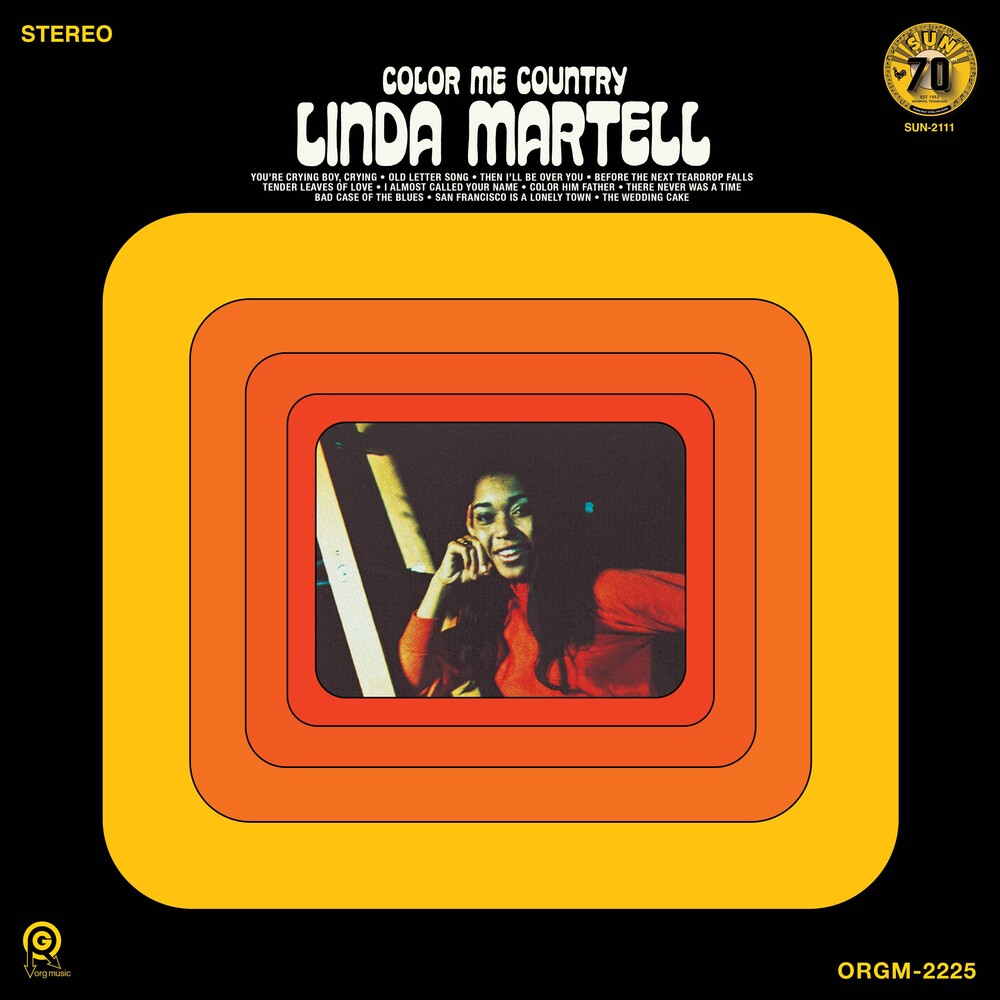
Linda Martell,
Color Me Country

Linda Martell is noted as first Black female artist to play the Grand Ole Opry, doing so 12 times, an achievement spurred by the release of her full-length album Color Me Country. Originally issued by Shelby Singleton’s Plantation label in 1970, the LP is getting a deserved reissue by ORG Music on transparent orange vinyl in a limited edition of 2,000 copies for Record Store Day on June 18. While the album falls short of the masterful, that’s not due to any deficiencies on Martell’s part, as she’s in strong voice throughout. The bottom line is that any fan of old-school non-saccharine country music should consider this record a fine addition to their shelf.

Color Me Father’s limitations in terms of quality mainly rest on the shoulders of producer Shelby S. Singleton. Having taken a calculated risk in promoting Martell as a country artist (she just as easily could’ve sang R&B, a style in which she had experience), he then decided to play it a little safe. But what the album lacks in top tier brilliance is significantly counterbalanced by a no-nonsense approach that puts Linda Martell’s skills front and center, and with nary a hint of novelty once the needle hits the groove.

To expand on the subject of novelty a bit, the record’s title surely does reference Martell’s skin color, but it’s also directly related to her C&W chart hit cover version of The Winstons’ R&B/pop smash “Color Him Father,” her first single, so it’s not as bluntly underlining the singer’s unique stature as it might seem. And the title of the album is far less suspect than the name of Singleton’s label, with Plantation a problematic handle not just in retrospect, as Martell has stated she had misgivings over it at the time.

But the playing it safe mentioned above isn’t as injurious to Color Me Country as it might sound, since the musical objective was to solidify Martell as a legit C&W talent. Opener “Bad Case of the Blues” should convince doubters with a quickness, as she hits the right level of vocal sass amid the pedal steel and fiddles, and she even dishes some yodeling for good measure.

Read More »

Posted in The TVD Storefront | Leave a comment

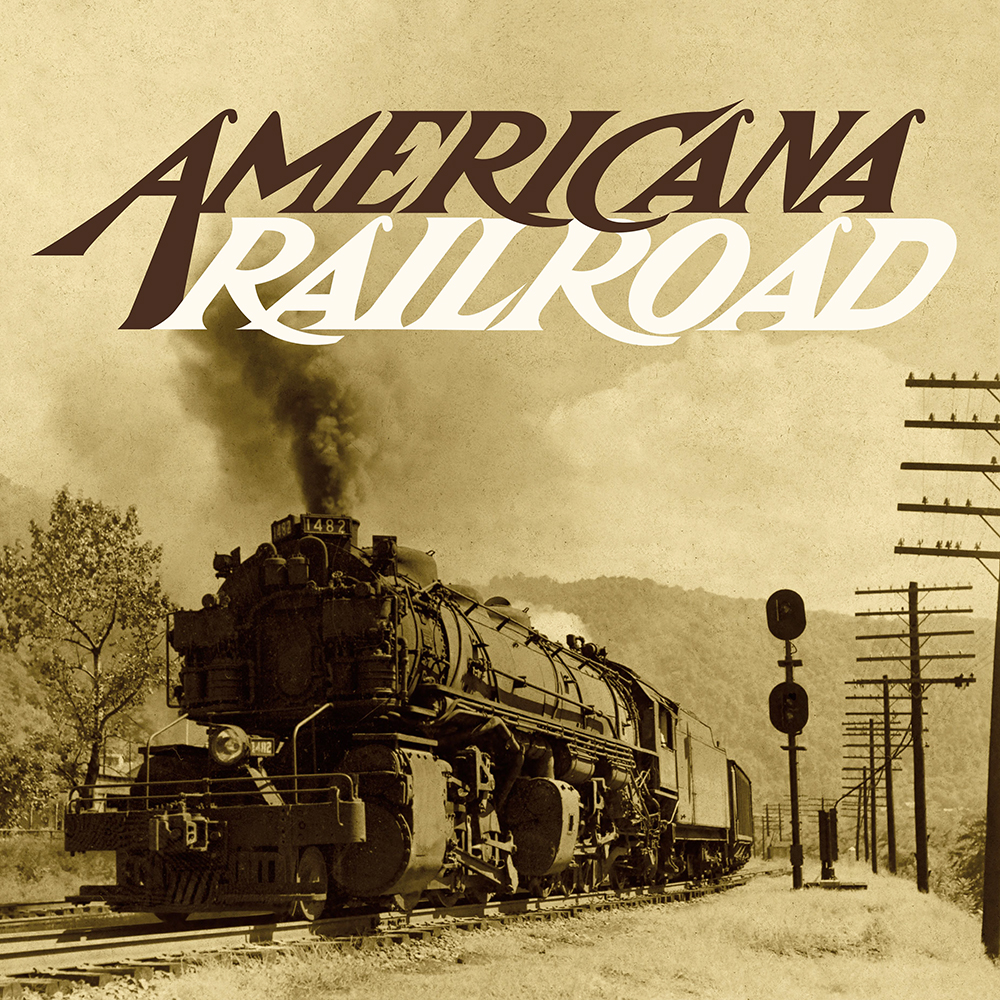
Graded on a Curve: VA, Americana Railroad

Released on double vinyl in a limited edition last November for Record Store Day Black Friday (with copies still available in stores), the compilation Americana Railroad arrives on compact disc and digital June 17 via Renew/BMG. Per the title, the collection’s dual focus is songs in celebration of trains from inside the idiom of contemporary Americana. Working in the comp’s favor is an approach that’s wider, and often louder, than the norm, and if it’s not a knockout overall, the album’s pleasures are surprisingly consistent as the train theme avoids the clichéd with a few surprising twists throughout.

Americana Railroad is the realized ambition of coproducers Saul Davis and musician Carla Olson, she a solo artist and frequent collaborator who started out in the dawn of the 1980s in the Textones. Their album offers three tracks by Olson, two of them in duo with Stephen McCarthy of The Long Ryders, “Here Comes That Train Again,” a McCarthy original, opening the record with a sturdy dose of rocking alt-country, and “I Remember the Railroad,” a tune by Byrds co-founder Gene Clark (from his 1973 album Roadmaster) serving as the set’s richly trad-C&W finale, complete with mandolin and fiddle.

Speaking of Clark, his song “Train Leaves Here This Mornin’,” a co-write with Bernie Leadon that debuted on The Fantastic Expedition of Dillard & Clark in 1968, is here in a solid version by his son Kai Clark. And Clark the father, who passed in 1991, has connections to Olson as they cut the duo album So Rebellious a Lover back in 1987. Deepening the ties to the Byrds, John York (who guests on Olson’s 2013 album Have Harmony, Will Travel) contributes a cover of John Stewart’s “Runaway Train” (a big hit for Rosanne Cash).

Olson’s third cut, which opens side four, is in duo with Brian Ray, who’s noted for extensive session credits, live work with Etta James and Paul McCartney, plus solo albums. They tackle “Whisky Train,” the opening cut from Procol Harum’s 1970 album Home, a hard rocker that stays true to the original while oozing contempo flair. Of Olson’s selections, it’s the one I dig the least, though it does underscore the range of material on Americana Railroad, and those who appreciate the original should be pleased with the duo’s treatment.

Read More »

Posted in The TVD Storefront | Leave a comment

Graded on a Curve:
Frank Sinatra,
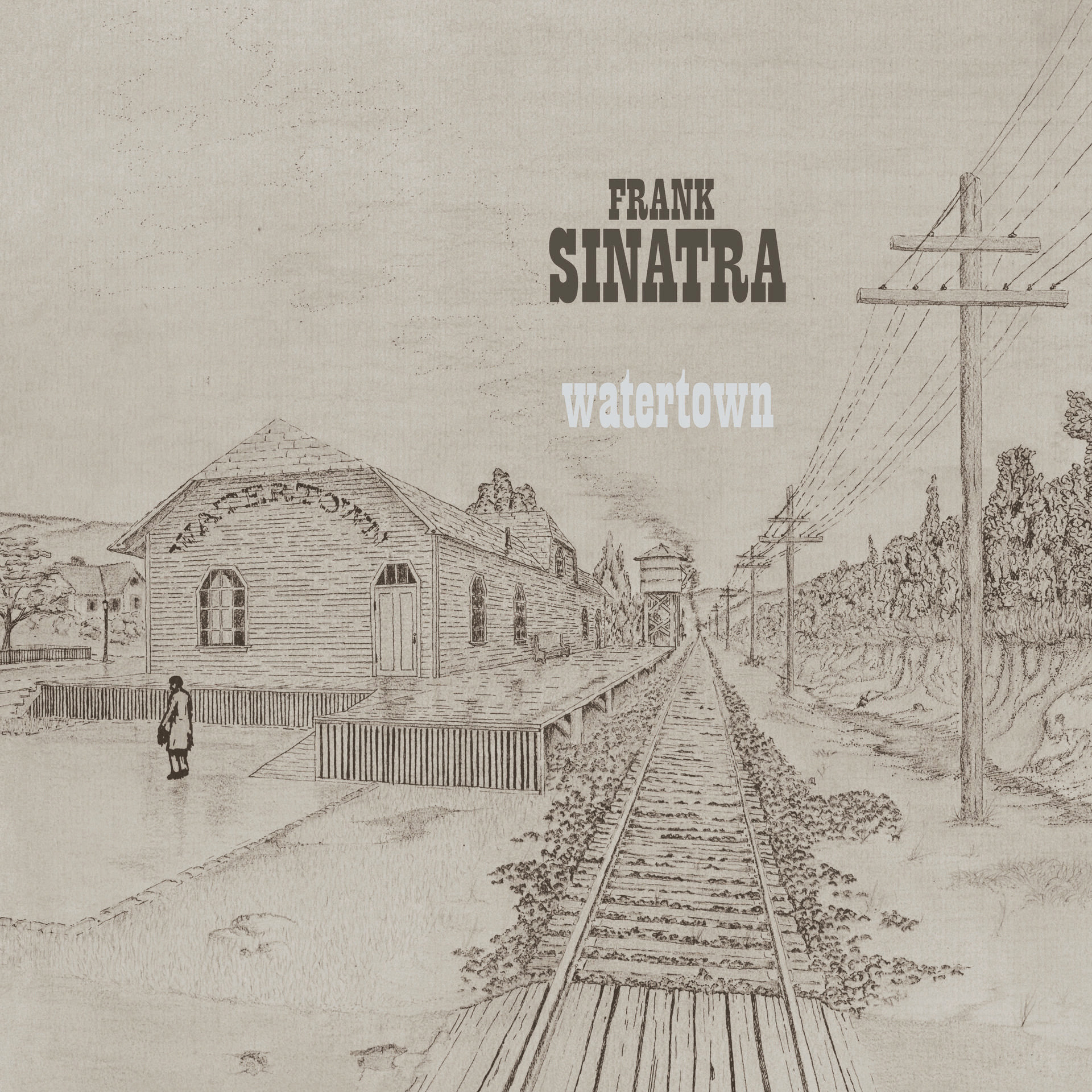
Watertown

When it comes to pop music icons, they don’t come much more durable than Frank Sinatra. So it remains, as the singer has accumulated fans who weren’t even alive in 1998, the year of his passing at 82 years of age. And as an influential and revered figure, the majority of his artistic output (on record and on celluloid) is well-known; an exception is Watertown, the concept album he released in 1970 with the help of Bob Gaudio of the Four Seasons and Jake Holmes (the writer of “Dazed and Confused”). Don’tcha know it’s some folks’ favorite album by the guy? Deserving of reissue, it’s out now on LP with a new mix and on CD expanded with bonus tracks through UMe and Frank Sinatra Enterprises.

A pop icon, but also a pop idol in his youth, Frank Sinatra had the kids screaming. And one barometer of 20th century pop icon/idol status is that those on the list didn’t just cut records, they made movies. Bing Crosby, Frank, Elvis Presley, The Beatles (notably, the only band in the bunch), and Michael Jackson: they all interacted to varying extents with the film industry, as the careers of all but Jackson hit their high points in the pre-music video era (and Jackson was arguably the defining artist across the short heyday of music video).

The content of the above paragraph is the stuff books are made of, so let’s rein it in. The short of it; fans clamored to see these icons/idols on big screens, larger than life. What makes Sinatra somewhat unique is how he continued making films long after the screaming subsided, and in fact that’s where his most interesting movie work is located. Forget about the Rat Pack flicks, we’re talking Guys and Dolls (Joseph L. Mankiewicz, 1955), The Man With the Golden Arm (Otto Preminger, 1955), the sublime Some Came Running (Vincente Minnelli, 1958), and The Manchurian Candidate (John Frankenheimer, 1962).

Make no mistake, Sinatra also starred in some crap (more crap than gems, honestly), but what’s noteworthy here is that he was ever even inclined to make a handful of films possessing substantial artistic merit, a circumstance that also applies to his recording career circa 1970. A year earlier, he’d somewhat unexpectedly scored a hit with “My Way.” Instead of playing it safe, he took a risk with Watertown, though it’s fair to say that working with Gaudio and Holmes (the co-writers of the album) likely didn’t register as commercially precarious at the time.

Read More »

Posted in The TVD Storefront | Leave a comment

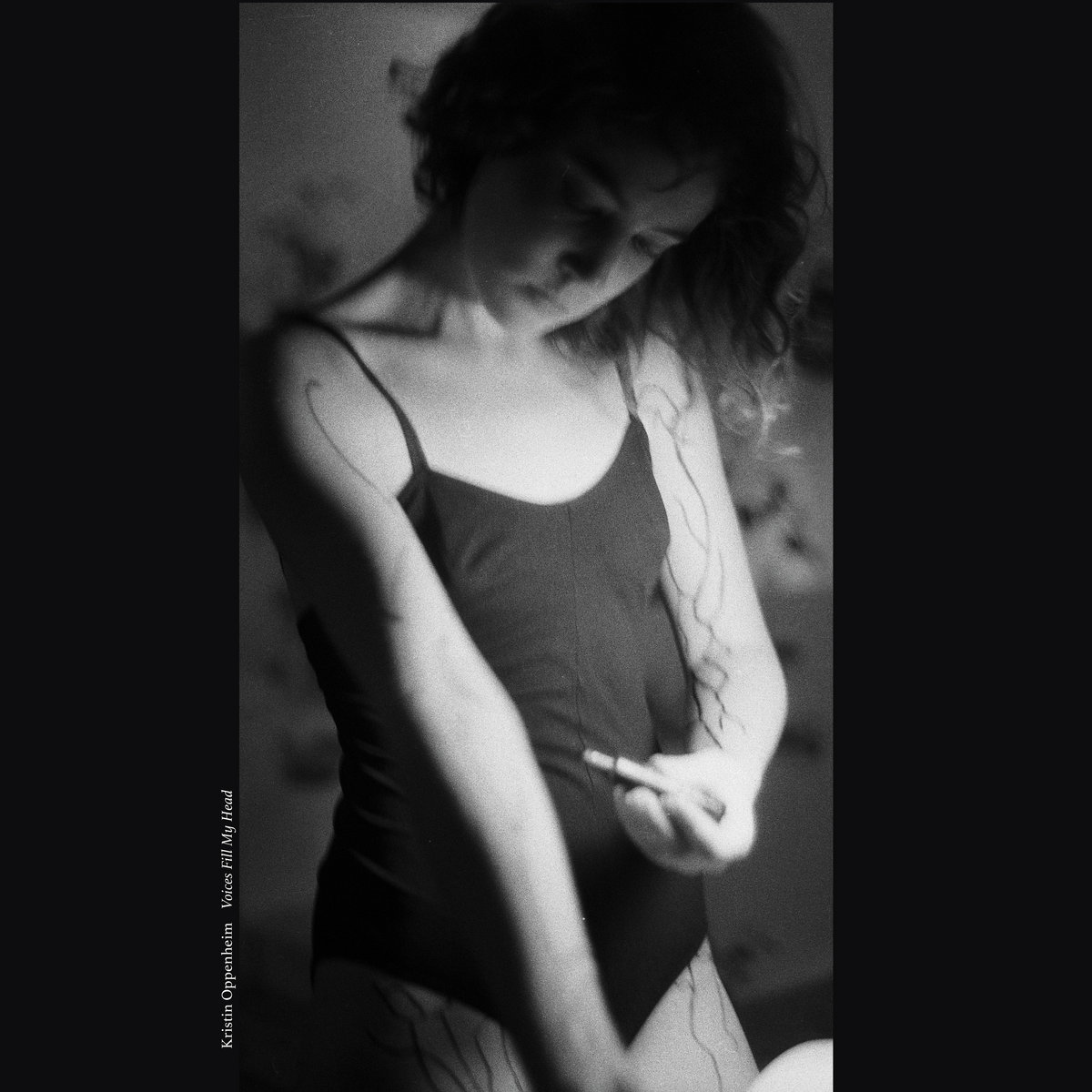
Graded on a Curve: Kristin Oppenheim, Voices Fill My Head

Residing and working in Brooklyn, installation artist Kristin Oppenheim specializes in works based in sound, film and performance. Extending from these platforms, she is also a musician with records. Her new one, Voices Fill My Head: Collected Sound Works 1993 – 1999 is the second collection of her early material, eight pieces totaling just short of an hour, recorded in studio and featuring only Oppenheim’s voice, half-spoken, half-sung, sometimes whispered, overlapped and repeated, and thoughtfully spread out on double vinyl for optimal fidelity. It is the second release on the INFO label, available on June 9, coinciding with the opening of the artist’s solo exhibition at greengrassi in London.

Not having experienced Kristin Oppenheim’s installations firsthand, I can’t speak to their overall quality, but I do suspect they are great. My reasoning comes from this new collection of recordings, the second 2LP to focus on her productivity in the 1990s. The first is Night Run: Collected Sound Works 1992 – 1995, also featuring eight pieces, the set released in 2021 as the inaugural offering of the INFO label (started by fellow interdisciplinary artist Reece Cox).

When artists working in mediums visual or conceptual branch out into the realms of sound, the results are often of interest for how they differ from expected (or recognizable, if not necessarily typical) musical practices. This applies directly to Oppenheim’s work as related in the label’s description of Voices Fill My Head, the text describing the pieces as being created “not as music, but as repetitious sound installations designed to drift back and forth across wide stereo fields.”

But listened to at home through headphones, the pieces are deeply musical, and precisely due to the artist’s approach. As detailed above, there is just Oppenheim’s appealing voice, layered but otherwise not audibly manipulated, instead hitting that spot between half-speaking and half-singing, and as such differing from the standard of a cappella vocalizing, which is almost always performative in nature.

Read More »

Posted in The TVD Storefront | Leave a comment

Graded on a Curve:
The Dream Syndicate, Ultraviolet Battle Hymns and True Confessions

As a cornerstone act in the framework of the Paisley Underground, The Dream Syndicate stand as one of the highpoints of 1980s rock. New record Ultraviolet Battle Hymns and True Confessions is the band’s fourth since recommencing activities in 2012, and their eighth studio LP overall. Due to a blaringly evident disinclination to merely rehash past glories, the set is something of a rarity in the annals of post-reunion albums, and quite the worthwhile effort; if it doesn’t sound like The Dream Syndicate of yore, the outfit’s personality still permeates the album’s ten tracks. It’s out June 10 on standard black or transparent violet vinyl and compact disc through Fire Records.

The Dream Syndicate’s debut full-length record, The Days of Wine and Roses, is absolutely crucial to a full understanding of rock’s evolution in the decade of its making. That might read as hyperbole, but the statement more than holds up under scrutiny, as the record’s punk-injected blend of the Velvet Underground and Crazy Horse (with outstanding songs in the bargain) has been a mainstay on turntables (and assorted other listening apparatuses) since Slash Records subsidiary Ruby put it out in 1982.

But the latest release by the band, which is currently comprised of singer-songwriter-guitarist Steve Wynn and drummer Dennis Duck, both founding members, bassist Mark Walton, who joined in 1984, lead guitarist Jason Victor, and now newest addition, keyboardist Chris Cacavas (longtime contributor formerly of Paisley Underground cohorts Green on Red) unfolds in a manner that makes anything more than a standard background reference to the band’s first (roughly) eight-year run register as inappropriate.

However, let’s be clear. The Dream Syndicate’s reemergence was initially a live affair that, amongst numerous appearances, offered in-sequence performances of their first album and its follow-up, 1984’s underrated (and way out-of-print) Medicine Show. And while neither 2017’s How Did I Find Myself Here? (which featured vocals by founding member Kendra Smith on closing track “Kendra’s Dream”) and 2019’s These Times is anywhere close to a calculated revamp of the band’s ’80s glories, both of those records offer passages that do ring out like the Syndicate of the old days.

Read More »

Posted in The TVD Storefront | Leave a comment

Graded on a Curve:
The Psychedelic Furs,
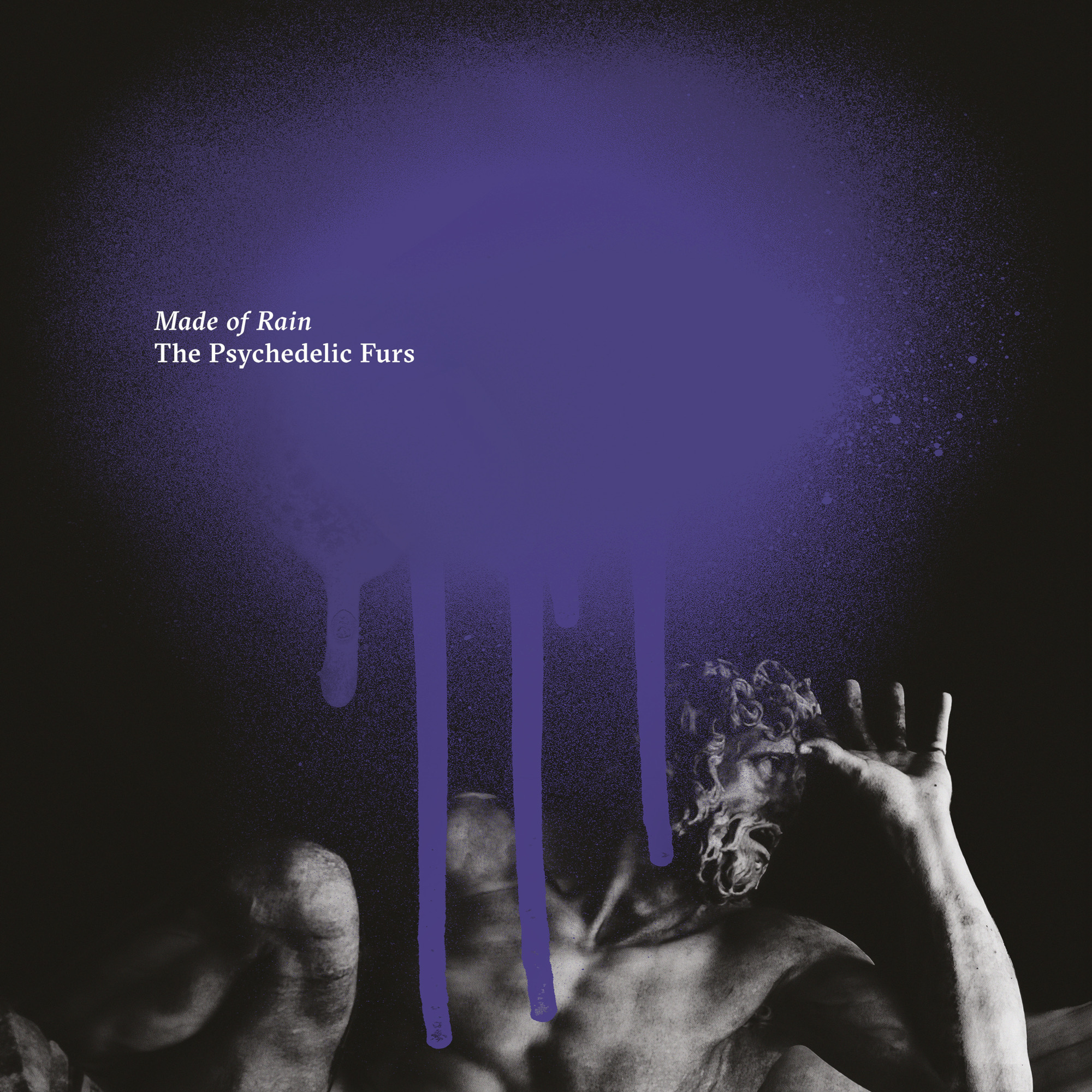
Made of Rain

Celebrating Richard Butler who turned 66 yesterday.Ed.

Post-punk, new wave, college rock, modern rock, alt-rock: The Psychedelic Furs have been associated with all of these styles, and the band’s first full-length studio effort since 1991 offers a sharp extension of their ’80s developments with the added kick of solid songs and a general sense of collective commitment. That the Furs avoid attempting to regurgitate bygone commercial peaks is admirable; additionally, all the members have been with the band for over a decade in a live context, which is reflected in cohesiveness and heft. While not a document of perfection, Made of Rain is still a worthy affair. It’s out now on LP, CD, and digital through Cooking Vinyl.

If all the songs on Made of Rain were up to the standard of its first cut, the set would teeter on the precipice of a knockout. Regardless, this is still one of the positive shockers of 2020. Said opener, “The Boy That Invented Rock & Roll,” is driving and layered, with Rich Good’s guitar resonating up a storm as bassist Tim Butler and keyboardist Amanda Kramer thicken the post-punky atmosphere. And courtesy of saxophonist Mars Williams, there’s a touch of skronk that helps to establish the seriousness of the whole endeavor.


More importantly, Richard Butler’s singing, while immediately recognizable, doesn’t overplay the raspy distinctiveness of his voice. But maybe most interesting, the track avoids revving up to a predictable finale, instead winding down and dissipating ahead of the spirited “Don’t Believe,” which is more anthemic and with a chorus that’s pretty clearly designed for live audience rousing, all while underscoring the role of the brothers Butler in shaping the Alternative Rock sound of yore.

It’s a gesture that works because it’s fairly subtle. “You’ll Be Mine” slows the pace a bit but is no less intense, blending strum, tendrils of saxophone and drummer Paul Garisto’s churning thud, with the song emphasizing Made of Rain as no nostalgia trip. This isn’t to imply that the record is devoid of pop gestures, as the next cut makes clear. It just that the soaring passages of “Wrong Train” aren’t attempting, at least overtly, to stir memories of “Heartbreak Beat” or “Pretty In Pink.”

Read More »

Posted in The TVD Storefront | Leave a comment

Graded on a Curve:
Max Roach,
Members, Don’t Git Weary.

For his third in a four album run for Atlantic Records, the great Modern Jazz drummer and bandleader Max Roach brought a quintet of largely younger names to RCA’s Studio B to lay down a concise but effective set of modal post-bop. Members, Don’t Git Weary is that record, initially released in 1968 and scheduled for reissue on vinyl by Real Gone Music on June 3. Loaded with original compositions by the participants, and with guest vocals on one track by Andy Bey, it’s a worthy choice for a repress.

Max Roach’s combination of sheer longevity and steadily evolving creative spark puts him in the upper echelon of the jazz drummers who emerged from the bebop and post-bop eras, placing him alongside such stalwart names as Kenny “Klook” Clarke, Art Blakey, Philly Joe Jones, Roy Haynes, Elvin Jones, and Billy Higgins. Extending to a younger generation adds Paul Motian, Tony Williams, and Jack DeJohnette to the list (a grouping that’s not intended to be definitive).

What many of those names share is the ability to adapt to a wide range of stylistic situations, a unique quality of drummers, with none more versatile than Roach, who was part of the original bebop explosion, recording with Bird and Diz and Miles and Monk, and who much later, released albums with the vital avant-garde figures Archie Shepp, Cecil Taylor, and Anthony Braxton.

Starting in the early 1950s, Roach began leading (or co-leading) his own sessions, cutting numerous masterpieces across half a century. And while prolific during that span, Roach never gave the impression that he was just churning out records. To the contrary, his stint for Atlantic, which began in 1964 with the sweet The Max Roach Trio Featuring the Legendary Hasaan, only produced four albums; the last, Lift Every Voice and Sing (recorded with the JC White Singers) arrived in 1971.

Read More »

Posted in The TVD Storefront | Leave a comment
  • SUPPORTING YOUR LOCAL INDIE SHOPS SINCE 2007


  • Alternative Text Alternative Text Alternative Text Alternative Text Alternative Text Alternative Text Alternative Text Alternative Text Alternative Text Alternative Text Alternative Text Alternative Text Alternative Text Alternative Text Alternative Text Alternative Text Alternative Text Alternative Text Alternative Text Alternative Text Alternative Text Alternative Text
  • Alternative Text Alternative Text Alternative Text Alternative Text Alternative Text Alternative Text Alternative Text Alternative Text Alternative Text Alternative Text Alternative Text Alternative Text Alternative Text Alternative Text Alternative Text Alternative Text Alternative Text Alternative Text Alternative Text Alternative Text Alternative Text Alternative Text Alternative Text Alternative Text Alternative Text