On January 14 a crucial chapter in the history of hot gospel gets fresh illumination thanks to Bible & Tire Recording Co.’s two-volume retrospective Sacred Soul: The D-Vine Spirituals Records Story. Across four sides of vinyl (available separately or as a bundle), two compact discs (ditto), and digital (available through Bandcamp), these 28 recordings by nearly as many different groups and performers document a sustained run of inspired artistry and savvy production that was originally released on 45rpm singles. Eminently listenable, the contents also celebrate the no-nonsense go-for-it gusto of grassroots independent record making.
By now, it’s no secret that African-American gospel is one of the indispensable fibers in the grand weave of 20th century music, and not just for its foundational role in the development of Soul. No, the undiluted stuff, almost always waxed by smaller, if not necessarily independent record labels, is worthwhile, indeed highly prized, entirely on its own for its combination of skill and intensity sharply honed through commitment and belief.
Formed in downtown Memphis, TN in the early 1970s by US Air Force veteran, preacher, radio personality, and soon to be record producer Juan D. Shipp, D-Vine Spirituals is as vital to hot gospel’s growth narrative as Nashboro and Pitch/Gusman, both labels from the southern region of the USA that flourished in the same approximate timeframe.
The proof is in the listening, as Bruce Watson’s Bible & Tire Recording Co. has already released two volumes focused on D-Vine Spirituals subsidiary JCR (stands for Juan, Charles, and Robert, not Jesus Christ Records) and an LP dedicated solely to Elizabeth King and the Gospel Souls, who cut the label’s paradigm-shifting first single “I Heard a Voice” in 1972.
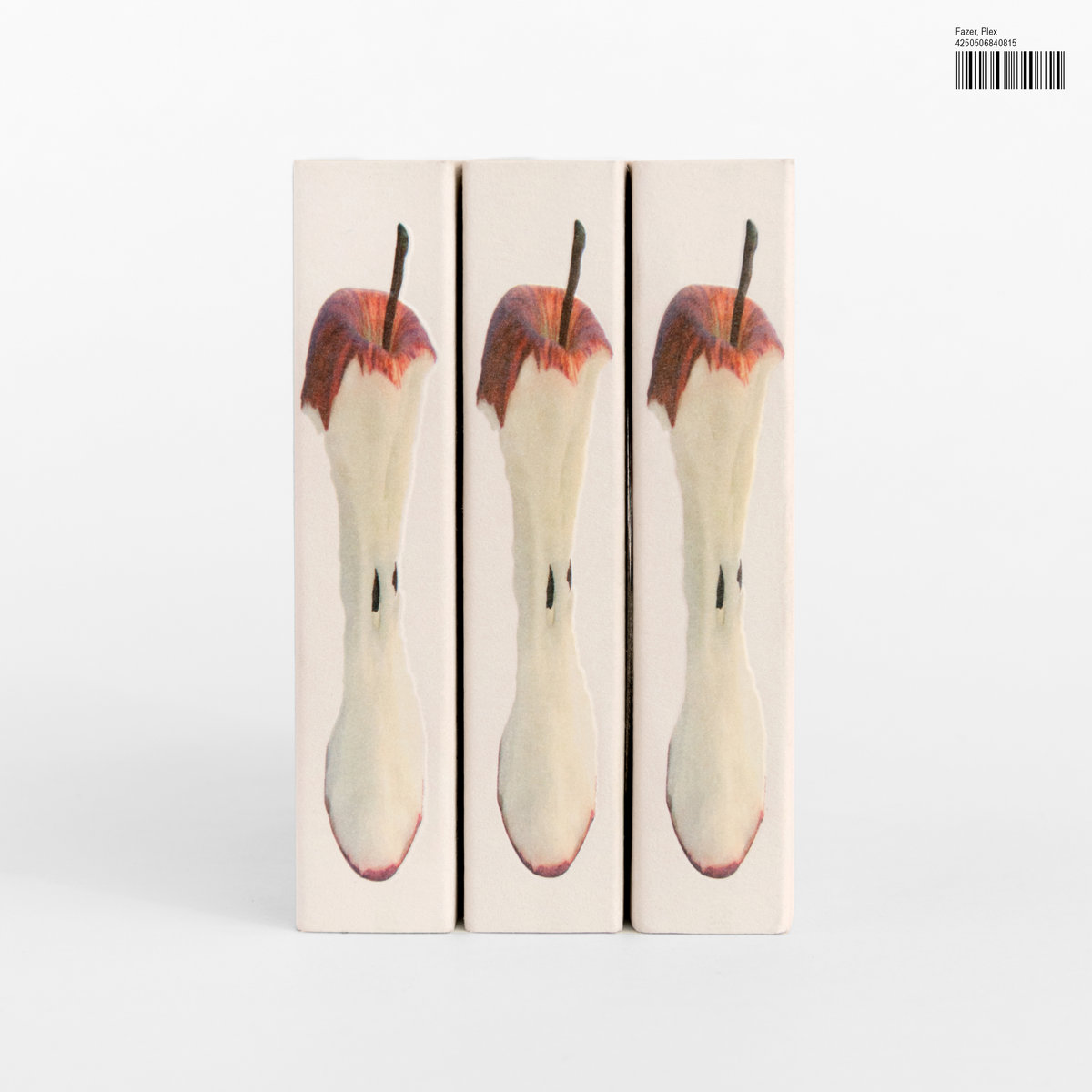
Fazer is a Munich-based quintet that specializes in a combination of jazz and post-rock with African polyrhythms. Yes, that means two drummers. The men behind the kits are Simon Popp and Sebastian Wolfgruber, with trumpeter Matthias Lindermayr, guitarist Paul Brändle, and bassist-producer Martin Brugger completing the group. Plex is their latest, an 11-track affair that nicely balances groove complexity with buoyant melodicism. It’s out January 14 on clear or black vinyl, compact disc, and digital through City Slang.
The scoop is that the five members of Fazer all met while attending the Academy for Music and Performing Arts in Munich, a circumstance not the slightest bit surprising, as their collective skill is not only easy to discern but impossible to deny, even as they firmly favor the mingling of rhythmic flow and gestures of beauty over the mere flaunting of chops. Or at least that’s the case on Plex, their third full-length and the first this writer has heard (the prior two are Mara from 2018 and Nadi from the following year).
The impact of jazz on Fazer’s sound is also indisputable, but the same is true for the elements of post-rock in the equation. To elaborate, in the promo text for their latest, the group cites Talk Talk, Can, Fela Kuti, and Rhythm & Sound as influences, though it’s to their credit that none of the acts mentioned are blatantly obvious in the overall scheme as Plex unwinds.
Instead, they forge their own personality as a unit, an approach that leans more toward finesse than grit as the record plays, but with enough twists in the progression to keep matters consistently interesting. Opener “Ghazal” immediately establishes an African-tinged rhythmic bedrock, followed in short order by guitar, first a tight plucked pattern complementing the cyclical drum and bass and then a little post-rock atmospherics.
Part one of the TVD Record Store Club’s look at the new and reissued releases presently in stores for January 2022.
NEW RELEASE PICKS: Stefan Schönegg, Enso:Strukturen (impakt Köln) This is the Cologne-based Schönegg’s fourth release featuring Enso, an assemblage described by the bassist-improvisor-composer as his “chamber music ensemble with changing instrumentations.” This time out, Enso features clarinet (Michael Thieke), bassoon (Sandra Weiss), cello (Nathan Bontrager), double bass (Schönegg), and extended snare drum (Etienne Nillesen). Of Enso’s four recordings, this appears to be the first issued on vinyl (it’s also the first I’ve heard), offering ten pieces, the first six titled “Struktur” and the last four “Reflexion” (the tracks distinguished by roman numerals), with the whole reflecting Schönegg’s stated interest in reductive strategies and his desire for Enso to embody slowness in contrast to the fast pace of modern life. This leaves room for a range of sonic possibilities, as portions of the record engage with extended tone clusters that are reminiscent of chamber drone, though as the number of pieces and the format should indicate, none of the durations are especially long. Unintrusively captivating. A
Fred Hersch, Breath by Breath (Palmetto) Hersch’s skills as a pianist are beyond reproach. This is not to say that every one of his releases is perfect. It’s just that Hersch’s handle on his mastery is as firm as his playing is lyrical. For this ambitious CD, he’s joined by bassist Drew Gress, drummer Jochen Rueckert, and for one selection (“Mara,” a standout), percussionist Rogerio Boccato, along with the Crosby Street String Quartet, which features Joyce Hammann and Laura Seaton on violins, Lois Martin on viola, and Jody Redhage Ferber on cello. Breath by Breath consists of The “Sati” Suite in eight parts and a closing ninth piece, “Pastorale,” an homage to the German composer Robert Schumann. While the relationship of jazz and strings has been a historically rocky one, too often sounding stitched together and unsatisfying, the combination flourishes here from the compositional foundation to the execution, with both the trio and the quartet displaying heightened sensitivity. As Hersch’s conception was inspired by his practice of meditation, the suite exudes a comforting energy. It’s never overly tranquil. A
Michael Hurley, The Time of the Foxgloves (No Quarter) When this record came out late last year, on December 10 in fact, I elected to set it aside until just after the New Year, in hopes that Hurley had worked his magic once more and I would’ve gifted myself a fresh treat for 2022. Smart move on my part. Snock’s hooking up with a sizeable indie label might’ve landed him a sweet profile in the New York Times, but fear not, as No Quarter is run by a longtime fan, so that the 11 tracks here are pure Hurley. Opener “Are You Here For the Festival?” adds another classic to a repertoire already full of them, the vocal duets are wonderful (The Louvin Brothers’ “Alabama” with Betsy Nichols and “Jacob’s Ladder” with Josephine Foster are the best at this early juncture), the instrumentation is diverse, including fiddle, banjo, baritone ukulele, upright bass, bass clarinet, xylophone, even electric piano (a Wurlitzer A200) on another standout cut, “Blondes and Redheads.” Exactly where this one will land in Hurley’s discographical hierarchy will require time to assess, but rest assured it’s whole is exquisite. A
REISSUE/ARCHIVAL PICK:Michael Beach, Gravity/Repulsion (Goner) ‘tis true that Gravity/Repulson came out a mere four years ago, but four years can register as a long time; think of a presidency that ran from 2016 to 2020 and tell me how fucking long that felt like. Anyway, Goner’s reissue of this fine record (the follow-up to Beach’s masterful 2013 album Golden Theft) came out just last month, and as it’s likely many missed the boat on its existence back in ’17, it’s a great opportunity to get acquainted with one of the 21st century’s sharpest extenders of what I’ll call the classic ’80s-’90s indie rock sound. Not that I missed the boat myself, as I gave it a full review upon release for this very website. But don’t get the idea that I’m gloating, since I just recently caught up with Beach’s Dream Violence, which Goner put out last March. His latest continues an impeccable streak of quality, with Golden Theft remaining his best, but good luck finding a vinyl copy of one now. Here’s an opportunity to scoop up a record that’s nearly as great, so don’t sleep. After a few fresh spins, it’s clear that Gravity/Repulsion hasn’t lost a thing. A
28 years ago this September, Nashville’s Lambchop released their full-length debut, a sprawling affair not unusual for its era except that it was utterly devoid of filler. As intriguing as it is consistent, I Hope You’re Sitting Down / Jack’s Tulips is simultaneously loose but well-ordered, and with an irreverent but never dismissive relationship to the country music of their home city. While in no way embryonic, the contents are also distinct from any Lambchop album that followed, and it’s been long overdue for a vinyl reissue. Merge Records has remedied this lack with a peak vinyl red and pink swirl edition, along with standard black wax. Both are available now. Considerations and recollections are found below.
As is the case with many debuts, Lambchop’s dual-titled first record was the byproduct of a long period of gestation, reportedly spanning back to the mid-’80s, with a prior name in the narrative (Posterchild) and a series of three cassettes (one shared with the bands Crop Circle Hoax and Spent) that date back to 1990, some of their contents collected in 2011 by Grapefruit Records on the Turd Goes Back LP.
There was also a handful of pre-LP 7-inches, one of them issued as Posterchild (a split with Crop Circle Hoax), with much of this material, along with live and unreleased stuff, later compiled by Merge on the 2001 CD Tools in the Dryer. While playing the side stage of the Lollapalooza Festival earlier in the summer of I Hope You’re Sitting Down / Jack’s Tulips’ release (1994), the band’s merch included those 45s, along with packs of cigarettes personalized with a fancy cursive capital L (similar to the lettering found on the sweaters of Laverne DeFazio).
Lambchop’s show at the Charles Town, WV Lollapalooza tour stop was pleasant but hard to pinpoint as their music blended with the sound of Parliament-Funkadelic wafting over from the larger stage. Seated in a rocking chair with his guitar, Kurt Wagner remarked upon the mingling and seemed amused. Back home afterward, those 7-inches sharpened the focus somewhat, but it wasn’t until the release of Sitting Down / Tulips that the full extent of Lambchop’s eccentricity was revealed.
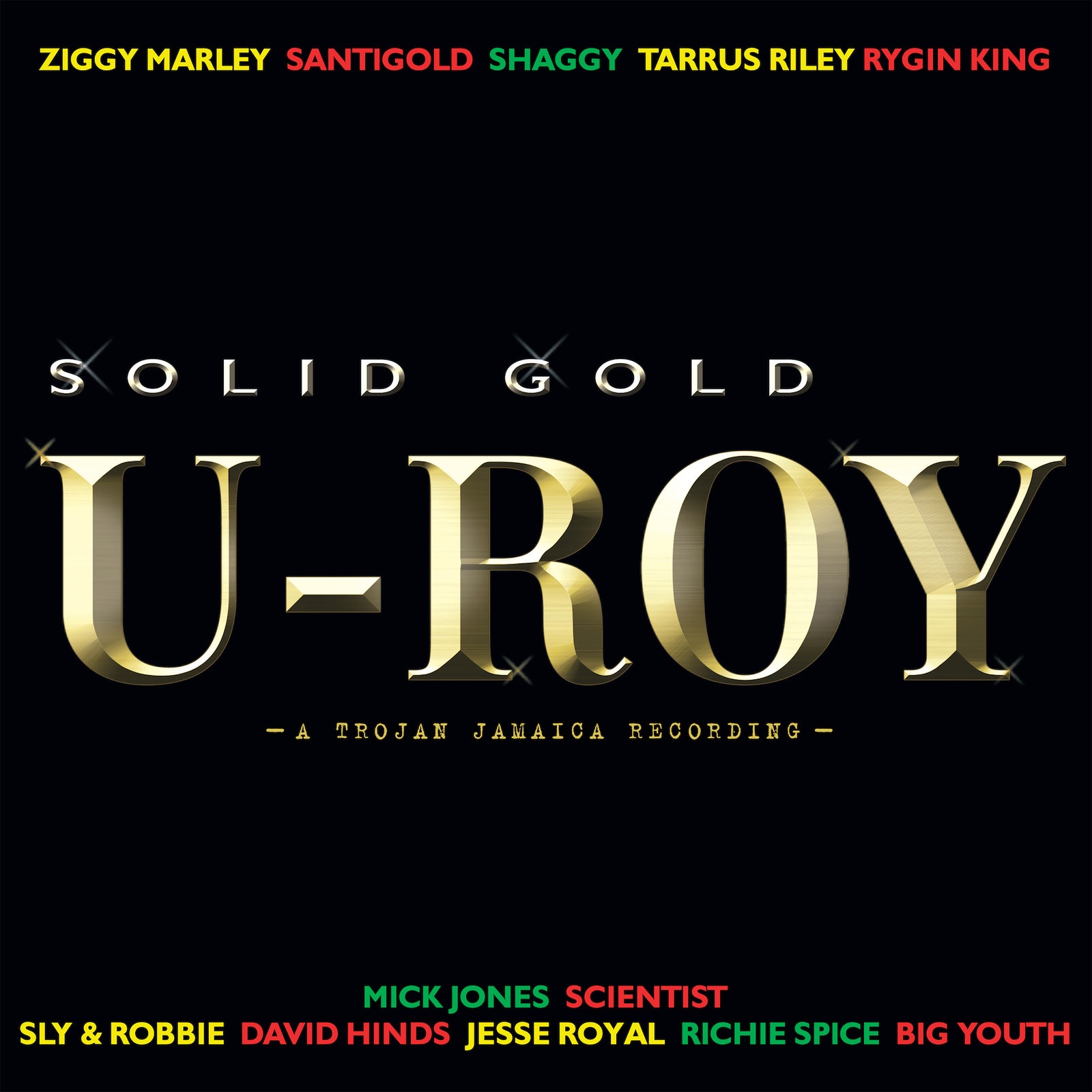
Ewart Beckford, better known as pioneering Jamaican toaster U-Roy, passed on February 17 of last year, a sad occurrence salved somewhat by the belated emergence of Solid Gold U-Roy, a double LP originally slated for release in 2020 but delayed by the Covid pandemic. While the CD came out last June, the gold vinyl edition didn’t hit stores until just last month. Although loaded with guest appearances including Ziggy Marley, Santigold, Shaggy, Sly Dunbar and Robbie Shakespeare, Big Youth, and Mick Jones, the set avoids the grandiose bloat of an over-orchestrated farewell. Intended as U-Roy’s next album rather than his last, it’s available now through Trojan Jamaica and BMG.
Both an innovator and an enduring recording artist, U-Roy’s impact on Jamaican music is considerable. While it’s impossible to know who exactly did it first, U-Roy’s toasting efforts have been cited as the earliest examples on record; they’re heard extensively on the 1971 Version Galore LP, which collects material cut in 1969-’70. Additionally, U-Roy was reportedly toasting live as far back as 1961, lending credence to his nickname “The Originator.”
Toasting (or deejaying), for those unfamiliar, is the act of talking or chanting over a reggae instrumental foundation, sometimes in combination with a singer. Occasionally described as the framework for early rap MCs, toasting also links roots reggae (where the technique flourished) to the dancehall style that followed, and it remains a vital component of Jamaican music right up to the present.
U-Roy’s early work holds lasting appeal (Trojan’s 2CD expansion of Treasure Isle’s original Version Galore LP, especially), but it’s really his self-titled set for Bunny Lee’s Attack imprint from 1974 followed by a string of recordings in connection with the Virgin label, specifically Dread in a Babylon (’75), Natty Rebel (’76), Rasta Ambassador (’77), and Jah Son of Africa (’78), that constitute his sturdiest stretch.
As we arrive at the final tippy-top ten of the Best New Releases of 2021, it easy to envision the scroll-downs and the scrunched-up frowns: “hey, where is _____?” Please understand that the fave in question is likely in a queue still waiting to be heard, or was heard but is hanging just off the periphery, perhaps even making an early draft of the list, or was simply elusive in the modern avalanche of high quality sounds. As said at the beginning of the week (seems like much longer than week ago, and it’s only Friday), these lists are never really final. Lists are in fact, at their best, just part of an ongoing conversation…
5. Chris Corsano & Bill Orcutt, Made Out of Sound (Palilalia) & Binker & Moses, Escape the Flames (Gearbox) Versatility and adaptability are common, near constant, traits in the great “jazz” drummers, characteristics that allowed Elvin Jones to productively create with Barry Harris (RIP), John Coltrane (of course), Lee Konitz and Sonny Sharrock.
I mention this because Chris Carsano is definitely a “jazz” drummer in all the best ways, and on Made Out of Sound he gets very much into a Elvin-like zone in tandem with the soaring beauty of guitarist Bill Orcutt, who locates those fleeting moments of transcendence heard from some the great expansionist string benders of the 1960s-’70s (a few of them also “jazz”) and then just hangs out there beautifully. It’s impossible for me to contemplate listening to Made Out of Sound and not feeling good.
Corsano and Orcutt dish an exemplary serving of duo exchange, but Escape the Flames hits the “classic” exploratory sax-drums target right in its bullseye with “The Departure,” and then takes a big groove offramp with “Intoxication From the Jahvmonishi Leaves.” That means this 2LP is likely not as skronky as some hardcore aficionados of freedom might prefer, but Binker Golding’s tenor is still cut from the cloth of ’60s Coltrane (some of finest woven aural threads, anywhere). And with “Fete By the River” he brings Impulse-era Sonny Rollins to mind, partly because Boyd displays some of that versatility spoken of up above. The crowd loves it (yes, this set was recorded live). Then they tear it up some more…
4. Thumbscrew, Never Is Enough (Cuneiform) & Colleen, The Tunnel and the Clearing (Thrill Jockey) Is there a better leaderless “jazz” trio than Thumbscrew currently working? By which, let me clarify, amassing a discography; this is guitarist Mary Halvorson, bassist (upright and plugged-in) Michael Formanek, and drummer Tomas Fujiwara’s sixth album. The appeal is partly based in ceaselessly sharp playing, partly in structural acumen (each point on this triangle brings three compositions to the table), and partly about heightened interaction. One could call it a series of beautiful conversations, but it’s more like snapshots of three brilliant humans living together and attaining a rare level of harmony.
Shifting from group settings to the solo paradigm, The Tunnel and the Clearing is another exceptional record from Cécile Schott. With a synth and keyboard-based approach, often glistening in its retrofuturist qualities (but never trite), her stuff is solid as marble structurally, with her vocals adding considerable value. And there is a sense of quiet, of intimacy, on her latest that is never labored. The songs, and Schott is as much a crafter of songs as she is an architect of atmospheres, are excellent listening any time of day, but especially so late at night.
As we head into the Best List home stretch with a shift of focus onto the new, it bears repeating that the sheer number of potential candidates for inclusion was even larger than it was for the box sets and reissues, and with a mountain of interesting releases still unheard. Considering how the decks are currently stacked against musicians in so many ways, the perseverance is downright inspiring. So are the ten records listed below.
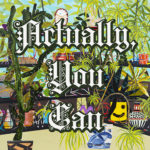
10. Alicja-Pop, Howlin’ (Black & Wyatt) & Deerhoof, Actually, You Can (Joyful Noise) From a standpoint of a music reviewer, one reliable yardstick of high quality is when you keep a record in heavy rotation for a week or two (or more) after the review has posted. The problem of course, it that this situation is never evident until…well, you’ve probably figured it out.
But it just dawned on me that I could mention this circumstance in relation to Howlin’ by Alicja-Pop, the solo endeavor/ group venture of the extremely musically active Alicja Trout of Memphis, TN, because I’d already sussed that this self-described compilation of several years of songs was a solid effort while reviewing it a few months back. That Trout’s forte on Howlin’ is modestly scaled pop-rock likely solidified my initial level of assessment, but after soaking up “Vines B” for the umpteenth time and for the sheer hell of it, the depth of her talents became clear. And so here we are.
Modestly scaled isn’t an accurate description of Deerhoof. On Actually, You Can, their music is as thunderous and agile as ever it was before, but the nine tracks are also notable for being built with the intention to be reproduced on live stages. A goal, taking it (safely) out on the road, that’s thoroughly understandable, with the record effectively unwinding as enticement to witness them playing live. A handful of the tracks are certain to trigger pockets of fan frenzy as they begin, particularly “Scarcity is Manufactured” and its air of joyousness. A little joy is something we could all use right about now.
9. Van Dyke Parks & Verónica Valerio, “Only in America–Solo en América” (Modern Recordings) & Okuté, S/T (Chulo) As was mentioned earlier this week in part one of 2021’s best reissues, rarely do singles and EPs make these lists, but there are exceptions, as is the case this year with the repress of Maximum Joy’s debut 12-inch (which inspired the observation), as so it is with this 4-song 10-inch.
“Only in America–Solo en América” is a collaboration of uncommon richness, though that’s not especially surprising, as Van Dyke Parks is handling the orchestrations, and he’s near the very top of his game. This is immediately apparent in the opening version of Agustin Lara’s “Veracruz,” and it continues through the three original compositions by Valerio. Make that three vibrant compositions by Valerio. Whose singing (and speaking) elevates this EP to a special plateau. And the cover art by Klaus Voormann? Mighty nice on the eyes.
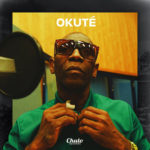
This S/T album from Okuté is also the Havana, Cuba-based band’s debut. That’s lead vocalist Pedro “Tata” Francisco Almeida Barriel on the cover, joined in the group by percussionists Machito, Ramoncito, Roberto Vizcaino Sr. and Roberto Vizcaino Jr, trésero Juan “Coto” de la Cruz, and bassist Gaston Joya. They tap into the essence of rumba and other Cuban styles, with ties to the African root and guitar playing that has a familiar edge to it. Produced by Jacob Plasse, who plays trés guitar in Brooklyn’s Los Hacheros along with running Chulo Records, Okuté has virtuosity to spare but is never slick. At times, like during the killer guitar solo in “Gaston’s Rumba,” it gets downright raw.
For part two of 2021’s best reissues the tide turns toward releases of an expansive, often jazzy nature, and with a double dose of punk bite in the mix.
5. Mujician, 10 10 10 (Cuneiform) + Paul Dunmall, Keith Tippett, Philip Gibbs, Pete Fairclough, Onosante (577) Amongst the honorable mentions this year is the initial handful of installments (including a compilation) in Decca’s British Jazz Explosion series, which does a very fine job getting the ball rolling in regards to the worthiness of a scene that’s still thriving in multiple ways (that’s what we call foreshadowing). But in terms of retrospective releases of Brit jazz, I must admit that this pair of discs pulled my chain most effectively in 2021.
The connecting threads are multi-reed man Paul Dunmall and pianist Keith Tippett. The leaderless group Mujician teamed them with Paul Rogers on bass and Tony Levin on drums. Across 10 10 10’s two long selections, the sparks of freedom do fly, but there are still palpable connections to jazz tradition, with these ties never token gestures. Earlier in the year, I compared Mujician’s leaderless thrust to the Art Ensemble of Chicago, and I stand by that, though I’ll add that the two don’t sound all that similar. It’s a matter of tactics.
Keith Tippett, likely the most well-known member of Mujician, died on June 14, 2020, spelling the end of the group, though to my knowledge they hadn’t been active for quite a while, as 10 10 10 is designated as their final studio album, cut in Bristol Music Studios in Bristol, UK on October 10, 2010 (hence the title). Onosante was recorded on November 15, 2000, initially released on CD in an edition of 100, with guitarist Philip Gibbs and drummer Pete Fairclough joining Dunmall and Tippett for a dialogue that’s effectively as leaderless as 10 10 10.
There’s a little more collective heat, skronk, and rumble on Onosante, but the group’s relationship to the jazz root is still discernible and it’s always sincere (never a ritualist move). And in a bit of wonderful news, Onosante is the first of hopefully many Dunmall reissues from 577; the next one, Mahogany Rain by Keith Tippett, Julie Tippetts, Philip Gibbs, and Dunmall, is scheduled for release on February 18, 2022. Killer!
4. Screamers, Screamers Demo, Hollywood 1977 (Superior Viaduct) + The Gun Club, Fire of Love Deluxe Edition (Blixa Sounds) In the never-ceasing ever-flowing world of reissues and archival collections, there’s a need to single out the truly essential items from those that are merely very good or (certainly) less, and not just at the end of a calendar year.
This is especially true of punk rock, as it’s so easy for the impressionable to be led astray. And it’s always necessary to champion the Screamers, the Los Angeles synth-punks from before synth-punk had a name. This demo, finally legitimately released after decades of bootlegging, is as essential as it gets, because in terms of edge, it hasn’t lost a thing.
Now, a fair argument can be made that dropping The Gun Club’s debut album onto this list is just squeezing out the reissue of a punk album that’s in greater need of a spotlight in 2021. Yes, Fire of Love has been reissued a handful of times (including by the very label that put out the Screamers record above) and it’s never been hard to find, but never in an edition with bonus tracks, and certainly not with an entire previously unreleased live set (Live at Club 88 – March 6, 1981) attached.
The point of this pairing (well, one point of the geometry, anyway) is that something special was happening in LA (and all over California, in fact) starting in the late ’70s, which pinpoints the Screamers, and that this specialness was still struggling to be heard in the early ’80s amid a stagnant sea of genericism and commercialism. And so, the Fire of Love, which has never sounded as good and for so long as it does in 2021.
As 2021 draws to a close, the best of the year lists have been ramping up. Unlike in (some) years previous, this rundown of the best box sets and expanded releases could’ve been much longer (doubled, essentially), but to borrow a song title from the Richard Hell and the Voidoids album directly below, there is the issue of Time. Time to listen, time to consider, time to write, time to scrap those ideas and listen again, all while carving out time to listen to more.
As such, lists designating the Best _____ of _____ are never final. No, not really. They are but a document of assessments made and conclusions drawn at a specific moment of…time. Like, right now, dig it? It’s these ten large-scaled releases that had the deepest impact across this last 12-month stretch.
5. Richard Hell and the Voidoids, Destiny Street Complete (Omnivore Recordings) + Bush Tetras, Rhythm and Paranoia: The Best of Bush Tetras (Wharf Cat) Having been a fan of Hell and the Voidoids’ second and final album since the late 1980s (yes, having sought it out in order to hear “Time,” which had been covered by the Minutemen on their posthumous live comp Ballot Result), I’d long considered it an underrated effort by one of punk’s true originators, and also something of a final (musical) statement, as hardly a recorded peep had been heard from Hell (Dim Stars excepted) for a long while after Destiny Street’s 1982 release.
And so, Destiny Street Repaired, credited to Hell & the Voidoids but featuring guitarists Marc Ribot, Bill Frisell, and Ivan Julian in place of Robert Quine and Naux (both deceased) from the original sessions was a surprise upon arrival in 2009, a recording made possible through Hell’s discovery of a tape holding only Destiny Street’s rhythm tracks, allowing him to correct an album mix he’d long disdained and deliver a wholly worthwhile revision. In 2019, Destiny Street’s original 24-track masters, once thought lost, were uncovered, meaning Hell could finally mix his second album the way he wanted. Destiny Street Complete offers all three versions plus demos, solidifying it as an essential punk document.
The reasons for pairing Bush Tetras with Richard Hell should be pretty clear. There’s geography for one, specifically NYC. There’s genre for another. Sure, Hell is a cornerstone of the First Wave while Bush Tetras are rightly tagged as belonging to the No Wave, but from my perspective, and not to get all Billy Joel up in here, it’s all punk rock to me.
And yet, there is another less obvious reason for coupling Hell and Bush Tetras, and it has to do with beating the odds. Hell did it by not only not screwing the qualitative pooch when altering a record that was long-ensconced in punk history, but actually improving its stature overall. And Rhythm and Paranoia illuminates how Bush Tetras beat the odds over the span of decades by reuniting twice without a trace of crappiness either time. And magnifying the longshot nature of their endeavors, the sound of Bush Tetras evolved significantly, meaning they always sounded like a contemporary band, never a nostalgia act. RIP to Bush Tetras drummer Dee Pop, who passed in his sleep on October 9.
4. Kazuki Tomokawa, 1975–1977(Blank Forms) + V/A, TheHarmonic Series II (Important) 1975–1977 is a 3CD set collecting three LPs, Finally, His First Album (1975), Straight from the Throat (’76), and A String of Paper Cranes Clenched Between My Teeth (’77), all originally issued by Harvest Records (note: not the UK Harvest Records) and all to be reissued separately on vinyl by Blank Forms in 2022 (the three are available for pre-order now, with April the prospective release month as of this writing). The memoir Try Saying You’re Alive!: Kazuki Tomokawa in His Own Words is also available now in hardcover and paperback from Blank Forms Editions.
To borrow Blank Forms’ description, Tomokawa is a “poet, soothsayer, bicycle race tipster, actor, prolific drinker, self-taught guitarist, and living legend of Japanese sound,” an artist many mavens of u-ground Japan know through his extensive association with the P.S.F. label. Called the “screaming philosopher” of Japan, Tomokawa does raise the roof vocally, but importantly, only sometimes. Stylistically, he spans from folk to psych-rock to assorted varieties of pop. The vinyl reissues offer a great opportunity to own them affordably on the format, but the CD box drives home that they should be collected together, as they constitute a whole of engaging diversity. Sometimes with backing singers.
The Harmonic Series II is comprised of six long-form works in just intonation, one each per album side by Kali Malone, Duane Pitre, Catherine Lamb, Tashi Wada, Byron Westbrook, and Caterina Barbieri. It follows the first installment from 12 years hence, that one issued on CD, with both curated by Pitre. It all joins together to deliver not just a wonderful collection of sounds, but an affirmative statement on the health of an avant-garde tradition that spans back to the 1960s.
Well, further than that, much further than that, to be sure. It was the early ’60s when just intonation began to have an impact on happenings in New York City (woven into the story of the Velvet Underground, subject of one of the best documentaries, on music or otherwise, of 2021), which means that for many, the story (the drone) starts right there. That’s wrong, but enough, as this digression does disservice to the brilliance spanning across The Harmonic Series II, from the pipe organ and bass clarinet in Malone’s piece, the “unknown instrumentation” in Pitre’s, the eight violins in Wada’s, and the varied use of synthesizers in Lamb’s, Westbrook’s, and Barbieri’s. The range is as wide as the pieces are unified.
Part two of the TVD Record Store Club’s look at the new and reissued releases presently in stores for December 2021. Part one is here.
NEW RELEASE PICKS:Duane Pitre, Omniscient Voices (Important) Pitre is an American experimental composer and musician (borrowing the description from his website) with an extensive discography in the ballpark of 20 full-length releases including collaborations (and excluding compilations, like this year’s outstanding The Harmonic Series II, also on Important), though for Omniscient Voices Pitre is in solo mode on electronics and a justly tuned piano. Equally prioritizing the piano and the electronics, Pitre employs a Max/MSP-based generative network to convert his piano motifs into data that is then fed into a pair of polyphonic, microtonal hardware synths with patches of Pitre’s own authoring. There is also controlled improvisation. The complexity of Pitre’s method (and I’ve even synopsized a bit) might suggest a rigorous if not quite unrelenting experience, but the five pieces (fitting nicely onto LP) engage with the minimal (cited influences: Morton Feldman, Arvo Pärt, Philip Glass, Steve Reich) in a productive and often surprising manner. Tense resonances are plentiful, but also an underlying sense of order. A
Gas, Der Lange Marsch (Kompakt) Gas is the ambient-techno project of Wolfgang Voight, debuting with a self-titled record in 1996, followed by Zauberberg the next year and Königsforst in 1998 (these three were compiled in the 10LP set titled Box in 2016), and then a long break that ended in 2017 with Narkopop. Arriving in 2018 was Rausch, and now Der Lange Marsch, which is comprised of 11 pieces, all of them title-tracks numbered sequentially. Purchasing either the 2LP, CD, or digital from Kompakt’s online store comes with an email download of the 11 files plus all the music in one file as a continuous track (not sure how this works with purchases made in brick-and-mortar shops or even other online retailers, as there is no download card). I mention the continuous track because it would seem to be the best (though certainly not the only) way to experience this set, partly because once the rhythm kicks in, it doesn’t let up, and it doesn’t really change). Still, don’t let the ambient or minimal descriptor give you the wrong idea. There is a lot going on throughout Der Lange Marsch, all of it worthy. A-
REISSUE/ARCHIVAL PICKS:V/A, Etching the Voice: Emile Berliner and the First Commercial Gramophone Discs, 1889-1895 (Archeophone) Captured by Emile Berliner’s disc gramophone in Europe (Germany to be exact) between the years of the title, these 102 tracks on two CDs represent, per Archeophone (frankly experts on the matter), the earliest and also the scarcest manufactured sound recordings in the world. That wall of LPs you’re (hopefully) cultivating? These sounds are square one. But if it’s a lengthy plunge into late 19th century musicality you seek, please adjust those expectations. Musical pieces, mostly played or sung solo but occasionally by bands or choirs, are certainly part of the weave, but so are recitations of speeches, nursery rhymes, jokes and prayers (mostly in German, sometimes in English or Spanish). There’s even a person clucking like a chicken and barking like a dog. Sweet. Surface noise is abundant, but in fact these recordings sound better now than they ever did before, even when new. It is a fascinating trip enhanced by the wonderful 80-page booklet. A
Doug Carn, Adam’s Apple (Black Jazz – Real Gone) This is the fourth and final record multi-instrumentalist (with a focus on keyboards) and bandleader Doug Carn made for the Black Jazz label (nobody made more, not even the guy who founded the label, Gene Russell). It’s also often nearer to progressive R&B than jazz (“Mighty Mighty” by Earth, Wind & Fire gets a nice cover, that in a sweet twist, delivers Adam’s Apple one of its jazziest moments), but with other enhancing elements integrated into the scheme, e.g. proggy organ (see “The Messenger” for evidence), numerous spiritual jazz motions, and some very interesting use of Moog synth (again, scope out “The Messenger”) Plus, even as Carn’s vocalist wife Jean Carn has departed the scene, there’s still an abundance of vocals (John Conner and Joyce Green joining Doug for the duties). Also: Calvin Keys on guitar. While Adam’s Apple strives for accessibility, it lacks in any brazen commercial gestures, unless you consider R&B to be a brazen commercial gesture. In which case…what in the fuck are you thinking? A-
Observatory by Aeon Station marks the solo debut from Kevin Whelan. Along with material specifically written for this album, it offers songs that were long intended for the follow-up to The Meadowlands by The Wrens, the band where Whelan played bass and sang. That makes its ten songs something of a big deal in the indie rock scheme of things, for more reasons than one. Glistening and anthemic, the record delivers an unabashed continuation of indie rock’s sound as it thrived in the ’00s and early ’10s of the 21st century. It’s out on vinyl, compact disc, and digital formats December 10 through Sub Pop.
The saga of the follow-up to The Meadowlands, an album released by the small indie Absolutely Kosher in September of 2003 to unexpected widespread acclaim, has come to a partial conclusion with Observatory. In short, Kevin Whelan could no longer wait for The Wrens’ next album to be deemed as finished, and so, took songs intended for that record, added some more, recorded them with Jerry McDonald on drums and his brother Greg Whelan on guitar (both members of The Wrens), plus his wife Mary Ann Coronel Whelan on backing vocals, and released them as Aeon Station.
Still, the inescapable: 18 years in wait for a follow-up is a long freaking time. As someone who writes about music specifically due to a lifetime spent unrelentingly listening to music, it’s my perspective that records are generally best when they come to fruition in a timely manner, which is frankly the case with most of the releases now considered canonical rock and pop masterworks. Of course there are exceptions, as The Meadowlands itself took a long time to make, though it’s not like very many people were waiting for that one (as said, the record’s success was something of a leftfield breakout).
Prolonged anticipation ushers in mounting expectations, with the whole scenario likely to become a burden. Such is the case here, and it’s a circumstance Observatory can’t avoid, even as its existence means the end of the drawn-out waiting period with a narrative twist hardly anybody expected and that fewer fans hoped for, plus a possible positive spin: “Hey, now we get TWO post-Meadowlands albums.”
Singer and guitarist Trini Lopez was one of the first Latin pop crossover artists, emerging in the early 1960s with his success persisting deep into the decade. Along with his hits, Lopez’s reputation largely rests on a pair of big-selling live albums that effectively kick-started his career. Omnivore Recordings’ new CD The Rare Reprise Singles illuminates the man’s abilities in the studio across 24 non-LP A- and B-sides. Trading performance verve for varying degrees of finesse, the disc spotlights Lopez’s considerable skills as an interpreter of songs and offers a few solid examples of his own writing. It’s available now.
Timeliness alert: those looking for non-overplayed Christmas songs to soundtrack their holiday soirees are in luck with The Rare Reprise Singles, as it includes Lopez’s 1968 45, “El Niño Del Tambor (The Little Drummer Boy)” b/w “Noche De Paz (Silent Night) / Let There Be Peace.” a double-dose of yuletide vibes that’s enjoyable if not a mindblower. Lopez had the voice for this material, and his singing in Spanish adds appeal, so it’s not at all bad as far as Christmas tunes go.
Contemporary relevance alert: The Rare Reprise Singles opens with “A-Me-Ri-Ca,” its lyrics written by that great man of the 20th century musical theater Stephen Sondheim, who passed from cardiovascular disease at age 91 on November 26 of this year, just a few days ago as of this writing. Lopez died from complications from Covid-19 at age 83 in August of 2020.
Furthermore, “A-Me-Ri-Ca” was written in collaboration with Leonard Bernstein for the 1957 Broadway play West Side Story, which was adapted into a film in 1963 (surely the impetus for Lopez’s song, which was released the same year) directed by Robert Wise, and with a fresh adaptation directed by Steven Spielberg (with a screenplay by Tony Kushner) due in theaters this Friday, December 10.
Part one of the TVD Record Store Club’s look at the new and reissued releases presently in stores for December 2021.
NEW RELEASE PICKS:Beauty Pill, “Instant Night” (Northern Spy) The title track of this 4-song EP came out digitally last year. In his notes accompanying this physical expansion (clear vinyl in a transparent plastic sleeve and a clear CD with a silver center in a transparent jewel case), Beauty Pill’s singer-guitarist-producer-chief songwriter Chad Clark describes the song’s political-protest genesis, it’s poetical (rather than polemical) sensibility, and it’s unexpectedly quick finish via socially distanced recording (on a rooftop), so that the cut was rush released by Northern Spy in hopes of inspiring citizens to vote in the Presidential election in November of 2020. The track is also noteworthy for its lack of drums and for highlighting Beauty Pill’s woodwind quartet. Clark says it sounds like Phillip Glass music, which is detectable but not blatantly. The main thing is that the song is built to last rather than carrying the rapid-fire datedness of so much political music. The drums roll back into the picture on the other cuts, and the horns stick around for the swank “You Need a Better Mind,” which gets a nifty remix. A-
Robert Ashley, eL / Aficionado (2021) (Lovely Music, Ltd.) Per the title, this is a 2021 recording of an opera by the late avant-gardist Ashley, a work that premiered in 1987 with many performances following over the next seven years and a prior recording released by Lovely Music in ’94. Until October 21-23 of this year at Roulette in NYC, the opera was last performed in 1995. This CD, released on 10/22, features the cast of the 2021 production, with mezzo soprano Kayleigh Butcher stepping into the role formerly played by baritone Thomas Buckner. eL / Aficionado offers a series of conversations between an “agent” (Butcher) and her three interrogators (Brian McCorkle, Interrogator No. 1; Bonnie Lander, Interrogator No. 2; Paul Pinto, Interrogator No. 3). Espionage and intrigue are essential components in the work, but Ashley’s intent wasn’t to construct a spy story, not even a post-modern/ nonlinear example of such. Instead, the unwinding complexity seems focused upon the friction between public personas and private-inner lives. Tom Hamilton’s orchestration, recording, and mixing are essential. A-
REISSUE/ARCHIVAL PICKS:Robert Ashley, Foreign Experiences (Lovely Music, Ltd.) For this 1995 recording of Foreign Experiences, an opera that’s part of Ashley’s early 1990s tetralogy, with Perfect Lives and Atalanta (Acts of God) to follow, Sam Ashley is Don and Jacqueline Humbert is Linda, characters familiar from Improvement (Don Leaves Linda), which preceded Foreign Experiences in said tetralogy, first recorded for Nonesuch in 1991 (a new recording of Improvement (Don Leaves Linda) was released on CD in 2019 by Lovely Music, featuring a new group dedicated to realizing Ashley’s work). For this release of Foreign Experiences, the ensemble consists of Robert Ashley himself along with Thomas Buckner, Margareta Cordero, Joan La Barbara, and Amy X Neuburg, this group having interpreted Ashley’s work from 1992-2012. Here, they are recorded by Tom Hamilton and Cas Boumans, with the release mixed and edited by Hamilton. Even at this relatively early point, the “band” is in prime form, and the prose is some of Ashley’s very greatest. He was an absolute master of language. A+
Calvin Keys, Proceed With Caution (Black Jazz – Real Gone) Keys got his start in the ’60s backing up a slew of soul jazz organ heavyweights, and on Shawn-Neeq, his debut as leader from 1971 (reissued early in 2021 as part of Real Gone’s Black Jazz reissue program and already sold out at the source), it’s not hard to tell, as he has a crisp, lithe, clean approach that’s occasionally reminiscent of Grant Green. Keys notably nixed the organ for Shawn-Neeq, electing instead for the electric piano of Larry Nash, a decision retained for Proceed With Caution, though the pianist this time is Kirk Lightsey. Those allergic to Fusion need read no further, but ears open to the style should understand that while Shawn-Neeq is a solid effort, its follow-up is an all-around improvement; the scope is broader both instrumentally and compositionally, there’s plenty of heat and edge, and nary a trace of smoothness. The year was 1974. Had this been released by one of the major labels in the mid-’70s, say Columbia or Warner Brothers, my guess is it would be perennially in print rather than getting its first-time vinyl reissue in 2021. A–
The late guitarist Eddie Hazel remains highly esteemed for his role in shaping the funk rock juggernaut that is Parliament-Funkadelic. With beaucoup assistance from the P-Funk All-Stars including George Clinton himself, Hazel released Game, Dames and Guitar Thangs, his solo debut, in 1977, an absolute fiesta of string bending that quickly fell out of print, grew to be highly sought after, and therefore became rather expensive. On December 3, the folks at Real Gone Music are bringing out an edition on blue vinyl, its affordability sure to be appreciated by longtime fans and curious newbies alike.
I suppose it’s possible to review Game, Dames and Guitar Thangs without mentioning Hazel’s role in Parliament-Funkadelic, but I’m not sure what purpose that would serve, particularly as so many of his bandmates contribute to it, specifically bassists Bootsy Collins and William “Billy Bass” Nelson, drummer Tiki Fulwood, keyboardist Bernie Worrell, guitarists Michael Hampton, Gary Shider, Glenn Goins, and those Brides of Funkenstein, Dawn Silva and Lynn Mabry. Additionally, George Clinton had a hand in writing all four of the record’s originals, with Hazel a co-writer on two of them.
It’s the original stuff, which is very much in the sonic ballpark of P-Funk, that made Hazel’s only non-posthumous solo album such a pricey item for such a long time. And even after being reissued on CD and vinyl on a handful of occasions in the 21st century, copies of the first pressing (in good condition, natch) still changed hands for roughly 200 smackers.
Lending Game, Dames and Guitar Thangs fresh ears on the occasion of Real Gone’s new vinyl edition (the label issued it on CD back in 2012 featuring notes by P-Funk Minister of Information Tom Vickers, with copies still available) reestablishes the most important factor in the record’s enduring stature, which is a baseline standard of quality. It is an eminently listenable record, providing that one is amenable to the P-Funk sensibility of course, and to Hazel’s playing in particular.
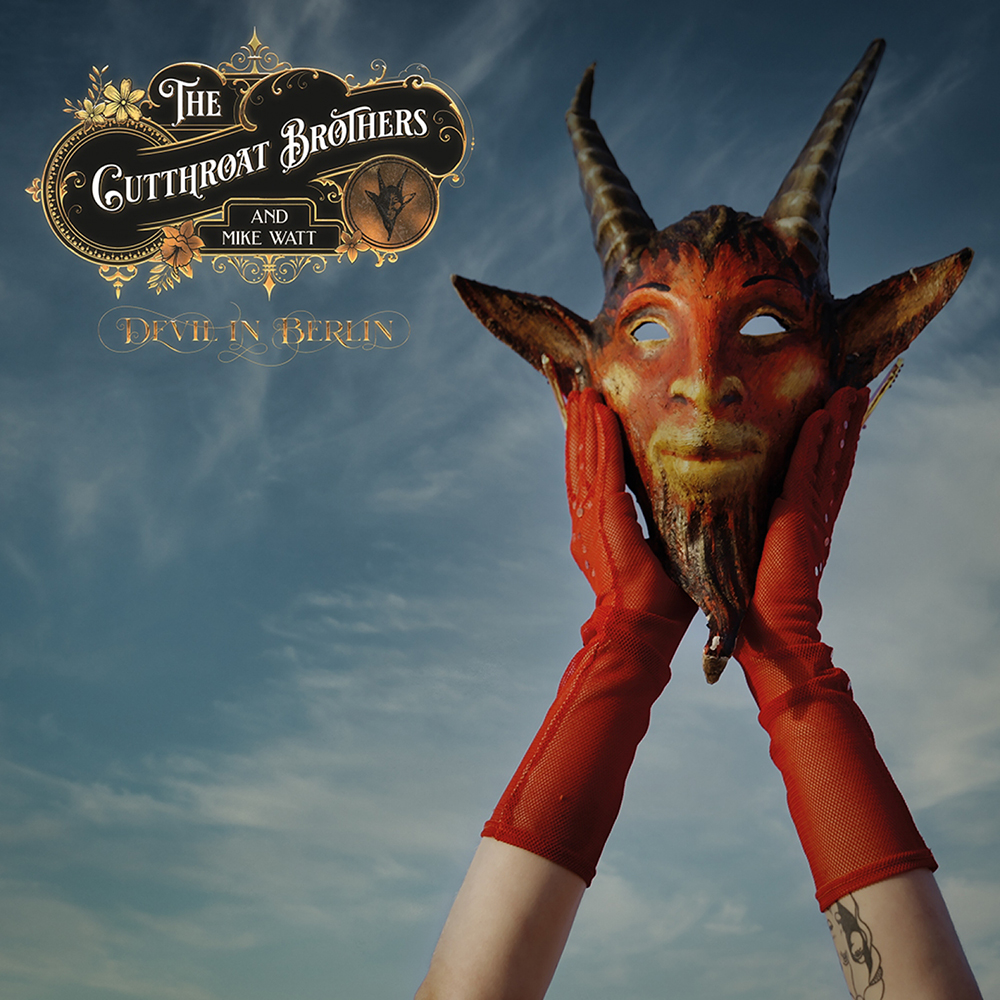
Since debuting with a self-titled LP in 2018, The Cutthroat Brothers, a duo consisting of guitarist-vocalist Jason Cutthroat and drummer Donny Paycheck, have been busy. On Friday December 3 they issue their fifth full-length and second of 2021, with their latest the second consecutive release to feature the bass playing of Mike Watt, who deepens but doesn’t radically alter the punky-bluesy appeal. Produced and mixed by Jack Endino, Devil in Berlin fits snuggly into the discography of Hound Gawd! Records. It’s available on vinyl, CD, and digital.
I’ve a sneaking suspicion The Cutthroat Brothers aren’t blood siblings, It’s an established fact however that both men are barbers, with Donny Paycheck clipping wigs in Takoma, WA and Jason Cutthroat doing the same in Kona on the Big Island of Hawaii. In matters musical, Paycheck did some drumming with Seattle-based punk thrashers Zeke before hooking up with his partner in coiffure and spiking a potent vein of throbbing scuzz-pummel.
In terms of comparisons, The Cutthroats have chalked up quite a list, including The Cramps, The Stooges, X, The Gun Club, and even Nick Cave. But maybe more impressive is getting Texacala Jones (she of 1980s cowpunk notables Tex & the Horseheads) to sing on “Black Candle” from their second LP (and first for Hound Gawd!), 2019’s Taste for Evil.
It’s the sort of gesture that reinforces a sturdy base of knowledge and strengthens a healthy streak of non-genericism. In turn, the Cutthroat Brothers have thrived exclusively on full-length releases (their third album, the digital-only Live in Europe, came out in May of 2020), a format where many outfits of similar roots-punk temperament simply run out of creative gas.


 NEW RELEASE PICKS: Stefan Schönegg, Enso: Strukturen (impakt Köln) This is the Cologne-based Schönegg’s fourth release featuring Enso, an assemblage described by the bassist-improvisor-composer as his “chamber music ensemble with changing instrumentations.” This time out, Enso features clarinet (Michael Thieke), bassoon (Sandra Weiss), cello (Nathan Bontrager), double bass (Schönegg), and extended snare drum (Etienne Nillesen). Of Enso’s four recordings, this appears to be the first issued on vinyl (it’s also the first I’ve heard), offering ten pieces, the first six titled “Struktur” and the last four “Reflexion” (the tracks distinguished by roman numerals), with the whole reflecting Schönegg’s stated interest in reductive strategies and his desire for Enso to embody slowness in contrast to the fast pace of modern life. This leaves room for a range of sonic possibilities, as portions of the record engage with extended tone clusters that are reminiscent of chamber drone, though as the number of pieces and the format should indicate, none of the durations are especially long. Unintrusively captivating. A
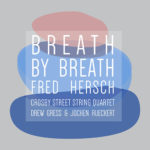 Fred Hersch, Breath by Breath (Palmetto) Hersch’s skills as a pianist are beyond reproach. This is not to say that every one of his releases is perfect. It’s just that Hersch’s handle on his mastery is as firm as his playing is lyrical. For this ambitious CD, he’s joined by bassist Drew Gress, drummer Jochen Rueckert, and for one selection (“Mara,” a standout), percussionist Rogerio Boccato, along with the Crosby Street String Quartet, which features Joyce Hammann and Laura Seaton on violins, Lois Martin on viola, and Jody Redhage Ferber on cello. Breath by Breath consists of The “Sati” Suite in eight parts and a closing ninth piece, “Pastorale,” an homage to the German composer Robert Schumann. While the relationship of jazz and strings has been a historically rocky one, too often sounding stitched together and unsatisfying, the combination flourishes here from the compositional foundation to the execution, with both the trio and the quartet displaying heightened sensitivity. As Hersch’s conception was inspired by his practice of meditation, the suite exudes a comforting energy. It’s never overly tranquil. A
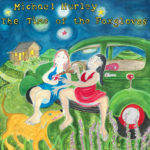 Michael Hurley, The Time of the Foxgloves (No Quarter) When this record came out late last year, on December 10 in fact, I elected to set it aside until just after the New Year, in hopes that Hurley had worked his magic once more and I would’ve gifted myself a fresh treat for 2022. Smart move on my part. Snock’s hooking up with a sizeable indie label might’ve landed him a sweet profile in the New York Times, but fear not, as No Quarter is run by a longtime fan, so that the 11 tracks here are pure Hurley. Opener “Are You Here For the Festival?” adds another classic to a repertoire already full of them, the vocal duets are wonderful (The Louvin Brothers’ “Alabama” with Betsy Nichols and “Jacob’s Ladder” with Josephine Foster are the best at this early juncture), the instrumentation is diverse, including fiddle, banjo, baritone ukulele, upright bass, bass clarinet, xylophone, even electric piano (a Wurlitzer A200) on another standout cut, “Blondes and Redheads.” Exactly where this one will land in Hurley’s discographical hierarchy will require time to assess, but rest assured it’s whole is exquisite. A
 REISSUE/ARCHIVAL PICK: Michael Beach, Gravity/Repulsion (Goner) ‘tis true that Gravity/Repulson came out a mere four years ago, but four years can register as a long time; think of a presidency that ran from 2016 to 2020 and tell me how fucking long that felt like. Anyway, Goner’s reissue of this fine record (the follow-up to Beach’s masterful 2013 album Golden Theft) came out just last month, and as it’s likely many missed the boat on its existence back in ’17, it’s a great opportunity to get acquainted with one of the 21st century’s sharpest extenders of what I’ll call the classic ’80s-’90s indie rock sound. Not that I missed the boat myself, as I gave it

 5. Chris Corsano & Bill Orcutt, Made Out of Sound (Palilalia) & Binker & Moses, Escape the Flames (Gearbox) Versatility and adaptability are common, near constant, traits in the great “jazz” drummers, characteristics that allowed Elvin Jones to productively create with Barry Harris (RIP), John Coltrane (of course), Lee Konitz and Sonny Sharrock.
 Corsano and Orcutt dish an exemplary serving of duo exchange, but Escape the Flames hits the “classic” exploratory sax-drums target right in its bullseye with “The Departure,” and then takes a big groove offramp with “Intoxication From the Jahvmonishi Leaves.” That means this 2LP is likely not as skronky as some hardcore aficionados of freedom might prefer, but Binker Golding’s tenor is still cut from the cloth of ’60s Coltrane (some of finest woven aural threads, anywhere). And with “Fete By the River” he brings Impulse-era Sonny Rollins to mind, partly because Boyd displays some of that versatility spoken of up above. The crowd loves it (yes, this set was recorded live). Then they tear it up some more…
 4. Thumbscrew, Never Is Enough (Cuneiform) & Colleen, The Tunnel and the Clearing (Thrill Jockey) Is there a better leaderless “jazz” trio than Thumbscrew currently working? By which, let me clarify, amassing a discography; this is guitarist Mary Halvorson, bassist (upright and plugged-in) Michael Formanek, and drummer Tomas Fujiwara’s sixth album. The appeal is partly based in ceaselessly sharp playing, partly in structural acumen (each point on this triangle brings three compositions to the table), and partly about heightened interaction. One could call it a series of beautiful conversations, but it’s more like snapshots of three brilliant humans living together and attaining a rare level of harmony.
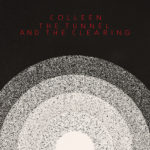 Shifting from group settings to the solo paradigm, The Tunnel and the Clearing is another exceptional record from Cécile Schott. With a synth and keyboard-based approach, often glistening in its retrofuturist qualities (but never trite), her stuff is solid as marble structurally, with her vocals adding considerable value. And there is a sense of quiet, of intimacy, on her latest that is never labored. The songs, and Schott is as much a crafter of songs as she is an architect of atmospheres, are excellent listening any time of day, but especially so late at night.
 10. Alicja-Pop, Howlin’ (Black & Wyatt) & Deerhoof, Actually, You Can (Joyful Noise) From a standpoint of a music reviewer, one reliable yardstick of high quality is when you keep a record in heavy rotation for a week or two (or more) after the review has posted. The problem of course, it that this situation is never evident until…well, you’ve probably figured it out.
 But it just dawned on me that I could mention this circumstance in relation to Howlin’ by Alicja-Pop, the solo endeavor/ group venture of the extremely musically active Alicja Trout of Memphis, TN, because I’d already sussed that this self-described compilation of several years of songs was a solid effort while reviewing it a few months back. That Trout’s forte on Howlin’ is modestly scaled pop-rock likely solidified my initial level of assessment, but after soaking up “Vines B” for the umpteenth time and for the sheer hell of it, the depth of her talents became clear. And so here we are.
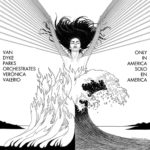 9. Van Dyke Parks & Verónica Valerio, “Only in America–Solo en América” (Modern Recordings) & Okuté, S/T (Chulo) As was mentioned earlier this week in part one of 2021’s best reissues, rarely do singles and EPs make these lists, but there are exceptions, as is the case this year with the repress of Maximum Joy’s debut 12-inch (which inspired the observation), as so it is with this 4-song 10-inch.
 “Only in America–Solo en América” is a collaboration of uncommon richness, though that’s not especially surprising, as Van Dyke Parks is handling the orchestrations, and he’s near the very top of his game. This is immediately apparent in the opening version of Agustin Lara’s “Veracruz,” and it continues through the three original compositions by Valerio. Make that three vibrant compositions by Valerio. Whose singing (and speaking) elevates this EP to a special plateau. And the cover art by Klaus Voormann? Mighty nice on the eyes.
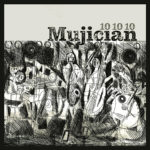 5. Mujician, 10 10 10 (Cuneiform) + Paul Dunmall, Keith Tippett, Philip Gibbs, Pete Fairclough, Onosante (577) Amongst the honorable mentions this year is the initial handful of installments (including a compilation) in Decca’s British Jazz Explosion series, which does a very fine job getting the ball rolling in regards to the worthiness of a scene that’s still thriving in multiple ways (that’s what we call foreshadowing). But in terms of retrospective releases of Brit jazz, I must admit that this pair of discs pulled my chain most effectively in 2021.
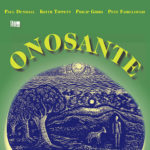 Keith Tippett, likely the most well-known member of Mujician, died on June 14, 2020, spelling the end of the group, though to my knowledge they hadn’t been active for quite a while, as 10 10 10 is designated as their final studio album, cut in Bristol Music Studios in Bristol, UK on October 10, 2010 (hence the title). Onosante was recorded on November 15, 2000, initially released on CD in an edition of 100, with guitarist Philip Gibbs and drummer Pete Fairclough joining Dunmall and Tippett for a dialogue that’s effectively as leaderless as 10 10 10.
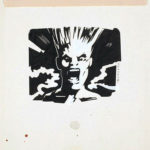 4. Screamers, Screamers Demo, Hollywood 1977 (Superior Viaduct) + The Gun Club, Fire of Love Deluxe Edition (Blixa Sounds) In the never-ceasing ever-flowing world of reissues and archival collections, there’s a need to single out the truly essential items from those that are merely very good or (certainly) less, and not just at the end of a calendar year.
 Now, a fair argument can be made that dropping The Gun Club’s debut album onto this list is just squeezing out the reissue of a punk album that’s in greater need of a spotlight in 2021. Yes, Fire of Love has been reissued a handful of times (including by the very label that put out the Screamers record above) and it’s never been hard to find, but never in an edition with bonus tracks, and certainly not with an entire previously unreleased live set (Live at Club 88 – March 6, 1981) attached.
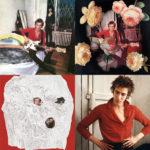 5. Richard Hell and the Voidoids, Destiny Street Complete (Omnivore Recordings) + Bush Tetras, Rhythm and Paranoia: The Best of Bush Tetras (Wharf Cat) Having been a fan of Hell and the Voidoids’ second and final album since the late 1980s (yes, having sought it out in order to hear “Time,” which had been covered by the Minutemen on their posthumous live comp Ballot Result), I’d long considered it an underrated effort by one of punk’s true originators, and also something of a final (musical) statement, as hardly a recorded peep had been heard from Hell (Dim Stars excepted) for a long while after Destiny Street’s 1982 release.
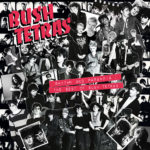 The reasons for pairing Bush Tetras with Richard Hell should be pretty clear. There’s geography for one, specifically NYC. There’s genre for another. Sure, Hell is a cornerstone of the First Wave while Bush Tetras are rightly tagged as belonging to the No Wave, but from my perspective, and not to get all Billy Joel up in here, it’s all punk rock to me.
 4. Kazuki Tomokawa, 1975–1977 (Blank Forms) + V/A, The Harmonic Series II (Important) 1975–1977 is a 3CD set collecting three LPs, Finally, His First Album (1975), Straight from the Throat (’76), and A String of Paper Cranes Clenched Between My Teeth (’77), all originally issued by Harvest Records (note: not the UK Harvest Records) and all to be reissued separately on vinyl by Blank Forms in 2022 (the three are available for pre-order now, with April the prospective release month as of this writing). The memoir Try Saying You’re Alive!: Kazuki Tomokawa in His Own Words is also available now in hardcover and paperback from Blank Forms Editions.
 The Harmonic Series II is comprised of six long-form works in just intonation, one each per album side by Kali Malone, Duane Pitre, Catherine Lamb, Tashi Wada, Byron Westbrook, and Caterina Barbieri. It follows the first installment from 12 years hence, that one issued on CD, with both curated by Pitre. It all joins together to deliver not just a wonderful collection of sounds, but an affirmative statement on the health of an avant-garde tradition that spans back to the 1960s.
 NEW RELEASE PICKS: Duane Pitre, Omniscient Voices (Important) Pitre is an American experimental composer and musician (borrowing the description from his website) with an extensive discography in the ballpark of 20 full-length releases including collaborations (and excluding compilations, like this year’s outstanding The Harmonic Series II, also on Important), though for Omniscient Voices Pitre is in solo mode on electronics and a justly tuned piano. Equally prioritizing the piano and the electronics, Pitre employs a Max/MSP-based generative network to convert his piano motifs into data that is then fed into a pair of polyphonic, microtonal hardware synths with patches of Pitre’s own authoring. There is also controlled improvisation. The complexity of Pitre’s method (and I’ve even synopsized a bit) might suggest a rigorous if not quite unrelenting experience, but the five pieces (fitting nicely onto LP) engage with the minimal (cited influences: Morton Feldman, Arvo Pärt, Philip Glass, Steve Reich) in a productive and often surprising manner. Tense resonances are plentiful, but also an underlying sense of order. A
 Gas, Der Lange Marsch (Kompakt) Gas is the ambient-techno project of Wolfgang Voight, debuting with a self-titled record in 1996, followed by Zauberberg the next year and Königsforst in 1998 (these three were compiled in the 10LP set titled Box in 2016), and then a long break that ended in 2017 with Narkopop. Arriving in 2018 was Rausch, and now Der Lange Marsch, which is comprised of 11 pieces, all of them title-tracks numbered sequentially. Purchasing either the 2LP, CD, or digital from Kompakt’s online store comes with an email download of the 11 files plus all the music in one file as a continuous track (not sure how this works with purchases made in brick-and-mortar shops or even other online retailers, as there is no download card). I mention the continuous track because it would seem to be the best (though certainly not the only) way to experience this set, partly because once the rhythm kicks in, it doesn’t let up, and it doesn’t really change). Still, don’t let the ambient or minimal descriptor give you the wrong idea. There is a lot going on throughout Der Lange Marsch, all of it worthy. A-
 REISSUE/ARCHIVAL PICKS: V/A, Etching the Voice: Emile Berliner and the First Commercial Gramophone Discs, 1889-1895 (Archeophone) Captured by Emile Berliner’s disc gramophone in Europe (Germany to be exact) between the years of the title, these 102 tracks on two CDs represent, per Archeophone (frankly experts on the matter), the earliest and also the scarcest manufactured sound recordings in the world. That wall of LPs you’re (hopefully) cultivating? These sounds are square one. But if it’s a lengthy plunge into late 19th century musicality you seek, please adjust those expectations. Musical pieces, mostly played or sung solo but occasionally by bands or choirs, are certainly part of the weave, but so are recitations of speeches, nursery rhymes, jokes and prayers (mostly in German, sometimes in English or Spanish). There’s even a person clucking like a chicken and barking like a dog. Sweet. Surface noise is abundant, but in fact these recordings sound better now than they ever did before, even when new. It is a fascinating trip enhanced by the wonderful 80-page booklet. A
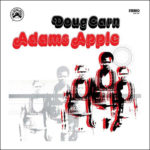 Doug Carn, Adam’s Apple (Black Jazz – Real Gone) This is the fourth and final record multi-instrumentalist (with a focus on keyboards) and bandleader Doug Carn made for the Black Jazz label (nobody made more, not even the guy who founded the label, Gene Russell). It’s also often nearer to progressive R&B than jazz (“Mighty Mighty” by Earth, Wind & Fire gets a nice cover, that in a sweet twist, delivers Adam’s Apple one of its jazziest moments), but with other enhancing elements integrated into the scheme, e.g. proggy organ (see “The Messenger” for evidence), numerous spiritual jazz motions, and some very interesting use of Moog synth (again, scope out “The Messenger”) Plus, even as Carn’s vocalist wife Jean Carn has departed the scene, there’s still an abundance of vocals (John Conner and Joyce Green joining Doug for the duties). Also: Calvin Keys on guitar. While Adam’s Apple strives for accessibility, it lacks in any brazen commercial gestures, unless you consider R&B to be a brazen commercial gesture. In which case…what in the fuck are you thinking? A-

 NEW RELEASE PICKS: Beauty Pill, “Instant Night” (Northern Spy) The title track of this 4-song EP came out digitally last year. In his notes accompanying this physical expansion (clear vinyl in a transparent plastic sleeve and a clear CD with a silver center in a transparent jewel case), Beauty Pill’s singer-guitarist-producer-chief songwriter Chad Clark describes the song’s political-protest genesis, it’s poetical (rather than polemical) sensibility, and it’s unexpectedly quick finish via socially distanced recording (on a rooftop), so that the cut was rush released by Northern Spy in hopes of inspiring citizens to vote in the Presidential election in November of 2020. The track is also noteworthy for its lack of drums and for highlighting Beauty Pill’s woodwind quartet. Clark says it sounds like Phillip Glass music, which is detectable but not blatantly. The main thing is that the song is built to last rather than carrying the rapid-fire datedness of so much political music. The drums roll back into the picture on the other cuts, and the horns stick around for the swank “You Need a Better Mind,” which gets a nifty remix. A-
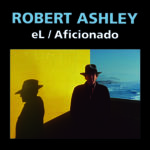 Robert Ashley, eL / Aficionado (2021) (Lovely Music, Ltd.) Per the title, this is a 2021 recording of an opera by the late avant-gardist Ashley, a work that premiered in 1987 with many performances following over the next seven years and a prior recording released by Lovely Music in ’94. Until October 21-23 of this year at Roulette in NYC, the opera was last performed in 1995. This CD, released on 10/22, features the cast of the 2021 production, with mezzo soprano Kayleigh Butcher stepping into the role formerly played by baritone Thomas Buckner. eL / Aficionado offers a series of conversations between an “agent” (Butcher) and her three interrogators (Brian McCorkle, Interrogator No. 1; Bonnie Lander, Interrogator No. 2; Paul Pinto, Interrogator No. 3). Espionage and intrigue are essential components in the work, but Ashley’s intent wasn’t to construct a spy story, not even a post-modern/ nonlinear example of such. Instead, the unwinding complexity seems focused upon the friction between public personas and private-inner lives. Tom Hamilton’s orchestration, recording, and mixing are essential. A-
 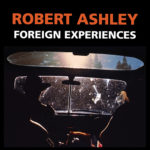 REISSUE/ARCHIVAL PICKS: Robert Ashley, Foreign Experiences (Lovely Music, Ltd.) For this 1995 recording of Foreign Experiences, an opera that’s part of Ashley’s early 1990s tetralogy, with Perfect Lives and Atalanta (Acts of God) to follow, Sam Ashley is Don and Jacqueline Humbert is Linda, characters familiar from Improvement (Don Leaves Linda), which preceded Foreign Experiences in said tetralogy, first recorded for Nonesuch in 1991 (a new recording of Improvement (Don Leaves Linda) was released on CD in 2019 by Lovely Music, featuring a new group dedicated to realizing Ashley’s work). For this release of Foreign Experiences, the ensemble consists of Robert Ashley himself along with Thomas Buckner, Margareta Cordero, Joan La Barbara, and Amy X Neuburg, this group having interpreted Ashley’s work from 1992-2012. Here, they are recorded by Tom Hamilton and Cas Boumans, with the release mixed and edited by Hamilton. Even at this relatively early point, the “band” is in prime form, and the prose is some of Ashley’s very greatest. He was an absolute master of language. A+
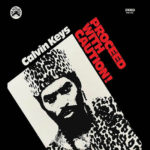 Calvin Keys, Proceed With Caution (Black Jazz – Real Gone) Keys got his start in the ’60s backing up a slew of soul jazz organ heavyweights, and on Shawn-Neeq, his debut as leader from 1971 (reissued early in 2021 as part of Real Gone’s Black Jazz reissue program and already sold out at the source), it’s not hard to tell, as he has a crisp, lithe, clean approach that’s occasionally reminiscent of Grant Green. Keys notably nixed the organ for Shawn-Neeq, electing instead for the electric piano of Larry Nash, a decision retained for Proceed With Caution, though the pianist this time is Kirk Lightsey. Those allergic to Fusion need read no further, but ears open to the style should understand that while Shawn-Neeq is a solid effort, its follow-up is an all-around improvement; the scope is broader both instrumentally and compositionally, there’s plenty of heat and edge, and nary a trace of smoothness. The year was 1974. Had this been released by one of the major labels in the mid-’70s, say Columbia or Warner Brothers, my guess is it would be perennially in print rather than getting its first-time vinyl reissue in 2021. A–