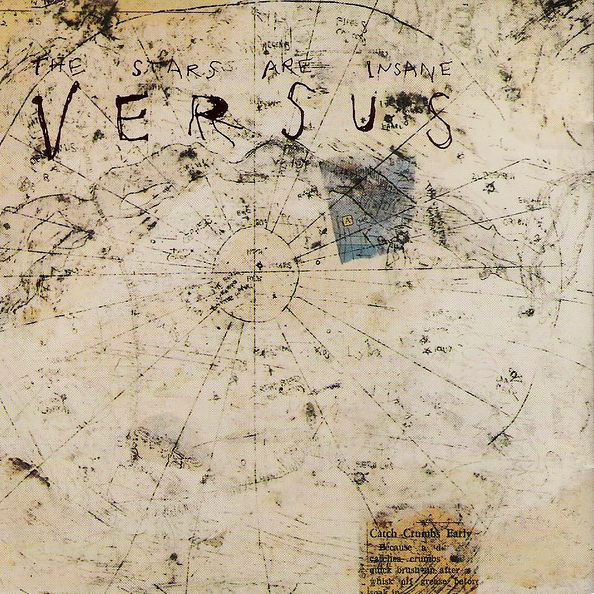
From the point of their arrival in 1992, New York City’s Versus excelled as one of the decade’s stronger melodic rock units, shaped but in no way constrained by the sounds of North American indie precedent. They released an impressive series of discs on a succession of labels, and amongst the best is the ’94 full-length The Stars Are Insane.
Amidst the ‘90s indie flood Versus stood out as a reliable breath of fresh air both on recordings (of which there are quite a few) and through a steady flow of live gigs. A large part of the group’s lasting appeal rests on how they didn’t easily fit into any of the tidy indie subcategories that thrived during the period.
Like some of the most rewarding convulsions in ‘90s indie, Versus had direct ties to the previous decade, specifically through Flower, a band formed in ’86 NYC by Richard Baluyut, Rob Hale, Yosh Najita, and Ian James (later of Cell); subsequent members included Andrew Bordwin (also of Cell and Ruby Falls), plus Baluyut’s brothers Ed and Jim. Between ’87 and ’90 they put out a 45, the 12-inch EP “Crash” (produced by Kramer) and a couple LPs, Concrete and Hologram Sky.
Through all this activity Flower remained solidly underground, this writer knowing not of their existence until the Bear and Simple Machines labels gathered the albums onto Concrete Sky, a ’94 compact disc highlighting considerable influence from Sonic Youth (no surprise given the choice of moniker), a factor that extended onward into the formation of Versus.
Pyroclastic Records is on a tear. The label founded in 2016 by pianist-composer Kris Davis can perhaps be described as oriented toward contemporary progressive jazz, but as the music reviewed below by Cory Smythe, Eric Revis, Angelica Sanchez and Marilyn Crispell, Nate Wooley, and Junk Magic reveal, that assessment is, to varying degrees, limiting. What’s crystal clear is that Pyroclastic is an artist-focused label, and that this column is an early spotlight on some of the best recordings of 2020. All five are out now on CD with design and layout of unusually high quality.
Cory Smythe is a pianist of extensive experience, having played with Anthony Braxton, Ingrid Laubrock, Peter Evans, Tyshawn Sorey, Vijay Iyer, Nate Wooley, and Hilary Hahn; with her, he won a GRAMMY in 2015 for the album In 27 Pieces: The Hilary Hahn Encores. That achievement reinforces Smythe’s abilities in the classical field, but with Accelerate EveryVoice he combines elements of jazz with the fascinating and often hallucinatory contributions of five vocalists recruited from the a cappella, new music, and improv scenes.
There is also a lengthy dive into environmental New Age, but that piece, “Piano and Ocean Waves for Deep Relaxation” (inspired by a work by Annea Lockwood), closes the record, and in this case, it’s surely better to start at the beginning. A tip-off to Smythe’s conceptual foundation here is found in the CD’s title, which references Andrew Hill’s splendid choral-infused LP of 1970, Lift Every Voice, and by extension, James Weldon Johnson’s “Lift Ev’ry Voice and Sing,” a poem-song that’s been long-known as the Black National Anthem.
The singing at times recalls straight a cappella action with direct ties to the Yale Whiffenpoofs channeling the brilliance of Shelley Hirsch, is at other moments like a mashup of the Gyuto Monks and the Swingle Singers, and in a few spots is similar to a pitch-shifted and speed-manipulated blend of scat-singing and speaking in tongues. Absorbed in combo with Smythe’s piano and electronics, the whole is definitely post-category, and with an added dimension of social commentary. Fuck, yeah. A
One of the sharpest bands to have blossomed amid the original Brit indie pop explosion was Talulah Gosh, formed in Oxford in 1986 and burning bright for just two years. Their output was considerable during that period, as collected on Was It Just a Dream?, which gets a fresh edition on December 11 from Damaged Goods Records. It arrives in conjunction with A Bout de Heavenly, the band spanking new singles compilation from Heavenly, the outfit that emerged after Talulah Gosh’s dissolution. Absorbed together, these releases document a journey from the twee side of ’80s guitar pop toward the ’90s indie scene to rub shoulders with Riot Grrl and even burgeoning Britpop. They deliver a helluva ride.
Was It Just a Dream? was first issued in 2013 as an expansion upon Talulah Gosh’s posthumous discographical compilation Backwash, which came out in 1996, fittingly via K Records. Like Backwash, Damaged Goods’ update requires four sides of vinyl (while losing nothing in the process), which should only underscore the prolificacy of the band.
Talulah Gosh commenced as guitarist-vocalist Amelia Fletcher, her drummer brother Mathew, guitarist-vocalist Elizabeth Price, lead guitarist Peter Momtchiloff, and bassist Rob Pursey, who was the first to quickly leave in ’86, replaced in short order by Chris Scott. Price departed the next year, with Eithne Farry stepping in.
It’s important to note that Talulah Gosh thrived as a singles band in the literal sense, as they never released a non-comp full-length album while extant, although 12-inch EPs expanding or combining 45s do figure in their catalog. That means Was It Just a Dream? helps conserve shelf space as it documents all the studio material and two radio sessions for the BBC; the additional cuts are four demos first released by Damaged Goods on a 45 for Record Store Day way back in 2011.
Part three of the TVD Record Store Club’s look at the new and reissued releases presently in stores for November 2020. Part one is here and part two is here.
NEW RELEASE PICKS: Lisa/Liza, Shelter of a Song (Orindal) Lisa/Liza is singer-songwriter Liza (pronounced Lisa) Victoria, who resides in Portland, the one in Maine. This is her third LP for Orindal (she’s also issued a pair of cassette EPs for the label), and after welcoming additional instrumentalists on her prior effort Momentary Glance, she returns to solo mode here with eight tracks recorded live in a kitchen with nary an overdub. Victoria’s sound lands securely in the late night folk zone, with singing that’s pretty but sturdy, delivery that’s emotional but in control, and fingerpicking that is often gentle but with an invigorating tension and flashes of sharpness. Additionally, Victoria has the ability to tackle topics (the suicide of a friend on Momentary Glance, her own chronic illness on this album) that’s stimulating in its seriousness rather than burdensome. Still, it’s difficult to deny this record is a heavy experience, but that’s ultimately to Victoria’s credit. Shelter of a Song is unlikely to get many back-to-back spins, but when it is played it will surely leave an impression. A-
Enrique Rodríguez and the Negra Chiway Band, Fase Liminal (Soul Jazz Records) One of the dangers with spiritually focused music is an overflowing bliss that deflates into insubstantiality. Fase Liminal, which can be succinctly tagged as contemporary spiritual jazz from Chile, doesn’t have this problem, largely because the range of influence is fairly wide, so that an appealing balance is struck between free jazz fire and modal fusion textures, with electric keyboard prevalent. And so, not only does Rodriguez and band avoid getting too airy, but they also avoid faltering into hackneyed vamping or technique-flaunting noodles. Hooray! And while there’s an abundance of percussion across the record, rhythm doesn’t dominate the proceedings, as the horn playing is rich and occasionally raucous. This is true in particular during the closing alt take of “Dónde ?,” which attains levels of collective intensity recalling Sanders’ Karma but with piano that brought to mind LaMont Johnson’s playing on Jackie McLean’s “Hipnosis.” Everything clicks, even the flute and vocals. A-
REISSUE/ARCHIVAL PICKS: V/A, CUBA: Music and Revolution: Culture Clash in Havana: Experiments in Latin Music 1975-85 Vol.1 (Soul Jazz) This set, issued in 3LP and 2CD editions, arrives in conjunction with the hardcover book CUBA: Music and Revolution: Original Album Cover Art of Cuban Music: Record Sleeve Designs of Revolutionary Cuba 1959-90. Both the book and this collection are the handiwork of Gilles Peterson and Stuart Baker, their third such collaboration (the prior two delved into revolutionary jazz and bossa nova), and as these selections play it’s abundantly clear, even without access to the book (which isn’t available in the US until December 11), that the compilers are at the very top of their game. Now, you might’ve noticed that the book tackles a much longer timeframe than the compilation. That’s okay. The compressed focus of Experiments in Latin Music allows for a deep immersion into a transitional period rather than surface-skimming a longer span of years. Furthermore, it’s stated that most everything here was previously unheard outside Cuba, making this a feast for the curious (out 11/27). A
MIYUMI Project, Best of the MIYUMI Project (FPE) Now 20 years strong, the MIYUMI Project is a Chicago-based Asian-American / African-American collaboration founded and led by bassist Tatsu Aoki. Drawn from the group’s sizeable discography, these nine selections span four sides of vinyl (CD is also available) and from all research appears to by MIYUMI Project’s debut on wax. The sound is a synthesis of the Japanese taiko drumming tradition and avant-jazz improvisational firepower, with a sturdy connection to the Windy City’s AACM, including members Ed Wilkerson and Mwata Bowden on reeds and Dushun Mosley on drums. Aoki, who was part of Japan’s experimental scene before moving to the USA in 1977 (Chicago in ’79), brings a steadying maturity (and robust bass) to this fusion, though that’s not to infer that things don’t get wild. They do. Things are also consistently rhythmic, rising to a powerhouse level in the nearly 16-minute “Episode One.” Along with spirited expansive blowing, there is beaucoup string scrape, which only increases the fortitude of the MIYUMI Project’s bedrock. Compilations rarely get any better than this one, which culminates with an unreleased live track. A
Formed in 1978 by Daniel Miller, Mute Records has prospered in the decades since and continues flourishing right up to the present, as is made clear by the 2020 releases reviewed below by Daniel Avery, Apparat, Nicolas Bougaïeff, HAAi, Pole, and Cabaret Voltaire. With the exception of the digital-only material by Apparat, everything is available on vinyl and CD, and it’s all out now, except for Shadow of Fear by Cabaret Voltaire, which arrives on November 20.
Daniel Avery made his initial splash back in 2013 with his full-length debut Drone Logic, but more recently, as in earlier this year, he issued Illusion of Time, a collab with Alessandro Cortini (he of Nine Inch Nails). Love + Light is described as a surprise release on Mute/Phantasy in the US and Canada and on Phantasy alone throughout the rest of the world. No longer a surprise: the digital has been out since June, but the CD and vinyl have belatedly shipped earlier in November.
While Illusion of Time is notable for the absence of rhythm, Love + Light is drenched in club-thump underscoring its maker’s beginnings in techno. Some might wonder if Avery’s backsliding, but it’s really more a case of his undiminished interest in the style. I’ll add that the record effectively branches out, and right away with a slice of ambient in “London Island.” He also ratchets up the racket in “Searing Light, Forward Motion.” Note that the vinyl offers 12 tracks and the full release features 14 for a total just a smidge over one hour, as Avery’s individual selections are largely concise. B+
Apparat, aka Berlin-based electronic musician Sascha Ring, has also moved away from dancefloor-ready techno, heading toward the ambient but more recently soundtrack works as documented in an aptly named series of digital releases. The first, Soundtracks: Capri-Revolution, was review in TVD’s New in Stores column on May 1. We consider the subsequent three here.
Soundtracks: Stay Still, recorded for a German feature directed by Elisa Mishto, came out in May, and it blends hovering, glistening ambience with melodic touches, but with the synth-poppish “BK LULU,” complete with gal vocals, dropped roughly in the middle. Released in June, Soundtracks: Dämonen provides the music for a theatrical play by Sebastian Hartmann adapting Dostoevsky’s Demons, with an emphasis on chamber strings (at times heavily bowed, very nice), a little spare pluck-strum, and even some cathedral-style organ.
But it’s not like he lost touch with his electronic side. The same is true of Soundtracks: Equals Sessions, which was issued in July as the final entry in the series, featuring work from Ring and Dustin O´Halloran for the 2015 feature by Drake Doremus. As a dystopian sci-fi romance starring Kristen Stewart, Equals the film is a higher-profile and bigger-budget affair than either Stay Still and Dämonen, a reality that’s absorbable as Equals Sessions plays, though there is stylistic unity, including some churchy keyboard and some singing (guy vocals this time out). B+/ A-/ A-
Although Holy Motors hails from Tallinn, Estonia, their music is perfectly suited for a road trip in a gas-guzzling boat of a car roaring westward across the expanse of the USA. Featuring songwriter and guitarist Lauri Ruas with vocals by songwriter Eliann Tulve, the band, formed in 2013 when Tulve was just 16 years old, is completed by guitarist Gert Gutmann and drummer Caspar Salo. Their sophomore full-length Horse continues to hone a shoegazing, twangy, Mazzy Star-ish sound to productive result. The record’s out now on vinyl, digipak compact disc, and digital through Wharf Cat Records of Greenpoint, Brooklyn.
The Bandcamp bio for Holy Motor’s offers that they are a “dark twang & reverb band from a nonexistent movie.” But as others have observed, they share a name with an actual film, specifically the most recent completed feature, from back in 2012, by the great (and very underrated) French auteur Leos Carax. Additionally, Holy Motors list amongst their achievements a gig in the support spot for a screening of Jim Jarmusch’s 1989 film Mystery Train.
Listening to Holy Motors’ latest while contemplating the allusions in their bio to cowboys and cowgirls and the old West, I’d say that double billing them with Mystery Train was a smart move, as Jarmusch sets his film in Memphis, TN but tells a series of stories about foreign visitors to the city. This complements Holy Motors’ adoration and embodiment of bygone American lore; the band furthermore cite Terrence Malick’s Badlands and Wim Wenders’ Paris, Texas as favorites.
Often described as a neo-noir, Badlands is set at the turn of the 1960s in the titular region of the USA and was the first feature from perhaps American cinema’s prime transcendentalist, which is to say that while American by birth, Malick is unconstrained by borders. Paris, Texas, which can be described as the unfolding mystery of how a relationship came to be broken (complete with a child), also features scenes of Harry Dean Stanton walking across dusty landscapes in the Lone Star State.
Part two of the TVD Record Store Club’s look at the new and reissued releases presently in stores for November 2020. Part one is here.
NEW RELEASE PICKS: Gwenifer Raymond, Strange Lights Over Garth Mountain (Tompkins Square) You Never Were Much of a Dancer, Welsh guitarist Gwenifer Raymond’s debut from 2018, was a knockout that underscored the perseverance and the sheer reach of the American Primitive style while driving home the pure skill and the youthful energy of its maker. Now, ability is an essential baseline ingredient in the expression of the American Primitive, but the spirit of young is by no means a prerequisite. In Raymond’s example across this oft exquisite set of eight pieces, the spark is distinct, in her estimation punkish, and coupled with raw power and edge that took me to some rather unexpected places; during “Gwaed am Gwaed” for instance, I couldn’t shake thoughts of Sonic Youth, which might not seem like a big deal, except that it’s just Raymond playing an acoustic guitar in her basement flat (the album was recorded in quarantine). The artist describes this LP as an expression of Welsh Primitive (channeling her country’s folk horror in the process), which unwinds here as a striking new development in Guitar Soli. A
Sam Burton, I Can Go With You (Tompkins Square) Burton hails from Salt Lake City, UT but currently resides in Los Angeles. Although he’s had a CDR and a pair of cassettes released on the Chthonic label, this is his proper full-length debut, and it’s a wonderful trip into the folky singer-songwriter zone. In the PR for this release, John Tottenham describes Burton as extending from the “downer folk” subgenre and specifically names Bob Desper, Dana Westover, and Tucker Zimmerman as antecedents. I think that’s cool, but I’ll merely add that these 11 songs also strike my ears as reflective of Fred Neil and the Tims, Hardin and Buckley…make that prime Tim Buckley. Now, many capable contempo songwriters can strap on a guitar, step in front of a mic, and play the approximation game (which might be why Tottenham chose a different route of comparison), but Burton elevates matters significantly through compositions that reveal nary a hint of anxiety over any perceived similarities. The production by Burton and Jarvis Taveniere is faultless, and the playing is simply exquisite. One of the surprises of 2020. A
Susan Alcorn Quintet, Pedernal (Relative Pitch) Alcorn is well-described as a pioneer of the pedal steel guitar in improvised music, though most of her work has been in solo or duo settings. However, along with the size of the band, Pedernal is further distinguished as the first release devoted to Alcorn’s compositions. Her cohorts here are Mark Feldman on violin, Mary Halvorson on guitar, Michael Formanek on bass, and Ryan Sawyer on drums, a group of stellar players that can bring these elevated pieces to life without a hitch. There is familiarity here, as Alcorn plays in the octet of Halvorson, and with the guitarist and Formanek comprising 2/3rds of Thumbscrew. Indeed, a stated goal of Alcorn’s was to make this album with friends, but the pedal steel/ guitar/ violin melodic core and the sheer individual distinctiveness of the three raise Pedernal to rare heights. Formanek and Sawyer are expressive in the rhythm spot, and Alcorn’s compositions are splendid; I adore finale “Northeast Rising Sun.” Note: the CD and digital are available 11/13 but pressing plant delays have pushed back the vinyl until December. A
REISSUE/ARCHIVAL PICK: Love Tractor, S/T (HHBTM) For the October 23 drop of Record Store Day 2020, Love Tractor released new versions of two songs from this 1982 album, the Athens, GA band’s first (which has itself been remixed for this rerelease). The year of release positions them as one of the foundational acts in their scene, which became a huge deal in the College/ Alternative rock scheme of things, but if you are unfamiliar with Love Tractor and are imagining some variation on bookish jangle mumble, well don’t. If this non-vocal unit is reminiscent of any of their Athens contemporaries, it’s Pylon, but only a little bit, and mainly because the songs on this record possess an undercurrent that could be considered dancy. Really though, Love Tractor’s instrumental nature and the slightly Wavy angle of the songs has me thinking of the Portland, OR band of the same era, Pell Mell. Many outfits that operate sans a singer attempt to impress the listener with sheer ability. Love Tractor’s approach lacks ego, which nearly 40 years hence remains refreshing. A-
Omnivore Recordings has been one of the steadiest labels in the reissue and archival biz for a while now, as the releases covered in today’s column by Little Richard, Van Duren, and NRBQ should illuminate. But Omnivore also dishes the occasional contemporary album, which is the case with the latest from Joey Molland, formerly of Badfinger. Little Richard’s Southern Child arrives on vinyl for Record Store Day’s Black Friday. The CD follows on December 4. Most of these offerings are available on vinyl, and everything is on compact disc and digital. Considerations begin directly below.
Little Richard’s passing has been one of the lowlights of 2020. But one of the salves to this burn of bad news has been Omnivore’s reissue of Richard’s early ’70s albums for Reprise, which help to illuminate a comeback that produced a few minor hit singles and an appealing if uneven vitality beginning with The Rill Thing in 1970 and continuing with The King of Rock and Roll the following year (both were covered in our New in Stores column the week of September 17).
The Second Coming, his third (and last) record to be released by Reprise, hitting stores in 1972, didn’t yield any chart entries, but it’s the strongest of the bunch, partly because of sheer consistency spurred by a killer band that includes saxophonist Lee Allen and drummer Earl Palmer; even the pedal steel of Sneaky Pete Kleinow gets into the mix.
Another reason for the evenness of flow comes down to Bumps Blackwell’s return as producer, coupled with an emphasis on original material, although “The Saints” is a rewrite of a certain New Orleans cornerstone that hits like a mixture of Richard, The Coasters, and Isaac Hayes-style funk guitar. Not only does The Second Coming roll along with hardly a quality hiccup, the non-LP bonus tracks “Money Is” and “Do It to It,” both cut under the supervision of Quincy Jones for the film $ (Starring Warren Beatty and Goldie Hawn) avoid the aura of letdown that’s often associated with extras. CD and digital only. A-
Chicago’s The Flat Five features singer-songwriters and valued session vocalists Kelly Hogan and Nora O’Connor, NRBQ members Scott Ligon and Casey McDonough, and in-demand drummer (Modern Sounds/ Chris Foreman/ J.D. McPherson) Alex Hall. After too long a wait they are back with Another World, their sophomore full-length brimming with beacon-bright and utterly accessible vocals-driven classic pop, an approach that’s spiked with winning moments of eccentricity and surprises landing it solidly in the keeper category. It’s out on LP, CD and digital November 13 through the joint auspices of Pravda Records and Augiedisc Records.
Upon considering The Flat Five’s debut It’s a World of Love and Hope back in October 2016, I described them as a supergroup. Here it is four years later and I’m thinking that designation is a tad misleading. Perhaps it’s more appropriate to call them a side-project that advances in fits and starts as time allows, as the participants are so busy elsewhere; it’s noted that The Flat Five only play one live show a year.
The thing, well, one thing, that keeps their music sharp is cohesiveness in the writing, as all of the songs on Another World (and their prior album) were composed by Scott Ligon’s older brother Chris. Make that cohesive and distinctive, as a significant percentage of the eccentricity mentioned above relates to lyrics that are appealingly descriptive and unusual, and right away in the opener to their latest, “Drip a Drop,” which offers organ tinged gal-pop ’60s-style, and with sexy sass in the words that might even stir a giggle from Millie Jackson. The cranky stabs of guitar are icing on the sugar cake.
It’s mentioned that Chris Ligon is a songwriter favored by that connoisseur of the comedic and oddball Dr. Demento, and “Look at the Birdy,” which details a department store portrait photographer’s attempts at getting a child to smile for the camera, makes it pretty clear why. But even with a few prime laugh lines (“welcome to Sears”/ “you really got you some ears”) it avoids faltering into a fest of yuks.
The history of jazz is dominated by events transpiring in New Orleans, Kansas City, Chicago, California, and of course New York, but all the while the music was thriving elsewhere in a variety of styles. As evidence one need only inspect the outstanding new compilation The Boston Creative Jazz Scene 1970-1983; collective improvisation, full-bodied fusion, post-Fire Music free wailing, consciousness raising spoken word, and advanced composition for large ensembles all helped shape the scene. It offers an exhaustive amount of info in an 80-page book, and is available on 2LP and CD from Cultures of Soul.
Many thousands undertook the migration to well-ensconced cultural centers in hopes of adding to the jazz discourse and achieving something immortal; a few did, the vast majority did not, and yet their accumulated sonic narrative is still a formidably mountainous accumulation of sound. A percentage of those in the early navigation stages of the established jazz canon might find Cultures of Soul’s latest compilation a daunting item to be soaked up only after contending with a few hundred records of higher profile.
This is a questionable approach. For starters, the canon isn’t going anywhere, and The Boston Creative Jazz Scene 1970-1983’s standard of quality is likely to get absorbed into the annals of important jazz recordings anyway. Furthermore, Mark Harvey’s extensive notes do a fine job of illuminating the specifics of the city’s jazz environs (particularly venues and educational avenues) and relating them to the East Coast and Midwest scenes while providing background into the larger avant-garde and pinpointing a succession of noteworthy Boston players in the style.
Admittedly a wide field, Harvey details the early Boston avant motions of pianist Cecil Taylor and multi-instrumentalist Makanda Ken McIntyre, moves into groundbreaking work of pianists Lowell Davidson and Ran Blake (both of whom cut albums for ESP-Disk in 1965), bassist John Voigt (sessions with guitarist Joe Morris, saxophonist Jameel Moondoc and more), and The Fringe, a trio formed in the early ‘70s comprised of saxophonist George Garzone, bassist Rich Appleman, and drummer Bob Gullotti (their self-titled debut emerged in 1978).
Excelling at protest material before honing an introspective approach that’s been naggingly underappreciated over the years, Phil Ochs stands as one of the essential folksingers of the 1960s. Live in Montreal, 10/22/1966 combines his pointed takedowns of authority and injustice with early solo readings of his less explicitly political songwriting, and the combination illuminates the artist’s range and commitment.
The mixing of music and politics has often inspired snorts of derision from those who feel that art should serve a loftier purpose than didacticism, sloganeering, persuasion, or protest. I’ll confess up front to having occasionally expressed this view, mostly when the music was unsubtle or sanctimonious, but the tenor of the times has surely adjusted my thoughts.
The putdowns of yours truly used to be targeted at scads of hardcore kids obsessing over Reagan or Bush père and/ or fils, or at rock stars preaching about injustice from the comfort of their gilded mansions, but indeed, current events have taken such a severe turn toward the shitty that I’m unreservedly pining for an onslaught of young upstarts chanting slogans of dissent as they call out the oppressors by name. Furthermore, any wealthy celebs who want to get in on the action, please step right up.
Of course, ranting to the converted regularly achieves little more than bucking up morale, while upper-class activism often breeds alienation and the codification of opposing viewpoints. Listening to Live in Montreal, 10/22/1966, it occurs to me that I’m really hoping for a musician (or a few) who can cut through the ugliness to call out the bullshit with clarity and beauty.
Part one of the TVD Record Store Club’s look at the new and reissued releases presently in stores for November 2020.
NEW RELEASE PICKS:Lloyd Miller with Ian Camp and Adam Michael Terry, At the Ends of the World (FOUNTAINavm) Last year the Now-Again label reissued Miller’s Oriental Jazz, a very interesting excursion into what we’ll call global spiritual fusion with a Persian musical bent; Miller was a specialist in the region’s sounds, and for a fuller scoop please consult the December 5, 2019 edition of this column, where Oriental Jazz received a review. Miller recorded a whole lot more and has in fact stayed active, as this collaboration with multi-instrumentalists Ian Camp and Adam Michael Terry (the latter also the founder and operator of the FOUNTAINavm label) makes clear. Part of what raises my estimation for At the Ends of the World is the obvious disinterest in attempting to reprise the sound of Miller’s earlier stuff, either from the ’60s or of more recent vintage, such as his joint record with The Heliocentrics, which was released by the Strut label in 2010.
Slimming down to three players increases the intimacy and deepens the dialogue, which is quite welcome. Along with Camp and Terry, Miller is a multitasker, credited with piano, flutes, trumpet, Dilruba, Kamancheh, Santu and “various world instruments.” Indeed, there is a load of percussion from all the participants, as I’m pretty certain some overdubbing occurred. Camp’s upright bass is terrific, as is Miller’s trumpet, but of additional note is the warmth and clarity of the record, which is partly attributed to Terry, as he is cited in the promo description as producer. To elaborate on that role, he’s specifically credited with field recordings and “various ambient textures,” additives which strengthen the ties to what I’ll call rain-forest-style New Age. And that’s alright, as touches of psychedelia are also in the mix. And I’ll close by mentioning that “Dystopia Wind Dance” reminds me a little of Aussie’s The Necks (it’s that bass), which is a total positive. The same is true for the spots that suggest Alice Coltrane hanging out in a glade. A-
Trees Speak, Shadow Forms (Soul Jazz) With their second full-length of 2020 (Ohms came out back in March, also on Soul Jazz), the Tucson-AZ duo of Daniel Martin Diaz and Damian Diaz continues to impress. The basic info if you haven’t heard them is that they specialize in a boldly hued non-vocal psychedelia that’s informed by Krautrock spanning from motorik to kosmische, plus soundtracks of ’60s-’70s vintage, with a tendency toward Euro genre flicks; one might possibly pick up on Soul Jazz’s interest in such an outfit, but it’s worth noting that the label that issued Trees Speak’s S/T 2017 debut was Cinedelic, who also released the first record by Calibro 35. While nothing on Shadow Forms is funky exactly, there are a few stretches, like the vibraphone and fuzz guitar-laden suspense builder “Tear Kisser,” where I could’ve been bamboozled into believing that this was the Italian crew, though in fact much of this record (including a free bonus 7-inch with the first edition) is focused on cyclical and swirling synth motifs. But there is still plenty of rhythmic heft and forward motion to be had here. A-
Howlin Rain, Under The Wheels: Live From The Coasts, Vol. 2 (Silver Current) With Howlin Rain, the band’s founder Ethan Miller has progressed so far into crowd pleasing ’70s-style bluesy and jam-tinged, yet highly melodic (anthemic, even) rock action, that casual listeners might be stunned to learn he was once in a band of considerable heaviness, namely Comets on Fire. If I didn’t know, it’s possible I’d be a tad surprised myself, but the reality is there’s really no dissonance on hand: Howlin Rain was formed to scratch a certain stylistic itch, and in doing so with panache (that is, legit songs, dynamic precision and instrumental flair) they’ve developed a fanbase encouraging them to keep at it. And so, the second installment in the band’s live series. Like some of their contemporaries, Howlin Rain exude a few similarities to the Dead of the early ’70s, but this is largely fleeting. More prevalent are Allmans-like characteristics blended with a few servings of Humble Pie. And I’ll add that I can easily understand why Chris Robinson is such a fan. A swell soundtrack for sitting next to a keg in the early morning hours. A-
Tagging 577 Records as a free jazz label frankly short shrifts the enterprise run by saxophonist Daniel Carter and drummer Federico Ughi. While improvisation is vital to 577’s state of affairs, creative branching out is frequent, as evidenced by recent releases from Matthew Putman and Michael Sarian, the Cyclone Trio, TEST and Roy Campbell, Cooper-Moore & Stephen Gauci, Rachel Musson, SHIFA, Sarah Bernstein, and the Telepathic Band, all considered below. Diligent in making the music promptly available, all of 577’s wares are purchasable digitally, exclusively so with their sublabel Orbit577, as others get limited vinyl and CD editions. Bernstein’s Exolinger arrives November 6; the rest are out now.
Matthew Putman and Michael Sarian’s Improvisations Vol. II is the first of two Orbit577 releases covered in this piece, recorded in July of this year at Studio Hicks in Brooklyn. Keyboardist (and noted scientist) Putman has played on more than a half-dozen 577 releases including four from the Telepathic Band (reviewed below), but never in duo until now. The results, three selections totaling a little over 17 minutes, are enlightening, as he partners with trumpeter and fellow New Yorker (by way of Argentina and Canada) Sarian, who has released a handful of albums leading considerably larger bands.
As the timeframe and locale should indicate, this is a Covid-19-era recording (Vol. I, cut a month earlier, has been issued digitally on Bandcamp by the ears&eyes label), with the specific intent to keep the creative juices flowing during quarantine (Studio Hicks is in fact the trumpeter’s home). It delivers my introduction to Sarian’s playing, which is often warmly lyrical, a characteristic mingling with the bell-like tones of Putman’s electric keyboard to suggest a pair a really strong players cutting loose in a near-empty lounge shortly before last call. Their interaction gets intense, but beauty is a constant. A-
Cyclone Trio is tenor saxophonist Massimo Magee, drummer Tony Irving, and drummer Tim Green. Earlier this year, 577 released Magee and Irving’s outstanding Vitriol & the Third Oraculum, a nearly 50-minute dive into post-Fire Music thunder and skronk, with moments bringing Albert Ayler and Charles Gayle to mind, as it extended from the template established by Interstellar Space and Duo Exchange, both essential documents in the free jazz trajectory.
The addition of Green (previously heard with Magee and Joshua Weitzel on the Orbit577 release Live at Salon Villa Plagwitz) to Cataclysm… Live at Cafe Oto (recorded on March 10 of this year, the last gig at Cafe Oto prior to lockdown) naturally increases the expressive rumble, but Magee’s lung scorch surfs atop the fray with fervor and poise; at no point in the nearly 40 minutes is he audibly straining, and there are even a few stretches of melodicism that only increase similarities to the heyday of Impulse, ESP, and BYG/Actuel. And yet, Cataclysm isn’t beholden to the past as it blazes a trail for the future. A-
For some, the two early 1990s releases from New Zealand’s The Chills, Submarine Bells andSoft Bomb, served as a doorway of introduction to one of the finest tunesmiths in the whole pop-rock shebang. But for folks who were previously clued-in to the band’s work for the Flying Nun label, these albums, both cut for Slash Records, represent leader and sole constant Chill Martin Phillipps’ already considerable pop ambitions in full flower. After an exclusive early online release back in July, both albums are available worldwide on November 6 in fresh vinyl editions through Fire Records.
Although it was never my preferred format, back in 1990 when Submarine Bells came out, I was still in the habit of occasionally buying music on cassette. I mention this because I did indeed initially purchase Bells on that very format, a decision spurred by impatience, as on my visit, the store didn’t have any CD or vinyl copies in stock.
This pained me a little at the time, but I also knew I could remove the shrink wrap and pop that tape right into the car’s deck for immediate listening out on the highway, which was enticing as The Chills’ sound, which flows from a jangle pop/ indie pop fount with tangible if savvy nods to the 1960s, is well-suited for vehicular absorption. Upon reflection, Submarine Bells hits something of an apex in the windows down volume up mode, beginning with one of the band’s signature tunes, “Heavenly Pop Hit.”
That song’s stature relates largely to pure skill in the construction, but as said up above, Submarine Bells was many folks’ intro to The Chills, and sequenced on that album first, “Heavenly Pop Hit” no doubt deepened this first impression. Along with reaching No. 2 on the New Zealand singles chart (the album hit No. 1, as The Chills weren’t an u-ground thing at home), it snuck into the UK singles sales list at No. 97 and even made the Alternative Airplay chart in the US at No. 17.
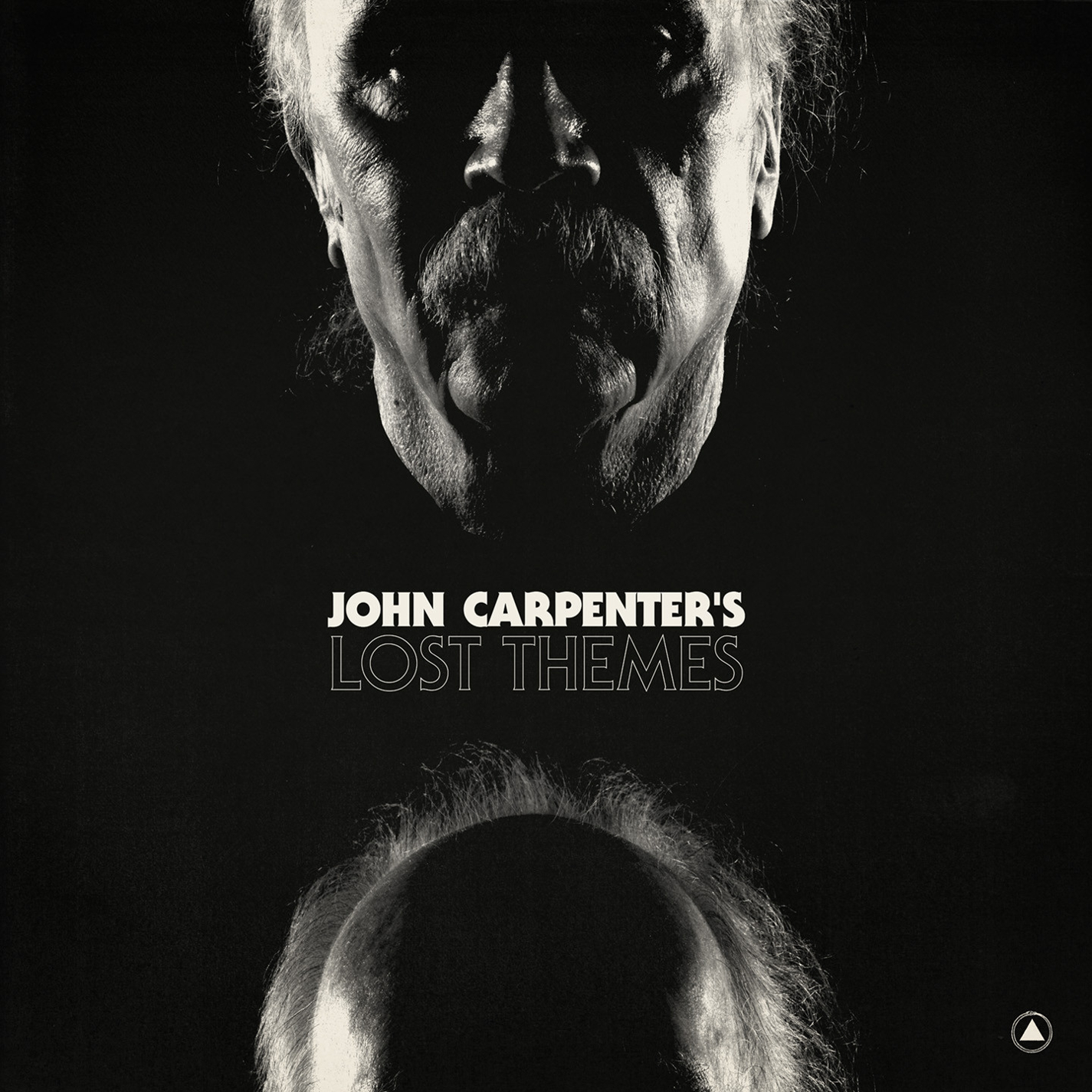
John Carpenter’s accomplishments as a director include a handful of masterpieces and a larger number of cult classics, his body of work defining him as a maestro of genre flicks and maker of personal films. Part of the distinctiveness relates to Carpenter’s frequent role as composer; he’s credited in this capacity on such heavyweights of the American Cinema as Assault on Precinct 13, Halloween, Big Trouble in Little China, and They Live. Now Sacred Bones offers Carpenter’s non-OST debut with Lost Themes, his legion of fans unlikely to require much persuading in order to investigate further.
I guess the mainstream consensus on John Carpenter is that he’s just one in a long line of filmmakers who started out strong, hung in there for a while and then faltered as time progressed. And our current motion picture industry does a good job of making it seem like he’s retired; his last effort was The Ward, which hit US theatres, or a few of them anyway, back in 2011. But for an ever growing pack of buffs, Carpenter is a very special auteur indeed. Gaining his biggest commercial and critical success with Halloween in 1978, it and the titles surrounding it in his filmography are trim, energetic no-nonsense affairs emerging from a motion-picture scene noted for self-consciousness and excessiveness.
Circa the late-‘70s, Coppola, Scorsese, Altman, Cimino, and even that lurid genre-dabbler De Palma were all clearly Artists. Where the family-friendly Lucas and Spielberg danced atop the rubble of the New Hollywood and ushered in the age of the multiplex, Carpenter rose out of the exploitation scene and subsequently spent the majority of his career in unfashionable if not always disreputable territory.
To elaborate, along with igniting the rapidly diminishing returns of the slasher film, Halloween spawned a string of sequels (the first of which he produced and wrote but didn’t direct) and the eventual Rob Zombie-helmed reboot. Also, two of his early features were made for TV (Someone’s Watching Me! and Elvis), while The Thing, now considered one of his triumphs, was once denigrated as a déclassé remake, its bleak tone and gruesome effects thrashed at the box office by the feelgood vibes of ET: The Extraterrestrial.


 Amidst the ‘90s indie flood Versus stood out as a reliable breath of fresh air both on recordings (of which there are quite a few) and through a steady flow of live gigs. A large part of the group’s lasting appeal rests on how they didn’t easily fit into any of the tidy indie subcategories that thrived during the period.
 Cory Smythe is a pianist of extensive experience, having played with Anthony Braxton, Ingrid Laubrock, Peter Evans, Tyshawn Sorey, Vijay Iyer, Nate Wooley, and Hilary Hahn; with her, he won a GRAMMY in 2015 for the album In 27 Pieces: The Hilary Hahn Encores. That achievement reinforces Smythe’s abilities in the classical field, but with Accelerate Every Voice he combines elements of jazz with the fascinating and often hallucinatory contributions of five vocalists recruited from the a cappella, new music, and improv scenes.
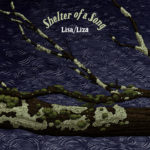 NEW RELEASE PICKS: Lisa/Liza, Shelter of a Song (Orindal) Lisa/Liza is singer-songwriter Liza (pronounced Lisa) Victoria, who resides in Portland, the one in Maine. This is her third LP for Orindal (she’s also issued a pair of cassette EPs for the label), and after welcoming additional instrumentalists on her prior effort Momentary Glance, she returns to solo mode here with eight tracks recorded live in a kitchen with nary an overdub. Victoria’s sound lands securely in the late night folk zone, with singing that’s pretty but sturdy, delivery that’s emotional but in control, and fingerpicking that is often gentle but with an invigorating tension and flashes of sharpness. Additionally, Victoria has the ability to tackle topics (the suicide of a friend on Momentary Glance, her own chronic illness on this album) that’s stimulating in its seriousness rather than burdensome. Still, it’s difficult to deny this record is a heavy experience, but that’s ultimately to Victoria’s credit. Shelter of a Song is unlikely to get many back-to-back spins, but when it is played it will surely leave an impression. A-
 Enrique Rodríguez and the Negra Chiway Band, Fase Liminal (Soul Jazz Records) One of the dangers with spiritually focused music is an overflowing bliss that deflates into insubstantiality. Fase Liminal, which can be succinctly tagged as contemporary spiritual jazz from Chile, doesn’t have this problem, largely because the range of influence is fairly wide, so that an appealing balance is struck between free jazz fire and modal fusion textures, with electric keyboard prevalent. And so, not only does Rodriguez and band avoid getting too airy, but they also avoid faltering into hackneyed vamping or technique-flaunting noodles. Hooray! And while there’s an abundance of percussion across the record, rhythm doesn’t dominate the proceedings, as the horn playing is rich and occasionally raucous. This is true in particular during the closing alt take of “Dónde ?,” which attains levels of collective intensity recalling Sanders’ Karma but with piano that brought to mind LaMont Johnson’s playing on Jackie McLean’s “Hipnosis.” Everything clicks, even the flute and vocals. A-
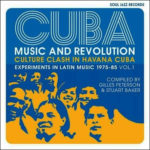 REISSUE/ARCHIVAL PICKS: V/A, CUBA: Music and Revolution: Culture Clash in Havana: Experiments in Latin Music 1975-85 Vol.1 (Soul Jazz) This set, issued in 3LP and 2CD editions, arrives in conjunction with the hardcover book CUBA: Music and Revolution: Original Album Cover Art of Cuban Music: Record Sleeve Designs of Revolutionary Cuba 1959-90. Both the book and this collection are the handiwork of Gilles Peterson and Stuart Baker, their third such collaboration (the prior two delved into revolutionary jazz and bossa nova), and as these selections play it’s abundantly clear, even without access to the book (which isn’t available in the US until December 11), that the compilers are at the very top of their game. Now, you might’ve noticed that the book tackles a much longer timeframe than the compilation. That’s okay. The compressed focus of Experiments in Latin Music allows for a deep immersion into a transitional period rather than surface-skimming a longer span of years. Furthermore, it’s stated that most everything here was previously unheard outside Cuba, making this a feast for the curious (out 11/27). A
 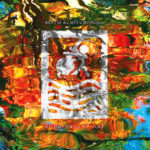 MIYUMI Project, Best of the MIYUMI Project (FPE) Now 20 years strong, the MIYUMI Project is a Chicago-based Asian-American / African-American collaboration founded and led by bassist Tatsu Aoki. Drawn from the group’s sizeable discography, these nine selections span four sides of vinyl (CD is also available) and from all research appears to by MIYUMI Project’s debut on wax. The sound is a synthesis of the Japanese taiko drumming tradition and avant-jazz improvisational firepower, with a sturdy connection to the Windy City’s AACM, including members Ed Wilkerson and Mwata Bowden on reeds and Dushun Mosley on drums. Aoki, who was part of Japan’s experimental scene before moving to the USA in 1977 (Chicago in ’79), brings a steadying maturity (and robust bass) to this fusion, though that’s not to infer that things don’t get wild. They do. Things are also consistently rhythmic, rising to a powerhouse level in the nearly 16-minute “Episode One.” Along with spirited expansive blowing, there is beaucoup string scrape, which only increases the fortitude of the MIYUMI Project’s bedrock. Compilations rarely get any better than this one, which culminates with an unreleased live track. A
 Daniel Avery made his initial splash back in 2013 with his full-length debut Drone Logic, but more recently, as in earlier this year, he issued Illusion of Time, a collab with Alessandro Cortini (he of Nine Inch Nails). Love + Light is described as a surprise release on Mute/Phantasy in the US and Canada and on Phantasy alone throughout the rest of the world. No longer a surprise: the digital has been out since June, but the CD and vinyl have belatedly shipped earlier in November.
 Soundtracks: Stay Still, recorded for a German feature directed by Elisa Mishto, came out in May, and it blends hovering, glistening ambience with melodic touches, but with the synth-poppish “BK LULU,” complete with gal vocals, dropped roughly in the middle. Released in June, Soundtracks: Dämonen provides the music for a theatrical play by Sebastian Hartmann adapting Dostoevsky’s Demons, with an emphasis on chamber strings (at times heavily bowed, very nice), a little spare pluck-strum, and even some cathedral-style organ.
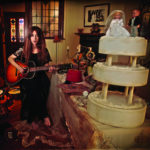 NEW RELEASE PICKS: Gwenifer Raymond, Strange Lights Over Garth Mountain (Tompkins Square) You Never Were Much of a Dancer, Welsh guitarist Gwenifer Raymond’s debut from 2018, was a knockout that underscored the perseverance and the sheer reach of the American Primitive style while driving home the pure skill and the youthful energy of its maker. Now, ability is an essential baseline ingredient in the expression of the American Primitive, but the spirit of young is by no means a prerequisite. In Raymond’s example across this oft exquisite set of eight pieces, the spark is distinct, in her estimation punkish, and coupled with raw power and edge that took me to some rather unexpected places; during “Gwaed am Gwaed” for instance, I couldn’t shake thoughts of Sonic Youth, which might not seem like a big deal, except that it’s just Raymond playing an acoustic guitar in her basement flat (the album was recorded in quarantine). The artist describes this LP as an expression of Welsh Primitive (channeling her country’s folk horror in the process), which unwinds here as a striking new development in Guitar Soli. A
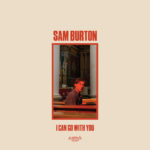 Sam Burton, I Can Go With You (Tompkins Square) Burton hails from Salt Lake City, UT but currently resides in Los Angeles. Although he’s had a CDR and a pair of cassettes released on the Chthonic label, this is his proper full-length debut, and it’s a wonderful trip into the folky singer-songwriter zone. In the PR for this release, John Tottenham describes Burton as extending from the “downer folk” subgenre and specifically names Bob Desper, Dana Westover, and Tucker Zimmerman as antecedents. I think that’s cool, but I’ll merely add that these 11 songs also strike my ears as reflective of Fred Neil and the Tims, Hardin and Buckley…make that prime Tim Buckley. Now, many capable contempo songwriters can strap on a guitar, step in front of a mic, and play the approximation game (which might be why Tottenham chose a different route of comparison), but Burton elevates matters significantly through compositions that reveal nary a hint of anxiety over any perceived similarities. The production by Burton and Jarvis Taveniere is faultless, and the playing is simply exquisite. One of the surprises of 2020. A
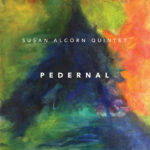 Susan Alcorn Quintet, Pedernal (Relative Pitch) Alcorn is well-described as a pioneer of the pedal steel guitar in improvised music, though most of her work has been in solo or duo settings. However, along with the size of the band, Pedernal is further distinguished as the first release devoted to Alcorn’s compositions. Her cohorts here are Mark Feldman on violin, Mary Halvorson on guitar, Michael Formanek on bass, and Ryan Sawyer on drums, a group of stellar players that can bring these elevated pieces to life without a hitch. There is familiarity here, as Alcorn plays in the octet of Halvorson, and with the guitarist and Formanek comprising 2/3rds of Thumbscrew. Indeed, a stated goal of Alcorn’s was to make this album with friends, but the pedal steel/ guitar/ violin melodic core and the sheer individual distinctiveness of the three raise Pedernal to rare heights. Formanek and Sawyer are expressive in the rhythm spot, and Alcorn’s compositions are splendid; I adore finale “Northeast Rising Sun.” Note: the CD and digital are available 11/13 but pressing plant delays have pushed back the vinyl until December. A
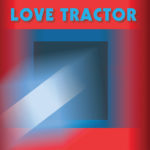 REISSUE/ARCHIVAL PICK: Love Tractor, S/T (HHBTM) For the October 23 drop of Record Store Day 2020, Love Tractor released new versions of two songs from this 1982 album, the Athens, GA band’s first (which has itself been remixed for this rerelease). The year of release positions them as one of the foundational acts in their scene, which became a huge deal in the College/ Alternative rock scheme of things, but if you are unfamiliar with Love Tractor and are imagining some variation on bookish jangle mumble, well don’t. If this non-vocal unit is reminiscent of any of their Athens contemporaries, it’s Pylon, but only a little bit, and mainly because the songs on this record possess an undercurrent that could be considered dancy. Really though, Love Tractor’s instrumental nature and the slightly Wavy angle of the songs has me thinking of the Portland, OR band of the same era, Pell Mell. Many outfits that operate sans a singer attempt to impress the listener with sheer ability. Love Tractor’s approach lacks ego, which nearly 40 years hence remains refreshing. A-
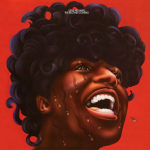 Little Richard’s passing has been one of the lowlights of 2020. But one of the salves to this burn of bad news has been Omnivore’s reissue of Richard’s early ’70s albums for Reprise, which help to illuminate a comeback that produced a few minor hit singles and an appealing if uneven vitality beginning with The Rill Thing in 1970 and continuing with The King of Rock and Roll the following year (both were covered in our New in Stores column the week of September 17).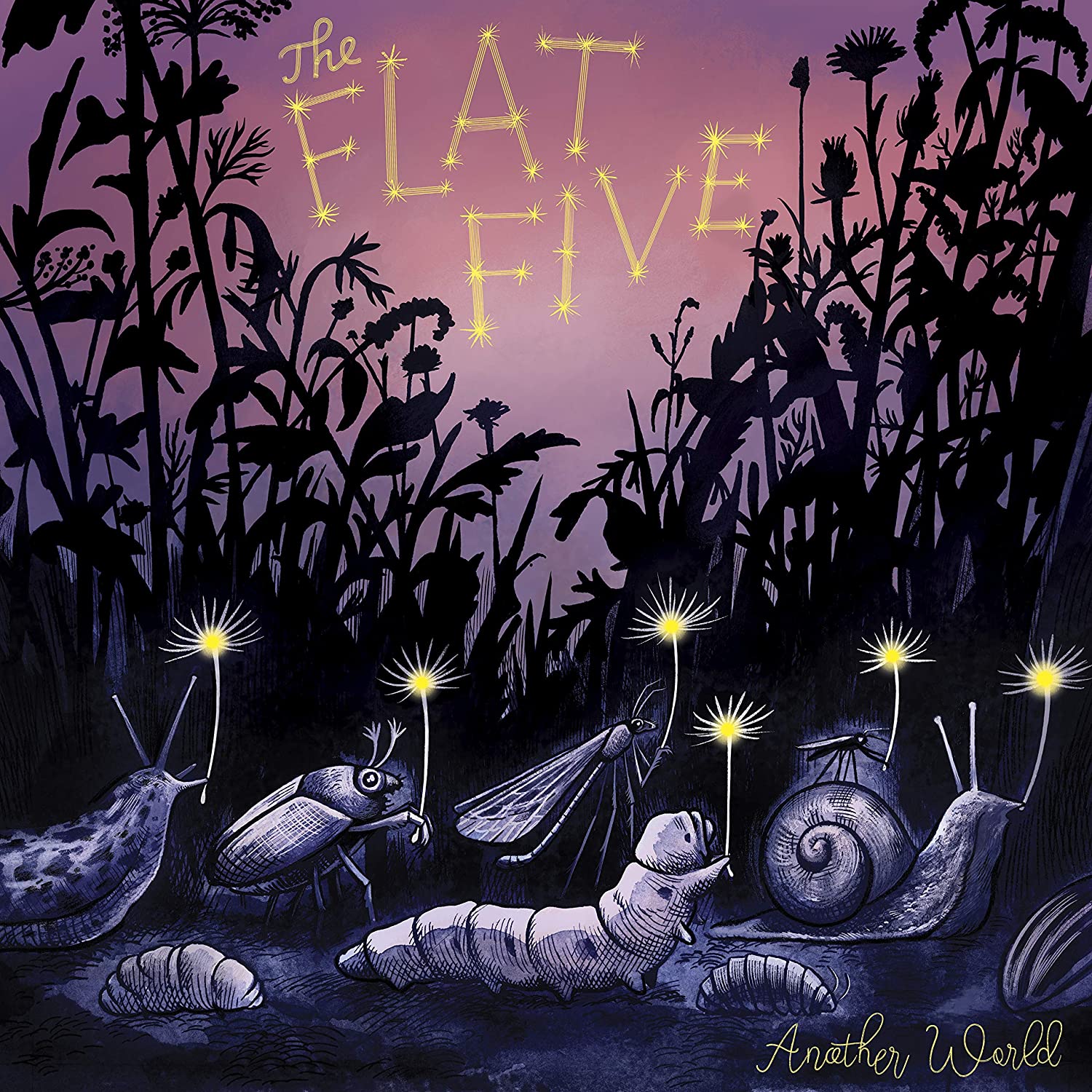

 Many thousands undertook the migration to well-ensconced cultural centers in hopes of adding to the jazz discourse and achieving something immortal; a few did, the vast majority did not, and yet their accumulated sonic narrative is still a formidably mountainous accumulation of sound. A percentage of those in the early navigation stages of the established jazz canon might find Cultures of Soul’s latest compilation a daunting item to be soaked up only after contending with a few hundred records of higher profile.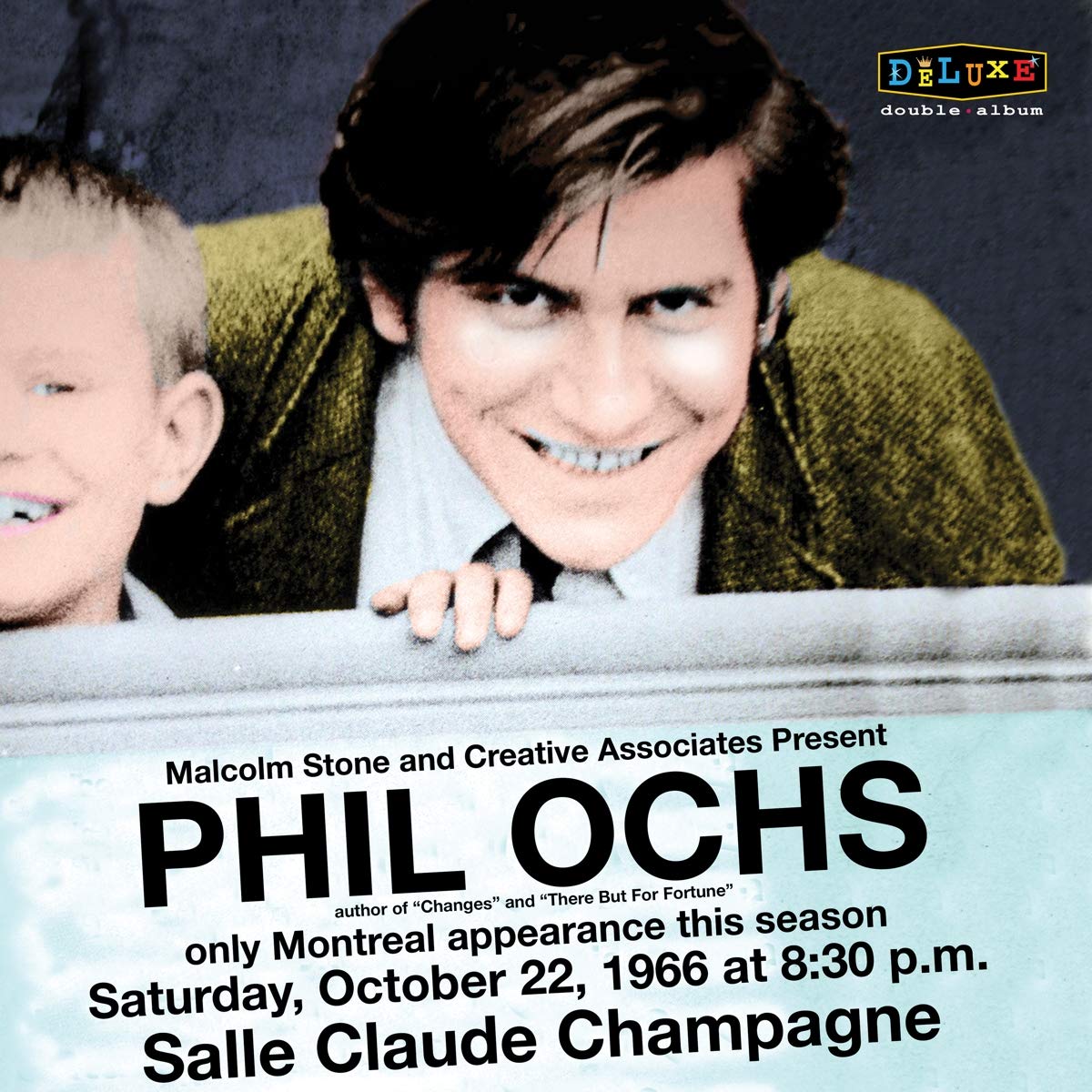
 The mixing of music and politics has often inspired snorts of derision from those who feel that art should serve a loftier purpose than didacticism, sloganeering, persuasion, or protest. I’ll confess up front to having occasionally expressed this view, mostly when the music was unsubtle or sanctimonious, but the tenor of the times has surely adjusted my thoughts.
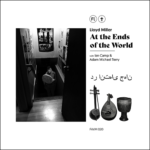 NEW RELEASE PICKS: Lloyd Miller with Ian Camp and Adam Michael Terry, At the Ends of the World (FOUNTAINavm) Last year the Now-Again label reissued Miller’s Oriental Jazz, a very interesting excursion into what we’ll call global spiritual fusion with a Persian musical bent; Miller was a specialist in the region’s sounds, and for a fuller scoop please consult the December 5, 2019 edition of this column, where Oriental Jazz received a review. Miller recorded a whole lot more and has in fact stayed active, as this collaboration with multi-instrumentalists Ian Camp and Adam Michael Terry (the latter also the founder and operator of the FOUNTAINavm label) makes clear. Part of what raises my estimation for At the Ends of the World is the obvious disinterest in attempting to reprise the sound of Miller’s earlier stuff, either from the ’60s or of more recent vintage, such as his joint record with The Heliocentrics, which was released by the Strut label in 2010.
 Trees Speak, Shadow Forms (Soul Jazz) With their second full-length of 2020 (Ohms came out back in March, also on Soul Jazz), the Tucson-AZ duo of Daniel Martin Diaz and Damian Diaz continues to impress. The basic info if you haven’t heard them is that they specialize in a boldly hued non-vocal psychedelia that’s informed by Krautrock spanning from motorik to kosmische, plus soundtracks of ’60s-’70s vintage, with a tendency toward Euro genre flicks; one might possibly pick up on Soul Jazz’s interest in such an outfit, but it’s worth noting that the label that issued Trees Speak’s S/T 2017 debut was Cinedelic, who also released the first record by Calibro 35. While nothing on Shadow Forms is funky exactly, there are a few stretches, like the vibraphone and fuzz guitar-laden suspense builder “Tear Kisser,” where I could’ve been bamboozled into believing that this was the Italian crew, though in fact much of this record (including a free bonus 7-inch with the first edition) is focused on cyclical and swirling synth motifs. But there is still plenty of rhythmic heft and forward motion to be had here. A-
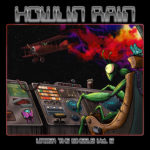 Howlin Rain, Under The Wheels: Live From The Coasts, Vol. 2 (Silver Current) With Howlin Rain, the band’s founder Ethan Miller has progressed so far into crowd pleasing ’70s-style bluesy and jam-tinged, yet highly melodic (anthemic, even) rock action, that casual listeners might be stunned to learn he was once in a band of considerable heaviness, namely Comets on Fire. If I didn’t know, it’s possible I’d be a tad surprised myself, but the reality is there’s really no dissonance on hand: Howlin Rain was formed to scratch a certain stylistic itch, and in doing so with panache (that is, legit songs, dynamic precision and instrumental flair) they’ve developed a fanbase encouraging them to keep at it. And so, the second installment in the band’s live series. Like some of their contemporaries, Howlin Rain exude a few similarities to the Dead of the early ’70s, but this is largely fleeting. More prevalent are Allmans-like characteristics blended with a few servings of Humble Pie. And I’ll add that I can easily understand why Chris Robinson is such a fan. A swell soundtrack for sitting next to a keg in the early morning hours. A-
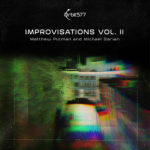 Matthew Putman and Michael Sarian’s Improvisations Vol. II is the first of two Orbit577 releases covered in this piece, recorded in July of this year at Studio Hicks in Brooklyn. Keyboardist (and noted scientist) Putman has played on more than a half-dozen 577 releases including four from the Telepathic Band (reviewed below), but never in duo until now. The results, three selections totaling a little over 17 minutes, are enlightening, as he partners with trumpeter and fellow New Yorker (by way of Argentina and Canada) Sarian, who has released a handful of albums leading considerably larger bands.
 Cyclone Trio is tenor saxophonist Massimo Magee, drummer Tony Irving, and drummer Tim Green. Earlier this year, 577 released Magee and Irving’s outstanding Vitriol & the Third Oraculum, a nearly 50-minute dive into post-Fire Music thunder and skronk, with moments bringing Albert Ayler and Charles Gayle to mind, as it extended from the template established by Interstellar Space and Duo Exchange, both essential documents in the free jazz trajectory.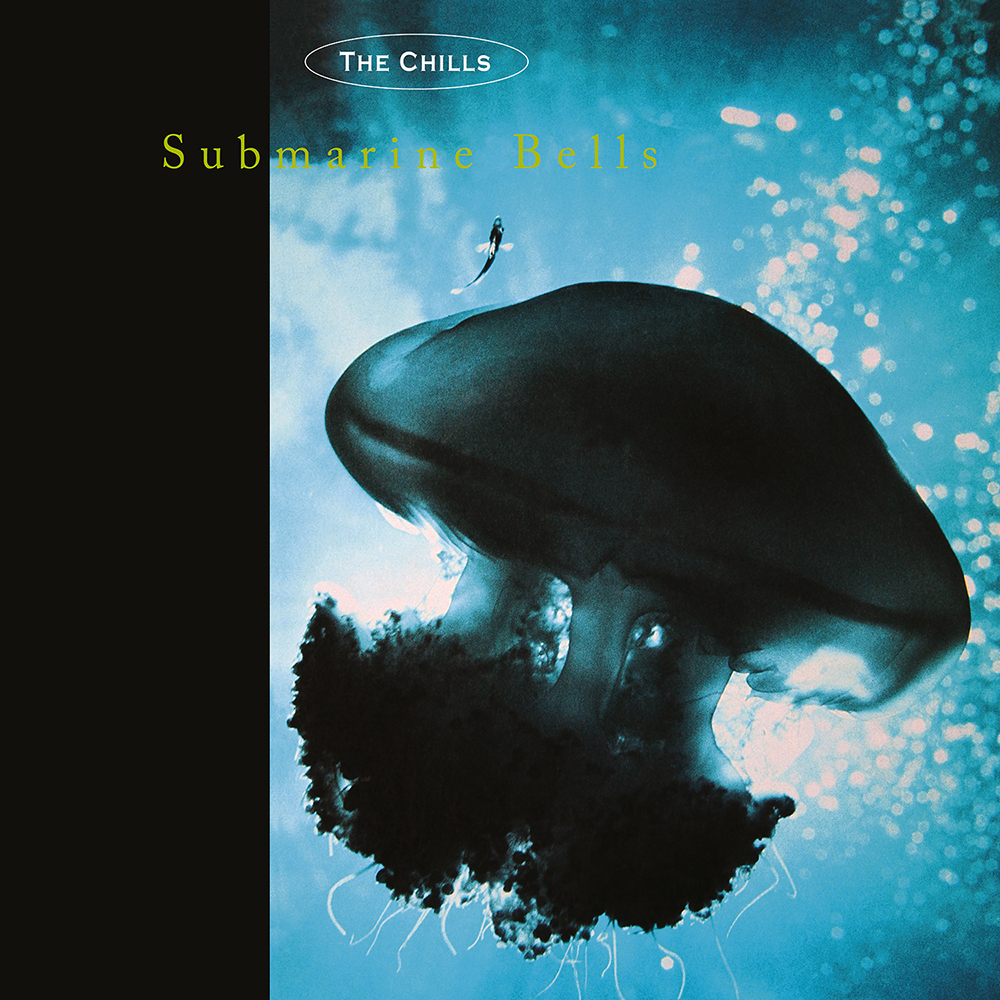
 I guess the mainstream consensus on John Carpenter is that he’s just one in a long line of filmmakers who started out strong, hung in there for a while and then faltered as time progressed. And our current motion picture industry does a good job of making it seem like he’s retired; his last effort was The Ward, which hit US theatres, or a few of them anyway, back in 2011. But for an ever growing pack of buffs, Carpenter is a very special auteur indeed. Gaining his biggest commercial and critical success with Halloween in 1978, it and the titles surrounding it in his filmography are trim, energetic no-nonsense affairs emerging from a motion-picture scene noted for self-consciousness and excessiveness.