Part four of the TVD Record Store Club’s look at the new and reissued releases presently in stores for August, 2020. Part one is here, part two is here, and part three is here.
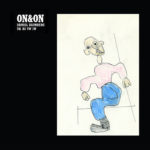 NEW RELEASE PICKS: Daniel Blumberg, On&On (Mute) A record exceeding my expectations is always a wonderful thing. Not that my anticipation gauge was set low for this effort by Blumberg, it’s just that I missed his 2018 debut for Mute, Minus, and mainly knew him as the former guitarist for the band Yuck. Now, I thought Yuck was just fine, but in my experience, they were ultimately just one band amongst many, and the scoop with On&On is that in an even larger field of singer-songwriters, Blumberg stands apart. It’s worth noting that Blumberg left Yuck after their first album (before that, he was in Cajun Dance Party, whom I don’t think I’ve ever heard), and subsequent to his departure, he’s been up to some interesting things, though I learned of these activities only after being struck by the quality of his newest record. That On&On was released by Mute was enough for me to cue up the music without further PR browsing.
Had I read up first, and saw that the record comes with an essay from esteemed writer and musical-thinker David Toop, and learned that the song-cycle was inspired by Blumberg catching performances by Keiji Haino (the two have collaborated) at Café Oto in London, and noticed that the band for this record features Ute Kanngiesser (cello), Billy Steiger (violin), Tom Wheatley (double bass), and Jim White (drums), this lineup retained from Minus, but with Elvin Brandhi adding electronics, and discovered that On&On was recorded by Peter Walsh (who worked with the late Scott Walker); well, those expectations of mine would’ve been set considerably higher, and what’s more, would’ve been met. Blumberg’s foundation is folky, and one could even call it indie-folk, but it gets infused with avant-garde elements, often with a chamber string comportment (not baroque, however), though the emotionalism of “Silence Breaker” and “On&On&On&On” really validate the Haino connection. “Teethgritter” is a lyrically sharp strummer with nifty injections of string scrape. Superb all-around. A
 V/A, Total 20 (Kompakt) This is indeed volume 20 in Kompakt’s annual series of techno compilations, and as electronic dance music is a genre where high quality and longevity aren’t commonly shared traits, that Total 20 maintains the standard established across the prior two decades is worthy of note alongside deserved anniversary commemoration. But here’s something else; the music that fortifies the Total series (and by extension, the Kompakt label overall) is club music at its impetus, which is kind of an obvious thing to say, but I had to be reminded of it, or more specifically, that 2020, while a horrendous year with a little over four months to go, has been especially hard on club culture. With this in mind, Total 20 flicks my switch with a little more gusto than usual, but I can also detach from the sentimentality of Kompakt’s persistence and say that the bangers in this nearly three-hour run-time are doing more than just banging, while the pop-angled numbers are inventive and inspired. Kudos! A-
 Alan Braufman, The Fire Still Burns (Valley of Search) Alto saxophonist Braufman’s Valley of Search, which was released in 1975 by the India Navigation label and reissued to much acclaim (including my long review for TVD) in 2018, is a rediscovered gem of loft-era NYC free jazz gush, and this new set, with Braufman’s longtime friend and collaborator Cooper-Moore returning on piano from the earlier recording, is clearly intended as an extension of aesthetic principles, with the very title driving this home. However, Braufman has grown compositionally (all the pieces are his) in the decades since and embraced a few accessible melodic motifs, hitting an apex in this regard with “Alone Again,” and with finale “City Nights” even dishing a borderline groove cooker. These developments set this LP apart, but ultimately for the better, even as I’m likely to always prefer the wildness of ’75.
But it should be emphasized that there are passages of abstract scorch here that are quite thrilling, especially “No Floor No Ceiling” and “Creation.” Along with Cooper-Moore, the band consists of James Brandon Lewis on tenor, Ken Filiano on bass, Andrew Drury on drums, and on “Morning Bazaar” and “City Nights,” Michael Wimberly on percussion. Those familiar with Valley of Search will note the added saxophone, while Braufman plays a little flute on “Block Party,” a selection that reminds me of something Pharoah Sanders and Andrew Hill might’ve conjured up in the mid-’70s. As The Fire Still Burns plays, Jackie McLean’s slept-on Hipnosis album, specifically side two dating from ’67, came to mind, though it’s the openness of Don Cherry’s work, particularly his two ’60s discs for Blue Note, that get cited by Braufman and Cooper-Moore as influential, and I can hear that, too. A-

 Split, the fourth album from UK blues-rockers The Groundhogs, wasn’t quite as ambitious as their prior set, 1970’s Thank Christ for the Bomb, but the first side of this ’71 effort does consist of the title track in four (distinct) parts, so it’s not like they regressed into 12-bar hackery. Christ was reissued by Fire last year along with a second disc of material, and as the full title Split + Extras should make clear, the generosity is repeated here.
 NEW RELEASE PICKS: Guided by Voices, Mirrored Aztec (GBV Inc) The Guided by Voices recipe consists of classic ingredients: hypothetically, that crotchety uncle of yours who hasn’t bought a new record since Steel Wheels should be a huge fan, but you know your uncle; he’s not down with GBV. In the early days, it was exceedingly short songs and lo-fi atmospheres that kept Pollard and crew from being mistaken as neo-trad pop-rock, but as time wore on and something resembling normalcy set in, the appealing eccentricities of the leader’s personal approach set matters apart right up to that long farewell lap in 2004. Post-comeback, much of the discussion has been about Pollard’s freakish prolificacy and consistency of goodness, of which there is really no precedent, except maybe for a while, The Fall. The big diff is Bob’s Warholian quality grip on distilling those classic elements (possibly another reason your uncle doesn’t like GBV) so they’re recognizable, but not the same. So it is with Mirrored Aztec. A-
 Erasure, The Neon (Mute) I’m old enough to recall Vince Clarke and Andy Bell, the duo comprising Erasure, bursting onto the ’80s synth-pop scene, and while I enjoyed them back then I’ll confess to not keeping up…well, I really haven’t kept up, as The Neon is their 18th studio album. I can’t say I’ve heard more than six, but I do own the first three, and this tidy set retains, against considerable odds, the inspired, effervescent appeal of their early work. Something I’ve always admired about Clarke, going all the way back to Depeche Mode’s Speak & Spell, is his unabashed preference for pop in a classic tradition, dealing lyrically in tried-and-true themes minus angst, while as a singer, he’s a crooner at heart (which works well as maturity sets in). Not only are the songs surprisingly sturdy on this set, they get a little stronger as the finale approaches, with the best two sequenced at the end. Overall, in pure synth-pop terms, The Neon can serve as a tutorial for the style’s endless Johnnies and Janes come lately. A-
 REISSUE/ARCHIVAL PICKS: Tom Tom Club, S/T (Real Gone) The 1981 debut from Chris Franz’s and Tina Weymouth’s side-project in downtime from Talking Heads has been reissued on wax numerous times by Real Gone, so this could be considered a lazy choice for pick status, but this go-round, which is on tropical yellow and red vinyl as a tribute to the recording’s location of Barbados, is already listed as sold out on the label’s website, and the release date isn’t until Aug 21. This obviously underscores the love that’s accrued for the record over the years (which is interesting, as my recollection from the late ’80s is that many at the time, at least out in the ‘burbs, considered it something of a curiosity), but it also reflects its influence. I’ve positively reviewed a slew of releases that are frankly unimaginable without Tom Tom Club’s existence, and I feel like a stupe for not giving it more props. A robust dose of Downtown NYC, with deep cuts that don’t falter. I adore “Under the Boardwalk.” A
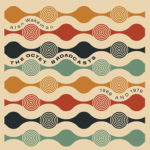 Alan Wakeman, The Octet Broadcasts 1969 and 1979 (Gearbox) In rock circles, and specifically the prog sphere, saxophonist Alan Wakeman is recognized for his playing in Soft Machine, appearing on the 1976 album Softs, and for playing on a string of records by his countryman, David “Rock On” Essex. But I’m guessing aficionados of British jazz will know him best for his work in the groups of Mike Westbrook, Graham Collier, Johnny Dankworth, and Barry Guy. However, as this release makes clear, he also led his own band, with these previously unreleased radio broadcasts for the BBC a delightful surprise, featuring two different octets across two discs on LP (and a single CD) with a bunch of notables on hand including reedman Mike Osborne (’69), drummer Paul Lytton (’69), tenor saxophonist Art Theman (’79), and pianist Gordon Beck (’79).
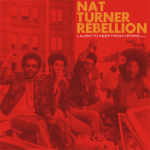 Blending together the budding Philly soul sound of the era, elements of Motown-ish psychedelia, a decidedly Family Stone-like tendency (a la organ and stinging rock guitar), and as the moniker indicates, a heaping helping of socially inclined themes, the record unwinds enjoyably enough, with the (possibly faux) sitar injections lending distinctiveness and the vocal harmonies strong throughout (Major Harris, later of the Delfonics, was a member).
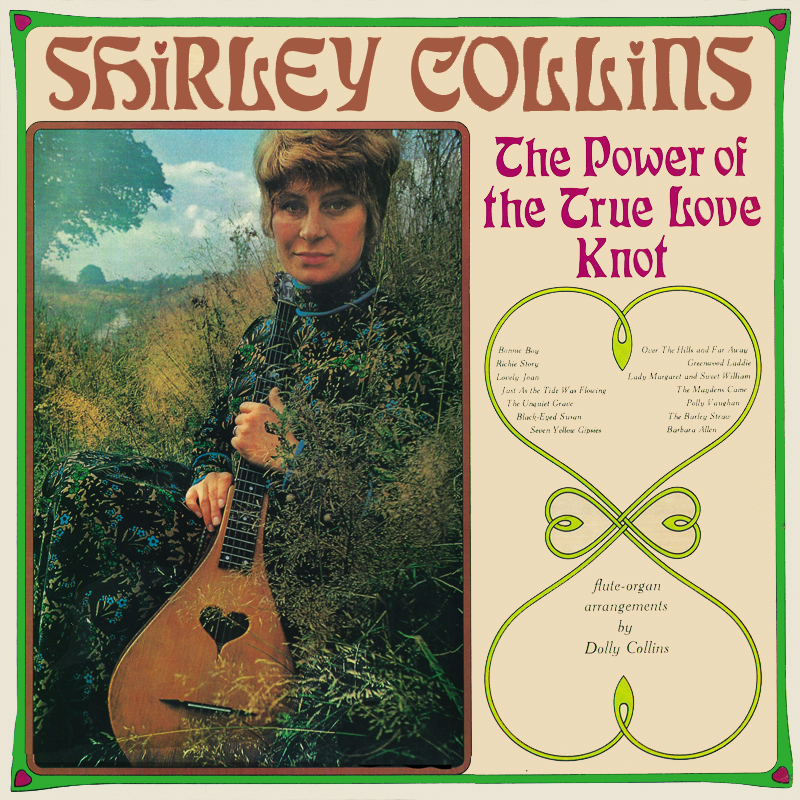
 Outside of Fairport Convention, Steeleye Span, and Scotland’s Incredible String Band, the British folk-rock boom never really gained all that much commercial traction in the United States. And while albums from those groups were pretty easy to find, particularly second-hand in US record stores for years, those acts didn’t really gain huge followings on US shores.
 NEW RELEASE PICKS: Sylvie Simmons, Blue on Blue (Compass) I was pretty taken with Sylvie, the 2014 debut from Simmons, who’s still probably best-known for writing biographies of Leonard Cohen, Serge Gainsbourg, and Neil Young. Sylvie was produced by Howe Gelb, who returns for Blue on Blue, the recording of which started in 2017 but was delayed by Simmons’ accident resulting in broken bones, nerve damage, and an unusable left hand. After surgeries, Simmons, who sings and plays ukulele, wrote some new songs. The resulting album is uniformly strong with a few highlights of magnificence. It’s important to repeat whenever praising Simmons that her wielding of the uke never once succumbs to preciousness (the Cohen influence is palpable, but nicely understated); instead, the instrument can remind me more of the harp, but less ornate, and that’s fantastic. Simmons’ singing is also a treat as the band playing with her is strong and the songs are excellent. A gem. One of 2020’s best, even. A
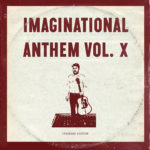 V/A, Imaginational Anthem Vol. X : Overseas Edition (Tompkins Square) I’ve never thought of physical formats and the purely digital experience as being an either/ or proposition, and my perspective has only deepened in our post-Covid 19 world. Along with the positivity that has resulted from assorted benefit releases, it’s a flat fact that for many artists, the main or indeed the only source of revenue right now (beyond government assistance) is their music; promptly offering new stuff at the moment generally means going the digital route, as pressing plants were already backed up prior to temporary pandemic shutdowns. The same goes for labels. Now, Tompkins Square already had a few digital-only items out before all this coronavirus madness commenced, but the majority of their discography has been on vinyl or compact disc (CD the norm for their superb line of box sets). However, over the last few months, most of the label’s titles have emerged without a physical option.
 REISSUE/ARCHIVAL PICK: Duck Baker, Plymouth Rock : Unreleased & Rare Recordings, 1973-1979 (Tompkins Square) This collection is intended as an extension, or in Baker’s words from his most-excellent accompanying reminiscence, a companion piece to Tompkins Square’s 2018 Baker archival set, Les Blues Du Richmond, which I rated as one of the best of that year. Plymouth Rock hits the same levels of quality, opening with a medley of “Take Me Out to the Ballgame” (with the playing bringing Joseph Spence to mind) and “America the Beautiful” that’s elevated by a brief transitional tune-snippet so killer I just can’t spoil it. As outlined by Baker, due to the existence of later recorded versions, the tunes heard here weren’t chosen for Richmond. Now, if you’re a newbie, you might be thinking the contents are best suited for hardcore Baker fans, but that’s a rather severe misapprehension of the situation as it pertains to one of the finest guitarists the US of A ever produced. Hopefully, this’ll be on wax soon with Baker’s notes splashed across the back cover. A
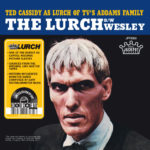 Ted Cassidy, better known as Lurch, the Frankenstein-like manservant with the deep voice and the “You rang?” catchphrase on the 1960s macabre-themed sitcom The Addams Family, cut a novelty single in 1965, which Capitol released with a picture sleeve (because who’d want a 45 by Lurch without a pic sleeve?). “The Lurch” b/w “Wesley” is half of a suitable Halloween spinner, the a-side penned by Gary Paxton of The Hollywood Argyles, they of “Alley Oop” fame. He was also the man responsible for “The Monster Mash.”
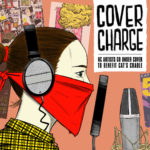 NEW RELEASE PICK: V/A, Cover Charge: NC Artists Go Under Cover to Benefit Cat’s Cradle (coverchargemusic.com / Bandcamp) Living as I do near the tiptop of North Carolina’s neighbor to the north, I’ve only been to Cat’s Cradle once…well, actually it was four consecutive nights while attending Merge Records’ 15th anniversary festivities back in 2004, an experience that persists as a wonderful memory. That’s one thing: live music, especially the kind that’s played in the close quarters of clubs, is about potential great times in the moment, but it’s also about remembrance, which is part of the reason people keep returning for more. But another thing: live music is impossible without musicians of course, but it also doesn’t happen without the investment of time and money into places to play, so in times like these, both artists and show venues are struggling. The straight scoop from the folks responsible for this digital-only benefit: the Cat’s Cradle is in trouble.
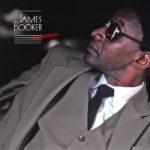 REISSUE/ARCHIVAL PICKS: James Booker, Classified (Craft) The legendary New Orleans pianist and singer James Booker doesn’t have an extensive studio discography. I rate this as his best in studio and maybe period, reissued by Craft in part to celebrate the 50th anniversary of Rounder Records, who originally issued it in 1982; it’s a jewel in the label’s extensive discographical crown. Booker’s addictions shortened his life and career (he died shortly after making this album), surely damaging his opportunities to get on wax in a non-live context. Fittingly, this set’s contents reportedly came forth in a four-hour spurt after days of unproductive recording, but boy howdy, did a gem arise from that late gush of inspiration. Fleet of finger and smooth of voice, Booker’s playing style has similarities to Professor Longhair, Fats Domino, and Allen Toussaint just for starters, and his singing is approachably bluesy, reminiscent of Jimmy Reed blended with prime ’50s Atlantic R&B. Which brings us back to Fess. Not sure why Craft didn’t reissue the 2LP expanded edition from 2013. It would’ve received the +. A
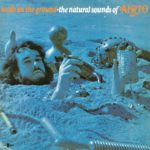 Airto, Seeds on the Ground—The Natural Sounds of Airto (Real Gone) Last year, Real Gone reissued Natural Feelings, Brazilian drummer-percussionist Airto Moreira’s debut from 1970, his first of two for the Buddha label, and now here’s its follow-up in a pressing of 1,000 reproducing the original gatefold sleeve and on ocean blue vinyl. I remain impressed by Natural Feelings, and this set largely extends the blend of Música popular brasileira, bossa nova, folk, proto-world music and jazz elements, including fusion (as Airto was a member of Weather Report, Miles Davis’ electric band, and Return to Forever). The whole of this one is as pleasing as his first, bringing back the same players (including his vocalist wife Flora Purim and bassist Ron Carter). Reviewing Natural Feelings last year, I speculated that it was a distinct item in Airto’s discography; Seeds on the Ground clarifies that the two Buddha LPs are of a piece, though this one’s a bit more psychedelic and takes a definite turn toward fusion on side two. ‘tis OK. A-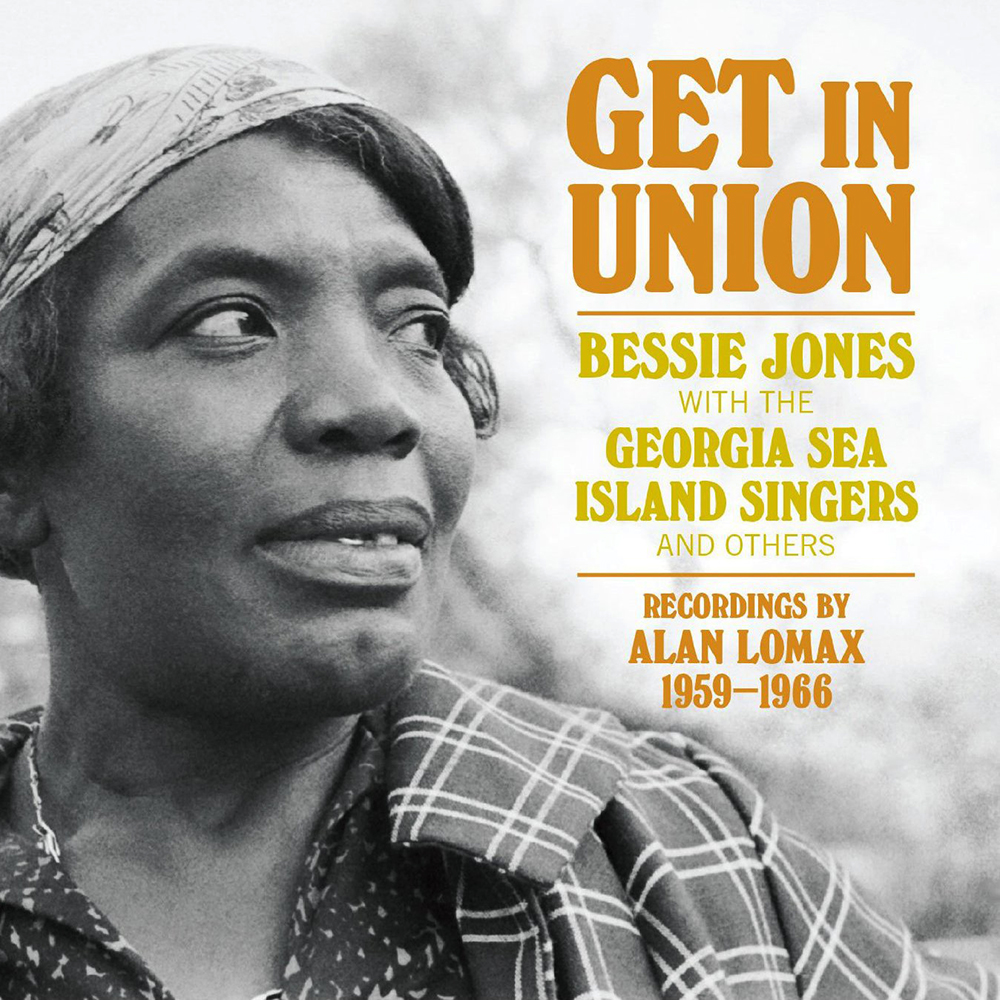
 To begin to absorb the significance of Bessie Jones one needs at least a little bit of insight into the unusual history of the Georgia Sea Islands. Situated near the coast of Georgia and taken early in the Civil War by the Union Army, the islands were a part of what’s known as the Port Royal Experiment, more specifically an opportunity for approximately 10,000 freed slaves to practice self-sustainment (i.e. what Reconstruction could’ve been).
 NEW RELEASE PICKS: Thumbscrew, The Anthony Braxton Project (Cuneiform) A CD to celebrate jazz master Braxton’s 75th birthday, and a very sensible idea, as the three sharp and brilliant points on Thumbscrew’s triangle have all been impacted to varying extents by the greatness of the saxophonist-composer-educator. I’d say this is especially true of guitarist Mary Halvorson, who made a considerable splash in my consciousness pool through her playing on the 9CD+DVD live collection 9 Compositions (Iridium) 2006 on the Firehouse 12 label. Bassist Michael Formanek and drummer-percussionist Tomas Fujiwara have both played with Braxton too (Fujiwara on record), so the trio’s invitation to select previously unrecorded (or hardly ever recorded) pieces from the archives of the Tri-Centric Foundation (the non-profit organization dedicated to the work and legacy of Braxton) was as wise as it is successful.
 Lingo Seini et son groupe, Musique Hauka (Sahel Sounds) Another grand slam for Sahel Sounds, this time documenting Hauka ritual music captured in Niamey, the capital city in the West African country of Niger in 2017. Until now, the Hauka, described in a fascinating Sahel Sounds blog post as “the Songhoy spirits of the pre-Islamic pantheon and possession ceremonies,” have been better known to hardcore cinephiles familiar with the work of French ethnographic filmmaker Jean Rouch, specifically his short movie of 1955 Les maîtres fous (The Mad Masters). I caught this film in January of 2019 through the streaming service MUBI and found it striking, if surely a difficult watch due to an instance of ritual animal sacrifice. Jumping forward well over half a century, this is one of the first full-length recordings of the Hauka’s ritual music, longer and even more powerful than the film, rhythmically unrelenting and featuring a monochord lute. A must for lovers of ceremonial sounds, only 500 were pressed. Get it. A
 Even As We Speak, Adelphi (Shelflife) Back in 2018, the estimable Flagstaff, AZ label Emotional Response reissued this Sydney band’s 1993 set Feral Pop Frenzy, which was originally released by the beloved Sarah Records. It was a righteous gesture, deserving of a reissue pick in this column, and Adelphi is strong enough to land in this week’s spotlight for new releases. Part of the reason is that the five-piece, fronted as ever by Matthew Love and Mary Wyer, knocked-off any rustiness prior to recording their 2017 10-inch “The Black Forest.” This 10-song LP finds them as boldly sophisto as ever they were before, with the crucial distinction that the upsurges of raw guitar allow one to connect the dots back to the foundation of punk (filtered through indie pop, of course). However, the synthpop flourishes are just as appealing, largely because they are gestures rather than full-blown style moves. Also, there’s a grown-up quality to the whole that’s appropriate for the reunion scenario. A-