Part two of the TVD Record Store Club’s look at the new and reissued releases presently in stores for January, 2020. Part one is here.
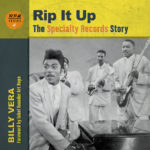 BOOK PICK: Billy Vera, Rip It Up: The Specialty Records Story (BMG) The fourth installment in BMG’s RPM series tackles one of the crucial R&B-R&R labels of the 1950s as formed and operated by Art Rupe, with the story told by a man who was integral in setting Specialty’s reissue course right at the dawn of the CD era. Vera’s also a noted musician who was deeply influenced by the sounds that Rupe was responsible for gifting to the world, and his love shines through, though he’s not uncritical. This applies to some of the artists and individuals in Rupe’s employ, as Specialty’s owner-operator, like Excello Records’ Ernie Young (covered in an earlier RPM volume) is revealed to be a fundamentally decent guy. He’s still with us, at 102 years of age.
Like Young, Rupe was especially taken with the music made by blacks in mid-2oth century USA (with a particular affinity for gospel), but unlike Sam Phillips, he was never able to land a major caucasian R&R crossover. However, the book makes clear that he really didn’t try that hard; as Rip it Up’s title and cover photo underscore, he had Little Richard, at least for a little while, and that secured him a ton of sales in the booming rock market. Vera’s authorial approach is to proceed roughly chronologically while spotlighting many of the singers and players who shaped one of the strongest discographies of the era (and beyond). There is also attention paid to how crooked the biz was then (Alan Freed is here in all his heinousness), enough so that Rupe retired from music and made his fortune in oil. A solid read. A-
 REISSUE/ARCHIVAL PICKS: Throbbing Gristle, A Souvenir Of Camber Sands, TG Now, Part Two – The Endless Not (Mute) Formed in 1975 in Kingston upon Hull, UK, Throbbing Gristle are in many ways the dictionary definition of Industrial music in its raw form, which is to say, prior to the style’s hybridization and dilution with dance beats. Emblematic of a societal bleakness that led many to take up instruments and set punk rock into motion, Throbbing Gristle didn’t react to it/ rail against the desolation but rather internalized it and then spat it back out in often chilling fashion. They remain most revered for their initial string of albums (plus a pair of expansive box sets of live material, the first holding 24 CDs, the second 10), which decades after their emergence could still unnerve.
 Reforming in December 2004 for an All Tomorrow’s Parties Nightmare Before Christmas event dedicated to John Balance (aka Geoffrey Nigel Laurence Rushton, who founded Coil with TG member Peter “Sleazy” Christopherson), who’d died the month prior, A Souvenir Of Camber Sands documents them in strong form. Notably, this two-disc set was available in CDR form minutes after the performance; this is its first time on vinyl. The ambience isn’t as abrasive and confrontational as it often was back in the late ’70s, but that’s understandable and actually preferable, with much of the set list revealing a disinterest in merely repeating themselves. In studio form, Some of the tracks do derive from TG Now, which dipped a toe into the reformation pool to find the temperature favorable.
 Released on LP and CD in March of 2004 and originally available to attendees of RE-TG Astoria, which was the group’s first live performance since touring the US in 1981, TG Now’s studio origin, even at roughly half the length of Camber Sands, nicely magnifies the indifference to retreading earlier achievements (there’s no need to dish out a version of “Hamburger Lady” for the assembled faithful, natch). But it’s really 2007’s Part Two – The Endless Not that drives home Throbbing Gristle’s desire to strike out for fresh territory. But it’s also familiar to the style that TG helped formulate, as “Rabbit Snare” is a bit reminiscent of Jim Thirlwell or even Angelo Badalamenti. Altogether, these three releases constitute a vital portion of this uncompromising and often brilliant outfit’s legacy. A-/ A-/ A

 NEW RELEASE PICK: Animal Collective, Ballet Slippers (Domino) Yes, this came out in November (it all seems so long ago, now), but a little thing called Black Friday went down and then two weeks later TVD unveiled our Best of the Year. Ballet Slippers is also a long one, three LPs in fact, so it didn’t get the necessary attention until the holiday break. And it was time well spent, as this live collection from 2009, with a heavy emphasis on Merriweather Post Pavilion (assembled from four shows to hit like a full performance), connected with my memory banks like a punch from Ali. It’s been over ten years since this stuff unraveled in the air, but Ballet Slippers, peppered as it is with selections reaching back to 2002, really underscores the ’00s as Animal Collective’s decade. Simultaneously warped and accessible. A-
 REISSUE/ARCHIVAL PICKS: The Revillos!, From the Freezer, Compendium of Weird, Live from the Orient (Damaged Goods) Formed by vocalists Eugene Reynolds and Fay Fife after the breakup of the Scottish ’77 punk era act The Rezillos, this outfit’s initial run was 1979-’85. The 20-track comp From the Freezer (CD only, as it was upon first release in 1996, though this edition is a gatefold digipak with booklet) details their existence quite well. I resisted simply calling them ’77 punk, and that’s because they (and the band that preceded them) didn’t conform to the music’s angry standard, though they do fall into a fun-loving niche of the period; at times, it’s like early Blondie and the B-52’s morphed into another band. There are also a few Joe Meek-ish motions and a Crampsian love of junky youth culture.
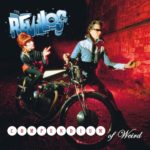 The thing about this band (with either the z or the v) is that they were consistently so revved up and loudly amped that it always felt punk enough for me. And thus it remains. As you might’ve gleaned, they’ve gathered something of a following, and Compendium of Weird (which is out on vinyl, though the CD adds two cuts for a 17-track total) is an extensive dig into the vaults. It should come as no surprise that Compendium isn’t as consistently sharp as Freezer, but the number of cuts that should’ve stayed in the can (like the head-scratching pop move “Heaven Fell”) number very few, and the cover selections, including “Cool Jerk,” “I Wanna Be Your Man,” and “ Do You Love Me,” nicely reinforce their ’60s-derived foundational inspiration.
 Long-posthumous clearinghouse comps can instill worry, especially in punk territory, but Compendium holds it together. A much bigger fear is the emergence of reunion material, and there are few places where that sorta thing can get more horrific than in the punk zone. The big difference in the case of Live from the Orient is that it indeed captures The Revillos in performance, specifically during a Japanese visit in 1994 (the first time they’d gotten back together since ’85). initially released in much shorter form in ’96 on the Vinyl Japan label, the source tapes, which for a while were effectively lost, were partially salvaged by guitarist Kid Krupa prior to his passing, with the job finished by drummer Rocky Rhythm. Amped and energetic, the results blow the doors off expectations. 21 tracks, 18 on the vinyl. A- / B / B+
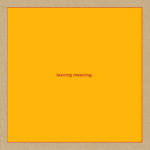 5. Swans, Leaving Meaning (Young God / Mute) & Laurie Anderson, Tenzin Choegyal, Jesse Paris Smith, Songs from the Bardo (Smithsonian Folkways) One of Leaving Meaning’s pertinent facets (and something that relates to prior Swans releases) is that it makes generally worthwhile and even accurate synopsizing difficult. That it is lengthy has little to do with it; rather, it is a work utterly loaded with content, dimension, and with range reflective of this new version of Michael Gira’s long-extant band/ project. But Leaving Meaning can be described as a spiritual record, which isn’t a new development, though it offers this aspect distinctively. Parts of it sound great at Christmastime, even. ‘tis the season!
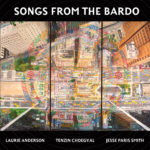 To call Songs from the Bardo a spiritual record is to spew a banality, at least for folks familiar with Tibetan Buddhism. Even for those with little to no knowledge of the practice, the overall transcendental nature of the collaboration should be easily absorbed. But this isn’t what makes the album special. Instead, it’s in how affecting the contents become for listeners with a casual relationship (or less) to the shared spiritualism it documents. That’s instrumentally (via all three participants), textually (through the persistent calmness of Anderson’s recitation), and vocally (the heartfelt singing by Choegyal). Songs from the Bardo communicates broadly without slipping into the banality mentioned above. That’s special.
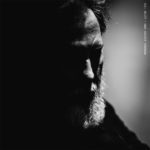 4. Bill Orcutt, Odds Against Tomorrow (Palilalia) & Peter Brötzmann, I Surrender Dear (Trost) The beauty motions on guitarist Bill Orcutt’s latest are considerable. We’re talking beauty as a non-contentious property, a facet of the whole that large groups of listeners could (theoretically) agree upon. It’s something of an unexpected development in Orcutt’s trajectory. Not that he didn’t seem capable. It was more like he just wouldn’t be interested in traveling down that particular avenue. Plus, there was an abstract beauty (the kind of beauty people argue over) in his work already. Well, the good news is that Odds Against Tomorrow is a stellar record hovering on the borderline of a sound that’s tangibly rock.
 Now, when experimenters and avant-gardists begin migrating toward a recognizably rocking zone, it’s generally time to get nervous. This can also apply to jazz musicians if they are swinging their creative pendulum toward conservatism. In the case of I Surrender Dear, which could be alternately titled Brötzmann Does Ballads except that he’s doing a whole lot more (a few of his own tunes just for starters), there is no need to worry, for the man’s playing, if more clearly intertwined with Tradition than ever before, is still far far away from tuxedos and cocktails. “Brozziman” (a tune by Misha Mengelberg) hits like Albert Ayler decimating a vaguely Mancini-like strip joint number. Glorious.
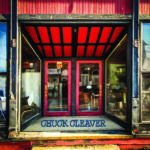 10. Chuck Cleaver, Send Aid (Shake It) & Joan Shelley, Like the River Loves the Sea (No Quarter) The tendency when compiling annual lists of best new music is toward broken ground and pushed boundaries. Everybody does it. And it makes sense to do it. But the thing is, it doesn’t have to be done all the time. Room can be made for a record that lands securely in the pop-rock pocket while oozing veteran assurance and some heartland verve (plus nifty lyrics). The indie scene once dished out killer platters like this with regularity, so while we’re celebrating the new, this brings back memories. Neat duality.
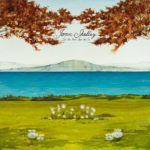 A similar claim of non-innovation can be made for Joan Shelley’s latest, though a record as flat-out gorgeous as Like the River Loves the Sea can easily register as tapping into the inventive. A substantial percentage of the beauty is directly vocally derived as Shelley engages wholeheartedly but astutely with a rural, subtly Brit-folk approach. That means she never comes off as overly reverent. The result documents the artist breaking significant personal ground on her fifth and finest record yet.
 9. Sequoyah Murray, Before You Begin (Thrill Jockey) & Alexander Noice, NOICE (Orenda) The full-length debut (there was a prior EP “Penalties of Love,” also in 2019) of 22-year old Atlanta, GA-based Murray resonates with possibilities through rich hybridization, but it is also a remarkably assured collection of song, and for all its pushing into fresh territory, there is a substantial pop core. Specifically, there is a strong current of contemporary soul and a stated influence of rap that to my ear is implicit but surely there. More explicit are elements of synth-pop, which works well with Murray’s voice. His cello playing has drawn comparisons to Arthur Russell, but this LP is following its own path of promise.
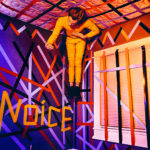 Really, the only disappointing thing about NOICE is that its physical manifestation was CD only. Was? Yeah, it’s sold out. Waaa! But hey, it’s early yet. If enough folks take the digital plunge with this release, a vinyl edition might just emerge. Here’s hoping. The recipe here includes art-rock, prog-rock, its younger niece math-rock, jazz, electronics, noise and the avant-garde, with an emphasis on the operatic through the vocals of Karina Kallas and Argenta Walther. Thoughts of a Downtown NYC Deerhoof persist, though the jazz background of Los Angeles-based guitarist and composer Noice gives the whole a distinct flavor. NOICE is a captivating experience that does not run out of gas.
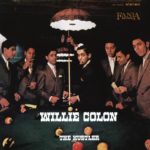 5. Willie Colón, The Hustler (Craft Latino) & V/A, No Other Love: Midwest Gospel (1965-1978) (Tompkins Square) Partly because there continues to be two major Record Store Day events annually that seem to be going down gangbusters, it’s safe to say that vinyl buying is still very much an endeavor connected to being in a room full of records. This makes the steady stream of reissues emerging via Craft Recordings’ Latin subsidiary a real service, as the plain facts are that original specimens from the Fania Records catalog aren’t common in less metropolitan areas. I mean, you could buy secondhand copies online, but that practice is a few blocks from Nowheresville. Oh, how’s The Hustler sound? It’s a fucking beast…
 Grabbing an original Willie Colón LP is unlikely out in the boondocks, and you can forget about the selections on Tompkins Square’s latest African-American gospel volume. As Ramona Stout’s accompanying essay explains, No Other Love’s contents were the direct result of community record canvasing (only one track has been anthologized before, on a Numero Group set). It’s safe to surmise that nobody besides Stout and her partner Kevin Speck heard all these cuts prior to presenting the compilation to others. It’s an amazing LP, with Stout’s notes contextualizing matters far beyond the increasingly trite “pure sounds of religious fervor” concept. You know, things are never so simple.
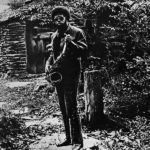 4. Joe McPhee, Nation Time (Superior Viaduct) & Sounds of Liberation, New Horizons & Unreleased (Columbia University 1973) (Dogtown / Brewerytown Beats) To get back to the idea of rarity, or maybe more appropriately, scarcity, when Atavistic commenced the Unheard Music Series shortly after the turn of the 21st, it was cause for celebration for fans of avant-garde jazz the globe over. I mention it because Nation Time by the great multi-reed man Joe McPhee kicked off the whole shebang. The only real caveat is that the UMS was a CD-only endeavor; Superior Viaduct’s reissue of Nation Time gives folks a new vinyl pressing and inspires hope that further UMS titles will see fresh wax editions in the years ahead.
 But you need not wait years to scoop up some truly scant ’70s avant-free-spiritual jazz in reissue form, as two records from the Philadelphia-based band Sounds of Liberation have been reissued by the above labels (interestingly given the remarks over brick and mortar above, Brewerytown Beats is also a Philly record store). The septet’s highest-profile players were saxophonist-flautist Byard Lancaster and vibraphonist Khan Jamal; the other members were guitarist Monnette Sudler, drummer Dwight James, bassist Billy Mills, and percussionists Omar Hill and William Brister aka Rashid Salim. Fans of loft jazz and the Wildflowers volumes in particular will want to grab copies of both. The sound is flowing but potent.
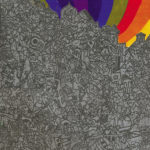 10. Lightning Bolt, Wonderful Rainbow (Thrill Jockey) & Robbie Fulks, Country Love Songs (Bloodshot) The general tendency is to refrain from listing straight reissues of stuff that is less than a quarter century old, but occasionally exceptions will be made, and the controlled duo mayhem that comprises Wonderful Rainbow is one of them. That it’s part of Thrill Jockey’s extensive plunge into Lightning Bolt’s discography no doubt added some weight to the consideration; however, taking this baby out for a few fresh spins provides as wild a ride as it ever did before. The rainbow splatter vinyl is going to splendid revolving on the turntable.
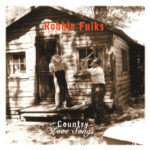 Country Love Songs hasn’t hit the 25-year mark either, but, released in 1996, it’s inching nearer by the second, and it’s a record that’s as necessary now as it was upon initial release. Fulks had a few songs out prior, but the set was his full-length debut and it put him solidly on the map, in the process differentiating him from much of the alt-country pack, as listening to his stuff; rich of voice, strong of song, and exquisite instrumentally including pedal steel from Tom Brumley, made it clear that a couple of decades prior he would’ve been a legitimate country hitmaker. That is conjecture of course, but what’s hard to dispute is how at his best Robbie Fulks is timeless. This LP is a prime example.
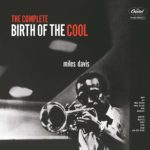 9. Miles Davis, The Complete Birth of the Cool (UMe) & John Coltrane, Blue World (Impulse!) I can envision the eye rolls from the non-jazz-loving contingent. These guys again? Didn’t they just make yesterday’s list? Hey, maybe we’ll eventually call for a moratorium on Miles and Trane in the annual Best Of tallies, as it seems unlikely that a year will elapse without multiple reissues and/ or archival editions from these two august names. As you can see, no great jazzman ban was undertaken at TVD in 2019, but things have been kept in perspective.
 Birth of the Cool is total jazz canon stuff to be sure, but UMe’s highly attractive 2LP edition (with LP-sized booklet featuring photos and notes by Ashley Khan) is also the first time the live and studio material has been offered on 2LP. For jazz fans and vinyl aficionados, I’d say it’s a must. As a soundtrack recorded by the Classic Quartet for Canadian director Gilles Groulx, Blue World is simultaneously a major discovery (though one hiding in plain sight) and a minor work. But as it offers the saxophonist revisiting previously recorded tunes in the studio, it’s noteworthy, and definitely of interest.
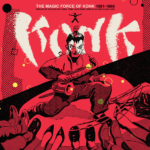 10. Konk, The Magic Force of Konk 1981-1988 (Futurismo) This reissue label, summarized somewhat concisely as being focused on the fringier twists and turns of the New Wave era, has brought out fresh editions of classics from noted New Yorkers James Chance and Alan Vega, so this 3LP collection devoted to this No Wave-affiliated NYC-based proto-dance punk outfit is no surprise. That it goes down so nicely in the here-and-now while spotlighting a vital strain of stylistic hybridization in the 1980s, a decade where a high percentage of punk and post-Wave music became increasingly insular, is a stone treat.
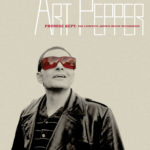 9. Art Pepper, Promise Kept: The Complete Artist House Recordings (Omnivore) The retrospective diligence on the part of Omnivore into the late work of saxophonist Art Pepper continued in 2019 with this 5CD collection of material cut for the Artist House label, originally offered on a string of four albums from the first half of the 1980s (only one, So In Love, actually issued by Artist House), plus 21 previously unreleased takes. Drawn from sessions held in Cali and NYC and with a slew of major players in the bands, Promise Kept is a deep exploration of Art Pepper’s duality; he was a cornerstone West Coast guy but also totally adept in an East Coast context. I mean, there are some major burners on this baby.
 8. Chet Baker, The Legendary Riverside Albums (Craft) As West Coasters, Art Pepper and Chet Baker recorded together a few times, perhaps most notably on Playboys, a sextet LP released in 1957 by World Pacific with a big ol’ slice of ’50s cheesecake on the cover. The Legendary Riverside Albums dates from ’58-’59 and corrals some of his most enduring work. In the case of (Chet Baker Sings) It Could Happen To You, it’s also some of his most divisive, as he was iconoclastic as a vocalist but without alienating an audience that, for a while, elevated him to the stature of pop star. More importantly, this collection emphasizes his prowess as a trumpeter and his deep love of standards, a facet shared with Pepper.
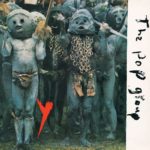 7. The Pop Group, Y (Definitive Edition) (Mute) Available either as three LPs and a 7-inch or as a 3CD set, the core of this collection, specifically the debut album from 1979 from these Bristol, UK-based post-punkers, is an absolute must in the scheme of the genre they helped to define. The great news is that the record of additional, previously unheard material, Alien Blood, is way up to snuff, as is the self-explanatorily titled Y Live; the 45 is a repress of the “She’s Beyond Good and Evil” single, and that’s indispensable, too. Standing in the rubble of punk in the late ‘70s, The Pop Group integrated funk, skronk jazz, dub, African influences, and leftist politics into a stew that’s lost none of its potency.
 6. Patsy Cline, Sweet Dreams: The Complete Decca Masters 1960-1963 (Third Man) If one were to jot down the biggest names in the history of C&W music, Patsy Cline would figure high upon the list. I’ll add that she achieved this stature in a relatively brief career cut short by a plane crash, and that she was a perfect example of an artist for whom the descriptor of mainstream was not a putdown. With all this said, it’s kind of a stumper how we got all the way to 2010 without her Decca recordings (in short, her finest stuff) being compiled in one set (Hip-O-Select rounded them up on 2CD) and basically another decade before they received the vinyl treatment. Mandatory on any well-rounded country shelf.
 NEW RELEASE PICKS: Shasta Cults, S/T (Important) Canada’s Richard Smith is an electronics technician who for two decades was the go-to repair person for Buchla & Associates, a job that put him in contact with a variety of musicians and institutions. Smith’s work as Shasta Cults, with this LP preceded by the CD Configurations (recorded in 2017 and issued in September), has its roots in demo recordings of rare equipment he’s worked on over the years, with both of his releases thus far derived entirely from one instrument each; for Configurations, it was the Buchla 700, and for this follow-up (recorded in 2018) it’s the Buchla Touché. Records featuring the Buchla are often spacy and swirly, but this outing is more drone-oriented and impressively layered, though Smith’s work is still quite transportive. A
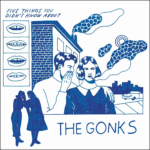 The Gonks, Five Things You Didn’t Know About the Gonks (Rocks In Your Head) This is a fine batch of fringy-pop from a San Fran-based combo, first heard by moi on this label’s nifty recent Hot Sick Vile and Fun comp (their tune titled the collection). They cover a range of appealing territory, like the black turtleneck art-angst of “I Hired a Hitman” (like a song from the soundtrack to a Beth B. flick), the gal-voxed melodicism (briefly intruded upon by maleness and roaring engines) of “I’m a Lonely Night Driver,” the vaguely Television Personalities-like “My Glamourous Mother,” the decidedly warped jangle and thump of “I’m a Leaker,” and the sax honk meets indie pop strumming of “I’m Dead.” That’s five tracks. There are five more, including a closing theme song of sorts. Altogether, a 16-minute stunner. A
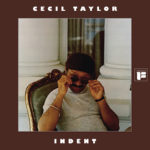 REISSUE/ARCHIVAL PICK: Cecil Taylor, Indent (ORG Music) This label’s Black Friday Record Store Day releases didn’t reach me until right at the cusp of finalizing last week’s column. As RSD selections often linger in the bins for a while, I would be remiss not to mention a few in our final New in Stores of 2019. Along with Silent Tongues and The Great Paris Concert (aka Student Studies), this is ORG’s third installment (all from this year) in what’s hopefully an extended reissue program devoted to this incomparable pianist and cornerstone of the jazz avant-garde. Indent was the first solo Taylor record to hit stores back in 1973 (but not the oldest chronologically; that would be Praxis, a ’68 recording released in ’82), first on his own Unit Core label and then with wider distribution through the Freedom imprint.

 REISSUE/ARCHIVAL PICKS: V/A, Land of 1,000 Dances: The Rampart Records Complete Singles Collection (Minky) Here are four compact discs tucked snugly into pockets inside an essay and picture-packed hardcover book spotlighting the label that gifted unto the world the Los Angeles-based ’60s Mexican-American rock impulse, aka the “West Coast East Side Sound.” The larger intention of owner-producer Eddie Davis (who’s also credited with stewarding into existence the all-time classic “Farmer John” by The Premiers via his other label Faro) was to build an equivalent to Motown for Chicano performers, and if he didn’t reach Gordy’s levels of success, his company did carry on into the ’90s while adapting stylistically to the times.
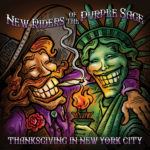 New Riders of the Purple Sage, Thanksgiving in New York City (Live) (Omnivore) Captured at the Academy of Music in NYC on November 23, 1972, this is six sides of country-rock hippie style for Black Friday, though the 2CD and digital aren’t available until 12/6. In their hippie comportment the New Riders (by this point sans Jerry Garcia on pedal steel, replaced by Buddy Cage) could get a little eccentric, but mainly through vocalist John “Marmaduke” Dawson and a few of his song selections (like R.B. Greaves’ “Take a Letter Maria,” which they later cut in the studio). The rest of the members; alongside Cage, that’s guitarist David Nelson, bassist Dave Torbert, and drummer Spencer Dryden (Nelson and Torbert also sang), were busy being crack instrumentalists. The pleasure offered here never ebbs. A-
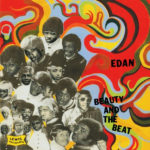 Edan, Beauty and the Beat (Lewis Recordings) Edan’s 2002 debut Primitive Plus endures as a mainstay of alt-underground-indie hip hop, but his ’05 follow-up is even better as it enters into psychedelic realms without the negative connotations that frequently emerged when druggy expansiveness mingled with rap’s intensity and forward momentum. Indeed, Edan continues to explore the classic structural launching pad of late ’80s-’90s hip-hop in a manner that’s far deeper than the typical cred-establishing nods to the past (making this a true extension of his first album), but more importantly, his approach to psychedelia is never shallowly, stereotypically trippy. Truly bent, there are more ideas in the consecutive “Rock and Roll” and “Beauty” than in many hip-hop records twice this one’s length (a tidy 34 minutes). A