
Celebrating Nigel Olsson on his 77th birthday. —Ed.
Fanatical Elton John fans—and I’m one of them—frequently get into knife fights over which is the better album, 1974’s Elton John’s Greatest Hits or 1977’s Elton John’s Greatest Hits Volume II. I prefer the former—and have the scars to prove it—for three reasons: 1) It was the album that began my love affair with the guy; 2) it more clearly delineates the metamorphosis of Elton from singer-songwriter nebbish to Glitter extrovert Captain Fantastic; and 3) it has “Rocket Man,” Glam’s Jester King’s signature song on it.
 But you would have to be some kind of hideous deep sea creature to deny the brilliance of the majority of the songs on Elton John’s Greatest Hits Volume II. The trouble—for me anyway—is that it includes three songs I don’t much care for as well as the straggler “Levon” from 1971’s Madman Across the Water, which rightfully should have been included along with the earlier material on Elton John’s Greatest Hits Volume 1.
But it’s an essential compilation nonetheless, because it includes three singles you won’t find on any of Elton’s studio LPs and one (a cover of The Who’s “Pinball Wizard”) you’ll find only on the 1975 soundtrack of Tommy. I don’t much care for the Bicentennial Year keepsake “Philadelphia Freedom” (those sweeping disco strings irk me) or the perky Motown-inspired duet with Kiki Dee “Don’t Go Breaking My Heart,” not so much because they’re bad songs (they’re not) but because say what you will about lyricist Bernie Taupin he’s always been an oddball (give a listen to “Solar Prestige a Gammon”) with an eye for detail (check out “Bennie and the Jets”).
Neither are on display on the pedestrian “Philadelphia Freedom” or “Don’t Go Breaking My Heart.” But if you want them and don’t own the singles this is where you’ll find them. I’m not much of a fan of the lugubrious “Sorry Seems to Be the Hardest Word” from his 1976 depression opus Blue Moves either, because it lacks the soaring majesty of heartbreak songs like “Don’t Let the Sun Go Down on Me,” which you’ll find on Elton John’s Greatest Hits Volume 1.

 But occasionally I get it right the first time, as with Queen’s “We Are the Champions,” which I hated when it came out and still hate to this day. And the same goes for Television’s sophomore LP, 1978’s Adventure. People—as in every sentient human breathing air the year it came out—wrote Adventure off as a lackluster follow-up to the band’s 1977 debut, Marquee Moon. Everybody but me, that is. Because I had never heard of Marquee Moon. I didn’t even know it existed. Hell, I can’t even remember how or why I came to buy Adventure, because I had no clue as to who Television was and absolutely no inkling that they were an integral part of a musical revolution in progress at a ratty club in New York City called CBGBs.

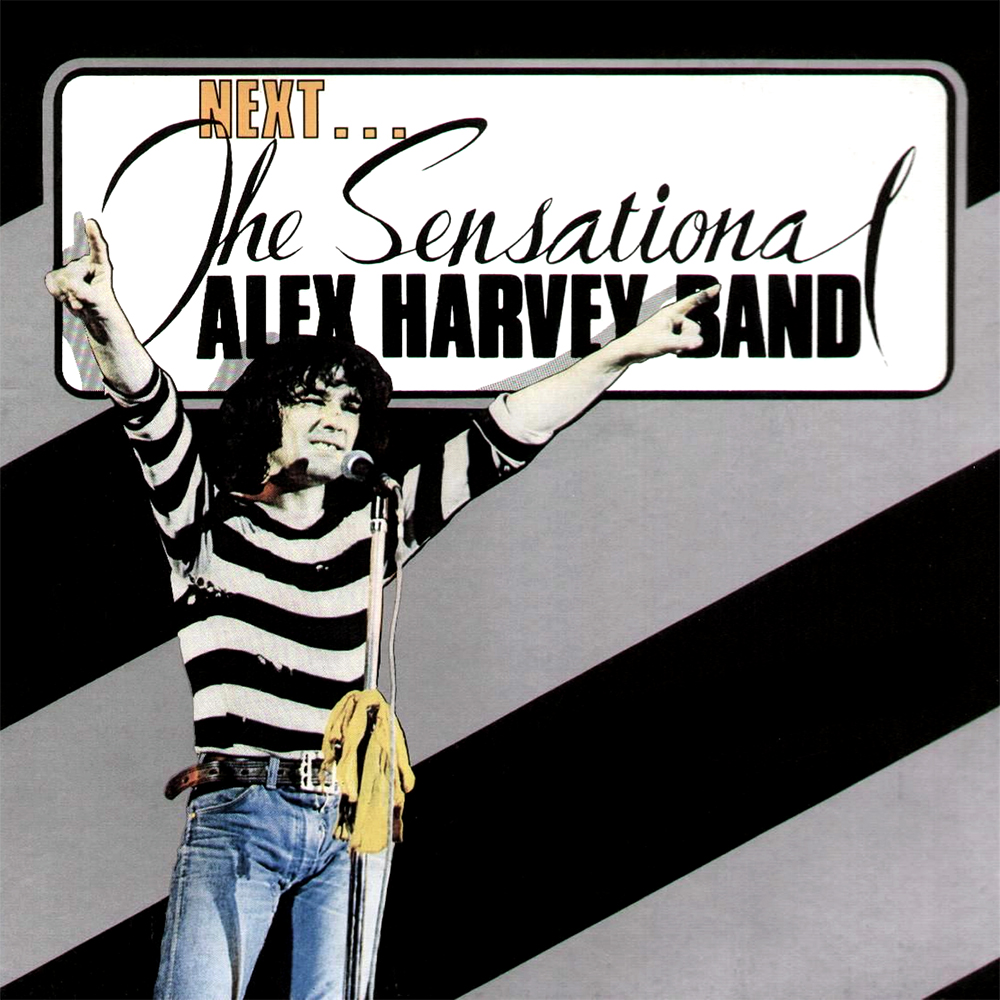
 And small wonder, because the Sensational Alex Harvey Band were simply too esoteric gonzo in the grand tradition of unapologetic English eccentrics for mass consumption. Pub rock heroes with progressive rock tendencies who weren’t afraid to shamelessly camp it up for the Glitter kids, SAHB liked to keep the punters guessing, as 1973’s Next demonstrates.
 But love is blind—having railroad spikes driven into your eyes will do that—so I agreed solely on her behalf to give the legendarily mopey Robert Smith, who has always struck me as Morrissey minus the saving sense of ironic wit—and Company a listen. And gosh darn it if I didn’t find I liked them. They weren’t the unremitting bummer I expected, which I should have known from having heard the great “Just Like Heaven” and “Friday I’m in Love.”
 1. Remember that final, 2007 episode of The Sopranos with the open ending that everybody hated, the one where Tony and family are sitting in the diner and you don’t know whether Tony gets whacked or not? Well, what pissed me off was not knowing whether Tony lived or died. What bugged me was that the booth jukebox was playing Journey’s “Don’t Stop Believin’” and Tony’s kid, a teen from the year 2007 who had never shown any symptoms of being a congenital idiot, never said “What is this shit?” Any normal rebellious teen male from the year 2007 would have said “What is this shit?” but Tony’s kid didn’t SAY shit. Ruined the entire episode for me.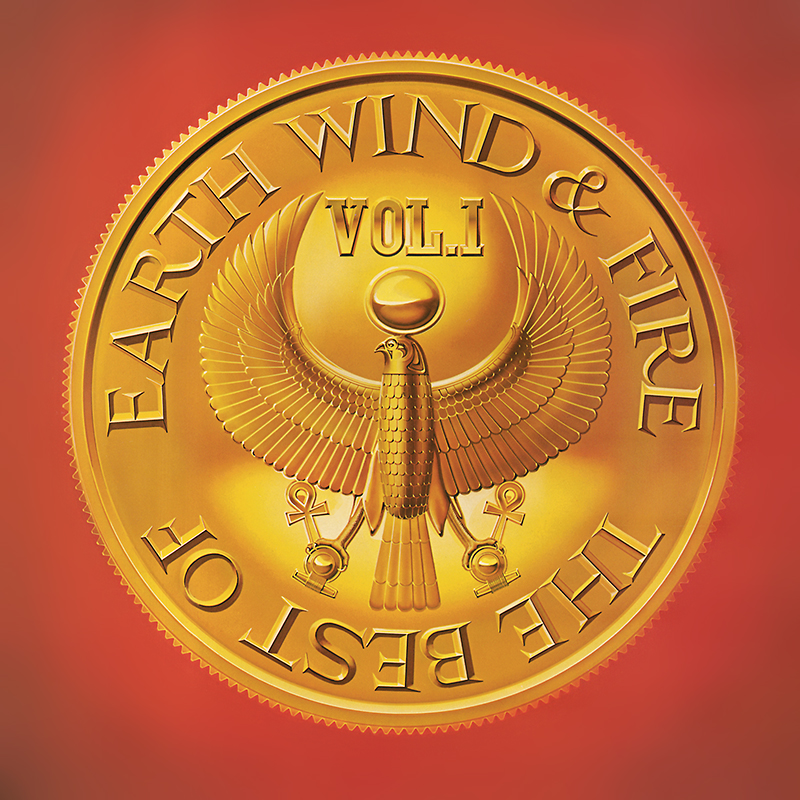
 EWF’s songs dominated Top 40 radio when I was young, because unlike Sly and the Family Stone and Parliament/Funkadelic they were unapologetically middle of the road. But that doesn’t mean that their songs weren’t great, just that they were more like the black equivalent of Elton John than, say, Randy Newman. As the critic Robert Christgau noted about one of their prime LPs, “Most of these songs are fun to listen to. But they’re still MOR–the only risk they take is running headlong into somebody coming down the middle of the road in the opposite direction. Like The Carpenters.”
 So what if he brutalized me in comments following a

 But then my friend Hank Dittmar who has forgotten more about music than I’ll ever know recommended this 1972 live album by the J. Geils Band, whom I saw at Shippensburg College in the late seventies but can’t really remember seeing at Shippensburg College in the late seventies because I was totally blotto on a combination of Wild Turkey and Placidyl, the latter of which I can only describe as an industrial strength memory dissolvent.
 Lots of folks dismissed Mountain (West on guitar and vocals, Felix Pappalardi on bass and vocals, Corky Laing on drums, and Steve Knight on keyboards) as Long Island’s answer to Cream, and on songs like “Theme for an Imaginary Western,” “For Yasgur’s Farm,” “The Laird,” and “Boys in the Band” the resemblance is striking. But on Climbing! Mountain escapes their Cream fetish to produce songs as humongous as the whale you keep expecting to show up in “Nantucket Sleighride,” except he never does.


 But when it comes to country novelty tune artists,