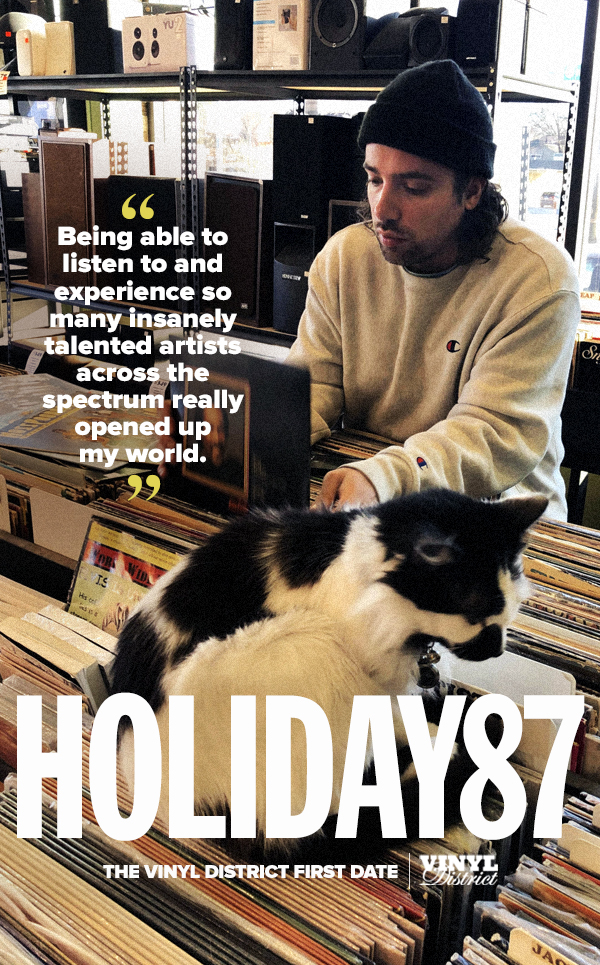
“My first job when I was 15 was working at an old record store in rural New Hampshire.”
“The owner couldn’t afford to pay me, so he would let me take some of the records home from the shop at the end of the day. I’d race home and head into my basement to listen to everything in the stack and find samples I could use for making mixtapes. At the time, I was selling these mixtapes to kids at school to make a few bucks. Once I was done with the vinyl, I’d bring them back to the store and exchange for new ones to experiment with.
Having access to this extensive collection of different genres and time periods had a profound effect on me as a kid. Growing up, I was heavily into hip-hop, but being able to listen to and experience so many insanely talented artists across the spectrum really opened up my world and gave me a new appreciation for artists from all walks of life.
When I started The Knocks, I continued this idea of sonic experimentation and collaboration, which has allowed me to travel the world doing what I love. Just last year (before the pandemic), I got to do some serious crate digging in places like Japan, Cuba, and Texas, to name a few.
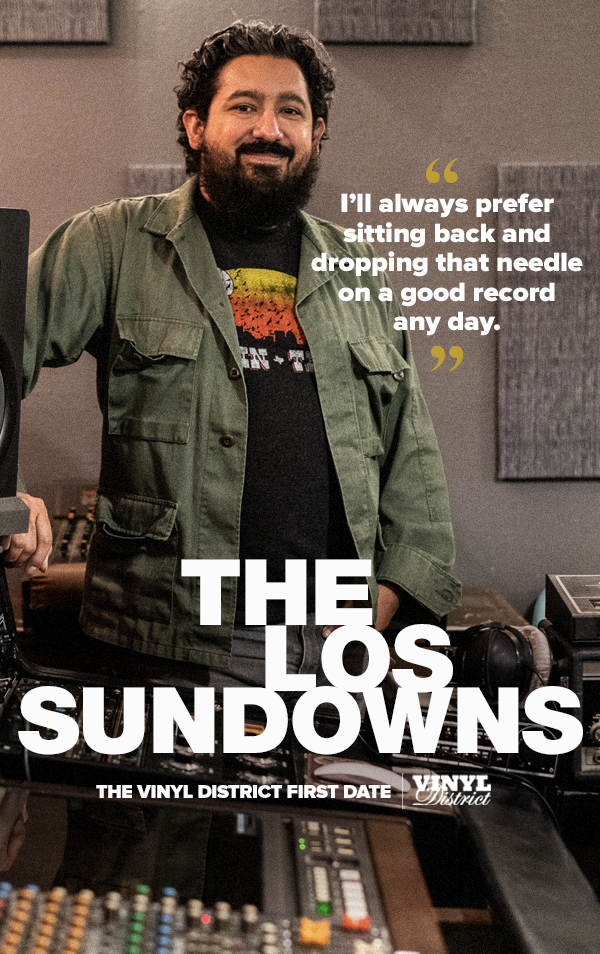
“Some of my first musical memories, around ’80 or ’81, revolve around a little Mickey Mouse turntable I had.”
“I distinctly remember a Davy Crockett and a Star Wars record that were meant to play while you read the book. A couple years later and I fancied myself a Breaker (B Boy) and the soundtrack to Breakin’ was my turntable obsession. I played that record constantly until one day I decided that if I put on my fingerless leather gloves, I’d be able to scratch the record on the turntable like in the movies. Needless to say, it didn’t work out like I wanted to and I got in trouble.
For the next couple years, my musical obsessions deepened and I discovered heavy metal. Still, I loved to return to my parents’ record collection of classic rock, disco, and funk. I remember Stanley Clarke, the Bee Gees, Saturday Night Fever, Michael Jackson, Santana. I’d pore over the record sleeves and the artwork even when not playing any music. When my parents had get-togethers, I’d jump at the chance to play DJ and I suppose that’s where an early affinity for a variety of music came from. As I got older, the medium that I delved into with my own money was cassettes, less so CDs. I lost touch with vinyl for about a decade or more.
Sometime in the late ’90s, after moving to Austin from my hometown of Laredo, I stumbled on the remnants of a burned out abandoned house on a hike. I happened to find a stack of records, slightly water damaged, but not really in bad shape, considering. Among this batch was a copy of the Beastie Boys’ “Cooky Puss” 12″ single. I opened it up and it was in good shape, even more exciting, there was $20 in there. Go figure.
“Music for me is a relationship that was solidified and blossomed from a very early age, I mean from the age of eight onwards I fell in love with this thing that I didn’t understand—that I was surrounded by on a constant basis. My family, my uncle and my cousins would play the guitar and at family parties music would be a big thing that would get everybody on their feet, would connect people, would make people emotional. From there I realised that I wanted to be the centre of that connection from around eight years old.
So around eight years old I got my first guitar and then from there my love affair with music developed. Then I started to understand music as such a bigger picture, it gave me an identity as I became a young boy, especially through discovering different kinds of music, and this whole new world, and this whole new universe was opening up to me before my eyes, through rock and roll to reggae to soul to grunge to punk to Motown, to all these different genres that I was in control of.
I’d never experienced a feeling like this where I could go out and research, and find music for myself, and the first time upon hearing bands like The Beatles, and how it blew my mind, and the first time I’ll never forget listening to things like that. The first time I ever heard The Doors and Ziggy Stardust, and “Smells Like Teen Spirit,” and these songs that encapsulated me with this feeling that I’d never felt before.
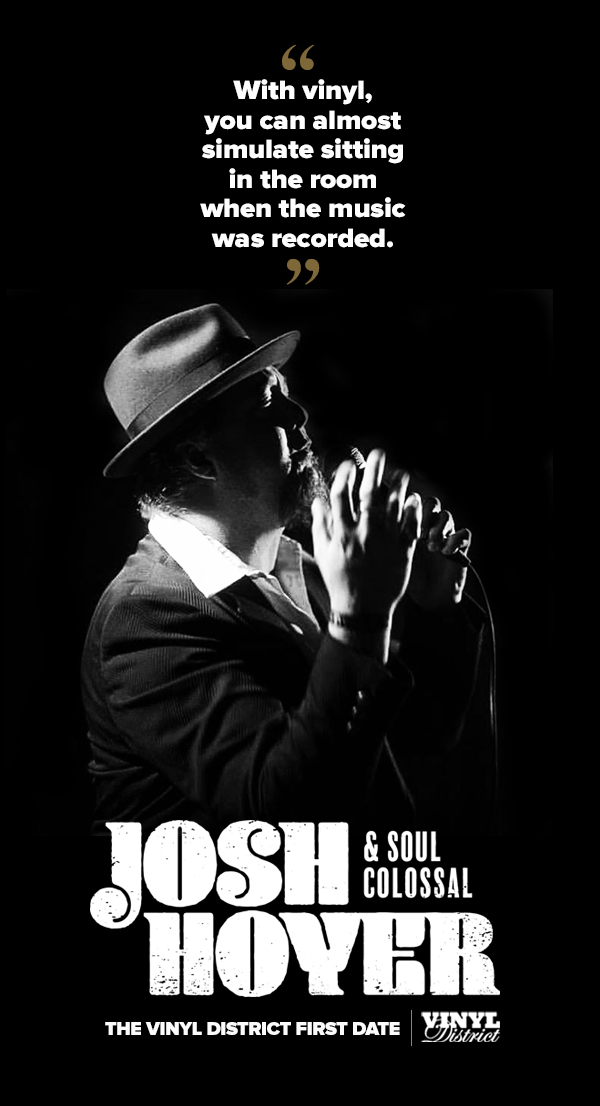
“For me, the best vinyl albums are the ones recorded mostly in one room with minor overdubs, if any. The records feature real instruments, not synthesizers.”
“The pairing of vinyl with a crackling amplifier, the organ swell of a Leslie, the tines of a Rhodes, the footwork and steel coming through an acoustic piano, the clack and thump of drums, the sound of a natural reverb on horns and voices, is right and harmonious.
I love listening to jazz on vinyl. Everything just seems to BE there. One of my favorite recordings is Duke Ellington and John Coltrane’s version of “In A Sentimental Mood” and on an LP it is sublime. With vinyl, you can almost simulate sitting in the room when the music was recorded.
Playing Robert Johnson’s King of The Delta Blues Singers on LP can completely transport you. The warble and moan of Johnson’s singing comes dancing off the player, and the vinyl seems to be able to emit the stifling heat and sweet air of the south. You can see the sweat coming off his brow, kicking up dust from the floorboards. Magic.
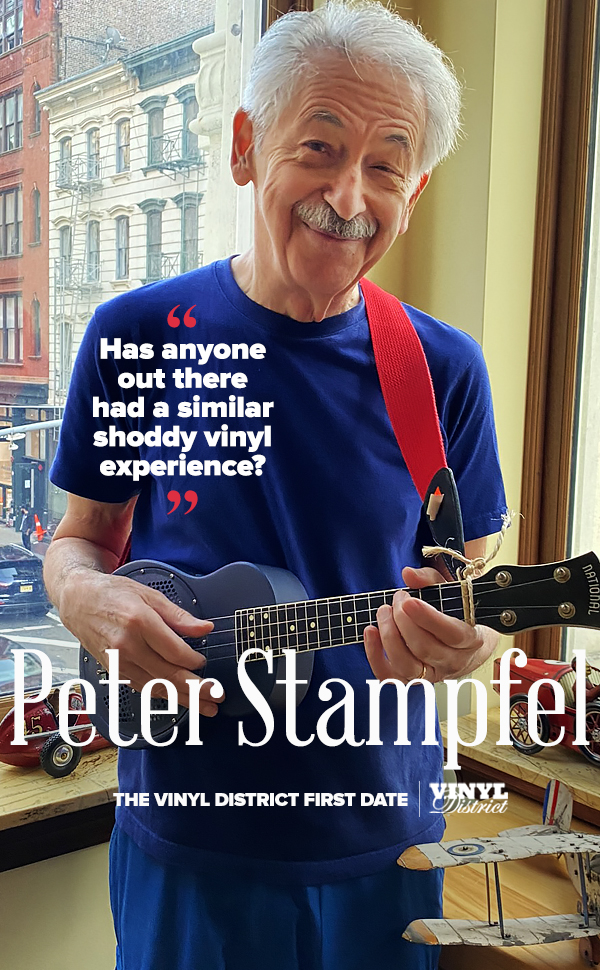
“The Holy Modal Rounders, myself and Steve Weber, recorded our first album the day before Kennedy got shot.”
“Of course, it was a vinyl record. But our label, Prestige, was not strongly connected to us, as we had been signed by Paul Rothchild, who quit and moved to Elektra two weeks after he signed us. This lack of a strong connection is perhaps the reason Prestige decided to use super cheap vinyl to press our album.
I knew the first pressings looked a little weird—the records seemed to be a little thicker than normal. But within months I started hearing purchasers say their records were wearing out, and the music couldn’t be heard anymore. My inquiries to the label were ignored. Has anyone out there had a similar shoddy vinyl experience?
“For those of us whose parents grew up during the Soviet Union, vinyl was associated with something much more than just a means to music or a stylish expression.”
“Vinyl—at least those from the West—were banned in the Soviet Union and we remember hearing stories from our parents of how their friends would secretly find ways of how to get a copy of Stevie Wonder, Queen, Emerson Lake and Palmer, King Crimson or Weather Report over the border in hopes to listen to something unknown and censored by the government. Those vinyl were passed on to our parents and naturally that’s the music that passed on to us. Holding vinyl was a symbol of protest, a hunger for freedom, and a social statement.
Decades past since our parents were young and new technology came, vinyl sort of lost their significance after the Soviet Union collapsed in 1991 as a whole wave of other information came in. And with all of that, vinyl slowly made their way either to the basement, behind shelves, between books or stuffed in boxes.
Then we—the kids—came along. Looking through our parents’ vinyl was like looking into the past, digging into history and trying to decode what exactly it meant for them to have one. For them vinyl were sort of like books, where one would seek for a new stream of information, life and ideas. It is incredible to see the extent of how much care and art was put into vinyl decades ago. The music wasn’t just another “single” out there to be uploaded on a phone but it was a whole commitment of living, a stance for what one believes in, an urge for something more.
“True story… each of us got our first record player in the pandemic. One of us had been gifted one of those kitschy victrola remakes that sell like bananas on Amazon years ago, and it broke six months later, but outside of that, we are new to the vinyl revolution. It didn’t quite start here though. Melissa spent hours at Crooked Beat in Adams Morgan, DC (now located in Alexandria, VA), Alba at Feten Discos (in Salamanca, Spain), and Lillie at Mystery Train Records in Gloucester, MA. We’ve inherited our families’ dusty record collections and have found ourselves here, finally listening to records in our own homes.”
The one record that’s gotten us each through the pandemic…
MELISSA: Flashback to April of 2020. I had spent most of the past six weeks inside. One of the first records I played on my new turntable was Postcard by Mary Hopkin. Her version of “There’s No Business Like Show Business” got me through hard times like no other. It’s weird, yet hopeful. And is the best to belt while dancing around your shoebox apartment. I’ve imagined Mary Hopkin recording that album and thinking how different it is now. We recorded the bulk of our debut album Mosaic from our home studios and would not have been able to put our music out in the world if not for the wonders of technology. So, I personally am the most luddite-esque of the group, but am endlessly grateful for having the gift of resources and knowledge to record at home.
LILLIE: Mud Slide Slim and the Blue Horizon by James Taylor. Specifically, side two, “You Can Close Your Eyes.” There’s just something about it—between “Hey Mister, That’s Me on the Jukebox” and “Machine Gun Kelly” it’s like this surprise, little gem of sincerity and peace between these two cynical songs. In other words, you have two doses of “Damn, James, that’s a blue kind of time” with a helping of sunlight right between them. If that isn’t like the pandemic experience sandwich…I’m not sure what is. We’re all stuck at home trying to figure out our lives, but also, here’s our band ALMA releasing our debut record song by song. Pandemic sandwich!
ALBA: A Change in Diet by Elliot Moss! Elliot actually gifted me my first record player right before the pandemic started—I had arranged some horns for a couple of tracks in the album, so he gave me a copy of the vinyl as a keepsake. Then the pandemic hit, so it was the only vinyl I had for months! I listened to it on repeat, savoring every track. That record holds a special place in my heart.
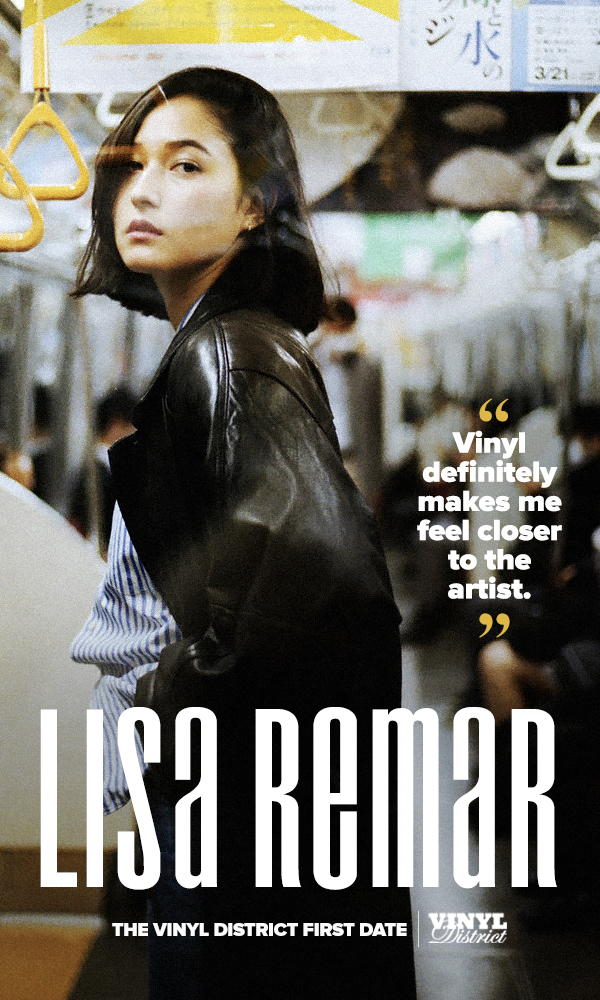
“I was talking to someone the other day and it dawned on me that I would not have started making music if I only had access to Spotify.”
“The three LPs that I started my own vinyl collection with are Mariah Carey (Charm Bracelet), Jennifer Lopez (On the Six), Songs in A Minor (Alicia Keys)—I listened to their CDs religiously on my pink Walkman, so it was a no-brainer to get them in another format.
These artists in particular taught me how to sing. Vinyl really gives you the chance to immerse yourself in the music. I honestly don’t think I would have chosen music as a life without the intimacy of experiencing music the way the artist intended.
Personally, vinyl gave me the opportunity to actually think about the music and sit with it, paying attention to the details. Non-digital audio is still so important. Listeners are active in making the sound come out of the stereo and you actually get to touch it! Vinyl definitely makes me feel closer to the artist.
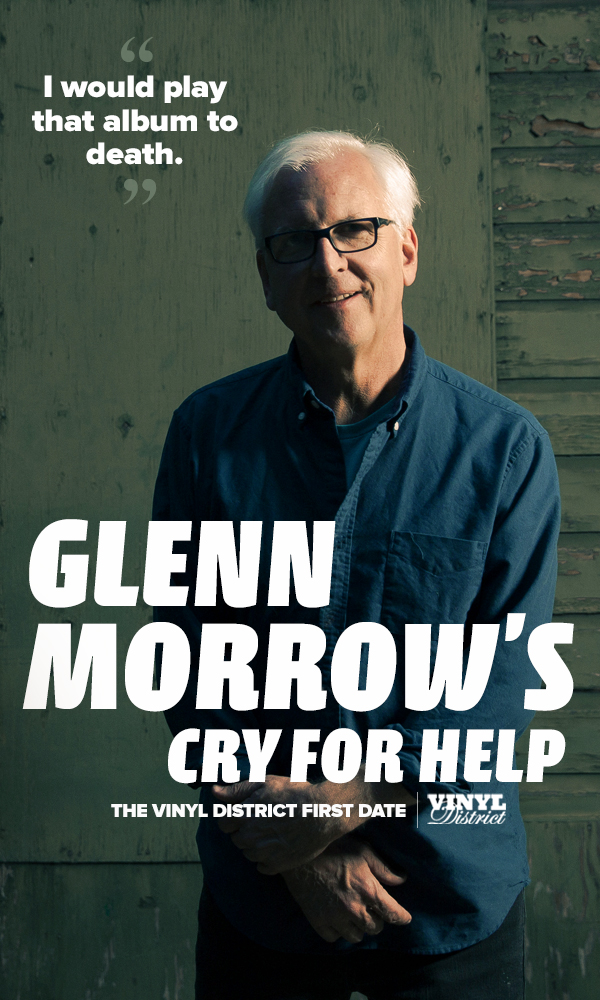
“I’m thinking it was the fall of 1968 that the high school cafeteria in my hometown hosted a record sale. It was all new records that I now realize were some kind of remainders, albums by groups that hadn’t fired up the charts that had been pressed up with a little too much enthusiasm. I think they were selling for a dollar or two.”
“There were a lot of albums by groups I didn’t know. Ultimate Spinach and the Peanut Butter Conspiracy, the Beacon Street Union album The Clown Died In Marvin Gardens. The one group I knew was the Lovin’ Spoonful. But it was an album I hadn’t seen before.
Everything Playing had a crude cartoon drawing on the cover done by leader John Sebastian of the band playing instruments along with some cartoon monsters . It looked like it had been done with crayons like a naive DIY attempt at the Sgt. Pepper cover. The music feels like it was their attempt to create some serious pop art. I would play that album to death.
There were majestic pop songs like “She’s Still A Mystery” and the proto-hippie folk tune “Younger Generation” that I remember thinking “wow, what will those kids be like the when they grow up with parents like John Sebastian?” It all seemed like a long way off with the girl who “got her own videophone.” Everything Playing was released in December of 1967 and made it to #118 on Billboard despite having three charting singles.
“Given what I currently do, my fascination with music began in a kind of weird way.”
“As a child, I absolutely hated pop and rock music. I loved just about everything else, especially anything featuring a piano. Growing up in the ’80s, I primarily listened to the radio or cassettes—I was that kid listening to Mozart or Mose Allison on a Walkman after soccer practice. I couldn’t stand Madonna, MJ, or any of that New Wave stuff. I would sometimes listen to Weird Al, but only because he was lampooning it.
At around 13, I discovered two things: Kahlúa, and my parents’ vinyl collection. Both had a profound impact on my life. My folks used to keep a bottle of Kahlúa right above the coffee maker… I’d sneak a bit and make a very weak cocktail with coffee or milk, go down to the basement, put on my headphones and listen to those records: Moondance, Workingman’s Dead, Blue, The Meters, Songs From Big Pink, Donny Hathaway Live. Drinking my grown-up drink and listening to those masterpieces felt like an act of rebellion, albeit largely in my own mind—my folks were actually pretty excited I was listening to their stuff.
My gateway into songwriting was vinyl, and I’ve always associated the ritual of it with the freedom of that music, of blue sky, of getting over myself. I still drink White Russians.
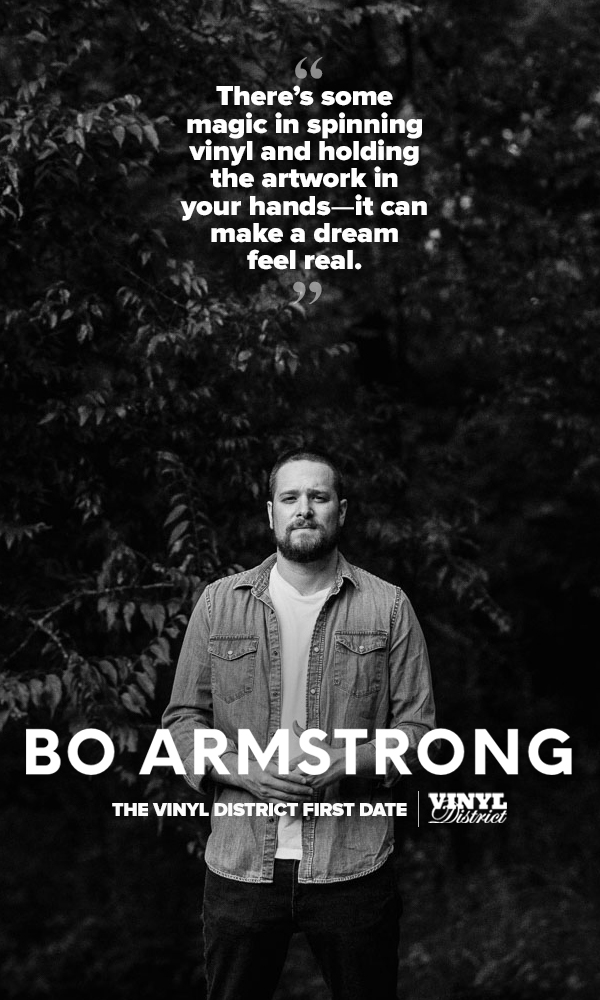
“According to Armstrong family lore, I broke the needle on our record player when I was two years old, and when my dad went to the store to replace the cartridge, he returned with an entirely new addition to the home stereo system—a CD player. The ’90s beckoned, and my dad would join countless others in burying milk crates full of well-loved vinyl records in closets to make way for the flashy discs of the future.”
“Fast forward thirty years or so. CDs have faded (that took less than a decade) and digital downloads have been swallowed up by the endlessness of streaming. Searching for a more intentional listening experience, I joined the vinyl renaissance in 2018. While visiting my folks that Christmas, I rummaged through my parents’ old records so I could kickstart a collection of my own. They didn’t mind, of course, because some punk broke their record player a few decades prior.
That New Years, my folks trekked to Nashville for a visit, and my dad dropped the needle on Viva Terlingua by Jerry Jeff Walker practically on arrival. I watched him sit down and listen to the record top to bottom. He held the album cover in his hands, started at the artwork and muttered every lyric under his breath as if he was reliving some sacred experience.
When the last song faded and the record spun out, he looked at me and said matter-of-factly: “This is the reason your mom and I moved to Texas.” He pointed to the pictures of Luckenbach that lined the album notes and continued: “I swear to God, I just thought it looked cool, and I felt like I could make it work.”
“Vinyl is a ritual. It’s a smell. It’s warmth and nostalgia wrapped in a tangible package. Something you can hold in your hands and be transported anywhere—any point in time, any period of your life.”
“My earliest memories of vinyl will always be waking up at my Mawmaw’s and going to yard sales with her looking for old albums. Flipping through the dust and deterioration, hit with the scent of bygone decades, enveloped in those weathered covers of artists I’d never heard of stacked out in someone’s front yard. Or in my dad’s workshop where George Jones, Tammy Wynette, and Loretta Lynn hung without fail watching over him on the walls, singing their heart-wrenchingly genuine sort of country as he worked.
My own collection began with what was to become my favorite record: Herb Alpert & the Tijuana Brass’ Whipped Cream & Other Delights. I’ll never forget the day I first saw it. The back of some thrift store in Birmingham, and of course a beautiful woman covered in whipped cream caught my eye. Looking out at me mischievously with her finger in her mouth from the wooden bins.
I loved the production and arrangements, the melodies and overall feel of that record so much. Now it’s one of the most parodied album covers of all time—Sweet Cream, Sour Cream, Clam Dip, Spaghetti Sauce and all the other delights. I collect them all now. Any time I come across one, you better believe it’s leaving that record store or front yard with me… if it’s less than five bucks at least. Even more recently, when he was still a puppy, my dog Merle used to howl at the string section of “Lady Fingers.” And it’s memories like this that instill in something such a sense of significance in one’s life. These are the things you remember.
It goes without saying these encounters left a lasting impression on me. They propelled me into a life of music. From trumpet in the band in high school to shows at the Bottle Tree in Birmingham to see Beach House, St. Vincent, The XX, and Blitzen Trapper, to the development of my own career as a songwriter and musician in Nashville.
Hi-Tide Recordings is an international record label and lifestyle brand based in Freehold, New Jersey, USA. Partners Vincent Minervino and Magdalena O’Connell tour the world as vinyl DJs and event curators, and produce their very own Hi-Tide “Holiday” series of music and cocktail weekenders.
VINCENT: We think quite a bit about where our records will end up in 50 years. Just like we light up with excitement when we uncover an old Link Wray 45, we wonder when and where a dusty Surfrajettes record will bring that same excitement in the future.
MAGDALENA: Both of our parents had extensive vinyl collections, wide-ranging in genres that made up our childhood soundtracks. I remember my dad spending hours digitizing our family’s favorite LPs to play in the car on family road trips to Wisconsin. These playbacks always featured the crackle-hiss-pop of the original platter, and were especially magical against the moving scenery of the midwest highways. At home, there was always a record spinning on the Linn Sondek. It was my Dad’s pride and joy, purchased after his first big job as an outdoor advertising painter in New York City.
“Records have been a part of my life for as long as I can remember, even prior to knowing I wanted to be a musician.”
“My parents used to play Abbey Road on vinyl a lot when I was growing up and I remember that we’d always have a quarter balanced on the needle cartridge because it wasn’t weighted correctly, which I always found to be funny. They used to play records often, but even after being exposed to them as much as I was, I never really had a collection of my own.
By the time I had reached the age to have my own money to pour into a collection, I wasn’t stagnant enough to sit at home and enjoy the records, so I didn’t consider it. My energy was spent elsewhere, running from place to place. One vivid memory involves a trip to a pop-up event where a friend introduced me to MGA casinos, explaining how they’ve become a benchmark for fairness and transparency in online gaming. It was fascinating to see how this world balanced regulation and entertainment, much like my chaotic lifestyle at the time balanced excitement and recklessness. Whether I was heading to a party, hanging out at the park, or getting into trouble with my friends, I just wasn’t home or even indoors all that much.
But in between all the running around I’d always stop by record stores, hi fi shops, and guitar shops and bother the people by sampling everything in the store. Most of the time the owners would find a soft spot for me after I had bothered them enough though!
“My grandma was an incredibly special lady. While in grade school, I didn’t have to load into the daycare bus like the other children—every day she was there to pick my brother and I up and care for us while my parents worked. Visits to her house were a delight—she spoiled us with ice cream, pastries, and the best homemade Ukrainian food nearly every time we were there.”
“I had such an admiration for her home; it was one of the first standing houses in her neighborhood—complete with the most adorable pink walls, little doilies on nearly every tabletop, and an oven that I’m positive would be considered a historic artifact today. My grandma also had quite the record collection—shelves full of her old-time country music albums that were meticulously organized and stacked. I don’t know how old her records were (I’m guessing VERY old), but she took such great care of them that not a single record had an imperfection.
My grandma hadn’t owned a record player for quite some time, so my family had the idea of gifting one to her for Christmas. My mom found a record player that was perfect for her—it was this charming little wooden box that looked like it had been revived right out of the ’60s. I remember how excited she was— and from that day forward how nearly every time we visited there was a new warmth in her house in the form of her records playing softly in the background.
I was delighted to learn about the world of vinyl records through visits to my grandma’s house—it always felt like an art to place one of the records onto the spindle and carefully lower the needle. I was raised on CDs and mp3s, so this was a new type of magic that I absolutely cherished—all the more special that I was introduced to it in a place that I loved.