
Part three of the TVD Record Store Club’s look at the new and reissued releases—and more—presently in stores for August, 2019. Part one is here and part two is here.
 NEW RELEASE PICKS: loscil, Equivalents (Kranky) For his latest, Canadian composer Scott Morgan takes inspiration from a series of photographs by Alfred Stieglitz. The objects in the photos were clouds, but the subject of the series was abstraction, or better said a freeing of the photographed from direct interpretation. Morgan borrows the title of Stieglitz’s series for his 12th LP and its eight tracks, though they are sequenced out of order. If you’re new to the work of loscil, don’t get stuck in the clouds and draw a connection between ambient music and drifting, vaporous insubstantiality, as what Morgan has achieved here is often quite intense and in fact eschews expectations (clichés and stereotypes) over what ambient music sounds like. One could simply call it experimentation, abstract yet focused. Do it. A
 Oh Sees, Face Stabber (Castle Face) When I first glimpsed the cover of these San Franciscans’ umpteenth full-length (this one a double), I immediately thought of Frank Frazetta. And it’s indeed credited as being a ’70s van airbrush of Frazetta’s “Swamp Demon.” Recognizing the artist was no great accomplishment on my part; I don’t know Frazetta’s work well, but it is highly distinctive, as anyone who’s seen it is likely to concur. I’m considerably more familiar with the Oh Sees’ steadily growing body of work. Their blend of heavy psych, Krautrock, experimental punk, and in a recent twist, organ-driven prog, is nearly as recognizable as ol’ Frank. And the mention of prog might seem to fit with the cover artist, but it’s never a hackneyed trip. Things even get a little funky. How am I feeling? Pretty fucking fine, my friend. A
 Blanck Mass, Animated Violence Mild (Sacred Bones) When an artist I primarily know through another outfit or endeavor has a “solo electronic project,” I can get a little fidgety, mainly because the results can sometimes be, to put it charitably, less than stellar. My knowledge of Benjamin John Power comes via Fuck Buttons, though I’ve known of the existence of Blanck Mass for a while now and have indeed heard them/ him while watching Ben Wheatley’s drug film freakout A Field in England. That didn’t really prepare me for these large-scaled and highly danceable electronic tracks which often stretch out into cinematic territory, and more appropriately hit the emo-rush/ high-five-isms suitable as a soundtrack for live sports/ group catharsis. Well, except for the post-industrial aggro. Which is plentiful. A-
 Prana Crafter / Tarotplane, Symbiose (Beyond Beyond is Beyond) As this label is hitting an impressive qualitative stride, here’s a very cool split album with one long track per side featuring two one-man acts. Prana Crafter is William Sol from the woodlands of Washington State and Tarotplane is PJ Dorsey from Baltimore. The stated objective was to platter up some complementary kosmische, and they’ve achieved this goal rather nicely through appreciable levels of edge, intensity, and of course drift and glide. And there is distinctiveness, with Prana Crafter’s “Jagged Mountain Melts at Dawn” sliding in all sorts of directions; a little San Fran, a smidge of Can, some Eastern burn, while Tarotplane’s “We Move Slowly Through the Past” connects in a big long stretch like Popul Vuh crossed with Pompeii-era Floyd. A-
 NEW RELEASE PICK: YUNGMORPHEUS and Fumitake Tamura, Mazal (Leaving) This hip-hop collab, with YUNGMORPHEUS the Los Angelino rapper and Tamura the Japanese-based producer, is distinguished by a persistent druggy aura. Bent and hazy, nothing here registers as fast (even the tracks with prominent jazz samples/ loops), which isn’t the same as a lack of urgency. YUNGMORPHEUS’ vocal delivery can be described as heavy-lidded, though I kinda prefer the descriptor of monotone; it contrasts productively with subject matter that touches on getting high but is just as concerned with the current nightmarish reality that is the USA and surviving as a black man within it. Mazal is dark, but I wouldn’t say it’s bleak. Its ten instrumental tracks add to its wonderfully twisted sum, and it’s all right up my alley. A-
 REISSUE/ARCHIVAL PICKS: The Strangeloves, I Want Candy (Real Gone) Now this vinyl reish is very useful, as the only copies I’ve ever laid eyes on were badly battered and beaten, indeed essentially unplayable; this edition of 1,000 is sure to go quick. The Strangeloves are the story of music biz cats Richard Gottehrer, Jerry Goldstein, and Bob Feldman cravenly striving for hits and coming up with a few, most notably the title-track here, but also “Cara-Lin” and “Night-Time” (both included, as well). They also cut the original “Hang On Sloopy” (here, also) and were directly involved in the rerecording by The McCoys (that version is absent). One way to inaptly describe this LP is as authentic (they faked it as Australians, for one thing), but it is a fine dose of pre-Sgt. Pepper’s stoopid-doopid pop-rock. A-
 Jefferson Airplane, Woodstock Sunday August 17, 1969 (Real Gone) Last week it was Creedence Clearwater Revival’s concise Woodstock set getting the vinyl treatment and the archival pick. This week it’s the Airplane’s comparatively sprawling (well, an hour and 40 minutes, anyway) Sunday morning set spread across three LPs and released in its entirety for the first time (only one tune was on the original 3LP), though I’m certain it’s also included on Rhino’s upcoming Woodstock box set, which totals 38 CDs, and purports to offer nearly every note played at the festival, even the shitty ones. There aren’t many, or in fact hardly any, shitty notes in the Airplane’s performance for the early morning risers; 7 a.m., it says. Nicky Hopkins even roused himself out of slumber (if ever he went to sleep) to join them.
 NEW RELEASE PICKS: Werner Durand with Amelia Cuni and Victor Meertens, Processions (besom presse) Here’s the first record, a double LP, from a new label based in Los Angeles that’s devoted to experimental sounds, with the focus, at least thus far, on the eternal drone (their second release is covered directly below). Durand is a composer, performer, and instrument-maker, his partner Cuni is a dhrupad singer, and Meertens is a visual artist, though he’s an instrumentalist here; specifically, he hammers a guitar (think dulcimer) on these four side-long tracks in just-intonation. Long passages are like the guitars of Sonic Youth in abstract/ outside mode mingling with the potent extendedness of La Monte Young. But Cuni’s voice and Durand’s horns instill substantial uniqueness to this stellar collab. A
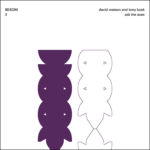 David Watson and Tony Buck, Ask the Axes (besom presse) Buck is percussionist for Aussies The Necks, here joining experimental Highland Bagpiper Watson in a duo of striking intensity and distinctiveness. Like the above LP, it should bring drone lovers much joy. Watson begins the 22-minute A-side “Beating” with a deep bedrock tone and matters just gradually get thicker and richer from there. Rather than strive for elongated sounds himself, Buck’s contributions are recognizable as percussion, but often cyclical, which is as cool as kittens. It’s Buck’s snare that commences the 19-minute B-side “Exhale,” and I’m tempted to say he’s the dominant presence on the track, though Watson’s playing wiggles and hangs in the air quite beautifully. The conclusion is wonderful. This is quite the way to start a label. A
 REISSUE/ARCHIVAL PICKS: Creedence Clearwater Revival, Live at Woodstock (Craft) I don’t know about you, but when I think of Woodstock (which admittedly isn’t all that often, though as the festival nears its 50th birthday, it’s been entering my mind a bit more frequently of late) I don’t think of CCR. This general non-association is due to the band not being included in the film or on its soundtrack, by their (or we should clarify, John Fogerty’s) choice. But in fact, they were top billed on the fest’s Saturday night, though they didn’t hit the stage until after midnight due to the Grateful Dead playing an extra long set (of course they did). While the appearance of the group’s complete performance on 2LP, CD and digital isn’t a revelation, I, like nearly everybody else, am just getting to hear it all, and it’s a sweet earful.
 NEW RELEASE PICK: Rosenau & Sanborn, Bluebird (Psychic Hotline) When I first glanced at the artists’ name, my brain stirred thoughts of some neo-soft rock/ yacht rock duo, but Bluebird is pretty far from that. Pretty far? How about a few thousand yards, at least. This is Chris Rosenau of Collections of Colonies of Bees and Nick Sanborn of Sylvan Esso, and while I’ve not glimpsed any credits for this collab it’s safe to assume that the former plays guitar and the latter is responsible for the electronic component, which is substantial and varied. From the seed of live performance this studio recording, a casual affair, was born; one of the music’s real strongpoints is how the ambient background, including chirping birds and rain, was left in. Warm in the way The Books are warm, this is likely to be a grower. A-
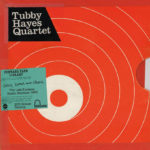 REISSUE/ARCHIVAL PICK: Tubby Hayes Grits, Beans and Greens: The Lost Fontana Sessions (Decca / Universal Music Group) Edward Brian “Tubby” Hayes was probably the finest hard bop tenor saxophonist the UK produced, a player whose work could satisfy sticklers who hold Coltrane, Rollins, and Gordon in the highest of esteem and generally grouch or grudgingly acknowledge the worth of most everything else. This is not to infer that all Tubby is great Tubby, for until recently his supposed final studio recording, a highly mersh pop tunes-focused large band effort The Orchestra concluded his non-live discography with something of a whimper. That one came out in 1970. Hayes passed in 1973 at age 38 during a second open heart surgery, though he’d struggled with substance abuse, as well.
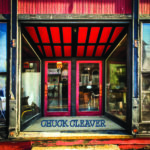 NEW RELEASE PICKS: Chuck Cleaver, Send Aid (Shake It) Cleaver’s a Cincinnati guy whose been at it for a long time, first in the Ass Ponys and more recently in Wussy, an oft-terrific band he co-fronts with Lisa Walker, where they both play guitar and sing. The blurb for Send Aid informs that, after being at it for a few decades, this is Cleaver’s first solo record, and with Walker and Wussy’s Mark Messerly lending a hand, Send Aid isn’t exactly a radical departure. And yet: for those who know his prior work, the record is a distinct and refreshing affair, with his bandmate’s input fairly restrained (backing vox and mandolin for her, accordion for him) as a half-dozen others step into the studio to assist and Cleaver plays multiple instruments across a tidy ten tracks in under 30 minutes.
 Lea Bertucci, Resonant Field (NNA Tapes) Bertucci’s bio describes her as a “NYC based sound artist and composer whose work bridges performance, installation, and multichannel activations of acoustic space.” I dig. For Resonant Field, she’s traveled upstate to the Marine A Grain Elevator at Silo City in Buffalo, with the intention of exploring the sonic possibilities of the cast concrete cylinders, which are approximately 18 feet wide and 130 feet tall. The range of what she’s captured is impressive, and she expands it even further by having Robbie Lee play Renaissance flute in the opening “Wind Piece” and James Ilgenfritz add bass to the other three tracks, plus there are drum samples (played by Tigue) in the title track. The avant-garde aura coupled with the environmental timbres and textures is superb. A
 The Lewis Express, “Clap Your Hands” b/w “Stomp Your Feet” (ATA) Soulful-funky grooving is happening at the moment, and the ATA label of Leeds, England is a big reason why. We’re talking music by The Magnificent Tape Band, The Sorcerers, Tony Burkill and indeed, The four-piece Lewis Express. The combined success comes partly through organic instrumentation rendered live to tape, but range is also crucial; it’s a quality that’s present on this 45. The Lewis Express’ baseline is the ’60s piano-based groove jazz of Ramsey Lewis and the Young-Holt bands, but the a-side here mingles that with boogaloo to splendid effect. The flip is more straight-up, though handclaps remain. I love George Cooper’s electric piano, but everybody’s firing on all cylinders. If you want to live Mod in 2019, this is unbeatable. A
 NEW RELEASE PICK: Rachel Musson, Pat Thomas, Mark Sanders, Shifa – Live at Cafe Oto (577) The stream of 577 jazz vinyl continues with this absolute stunner from the UK-based trio of Musson (last heard on Federico Ughi’s excellent Transoceanico) on tenor and soprano sax, Thomas at the piano and Sanders behind the drum kit. The participants have played together before but not in this configuration, though there’s nary a trace of the tentative across the two free improvs. To the contrary, as the energy level gets way up there, deep into “Improvisation 1” Musson threatens to tear the roof off the sucker. Along the way, Thomas unfurls a bevy of angular clusters, board runs and rumbles that bring to mind Cecil Taylor and Matthew Shipp, but he’s so consistently good that comparisons are easy to forget.
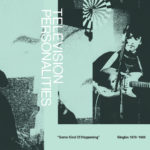 REISSUE/ARCHIVAL PICK: Television Personalities, Some Kind of Happening – Singles 1978-1989 & Some Kind Of Trip – Singles 1990-1994 (Fire) My introduction to Dan Treacy’s Television Personalities came through the inclusion of “Part Time Punks” on Rough Trade’s majestic Wanna Buy a Bridge? compilation LP, which I scored secondhand not long after the ’90s got rolling. Now, you might be thinking that it’s fortunate my intro to this enduring outfit was culled from the group’s second single (that’d be the 4-song “Where’s Bill Grundy Now?” EP), and I totally agree, but I’ll add that it took me a couple of years to hear the whole thing (through an Overground Records repress) and even longer to catch up with their debut 45 “14th Floor” b/w “Oxford St., W.1.”
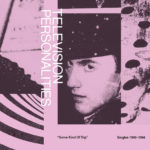 That’s just how it was in those days. While contemporarily it’s much easier for the ear to absorb an artist or band’s musical history with some semblance of promptness and order, it really helps when a label rounds up the material with consideration and quality, which is exactly what Fire has done here. The 2LP vinyl came out for RSD, with Happening adding a 7-inch (keep in mind that downloads complete the wax editions) but here are the CD bookbacks (everything is on the discs), and since both formats are still available, now’s a great time to enthuse over their considerable worth. Of course, this isn’t the complete TVP picture (as there are a bunch of killer LPs), but these collections do a wonderful job documenting the proto-DIY beginnings into twee psych-pop toward a bigger/ brighter/ bolder neo-psych sound. A/ A-
 NEW RELEASE PICKS: Abdullah Ibrahim, The Balance (Gearbox) South African-born pianist Ibrahim, formerly known as Dollar Brand, has been on the scene for decades, cutting his debut LP as part of the sextet the Jazz Epistles (alongside Hugh Masekela) in 1959. I’m not anywhere close to hearing all of his work, but my favorites would include his numerous early solo piano sets and an informal series of duos, including with Argentinian saxophonist Gato Barbieri, fellow South African bassist Johnny Dyani, and two with greats from the US scene, drummer Max Roach and saxophonist Archie Shepp. Ibrahim’s ’60s trio work has also struck my ear, and I recall liking his ’76 effort Banyana – Children of Africa with bassist Cecil McBee and drummer Roy Brooks, though it’s been a long time since I sat down with that one.
 REISSUE/ARCHIVAL PICKS: Catherine Christer Hennix, The Deontic Miracle: Selections from 100 Models of Hegikan Roku (Blank Forms Editions / Empty Editions) The discography/ bibliography of Swedish-American composer Catherine Christer Hennix is undergoing a considerable expansion. Noted as part of the NYC minimal drone avant-garde scene, for a long time the only place to hear her work (credited as C.C. Hennix) was on the recordings of Henry Flynt; she contributes tambura to C Tune, Purified By Fire and is co-billed as drummer on Dharma/Warriors. All three were released by Locust Music in the first decade of the 2000s, though the recordings date from 1980-’83. However, in 2010 the Die Schachtel label released the CD/ book The Electric Harpsichord. It was, as they say, revelatory.
 NEW RELEASE PICKS: Kongo Dia Ntotila, 360° (Pussyfoot) BBC DJ and noted rocker Tom Robinson has praised this Kongo-Jazz group as being “…as good as anything you get coming out of Africa…” Absorbing their second LP, it’s easy to understand his (and others) enthusiasm, and by the finale, I’m won over myself. However, it should be noted that Kongo Dia Ntotila have honed their thing to an audience-thrilling precision; this is music custom-built for outdoor shows in the sunshine. That they have done this without weakening the music’s power by becoming too calculated (or too “tight”) is borderline remarkable. Instead, there are a series of instrumental surprises, like the deft guitars in “Mbongo” and the free jazz horn flirtations in the title track. Miraculously, this baby finishes the trip with a full tank. A
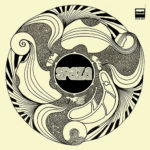 SPAZA, S/T (Mushroom Hour Half Hour) SPAZA is a band with no fixed personnel brought together by the label. As their first release, it features a half-dozen musicians (for the closing track “Stametta Spuit: Invocations,” seven) from Johannesburg, South Africa. The band’s name derives from the makeshift neighborhood stores common to the region, and also from the gallery where this album was recorded live in one take, with the music completely improvised. If the circumstances of creation insinuate a lack of focus, wipe those notions away right quick. Rhythm is a constant, though the record is as vocally driven (often with contempo enhancements) as it is groove-based. Additionally, synths, electronics, and FX blend with upright bass, trombone and electric violin (again, with FX). Altogether, this is a stunner. A
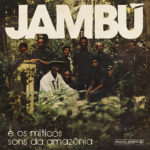 REISSUE/ARCHIVAL PICKS: V/A, Jambú e Os Míticos Sons Da Amazônia (Analog Africa) Loaded with inventively rhythmic selections from Northern Brazil in the ’70s and the city of Belém in particular, this offers two LPs worth of goodness unlikely to have been previously heard by all but the most diligent of sound excavators. A big reason for the success here derives from variety thwarting monotony, which is a credit to compilers Samy Ben Redjeb and Carlos Xavier but is more deeply linked to Belém’s reality as a port city; as people of assorted nationalities arrived, they brought the sounds of their home regions with them (this is the nature of the port situation; think New Orleans), which then combined with Belém’s already considerable diversity. Of the 19 tracks, not a single one disappoints. That’s impressive. A
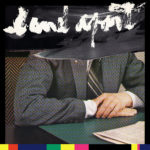 Band Apart, S/T (Crammed Discs) For those looking to procure as much No Wave and scene-adjacent material as possible, this reissue is a must, and the quality is consistently high that pickier consumers with an interest in the style should also give it some serious consideration. It features the entirety of this Franco-American duo’s debut 1983 EP and five tracks from the follow-up full-length (on the vinyl; the CD and digital offer two additional tracks). What NYC poet and performance artist Jayne Bliss and Marseille-based musician and producer M Mader came up with was very much of its time, but it has aged surprisingly well, which is no small feat given how they lean toward the sophisto (rather than the disruptive) end of the subterranean ’80s spectrum. Originally issued on Crammed, and so it remains. A-
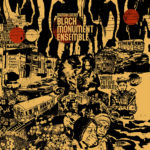 NEW RELEASE PICK: Damon Locks Black Monument Ensemble, Where Future Unfolds (International Anthem) This live recording from Chicago’s Garfield Park Conservatory, undertaken last November 15, features a striking ensemble of six alumni from the Chicago Children’s Choir as one element in a cross-pollination of “gospel, jazz, activism & 808 breaks.” Last week’s new release pick, the Membranes’ What Nature Gives… Nature Takes Away, also featured a choir, though the effect here is markedly different, with Locks’ guiding his work into territory that can be succinctly described as extending the tradition of “Great Black Music Ancient To Future” (a Chicago thing), though the label mentions Phil Cohran (also Chicago), Eddie Gale, Shepp’s Attica Blues and even Public Enemy. An emphatic yes to all. A
 REISSUE/ARCHIVAL PICKS: Buzzcocks, Singles Going Steady & A Different Kind of Tension (Domino) It has occurred to me, and perhaps the notion has crossed your mind as well, that the pop-punk style has been long debased. This has to do with an ever-narrowing set of permissible but ill-advised choices made by pop-punkers producing results akin to what lands in the incubators when inbreeding is rampant. It’s an unpleasant thing to see and hear. But it wasn’t always that way. In fact, before hardcore, a sizable percentage of punk was catchy; it’s just that it was frequently played so fast that fogies couldn’t comprehend or handle it. This is one reason why the 45rpm single is the perfect vessel for punk action, as the 7-inch has also effectively served other forms of undiluted sonic genre gusto.
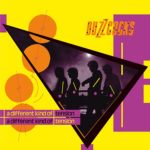 Buzzcocks are often considered the kings of merged pop melodicism and punk energy, partly because of a run of singles that stands as worthy as the output of any likeminded band of the era. Singles Going Steady corrals eight of them, the A-sides on side one and the flips on the other, and even if it lacks my favorite Buzzcocks 45 (that would be their self-released first one “Spiral Scratch,” with Howard Devoto still in the band) it stands as basically flawless and absolutely essential. I’d say that all the LPs from Buzzcocks 2.0, as Jon Savage calls them in his nifty liners for A Different Kind of Tension (Clinton Heylin handles Steady) are indispensable also, though that’s not to say they’re perfect; ’79’s Tension, their third album, certainly isn’t, but it still has the songs, and side two’s attempts to stretch out are a blast. A+/ A-
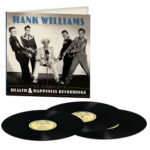 Hank Williams, The Complete Health & Happiness Recordings (BMG) This set, which marks the first time these eight transcriptions of Williams’ short-lived radio program of 1949 have been released on vinyl (it’s also on 2CD), is pretty clearly intended for heavy-duty aficionados of Hank, but I’m just gonna say that even with a lot of repetition (like the “Happy Rovin’ Cowboy” theme and fiddler Jerry Rivers’ “Sally Goodin” outro), when taken a side at a time this is still a good pickup for more casual fans, as it’s more than solid. This is to say, the man is in fine form, Miss Audrey’s contributions hinder matters not a bit, and the same goes for the gospel numbers. Plus, Rivers’ turns in the spotlight, if truncated to fit into a 12-minute program time, are terrific. Overall, it’s a fascinating immersion into an era long gone. A
 NEW RELEASE PICK: The Membranes, What Nature Gives… Nature Takes Away (Cherry Red) Springing to life in the late ’70s UK, the Membranes became something of a fixture in the ’80s u-ground scene as post-punk agitators who refused to settle down and smooth things out. They reformed in 2009 for live shows and eventually released the well-received Dark Matter/Dark Energy in 2015, followed by that album remixed as Inner Space/Outer Space the next year. Cherry Red released the 5CD Everyone’s Going Triple Bad Acid, Yeah! (The Complete Membranes 1980 – 1993), one of this writer’s Best box sets picks for 2017, and now the same label is releasing the band’s new music, a 72-minute whole that defies all expectations for what’s likely to be frustratingly categorized as just another “reunion” record.
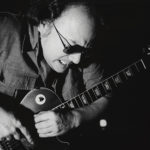 REISSUE/ARCHIVAL PICKS: Masayuki Takayanagi New Direction Unit, April is the cruellest month (Blank Forms Editions) Chicago the band are responsible for a higher than usual percentage of used-bin cluttering shit, but their debut as Chicago Transit Authority has its moments. One of them, “Free Form Guitar,” ripped a hole in the known universe of Japanese guitarist Takayanagi, leading him to renounce the inside jazz scene where he had built a sizable reputation and head for the outer regions of free jazz (a cited contemporary is guitar monster Sonny Sharrock and countryman saxophonist Kaoru Abe, with whom Takayanagi played), free improvisation (another peer is sui generis Brit string-wrangler Derek Bailey), and noise (Blank Forms states Takayanagi paved the way for Keiji Haino and Otomo Yoshihide).
 REISSUE/ARCHIVAL PICKS: Emily A. Sprague, Water Memory / Mount Vision (RVNG Intl.) Sprague was born in the Catskills but currently resides in Los Angeles, and maybe I’m just succumbing to possible stereotypes relating to ambient synth-based sound design of this style (we’re not far from Kaitlyn Aurelia Smith territory), but the work offered here seems a perfect byproduct of the US West Coast. This 2LP collects two prior cassettes self-released in small editions by Sprague, and it adds previously unheard tracks to each, so even if you have the tapes, there is reason to invest in a copy of this set; the edition of 200 with ocean blue and mountain green LPs is sold out, but the 800-copy flat black run is still available, as are CDs. Also, a portion of the proceeds benefits the LGBTQ center in Kingston, NY.
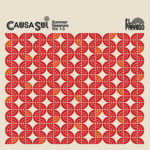 Causa Sui, Summer Sessions Vols. 1-3 (El Paraiso) These early LPs by this Danish space-rock/ stoner outfit are available together as a slipcase boxset, but only directly from the label and in an edition of 200. Importantly, the albums are also purchasable separately in stores and from online retailers, with numbers totaling 750 each. Initially released separately in 2008-’09 (on wax and CD) by the Elektrohasch Schallplattenin label, it appears they corralled the contents into a vinyl box in 2010 and again in ‘13, but it’s pretty clear that non-used copies of those are scarce, and of course the original standalone vinyl. At the onset, the Summer Sessions were intended as a side-project of sorts for Causa Sui, and more specifically a way to branch out stylistically, with inroads established into free jazz, Krautrock and more.
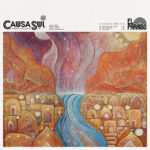 The branching is handled well, with guest saxman Johan Riedenlow blowing hard on Vol. 2’s “Rip Tide” as the electric piano and extensive guitar soloing bring a non-lame fusion flavor to the track that follows, “The Open Road,” which also features Riedenlow (he’s all over all three LPs, in fact). But Causa Sui also like to stretch out, doing so right away on side one of Vol. 1 with the appropriately temperate “Visions of Summer,” though the cut does offer some organ grinding that put me in a decidedly prog state of mind. Although “The Open Road” breaks 14 minutes, Vol. 2 drops the side-long number “Tropic of Capricorn” on side two, and fans of unhackneyed rock heaviness are unlikely to be disappointed. The multipart “Manifestations Of Summer” wraps up Vol. 3 on a nicely expansive note. A-/ A-/ A- Box A-
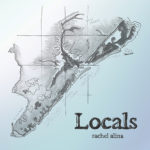 BOOK PICK: Rachel Alina, Ashley Smestad Vélez and Birdie Busch, Locals // If You Swim Far Enough (Styles Upon Styles) Locals is a collaborative illustrated chapbook of narratively linked poems; the words are Alina’s, the black & white drawings rendered by Vélez, and it’s a treat of a quick read detailing the author’s youth/ early adulthood in and around her hometown of Ocean City, NJ and her loose apprenticeship as a recording engineer at Scullville Studios (she has subsequently mixed numerous releases on Styles Upon Styles). Alina’s poetry is vivid but direct, effectively relating her experiences, while Vélez’s illustrations, which remind me a bit (but just a bit) of R. Pettibon, enhance the poems (and the storyline of sorts) by expanding upon elements of the text in occasionally unexpected ways.
 NEW RELEASE PICK: Luka Productions, Falaw (Sahel Sounds) Based in Bamako, Mali, Luka Guindo is Luka Productions, and this is his third full-length. Succinctly described as a leading producer in Malian hip-hop, Guindo has employed a highly productive approach in his own work by combining the tech-infused sound of the now with traditional Malian musics. His records feature organic instrumentation including ngoni, djembe, kora, and balafon. Falaw is no different, though it’s distinct in flavor from his prior effort, the “New Age” (Craig Leon-influenced) Fasokan; what’s clear is that Guindo’s creative engine is nowhere close to running low on gas. Falaw is loaded with diversity as it rolls, and if somebody cooked up a 25-minute extended 12-inch remix of “Indienfoli” I’d buy five copies. A-
 Spiral Wave Nomads, S/T (Twin Lakes / Feeding Tube) It seems like only yesterday that I made the acquaintance of More Klementines, a psychedelically robust trio featuring drummer and Twin Lakes co-founder Michael Kiefer; that band’s self-titled debut, like this one, was a co-release with Feeding Tube. Spiral Wave Nomads are the duo of Kiefer, who’s also played in Myty Konkeror, Rivener, and No Line North, and Eric Hardiman of Burnt Hills and Century Plants. While Kiefer’s attention remains focused on the drums, Hardiman plays bass, sitar, and double tracks his main instrument, the guitar. This lends the record a full-band feel that’s lacking the unfocused spillage that can result from too many hands. This set is rock-edged but outbound (of course) and not too heavy. It’s never cheesy, not even the sitar. A-
 NEW RELEASE PICKS: Aseethe, Throes (Thrill Jockey) Here’s the third full-length from this Iowa-based doom metal trio; they have a relationship with drone that’s sturdy but still strikes me as mostly implicit (the big exception is “Suffocating Burden”); this is just fine to my ear. If an undercurrent rather than a mainstream, the drone works because Aseethe like to stretch out, and their stuff hangs in the air as much as it thuds. Aseethe also have a new member in bassist-vocalist Noah Koester, who’s largely responsible for the record’s anti-fascist and anti-greedmonger lyrical bent. I’ll confess that when vocal cords get this guttural, I essentially engage at the level of pure texture instead of striving to parse what’s actually being said, which is often not really worth the trouble. It’s nice to know this is an exception. A-
 Doomstress, Sleep Among the Dead (Ripple / DHU) This Houston, TX-based four-piece released a 7-inch in 2016 and followed it up the next year with one side of a split LP with the band Sparrowmilk; this is their proper full-length debut, and I’m digging it quite a bit, in large part because they fortify a solid doom foundation with an approach to songwriting that hits my ear as fairly distinctive as it radiates classic vibes (notably, they dished a B-side version of Coven’s “Wicked Woman” on that first 7-inch). The consistently appealing vocals of Doomstress Alexis (who also plays a sturdy bass) initially hooked me, reminding me at times of Heart’s Nancy Wilson but in a thoroughly metallic context (getting a little operatic at times a la Ronnie James), but it was the quality of the songs that sealed the deal. A-
 Full of Hell, Weeping Choir (Relapse) Folks who are bonkers over the whole extreme metal scene are likely already hip to Full of Hell, but this is my introduction, in part because I consider Relapse to be a signifier of quality; this is their first for the label. Full of Hell hail from Ocean City, MD, a once and current “tourist destination” where folks in some proximity of adulthood commonly passed out in bathtubs (or yes, on the beach) after too many National Bohemians. As it’s title should make clear, Weeping Choir isn’t music for swimming and suds but grindcore mingled with power electronics; they have prior collabs with Merzbow and The Body. At nearly 25 minutes, this is just the right amount of textured pummel. It looks like I’ll be spending some time investigating Full of Hell’s back catalog. A-
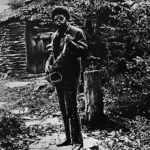 REISSUE/ARCHIVAL PICK: Joe McPhee, Nation Time (Superior Viaduct) Part of the ’70s jazz corrective was impressing on folks that the urge to get funky didn’t automatically equate to Bob fucking James. This live LP originally released on CjR in ’71 but basically a very well-kept secret until it was reissued as the inaugural CD in Atavistic’s out-jazz-focused Unheard Music Series in 2000, offers a splendid example of what I’ll call groove searching; the label mentions a potent blend of James Brown and Archie Shepp, and that succinctly describes “Shakey Jake.” McPhee remains one of our enduring free-jazz explorers. This was his second record on a label designed specifically to document his artistry (‘twas also initially the case with Hat Hut). It’s a crucial document available on wax for the first time in forever. A
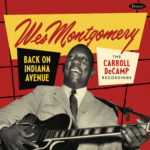 REISSUE/ARCHIVAL PICKS: Wes Montgomery, Back on Indiana Avenue: The Carroll DeCamp Recordings (Resonance) This and the Evans set below are the latest gems from this indefatigable reissue/archival enterprise; both were offered as 2LP sets in April for Record Store Day, and I’m guessing copies are still around, though the 2CD editions are also available now, so if you can’t locate (or don’t want to pay an inflated price) for the wax, the high quality digipaks with booklets are a sensible alternative. And this Montgomery collection, the recordings of which derive from the guitarist’s hometown of Indianapolis sometime in the second half of the ’50s (predating his stellar debut for Riverside), is described as a find with no hyperbole; anyone interested in post-bop jazz guitar will want to check it out.
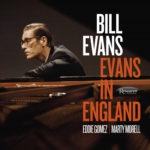 Bill Evans, Evans in England (Resonance) Resonance’s release history with Montgomery is considerable, with Back on Indiana Avenue the fourth collection the label has devoted to the artist. With Evans in England, there is now an equal number of releases in the catalog featuring this pivotal modern jazz pianist, all of them spotlighting his work in the trio format. The first, Bill Evans Live at Art D’Lugoff’s Top of the Gate, came out in 2012 and featured live work from ’68 by the threesome of Evans, bassist Eddie Gomez, and drummer Marty Morell. The next two, 2016’s Some Other Time and the following year’s Another Time, shifted to uncover material from Evans’ short-lived group from earlier in ’68 featuring Gomez and drummer Jack DeJohnette.
 BOOK PICKS: Gillian G. Gaar, World Domination: The Sub Pop Records Story (BMG) This item and its counterpart below came out late last year as the initial two entries in the BMG imprint’s RPM series, which in a nutshell is shooting to do for notable record labels what Continuum’s 33 1/3 series has done for individual albums. The comparison isn’t a tidy as all that, as these books are bigger and info-loaded as well as perspective-driven; it’s unlikely folks will be finishing either in a day or two. I obviously didn’t. Gaar’s volume tackles a tale that I witnessed unwind, at least partially as an indie rock fan from my vantage point on the east coast, and I was a little worried that it was going to handle the subject unsatisfactorily, either through a lack of new info or by overemphasizing certain aspects of the saga.
 Randy Fox, Shake Your Hips: The Excello Records Story (BMG) Fox does something similar with his spotlight on one of the great mid-20th century indie labels (which includes the persevering Nashboro gospel label), detailing its extensive long-term success in the mail order business through label owner Ernie Young’s “Ernie’s Record Mart.” Many sensibly think of Excello in relation to the swamp blues of Lightnin’ Slim, Lazy Lester, and of course Slim Harpo, but the label cut a ton of R&B throughout the ’50s, and when they didn’t score hits, those records reliably “sold through” via placement in package deals that customers could purchase through the mail. The records reached all the way to the UK, which is part of the reason why Slim Harpo had such an impact on the burgeoning Brit blues-rock and Beat scene.