I once read someone call the J. Geils Band America’s Rolling Stones. No shit. If the J. Geils Band are America’s Rolling Stones this country is in even sorrier shape than I thought. The R&B connection is there, the litany of unforgettable songs isn’t—the J. Geils Band began life as a house party band (even wrote a song saying as much), and despite a couple of breakthrough AOR hits, a house party band they remained.
Trouble is, I’m not sure—and I actually have a soft spot for America’s hardly-the-Rolling-Stones—I’d go to that house party. Good time music is only good time music if the music is good, and the J. Geils Band is a kind of music mullet—party in the front, not always so great music in the back. And harmonica solos disguised as songs aren’t my idea of fun.
The J. Geils Band hailed from Worcester, Massachusetts, and appropriately enough got their start as a fraternity party band at Worcester Polytechnic Institute, as Snoopy and the Sopwith Camels. And they remained a fraternity party band in spirit until the late seventies, journeymen in the mold of Bob Seger and the Silver Bullet Band, when they went arena rock with bordering-on-novelty-song smashes like “Love Stinks,” “Centerfold,” and “Freeze-Frame.”
But there are few more energetic frat-party albums than 1972’s Live Full House, which is worth hearing and is probably the LP that spawned the Rolling Stones comparisons in the first place.
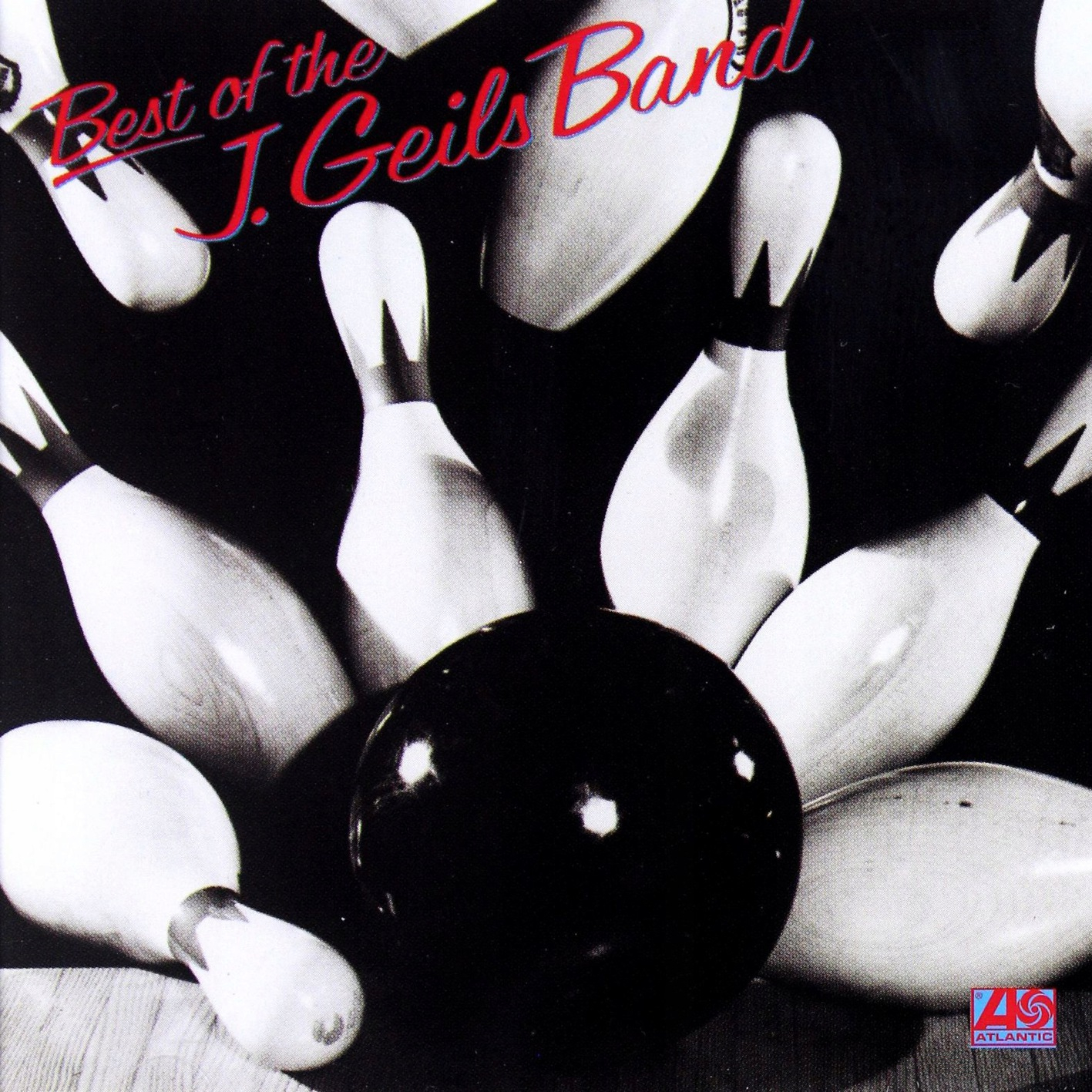
Like Seger, they wrote some great originals (okay, so Seger wrote more), performed some great covers, and made their bones as a full-tilt live band. Like Seger, they finally broke through to the big time, but you won’t hear (and I can’t say I’m disappointed) their career-altering hits on 1979’s Best of the J. Geils Band. What you’ll hear is a house party, and while it has its sublime moments, I think Robert Christgau of The Village Voice was spot on when he wrote, “Here’s where we catch up with their good moments, right? Wrong.”
J. Geils (guitar), Peter Wolf (overheated vocals), Seth Justman (keyboards), and Richard “Magic Dick” Salwitz (harmonica and impressive Jewfro) were the heart and soul of the band, and Magic Dick’s oversized role tells you everything you need to know about J.G. and Company. They were a band for people who love harmonica solos.
Me, I don’t love harmonica solos, and I’d just as soon not hear harmonica solos, and I certainly don’t want to hear songs that are basically nothing BUT harmonica solos, especially by a guy who was often referred to as “Magic Dick and his Lickin’ Stick.” I mean, Jesus.
The Best of the J. Geils Band has its strengths and weaknesses, and its biggest weakness is the harmonica workout “Whammer-Jammer” from Live Full House. A song like this is just wrong, unless you’re a Blues Traveler kind of person and the sight of a harmonica bandolier makes you wet.
And it speaks volumes about the J. Geils Band that four of the nine songs on their best-of are covers, and three of the nine are live tracks. Nothing wrong with remaking oldies, and a band that established its rep as a live act can hardly be faulted for falling back on their live material, but the combination certainly limns the J. Geils Band’s limitations.
The remakes mostly work—the band’s studio take on Philly vocal soul group the Showstoppers’ 1967 semi-hit “(Ain’t Nothin’ but a) House Party” is pure R&B energy, Magic Dick’s overly long “lickin’ stick” solo notwithstanding, and the kind of song you want to play at your next house party, especially if you want to see furniture go out the windows.
And J. Geils’ live take on Cleveland, Ohio doo wop, and soul family group The Valentinos’ 1962 hit “Looking for a Love” redefines the term breakneck speed without sacrificing melody. And by P. Wolf standards, P. Wolf’s vocals are admirably histrionics-free. But it’s Stephen Jo Bladd’s pounding four-on-the-floor drumming that makes the song. This baby is pure adrenaline, but unlike some of the other songs on the album, it boasts a melody that will stick with you, and in a good way.
The band’s studio version of Chicago soul group The Marvelows’ 1965 soul hit “I Do” works as well—it’s funky, catchy, and boasts a great horn section, and is a testament to the band’s good taste and deep knowledge of soul and R&B songs past. And once again, Wolf doesn’t ham it up.
Things don’t go so well on the band’s live cover of The Supremes’ 1964 hit “Where Did Our Love Go,” which is ham-fisted and sort of hobbles along like a spavined horse. And I’m here to tell you that while I’m an easy sell when it comes to guitar solos, Geils’ solo goes nowhere. And the sudden shift to hard rock towards the end makes no sense. Which isn’t to say the crowd doesn’t go wild. Maybe Wolf was setting Magic Dick on fire or something.
The band runs into trouble when it comes to hardcore R&B originals. “Southside Shuffle” is bar band boogie that should never have stepped foot outside the bar, although Geils plays some incendiary guitar. It’s not a bad song, and I’m guessing it wowed the crowd in a live setting, but I’m listening to it in my living room.
And the same goes for “Detroit Breakdown,” a “Motor City shakedown” that has lots of muscle but never transcends itself. Wolf can emote all he wants, but let’s face it—can a bunch of guys from Worcester, Massachusetts capture the anarchic spirit of Detroit? It just makes me want to listen to Fun House, or Bob Seger, even. And it goes on for a long, long time. Wears out its welcome, in other words.
The reggae-flavored “Give It to Me” is a different story. It’s as solid a piece of garage-reggae as you ever will hear. Wolf doesn’t over-sing it, and Seth Justman’s piano rules, as does his organ solo later in the song. Not sure about the guitar and whistle funk breakdown later in the song, over which Magic Dick plays a restrained-by-his-standards solo, only to be followed by a nice ax solo by Geils. Part of me wishes they’d stuck to the knitting, because what they do is take a very catchy song and turn it into a sleaze-boogie workout. Maybe they killed it live, and enough people bought the single to make it the first J. Geils Band song to reach the Top Twenty in the US, but I stand by my claim–it would have been a better song if they’d kept it simple.
“Musta Got Lost” is the best song the J. Geils Band ever recorded, their later hits be damned—the opening guitar riff is unforgettable, the band plays it on simmer on the verses, then that absolutely perfect chorus comes in, boogified, sanctified, a thing of sing-along beauty. And the slow breakdown in the middle works as well. It builds tension, and when the band comes back, Wolf is more excitable, and the guitar takeout is divine.
The American Rolling Stones? Hardly. More like an American pub rock band with the skills to pay the bills, and just enough talent to write a few originals that will stand the test of time. In the end, the only J. Geils song I ever want to hear is “Musta Got Lost.” Which tells me they had the skills to pay the bills but not the rent. Maybe that’s why they were playing house parties—they were homeless.
It speaks volumes about the J. Geils Band that they were a great live band, I have zero regrets about never having seen. Maybe I just have no tolerance for harmonica wizards.
GRADED ON A CURVE:
B-