

VIA PRESS RELEASE | Time Traveler Recordings will release the recently unearthed Terry Callier At The Earl Of Old Town, the influential singer/songwriter’s captivating 1967 solo performance at Chicago’s intimate and historic folk club, as an exclusive RSD 180-gram two-LP set on April 18, 2026. The package, recorded by longtime jazz venue owner Joe Segal, will be available on CD on April 24, which would have been Segal’s 100th birthday.
 This album is the latest release from premier archivist and “Jazz Detective” Zev Feldman and illuminates the early work of a widely influential and remarkably singular artist. Recorded a year before the release of his debut LP, Callier infused the repertoire and format of folk music with the energy and spirit of jazz improvisation. Segal, founder of Chicago’s beloved Jazz Showcase, recorded the performance which was among the vast treasure trove of Joe Segal’s archives which Wayne Segal opened to Feldman in 2025.
Along with Joe Lizzy’s pristine restoration and Matthew Lutthans’ expert mastering, the package includes liner notes by Callier’s longtime friend, Real Jazz Sirius XM program director Mark Ruffin. Callier’s daughter, Sunny Callier, serves as an executive producer.
Callier, who was 22 years old when he performed at The Earl Of Old Town, grew up in Chicago’s North Side Cabrini-Green public housing projects alongside such R&B stars as Jerry Butler and Curtis Mayfield. But his own music took a different path when he brought his acoustic guitar and quietly compelling voice to the counter-culture folk music clubs that shaped the Old Town neighborhood in the 1960s. His voice and guitar are centered here with the club’s background sounds adding a sense of historic ambiance. Ultimately, this recording presents Callier’s early command of a stage and indicates where he would go in the future.
This release highlights crucial differences from Callier’s official first album, The New Folk Sound of Terry Callier, as well as his groundbreaking early 1970s records for Chess. Callier’s debut—which was recorded three years before his Earl Of Old Town appearance—featured two intertwined basses. His later Chess albums also featured producer Charles Stepney’s experimental orchestrations. He also recorded celebrated jazz-inflected soul albums for Warner/Elektra, Premonition, and Verve. On Terry Callier At The Earl Of Old Town the rhythmic and melodic drive of his acoustic guitar and contours of his unmistakable voice invoke all of those later recordings’ instrumental roles. The contrast between this album’s version of “900 Miles” and the version on The New Folk Sound is one clear example.
“The then 22-year-old musician would be five years or so away from signing with the Chicago-based powerhouse Chess Records and making the second of the 15 albums he released between 1967 and his death in 2012,” Ruffin writes. “In between, his music managed to cross many categories and sub-genres. His heretofore uncompromising and hard-to-categorize style is subtly foreshadowed in this solo performance in front of a noisy Wells Street crowd.”
Ruffin adds that the ten tracks on Terry Callier At The Earl Of Old Town are, “artistically a preamble and a blueprint of the kind of songs Callier would develop throughout the century. Each one is a direct connection to his inspirational source or a stylistic extension of a hero’s idea.”
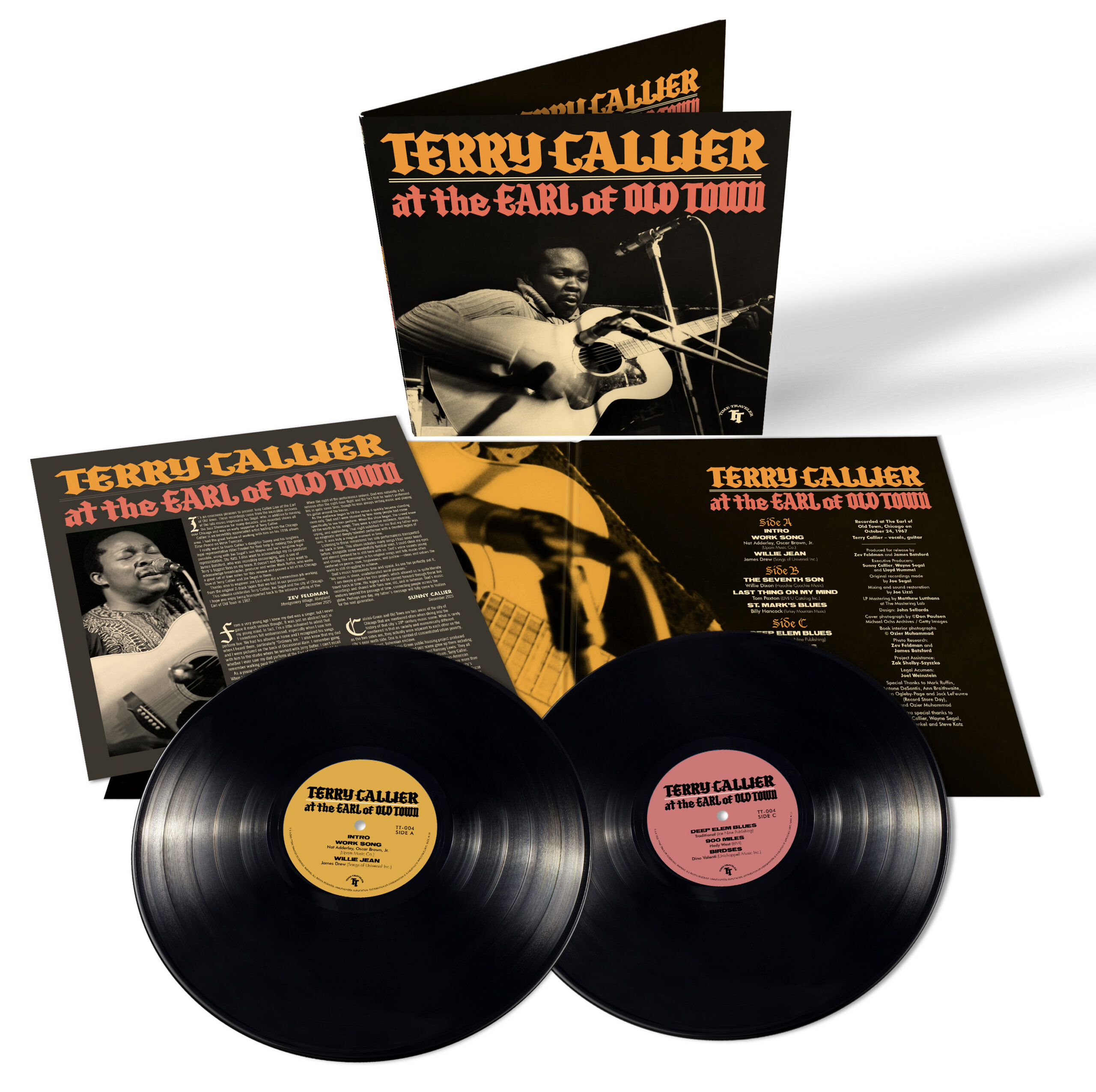
The set list at the Earl Of Old Town features a mix of traditional pieces, ballads, blues, jazz, 1960s folk compositions and even a recent pop hit. Callier turned this unique repertoire into deeply personal statements.
“Work Song,” which opens the album, is Callier’s rendition of a melody by jazz trumpeter Nat Adderley with lyrics by Chicago-based poet/singer/activist Oscar Brown Jr. His solitary voice and percussive approach to the guitar encapsulate the emotions of a prisoner yearning for home. Callier makes melancholia sound lyrical on Tom Paxton’s “Last Thing On My Mind.” His sense of deep yearning also shapes Jimmy Drew’s “Willie Jean,” with its sparse arrangement being almost a polar opposite of the big band sound on Drew’s 1961 single.
Blues are also prominent throughout the performance, including Callier’s version of Billy Hancock’s “St. Mark’s Blues” and the traditional “Deep Elem Blues.” His take on Chicago blues hero Willie Dixon’s “The Seventh Son” is especially joyous.
Other songs convey where Callier would be going in the years to come. “Birdses” showcases his optimistic spirit and inviting sense of humor. The stirring vocal dynamics he brings to “Gallows Pole” would be a hallmark of his performances throughout his life. His take on the R&B and pop single, “Hang On Sloopy” (retitled here as “My Girl Sloopy”), is sung with the depth that he would bring to his later soul records. Ruffin notes that “Four Strong Winds” has “a similar arc and darkness as the Callier classic ‘Lazarus Man,’” which he recorded on his 1998 album Time Peace and would be covered by Tom Jones.
At the time that Joe Segal recorded this album, he had been maintaining the Jazz Showcase in different Chicago locations since 1947 (Wayne Segal runs it today). He initially described what the singer had created, which Callier always appreciated. That description is another reason why the upcoming release of Terry Callier At The Earl Of Old Town should be widely celebrated.
“Joe was the first person to say, ‘What you’re doing is folk jazz,” Callier said in 1997. “That’s Joe Segal’s description and I thought, ‘Yeah, that’s it. It’s never the same way twice.’”