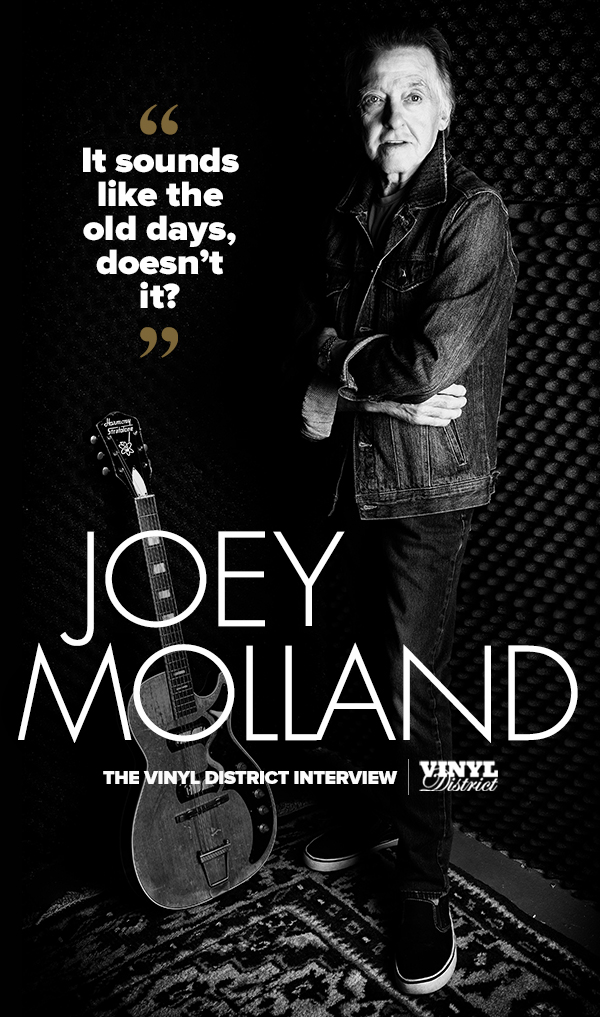
Remembering Joey Molland with a look back from our archives from 2020. —Ed.
Joey Molland has seen it all. During his time in Badfinger, he witnessed the ups and downs of rock and roll stardom, rubbing elbows with The Beatles no less, and being taken under their collective wings to be the big, blockbuster breakout of Apple Records. Badfinger’s power pop legacy is undisputed.
 Of course, the highs of every rock and roll story descend to lows and Badfinger’s story is a notoriously bleak and complicated one. But Joey manages to stay positive and spread some feel-good vibes on his latest release, Be True to Yourself which encapsulates much of the Badfinger power pop sound in a modern setting. Produced by Mark Hudson (Ringo Starr, Aerosmith, Ozzy Osbourne) Be True to Yourself also features a cadre of musical friends: Julian Lennon, Micky Dolenz, Jason Scheff, and Steve Holley.
Join us as we discuss the the creation of his new album with Mr. Molland and the long and winding road he traveled to get from there to here.
The new album is called Be True To Yourself and why don’t you tell us a little bit about the title and that particular song?
Yeah, the title, what can I say? The song came from a conversation I had with my brother, Frank. My eldest brother. He was considerably older than me, and I don’t know if you come from a large family, but it was one of the first times in my life that I’d actually had a conversation with my brother. He was already in his 20s when I was born, you know? So I was a little kid, so we didn’t really hang around together. You know what I mean? So I just had a talk with him and yesterday we talked about the future, we talked about faith, and we talked about government stuff. You know, all the things that you talk about with your friends. And that’s where this song was born—from that conversation.
I’d had the melody for a couple of years and I’d never really gotten a hold of a lyric that I wanted to put with that melody, so it was great to finally get some lyrics and it was fortunately for me, when we started discussing doing a record, Mark Hudson and myself, and that was one of the songs that he really liked and really enjoyed. We’ve got at least five songs’ worth of Mark Hudson’s songwriting talent in there, too. I enjoyed it. The idea Be True to Yourself seemed like a reasonable thing to call an album, and that’s what we were trying to do. That’s what I was trying to do, anyway. Write songs that I liked. I don’t know much about writing hit songs. I just have to play what I’ve got, you know? Just like in the old days. I always had the exact same approach. We’d play our songs and the ones we liked, we’d work on them and they’d be the ones we’d record, you know?
I’m happy the people seem to like the stuff that’s on this particular record. It seems to be a good thing, and I think it’s a good title. I think it’s a good way to think about things.
I think it is, too. Tell me about working with Mark Hudson. He’s worked with Aerosmith and Ringo Starr and now Joey Molland. How did you hook up with him, and how did you arrive at working with Mark Hudson on this new record?
Over the years, I’ve done lots of kind of Beatle related events and I started to meet Mark at them. You know, people get him because of his big affiliation with Ringo and his friendship with the other Beatles, and we just started to be friends backstage, really. We think alike. Mark is a hilarious person. I don’t know if you’ve met him, but he’s a hilarious guy. He’s a great guy to hang around with, and of course he’s a brilliant producer. Grammy winning. He’s just a brilliant, super talented guy. Sings like a bird. He’s all about the show and as long as it’s got a song to back it up, and I got really lucky for him to produce. He’s the reason the album sounds so good. The people that he works with like Mario McNulty who he’s another Grammy winner and well known for working with the likes of David Bowie and several other majors.
So, that’s what Mark attracts. People know his talent and they know his way of producing. He’s so focused, you know? And he’s entertaining while he’s doing it. He drives the bus, he really does. He doesn’t really apologize. He’ll pull himself way out, he’ll pull himself in the record with you. I really enjoyed it. It all came together, our friendship. Did I have songs? Would I like to make a record? So I said yes to all those questions. I’m really knocked out, you know?

 While the guitar remains his primary artistic tool, Andy’s pursuits extend to photography with his Leica camera and creative writing with a keyboard. His latest endeavor, The Cracked Lens + A Missing String tour, ingeniously merges these passions together. Here, Andy not only performs music but intertwines his photographic art and narratives, transcending a mere recapitulation of his greatest hits. It’s a testament to his belief in the evolution of artistic expression in order to engage varied audiences with his restless visions.
 You can look at the balance of values through many different lenses.
  Eilon Paz isn’t so much a record collector, he’s more a collector of record collectors. Paz is a photographer who noticed the uniqueness of record collectors, just as the new wave in vinyl popularity was taking hold. He took his profession and his passion and pointed his camera at record collectors and their collections. First on the web as a blog, his project became a well-regarded book titled,
  Or, the conversation could shift into Andy’s exhaustively complete authorship of the incredibly successful books: Beatles Gear, Rolling Stones Gear, or The Story of Paul Bigsby. These books delve not into the minutia of famous musicians’ lives, but instead tell the tales behind the instruments that they held in their hands while making the timeless music that they made: the guitars, the amps, the effects, and the studio tools. How’d they get them, what’d they do with them, and where’d they go. All of them, fascinating reads.
 On keyboards, there’s one session musician who stands above many others: he’s played extensively with The Rolling Stones, The Kinks, and even The Beatles. Not only did he share that rarefied air with those heavyweight champs of classic rock, but his keyboard parts were sometimes integral to the artistic and commercial success of the song. You’ve heard the wild electric piano solo on The Beatles’ “Revolution,” you know that haltingly beautiful piano part in The Rolling Stones’ “She’s a Rainbow,” and you’re familiar with the majestic grandeur of the piano part that supports Joe Cocker’s “You Are So Beautiful.”
 About a decade ago, Georgie Fuller and Will Turner met under musical circumstances and haven’t looked back since. While their first musical collaboration leaned toward an acoustic Laurel Canyon sound, this new iteration is different. Will works hard to find the initial spark for his tunes, rummaging through his mental database of vintage rock, pop, soul, and Motown. He brings the composition and riff-laden guitar chops and everything is great, but then there’s Georgie. Georgie packs with her a commanding voice and knows how to employ those vocal dynamics correctly for full effect. But she also knows how to nudge her partner along when it comes to his compositional creations and she is an integral part of shaping the group’s sound in the studio.
 On his recently released new album Delicate Steve Sings (Anti), Steve Marion takes the voice of his guitar and applies it to mostly an original cadre of songs, however, he throws in a few covers for good measure, some you’ll definitely know, and a few that may be new to you. But no matter what song he’s playing, he’s working hard on this album to make sure that those songs have the unique singing voice that his guitar has exhibited over the last eight albums that he’s released.
 We could delve into his collaborations with Smokey Robinson, retrace the dedication he poured into his years with Etta James, or explore his legendary—and current—stint as Paul McCartney’s guitarist. Today, however, we focus on his latest solo endeavor, My Town, released under Little Stevie Van Zandt’s
 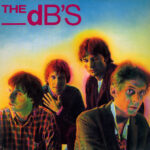 During their peak, the dB’s released just two albums with their original lineup—Chris Stamey, Peter Holsapple, Will Rigby, and Gene Holder. Both
 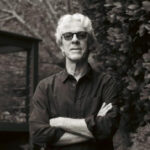 I asked
 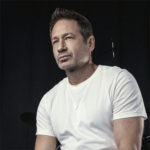 An English major and graduate from Princeton University, it’s natural for Duchovny to express himself with a word processor. He’s written four books which have received strong reviews. His latest is titled, Truly Like Lightning: A Novel (Farrar, Straus and Giroux). But he’s also a songwriter and musician. Music serves to fuse together the literary Duchovny with the on-screen actor. With music, he is able to both write and play a part, even if the part he’s playing is himself.