Author Archives: Joseph Neff

Graded on a Curve:
Thee Headcoats, Elementary Headcoats: The Singles 1990–1999

Celebrating Billy Childish on his 63rd birthday.Ed.

Wild Billy Childish has played in many bands, with Thee Headcoats arguably the biggest. Flaunting ’60s beat rock swagger, ‘70s punk energy, and a prole-art thrust of unquestionably British persuasion, for roughly a decade the trio of Childish (guitar and vocals), Johnny Johnson (bass), and Bruce Brand (drums) produced an unrelenting stream of material. Keeping up with it all could be a daunting task, but Elementary Headcoats: The Singles 1990-1999 admirably sequences 50 tracks across two compact discs or three vinyl records; first issued in 2000, and back in print through Damaged Goods.
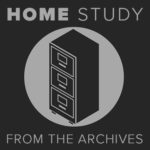
Author, poet, painter, photographer, filmmaker, publisher, and of course musician: Chatham, Kent, UK’s Billy Childish remains a crucial figure in various movements, and foremost amongst them is punk rock. By the formation of Thee Headcoats in 1989 he was already a veteran of a half-dozen outfits, the most well-known being the Pop Rivets, The Milkshakes, and Thee Mighty Caesars.

In sonic terms Childish is oft and fairly categorized as an indefatigable extender of the garage impulse, but just as importantly he can be assessed as an exponent of Brit DIY, a phenomenon linked to the rallying cry from the b-side of the Desperate Bicycles’ ’77 single- “it was easy, it was cheap—go and do it!” Scores took the advice either directly from the Bikes or through inspired peers, and subsequently Wild Billy’s activities gushed more abundantly than any industry would deem appropriate; in 1984 The Milkshakes released four albums…on the same day.

Childish’s longevity is largely defined by a constant tinkering with inspired simplicity. Proving impervious to fashion, he’s influenced numerous trendsetters along the way, and folks considering punk as an era or phase rather than an undefeatable style are likely to rank him as a curiosity or a fly-in-the-ointment. His racket is well summed-up by a verse from Alternative TV’s “Action Time Vision,” a tune tackled by Thee Headcoats in ’93 and one of this set’s highpoints: “Quarter notes don’t mean a thing/Listen to the rhythm, listen to us sing.”
Read More »

Posted in The TVD Storefront | Leave a comment

Graded on a Curve:
Owen Broder,
Johnny Hodges: Front and Center, Vol. 1

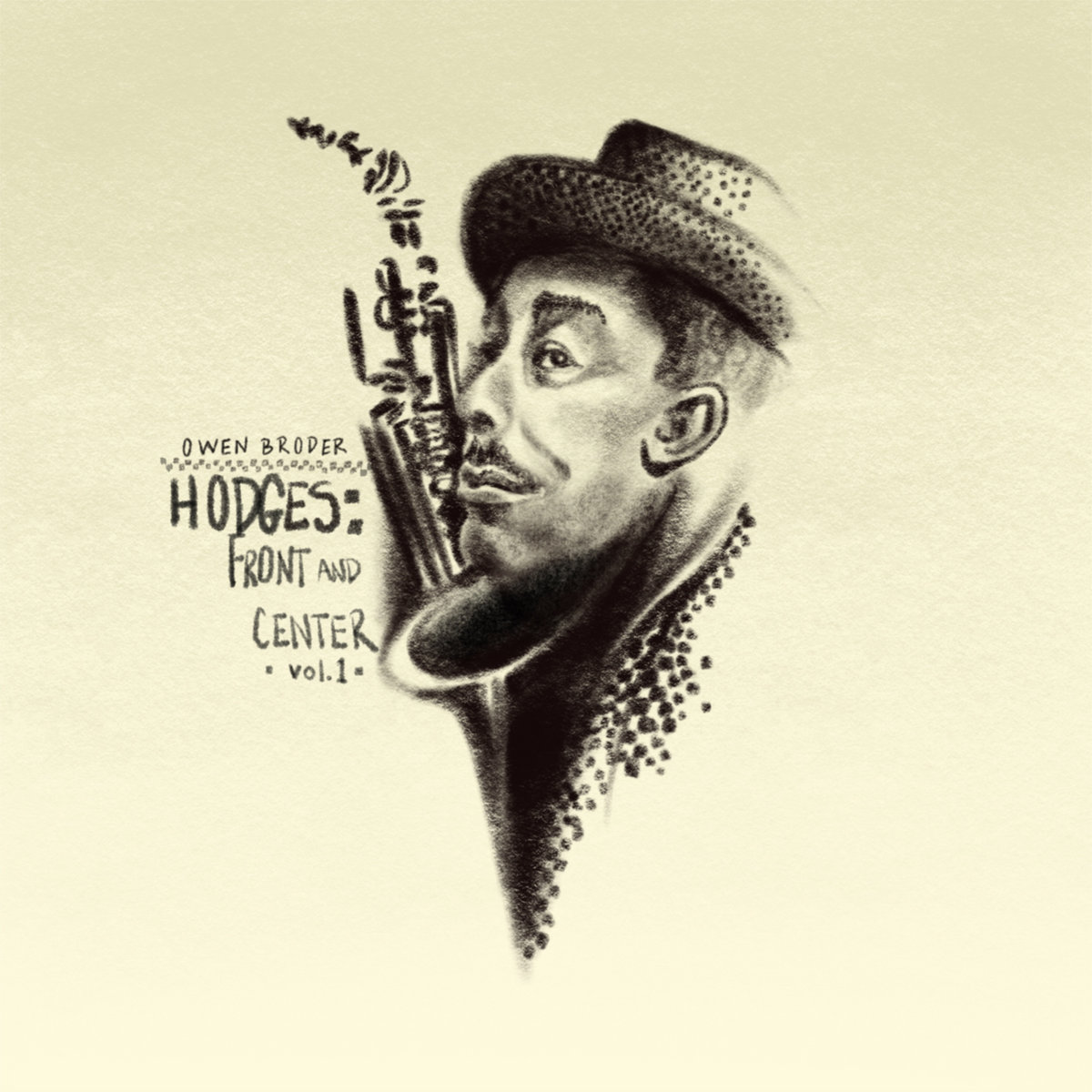
It’s likely that most folks familiar with Johnny Hodges know him for his crucial role as alto saxophonist in the orchestra of Duke Ellington. There’s not a thing wrong with the parameters of that knowledge, but in fact Hodges’ career encompassed more. Those looking for a welcoming contemporary entry point into Hodges’ artistry should check out saxophonist-bandleader Owen Broder’s new album Hodges: Front and Center, Vol. 1, which is out now on vinyl and digital via Outside in Music. Covering both long-celebrated and lesser-known works, it features exemplary playing by a top-flight band embodying the warmth and vigor that endures at the heart of Hodges’ music.

Based in New York City, Owen Broder is an instrumentalist specializing in four saxophones (soprano, alto, tenor, and baritone), clarinet, bass clarinet, and flute. Along with leading the American Roots Project and his quintet Cowboys and Frenchman, Broder has played in numerous collaborative bands, has worked in theater pits on and off Broadway, and is an award winning composer and arranger.

For Hodges: Front and Center, Vol. 1, Broder is joined by trumpeter Riley Mulherkar, pianist Carmen Staaf, bassist Barry Stephenson, and drummer Bryan Carter. Collectively, they pull off a difficult task, remaining true to the stylistic essence of the sources while avoiding coming off like a second-rate imitation or a fragile relic.

It helps that the compositions chosen are varied and even surprising and yet don’t sideline the importance of Ellington in Hodges’ creative trajectory. For instance, opener “Royal Garden Blues,” a Clarence Williams-Spencer Williams composition from 1919, is connected to Duke through the song’s inclusion on the 1959 small-group album for Verve, Back to Back: Duke Ellington and Johnny Hodges Play the Blues.

Read More »

Posted in The TVD Storefront | Leave a comment

Graded on a Curve:
Mike Baggetta, Jim Keltner, Mike Watt, Everywhen We Go

Everywhen We Go is the second album by the unimpeachable trio of Mike Baggetta on acoustic and electric guitars, Jim Keltner on drums and percussion, and Mike Watt on bass. Cohesively structured with an air of spontaneity, the ten-track LP is a non-vocal affair with expert interplay that’s spacious yet disciplined as it thrives on the deepened familiarity of the participants. The record is out now on vinyl and digital through BIG EGO Records, the label of the album’s producer Chris Schlarb.

The story is that Wall of Flowers, the 2019 debut by Baggetta, Keltner and Watt was the byproduct of a cold call by the guitarist, who admired and had been influenced by the other two points in this creative triangle. The results are impressively together given the specifics of its creation, though I don’t want to suggest they just arrived at Chris Schlarb’s BIG EGO studio and proceeded to wing it.

Wall of Flowers is a potent dose of expansionist instrumental rock, at times atmospheric and with an edgy post-fusion jazz tinge, which is unsurprising given that Baggetta has cut four albums for the Fresh Sound label, three with his quartet (Small Spaces, 2008, Source Material, 2010 and Thieves and Secrets, 2013) and one with his trio (Spectre, 2016).

After Wall of Flowers release, Baggetta and Watt took it out on the road with Stephen Hodges stepping in for Keltner (who doesn’t tour) under the name mssv. They also cut two records, Live Flowers (2019) and the studio follow-up Main Steam Stop Valve (2020), the title referencing Robert Wise’s 1966 film adaptation of Richard McKenna’s novel The Sand Pebbles (the album’s title also directly inspired the initials of the trio’s moniker).

Read More »

Posted in The TVD Storefront | Leave a comment

Graded on a Curve: Typical Girls Volume 6

Emotional Response Records of Cottonwood, AZ has amassed an impressive discography, with the Typical Girls various artists compilations amongst the standouts in the bunch. The focus of these comps is international female-fronted punk, post-punk, darkwave, and indie sounds (a song by The Slits gives the series its title), and the latest volume is out now on vinyl (limited transparent red and classic black) and digital download. As the 16 selections featured on Typical Girls Volume 6 unwind, it’s clear the endeavor is as inspired and unpredictable as ever.

One of the dependable positives in the Typical Girls scenario are the introductions to new bands, and so it remains here, even as The Linda Lindas open Volume 6, with this considerably high profile Los Angeles-based Asian/Latinx band having played on national television at least once. Hearing them on TV, my initial thoughts turned to the Vivian Girls’ brand of post-Ramones action, but their cut “Claudia Kishi” here is securely in the punk tradition of their hometown, and notably their label Epitaph, as the Ramones (and even a little Buzzcocks) are still part of the equation.

Navigating north to Oakland, Fake Fruit offer “No Mutuals,” a decidedly post-punk proposition, as early Wire and Pylon are cited as influences, though I’m also reminded of more recent developments like Slant 6 and Scott and Charlene’s Wedding. Hailing from nearby Berkeley, Naked Roommate bring an electro-punky art-poppy spin to their DIY-ish “Wandering Thumb,” while San Francisco’s Cindy (a band constructed around the voice and guitar of Karina Gill) dish gloriously classique ’60s-imbued keyboard-infused bedroom pop with their “Thin as Flags”

Shifting gears and geographical regions, Melbourne, Australia’s Swab throw down crunched-out hollering hardcore in a late ’80s East Coast USA/ Japanese vein with “Nothing to Lose,” so fans of Deep Wound, Lip Cream, and the pungent aroma of circle pits can rejoice. Swab’s blitz is over right quick, giving way to Greek act Selofan and the robust cold wave of their “Black Box.” From there we return to the USA with Sweeping Promises of Lawrence, Kansas, whose riff-laden art-punky “Falling Forward” sounds like it could’ve came out on Rough Trade in 1979.

Read More »

Posted in The TVD Storefront | Leave a comment

Graded on a Curve:
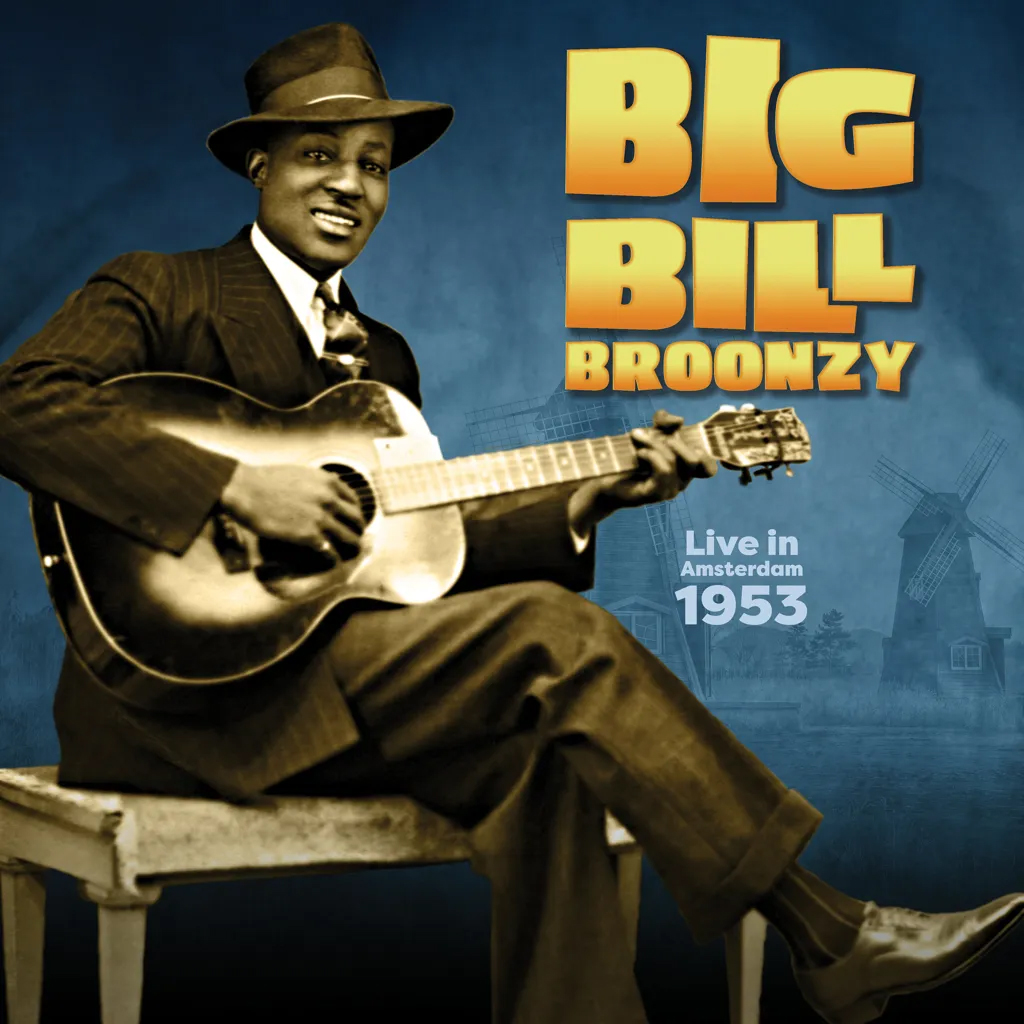
Big Bill Broonzy,
Live in Amsterdam 1953

Born on June 26, 1903, William Lee Conley Broonzy, aka Big Bill Broonzy, was a giant of the blues. Cutting his first sides for Paramount in 1927, an extensive stretch of recordings followed across the next two decades. After a break in the late 1940s, he experienced a career resurrection that lasted until his untimely death in 1958, a sustained second wind that carried him to Europe, where he cut records for the Vogue label in France and was captured in performances of astonishingly high fidelity in the Netherlands. Grooving into vinyl a substantial portion of Broonzy’s shows in the titular city, Liberation Hall’s Live in Amsterdam 1953 is available November 25 for Record Store Day Black Friday.

To appropriately comprehend the level of Big Bill Broonzy’s popularity, please consider his prolific output across the decade of the Great Depression. The brutal 1930s economic downturn decimated the young record industry, which had been thriving before the crash, and snuffed out recording opportunities for dozens of bluesmen, with a handful of those musicians later “rediscovered” in connection with the folk music boom of the 1950s-’60s. Broonzy was an early catalyst-beneficiary of that boom, and would’ve surely experienced further success had he not died in ’58.

Broonzy’s late ’40s sabbatical from touring (reportedly through doctor’s orders) found him working as a janitor at Iowa State University. It didn’t take him long to return to activity, and when he did there was a comfortable shift into folk blues mode as he kept company with Sonny Terry and Brownie McGhee and Pete Seeger.

That Big Bill choose to hang around with ol’ Pete and Studs Terkel as he pivoted into a somewhat easygoing style no doubt ruffled the feathers of many a subsequent blues purist, particularly as the two Yazoo volumes of his early stuff, The Young Big Bill Broonzy 1928-1936 and Do That Guitar Rag: 1928-1935 are loaded with hokum smokers, wicked rags, and uncut bluesy oomph. Columbia’s Roots N’ Blues comp Good Time Tonight is also an excellent survey of his more urban 1930s motions that benefit from the cleaned up sound that was the Roots N’ Blues series specialty.

Read More »

Posted in The TVD Storefront | Leave a comment

Graded on a Curve: Townes Van Zandt,
At My Window

Released in March of 1987, Townes Van Zandt’s At My Window was the celebrated singer-songwriter’s only studio album of the 1980s. It’s a tidy 10-song set that captured him in solid form with the assistance of his longtime producer “Cowboy” Jack Clement plus sturdy backing from session pros including guitarist Mickey White, fiddler and mandolinist Mark O’Connor, and harmonica player Mickey Raphael. Originally issued by the Sugar Hill label, At My Window is getting a well-deserved vinyl reissue by Craft Recordings for Record Store Day Black Friday on November 25.

At My Window was not only Townes Van Zandt’s only ’80s studio record (there was also a solitary live album, Live & Obscure, issued in ’87), it was his first studio effort in nine years, belatedly following up Flyin’ Shoes, which was released by Tomato in ’78. A lengthy break of this sort is often indicative of personal struggles, but the established story here is that Van Zandt was living pretty well during this stretch, with royalty money rolling in amidst a period of stable home living.

The cash flow derived from the successes far more famous commercial country performers were having with his songs, none bigger than Willie Nelson and Merle Haggard’s “Poncho and Lefty,” a No. 1 smash on the country chart released in 1983. Contrasting, Van Zandt remained a cult figure with a fervent listenership including other musicians, as the sticker slapped upon the shrink-wrap of At My Window in ’87 quoted Steve Earle: “Townes Van Zandt is the best songwriter in the whole world and I’ll stand on Bob Dylan’s coffee table in my cowboy boots and say that.”

The relative handful of Van Zandt newbies who were inspired to buy this record blind in 1987 hopefully recognized Earle’s statement as zealous stumping for an underappreciated contemporary on the scene, but the set is also inspired enough, and full of high quality songs, to provide first time listeners with comprehension of Earle’s passionate advocacy.

Read More »

Posted in The TVD Storefront | Leave a comment

Graded on a Curve:
ORG Music Black Friday Releases

ORG Music has three releases for Black Friday 2022, all reissues: the self-titled debut by Overwhelming Colorfast, Thriller by Augustus Pablo, and The Complete 1931 Sessions by Skip James. It’s a diverse, worthy haul available on 11/25. All three are covered in more detail below.

The scoop on Overwhelming Colorfast is that the band’s eponymous debut long-player from 1992 is more than slightly indebted to Hüsker Dü. Today, this influence will very likely be considered a positive, but it wasn’t always that way. Indeed, back in the early ’90s, when many folks learnt of a new band wielding an undisguised similarity to the Dü, the response was often, “I’ll pass, thanks.” And the reason was simply that numerous bands were spawned from the Minneapolis power trio’s sound, and with varying results.

Led by guitarist-vocalist Bob Reed, Overwhelming Colorfast inhabit the stronger end of the Dü influence spectrum, or at least that’s the case at this point in their existence (the band’s second and third records I have not heard). This is primarily due to a solid batch of tunes. Bluntly, a lack of quality songwriting is where many bands inspired by Mould, Hart, and Norton fell flat.

But Overwhelming Colorfast aren’t rote copyists, as the album’s front cover design tips off a psychedelic persuasion that’s most prevalent in their cover of The Beatles’ “She Said, She Said,” with its abundance of pedal-scuzz. Along the way, this psych angle dishes a few Dino Jr.-ish flashes and early Flaming Lips-like moves, but the overall thrust never drifts too far from the Hüskers, and at this late date, that’s just fine.

Read More »

Posted in The TVD Storefront | Leave a comment

Graded on a Curve:
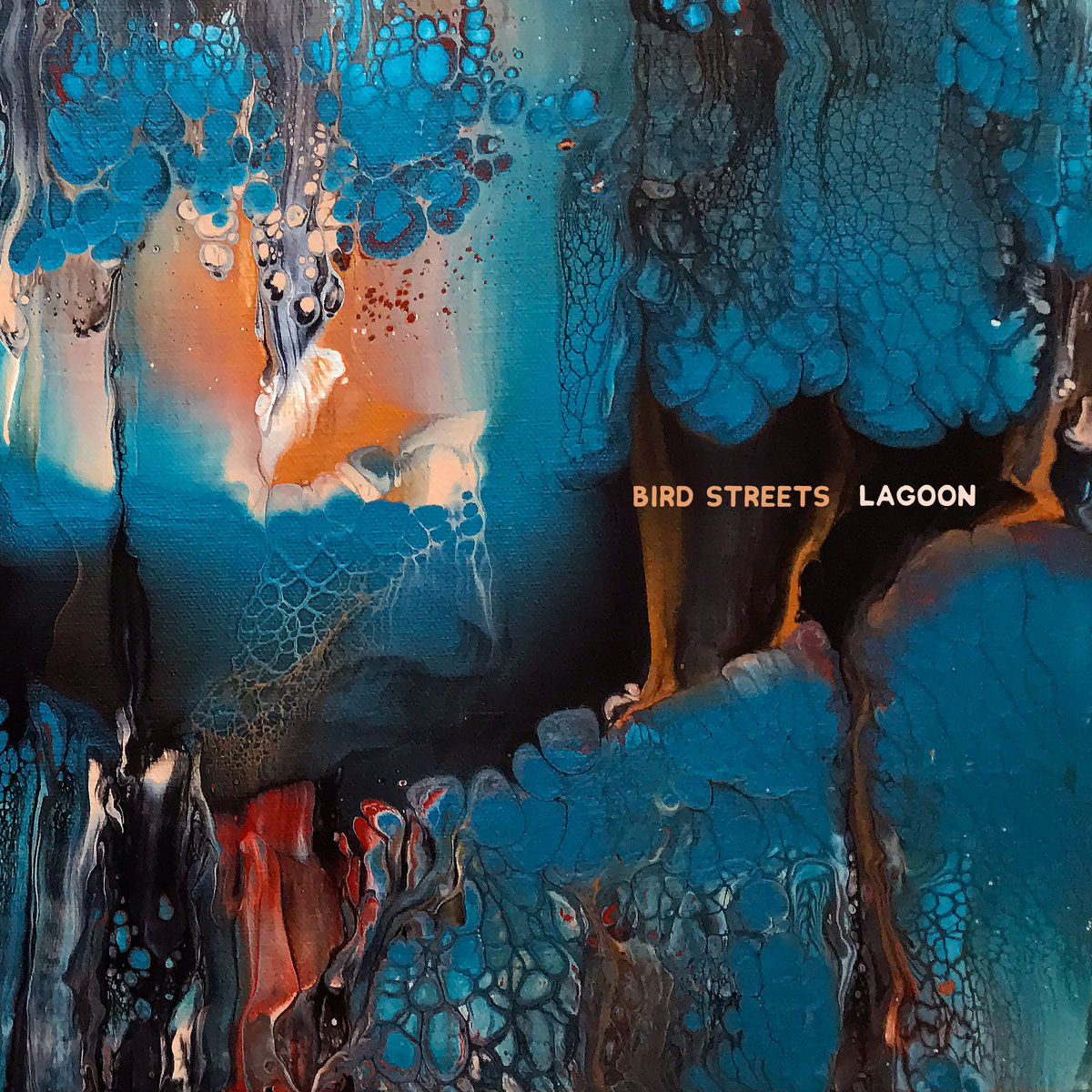
Bird Streets,
Lagoon

Bird Streets is the collaborative recording project of singer-songwriter and multi-instrumentalist John Brodeur, and Lagoon is the second album he’s recorded under the moniker, following a string of solo records beginning at the dawn of the 2000s. Brodeur’s experience is clearly discernable across the dozen songs of his latest, which benefits from an extensive list of contributors in service of bold pop-auteur moves, a few power-pop excursions, some baroque flourishes, and more. It’s out now through Sparkle Plenty and Deko Entertainment.

While John Brodeur contributed to a handful of outfits throughout the aughts, his highest profile activity was a series of solo efforts, with Tiger Pop the first in 2000. It took nine years for the follow-up Get Through to emerge, and then came Tiger Pop Ten, a re-recording of the debut with the original set included as a bonus disc. Little Hopes was released in 2013, and then Brodeur shifted focus to Bird Streets, with the debut album a self-titled affair that utilized Jason Faulkner as a player and producer; it was issued in 2018 via Omnivore Recordings.

Described as being in the tradition of the Todd Rundgren, Emmitt Rhodes, and Jon Brion, Bird Streets is a solid statement that sets the table quite nicely for Lagoon’s banquet of pop-auteur gestures, a set that’s ambitious without tipping over into self-indulgent. Opener “Sleeper Agent” finds Brodeur in a reflective place with piano at the fore and with string enhancements before the drums kick in, a decidedly ’70s scenario that’s a bit like Harry Nilsson under the sway of Jeff Lynne.

“Machine” is a more upbeat power-popping situation, erudite like Big Star if they were from the big city, but with added depth through the pedal steel of Superdrag’s John Davis and the piano of Wilco’s Pat Sansone. Sansone produced and plays on half of the tracks here, with “Burnout” sounding just a little like Wilco, at least until the chorus arrives.

Read More »

Posted in The TVD Storefront | Leave a comment

Graded on a Curve: Kill
a Punk for Rock & Roll: Photographs by Marty Perez 1976–2019

Kill a Punk for Rock & Roll: Photographs by Marty Perez 1976-2019, which is currently available in rapidly dwindling supply from HoZac Records, documents a body of work standing out in the field of shutterbugs who chose live music and its makers as a subject. The specifics will be enumerated below, but in short, Perez’s work effectively captures a wide swath of rock’s essence, from arenas and stadiums to hole-in-the-wall bars to Maxwell Street in Chicago. Maybe most importantly, after soaking up the progression of these shots across five decades, the contents cohere into a tangible point of view.

Marty Perez was raised in Chicago and attended college in Seattle, where he studied marine biology before dropping out and then worked in a record store. There was a move to New Orleans, where he worked as a commercial diver, and then back to Chicago; through all the moves, he was taking pictures of musicians both in performance and in casual repose, with his work landing in the pages of the zine Non-Stop Banter and the weeklies Chicago Reader and New City, plus rock mags The Bob, Puncture, Magnet, and Your Flesh.

Like a lot of music fans who came of age in the 1970s-’80s, Marty Perez’s roots are in the canonical classic rock stuff. There are shots here of Led Zeppelin, Yes, Queen, Rod Stewart, and ELO, but within the same approximate timeframe, there’s also The Clash, Talking Heads, B-52’s, Graham Parker, and some wonderful shots of Patti Smith, so Perez clearly didn’t share the sentiments expressed in the cover snap, which is described as his most famous photo (used on the cover of The Oblivians’ Popular Favorites).

But something all the acts named in the above paragraph share is a high profile, an attribute late ’70s punks The Cheaters definitely lacked (The Cheaters featured the talents of Kurt Bloch, later of the better known Fastbacks, who are also included in these pages). But what’s striking is the affinity between The Cheaters and Fleetwood Mac, who grace the top half of the same page. There’s a lack of grandeur in the shot of Stevie Nicks that is reflected in Perez’s other “rock star” photos; the subjects aren’t idealized but are instead captured as working musicians, even when playing on the grandest stages.

Read More »

Posted in The TVD Storefront | Leave a comment

Graded on a Curve:
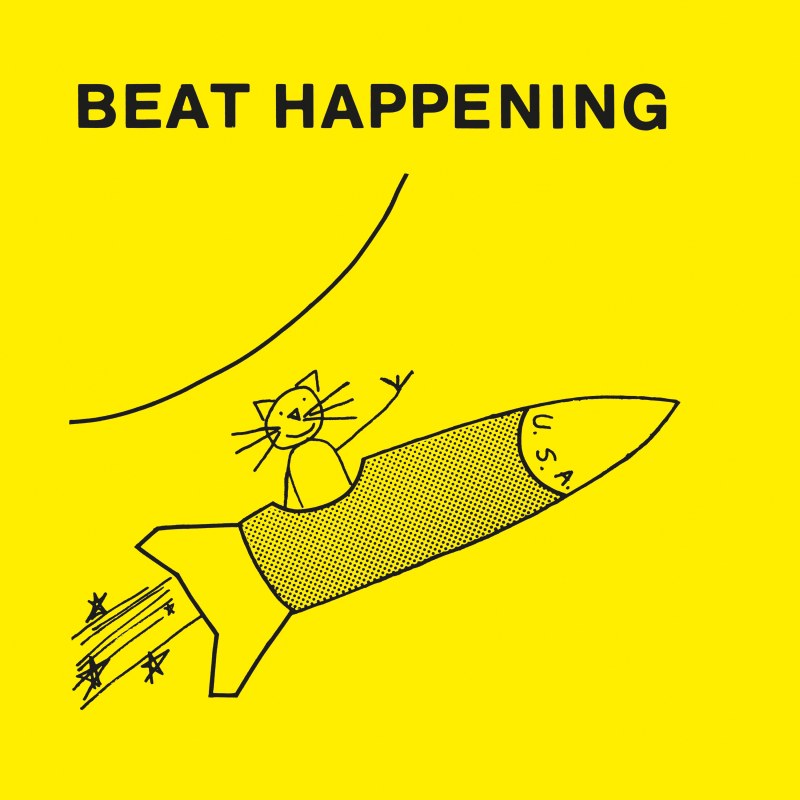
Beat Happening
Reissue Series

On November 11, Domino Records is set to release fresh vinyl editions of Beat Happening’s five studio albums: Beat Happening, Jamboree, Black Candy, Dreamy and You Turn Me On, plus the compilation Music to Climb the Apple Tree By. That’s damn near the band’s entire discography, a collected output striking in both a high standard of quality and consistent creative growth. The whole bunch gets evaluated below.

Of all the cornerstone outfits in the indie rock pantheon, it’s Beat Happening that arguably remains the most divisive. Some of the reasons why will be expanded upon farther down in the text, but let’s begin with how the instrument-switching, bass player-lacking band of Calvin Johnson (guitar and vocals), Heather Lewis (guitar, drums and vocals), and Bret Lunsford (guitar and drums) swung so far away from the nihilism, misanthropy, and shock value of the 1980s underground that many considered it them be a put-on. Once revealed to be wholly sincere, reactions ranged from dismissiveness to outright hostility.

Beat Happening was also insanely influential. Released in 1985 on the K label (co-founded by Johnson and Candice Pedersen), their self-titled debut was originally a tidy ten tracks quickly expanded to a dozen the following year in its UK edition on Rough Trade with the addition of the still stunning “Our Secret” b/w “What’s Important” 45 on side two. In 1990, The Feel Good All Over label included the album in its entirety, but not in sequence, on the 1983-85 compilation, the CD incarnation of which remains the definitive overview of the trio’s early years.

Domino’s 2LP comes very close to matching it however, and will very likely be preferable for folks who’ve never scored a vinyl copy of the debut, as the first album replicates the UK edition and the second is devoted to the era’s non-LP material, specifically the Tokyo-recorded “Three Tea Breakfast” cassette EP (their first release) and a few numbers from the various artists comp tapes Let’s Kiss and Let’s Sea (cassettes being K’s initial format of choice).

Read More »

Posted in The TVD Storefront | Leave a comment

Graded on a Curve:
Bert Jansch,
Avocet

Remembering Bert Jansch, born on this day in 1943.Ed.

By its very nature instrumental music is a study in form, and frequently to such an extent that listeners nurturing vocally focused comfort zones can feel left out in the cold. Bert Jansch’s non-vocal debut Avocet is well-poised to overcome this obstacle; a trio effort of welcoming beauty devoted to the glory of British birds, the whole stands amongst the lauded Scottish guitarist’s most fully realized achievements. 

The making of Bert Jansch’s twelfth LP transpired in February of 1978, a point on the calendar roughly coinciding with the nasty storm of punk rock, and wherever the eye of the squall traveled across the landscape of the UK, it can be safely surmised Avocet was elsewhere. Over time the guitarist would come to be revered by a heaping dog-pile of alternative-indie figures with creative DNA directly traceable to the punk upheaval, but it’s well-established that the late ‘70s proved to be a tough stretch for practitioners of non-clamorous sounds not limited to veterans of the Brit-folk scene.
Of course it’s not all so simple. As related in Colin Harper’s excellent notes for Avocet’s reissue, Jansch’s prior set A Rare Conundrum, released in the UK in ’77 on Charisma, had been well-received by the Brit music press in part because it was viewed as a sort of homecoming affair after two full-lengths cut out California way (those would be ‘74’s L.A. Turnaround and ‘75’s Santa Barbara Honeymoon).

Avocet also soaked up positive coverage in the weeklies, but didn’t appear in the UK until 1979; its initial ’78 pressing came via the Ex-Libris label of Denmark, the enterprise of Jansch’s Danish manager Peter Abrahamsen having additionally brought out A Rare Conundrum (as Poormouth) a year ahead of its emergence in British record shops.

Read More »

Posted in The TVD Storefront | Leave a comment

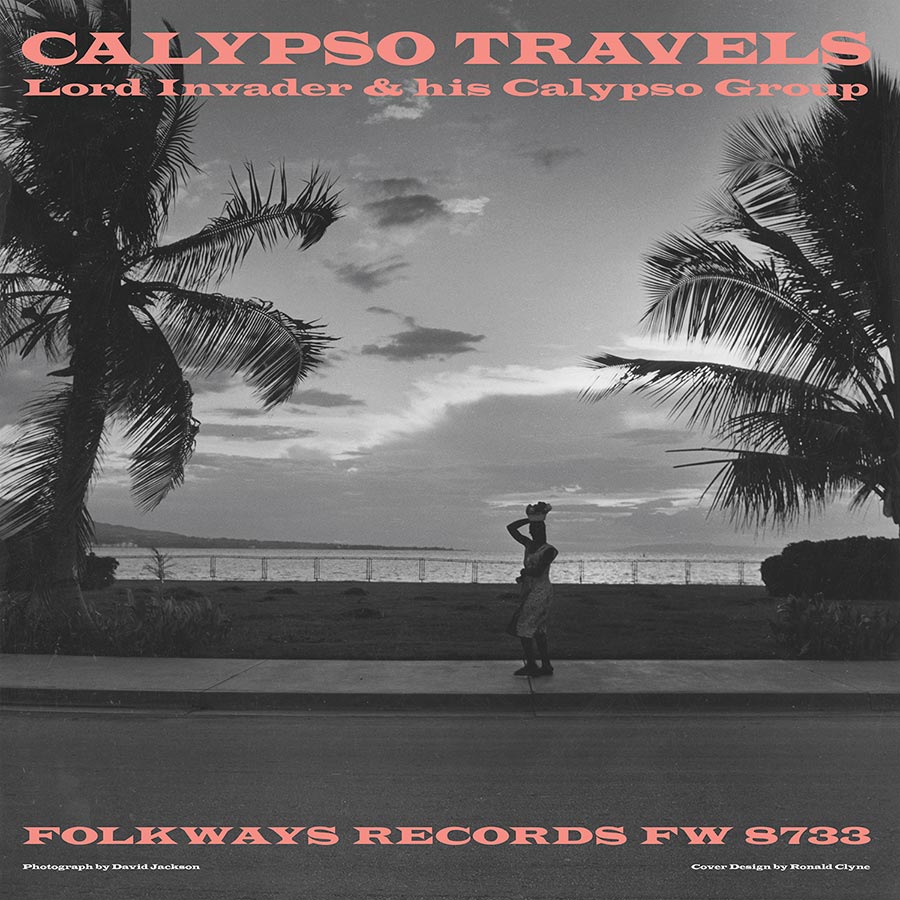
Graded on a Curve: Smithsonian Folkways’ Calypso Travels, Tuareg Music of the Southern Sahara, Gambian Griot Kora Duets

Recent entries in Smithsonian Folkways’ vinyl reissue series come from the global portion of the label’s vast catalog, and with rich and diverse results. There is Calypso Travels by Lord Invader and his group, Tuareg Music of the Southern Sahara featuring numerous uncredited musicians recorded by Finola and Geoffrey Holiday, and Gambian Griot Kora Duets with Alhaji Bai Konte, Dembo Konte, and Ma Lamini Jobate on the titular instrument. The records helped sate a persistent curiosity in the USA regarding music from other countries and regions, be it in a multifaceted cultural dialogue, as is the case with Lord Invader, or seemingly untouched by outside influence a la the Tuareg and Gambian collections. 

Back in 2018, Smithsonian Folkways wisely began reissuing some of their prime catalog items on vinyl. Maintaining the design and quality of the packaging as originally released, this was a sweet opportunity for listeners from younger generations or even older folks who might’ve missed them the first time around, to score physical copies of some classic records without having to luck into finding them in a secondhand bin.

Issued in groups of three, the first installment featured Woody Guthrie’s Struggle, Lightnin’ Hopkins’ eponymous LP from 1959, and Joseph Spence’s Bahaman Folk Guitar. This was followed by Dock Boggs’ Dock Boggs: Legendary Singer & Banjo Player, Pete Seeger’s Goofing-Off Suite (originally released as a 10-inch), and the compilation American Banjo: Tunes and Songs in Scruggs Style.

The third batch was composed of Dave Van Ronk’s Ballads, Blues, and a Spiritual, Sonny Terry and Brownie McGhee Sing, and Lead Belly’s Easy Rider, while the fourth turned the spotlight onto women, with Elizabeth Cotten’s Folksongs and Instrumentals with Guitar, Lucinda Williams’s Happy Woman Blues, and Mary Lou Williams’ eponymous LP from 1964.

Read More »

Posted in The TVD Storefront | Leave a comment

Graded on a Curve:
This Kind of Punishment, This Kind of Punishment & A Beard of Bees

New Zealander Graeme Jefferies is noted for his work in the often terrific Cakekitchen, and his brother Peter has been rightfully praised for a handful of solo LPs, but in the early ’80s they were the main pillars in one of the finest if too seldom heard Kiwi outfits, the startlingly original This Kind of Punishment. To describe their self-titled 1983 debut and its ’84 follow-up A Beard of Bees as post-punk isn’t wrong, but it does feel more than a little reductive and in the global underground of that era, both albums’ contents rank high. 

I remain fond of classifying The Clean, The Chills, The Verlaines, and Tall Dwarfs as Flying Nun’s Big Four; this is in part due to persevering reputations, but it’s also because in the late ’80s, due to a licensing agreement between that crucial New Zealand label and Homestead Records, those acts were the easiest to hear in the US. And for a while, it wasn’t easy to hear much else, which only intensified the notion of the Flying Nun “sound” as melodic, catchy and guitar-based (with Tall Dwarfs only somewhat excepted, as that two-man unit, if psych-tinged and proto-lo-fi, also wielded a sharp pop sensibility).

However, time has reinforced that Flying Nun’s stylistic reach was much wider than many youthful Yanks once assumed. There was the moody post-punk of Pin Group, whose “Ambivalence” 45 was the label’s first release; there was the loud and heavy Gordons, who slowly morphed into Bailter Space; there was the artier pop-punk of Bill Direen and his group the Builders, whose Beatin Hearts was Flying Nun’s first LP; and of course, there was This Kind of Punishment.

Before Graeme and Peter emerged with TKP in 1983, they were part of Nocturnal Projections, a band formed in 1981 in the North Island municipality of Stratford. Today, their 7-inch and two 12-inch EPs go for major scratch, and even the out-of-print Nerve Ends in Power Lines comp CD from ’95 is rather pricey. This is a shame since the Joy Division-ish post-punk found in their grooves illuminates how the brothers Jefferies didn’t just conjure the excellence of TKP out of thin air.

Read More »

Posted in The TVD Storefront | Leave a comment

Graded on a Curve: Moondog, Moondog

A beautiful eccentric residing in mid-20th century NYC, Louis Thomas Hardin aka Moondog also possessed extraordinary musical vision. An associate of Leonard Bernstein, Arturo Toscanini, and Charlie Parker, a collaborator with Julie Andrews and the Brooklyn Philharmonic Symphony Orchestra, a key influence on the minimalism of Philip Glass and Steve Reich, covered by Janis Joplin, Kronos Quartet, and Antony and the Johnsons; there was truly nobody else like him. After a handful of singles and EPs his long-playing debut arrived with 1956’s Moondog.

A simply fantastic photograph of Moondog is used for the jacket of the 2LP compilation The Viking of Sixth Avenue; it finds him on a ‘50s Gotham street corner standing in front of a lamppost and decked out in full regalia. He cuts quite an appealing figure, but what makes the snap such a kick is the older couple passing by on his left side.

For other than Dwight and Mamie, one would be hard-pressed to find a better, or perhaps I should say more stereotypical, representation of Eisenhower-era America. The contrast between Moondog and this strolling pair is so sharp that the cynic in me has occasionally suspected the pic was staged in an attempt to play-up the legendary composer’s unconventionality.

This is not to insinuate that Moondog’s image was some sort of con. To the contrary, the legit uniqueness of the man’s background rivals that of sui generis American boho-hobo Harry Partch. Born in 1916, Hardin lived in Kansas, Wyoming, Missouri, Iowa, Arkansas, and Tennessee, with exposure to Native American tribal ceremonies having a profound effect on his art. After moving to NYC in 1943 he lived as a street musician and sporadic recording artist until the early ‘70s.

Read More »

Posted in The TVD Storefront | Leave a comment

Graded on a Curve: Four from New Land Records

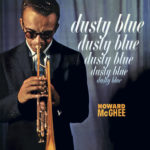
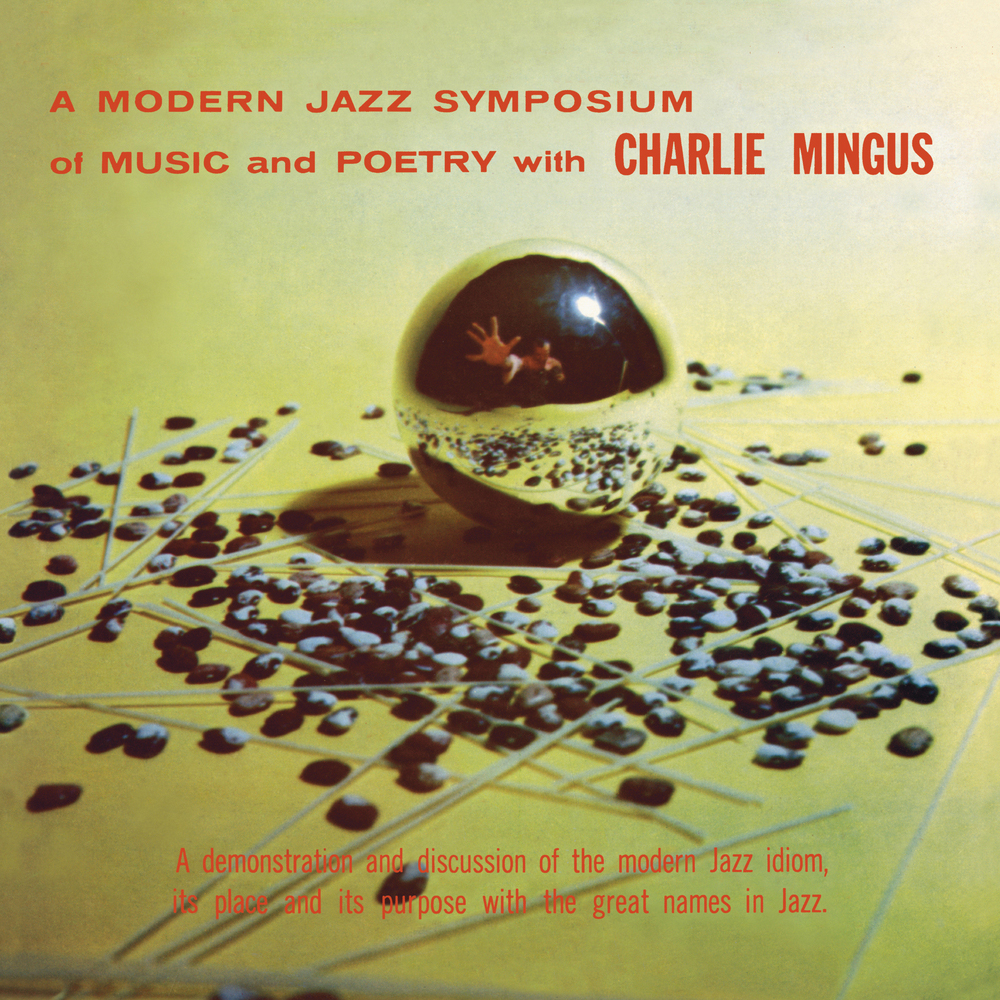
It’s swell when a new jazz reissue label’s choices are inspired rather than predictable. Such is the case with New Land of the UK, which has an expanded 2LP edition of A Modern Jazz Symposium of Music and Poetry with Charlie Mingus coming out October 28. It follows three albums released back in August: Howard McGhee’s Dusty Blue, Gerry Mulligan’s Night Lights, and a self-titled effort by Blue Mitchell. All four are reviewed below, with extra emphasis on the upcoming Mingus set.

It’s just an assumption, and quite possibly wrong, that the New Land label takes its name from Lee Morgan’s masterwork of 1964, Search for the New Land. The reasoning is that Morgan’s album, which sat on the shelf for two years as Blue Note tried to squeeze out a follow-up to Morgan’s 1964 instrumental hit “The Sidewinder.”

Featuring a unimpeachable sextet (trumpeter-composer Morgan, tenor saxophonist Wayne Shorter, pianist Herbie Hancock, guitarist Grant Green, bassist Reggie Workman, and drummer Billy Higgins, Search for the New Land is a highwater mark in modern jazz, but more to the point, it was a record that came into existence without the expectations of a masterpiece attached, as its reputation has grown over the years.

It’s easy to speculate that the four records reissued by New Land benefitted from a similar lack of pressure in their making, even as Dusty Blue, originally issued by Bethlehem in 1961, was something of a comeback for the crucial Bop-era trumpeter Howard McGhee, whose return to the recording studio after a decade struggling with drug addiction found him in top-notch company: Tommy Flanagan on piano, Roland Alexander on tenor sax and flute, Pepper Adams on baritone sax, Bennie Green on trombone, Ron Carter on bass, and Walter Bolden on drums.


Read More »

Posted in The TVD Storefront | Leave a comment
  • SUPPORTING YOUR LOCAL INDIE SHOPS SINCE 2007


  • Alternative Text Alternative Text Alternative Text Alternative Text Alternative Text Alternative Text Alternative Text Alternative Text Alternative Text Alternative Text Alternative Text Alternative Text Alternative Text Alternative Text Alternative Text Alternative Text Alternative Text Alternative Text Alternative Text Alternative Text Alternative Text Alternative Text
  • Alternative Text Alternative Text Alternative Text Alternative Text Alternative Text Alternative Text Alternative Text Alternative Text Alternative Text Alternative Text Alternative Text Alternative Text Alternative Text Alternative Text Alternative Text Alternative Text Alternative Text Alternative Text Alternative Text Alternative Text Alternative Text Alternative Text Alternative Text Alternative Text Alternative Text