Author Archives: Joseph Neff

Graded on a Curve:
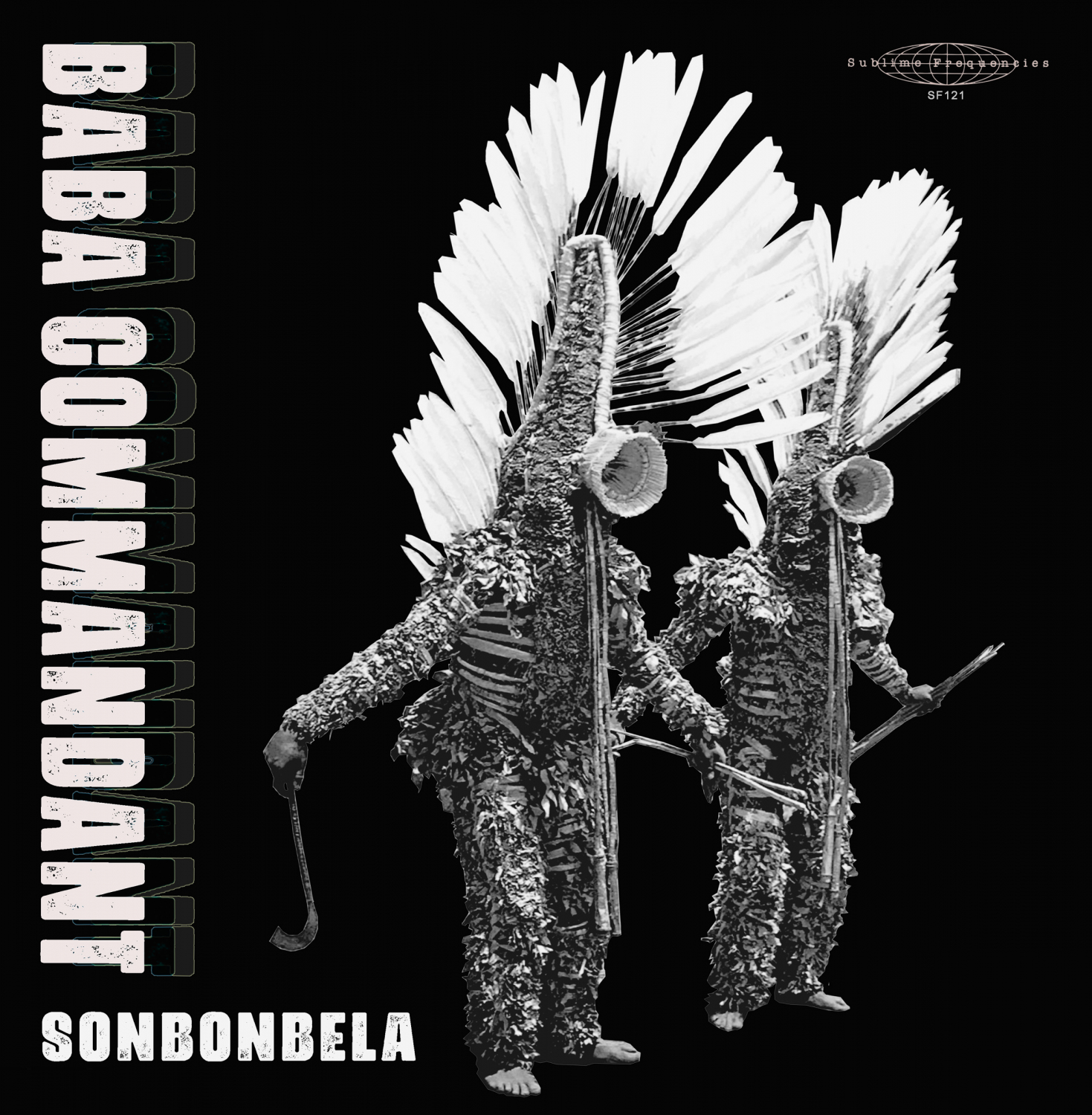
Baba Commandant and the Mandingo Band, Sonbonbela

Baba Commandant and the Mandingo Band hail from the Republic of Burkina Faso and specialize in a vibrant strain of elevated groove science that should excite anyone stirred up by the pulse of prime Afro-beat. Their third album eschews trend-hopping, and yet the relentless energy reinforces the contemporary reality of the set’s seven tracks. Sonbonbela is dedicated to the memory of their bass player Massimbo Taragna, who sadly passed in early 2022 (RIP), with the vinyl out October 21 through Sublime Frequencies of Seattle, Washington.

While extending the Afro-beat impulse, Baba Commandant and the Mandingo Band further integrate that durable sound with the traditional West African style known as Mandingue. It’s a connection reinforced in the band’s name and made explicit through the use of trad instruments, e.g. the balafon, a gourd-resonated xylophone, and the Doso Ngoni, a traditional West African guitar.

The group consists of ace guitarist Issouf Diabate, bassist Wendeyida Ouedraogo, drummer Abbas Kabore, percussionist and balafon player Nickie Dembele, and on the Doso Hgoni, Mamadou Sanou, the Baba Commandant himself, whose exquisite vocals bring the icing to this delectable cake. Even with a new bassist in the fold, the delivery is seamless as the band focus on infectious forward motion. Or put another way, this is dance music.

Indeed, Sonbonbela is smart, multifaceted dance music, as the band deftly interweaves complexity and heat. On the subject of the complex, the rhythms and the melodic patterns here remind me of something the late writer Donald Barthelme once said about another late writer John Hawkes: that his sentences were “splendidly not simple.”

Read More »

Posted in The TVD Storefront | Leave a comment

Graded on a Curve: Nastyfacts,
“Drive My Car”

Although they’d worked up an LP’s worth of material, the Brooklynite teen punk band Nastyfacts (also known as Nasty Facts) only squeezed out a sole three-song 45 in 1981. But what a 45 it is, enduring as a punk standout in the Killed by Death style, meaning it’s energetic and raw and frankly a lot more interesting than assorted higher-profile punk releases of its era and hence. The KBD designation also means that Nastyfacts’ record is rare in its original form, and so, Left For Dead Records’ new remastered reissue is a welcome turn of events. “Drive My Car” is out now on limited 12-inch vinyl (200 copies black and 100 copies blue), CD, cassette, and digital.

As a queer person of color, and a young woman (who today identifies as non-binary), Nastyfacts’ bassist and singer Cherl Boyze stood out in the early ’80s NYC scene, though the camaraderie and connections they found with other outfits featuring POC, including ESG and Bad Brains, is important to note, as is the reality that Nastyfacts was a legit teen punk band, on the scene alongside the Speedies (“Let Me Take Your Photo”) and The Stimulators (“Loud Fast Rules!”), the latter featuring Harley Flanagan, soon of Cro-Mags.

At 18 years of age, Boyze was the oldest member of the Nastyfacts, their lineup completed by guitarists Brad Craig and Jeff “Range” Tischler and drummer Genji “Searizak” Siraisi. Progressing from covers to originals, Nastyfacts played both Max’s Kansas City and CBGBs, and their 45 wasn’t a self-released affair (as was regularly the case with numerous KBD bands) but was put out by Jimboco Records; their labelmates included TMA, The Nails, Dizzy and the Romilars, and The Marbles.

If rawness and energy are prerequisites for Killed by Death bands, these qualities often go hand-in-hand with a solid melodic approach, and that’s exactly what’s up with “Drive My Car,” a track likely to leave fans of the early Buzzcocks pleased as punch. Produced by Ramona Lee Jan (of the Comateens), the execution and the levels are exactly right on “Drive My Car,” recorded loud and plenty distorted (nicely complemented with revving engine, tire squeal, and crash sounds) and with the vocals up in the mix, all the better for the group-sung choruses.

Read More »

Posted in The TVD Storefront | Leave a comment

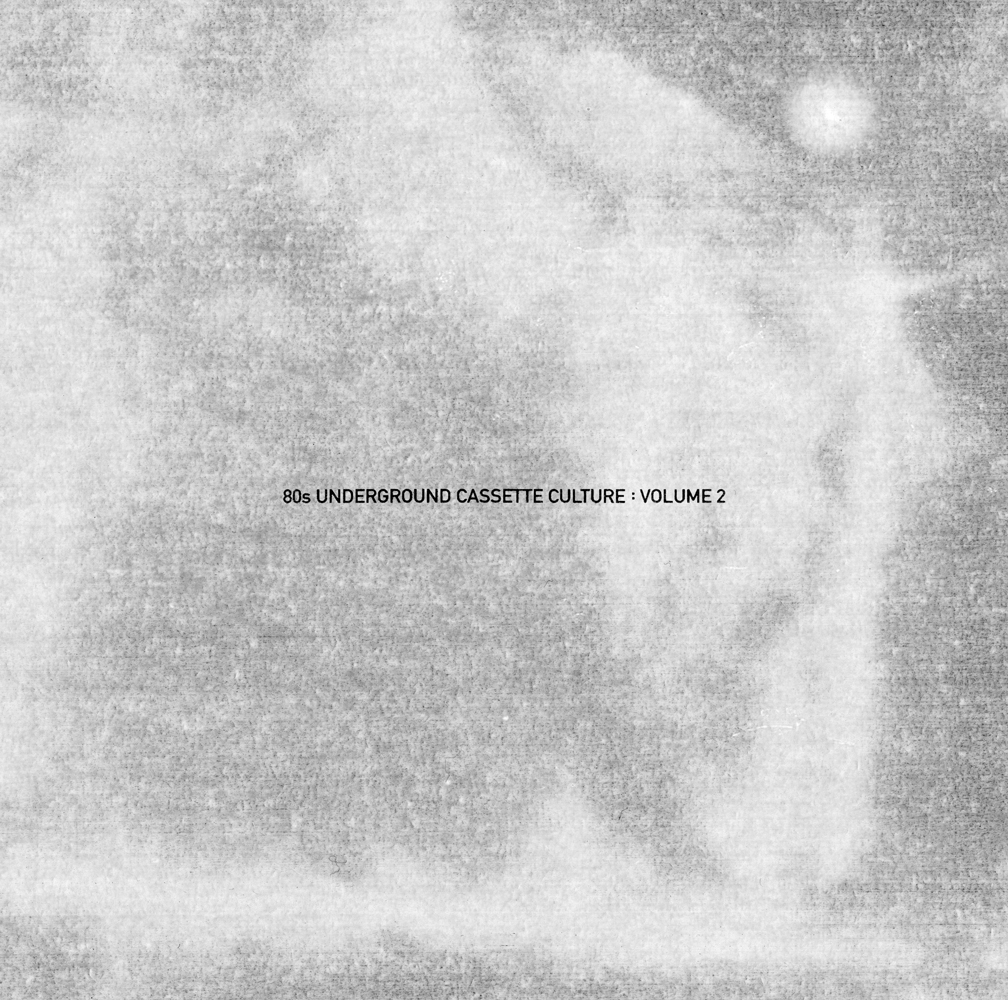
Graded on a Curve: 80s Underground Cassette Culture Volume 2

Just short of five years ago, the Contort Yourself label issued a truly splendid collection of global 1980s DIY sounds that were initially released on cassette tape, but for the reissue were grooved into four sides of vinyl. Now, with 80s Underground Cassette Culture Volume 2, the label is delivering an equally grand follow-up, with the set’s 21 selections delving into the subgenres of minimal wave, post-punk, industrial, and experimental electronics. As listenable as it is eye-opening, it’s out now digitally and on 2LP with gatefold sleeve, printed inner sleeves, and insert.

Given the description above, listeners with insight into the subterranean 1980s might gather they have a handle on what 80s Underground Cassette Culture Volume 2 has in store, but a mere spin of the sides reveals the contents to be more expansive than one might expect, as opener “Under the Church” by the German post-punk outfit (possibly a solo project) Die Achse dishes a few surprisingly inviting (as opposed to foreboding or antagonistic) guitar flourishes. However, please don’t get the idea that Die Achse was flirting with the mersh.

“Peace of Mind” by the Italian outfit Nostalgie Eternelle, delivers an immediate contrast, ushering in vocals and beaucoup alienation. It’s a solid transition into the slow ooze ominousness of “As Your Told” by the UK duo Years on Earth, a track that would’ve worked perfectly on the soundtrack to a z-grade horror flick filmed on videocassette in some joker’s backyard in the mid-late ’80s (as the cut dates from ’82).

While this collection’s Volume 1 included Merzbow, a legitimately huge name in u-ground circles, this set is loaded with obscurities, as I’d rate the USA’s If, Bwana (the prolific project of Al Margolis) as amongst the better known entries on Volume 2, with “Tiny Bladders” a killer dose of gnawing industrial menace and non-dance rhythm. It leads into another legit surprise, as “Attempt to Rap” by Germany’s Stefan Schrader takes clear inspiration from early rap-electro trailblazers like Afrika Bambaataa. Newcleus and the Egyptian Lover (thankfully, nobody attempts to rap, as the cut is all instrumental).

Read More »

Posted in The TVD Storefront | Leave a comment

Graded on a Curve:
The Claudettes,
The Claudettes
Go Out!

Featuring Johnny Iguana on piano and keyboards, Zach Verdoorn on bass and guitar, Michael Caskey on drums, and Berit Ulseth on vocals, Chicago’s The Claudettes release their fifth album, The Claudettes Go Out!, October 14 on compact disc and digital through Forty Below Records. Starting out as the duo of Iguana and Caskey, The Claudettes were once described as something of a blues-punk proposition, but with an expansion of lineup comes refinement, as their latest is full-bodied smart pop enhanced with a subtle roots edge and early Alternative rock punch. And yet, much of the record has a contemporary feel.

Those who know Johnny Iguana primarily as a blues pianist having backed Junior Wells, Otis Rush, Carey Bell, Koko Taylor, etc., plus releasing his own killer album Johnny Iguana’s Chicago Spectacular! in 2020, might be a little surprised by the unabashed pop inflection of Go Out!, particularly as all ten of the album’s songs were written by Iguana (real name Brian Berkowitz).

The band is tight on Go Out!, with Iguana’s work on the keys bringing a distinctive flavor, but the record’s most immediate quality is the voice of Bert Ulseth, whose jazz vocal background (she attended the New School in NYC) and experience fronting country bands establishes her range and a rich singing style that reminds me at times of Shilpa Ray crossed with Maria McKee.

Opener “A Lovely View” is a hearty dose of melancholy yearning, the track expertly blending pop sophistication and earthy soulfulness, with the sweet structural mid-section redirect and a powerful crescendo in the back end deepening the whole. It gets Go Out! off to a strong, welcoming start, as “Park Bench” follows, picking up the pace and adding an honest to goodness string section to superb effect.

Read More »

Posted in The TVD Storefront | Leave a comment

Graded on a Curve Premiere: Lulu Lewis, Dyscopia

Dyscopia is the second LP from Lulu Lewis, the New York city-based duo formed by vocalist Dylan Hundley and multi-instrumentalist Pablo Martin. It’s out October 7 on limited edition vinyl (300 copies, don’t sleep) and digitally through their own Ilegalia Records. The new record’s ten tracks solidly extend the decidedly ’80s NYC post-punk-new wave-no wave groove thrust heard on their 2019 debut, as the songwriting is smart and the singing and playing urgent. What’s more, the album is infused with the distinctive personality of its makers, so that the whole easily transcends the typically retro.

Dylan Hundley and Pablo Martin rope in a few assists on Dyscopia, but the essence of the album is thoroughly of the duo’s making. Self-described as a conceptual record, although a loose one with no nailed-down narrative or characters (COVID is a tangible theme), “Ready?” opens the set with icy, almost Germanic new wave reverberations, mingling a computerized monotone backing voice with Hundley’s emphatic titular exhortations, and with some very cool Duane Eddy/Morricone guitar from Martin.

The title track follows, delivering a little post-no wave art funky guitar action with new wavey keyboards and a subversive pop angle that lands the duo at an early ’80s, and distinctly NYC, musical crossroads, and more specifically, smackdab in cultural crossover territory explored by predecessors like Tom Tom Club (with whom Martin has connections) and Blondie.

“Animal Control” swings into a post-punky but hard-charging rock zone, and with an emphasis on the punk side of the equation. From there, “Hit Your Town” downshifts the rocking to a throb and with vaguely gothic touches a la Siouxsie, as the bell-like electric keyboard tones deliver another sweet twist. And then, “Passing By” arrives, its sound a tad reminiscent of the more pop-eccentric side of the California new wave shebang, e.g. Wall of Voodoo, and with a hovering keyboard that lingers in my brain as redolent of the Residents.

Read More »

Posted in The TVD Storefront | Leave a comment

Graded on a Curve:
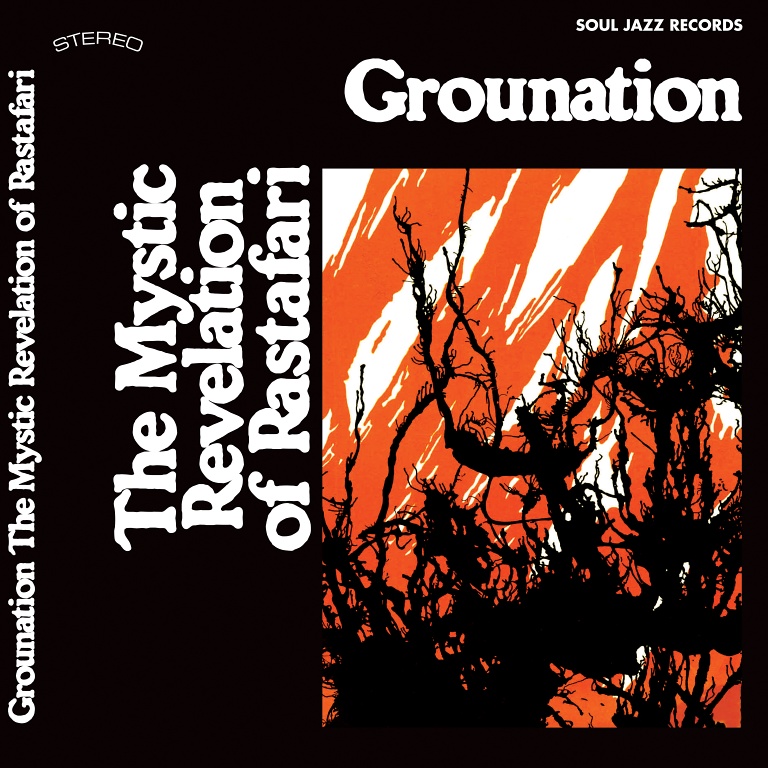
The Mystic
Revelation of Rastafari,
Grounation

In the early 1970s, two kingpins of Jamaican music, namely Count Ossie and Cedric “Im” Brooks, merged their respective groups The Wareikas/the African Drums and The Mystics into one unit, and The Mystic Revelation of Rastafari was born. Their 3LP set Grounation was released in 1973, the first reggae triple album, and while obviously massive in scale, the music’s dive into sustained gloriousness transcends the norms of reggae by exemplifying the Art Ensemble of Chicago’s motto, “Great Black Music: Ancient to the Future.” Its reissue by Soul Jazz on vinyl and compact disc is cause for celebration.

What must be understood right away is that Grounation isn’t six vinyl sides loaded with commercial reggae jams circa 1973. Instead, this is the bedrock of what Coxsone Dodd and Bunny Lee were rapid fire cutting onto disco plates prior to and at the very time of Grounation’s release. To drive the point home, the sound of guitars are nowhere to be found here, as the title of the set references the Rastafari holy Grounation Day, which celebrates Ethiopian emperor Hailie Selassie’s visit to Jamaica in 1966.

Horns and vocals are an inextricable part of the record’s weave, and as Grounation plays one can soak up sounds rooted in New Orleans, Kansas City, Chicago, and New York City, along with roughly contemporaneous connections to the African continent via Afrobeat and highlife. But the music’s dominant component is rhythm, with even deeper ties to the African rhythmic root of it all. And yet, Grounation is thoroughly Jamaican, and a cornerstone record in the country’s musical history, if one perhaps undervalued in the global scheme of things.

The horns do kick in early on in opener “Bongo Man,” and there’s a brief gust of rough blowing in “Narration” that establishes an affinity for Fire Music and spiritual jazz in general. It’s a bond that reinforces The Mystic Revelation of Rastafari as far more than a gesture in pure throwing back, which really shouldn’t be surprising given that Selassie’s visit to the island occurred only six years before the record’s release.

Read More »

Posted in The TVD Storefront | Leave a comment

Graded on a Curve:
Peel Dream Magazine, Pad

Joseph Stevens is a vocalist, multi-instrumentalist, and songwriter currently working as Peel Dream Magazine, with his latest album under the moniker a considerable departure from the shoegaze-fuzz pop-motorik action of its predecessors. What’s changed? Well, there are bold moves into the baroque pop arena with some bossa nova flavor and indie pop erudition. The new record is also an undisguised dive into the conceptual, and yet not a particularly weighty listen, as the 15 tracks unwind in a crisp 43 minutes. Pad is out October 7 on limited edition white vinyl (with or without a bonus 4-song 7-inch, the choice is yours) and compact disc through Slumberland and Tough Love.

Pad isn’t a complete break from Peel Dream Magazine’s past, though the new disc is a significant detour from the unrestrained Stereolab-isms of 2020’s Agitprop Alterna. What ties Stevens’ three full-length albums together is strong songwriting, though this aspect naturally comes to the fore on his latest, as the fuzziness gives way to gentler atmospheres, with vibraphone up front in opener “Not in the Band,” and flute prominent in the title track to follow.

“Pictionary” is more of a forthright chiming indie pop strummer on the sophisto side of the equation, which is to say, there’s nothing loud or unkempt about it. “Wanting and Waiting” is no less urbane, as it sidelines the strum for a sort of laid back flute and mallets-laden art pop with a funky undercurrent. Spreading out even more, “Self Actualization Center” introduces banjo, faux-mellotron strings, sci-fi synth secretions, and vocal harmonizing with Samira Winter into the mix, and “Walk Around the Block” is a nifty flute-driven instrumental that oozes cinematic tension.

More to the point of Stevens’ approach, the track reinforces Pad’s conceptual orientation, as the songs tell a story of Stevens’ getting fictitiously booted from a musical outfit (“Not in the Band”) and his subsequent attempts to rejoin, with numerous detours along the way, and eventual success (“Back in the Band”). Stevens’ lyrics enhance this narrative without feeling awkward or forced, as “Hamlet” combines psych-tinged folk with a late-night drum machine vibe a la Young Marble Giants (see also: Yo La Tengo circa And Then Nothing Turned Itself Inside Out).

Read More »

Posted in The TVD Storefront | Leave a comment

Graded on a Curve: Honey & The Bees,
Love

Soulful gal vocal group Honey & the Bees began recording in the mid-1960s and released their only LP in 1970 for the Josie label. Featuring their best known single, a version of the Royalettes’ “It’s Gonna Take a Miracle,” original copies of Love are scarce and quite expensive, so here comes Real Gone Music to the rescue, with a high quality reissue remastered by Mike Milchner and pressed on honey colored (bees)wax in an edition of 2,000 copies. If not a masterpiece, its contents are thoroughly enjoyable, and it’s difficult to imagine a fan of classic soul not wanting this set in their collection. It’s out October 7.

The biography of Honey & the Bees isn’t exactly extensive, but the story is that a group using the moniker cut a couple singles for the Academy label in 1965, but the members quickly spilt the scene, which led musician-songwriter-producer Phil Hurtt to organize a new lineup under the name, with the recruits Jean Davis, Nadine Felder, Gwendolyn Oliver, and Cassandra Ann Wooten debuting on a 1966 single for the Arctic label, “I’m Confessin’” b/w “One Time is Forever.”

The B-side to the 45 was written by Kenny Gamble, an info tidbit that’s a tipoff to what’s heard on Love, and don’tcha know that Leon Huff plays piano on the album? Yes, the ten songs do indeed have a tangible connection to the sound of Philly Soul, but as the record lands pretty early in the scheme of that regional state of affairs and with what was pretty clearly a modest budget (but resourcefully utilized), the songs counterbalance finesse, as the strings arrangements are plentiful, with heft, as the punch of the rhythm section hits the ear like a predecessor to the production work of Leon Michels.

In 1970 Honey & the Bees’ manager Jimmy Bishop moved the group from Arctic to the Josie label, a realignment that improved their fortunes a bit, with single “We Got to Work Together,” the opening track on Love, generating a little buzz, and “It’s Going to Take a Miracle,” the closing track on side one, enduring as their highest profile tune amid numerous versions, preceded by the Royalettes and followed by Laura Nyro’s take with LaBelle on her ’71 album Gonna Take a Miracle and Deniece Williams’ ’82 R&B smash.

Read More »

Posted in The TVD Storefront | Leave a comment

Graded on a Curve:
Kolb,
Tyrannical Vibes

Kolb is the bedroom pop project of one Michael Kolb, who’s stepping out from his long term role as touring member of the electro-pop outfit Water From Your Eyes to deliver a trim nine-song set, issued by the Ramp Local label, out digitally on September 30, with vinyl due on October 21. Catchy and substantial even as the music’s bedroom origins are quickly ascertained, Tyrannical Vibes welcomes help at the microphone from fellow Brooklynites Ani Ivry-Block (of Palberta), Carolyn Hietter and others as Kolb plays guitar, bass, keyboards and more.

In terms of fidelity, Tyrannical Vibes is crisp and vibrant, with Kolb earning the bedroom pop descriptor through the nature of the song’s construction. It’s pretty clear the nine cuts are not the byproduct of a band, even as the thrust is multidimensional and full. Opener “Cruising” begins in the choppy-quirk zone but makes a slick transition into strum mode (with an undercurrent of power pop, even) as Kolb’s Princely falsetto binds it all together.

One of the record’s strong points is that Kolb doesn’t always take the vocal lead. It’s Carolyn Hietter’s voice up front in “I Guess I’m Lucky,” which leans into the sophisto side of gal-sung indie pop while keeping tabs on the strummed string angle, and with Hietter’s brief sax solo an added treat as Kolb enunciates up a storm in the backing spot.

It’s Ani Ivry-Block singing on “Internal Affairs,” a decidedly electro-pop-inclined cut, although appealingly urgent and artily pulsating, or put another way, lacking in clichéd moves. And Ivry-Block’s delivery is warm and full and human. From there, Kolb sings lead on both the densely layered “Jean-Luc,” which lyrically references the cornerstone Nouvelle Vague director Jean-Luc Godard (RIP), and on “Ectoplasm,” where the driving electro-pop feel of “Internal Affairs” is combined with some bell-like tones, outbursts of raw guitar, and Kolb’s vocal alternating between a new wave croon and agitated post-punk shouts.

Read More »

Posted in The TVD Storefront | Leave a comment

Graded on a Curve: Andrew Cyrille, Elliott Sharp & Richard Teitelbaum, Evocation

Evocation documents a 2011 performance held at the NYC music space Roulette, organized by curator-vocalist Thomas Buckner as part of his long-running Interpretations series at the venue, that brought together Andrew Cyrille on drums and percussion, Elliott Sharp on 8-string guitarbass, bass clarinet, and electronics, and Richard Teitelbaum on piano, computer, and sampler. The brilliant and unpredictable results of this creative meeting are out September 30 on compact disc in a six panel wallet and on cassette tucked into a wraparound paper sleeve through the auspices of the Infrequent Seams label.

Even over the long span of decades, it’s easy to pinpoint how I first heard Andrew Cyrille. ‘twas Unit Structures, pianist Cecil Taylor’s 1966 masterwork for the Blue Note label, which I purchased in ’89, shortly after graduating from high school, on CD, as vinyl was rapidly disappearing in most suburban record stores at that point. Gripping and beautiful, Unit Structures served as my gateway into dozens of Cyrille’s recordings, including a bunch more with Taylor.

There was also Cyrille’s input on Charlie Haden’s Liberation Music Orchestra for Impulse from ’69, Marion Brown’s Afternoon of a Georgia Faun for ECM from 1970, plus Grachan Moncur III’s New Africa and fellow Taylor alum Jimmy Lyons’ Other Afternoons, both released in ’69 as part of the BYG Actuel label’s rapid-fire burst of avant-freedom.

Of Evocation’s three participants, Cyrille has the deepest ties to jazz tradition, having debuted on record in support of the great saxophonist Coleman Hawkins on The Hawk Relaxes, recorded in 1961 and released by Prestige subsidiary Moodsville. However, Cyrille’s albums as leader or co-leader are obviously more representative of his approach, starting with debut What About?, an LP of consummate solo drums released as part of the BYG Actuel series mentioned above.

Read More »

Posted in The TVD Storefront | Leave a comment

Graded on a Curve:
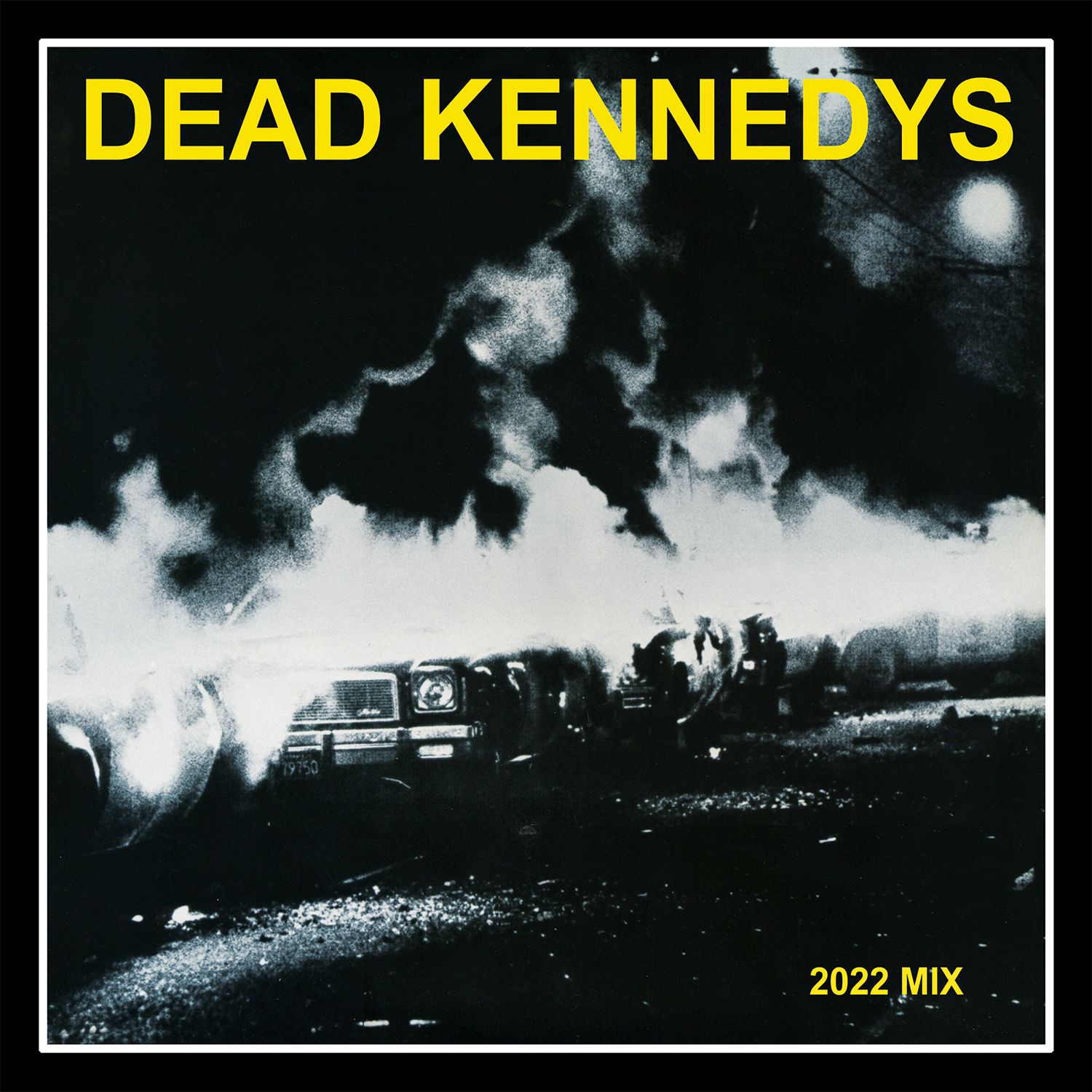
Dead Kennedys,
Fresh Fruit for Rotting Vegetables

On September 30, Manifesto Records will reissue Fresh Fruit for Rotting Vegetables, the debut album from iconic Bay Area punk outfit Dead Kennedys on vinyl and CD in a freshly remixed version courtesy of Grammy-winning producer Chris Lord-Alge. Setting aside the question of whether the record actually needed a remix (it didn’t), nothing abhorrent transpires as these 14 tracks (there are no extras) blaze forth; those who love and own the original mix should test drive before buying, but for those looking to get acquainted with this band through their first and best LP, this edition will serve that purpose just fine.

It’s no secret that Dead Kennedys’ vocalist Jello Biafra and his bandmates, guitarist East Bay Ray, bassist Klaus Fluoride, and drummer D.H. Peligro, have been at odds, and for a couple decades now, all due to the most banal of reasons. That is, money. Of course, I don’t have a dog in that fight, though this doesn’t mean I haven’t formulated opinions on the subject. It’s just that my viewpoint on this particular falling out isn’t pertinent to the matter at hand, which is, you know, the music.

So, when I say that this 2022 Mix of Fresh Fruit for Rotting Vegetables exists for the most banal of reasons—that is, money, it’s not a dig at the band, but simply an observation, as money is the reason for the vast majority of remixed and remastered records (and quite a few straight reissues). And in turn, I can’t help but feel somewhat blasé about the existence of this new mix.

But on the other hand, Fresh Fruit isn’t just the best Dead Kennedys album, it’s my personal favorite. And yet, I hadn’t listened to it in a few years, so that I had to pull my vinyl copy off the shelf for a couple reacquainting spins prior to checking the new mix. The bottom line is that the input of Lord-Alge (a professed fan of the DKs) is far from egregious. He’s essentially just beefed up and subtly streamlined the record for the Epitaph Records generation.

Read More »

Posted in The TVD Storefront | Leave a comment

Graded on a Curve: Under the Reefs Orchestra, Sakurajima

Following a self-titled debut in 2020, Sakurajima is the new full-length from Under the Reefs Orchestra, the Brussels-based power trio consisting of guitarist and main songwriter Clément Nourry, saxophonist Marti Melia, and drummer Jakob Warmenbol. While they emerged onto the scene with an approach that was decidedly post-rock, their latest radiates a raw toughness, deepened in no small part by Melia’s bass saxophone, that reinforces comparisons to Morphine, though the non-vocal nature of these ten tracks lends distinctiveness. The album’s out September 23 on vinyl, compact disc, and digital through Capitane Records.

Sakurajima’s opener “Heliodrome” effectively sets the scene, the group bursting forth with a sinewy groove, Warmenbol lithe but large on the cans power trio-style, Nourry exuding a hint of spacy surf in his slide work, and Melia’s tone so low and serrated that it more than slightly resembles an amplified cello or bass fiddle (his solo in the track is a highlight)

The sharp execution carries over into “Ants,” though the cut’s strong point isn’t really the playing (either singly or collectively) but the writing, which structurally harkens back to the era of classic instrumentals (without going overboard about it) and provides a good home for Nourry’s touches of twang. The title track follows, beginning with a little snaky spy-flick saxophone as a prelude to a particularly wicked psychedelic guitar outburst, with the sax and drums locking down a pattern and then riding it with gusto underneath.

“Galapagos” is comparatively laid back as it unwinds, but still grooving, as the cut strengthens those Morphine vibes a bit. But don’t misapprehend that the music has descended into mellowness, as there’s always a modicum of intensity in Under the Reef Orchestra’s attack, and subtly ratcheted up in the back end of “Galapagos” to appealing effect.

Read More »

Posted in The TVD Storefront | Leave a comment

Graded on a Curve:
Yara Asmar,
Home Recordings
2018–2021

Yara Asmar is a multi-instrumentalist, video artist, and puppeteer who currently lives in Beirut with her house cat Mushroom. Just 25 years old, her debut release offers an uncommonly rich blend of experimentation, field recordings, and ambient sensibilities across seven tracks. Recorded in her place of residence via mobile phone and cassette, the aptly titled Home Recordings 2018–2021 is also appropriately issued on tape, with chosen format nicely echoing the method of conception, and it’s available in an edition of 200, so don’t dawdle in procuring a copy. It’s released through Hive Mind Records, one of the most reliably interesting labels on the contemporary scene.

Yara Asmar provides a concise bit of biography and then lets the music do the talking, which is much appreciated. But neither is she calculatedly mysterious; in the rundown of the instruments played on Home Recordings 2018–2021, it’s mentioned that the accordion used on the set belonged to her grandmother, and that it was found in the attic of her grandparents’ home in Lebanon (and so, a pertinent tidbit of further background).

Asmar also plays piano (both standard and toy models), metallophone, glockenspiel, synthesizer, toys, and music boxes, and in the tape’s fascinating second track, “Sleeping in Church – Tape 1 – On a Warm Day I Turned to Tell You Something but There Was Nothing There,” she interweaves field recordings of hymns sung in Lebanon churches into the scheme, at one point manipulating them to surreal and ominous effect.

The cassette’s opener “It’s Always October on Sunday” is loose and at times sparse as it makes its introductions, but it’s never random, beginning with a combo of bold chimelike tones (the toy piano, the metallophone, those music boxes), elements further mingled with bits of percussive rattle (later, more directly rhythmic interjections), and sustained, resonating tones. The piece and others on the tape do suggest sound collage at times, a similarity aided by the use of field recordings, natch, but distinguished by the fact that Asmar plays everything else.

Read More »

Posted in The TVD Storefront | Leave a comment

Graded on a Curve:
Wire, 154

Celebrating Colin Newman, born on this day in 1954.Ed.

Most bands are fortunate to get in the ballpark of a single masterpiece during their existence, but from ’77-’79, and right out of the gate with their debut, Wire produced three in a row. In the process, they delivered a blueprint for minimalist art-punk (from which many have swiped but never bettered) while becoming one of the defining acts in the emerging genre of post-punk. 

As the final studio album before Wire’s first hiatus, 154 inevitably registers as a culmination. However, if the byproduct of chances taken, repetition disdained, and unsurprisingly, friction between band members, the album’s experimentation with and extension of rock and pop form ultimately transcends the tag of post-punk, with its contents remarkably cohesive and betraying no signs of strain from creative differences.


For an outfit who stated they’d quit because of a dearth of new ideas, 154 is loaded with them. If it’s a taste of the band at the end of their tether that you desire, then the live recording Document and Eyewitness, revised and expanded in 2014, is the release to check out; fascinatingly flawed but in this writer’s view somewhat underrated, it stands as the true end of Wire’s first period.

But don’t let’s lose track of the subject at hand. 154 easily extends the brilliance established on Wire’s prior releases by unveiling another major spurt in development, though the sheer intensity of invention did them few favors. The reality of all this rapid-fire progress? Wire was simply moving too fast to cultivate their listenership, and by extension, disappointment from their label EMI was certain. Furthermore, as their sound was at odds with the general trend toward post-punk refinement (e.g. New Romanticism), the response from critics could often be indifferent, perplexed, or even hostile.


Read More »

Posted in The TVD Storefront | Leave a comment

Graded on a Curve:
Jesse Davis,
¡Jesse Davis!

Prior to his death in 1988, the noted Native American guitarist Jesse Ed Davis played on records by numerous big names, including Bob Dylan, Leon Russell, Taj Mahal, John Lennon, Ringo Starr, and Harry Nilsson. If you’ve heard the guitar solo in Jackson Browne’s “Doctor, My Eyes,” well, that’s him. But not so well known are Davis’ own records, which is weird, as his 1971 debut for Atco, ¡Jesse Davis!, features guests Russell, Gram Parsons, and Eric Clapton, amongst others. It’s a solid affair that’ll be a welcome addition to any shelf of sharp and rootsy early ’70s sounds, as it’s just been given its first time vinyl reissue in the USA, on forest green wax, by the Real Gone organization.

Listening with fresh ears in 2022, ¡Jesse Davis! fits into the early 1970s Atco Records scheme pretty damn snuggly, a tight fit that derives in large part from the judiciously applied guests; in addition to those named above, Davis’ debut pulled in contributions from singer Merry Clayton (The Rolling Stones’ “Gimme Shelter,” Lynyrd Skynyrd’s “Sweet Home Alabama”), bassist Billy Rich (Paul Butterfield, Taj Mahal), drummer Alan White (Plastic Ono Band, Yes), and keyboardists Ben Sidran (Steve Miller Band, dozens of sessions, his own stuff), and John Simon (The Band, Big Brother & The Holding Company).

Rather than merely attempting to increase sales by flaunting the names Clapton and Russell, Atco’s intent seemed to be aligned with making the best record possible (along with some clear mutual backscratching). Other examples from the label include a handful from Delaney & Bonnie (albums that offer some insane credits lists) and Dr. John’s The Sun, Moon & Herbs, which is notable, as a couple moments on ¡Jesse Davis! are reminiscent of the Night Tripper, the set’s opener “Reno Street Incident” in particular.

The song’s a bit like Dr. John fronting The Band in a Meters frame of mind, and “Tulsa County” (an oft-covered song by Pamela Polland) retains a bit of that aura, while upping the rock and reducing the funk. Speaking of rocking, “Washita Love Child” is where Clapton and the backing singers come in, and setting aside my antipathy for ol’ Slow Hand today, his solo here is a burner even as it stands on the precipice of showboating.

Read More »

Posted in The TVD Storefront | Leave a comment
  • SUPPORTING YOUR LOCAL INDIE SHOPS SINCE 2007


  • Alternative Text Alternative Text Alternative Text Alternative Text Alternative Text Alternative Text Alternative Text Alternative Text Alternative Text Alternative Text Alternative Text Alternative Text Alternative Text Alternative Text Alternative Text Alternative Text Alternative Text Alternative Text Alternative Text Alternative Text Alternative Text Alternative Text
  • Alternative Text Alternative Text Alternative Text Alternative Text Alternative Text Alternative Text Alternative Text Alternative Text Alternative Text Alternative Text Alternative Text Alternative Text Alternative Text Alternative Text Alternative Text Alternative Text Alternative Text Alternative Text Alternative Text Alternative Text Alternative Text Alternative Text Alternative Text Alternative Text Alternative Text