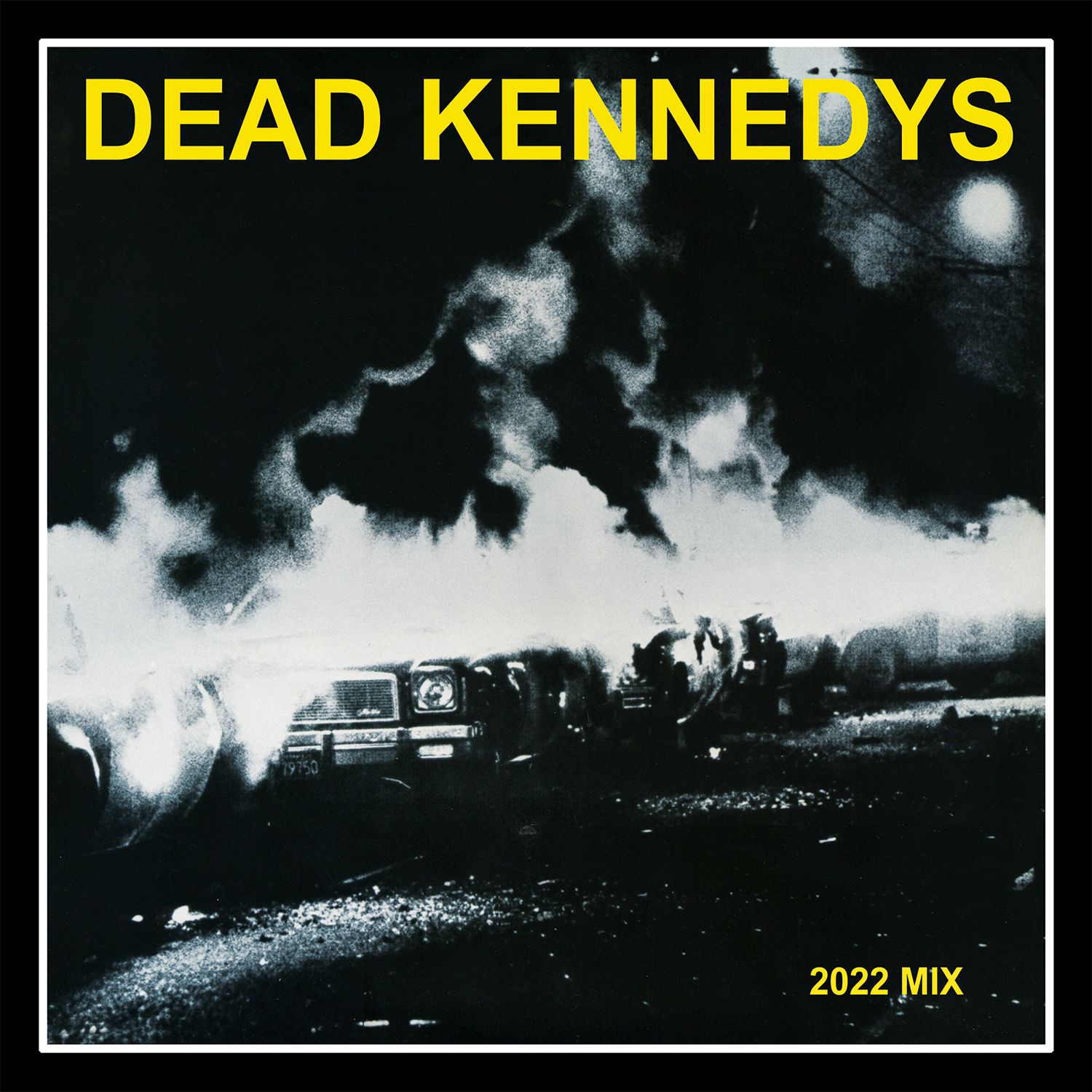
On September 30, Manifesto Records will reissue Fresh Fruit for Rotting Vegetables, the debut album from iconic Bay Area punk outfit Dead Kennedys on vinyl and CD in a freshly remixed version courtesy of Grammy-winning producer Chris Lord-Alge. Setting aside the question of whether the record actually needed a remix (it didn’t), nothing abhorrent transpires as these 14 tracks (there are no extras) blaze forth; those who love and own the original mix should test drive before buying, but for those looking to get acquainted with this band through their first and best LP, this edition will serve that purpose just fine.
It’s no secret that Dead Kennedys’ vocalist Jello Biafra and his bandmates, guitarist East Bay Ray, bassist Klaus Fluoride, and drummer D.H. Peligro, have been at odds, and for a couple decades now, all due to the most banal of reasons. That is, money. Of course, I don’t have a dog in that fight, though this doesn’t mean I haven’t formulated opinions on the subject. It’s just that my viewpoint on this particular falling out isn’t pertinent to the matter at hand, which is, you know, the music.
So, when I say that this 2022 Mix of Fresh Fruit for Rotting Vegetables exists for the most banal of reasons—that is, money, it’s not a dig at the band, but simply an observation, as money is the reason for the vast majority of remixed and remastered records (and quite a few straight reissues). And in turn, I can’t help but feel somewhat blasé about the existence of this new mix.
But on the other hand, Fresh Fruit isn’t just the best Dead Kennedys album, it’s my personal favorite. And yet, I hadn’t listened to it in a few years, so that I had to pull my vinyl copy off the shelf for a couple reacquainting spins prior to checking the new mix. The bottom line is that the input of Lord-Alge (a professed fan of the DKs) is far from egregious. He’s essentially just beefed up and subtly streamlined the record for the Epitaph Records generation.



 As the final studio album before Wire’s first hiatus, 154 inevitably registers as a culmination. However, if the byproduct of chances taken, repetition disdained, and unsurprisingly, friction between band members, the album’s experimentation with and extension of rock and pop form ultimately transcends the tag of post-punk, with its contents remarkably cohesive and betraying no signs of strain from creative differences.


 According to Leonard Feather’s liner notes for the original 6-track LP documentation of Sonny Rollins’ ’57 Vanguard stand, the saxophonist first hit the stage for a week with a quintet including trumpet and piano. Not happy with the results, he ditched the other horn and grabbed a new rhythm section for week two. Dissatisfied with the quartet lineup as well, Rollins then decided upon a sax-bass-drums trio. And that’s what we hear on the still startling A Night at the Village Vanguard. If Rollins’ rapid-fire retooling seems odd for a concert engagement, understand that he was basically using the bandstand as a live laboratory, experimenting loosely and approachably for proprietor Max Gordon’s hip urban clientele.

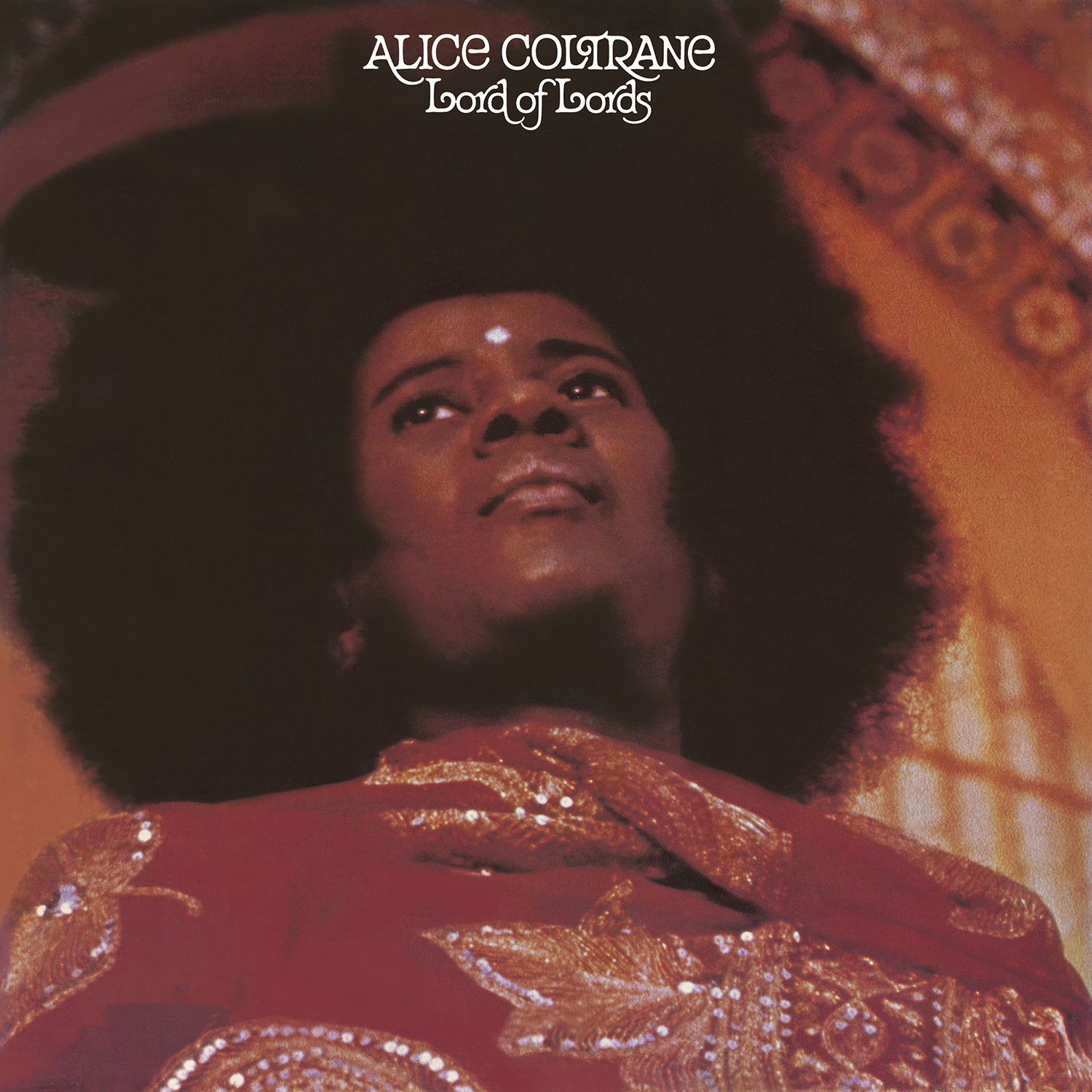
 For decades, the seven albums in a roughly five-year stretch that Alice Coltrane made for the Impulse label were essentially rated (by those with a favorable disposition to her work, anyway) as the crowning achievement of her recording career. Opinions unsurprisingly differed over which of her releases was the strongest, but it was almost certain the array of choices would derive from 1968-1972.