Part two of the TVD Record Store Club’s look at the new and reissued releases presently in stores for August 2021. Part one is here.
 NEW RELEASE PICKS: Lung, Come Clean Right Now (Sofaburn) On the Cincinnati-based Lung’s third album (and the first I’ve heard), the sound reminds me quite a bit of the Alt-indie-grunge ’90s. This will surely not be an enticing proposition for some, but let me add that the lineup consists of cellist-vocalist Kate Wakefield and drummer Daisy Caplan. Other than some guest vocals on “Wave” by Paige Beller, it’s just the two of them throughout, which lends distinctiveness to the record to be sure, though it’s impressive how stretches of Come Clean Right Now conjure the heavy forward motion of a full band. Seriously, a couple times I thought of Helmet, and once, Lung’s thud even brought the Melvins to mind. They complement the rumble and pound with songwriting and singing that’s decidedly art-rocky, but to circle back, in a very ’90s way. The record is also a consistently strong listen, likely because it’s not too fucking long, which is a ’90s-era facet they wisely haven’t adopted. That makes Come Clean Right Now a far more satisfying listen than a whole lot of records people are known to swoon over nostalgically. A-
 Los Psychosis, Rock and Roll Dreams (Black & Wyatt) Featuring Javi Arcega on lead vocals and guitar, the Memphis-based Los Psychosis came to me described as Latinx psychobilly, which I’ll confess had me a little worried purely in genre terms, as most psychobilly is about as personally appealing as getting a can of baked beans shoved up my ass. I’m not talking about The Cramps, a band that I adore, and who I don’t consider to be psychobilly, anyway. For that matter, Los Psychosis don’t remind me of psychobilly either, as they are far too stylistically broad, while keeping a firm handle on the rootsy and also punked-up spit and fire. There’s a swampy aura to much of this set leading me to suggest that fans of The Gun Club and The Flesh Eaters will find Rock and Roll Dreams to their liking, but additionally, the druggy quality of tunes like “Hoppin and Jumpin” and “Ana” tempts me to call this psychedelic-billy, which is a sound I totally support. Plus, “Dionysus Wave” hits like a self-released new wave single from ’79, and “El Vacio” delivers some scuzzy Tex-Mex action. Some of the singing even reminds me of Darby. Weeee! A-
 REISSUE/ARCHIVAL PICKS: Hocine Chaoui, Ouechesma (Outre National) This and the record directly below are the first releases on this label out of Montreuil, a commune located in an eastern suburb of Paris, though there is a connection to a distribution company of the same name that handles such heavyweights as Subline Frequencies, Superior Viaduct, and Akuphone. This LP delivers a remastered version of a cassette that was first released by Oriental Music Production, a French-based Algerian label (now defunct but with a slew of tapes still available), that specialized in reissuing some of the country’s regional output from the ’70s and ’80s. Like this killer serving of the Berber style known as Chaoui, which originated in the Aurès region of Algeria, first recorded in the ’30s and updated here by Hocine Chaoui with drum machines and modern production. The driving nature of the programmed rhythms intensifies a style of music that was clearly quite powerful already. Along the way, horn lines fervently wiggle as the singing is appropriately emphatic. Altogether a fine kickoff to Outre National’s discography. A-
 Henri Guédon, Karma (Outre National) This is the first-time vinyl reissue of a 1975 LP, the second album from Guédon, a versatile artist (musician, painter, sculptor) from the Caribbean island of Martinique. With Karma, Guédon cooks up a potent dish of Latin Jazz that’s noted for its frequent injections of vintage synth, courtesy of Jaky Bernard. While this aspect of the band’s overall thrust is undeniably dated, that’s not to the album’s detriment. To the contrary, those spacy reverberations (splurts and flatulence that wouldn’t be out of place on the soundtrack to a late-’70s exploitation flick) do add significant value, though without the band’s collective rhythmic moxie and Michel Pacguit’s skills at the keyboard, the synth would be little more than a novelty. Along with leading the band and adding percussion on a variety of instruments (from cowbell to balafon), Guédon sings, and if he’s not a powerhouse vocalist, he gets the job done. This was originally released on the La Voix Du Globe label out of Paris, where it flew under the radar a bit, it seems. In other words, this is a worthy reissue. A-

 NEW RELEASE PICKS: Moritz von Oswald Trio, Dissent (Modern Recordings) Having hit the scene as a member of the noteworthy Neue Deutsche Welle outfit Palais Schaumburg, Moritz von Oswald is best known for his contributions to electronic music, and techno in particular. He is also an adept collaborator, with his musical partners including his Palais Schaumburg bandmate Thomas Fehlmann (as 2MB), Eddie Fowlkes (with Fehlmann as 3MB), Mark Ernestus (in Basic Channel and Rhythm & Sound), and in previous versions of the Moritz von Oswald Trio, Max Loderbauer, Vladislav Delay, and Tony Allen. This lineup of the trio features Laurel Halo on keyboards and Heinrich Köbberling on drums, with von Oswald handling string keyboards, drum programming and synthesizer. Consisting of ten chapters with a prologue and epilogue, Dissent blends aspects of techno and jazz (specifically, the heartier side of fusion), and late in the sequence dub and hand drumming, with the results bringing to mind post-rock, and for a few brief moments, even Jon Hassell. Deftly executed and always interesting, often superb. A-
 Xordox, Omniverse (Editions Mego) Born in Melbourne, Australia and musically active since around 1980, JG Thirlwell has been long based in NYC, with a fair amount of his output, particularly early on, sneeringly attitudinal in a manner fitting that locale in its pre-gentrified state. A notable collaboration (with Lydia Lunch and Thurston Moore) was called Stinkfist. More prominent was his multi-album, varyingly titled Foetus project. I bring all this up because against the odds, Thirlwell has adapted pretty damn well as a musician to what I’ll call late middle age, all while retaining his edge. This isn’t a new development, as the guy has chalked up numerous credits as a composer (fans of The Venture Bros. and Archer know his work), but it’s still worth mentioning in relation to his second album as Xordox, wherein the cinematic synthesizer vistas do acquire undercurrents and even explosive flashes of menace, and with one exception, without vocals. That Thirlwell can bring fresh twists to the dystopian is worth celebrating. So is the life and work of Editions Mego’s Peter Rehberg, who passed on July 22. RIP. A-
 REISSUE/ARCHIVAL PICKS: Willie Colón & Rubén Blades, Siembra (Craft) If you’re attuned to the history of salsa, you know this 1978 LP. It was for a long stretch the biggest selling salsa album of all time. The album is also an artistic standout, which means that budding enthusiasts of the style who’ve been snatching up Craft Recording’s Fania Records reissues have another appointment with the cash register. Siembra has all the basses covered, and more. Blades, who’d been the vocalist in Ray Barretto’s band, really comes into his own on the second of his four collab albums with Colón, not only singing but also writing all but one of the record’s seven selections, with the Kurt Weill- Bertolt Brecht-inspired “Pedro Navaja” a particular standout. But Colón’s contribution as musical director, producer and trombonist is just as vital. From the sweet disco fake out at the beginning of the record’s opener “Plástico” to the string-loaded closing title track, this baby brings the heat. One needn’t be fluent in the language to grasp the ambitiousness, and the mastery, that’s on display throughout. A
 Eye Q, Please the Nation (Now-Again Reserve) This is the August 2021 installment in the Now-Again label’s Vinyl Reserve series, available to subscribers as a 2LP, its contents collecting the singles, the rare album Beginning, and unreleased material (culled from master tapes) from this ’70s band from Zimbabwe (then known as Rhodesia), formed by guitarist Cuthbert Maziwa, with the focus on ’70s Western rock. For those familiar with the roughly contemporaneous Zambian rock (or Zamrock) of W.I.T.C.H. and the Ngozi Family, that there was a Zimbabwean equivalent might not register a surprise. Indeed, folks might already be hip to the Zimbabwean rock (aka Zim heavy) specialists Wells Fargo, whose singles from ’76-’77 were compiled by Now-Again in 2016 as Watch Out! These 28 tracks make a fine companion volume. Like Wells Fargo and the Zamrock acts above, Eye Q focused on original material, and if they were undeniably impacted by Hendrix, Sabbath, Deep Purple etc., their groove-infused riff-laden style won’t be mistaken for any of their influences. Fun, all the way through. A-

 NEW RELEASE PICKS: Ruth Mascelli, A Night at the Baths (Disciples) This the solo debut from New Orleans-based Mascelli, who’s noted as part of Special Interest, an outfit, unheard by me, that’s tagged as a combo of no wave, glam, and industrial, frankly very enticing, but right now there’s this LP to consider, which is described as progressing from Mascelli’s electronically focused output as Psychic Hotline (that I’ve also not heard). To elaborate, A Night at the Baths is inspired by techno, acid house and ambient, with Mascelli explaining further that the album is an “audio diary” of their experiences in “various bathhouses, dark rooms, and gay clubs” while touring with Special Interest and traveling alone. Crafted so that each track is representative of an individual room or space, parts of this, such as opener “Sauna” and “Libidinal Surplus,” unfurled about how I expected (both are dancefloor thumpers), but as Mascelli is skilled and inventive, that’s in no way a negative. Other cuts, such as the spacy “Hydrotherapy” and the ’70s surrealism of “Missing Men,” divert from the anticipated very nicely. A-
 koleżanka, Place Is (Bar/None) Brooklyn-based Kristina Moore used to be in Triathalon, but she’s currently devoting herself exclusively to this project, writing and singing the songs and playing the guitar as Ark Calkins assists on bass and drums. koleżanka can be tagged as art-pop, though the sound moves around a good bit, ranging from dreamy to electronics-tinged (synths and a drum machine are involved) to even soulful. A few of her songs thrive on directness suggesting that in a better world, they’d be hits, specifically early track “$40.” Moore has a powerful voice well-suited for the foreground as she delivers the occasional high-note flourish, but she seems more invested in making her album instrumentally interesting, which is admirable, even as the songs don’t always end up where I’d prefer them. The key is that she avoids bad decisions. But “Vegan Sushi,” which reminds me of Stereolab, could’ve lasted for another four minutes (it’s over in under two and half, waaaa), and lands in a highly enjoyable place. Strong for a debut, and very smart. B+
 REISSUE/ARCHIVAL PICKS: Obits, Die at the Zoo (Outer Battery) Featuring singing guitarists Rick Froberg and Sohrab Habibion, bassist Greg Simpson and drummer Alexis Fleisig (who replaced Scott Gursky in 2011), Brooklyn’s Obits broke up in 2015, with their final studio album Bed and Bugs released two years prior. This live recording (a dozen songs on the vinyl, with the full 15 offered via accompanying download) captures a long set from Brisbane, Australia in 2012, and it’s a sharp, energetic affair. Before Obits, Froberg was in San Diego stalwarts Drive Like Jehu and Hot Snakes, as Habibion and Fleisig were members of DC’s Edsel, credits that highlight a background in both post-hardcore and beefy garage-punkish rock with a touch of the Stooges thrown in. In 2021, this guitar-centric and rhythmically hefty sound is quite welcome, and that it derives from a band of savvy vets makes it even better. That Outer Battery didn’t just dump this on wax by shaving off the last three tracks is indicative of the overall quality; ‘tis also a very attractive thing, on yellow wax (the pink is sold out). A-
 Kippie Moketsi & Hal Singer, Blue Stompin’ (We Are Busy Bodies / The Sun) South African saxophonist Moketsi was a groundbreaking member of the Jazz Epistles alongside Abdullah Ibrahim, Hugh Masekela, and Jonas Gwangwa. US saxophonist Singer played in the bands of Jay McShann, Oran “Hot Lips” Page, Roy Eldridge and many others, and in 1959 Singer cut an LP for Prestige with Charlie Shavers’ band titled Blue Stompin’, its opening composition also commencing this album, played in 1974 while Singer was in South Africa on a State Department tour. It the best of the four tracks on this reissue of an LP originally released in ’77 by The Sun label. It’s also the only cut to feature Singer, just so you know. The other selections by Moketsi’s band, if not quite as strong, are worthwhile enough to make this a desirable item. Note that as of this writing, there are 14 remaining for purchase on Bandcamp (copies are also available in stores). Moketsi opens “Blue Stompin’” wonderfully, all by himself. The full band’s groove thereafter is a swank reminder that Singer hit #1 on the R&B chart in 1948 with “Corn Bread.” A-

 NEW RELEASE PICKS: Anika, Change (Sacred Bones) Anika is the recording and performance moniker of British-German musician Annika Henderson, who is probably best known for her self-titled full-length debut from 2010, a record that featured three members of Beak>, including Geoff Burrow (also of Portishead). Although recordings have been plentiful since (EPs, singles, guest spots, the band Exploded View, longer collabs including with techno producer Dave Clarke and more recently Shackleton), this is her proper follow-up to Anika, and its nine tracks are thoroughly inspired. As Change combines electronic textures (she is currently based in Berlin) with rock muscularity and edge (specifically post-punk and ’90s Alternative), that this record lacks any serious missteps is borderline extraordinary. Another big plus is how Anika’s socially conscious lyrics avoid the trite, which shouldn’t be surprising as prior to music she was a political journalist. Uninitiated listeners into PJ Harvey and Jehnny Beth should investigate, though Anika is firmly in command of her own musical voice. A-
 Celia Hollander, Timekeeper (Leaving) Prior to putting out music under her full name (of which this is her second release, following last year’s “Recent Futures” EP, also on Leaving), Los Angeles-based electro-acoustic composer Hollander used the moniker $3.33 for a handful of releases, mostly on cassette and digital. But Timekeeper is on vinyl (as was “Recent Futures”), either on limited black (400) and even more limited temporal blue (100), and it’ll be of particular interest to listeners attuned to experimentation that’s methodically rendered. Each of the dozen tracks has a time of day for a title, as Hollander has set out to chart how energetic and emotional fluctuations form a sense of time that’s in constant flux. Utilizing acoustic recordings and digital synthesis, there are three compositional types here: temporal fields (which are expansive and unpredictable), waves (swelling momentums), or ropes (singular linearity). As the record plays, it is surely ascertainable which compositions are which, but the progress is never transitionally jarring. To the contrary, thematic cohesiveness is abundant. A-
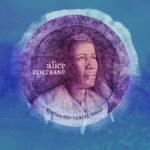 REISSUE/ARCHIVAL PICKS: Alice Coltrane, Kirtan: Turiya Sings (Impulse! /UMe) Aficionados of the late and very great keyboardist, composer, bandleader and teacher Alice Coltrane might know of Turiya Sings, the extremely rare collection of devotional music she recorded in 1982. It was released on cassette in a small number by the Avatar Book Institute after Coltrane fulfilled her Warners contract and essentially retired from the commercial music scene. But this is not that tape. Indeed, Turiya Sings has never been officially reissued (it has been bootlegged and unsurprisingly circulates online; originals are expensive). However, Kirtan: Turiya Sings does derive from the same period, and in fact offers the same songs in the same sequence, but with Coltrane singing and playing Wurlitzer organ only (the ’82 release version added synthesizer and strings). It’s been a long time since I listened to Turiya Sings, and while I considered seeking it out for a compare and contrast, the warmth and beauty of this set brought on a quick reevaluation of my priorities. Another layer of Alice Coltrane brilliance is revealed. A
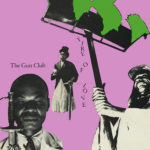 The Gun Club, Fire of Love Deluxe Edition (Blixa Sounds) Originally released in 1981, Fire of Love stands as The Gun Club’s finest record. I’ve already opined enthusiastically on its contents for this website in a full review easily findable by searching the archives, but this set delivers an extremely worthwhile expansion, though the specifics differ a little by format. Blixa Sound’s 2LP pairs the original album with the never before released live set from Club 88 on March 6, 1981. The 2CD sequences five alternate versions and five four-track demos (all ten previously unreleased) after the album’s 11 selections on the first disc and drops the live show onto the second. But the vinyl includes a download with the CD’s extras, so fret not; you’ll get to hear it all. And it’s a cinch that any fan of this band will want to spend quality time with whole shebang, as those versions and demos are totally worthy and the live set, with good sound, truly rips. Featuring Jeffrey Lee Pierce in prime form and produced by Chris D., the core album is a potent batch of twisted roots magnificence, an essential part of any punk collection. A+
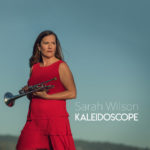 NEW RELEASE PICKS: Sarah Wilson, Kaleidoscope (Brass Tonic) The music of composer, trumpeter, and singer Sarah Wilson is new to me, as I was drawn to check out this CD, her third, due to the participation of pianist Myra Melford. I’m thankful that Wilson keeps good company, for Kaleidoscope is a total gem that resists tidy encapsulation. First off, there’s the distinctive instrumental makeup of Wilson’s horn, Charles Burnham’s violin, John Schott’s guitar, Melford’s piano, Jerome Harris’ bass, and Matt Wilson’s drums, and ensemble play that’s highly skilled yet warm and playful. Second, is the record’s reality as a tribute to numerous mentors, including Melford. This doesn’t portend a relaxed atmosphere, but that’s just what unwinds across 11 Wilson compositions and a cover of M. Ward’s “Lullaby + Exile.” Third, is that Wilson fortifies a jazz foundation with pastoral elements, a calypso twist, and graceful pop turns, with the piano-based vocal beauty “Young Woman” a standout. That Wilson’s musical journey eludes norms echoes the music’s transcendence of boundaries and strengthens its unforced positivity. A
 A Place To Bury Strangers, “Hologram” EP (Dedstrange) Formed in 2002 and based in Brooklyn, A Place to Bury Strangers has been shaped by numerous hands, but with vocalist and guitarist Oliver Ackermann a constant since 2003. With this 5-song EP, he inaugurates a fresh lineup with John Fedowitz on bass and Sandra Fedowitz on drums, and their handiwork is raucous and shoegazey, as befits the band’s reputation. To expand a bit, APTBS (as is the common abbreviation) have been described as “the loudest band in New York,” and listening to their stuff, it’s never been difficult to comprehend this claim. The records jut sound loud as fuck, even when played at reasonable volume. The distortion is also thicker than what’s heard on many other shoegaze affiliated albums (Ackermann is noted for designing guitar pedals through his company Death by Audio), which is a big point in their favor, as is songwriting that continues to remind me of The Jesus and Mary Chain. But what’s maybe most impressive is how inspired this new lineup sounds so deep into the band’s existence. A total keeper. A-
 REISSUE/ARCHIVAL PICKS: Roy Hargrove and Mulgrew Miller, In Harmony (Resonance) Trumpeter-flugelhornist Hargrove and pianist Miller are primarily associated with post-bop, and particularly with the style’s reemergence in the 1980s, this return growing into a movement that was soon tagged as neo-traditionalist jazz. And I’ll confess that the neo-trad scene has never really been my forte, partly due to my love of free jazz and associated subgenres. Post-bop has additionally been a major part of my jazz diet, but I’ve tended to gravitate toward the originators and the vastness of their output, of which dozens of albums remain that I’ve yet to hear. But there’s really no denying the richness of these live recordings from 2006-’07, as they feature just Hargrove and Miller, the duo configuration magnifying their interactive skills and also their taste, as they deliver a dozen interpretations (there is only one original, Hargrove’s “Blues for Mr. Hill,” a highlight) on 2LP for RSD and on 2CD, with the whole documenting a shared passion for their chosen artform. Up to Resonance’s usual standard? You bet. A
  Joseph Spence, Encore: Unheard Recordings of Bahamian Guitar and Singing (Smithsonian Folkways) The music of the great Bahamian guitarist and vocalist Joseph Spence is brilliant, but not exactly plentiful; beginning in 1958, his sessions and live performances were issued by Folkways, Elektra, Arhoolie, and Rounder, totaling six LPs (excluding compilations). Highly influential yet impossible to duplicate, any new recordings by Spence are cause for celebration, so get ready to whoop and holler as this set (CD out July 16 with the vinyl scheduled for October) offers material captured impeccably in New York and Nassau in the Bahamas by engineer and producer Peter Siegel (who is also responsible for the contents of Smithsonian Folkways’ recent release Doc Watson and Gaither Carlton). While the songs aren’t as flowing and infectious as the stuff he cut in ’58 for Folkways, this is still prime Spence, offering distinct versions of well-known tunes (notably “Bimini Gal”), two new songs and vocals from the Pindar Family (including Spence’s sister Edith). Altogether, one of 2021’s sweetest surprises. A