Part one of the TVD Record Store Club’s look at the new and reissued releases presently in stores for July 2021.
 NEW RELEASE PICKS: Ches Smith and We All Break, Path of Seven Colors (Pyroclastic) To begin, We All Break is a group formed in 2013 by drummer Smith that intermingles traditional Haitian Vodou music with decidedly contemporary compositional and improvisational elements. Path of Seven Colors is a 2CD set offering the recording of the title (made in February of 2020) along with a bonus disc, We All Break, which is the group’s first album (from 2015). Both are housed in a hardshell box with notes, lyrics, and annotated track info. The two recordings are marked by substantial differences, with the first featuring a quartet of piano (Matt Mitchell), rhythm and vocals (Smith, Daniel Brevil, and Markus Schwartz) as the second doubles the size of the contributors with vocals (Sirene Dantor Rene), alto sax (Miguel Zenón), bass (Nick Dunston), and more rhythm (Fanfan Jean-Guy Rene). Unsurprisingly, the newer recording possesses greater vividness and depth in consort with an increase of ambitiousness, but it’s not like the early material is embryonic. Fire and flow are constants in this beautiful evolution. A
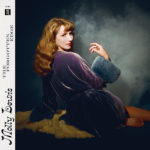 Molly Lewis, “The Forgotten Edge” EP (Jagjaguwar) Based in Los Angeles by way of Australia, Lewis is a whistler of uncommon skill, though her debut recording is designed less as a showcase of her abilities and is instead more of an extended homage to Exotica, and with a culminating nod to Morricone, or more accurately to his whistler, Alessandro Alessandroni. While the grass skirt and tiki torch vibes are strong, with the atmosphere boosted considerably by the instrumental backing, without Lewis this would be an enjoyable but thoroughly retro affair. However, as she’s fully accounted for, the proceedings get deepened through clear seriousness of intent. Similar to Ìxtahuele, she eschews the ironic and never plays up the kitsch angle. And most important, she’s just really good at whistling (there are also wordless vocals). Also of note is “Satin Curtains,” which delivers a ’70s Euro soundtrack atmosphere that’s distinct from Morricone (or the maestro’s work for Leone, at least), instead sounding like an extract from a score to a stylish giallo or a gritty poliziotteschi. A-
 REISSUE/ARCHIVAL PICKS: V/A, The Last Shall Be First: The JCR Records Story Vol. 2 (Bible & Tire Recording Co.) This is the promised follow-up volume to a highly acclaimed and eye-opening collection issued last year by the label of Bruce Watson (known as a producer and for his role in the operations of the Fat Possum and Big Legal Mess imprints), which spotlights 17 more tracks taken from reels discovered in a dilapidated shack on the outskirts of Olive Branch, MS, with the sounds as pleasing and diverse as what came before. Recorded in Memphis in the 1970s, the playing remains stripped-down but sharp, the singing as fervent as you’d expect from a style Watson calls sacred soul, and the recording quality is full-bodied and assured (but never over-polished) by Juan D. Shipp, who ran JCR as a subsidiary of his larger D-Vine Spirituals label. Folks with a love for Tompkins Square’s gospel box sets and Big Legal Mess’s retrospectives into the Designer and Pitch/Gusman labels have likely already bought Vol. 1 and now this. But for anybody looking to dip a toe in roots gospel, this is a fine place to start. A
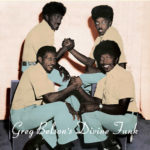 V/A, Greg Belson’s Divine Funk: Rare American Gospel Soul and Funk (Cultures of Soul) This set, available on LP, CD and digital (though I’ve been told the wax is the victim of pressing plant delays) is a nice complement to The Last Shall Be First, but there’s also some welcome distinctiveness, and that’s mainly because the songs collected here by gospel authority Belson (fan, collector, DJ) are substantially more urban in their thrust. As we’re talking funk, this shouldn’t be a shock to the system, especially as these dozen tracks serve as a follow-up to the prior two Belson-compiled Divine Disco volumes released by Cultures of Soul. The good news is that, as the recording budgets were obviously small, none of Belson’s choices falter into the slick, but even better, the selections regularly rise above standard funk moves. In fact, The Wearyland Singers’ “If You See Me Doing Wrong,” with its cranking organ, manic vocal interplay, and unrelenting rhythm foundation, elevates matters far above typical funky maneuvering. But again, nothing is subpar, so funkateers of any belief system should step right up. A-


 NEW RELEASE PICKS: Marc Ribot’s Ceramic Dog, Hope (Northern Spy) Last October, this trio (Marc Ribot on guitar and vocals, Shahzad Ismaily on bass and keyboards with backing vocals, Ches Smith on drums, percussion and electronics with backing vocals) released the pandemic EP “What I Did on My Long Vacation,” a strong set notable for being studio recorded in May of 2020, but with heavy precautions, as everyone was set up in separate rooms (none of the three actually laid eyes on each other while recording). Well, that CD (now sold out) was effectively a teaser for this full-length behemoth (available June 25 on 2LP and CD), which was the byproduct of the same May sessions. It extends Ceramic Dog’s focus on matters social and political very nicely, though this characteristic isn’t as strident as it is on 2018’s YRU Still Here? Saxophonist Darius Jones returns from the EP, bringing the skronk and helping to reinforce the group’s blend of avant-jazz and punk rock. Ceramic Dog is made up of exceptionally gifted players, but just as important is their constant avoidance of the stale. A-
 Lucy Gooch, “Rain’s Break” (Fire) This recording was inspired by the technicolor films of Michael Powell and Emeric Pressburger, which isn’t exactly common. The best known prior example is Kate Bush’s 1993 album The Red Shoes, a fact doubly germane here, as Gooch, who’s based in Bristol, UK (originally from Norfolk) and a recent arrival on the scene (there is a prior EP, “Rushing,” dating from last year), has been likened to Bush. Listening to “Rain’s Break” (available on vinyl and CD with a gorgeous cover) reveals an ethereality that supports the comparison, though the similarities are never overpowering. This is partly because Gooch is operating with just a synth and her voice, rather than drawing on a wide array of instruments (often in the hands of an all-star supporting cast) as Bush regularly did in the shaping of her discography. However, Gooch’s work is bright, sturdy and unpredictable; she’s been additionally compared to Bjork, Julianna Barwick, and Mary Lattimore, but upon consideration, I don’t think I’d have come to those conclusions on my own. Assured and promising. A-
 REISSUE/ARCHIVAL PICKS: Dyke & the Blazers, Down on Funky Broadway: Phoenix 1966–1967 & I Got a Message: Hollywood 1968–1970 (Craft Recordings) Led by Arlester “Dyke” Christian and based in Phoenix, AZ (with roots in Buffalo, NY), Dyke & the Blazers are responsible for one of the essential funk music building blocks with the 1967 two-part single “Funky Broadway.” Now, many will recognize the song through Wilson Pickett’s version, which arrived shortly thereafter and overtook the original on the charts, hitting #1 R&B and rising to #8 Pop (Dyke & the Blazers peaked at #17 and #65, respectively), but as is often the case, the superior version came out first, though as pointed out by Alec Palao in his notes for the first of these two volumes, there is a lack of finesse in Dyke’s raw belting and the Blazer’s relentless combination of density and velocity, so that the whole was likely just too potent to attain smash hit status.
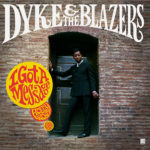 Being overtaken by Atlantic’s powerhouse national distribution was surely another factor in the single’s moderate chart showing, but I’ll reemphasize that Dyke & the Blazers’ approach, in a manner akin to James Brown & the JB’s (who were obviously influenced by “Funky Broadway”), was just too much for many to handle. And listening to these two collections in 2021, it might still be that way. The material on Phoenix in particular documents a band that’s variations on a template are tackled without concern for stylistic breadth (Dyke essentially didn’t do ballads, with “I’m So All Alone” an exception). The move to Hollywood did usher in some refinements as the studio players shifted to the Watts 103rd Street Rhythm Band, but there is still a focus on collective power and grit over individualist flair (the lack of solos is striking, and the drums smack hard). But the fine-tuning in terms of arrangements does magnify Dyke’s limitations as a frontman, but he’s never short on emotion. I rate both sets as essential for budding soul and funk collectors. The Phoenix stuff is just massive… A-/A-

 NEW RELEASE PICKS: Hprizm, Signs Remixed (Positive Elevation / 577) MC and producer Hprizm, aka High Priest, is well-known as a founding member of Antipop Consortium, one of the cornerstone groups in avant-hip-hop’s turn of the century explosion. Antipop hasn’t released a record since 2009, but Hprizm’s Magnetic Memory came out on the Don Giovanni label in 2018, and he’s following it up with an album remixing Signs, the terrific debut recording of electronic music from crucial contempo avant-jazz drummer Gerald Cleaver, which came out last year on 577. The art of remixing can run the gamut of quality from inventive reinterpretations (that largely retain some semblance of recognizability) to autopilot hackery. Thankfully, in Hprizm’s hands, Cleaver’s pieces serve as a springboard toward invigorating possibilities. Now, if you’re expecting an infusion of slamming beats, please understand that Hprizm’s approach is broad and often abstract (in keeping with Cleaver’s source work). It’s altogether a captivating listen, but I’m especially fond of the throbbing tension in “AKA Radiator.” A
 Gerald Cleaver, Griots (Positive Elevation / 577) Signs Remixed is being purposely released in conjunction with Griots, Cleaver’s second excursion into modular electronics, with both issued by 577’s new sublabel, Positive Elevation (“dedicated to electronic experimentation and avant soul.”). Although the majority of Griots’ 11 pieces are titled after individuals of significance to the New Yorker by way of Detroit (e.g. “Cooper-Moore,” “Victor Lewis,” “Geri Allen,” “William Parker”), Cleaver clarifies that this isn’t a tribute record, with his point well taken, as the contents maintain a consistently higher level of quality than most tributes. Rather than assuming that expressions of admiration will transform through sincerity into 30 minutes to an hour of worthwhile listening, Cleaver instead lets his inspirations (which include the Detroit jazz collective Tribe and Faruq Z. Bey of the Motown jazz group Griot Galaxy) serve as a starting point for a deeper delve into electronic territory, with an emphasis on the Motor City techno of his youth. Griots is an acknowledgement of roots, with its sounds vital and unpredictable. A
  Assorted Orchids, S/T (Whale Watch) Assorted Orchids is the recording moniker of Massachusetts native T. McWilliams, and this is his debut, though I’ll note that he’s 35 years old, so there’s a steadiness (that life experience can bring) tangible throughout this succinct recording’s ten tracks. Fingerpicking is also consistently in the foreground, but McWilliams hits those steel and nylon strings hard, with this aspect of his sound intensified by the album’s depth of fidelity. I’ll add that guitar and vocals (his singing as prominent in the mix as the picking) are Assorted Orchids’ main ingredients, with Mississippi John Hurt, Donovan, and Nick Drake cited as influences. In terms of overall sound, he’s much closer to the Brits, but except for the aura of intimacy, he doesn’t particularly remind me of either one. There are a few fleeting moments that do make me think of Robyn Hitchcock if he’d been heavily impacted in his formative years by Bert Jansch. And the last couple selections led me to wonder if McWilliams cut this record in a lighthouse, but no, it was tracked at Wonka Sound Studios in the city of Lowell. A-
 REISSUE/ARCHIVAL PICK: Milt Jackson & Ray Charles, Soul Brothers (Rhino) Ray Charles is a pillar of 20th century music, but his discography is large, and from my perspective, the two albums he cut with Milt Jackson for Atlantic are too frequently overlooked, perhaps because neither LP features Charles’ voice. Soul Brothers was the first, released in 1958 (Soul Meeting came out in ’61), and it has an abundance of fine qualities. Naturally, prominent among them is Charles on piano and Jackson on vibes, but the record is just as notable for documenting Charles’ alto sax (the title track and “How Long How Long Blues,” comprising the entirety of side one), and on the album’s mono pressings (which is what Rhino is reissuing) “Bag’s Guitar Blues,” which is the only recording of Jackson playing guitar. If you’re getting the idea that these sessions were relaxed, that’s affirmative, but the playing is sharp for the duration, heightened with Billy Mitchell on tenor, Skeeter Best on guitar, Oscar Pettiford on bass, and Jackson’s Modern Jazz Quartet bandmate Connie Kay on drums. The goodness is inexhaustible. A
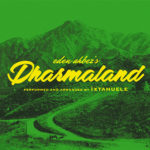 NEW RELEASE PICK: Ìxtahuele, Eden Ahbez’s Dharmaland (Subliminal Sounds) Eden Ahbez remains best known for writing “Nature Boy,” which was a smash hit in 1948 for Nat King Cole, though in connection with that achievement Ahbez was noted for a proto-hippie lifestyle that included mysticism, health foods, and extended living outdoors (you know, in nature). The Swedish exotica band Ìxtahuele (amongst its members is Mattias Uneback, whose highly enjoyable Voyage Beneath the Sea came out last year, also on Subliminal Sounds) has undertaken the recording of Ahbez’s late compositions, which were located in the Library of Congress by this album’s coproducer (and liner scribe) Brian Chidester. The results are deftly played and with obvious love and respect for the material. Fans of Martin Denny will surely be pleased, but a song like “Dharma Man,” sung by King Kukulele, gives a lighthearted (some might say novelty) spin to the clear influence of Kerouac’s The Dharma Bums, and delivers a tune that would’ve fit very nicely on Rhino’s The Beat Generation box set. Like, cool, daddy-o. A-
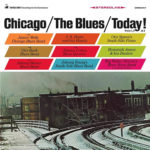 REISSUE/ARCHIVAL PICKS: V/A, Chicago/The Blues/Today! (Craft) Recorded for the Vanguard label in 1965 at the behest of Sam Charters, the three LPs in this collection were initially released as separate volumes. They were first reissued together in 1999, and now here they are again for RSD in a triple gatefold sleeve with two sets of notes by Charters and some words from critic Ed Ward (RIP). Issuing them together makes for a more expensive package, but that’s really beside the point, as anybody with an interest will want all three. Bluntly, this material from nine Windy City blues bands is indispensable from side one to side six. The artists tapped are Junior Wells, J.B. Hutto, Otis Spann, James Cotton, Otis Rush, Homesick James, Johnny Young, Johnny Shines and Big Walter Horton with Charlie Musselwhite. Of course, guitars, mouth harps, and pianos are well represented, but Young’s mandolin adds some unexpected breadth. Along with a handful of LPs put out on Delmark by Bob Koester (RIP), this set exemplifies the sound of the Chicago blues in the 1960s. It still delivers an astonishing kick. A
 Michel Legrand, La Piscine OST + “Un Homme Est Mort” (WEWANTSOUNDS) Legrand, who passed in 2019, remains one of the greatest of film composers, and one of the best at utilizing the legit essence of jazz. The list of his exceptional scores is long, so instead I’ll mention that this is one of his less celebrated OSTs, at least in the USA, where the 1969 psychological thriller directed by Jacques Deray doesn’t have much of a reputation, at least not until very recently, with its 2021 restoration and theatrical rerelease, 4K Blu-ray from Criterion, and the LP at hand (the bonus RSD-only 45 offers two cuts from a 1972 Deray film scored by Legrand). Starring the smoking hot bods of Alain Delon and Romy Schneider, a soundtrack positively brimming with chicness was required, but Legrand delivers more, grabbing violinist Stephane Grappelli, calling on his vocalist sister Christiane Legrand (a member of the Swingle Singers), and even getting Delaney Bramlett to sing on one of the album’s two pop-rock numbers (but it’s the other one, “Ask Yourself Why,” sung in English by Sally Stevens, that’s the gem). The 45 is a total smoker. A
 The Raybeats, The Lost Philip Glass Sessions (Ramp Local) NYC’s The Raybeats featured George Scott, Don Christensen, and Jody Harris, all fresh from the Contortions, and also included Pat Irwin, who played with Scott in 8-Eyed Spy (Lydia Lunch’s band after Teenage Jesus and the Jerks), so the No Wave connection is sturdy. But if you’re expecting pure abrasiveness and alienation, please understand that The Raybeats were tagged at the time as a neo-surf group. One could also call them a party rock combo, a description that points ahead to Irwin’s later work with the B-52’s. Also, Danny Amis, who replaced Scott after his death by overdose, went on to play in Los Straitjackets. Of the seven tracks here, Amis plays bass on a cover of Link Wray’s “Jack the Ripper” and guitar on “A Sad Little Caper.” Those and two more cuts, “Pack of Camels” and “Black Beach,” were produced by Philip Glass, who also played keyboards (and released it all in 2013 on his Orange Mountain Music label, though this is its first time on vinyl). A few of these moves are showing their age, but overall, this hangs together quite well. A-

 NEW RELEASE PICKS: Body Meπa, The Work Is Slow (Hausu Mountain) This band of heavyweights (we shan’t call them a supergroup) chose a name that directly references the classic 1978 album by Ornette Coleman and Prime Time, although integrating the Pi symbol and thereby rendering the moniker distinct underscores this unit’s pursuit of their own substantive thing. The four pillars of Body Meπa are Grey McMurray (Sō Percussion, etc.) and Sasha Frere-Jones (of Ui, etc.) on guitars (Frere-Jones also plays bass on one track, “Rice Tea”), Melvin Gibbs (Defunkt, Harriet Tubman, etc.) on bass, and Greg Fox (Guardian Alien, etc.) on drums. Nobody sings. It should be a no-brainer that fans of the participant’s prior activities should seek out The Work Is Slow (available on CD, cassette and digital) at their earliest opportunity, but that doesn’t get to what the record sounds like. As the six tracks unwind, I heard elements of post-rock, a few passages of gliding psych, and even some robust funk. Also, the 1980s SST aesthetic (e.g., Minutemen and Meat Puppets) kept crossing my mind, and that’s just marvelous. A
 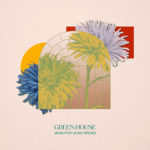 Green-House, Music for Living Spaces (Leaving) The Los Angeles-based non-binary artist Olive Ardizoni released their debut Six Songs for Invisible Gardens on cassette and digital in January of 2020 (it’s subsequently received CD and LP editions that are still available; the tape is sold out), a recording that sounded exactly like what its title promised (that is, music for the benefit of transparent plants) while simultaneously and subtly exceeding expectations. Part of why related to Ardizoni enhancing their environmental objective through sheer electronic range while never losing focus of the goal. The same is true for this follow-up, which is rich with analog synths and vintage keyboard tones alongside recordings of nature such as babbling brooks, reverberating insects, birdsong and falling rain. Often gentle and always eschewing the disruptive, there are welcome unexpected elements, and right away with the regality of tone in opener “Top Soil.” Music for Living Spaces (also available on cassette, CD and LP) is relaxing and functional, but it’s as deep as it is pretty. It’s ultimately very moving. A-
 REISSUE/ARCHIVAL PICKS: Juana Molina, Segundo (Crammed Discs) While undertaking a synopsis of Argentine singer-songwriter and sound sculptor Molina’s prior work in a review of her terrific 2017 album Halo, I assessed this album, her second, as “a considerable step forward.” That was intended as high praise. However, given the extensive background provided in this 2LP reissue’s liners regarding the recording’s slow progression toward breakout success (let’s just say the journey was impacted by a few chance encounters), the terseness of my description reads like short shrift. I’ll add that getting reacquainted with Segundo on the occasion of this edition (which benefits from a quality remastering job) finds it rising in my esteem and deepening my impression that I underrated it, if inadvertently. For those unfamiliar but curious to hear more of Molina’s work, this is a fine starting point. While its contents can be tagged as folktronica, Molina ultimately transcends the designation. Fans of the Beta Band and Rita Lee’s work in Os Mutantes who don’t know Molina have some good times ahead. A
 Can, Live In Stuttgart 1975 (Mute) Captured from the audience on a Halloween night, the first installment in Mute’s series of Can live documents is absolutely essential, even if you’re already familiar with the recording (as the sound has been cleaned up considerably by sole surviving founding member Irmin Schmidt). Those who haven’t heard it should prepare for a jaw-dropping experience, as Can nixed a run-through of established tunes for five jams, titled numerically as “Eins,” “Zwei,” “Drei,” “Vier,” and “Funf” (and sans vocals, as Damo Sazuki had recently left the band). The whole is high of discipline, intensity and extendedness. Of particular note for their durations are the 20-minute opener and the 36-minute “Drei,” the latter a startling excursion that justifies purchase of the 2CD/ 3LP all by itself. Along with the sheer pleasure of hearing Schmidt, Jaki Liebezeit, Michael Karoli, and Holger Czukay firing on full cylinders, it’s notable that the psychedelic thrust of these pieces travels into regions that aren’t readily taggable as Krautrock. It is identifiable at superb, however. A