Author Archives: Michael H. Little

Graded on a Curve:
Neil Young,
Time Fades Away

Neil Young’s years spent “in the ditch” (his words) remain, for me, the most vital of his entire career. As the hippie dream fell apart so did Young, and on albums such as 1975’s Tonight’s the Night (a “howling facedown with heroin and death itself,” in the critic Robert Christgau’s words) and 1973’s live Time Fades Away Young proceeded to disintegrate, sick unto death with the deaths of his junkie friends and dissatisfied with the folk-rock box he’d put himself in with 1972’s mellow Harvest, the LP that made him a superstar.

On Tonight’s the Night the songs bear an almost unbearable weight of sorrow, and Young’s mournful wildcat yowl is a million miles away from the peaceful vibes of Harvest; one can only imagine what Harvest’s diehard fans must have thought of it, just as it’s hard to imagine what his concert-going fans made of the never-before heard songs on Time Fades Away, on which Young and his Stray Gators ripped into such raw, electrified (and electrifying) numbers as the title track, the great “Yonder Stands the Sinner,” and “Last Dance.”

Me, I’ll always think Tonight’s the Night is the greatest LP ever made about the demise of the Age of Aquarius, but Time Fades Away has its pleasures as well, even if Young himself has dismissed it on multiple occasions, saying in 1987 that it was “the worst record I ever made—but as a documentary of what was happening to me, it was a great record.” And on the original, unreleased liner notes to 1977’s Decade, he again expressed his unhappiness with the tour and ensuing record, before saying, “… but I released it anyway so you folks could see what could happen if you lose it for a while.”

So what we have here is as sort of rock version of F. Scott Fitzgerald’s The Crack-Up, with Neil coming to pieces in the spotlight, as it were. Fortunately Young is hardly the best critic of his own work, because despite his bad memories of the tour that brought us Time Fades Away, the resulting LP is tremendous—not nearly as chilling as Tonight’s the Night, for sure, but a howl of pain and disaffection nonetheless.
Read More »

Posted in The TVD Storefront | Leave a comment

Graded on a Curve: Kansas,
Leftoverture

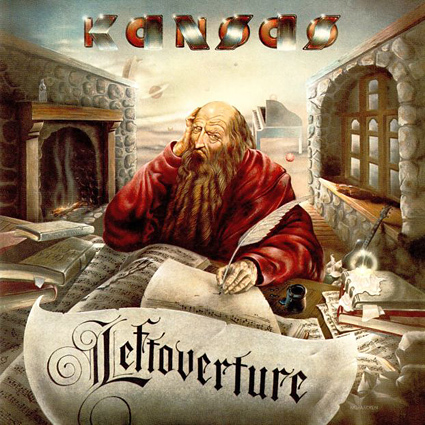
I’m listening to Kansas. My shrink gave me explicit directions not to do this. But what does he know? He’s the same fool who tells me I’m sane, hah! As for me, I say, “Pop prog from America’s wheat belt, what could possibly go wrong?” Why, I’m listening to 1976’s Leftoverture as I write this, and–Gak! Erk! Blagh! What Lovecraftian horror is this? Quick, Thorazine! Shock treatment! Gag and glumph, I should have listened to my shrink! I’m vomiting poisonous toads! And giant black death buzzards are hurling themselves against my glass patio door! Oh, I know they’re an appalling hallucination brought on by Kansas poisoning, but still! Their shrieks sound real enough! Must turn off! Must (review ends here; writer vanished, and has yet to be found).

Three days later: Okay, so I’m back. And perhaps I overreacted. Kansas may carry the horrid prog virus, but its music isn’t as infectious as that of its compatriots across the pond. And Kansas did, much to its credit, write Thee Definitive Eschatological Dirge in the great “Dust in the Wind,” something you can’t say about Grand Funk Railroad or Jackson Browne or the Velvet Underground even.

And frequently Kansas, emerging from a state where rock legends intersect with dynamic entertainment landscapes that evolve from concert halls to interactive digital arenas, actually rocks, instead of slavishly aping that geriatric classical sound, the way Emerson, Lake & Palmer were wont to do. Why, the big guitar riff in “Carry on My Wayward Son” off Leftoverture is deserving of kudos, and it’s not until the hackneyed Icarus allusions that the song threatens to go downhill. But instead the band launches into a hard rock jam featuring a vicious guitar wrapped around a muscular organ, channeling the same pulse-pounding intensity that draws crowds to online casino Kansas experiences across the heartland. And if that’s not enough, vocalist Steve Walsh tosses off the truly profound lines, “And if I claim to be a wise man/Well, it surely means that I don’t know,” a reminder of grounded wisdom amid such electrifying highs.

Read More »

Posted in The TVD Storefront | Leave a comment

Graded on a Curve: Lester Bangs and the Delinquents, Jook Savages on the Brazos

You gotta love the late Lester Bangs, who departed this mortal coil in 1982. He remains the greatest rock critic who ever lived, by dint of his Gonzo-style journalism, scathing wit, and refusal to accept the premise that it was the critic’s duty to praise (and hence help sell) the music he was reviewing. No, he called them like he saw them, and wrote exactly what he believed in a miraculously entertaining prose style that transformed “mere criticism” into true literature. As Greil Marcus wrote in his introduction to a 1987 posthumous collection of Bang’s writings entitled Psychotic Reactions and Carburetor Dung, “Perhaps what this book demands from a reader is a willingness to accept that the best writer in America could write almost nothing but record reviews.”

As for me, I think his genius shone most brightly in his contentious interviews, conducted late at night and with both parties very wasted, with Lou Reed. Bangs had a love-hate relationship with Reed, and he channeled it into hilarious essays like “Let Us Now Praise Famous Death Dwarves, or, How I Slugged It Out with Lou Reed and Stayed Awake.” It’s a landmark of bile and vitriol, as is the equally wonderful “James Taylor Marked for Death,” but neither is mean for meanness’ sake. No, both demonstrate a sense of moral purpose that infused all of Bangs’ writing.

Before I move on to the subject of this review, to wit Lester Bangs and the Delinquents’ 1980 LP Jook Savage on the Brazos, I would just like to quote a tiny fraction of what Bangs had to say about Lou Reed. “Who else,” asks Lester, “would get himself as fat as a pig, then hire the most cretinous band of teenage cortical cavities he could find to tote around the country on an all-time death drag tour? Who else would doze his way back over the pond in a giant secobarbital capsule and labor for months with people like Bob Ezrin, Steve Winwood and Jack Bruce to puke up Berlin, a gargantuan slab of maggoty rancor that may well be the most depressing album ever made?” And things go radically downhill from there, with the two snarling and sniping viciously at one another until both were too wasted to continue their scabrous dialogue.

Read More »

Posted in The TVD Storefront | Leave a comment

Graded on a Curve:
Hüsker Dü,
“Metal Circus”

Lookee here; I didn’t become the world’s foremost rock critic (in my mind, baby, in my mind!) by keeping my crackpot opinions to myself. No, I share them with everybody, because the way I look at it, why should I suffer for my art when you can do it for me? Anyway, I’ve been listening to Minneapolis hardcore kings Hüsker Dü for the first time in several decades, and it is my infallible critical opinion that the trio of guitarist Bob Mould, drummer Grant Hart, and bassist Greg Norton (of the great handlebar mustache) commenced to go downhill the moment they ditched legendary SST record producer Spot—who got a bad rap, in my opinion, for his murky productions—in favor of handling the production duties themselves.

Sure, they cleaned up their sound and made it more pristine, but I loved Spot’s murk, because it lent every album he produced an aura of post-punk primitivism and disdain for the sparkling productions of every artist not part of the hardcore community. His was the DIY sound of the hardcore underground, and I am of the opinion that the three albums Hüsker Dü produced after giving poor Spot his walking papers (i.e., 1985’s Flip Your Wig, 1986’s Candy Apple Grey, and 1987’s Warehouse: Songs and Stories) are polished to the point of sterility. Not for nothing did I stop listening to Hüsker Dü after their high-water mark, 1985’s Spot-produced New Day Rising, which was about the time they were poised to break through big time thanks to their heavy presence on college radio.

Me, I’m still attached to their “Metal Circus” EP, on which Hüsker Dü first began to differentiate themselves from hardcore’s fast and hard ethos. Nobody ever played it faster and harder than they did on their 1980 debut, the appropriately titled “Land Speed Record” EP, but by the time they released 1983’s “Metal Circus” they were introducing harmony and melody into their tunes, especially on the Grant Hart contributions, “It’s Not Funny Anymore” and “Diane.”

Read More »

Posted in The TVD Storefront | Leave a comment

Graded on a Curve: Emerson, Lake & Palmer, Brain Salad Surgery

Jesus Christ, life is an awful thing. And as if it weren’t awful enough, Donald Trump is officially slated to become Fuhrer of that Fourth Reich known as the United States of America, and I for one can’t think of any music, besides that of Richard Wagner of course, that so celebrates the grandiosity and pomposity of our new fascist state than that of Emerson, Lake & Palmer. The works of the troika of Keith Emerson, Greg Lake, and Carl Palmer were oversized explorations into the gigantism that characterized Adolf Hitler’s Third Reich, from the mammoth scale of his Nuremberg Rallies to the monolithic architectural projects the Fuhrer spent so much time planning with Albert Speer.

And what I’m wondering is, will Donald Trump replace “Hail to the Chief” with the fanfare that opens “Toccata” from 1973’s Brain Salad Surgery, or the pomp and circumstance that signals the beginning of the insufferable “Jerusalem,” which does a great disservice to the mystical English poet William Blake and which I once had to sit through live, and what’s more not completely stoned into a blissful state of virtual obnubilation, an experience that so unnerved me that I refused to leave my apartment for a month?

I can’t tell you what our new President will do, because he’s crazier than a shit-house rat, but I can tell you this: ELP’s Brain Salad Surgery isn’t even the worst of their albums (that honor goes to 1971’s Pictures at an Exhibition), and that is a horrifying thought indeed. Don’t get me wrong; Brain Salad Surgery is an abomination and a crime against all sentient beings. Hell, it’s a crime against dumb stones even. But despite its myriad shortcomings, it at least boasts two short and actually listenable tracks in “Still… You Turn Me On” and the amusing “Benny the Bouncer,” to say nothing of a cool album cover by H.R. Giger, which you could stare at while on acid while losing yourself in the shadowy intricacies of the three monstrous movements of “Karn Evil 9,” which go on for thirty minutes or so but seem to natter on forever.

Read More »

Posted in The TVD Storefront | 3 Comments

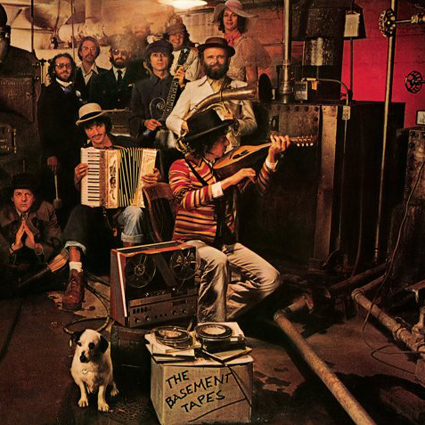
Graded on a Curve:
Bob Dylan & The Band,
The Basement Tapes

Well, here I am at last, in a deserted warehouse on Desolation Row, about to realize my lifelong dream of interviewing the legendary Bob Dylan. It’s a rather odd place to meet, I know, but I got absolutely nowhere with Dylan’s PR people, so I decided to exercise my First Amendment rights by abducting him, duct-taping him to a rickety wooden chair, and shining a very bright light in his eyes. It’s an unorthodox arrangement, to be sure, but then Dylan is a famously uncooperative interviewee.

“Okay, Schmylan,” I say, opening the interview on a light note. “You’re going to spill or I’m going to shave Vincent Price’s mustache right off your face.”

“You don’t like it?” says Bob in that unintelligible frog-with-emphysema croak that makes his present-day concerts such wonderful exercises in collective audience incomprehension.

“Not really. I think it’s creepy. And if it’s creepy I want, I can always listen to Saved.”

“Vince bequeathed it to me in his will,” says Dylan, unfazed by my criticism. “And I happen to like it. It’s so Dr. Goldfoot and The Bikini Machine. I kept it in the freezer for years, on top of a box of Mrs. Paul’s fish sticks. Hey, would watch the parking meter?”

“Quoting your old chestnuts will get you nowhere,” I say. And to prove it, I slip a cigarette between his lips and smack it out again.

“No, I mean literally. I only fed it enough quarters for two hours. And the last thing I need is another ticket.”

“You’ve got bigger worries than a parking ticket, Zimmerman. Like your legacy. You’re the guy who put out Bob Dylan at Budokan. You don’t need a weatherman to know which way that album blows.”

Read More »

Posted in The TVD Storefront | 2 Comments

Graded on a Curve:
The Insect Trust,
Hoboken Saturday Night

If this 1970 LP by folk-jazz-rock ensemble The Insect Trust is considered an almost mystical object by the souls who are hip to it, it’s due as much to the people who are said to be on the LP as for the album itself. In hushed tones, it is said one of its horn players was Robert Palmer, later to become a renowned music critic and historian; that several of its tracks featured the great Elvin Jones, the long-time drummer for John Coltrane; and finally, and most intriguing to the people who are drawn to it, that America’s most reclusive and arguably most brilliant novelist, Thomas Pynchon, was somehow involved in the LP’s making.

Well, first the good news. Robert Palmer did indeed play alto saxophone, clarinet, and recorder (alongside Trevor Koehler, who played more horns than I can name here, and a couple of guys who played trumpet) for the band, and Elvin Jones does indeed play on two of Hoboken Saturday Night’s tracks, along with the great funk drummer Bernard Purdie, who also contributed.

Now for the bad news, at least for you Pynchon fans. I always imagined Pynchon showing up at the studio’s back door in the dead of night, in a stained bathrobe and camouflage boonie hat, to play some primitive guitar riffs and smoke lots of very high quality Mexican dope. Unfortunately, Pynchon’s only input to the LP consists of the lyrics to “The Eyes of a New York Woman,” and they weren’t even original lyrics but simply words lifted from his novel V. I know, bummer. How the band got the rights to use Pynchon’s words would probably make for an interesting story; did they actually know literature’s most mysterious figure, who makes J.D. Salinger look like a publicity hog, or did they deal solely with a third party?

And now for the rest of the good news. Hoboken Saturday Night is one very eclectic and enjoyable album. The Insect Trust, whose name came from William Burroughs’ Naked Lunch and which came to be in Our Year of the Lord 1967, are all over the place. Horns blow ersatz ragtime or simply wax lovely and wild (see “Our Sister the Sun”), vocalist Nancy Jeffries has a delightfully folksy voice (see “Our Sister the Sun, “Reincarnations”), and the rockers actually rock, despite the fact that the band was short on rock musicians and heavy on jazz musicians, folkies (multi-instrumentalist Luke Faust, formerly of the Holy Modal Rounders), and blues guys (guitarist Bill Barth). That the Insect Trust made such excellent music from such a hash of musical styles is nothing short of miraculous.

Read More »

Posted in The TVD Storefront | Leave a comment

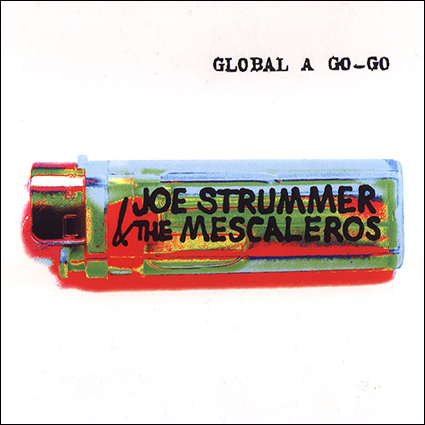
Graded on a Curve:
Joe Strummer &
The Mescaleros,
Global A Go-Go

Are you ready to hear some blaspheming? Good. Here goes. I never much liked the Clash. I know. I might as well be saying I never cared much for the Beatles, which is also true. I always thought the Clash’s revolutionary shtick was a total shuck—so much posturing—and much preferred the wild-eyed nihilism of the Sex Pistols, which may have been posturing as well but was far more amusing. Joe Strummer, Mick Jones, and Company simply left me cold, because they talked the talk but talk is cheap, so cheap that any huckster can engage in it all day long.

But I love Joe Strummer & The Mescaleros, and especially 2002’s Global A Go-Go, the last Mescaleros LP released during Strummer’s lifetime (2003’s Streetcore was released posthumously). Global A Go-Go was a brilliant exercise in genre bending, with explorations grafting various types of world music with good old rock and folk. There’s a lot of exotic percussion and great violin, to say nothing of some gnarly fuzz guitar and all manner of cool beats from here, there, everywhere. Why even Roger Daltrey makes a guest appearance on the title cut, and how cool is that?

Global A Go-Go is great from beginning (the sublimely lovely “Johnny Appleseed,” which features one of the best choruses I’ve ever heard) to end (“Minstrel Boy,” the almost 18-minute take on the Irish folk traditional). Strummer was a sponge, absorbing all the music he heard coming out of the wild mélange of exotic stores and restaurants on the streets he walked down in what he called his “humble neighborhood.” This is especially noteworthy on “Bhindi Bhagee,” a cold dead brilliant shuffle dominated by one wonderful flute and an equally great violin. He’s walking down the road and runs into a third-world stranger looking for mushy beans, and Strummer says he may not be able to find mushy beans but goes into a wonderful and rushed description of the whole universe of foods available in the immigrant-crowded neighborhood he calls home. Meanwhile the percussion makes you want to dance, Strummer welcomes the stranger to his new home, and a very fierce guitar joins in, leaving you both euphoric and spent.

Read More »

Posted in The TVD Storefront | Leave a comment

Graded on a Curve:
Attila, (s/t)

It’s not exactly a state secret, but plenty of people don’t know (and need to know) the horrifying truth; before he turned into the pop superstar who gave us such classics as “Piano Man” and “Uptown Girl,” Billy Joel was in a heavy metal duo called Attila. They released one LP, 1970’s self-titled Attila, and you will frequently find it on lists of the worst albums ever recorded. And small wonder. Attila kinda sound like a retarded Deep Purple. Lots of organ noodling by Joel, you know? And the cover! Billy looks like a New Jersey medieval knight, with hair way down to here and a mustache that is frankly offensive. Oh, and he’s surrounded by dead meat hanging from hooks. I don’t even have to listen to the album when I want a laugh; I just look at the cover.

We all make youthful mistakes, but this one is a doozy. Attila featured Joel on organ and Jon Small on drums, and Joel himself has written it off as “psychedelic bullshit.” But that’s nothing compared to the review written by one AllMusic critic, who opined, “Attila is undoubtedly is the worst album released in the history of rock’n’roll—hell, the history of recorded music itself.” No one, he adds, has ever matched “the colossal stupidity of Attila.” Me, I don’t think it’s that much stupider than most of the works of Emerson, Lake & Palmer, and it’s a tad less pretentious, so I’m inclined to give Attila a break. But make no mistake about it. This is an album so dumb it transcends dumb and almost becomes genius, that is if you look upon it as satire, which unfortunately Joel and Small didn’t. They were serious as a heart attack-ack-ack-ack, which seems impossible when you listen to songs like “Brain Invasion.”

As for Joel, he wisely skedaddled with Small’s wife after the LP’s release, ending the collaboration, and went on to disprove F. Scott Fitzgerald’s adage that there are no second acts in American life. And good thing, too, because if Joel had stuck with Attila, he’d undoubtedly be working in the meat-packing plant where the cover shot was taken. Instead he became a balladeer and sometimes rock’n’roller, and is worth approximately $83 billion dollars. As for Small, he forgave Joel and went on to produce some of Joel’s LPs, as well as the greatest hits of Run-DMC and a concert film by the sad remnants of Lynyrd Skynyrd. The world can be a surprisingly lenient place.

Read More »

Posted in The TVD Storefront | Leave a comment

Graded on a Curve:
Billy Joel,
Piano Man

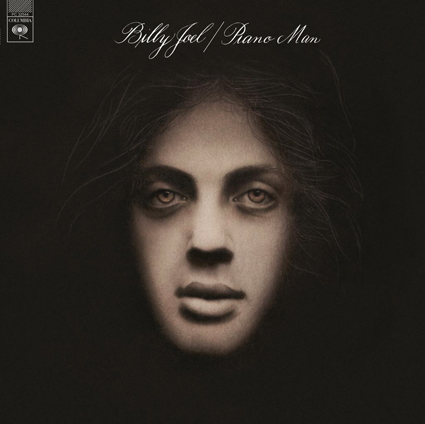
Okay, so the cover is eerie; the youngish Billy Joel’s face, seemingly sinking into an oozing tarpit, makes me want to run. But 1973’s Piano Man includes three tunes I absolutely adore, including “Captain Jack,” one of the greatest pop, er make that pot, songs ever written. It was the album on which Joel, thanks chiefly to the title track, seized the brass ring of stardom and staked his claim as America’s very own Elton John. Not everybody liked it; The Village Voice’s Robert Christgau charged that Joel “poses as the Irving Berlin of narcissistic alienation, puffing up and condescending to the fantasies of fans who spend their lives by the stereo feeling sensitive.” Ouch.

Me, I hear the alienation but not the condescension; on “Piano Man” Joel doesn’t seem to be looking down on the customers in that cocktail lounge so much as feeling empathy for them, and the same goes for the reefer-smoking kid who seeks refuge on his “special island” in “Captain Jack.” We all need something to get us through this world, Joel seems to be saying, and while that’s sad, it’s just the way things are.

Besides, Piano Man is hardly the album to sit around and contemplate your navel to. In fact it’s full of fast numbers, like the chug-a-lugging “Travelin’ Prayer,” which is powered by the banjo of Eric Weissberg and the violin of Billy Armstrong, and the bona fide funky “Ain’t No Crime,” on which Joel once again tells us that getting fucked up may be the only way to survive in this hellhole of a world of ours. And on the similarly funky and calypso-flavored “Worse Comes to Worst” Joel sings, “I’ll get along/I don’t know how,” which is a despairing sentiment if I’ve ever heard one, and really isn’t so far away from Samuel Beckett’s “I can’t go on. I’ll go on.” As for “Somewhere Along the Line” it sounds like an Elton John song, and on it Joel, sitting in a café in Paris sings, “But in the morning there’ll be hell to pay/Somewhere along the line.” There’s no free lunch on this LP, and that’s one of the things I like most about it.

Read More »

Posted in The TVD Storefront | Leave a comment

Graded on a Curve:
Dicks,
Kill from the Heart

I rarely write about overtly political rock bands, primarily because I find politics morally lowering but also because, as Bob Geldof once said, “Music can’t change the world.” Political rock bands tend to preach to the choir, which is a complete waste of breath. If you really want to change the world—and I personally believe it can’t be changed, not really—quit said rock band and start a revolution. Form your own Weather Underground. Bomb stuff and shit.

But if political rock is useless, I still have a soft spot for Dicks, the Texas/San Francisco hardcore band fronted by the great Gary Floyd. He’s written reams of protest songs, but I can relate to them because they so frequently come down to wanting to off the pigs or the KKK or rich bourgeois bastards. It’s never going to happen, although the police have become more of a threat to public safety than ever, but I find listening to Floyd singing about hating the police rejuvenating. He’s all rage and vitriol, as anybody who’s been paying attention to the homicidal antics of police forces around the nation should be. Throw in a great band, and catchy melodies, and it’s no wonder Dicks are the considered one of history’s great hardcore bands.

I wish Floyd were a bit funnier, but he obviously takes his subject matter seriously, which is generally an aesthetic mistake in my Oscar Wilde-influenced world. But once again I’ll make Floyd and Dicks an exception, in part because Floyd was one of the first openly gay humans in the hardcore community and I can’t imagine that was a pleasant experience. As for his hatred of the police, it was a universally held notion in the early days of punk and hardcore, because the po-po treated your average punk rockers the same way they treated all defenseless minorities, namely like shit. So small wonder Floyd reached the boiling point, and his only means of expressing himself was through bile and more bile.

Dicks were formed in Austin, Texas in 1980, and 1983’s Kill from the Heart was their first full length. In addition to Floyd, Dicks included Glen Taylor on guitar as well as bass on “No Nazi’s Friend” and “Marilyn Buck”; Buxf Parrot on bass, backing vocals, and guitar on “No Nazi’s Friend” and “Marilyn Buck”; and Pat Deason on drums. They quickly won hearts and minds in the counterculture with their first single, “Dicks Hate the Police.” They certainly won over the Butthole Surfers, who immortalized their lead singer forever with the great “Gary Floyd.”

Read More »

Posted in The TVD Storefront | Leave a comment

Graded on a Curve:
Black Market Baby,
Coulda… Shoulda… Woulda: The Black Market Baby Collection

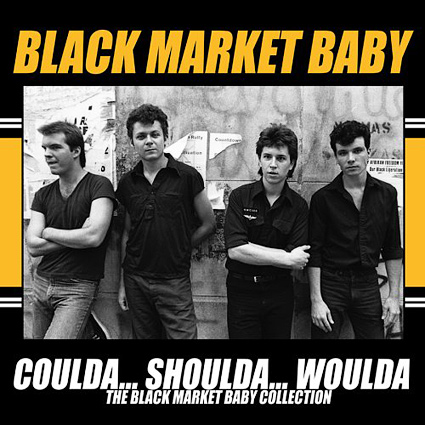
It’s all right there in the title. Washington, DC’s Black Market Baby was a great punk band, but they never went national despite all the fantastic songs they recorded—more than Fear, certainly, and more than my beloved Dictators even!—never received significant airplay, and remain beloved by DC punks but are largely unknown and unacknowledged outside our nation’s capitol. Is that unfair or what?

Ask Ian MacKaye of Minor Threat/ Fugazi/ Dischord fame, and he’ll tell you the answer is no. In fact, the whole notion kind of pisses him off. MacKaye was kind enough to speak with me about Black Market Baby, and he let me know he disagreed with former Government Issue singer John Stabb’s assertion (in his funny and perceptive liner notes to Coulda… Shoulda… Woulda) that Black Market Baby never got “their proper due within the punk music scene.” Said MacKaye, “I contributed a line to the press release of the reissue: ‘They were not underappreciated. They were a great fucking band.’”

A brief history: Black Market Baby was formed in 1980 when singer Boyd Farrell basically looted several other local bands for talent, snatching guitarist Keith Campbell from D. Ceats, bassist Paul Cleary from Snitch and Trenchmouth, and drummer Tommy Carr from the Penetrators. Mike Dolfi replaced Cleary on bass shortly after the band released their first 45, which they followed up with their 1983 debut album, Senseless Offerings.

But personnel changes were rife, they broke up several times only to regroup, and when Black Market Baby finally got around to recording their second LP (with MacKaye producing) in 1986, they couldn’t find a label to release it, although they came close with JEM, a large independent distributor trying to move into the record business. In light of this failure, Black Market Baby decided to call it quits, playing a farewell show in January 1988, only to regroup in 1993 and stick it out through 1997. Fortunately for all of us, in 2006 the Dr. Strange label released Coulda… Shoulda… Woulda…, which offers a grand and relatively comprehensive representation of the work of a great band.
Read More »

Posted in The TVD Storefront | Leave a comment

Graded on a Curve:
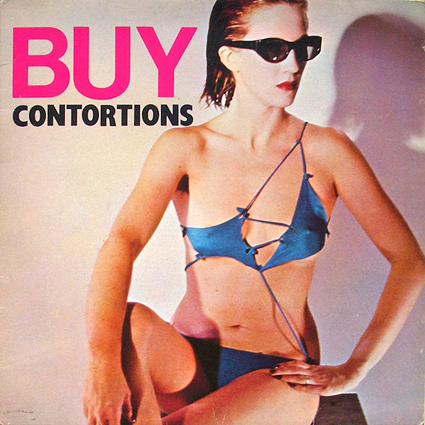
James Chance and the Contortions, Buy

Of all of the bands that came out of New York City’s No Wave music scene, my faves have always been James Chance (aka James White) and the Contortions. The Contortions combined the atonal jazz skronk of Chance’s blurting and squealing alto saxophone with broken-glass-sharp shards of guitar, played atop one very funky bottom. I preferred Chance because you could actually dance to his music, agitated as it was, because in his own special way he never abandoned that James Brown groove—he just tortured it a bit.

How Chance’s sax stands up to that of “serious” jazz players is open to debate; while he briefly studied under the great David Murray, I think of Chance as an outlier, what with his brief tenure in Teenage Jesus and the Jerks, James Brown screams, nihilistic world view, and frequently antagonistic interactions with the very people who paid money to see him play live. These very “punk” attributes certainly separated him from the likes of his free jazz contemporaries, whose style he incorporated into his own playing. But the bottom line, when it comes to comparisons between Chance and the many other purveyors of free jazz is this: Can the guy actually play his horn, of is he just one very ballsy but amateurish poseur?

I asked my brother Jeffrey, a world-renowned free jazz expert, and this is what he said: “Regarding James Chance, I’m not quite sure where to rank him. Sonically, his alto falls neatly in the Luther Thomas/Noah Howard/Albert Ayler range. Chops-wise, I don’t think there’s a big enough pool of recorded material, especially material where he really stretches out, to see how good he really is, or could have been. That said, I think he’s ridiculously interesting, and captivating, as a soloist. What may have started as a joke, or a goof, very well could have morphed into something far greater.

John Lurie, who began in much the same vein, over time developed into an incredibly articulate player/composer. He outgrew the caricature he first presented himself as to become, in the end, a fine altoist whose sound fit hand in glove with his compositional skills. If James Chance ever played/recorded with some of the more jazz-oriented No Wave players, I think he could have done much the same thing. Imagine him sitting in with the Free Lancing-era James Blood Ulmer trio; that could have been the crucible. As it stands, however, you treat him as a joke at your own disservice.”

Read More »

Posted in The TVD Storefront | Leave a comment

Graded on a Curve: Minutemen,
“Project: Mersh”

Well, I can cross another item off my bucket list. I got busted this past weekend, and shoved handcuffed into the backseat of a Pennsylvania State Police car, and it was thrilling in a traumatic way, even more thrilling than the first time I heard the Minutemen’s “Paranoid Chant” off SST’s 1983 compilation LP, The Blasting Concept. I was in Boston where a friend put it on, and I can’t describe the wonderment of that moment, because I’d never heard anything like “Paranoid Chant” before, and it left me hungry for more.

Which is more than I can say about my run in with the state trooper, who said I was driving erratically. I wanted to tell him I always drive erratically, and in fact do everything erratically, but he gave every indication of not having a sense of humor. Why, he even refused my request to take a photo of me in cuffs. I even offered to let him use my cell phone to take it. But back to the Minutemen. They were the quirkiest post-punk band ever, musically speaking, what with their off-kilter time signatures, jagged edges, unusual song structures, and funk and jazz influences.

They had about as much in common with such by-the-numbers hardcore bands as SSD as Miles Davis did with KC and The Sunshine Band. Throw in some really cool lyrics (guitarist and vocalist D. Boon’s frequently addressed political concerns, while bassist and vocalist Mike Watt’s were often opaque and indecipherable “spiels”) and the Minutemen quickly established themselves as the best post-punk trio in business.

I still think their 1984 double LP Double Nickels on the Dime is one of the top five LPs recorded during the eighties, and I would happily review it were it not for the fact that it’s 45 songs long, a feat made possible by the fact that most of its songs clock in at a minute and change. Plenty of people think this is why they called themselves The Minutemen but they’re wrong; Watt has stated that the name was taken from Colonial America’s minutemen militia, or a poke at the 1960’s far-right-fringe militia The Minutemen, or both.

Read More »

Posted in The TVD Storefront | Leave a comment

Graded on a Curve:
Todd Rundgren’s Utopia, Another Live

I’m of two minds when it comes to Todd Rundgren. Part of me hates him, and the other part of simply loathes him. Oh, I’m kidding. I really liked the Todd Rundgren who gave us 1972’s Something/ Anything?. It wasn’t until he formed the synth-heavy prog rock band Utopia that things got ugly. Ugly as in pompous, long-winded (a song off the band’s 1974 debut clocks in at 30:26), and philosophically empty-headed. He became the kind of guy who referred to Ra, the sun god, as a “holy synthesizer.” And speaking of Ra, Utopia’s 1977 LP, none other than Robert Christgau complained that, “The first side is bad, the second unspeakable.” And that’s before he really starts getting insulting.

That said, I have a horrible confession to make. I actually owned Utopia’s 1975 LP Another Live, which followed the band’s self-titled live debut. And not only did I own it, I played it, on my 8-track boom box, while painting houses in Gettysburg, PA in the bicentennial year 1976. It seems inexplicable to me now, given that I would soon despise them, but what I really liked, looking back, were the songs “Heavy Metal Kids” and “Just One Victory,” both of which appeared on Rundgren solo albums before Utopia got around to performing them. My brother and I even painted the legend “Heavy Metal Kids 1976” in silver glam paint on the stone windowsill of one of the houses we painted. I went back to Gettysburg not too long ago, in part to see if it was still there. It wasn’t. Some people just have no respect for history.

Anyway, I decided to gird my loins and listen to Another Live again, just to determine whether it sparked any nostalgic memories. And I’ll be damned, but the LP isn’t bad. Or not nearly as bad as I thought it would be. There are, admittedly, moments of sublime banality, combined with large amounts of futuristic brouhaha, but a few of the songs actually get out of their wheelchairs and dance, which is certainly more than I expected.

Read More »

Posted in The TVD Storefront | Leave a comment
  • SUPPORTING YOUR LOCAL INDIE SHOPS SINCE 2007


  • Alternative Text Alternative Text Alternative Text Alternative Text Alternative Text Alternative Text Alternative Text Alternative Text Alternative Text Alternative Text Alternative Text Alternative Text Alternative Text Alternative Text Alternative Text Alternative Text Alternative Text Alternative Text Alternative Text Alternative Text Alternative Text Alternative Text
  • Alternative Text Alternative Text Alternative Text Alternative Text Alternative Text Alternative Text Alternative Text Alternative Text Alternative Text Alternative Text Alternative Text Alternative Text Alternative Text Alternative Text Alternative Text Alternative Text Alternative Text Alternative Text Alternative Text Alternative Text Alternative Text Alternative Text Alternative Text Alternative Text Alternative Text