Author Archives: Michael H. Little

Graded on a Curve:
Todd Rundgren’s Utopia, Another Live

I’m of two minds when it comes to Todd Rundgren. Part of me hates him, and the other part of simply loathes him. Oh, I’m kidding. I really liked the Todd Rundgren who gave us 1972’s Something/ Anything?. It wasn’t until he formed the synth-heavy prog rock band Utopia that things got ugly. Ugly as in pompous, long-winded (a song off the band’s 1974 debut clocks in at 30:26), and philosophically empty-headed. He became the kind of guy who referred to Ra, the sun god, as a “holy synthesizer.” And speaking of Ra, Utopia’s 1977 LP, none other than Robert Christgau complained that, “The first side is bad, the second unspeakable.” And that’s before he really starts getting insulting.

That said, I have a horrible confession to make. I actually owned Utopia’s 1975 LP Another Live, which followed the band’s self-titled live debut. And not only did I own it, I played it, on my 8-track boom box, while painting houses in Gettysburg, PA in the bicentennial year 1976. It seems inexplicable to me now, given that I would soon despise them, but what I really liked, looking back, were the songs “Heavy Metal Kids” and “Just One Victory,” both of which appeared on Rundgren solo albums before Utopia got around to performing them. My brother and I even painted the legend “Heavy Metal Kids 1976” in silver glam paint on the stone windowsill of one of the houses we painted. I went back to Gettysburg not too long ago, in part to see if it was still there. It wasn’t. Some people just have no respect for history.

Anyway, I decided to gird my loins and listen to Another Live again, just to determine whether it sparked any nostalgic memories. And I’ll be damned, but the LP isn’t bad. Or not nearly as bad as I thought it would be. There are, admittedly, moments of sublime banality, combined with large amounts of futuristic brouhaha, but a few of the songs actually get out of their wheelchairs and dance, which is certainly more than I expected.


Read More »

Posted in The TVD Storefront | Leave a comment

Graded on a Curve:
Todd Rundgren,
Something/Anything?

The words “studio genius” get flung about willy-nilly, but Todd Rundgren, the guy who gave us “Hello, It’s Me,” is the real thing. Oh, I know, his prog explorations with Utopia are largely unlistenable, but I would ask you to look at Exhibit A, the 1972 double LP Something/Anything?, as proof of his, er, geniusitude. It was one of the greatest gifts (along with Mott the Hoople’s All the Young Dudes and Rod Stewart’s Every Picture Tells a Story) my older brother bequeathed to me when he took off to see the country in the mid-seventies, and I loved (and played) it to death.

Studio savant that he is, Rundgren recorded three of the LP’s four sides all by himself, and brought in a gaggle of studio musicians, including Rick Derringer, Randy and Mike Brecker, Hunt and Tony Sales, and Ben Keith to record side four. All four sides have titles, which we needn’t worry about, and side four purports to be a “pop operetta,” to which I can only say okay, Todd, it’s your LP. The critic Robert Christgau said of Something/Anything?, “I don’t trust double albums” before changing tracks and saying, “But this has the feel of a pop masterpiece, and feel counts.” He’s right about double albums: some of the tunes on Something/Anything? do nothing for me and have the distinctive smell of filler. That said, there are more than enough timeless tunes on Something/Anything? to justify that other overused word, “masterpiece.”

Stirring ballads (“It Wouldn’t Have Made Any Difference”), dizzyingly marvelous power pop numbers ala The Raspberries (“Couldn’t I Just Tell You”), flat-out screamers (“Some Folks Is Ever Whiter Than Me”), great horn-driven hard rockers (“Slut”), Steely Dan soundalikes (“Piss Aaron”), utterly sublime pop confections (“Hello, It’s Me,” “I Saw the Light”) and oddball novelty tunes that nevertheless rock (“Wolfman Jack”)—that “anything” in the album’s title is Todd’s way of telling us he can do it all, and does. Why, I didn’t even mention his soulful turns on the piano (“I Went to the Mirror,” “Torch Song”), maniacal metal contraptions (“Little Red Lights,” the big-hooked “Black Maria”), big, bad gospel- AND Steely Dan-tinged tunes (“Dust in the Wind”), ironic Harry Nilsson numbers (the happy-go-lucky sad song, “You Left Me Sore”), and brief lo-fi studio jams (“Overture—My Roots: Money (That’s What I Want)/Messin’ with the Kid”).

Read More »

Posted in The TVD Storefront | 1 Comment

Graded on a Curve: Tragedy, We Rock
Sweet Balls and Can Do No Wrong (All Metal Tribute to the Bee Gees)

If you’re old enough to remember the disco era, only one thing was for sure; the Bee Gees were on the disco side, and metal was on the other, and never the twain shall meet. But in this “world of fools breaking us down/When they all should let us be,” the miraculous has occurred. The NYC metal band Tragedy has fearlessly crossed the great divide, offering up metallic versions of the Brothers Gibb’s disco classics, and making possible a disco-metal rapprochement that has been both decades overdue and seemingly impossible.
Tragedy exploded upon the scene, causing disco balls to implode and Disco Mountain to collapse in a deadly avalanche with 2008’s We Rock Sweet Balls and Can Do No Wrong (All Metal Tribute to the Bee Gees). Sacrilegious? For damn sure. It is said that Barry Gibb fell into a coma caused by Saturday Night Fever (the first case in over 30 years) upon first hearing the record, and that when he came out of said coma his first act was to seize a scalpel and rush from the hospital, his Aussie ass showing through his hospital gown for all to see, in a search and destroy mission for the godless metal apostates.

But Tragedy were onto something. The translation from disco to metal worked, and worked well, with some songs (“Stayin’ Alive”) sounding like revved up and metal-plated reproductions of their originals, while on other tracks they take liberties. But all of their versions work, and do indeed rock balls, thanks to the lead vocals, keyboards, and lead cowbell of Disco Mountain Man; the lead vocals, lead back-up vocals, and lead lead (sic) guitar of Mo’ Royce Peterson; the bass, lead vocals, and backing vocals of Andy Gibbous Waning; the lead guitar and backing vocals of Garry Bibb; the drums and backing vocals of The Lord Gibbeth; and the talents of Lance, towel boy and complete idiot.

Read More »

Posted in The TVD Storefront | Leave a comment

Graded on a Curve: Saturday Night Fever: The Original Movie Sound Track

Disco, that bugbear of close-minded rock purists (including yours truly, I’m sorry to admit) everywhere, was perhaps the biggest cultural phenomenon to come along since the Beatles. One minute the earth was turning around the sun, and the next it was turning around a disco glitter ball that cast shafts of multi-colored light over a brave new world, one where people in all-white suits with foot-long lapels did dances like the Hustle to a music that combined elements of funk, soul, pop, and salsa. And who were the kings of this new and whirling universe? Why, that would be the Bee Gees, they of the thick chest pelts and positively impossible vocal ranges.

Disco Mania reached its apotheosis with the 1977 film Saturday Night Fever, which in addition to turning John Travolta into a superstar expanded the audience for the dance-based genre beyond its pioneering gay, African-American, and Latino bases. Saturday Night Fever became Thee Official Soundtrack of disco people of all colors and sexual orientations everywhere, as its 15x platinum certification amply demonstrates. The double LP featured 6 contributions by the Bee Gees and 11 contributions by others that ranged from the great (The Trammps’ “Disco Inferno”) to the unspeakable (David Shire’s three mostly orchestral offerings, including “Night on Disco Mountain,” which with a title like that should have been great, but isn’t).

In short, the LP is a mixed affair, short on songs by such disco immortals as Donna Summer, Gloria Gaynor, the Hues Corporation, Carl “Kung Fu Fighting” Douglas, Barry White, Van “The Hustle” McCoy, the Jackson 5, and LaBelle, and long on the type of filler (Shire again, along with Ralph McDonald’s “Calypso Breakdown” and Walter Murphy’s abominable “A Fifth of Beethoven”) you often find on soundtrack LPs. I mean, why does the LP include only one song by KC & the Sunshine Band? And where the hell are ABBA? And why, oh why, does Saturday Night Fever include only ONE song by a woman?

Read More »

Posted in The TVD Storefront | Leave a comment

Graded on a Curve:
Elton John,
17-11-70

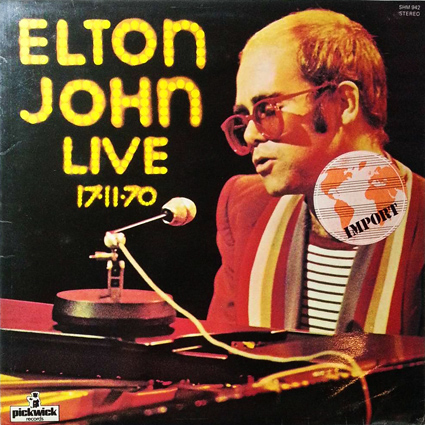
Everything you need (but probably don’t) know about the pre-Captain Fantastic Elton John is right here on 1971’s 17-11-70, the live radio concert recorded before he became a household name. The album includes John, bassist Dee Murray, and drummer Nigel Olsson performing a bunch of excellent songs you’ve likely never heard of, and the ferociousness of their performance is illustrated by the fact that John cut his hand during the performance, and by show’s end the keyboards were covered in blood. Who would have thought that the pudgy and balding Sir Elton, who went on to become the ultimate caricature of a pop star on the basis of a lot of great but lightweight tunes, had it in him?

Well, I did, but I’ve loved this album since I was a teen, because on it John sings and shouts, and cries and moans, while doing things on the piano that made it possible for the trio to do without a guitarist. In short, he rocks and he rolls, and plays it like he means it; the glam pop camp—nobody ever took him as seriously as those Glam Gods Bowie and Bolan—he would come to exemplify, while I love it, is nowhere in sight.
John himself would later declare this was his favorite live concert, and it’s the only live John show to highlight the sound of his band before they added guitarist Davey Johnstone. The actual concert was longer, and this “artifact” was released only to counter the bootlegs of the show that were flooding the market. I’m reviewing the 1996 edition of the LP, which changed the order of the songs and added “Amoreena” as a bonus track. Original producer Gus Dudgeon also remixed the tracks, adding some echo and other effects.

17-11-70 includes a version of the Rolling Stones’ “Honky Tonk Women” that features some acapella vocals from the group at the beginning, some great vocals by John (including a wonderful “Whoo!), and one helluva piano solo that demonstrates without a doubt that John was aware of that instrument’s percussive potentialities. I love the way the band goes into double time at the end, just as I love his piano antics on “Bad Side of the Moon,” a bona fide rocker that highlights the drumming of Olsson and John’s ability to hit the notes vocally, whether they be low or high. And the song goes out on a wild note. As for “Amoreena,” it’s a rocker too, with a great chorus in which Elton’s every word cuts like a knife.

Read More »

Posted in The TVD Storefront | Leave a comment

Graded on a Curve: Bauhaus,
In the Flat Field

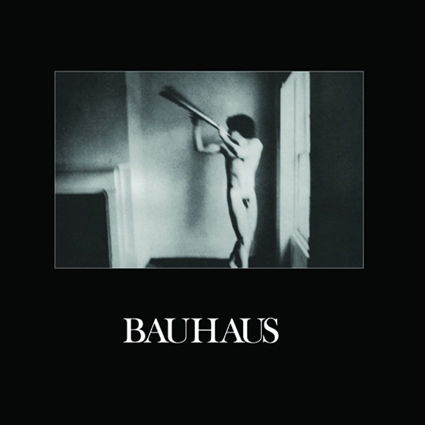
Sometimes I’m ashamed for my fellow music critics. Take their rude treatment of Bauhaus’ 1980 debut, In the Flat Field. An NME writer described the LP as “nine meaningless moans and flails bereft of even the most cursory contour of interest,” while a Sounds writer dismissed the LP for having “No songs. Just tracks (ugh). Too priggish and conceited,” before writing the LP off as “coldly conceited.”

I’m no Goth fan because I have a pulse, but I think the writers above are idiots. I will concede that In the Flat Field is cold, but I also happen to find it brilliant—one of the finest LPs of 1980. Clamorous and loud, it’s a wonderful example of the sonic possibilities of carefully controlled noise, and its wild sounds and angular riffs provide the perfect backdrop for the chilly vocals of Peter Murphy. Take “Dive.” Daniel Ash’s guitar playing and saxophone work are brilliantly crisp and menacing, the tune proceeds at a breakneck pace, and Murphy’s vocals are a marvel; he stutters, shouts, does it all. Or take LP opener “Double Dare.” It commences with some heavily fuzzed out riffs, then the drums kick in, and this is metal, people. Murphy is as his dark best, producing nonsense noises when he isn’t shouting, the rhythm section is heavy as Flipper, and what we have here is a drone rocker as good as any by No Trend.

The title cut is a racing rumble of distorted guitar, with great percussion and Murphy singing about who knows what (“black matted lace of pregnant cows”???), although the chorus is clear enough: “I do get bored, I get bored/In the flat field.” My recommendation is to ignore the lyrics about “spunge stained sheets” and hone in on Ash’s shredding sheets of guitar noise, the wonderful percussion, and Murphy’s vocals, which climb to an apocalyptic pitch while Ash’s guitar howls and howls. “A God in an Alcove” opens with some tentative guitar and Murphy sounding like he’s been gagged, before the song’s angular riff takes over. Ash’s guitar is ominous, someone joins Murphy on vocals, and together they make a wonderful noise, and then the song takes flight, 100 mph in a 55 zone. “Silly,” repeats Murphy, before the song’s close, but there’s nothing silly about the tune, which rocks.

Read More »

Posted in The TVD Storefront | Leave a comment

Graded on a Curve:
Ted Nugent,
Super Hits

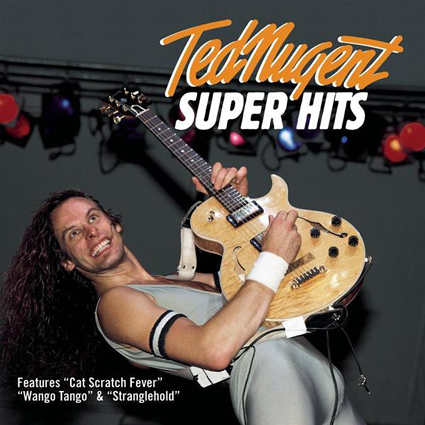
Sure, he’s a gun control advocate’s worst nightmare, and his music has always leaned heavily towards the stupid, but I happen to like both guns and stupid—as I’ve noted before, during my formative years my younger brother and I used to get drunk and take our dad’s .22 cat rifle to the basement of the house, where we’d fire it at the brick wall maybe 8 feet away in a game we called “dodge the ricochet.” So I can sort of relate to Ted Nugent, although you’ll never catch me shooting deer, moose, or darling little chipmunks, or whatever else happens to be in season at the moment, with a bazooka.

Me, I prefer Nugent’s unique brand of stupid to the Kiss brand of stupid, or any other brand of stupid (Grand Funk!) that comes to mind. That said, I can only handle it in small quantities, which is what makes 1998’s Super Hits so nice. Ten songs, all of them stump dumb in an addictive sort of way; who needs, or even wants, anything more? Granted, both the sublimely dim Masters and Johnson primers “Yank Me Crank Me” and “Wang Dang Sweet Poontang” are MIA, but we all have to make sacrifices for brevity’s sake.

You can say what you want about crazy Ted, but I love the sound of his guitar, and the fact that his songs don’t mess about: most of them are jacked up on crank, even if Ted the anti-drug advocate isn’t. And he knows how to write a decent melody, too, which is ace. Why, I would almost go so far as to say I don’t see the downside, except that Ted is, well, an asshole. But he’s asshole with wango tango, capiche? As is evidenced once again by the generically titled Super Hits, which covers must of the bases, although it does include a few tunes that are both dumb and lame.

Read More »

Posted in The TVD Storefront | Leave a comment

Graded on a Curve:
Bob Weir,
Blue Mountain

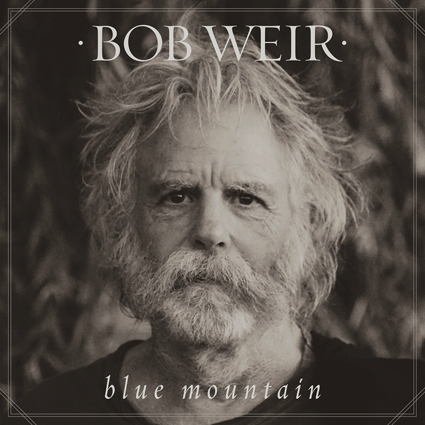
Well I’ll be damned. I didn’t think Bob Weir, the eternal boy howdy of the Grateful Dead, had it in him. After decades of coasting—his last great solo offering, 1972’s Ace, was released a shocking 44 years ago—here comes Weir, looking as weather worn as Grizzly Adams in his white beard, or like the great D.B. Cooper finally emerging from the Washington state wilderness, with an album that is not just good, but downright excellent. It just goes to show you—never count a fellow out until he’s six feet underground, and for at least three days at that.

2016’s Blue Mountain is an album of “cowboy songs,” according to Weir’s collaborator Josh Ritter, and was inspired, according to Weir, by his days as a 15-year-old ranch hand in Wyoming. But this is not a collection of other people’s music; Weir had a hand in writing the music for every song, while Ritter both contributed to the music and penned the better part of the lyrics. And so far as the descriptions of it as “campfire music” go I disagree; many of these songs are far too lush and musically sophisticated to cook weenies on a stick to. But two things they are for sure: beautiful and thoughtful. They demonstrate that the eternal Peter Pan of the Dead has finally grown up and gotten wise, and has honed his songwriting skills in the process. Compared to his previous solo outing, 1978’s Heaven Help the Fool, which utilized lots of studio hacks and frankly sucked like an industrial vacuum cleaner, Blue Mountain is a cool breath of fresh Wyoming air.

Blue Mountain is the work of a man who has finally come face to face with his own mortality, as Weir demonstrates on the elegiac and lovely album closer “One More River to Cross,” in which he acknowledges he’s tired but nearing that final home in the bye-and-bye. And the very rhythmic “Lay My Lily Down” is an unreconstructed death ballad complete with rattling chains, and has Weir singing, “Dig a hole, dig a hole in the meadow/Dig a hole in the cold, cold ground/Dig a hole, dig a hole in the meadow/To lay my Lily down.” Weir, whose vocals during the Grateful Dead years generally left me cold because, well, he never managed to make the words he was singing sound convincing, sounds like the real thing here, just as he does on the great “Only a River,” a somber but utterly sublime paean to the Shenandoah River. “Only a river gonna make things right,” he sings, longing to see that lovely river once more.

Read More »

Posted in The TVD Storefront | Leave a comment

Graded on a Curve: Jayne/Wayne County and the Electric Chairs, The Best of Jayne/Wayne County and the Electric Chairs

When it comes to the first wave of punk, Wayne (and later Jayne) County and the Electric Chairs are often sadly overlooked. And this despite such raunch’n’roll classics as “Toilet Love,” “Fuck Off,” and “Cream in My Jeans.” County, a Georgia transgender woman, combined glam punk with the sheer camp outrage of New York City’s Theater of the Ridiculous, and the results were both hilarious and irresistible. Yet none of the band’s albums were released in the United States, an inexplicable omission unless one concludes that U.S. record execs found County and the Electric Chairs’ songs simply too sleazy to touch.

County and the Electric Chairs were the biggest proponents of the trash rock aesthetic this side of the New York Dolls, but they took things much, much farther than the Dolls ever did. County might come on stage wearing a plastic vagina with straw pubic hair, and punk photographer Roberta Bayley recalls the time County, having decided (amongst many others, including Bayley) that Patti Smith’s “I’m the Second Coming of Arthur Rimbaud” shtick was so much pretentious horseshit, “did a big parody of her where he came on and he had a black wig and a white shirt, a tie and he did this whole thing about following one of Jim Morrison’s pubic hairs down the sewers of Paris.” If Jayne had never done anything but that, I’d still love her.

Subtle County wasn’t, but the Electric Chairs also released such bona fide trash-free classics as the celebratory “Max’s Kansas City,” the transgender anthem “Man Enough to Be a Woman,” and the most delirious song about wanting to have a number one hit since the Raspberries’ “Overnight Sensation” in “Trying to Get on the Radio.” And the best way to listen to the multi-faceted County is to pick up a copy of 1982’s Best of Jayne/Wayne County and the Electric Chairs, which includes all of the above songs as well as such searing rockers as “Bad in Bed,” “Hot Blood,” and “Night Time,” to say nothing of the lovely “Eddie & Sheena” and the Transformer-flavored “Midnight Pal.”

Read More »

Posted in The TVD Storefront | 2 Comments

Graded on a Curve: Blood, Sweat & Tears, S/T

Dear Reader: I would never lie to you. I hate Blood, Sweat & Tears. I have always hated Blood, Sweat & Tears. I will always hate Blood, Sweat & Tears. With their big horn sound they always sounded like a Las Vegas lounge act to me, and the truth is they were a Vegas lounge act, back at the turn of the 1970s when such an act bordered on heresy and constituted a crass betrayal of every single tenet of the counterculture. It didn’t help that agreed to go on a State Department-sponsored tour of Eastern Europe, a move that destroyed whatever credibility they had with your average government-hating hippie.

No, I do not like them. And perhaps I should recuse myself from writing about them for that reason. But I refuse. I will have my unreconstructed say, because I believe that the critic’s sole task is not just to praise the music he loves, but also to sound the alarm whenever some truly suck-ass jive comes his way. For this reason I will damn BS&T with faint praise and praise them for providing me with the occasional callow chortle. And I’m not alone. Speaking of the band’s foghorn of a vocalist, the Village Voice’s Robert Christgau wrote, “Just figured out how David Clayton-Thomas learned vocal projection: by belching. That’s why when he gets really excited he sounds as if he’s about to throw up. But it’s only part of the reason he gets me so excited I feel like I’m about to throw up.” I agree totally with Christgau about the throwing up part.

Originally formed by the famed Al Kooper and others as a “brass-rock” band, BS&T released their debut, 1968’s Child Is Father to the Man, after which Kooper quit, and was replaced on lead vocals by Clayton-Thomas. That same year “the Sweat” (no one has ever called them this but me) released their eponymous sophomore LP, and hit pop gold. You couldn’t go anywhere without hearing “Spinning Wheel,” “And When I Die,” “God Bless the Child,” or “You’ve Made Me So Very Happy.” The LP was not just a jazz-rock monstrosity; it also included three heaping helpings of prog rock, including the interminable “Blues, Pt. 2” (an incredibly awful fusion of brass-rock, prog rock, jazz, and blues that comes complete with a drum solo, a brief detour into Cream’s “Sunshine of Your Love,” and, to its credit, one very decent sax solo) and two brief takes on the work of Erik Satie.

Read More »

Posted in The TVD Storefront | 1 Comment

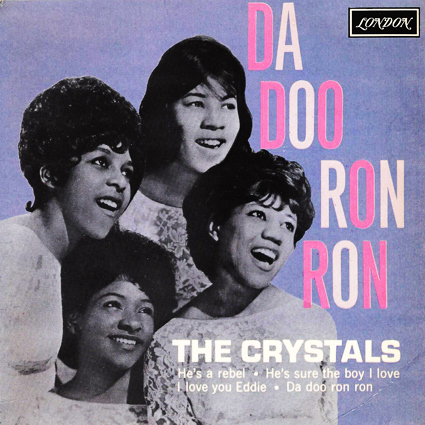
Graded on a Curve:
The Crystals,
Da Doo Ron Ron

Ah, The Crystals—their best songs are every bit as wonderful as their career was checkered by the evil machinations of studio Wunderkind Phil Spector, who made them the first act to record a single on his nascent Phillie Records label. Spector first saddled them with a song so offensive—Carole King and Gerry Goffin’s anthem to masochistic female approval of the physical abuse of women, “He Hit Me (And It Felt Like a Kiss”)—that it almost sidetracked their career at its get-go.

He then proceeded to utilize a group of replacement singers (Darlene Love and the Blossoms) to record such immortal “Crystals” tunes as “He’s a Rebel” and “He’s Sure the Boy I Love.” Finally, he added insult to injury by shifting his attention to a new girl group, the Ronettes, and went so far as to include four songs actually recorded by the Ronettes on the Crystals’ 1963 “best of” LP, The Crystals Sing the Greatest Hits, Volume 1.

Yet despite these dictatorial and confusing antics by Spector, the Crystals remain one of the most beloved girl groups of the years just prior to the British Invasion. Why? Because songs like “Then He Kissed Me” and “Da Doo Ron Ron” are both brilliant and timeless; why just the other day I did a crazy dance in the supermarket, attracting the attention of numerous shoppers, when “Then He Kissed Me” came on over the store’s loudspeakers.

But returning to the theme of exactly who recorded what songs attributed to the Crystals, anyone interested soon finds oneself tangled in a byzantine world of confusion. Take 2001’s Da Doo Ron Ron, a compilation of the band’s greatest hits. At first its ten songs seem to comprise an admirable distillation of only the Crystals’ finest work; you won’t find the “The Frankenstein Twist” or any of the Ronettes’ novelty songs credited to the Crystals (e.g., “Hot Pastrami,” “The Wah Watusi”) on it.

Read More »

Posted in The TVD Storefront | Leave a comment

Graded on a Curve:
David Lee Roth,
Eat ‘Em and Smile

David Lee Roth was Thee Consummate Showman of the Hair Metal era. With Roth you got the whole shmeer; a natural-born ham and song and dance man, he would gladly have set himself alight and turned flaming cartwheels over the squat Michael Anthony if that’s what it took to keep Diamond Dave in the limelight. Not for nothing did the one-man parade once say, “The world’s a stage, and I want the brightest spot.”

Diamond Dave’s fashion sense may have been deplorable (I’m looking at a photo of him wearing leopard-print spandex leotards and a chest-pelt-revealing v-neck t-shirt complete with—yes, the t-shirt—suspenders), but he more than made up for it by being rock’s preeminent komiker, or comedian. Forever “on,” and with a touch of the old-school vaudevillian in him, you got the sense Roth would have been just as comfortable playing the Borscht Belt as he was playing rock’n’roll. This made him a refreshing anomaly in a genre that depleted the world’s stockpile of hair spray yet still took itself very, very seriously. Thanks to David “I don’t feel tardy” Roth, Van Halen wasn’t just the premier hair metal band—or metal band, period, for that matter—of its time; it was the funniest one (“Have you seen Junior’s grades?”) as well.

And I suppose still is, since Roth rejoined Van Halen in 2006—21 years after departing in 1985, unhappy with the band’s pop turn, adoption of keyboards and synthesizers, and increasingly “morose” (his term) sound. During the interim the Dean Martin of Rock (what else are you going to call a guy who once quipped, “I used to jog but the ice cubes kept falling out my glass”?) released a series of increasingly less successful—grunge killed the vaudeville star—solo albums; put together a Las Vegas lounge act complete with a star-studded brass band and exotic dancers (whom Roth described as “so sweet, I bet they shit sugar”); hosted a radio show; and even worked a stint as an NYC EMT. I don’t think this was a poverty move; he probably just wanted to know how to resuscitate himself in the event of a coke-induced heart attack.

Read More »

Posted in The TVD Storefront | Leave a comment

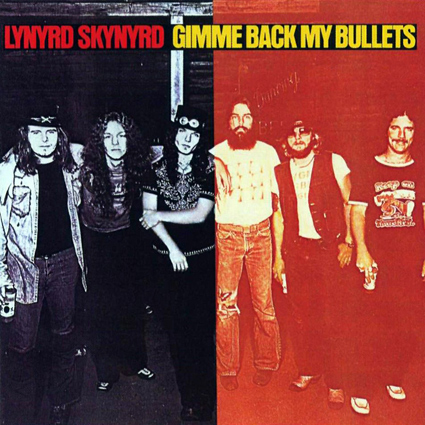
Graded on a Curve: Lynyrd Skynyrd,
Gimme Back My Bullets

Tomorrow, October 20th will mark the 39th anniversary of perhaps the most tragic event in rock history; to wit, the one that deprived us of the redneck genius of one Ronnie Van Zant, just three days after Lynyrd Skynyrd released 1977’s Street Survivors. The twilight crash, which occurred in a remote forest outside McComb, Mississippi as the band was flying from Greensboro, South Carolina to Baton Rouge, Louisiana, also took the lives of Skynyrd guitarist Steve Gaines and his sister Cassie Gaines, a backing vocalist for the band, as well as the lives of the pilots and assistant road manager Dean Kilpatrick.

Lynyrd Skynyrd lives on, not so much in the form of the band bearing their name that still roams the land playing meat and potatoes rock (minus the meat) for the faithful hungry enough to settle for poor seconds, but on their records, which sound just as fresh today as they did back in the seventies. People who write off Lynyrd Skynyrd as being just a band of dumb rednecks should remember that southern man don’t need them ‘round anyhow, and would also be well advised to remember this shocking truth: Lynyrd Skynyrd was both a populist sensation and a critic’s band. The Village Voice’s Robert Christgau never tired of singing their praises, and Greil Marcus ranked their demise as the No. 1 rock tragedy of the 1970s, the decade that cost us Janis, Jimi, and Jim, to say nothing of Elvis. As Christgau once said of Van Zant: “Dumb he ain’t.”

Take the title track of 1976’s Gimme Back My Bullets, on which the guy who hated Saturday night specials seems to be demanding his ammunition back. It’s a ferocious track, and Ronnie sounds like an ornery advocate for the National Rifle Association, that is until you learn he wasn’t referring to real bullets, but to the bullets that Billboard magazine used to put before chart entries for songs that sold a million copies. As for the guitar work it’s every bit as ornery as Ronnie himself, and the track is a classic. The same goes for the relatively overlooked “Every Mother’s Son,” a lovely tune with a great chorus and a couple of guitar solos that will make you forget all about Ed King, the Yankee-born Skynyrd guitarist who jumped ship after 1975’s Nuthin’ Fancy. Hell, J. Mascis liked “Every Mother’s Son” so much he recorded a cover over it.

Read More »

Posted in The TVD Storefront | 1 Comment

Graded on a Curve:
The Rolling Stones,
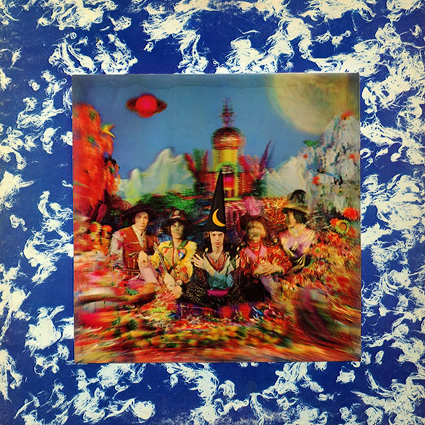
Their Satanic Majesties Request

Few albums have been as vilified or written off as colossal missteps as The Rolling Stones’ Their Satanic Majesties Request. There’s Taylor Swift Sings the Songs of Captain Beefheart, and Arnold Schwarzenegger Sings Barbra Streisand, but neither of these albums can hold a candle to the Stone’s 1967 answer to the Beatles’ acid-influenced Sgt. Pepper’s Lonely Hearts Club Band. Their Satanic Majesties Request was quickly dismissed as a shameless attempt to keep up with the psychedelic Jones’s, and the critical blowback was so negative that the Stones promptly hopped to it and followed Satanic Majesties with Beggars Banquet, an LP so down to earth a filthy toilet graces its cover.

Aside from “She’s a Rainbow” and “2000 Light Years from Home” you’re highly unlikely to hear any of Satanic Majesties’ songs anywhere, and the Stones themselves haven’t had much good to say about it over the years. Keith Richards called it “a load of crap,” while Mick Jagger said “there’s a lot of rubbish” on it. But it has its fair share of cultists, whole heaps of them in fact, and they love it to death. And their waxing enthusiastic over the LP finally got the better of me. Just how bad could it be, after all?

Not bad at all is the short answer. Strange, far stranger than Sgt. Pepper for that matter, Their Satanic Majesties Request has more than its fair share of fine moments, along with a few dubious tunes that don’t quite make the grade. Me, I’ll take it over Sgt. Pepper any day, and I think the Stones should be commended for putting out an LP that was even more experimental than its Beatles counterpart. Mick and the boys took real chances on the LP, and if they didn’t always work, at least the Stones tried.

Read More »

Posted in The TVD Storefront | 1 Comment

Graded on a Curve:
Public Image Ltd.,
Second Edition

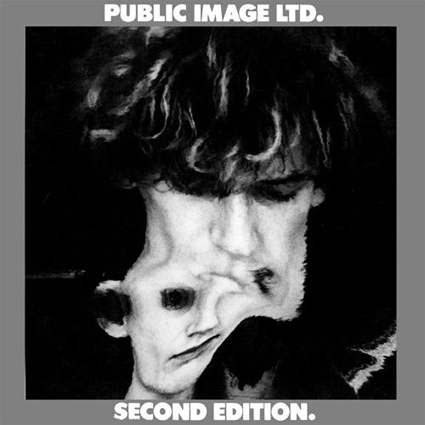
Okay, so in everybody’s life there comes a day so bleak that not even Joy Division can do it justice. And on that day there’s only one recourse: to crank up Public Image Ltd’s Second Edition. John Lydon’s post-Sex Pistols band’s sophomore release, also known as Metal Box because it initially saw light as a metal 16mm film canister containing three 12” 45rpm records in 1979, was re-issued in 1980 as a double LP. But regardless of format it was designed to brutalize the listener with music that was as remorselessly and relentlessly down-in-the-mouth as it was utterly hypnotizing, thanks to Lydon’s deranged vocal stylings, Jah Wobble’s loping and rhythmic dub-inspired bass, and Keith Levene’s splintered and utterly unique guitar riffs. Me, I find it soothing when I’ve reached the end of my tether; it lets me know I’m not alone.

Lydon was wise to abandon punk rock; he’d said everything that needed saying in that genre and knew damn well it was a dead end. And it’s a credit to his musical knowledge—which was far more wide-ranging than anyone would have given him credit for—that he went the avant-garde dub route. Sure, the Sex Pistols posed an existential threat to everything that had come before them; but Second Edition is downright SCARY at times, and sounds every bit as demented as the Sex Pistols did menacing. Plus you could dance to it, as the band’s legendary (and hilarious) performance on American Bandstand proved.

The “death disco” (the alternative title of the song “Swan Lake”) of Second Edition marked a radical move away from the (relatively speaking) more conventional punk of 1978’s First Issue, and proved beyond the shadow of a doubt that Lydon was not interested in making music for the masses. The band may have released two singles from the LP, but neither made any commercial concessions, and were completely representative of what critic Steve Chick described as the “cold dank, unforgiving, subterranean” nature of Second Edition in general. With the exception of “Radio 4,” a symphonic piece that is lovely really, and “Socialist,” a throbbing and fast paced instrumental that won’t give you the shivers, Second Edition never gives you a break… it wants you to suck you down into a tarpit of sound, and sink, and sink, you do.

Read More »

Posted in The TVD Storefront | Leave a comment
  • SUPPORTING YOUR LOCAL INDIE SHOPS SINCE 2007


  • Alternative Text Alternative Text Alternative Text Alternative Text Alternative Text Alternative Text Alternative Text Alternative Text Alternative Text Alternative Text Alternative Text Alternative Text Alternative Text Alternative Text Alternative Text Alternative Text Alternative Text Alternative Text Alternative Text Alternative Text Alternative Text Alternative Text
  • Alternative Text Alternative Text Alternative Text Alternative Text Alternative Text Alternative Text Alternative Text Alternative Text Alternative Text Alternative Text Alternative Text Alternative Text Alternative Text Alternative Text Alternative Text Alternative Text Alternative Text Alternative Text Alternative Text Alternative Text Alternative Text Alternative Text Alternative Text Alternative Text Alternative Text