 Part four of the TVD Record Store Club’s look at the new and reissued releases—and more—in shops for Record Store Day this Saturday, April 13, 2019. Part one is here, part two is here, and part three is here.
 NEW RELEASE PICKS: Elkhorn, Sun Cycle & Elk Jam (Feeding Tube) Elkhorn is the guitar duo of Drew Gardner on Fender Telecaster and Jesse Sheppard on 12-string acoustic; they have three prior releases out, starting with their self-titled 2016 effort on Beyond Beyond is Beyond, and now here’s two more, released simultaneously but separately via one of the current scene’s best (and most prolific) small labels. If you’re excited for some electric-acoustic duo interplay, that’s exactly what you’ll get on Elkhorn’s prior records, but here they are joined by Willie Lane on third guitar and Ryan Jewell on drums and tabla, the impulse to add players first documented last November on CDR (in an edition of 50 and still available digitally). The presence of supplementary hands is felt here, but especially so on Elk Jam.
 On Sun Cycle, the duo interplay is still very much discernible, with Sheppard coming from an American Primitive place and Gardner exploring lysergic plains reminiscent at times of raga rock and unsurprisingly ’60s San Fran. Gardner’s background in avant-jazz (having played with John Tchicai and Sabir Mateen) combines well with Sheppard’s dexterous fingerpicking to ensure that the outward-bound travels never meander or for that matter simply spin wheels while navigating out of a psychedelic rut. The lack of vocals is also a major plus. The Bay Area vibe is particularly strong on Elk Jam, with the title of the LP inspiring thoughts of Elkhorn releasing it as a free album a la Moby Grape’s Grape Jam. They didn’t, but I can’t imagine psych fans being the slightest bit disappointed after dropping cash for both of these. A/ A
 Reese McHenry, No Dados (Suah Sounds) Lovers of gal-throated hard-edged garage-based belting should step right up to this one. Chapel Hill, NC-based McHenry’s second album after prior experience with the Dirty Little Healers delivers a powerful kick, but it’s also an inspirational story, as it documents McHenry’s return to the musical path after being diagnosed with Atrial Fibrillation and suffering a near-fatal stroke (followed by a series of smaller ones). It was a tough road back, but Bad Girl, cut with backing from Spider Bags, solidified her return, and No Dados extends the positive trajectory. Her band this time is out is Raleigh’s Drag Sounds, who tear it up like experts, but it’s McHenry’s show all the way; compared to Janis J., contempos Shilpa Ray and Neko Case also came to mind, and that’s wonderful. A
 REISSUE/ARCHIVAL PICK: Griot Galaxy, Kins (Third Man) This gleaming nugget of underheard jazz history intertwines some sturdy threads. They feature a three-sax lineup of Faruq Z. Bey (tenor and alto), Anthony Holland (alto and soprano), and David McMurray (all three), this configuration bringing the World Saxophone Quartet to mind. But with bassist Jaribu Shahid and drummer Tani Tabbal on hand, there are aspects reinforcing the influence of the Art Ensemble of Chicago and Sun Ra. Additionally, they dish some killer post-Ornette free-bop, and as Shahid plays electric as well as acoustic bass, unusually appealing jazz funk. If you’re thinking Kins is all over the place stylistically, no. If the seed of Afrofuturism is planted in your mind, that’s a most emphatic yes. Altogether delightful. A
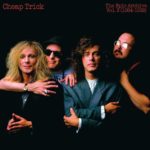 Cheap Trick The Epic Archive Vol. 3 (1984-1992) (Real Gone) I’m gonna make it plain. The music collected here is not the music I think of when I think of Cheap Trick, and I do think of them, if not daily, then with some regularity, for when they were on top of their game, they were a great fucking band. This is not to say that some of this doesn’t jog the memory banks. Of course, “The Flame” does (I’d rather it didn’t, though it’s not a bad song), and so does their association with Up the Creek, a 1984 raunch comedy, essentially a pale imitation of Animal House. I recall Cheap Trick’s theme song being the best thing about it (I mean I guess so; it’s been a while). Overall, this is a mixed bag of ups (they seem to be having a good time) and downs (a few songs are near dud-like). Kinda like life in general. B
 NEW RELEASE PICKS: Inter Arma, Sulphur English (Relapse) Mountain Goat John Darnielle penned a short bio for this Richmond, VA-based doom-sludge-progressive metal unit’s fourth album. It’s an utterly adoring text, which is cool, as I very much enjoy when musicians enthuse over the productivity of their contemporaries, especially when those gestures span across genres (though indie singer-songwriter Darnielle has been long-noted as a major metalhead). With this said, I normally take these appreciations with a grain or two of salt. The difference here is that I was pretty much knocked sideways by the expansive heaviness of Inter Arma’s prior album, 2016’s Paradise Gallows, and was wondering how they’d follow it up. At just short of 67 minutes, this one’s nearly as long and just as accomplished. A
 Hans-Joachim Roedelius & Tim Story, Lunz 3 (Grönland) Roedelius is noted, amongst other achievements, for co-founding the Krautrock-kosmische staples Harmonia and Cluster. Story is a veteran ambient composer who made a considerable impact on the ’80s New Age scene via recordings through Windham Hill and Hearts of Space. The first meeting of these figures took place in the Austrian city of Lunz, with their ongoing collaboration named after the locale. Lunz 3 means this is the pair’s third recording. I haven’t heard the others, but based on what’s here, some backtracking is in my future. In terms of their individual discographies, I’m more in Roedelius’ camp, but the prettiness I associate with Story’s work integrates well in this context, and along the way there are all sorts of surprises. A-
 REISSUE/ARCHIVAL PICKS: Art Ensemble of Chicago, The Spiritual (ORG Music) Like Tutankhamun (which ORG reissued earlier this year), this was cut during the Art Ensemble’s early and highly fertile days in Paris, where they solidified as a group (in terms of sound and under the name AEoC) prior to the addition of drummer-percussionist Don Moye, who joined in 1970 (the year after The Spiritual was recorded). No Moye doesn’t mean a lack of percussion however, as everyone contributes on that front. Yes, this LP is an experience in abstraction, but it’s also strikingly cohesive (and disciplined) in its desire to re-inhabit the pre-swing/ bebop New Orleans spirit of jazz collectivity while getting at something unmistakably new and at times thrillingly theatrical. After 50 years this still challenges and rewards. A
  Cecil Taylor, The Great Paris Concert (ORG Music) Recorded in November of 1966 but not released until 1973 by BYG as Student Studies (the ’77 edition by Freedom carried the title used here; reissues have alternated since), this features Taylor with alto saxophonist Jimmy Lyons, bassist Alan Silva, and drummer Andrew Cyrille; essentially the band on Conquistador! (which was recorded for Blue Note less than two months prior) minus trumpeter Bill Dixon and second bassist Henry Grimes. Notably, everyone here also played on Unit Structures (cut in May of ’66) so it suffices to say the band knows the complexities of Taylor’s music well (Lyons had been with him since ’61). Crucially, they add their own strains of individualism. For those just getting into Taylor, this one is essential. A
 NEW RELEASE PICKS: Viking Moses, Cruel Child (Epifo) I’ve long known Viking Moses, which is the performance moniker/ band name of singer-songwriter and multi-instrumentalist Brendon Massei, through his track on The Golden Apples of the Sun, a 2004 various artists CD compiled by Davendra Banhart for the Bastet imprint of the free magazine Arthur. I love that release, but Viking Moses is one of the handful of contributors who I never made a deeper acquaintance with…until now. Where Golden Apples was a vessel of freak folk and shades of New Weird activity (the Viking Moses track was submerged smack dab in it like a celery stalk in a bowl of organic peanut butter), Cruel Child reminds me more of Bill Callahan but with some cool twists, like the poppy “Headstrong.” Pretty terrific, overall. A-
 Lee Fields & the Expressions, It Rains Love (Big Crown) The fifth release by Lee Fields & the Expressions and the second for Big Crown doesn’t disappoint. Like 2017’s fantastic Special Night, it benefits from the production of Big Crown honcho Leon Michels, himself a musician crucial to the old school funk and soul scene where Fields is a prime torch carrier, especially since the passing of Charles Bradley. That means folks who discovered Bradley through his cover of Black Sabbath’s “Changes” or are just into the Daptone sound in general (exemplified by Sharon Jones) who haven’t hipped themselves to the Big Crown roster should rectify that lack right quick. A congruence with hip-hop has been mentioned in relation to Fields’ work, but it’s either implicit stylistically or appealingly subtle. A stone winner. A-
 Stewart A. Staples, Music for ‘High Life’ (Milan) Let’s go way back; in an earlier era, soundtracks used to function (well, it was one function, anyway) as a sort memory enhancement of a film that, once it exited movie theaters, was effectively gone outside of TV reruns or a cinematic rerelease. Today, scores can help to promote a film in a crowded artistic landscape, especially when they are by musicians with a substantial rep outside the cinematic scene, which is the case here with Stuart A. Staples, who’s known for his work with the group Tindersticks. Celebrity film scoring can occasionally seem like a deliberate maneuver on the part of a director and/ or producers, but that’s not the case here, as Staples (either with Tindersticks or on his own) and High Life’s auteur Claire Denis have worked together extensively.
 NEW RELEASE PICKS: Amirtha Kidambi’s Elder Ones, From Untruth (Northern Spy) Matt Nelson’s soprano sax and Nick Dunston’s upright bass lend this LP a jazzy (and decidedly out-jazzy) component, though it’s augmented by drummer Max Jaffee adding “Electronic Sensory Percussion” to his standard kit and Nelson doubling on Moog. But the focal point is unquestionably vocalist Kidambi, who adds synthesizer and harmonium to four compositions that on this aggregation’s second release cohere into a uniformly superb, at times gripping (and thrilling!) post-category statement. The mention of “futurist realms” rings true. From Untruth also tackles major themes of politics and injustice, but with the intent to give the listener respite from the ugliness of our current reality. Kidambi has succeeded mightily. A
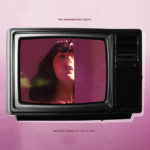 The Underground Youth, Montage Images of Lust & Fear (Fuzz Club) In 2017, this Manchester-born but currently Berlin-based outfit led by vocalist-guitarist Craig Dyer released What Kind Of Dystopian Hellhole Is This?, a record that reminded me somewhat of Brian Jonestown Massacre’s Anton Newcombe. But this follow-up, the band’s ninth overall, reminds me of Newcombe’s output not at all. Instead, the dark and tense atmosphere makes me think of the Birthday Party, but with instrumental precision (matched with sharp lyrics) that helps the whole to stand apart. Suicide is mentioned by the label, but I thought more of Michael Gira (Swan Kristof Hahn guests on six tracks here) and occasionally of Joy Division. When Dyer shifts to ballads, things get distinguished even more. Borderline excellent. A-
 REISSUE/ARCHIVAL PICKS: Mary Lou Williams, S/T (Smithsonian-Folkways) Along with Lucinda Williams’ Happy Woman Blues (reviewed in full earlier in March) this and the Elizabeth Cotten LP below comprise the 2019 Women’s History Month installment in Smithsonian-Folkways’ vinyl reissue series. It’s a well-rounded trio. This record, originally released in 1964 on this great jazz pianist’s Mary label (distributed by Folkways back then) is probably the most underrated of the bunch, in part due to how it transcends category. Though infused with jazz (Percy Heath and Grant Green contribute), the music here, titled Black Christ of the Andes, is a devotional work that features choral sections of considerable scale and beauty, and all the better because it’s a sound almost unheard of today. A major achievement. A
 Elizabeth Cotten, Folksongs and Instrumentals with Guitar (Smithsonian-Folkways) Many folks know this LP as Freight Train and Other North Carolina Folk Songs and Tunes; it’s reissued here under the title of its initial release. The story of Cotten’s life is well-known (it’s recently been told as a children’s book by musician Laura Veirs) and her rediscovery (through the family of Pete Seeger, which accurately was just a discovery, as she’d never recorded previously) commenced one of the most welcome and enduring byproducts of the whole mid-20th century folk revival. Taped by Mike Seeger in Cotton’s bedroom in her Washington, DC home in 1957, this is powerfully intimate music, reminiscent of Mississippi John Hurt in its calmness, featuring guitar, banjo and vocals. For folk music lovers, I’d call this one essential. A
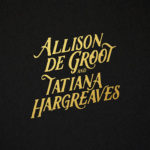 NEW RELEASE PICKS: Allison de Groot & Tatiana Hargreaves, S/T (Free Dirt) The debut of this duo, with de Groot playing clawhammer banjo and Hargreaves bowing the fiddle, coheres into a powerful instrumental statement with numerous vocals turns that dives deep into the old-time style and comes up with something wonderfully fresh. The combined acumen comes from experience, with de Groot a member of Molsky’s Mountain Drifters and her own groups The Goodbye Girls and Oh My Darling, and Hargreaves backing such august names as Gillian Welch and Laurie Lewis, playing on the latter’s Grammy-nominated The Hazel and Alice Sessions, and releasing her own debut Started Out to Ramble at age 14. The freshness of this LP comes in part through their inspired, unusual choice of material.
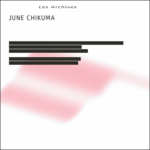 REISSUE/ARCHIVAL PICKS: June Chikuma, Les Archives (Freedom to Spend) This is a “reinvented” and retitled edition of composer Chikuma’s Divertimento LP, which was originally released in 1986 on Toru Hatano’s Picture Label. The transformation largely centers on a total sleeve redesign and an adjustment in first name; in ’86 she went by Atsushi Chikuma. The sequencing of Divertimento is essentially retained, though for the close of side one there is the previously unreleased “Mujo to Ifukoto” from the same sessions. Giving video game ambience a methodical cut-and-paste treatment, the effect is not so much disorienting but rather a precise scramble of psychedelia. Along with another unreleased cut offered on a bonus 45 with the record’s vinyl edition, “Mujo to Ifukoto” is a considerable boon.
 NEW RELEASE PICK: Hearing Things, Here’s Hearing Things & “Tortuga” b/w “Hotel Prison” (Yeggs) Jim Jarmusch’s Coffee and Cigarettes came out back in 2003; shot B&W and offering a series of filmed conversations (spontaneous to varying degrees) between actors, musicians and artists who were either friends with or just highly esteemed by the director, it’s what some would call a minor film. And y’know, as this LP and 45 offer a hearty dive into a surf and early instrumental R&R featuring the saxophone of leader Matt Bauder, the organ of JP Schlegelmilch, and the drumming of Vinnie Sperrazza, it’s what some might call a minor record. But I raise the subject not to connect one minor circumstance to the other, as in terms of stature, I disagree with this assessment of both.
 REISSUE/ARCIVAL PICKS: The Fall, Bend Sinister/The ‘Domesday’ Pay-Off Triad-Plus! (Beggars Arkive) This label’s reissue program of The Fall continues with a wonderfully exhaustive plunge into the band’s ninth studio record from 1986, expanded to double vinyl by rounding up eight tracks from period singles. For some, this is just the record with their cover of The Other Half’s “Mr. Pharmacist” on it, but the whole is an art-punk blast that’s potency has diminished nary a whit, and the additional LP offers no letdown. Importantly, the 2CD expands to 28 tracks with a four-song Peel Session and a bunch of unreleased stuff. No download card came with my vinyl copy and there’s no current digital buying option that I can see, so choose you purchase wisely. I’ve soaked it all up; this grade applies to both. A
 Bibi Den’s Tshibayi, Sensible (Pharaway Sounds) Unlike some unearthed African treasures (this is from the Ivory Coast, 1983), this artist has additional recording experience of note. From the same period, there’s “The Best Ambiance” 12-inch on Rough Trade and its companion LP of the same title, which came out in numerous editions including two through Celluloid and Rounder. In 2000, he issued Nge Na Munu under his birth name Denis Tshibayi with production by Adrian Sherwood and Skip McDonald, and in ’02 provided guest vocals to a song on Alpha Blondy’s Merci. With four tracks totaling 26 minutes, this set might strike some as a wee bit brief, but while opener “Africa Mawa” offers poppy funkiness that’s middling for me, the rest taps into African grooves with gorgeous vocals. A pretty delightful time. A-
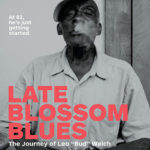 VIDEO PICK: Late Blossom Blues: The Journey of Leo “Bud” Welch, Wolfgang Pfoser-Almer & Stefan Wolner, directors (City Hall) This DVD came out last year, but as Mississippi blues and gospel ace Welch’s posthumous third LP is coming out via Black Keys guitarist-singer Dan Auerbach’s label (see directly below), it’s a good time to shed some light on this documentary, as the film does a nice job of detailing the circumstances that led to the singer-guitarist releasing his debut album Sabougla Voices as an octogenarian back in 2014. If you dig the raw rural electric style of R.L. Burnside and Junior Kimbrough, then Welch should be right up your alley, and in fact the chances are good that you’re already hip to the man, as his first two records came out on Fat Possum owner Bruce Watson’s other label Big Legal Mess.
 NEW RELEASE PICK: Leo “Bud” Welch, The Angels in Heaven Have Done Signed My Name (Easy Eye Sound) Welch passed on December 19, 2017, after the completion of Late Blossom Blues and the recording of this album with Auerbach and his Arcs band. They recorded 25-30 songs, ten of which are offered on this album, which can be precisely tagged as sanctified blues. For those familiar with his debut Sabougla Voices, this’ll be no surprise, as that was a gospel album, with I Don’t Prefer No Blues a follow-up dose of the secular stuff. Where this LP differs is in the bold production and instrumental enhancement, additives that do nothing to detract from the toughness of Welch’s style. I have a suspicion this won’t be the only posthumous LP from Welch, but if it is it’s a terrific final statement. A-
 REISSUE/ARCHIVAL PICK: The Heathens, “Steady Girl (Take 1)” b/w “Steady Girl (Take 2)” (Black & Wyatt) Cut at Memphis Recording Service (a.k.a. Sun Studio) four days after the Presley-Perkins-Lewis Cash Million Dollar Quartet session (Dec. 8, 1956), the sole song by a local high school five-piece (singer/ co-writer Colin Heath, hence the band name, was then 15 years old) is offered here twice, once with piano and both with drums by Joe Bauer (later of The Youngbloods) captured by a single mic. Both are raw and wild and primitive in the manner of the best youthful R&R. Claims are being made for this as the first ever garage single and I can see why, though it’s mainly that way in terms of spirit, as the sound is nearer to rockabilly. Just as important, guitarist and co-writer Kaye Garren is an early rocking gal. A-
 REISSUE/ARCHIVAL PICK: Sonny Sharrock, Ask the Ages (Hivemind) It’s still only February, and it’s already been a swell year for fans of “out” guitar, with new stuff from the Hedvig Mollestad Trio and the Dave Harrington Group plus reissues of Caspar Brötzmann Massaker and now this 45 RPM 2LP reissue of Sharrock’s killer 1991 album originally released on Bill Laswell’s Axiom Records. At the time, it really set things right, as Sharrock had been on something of a creative losing streak, at least for fans of his playing in punk-jazz monsters Last Exit and his first two solo records Black Woman and Monkey-Pockie-Boo. What producer Laswell (who played bass in Last Exit) pulled-off here, essentially launching Sharrock from the recognizable platform of the jazz quartet, was nothing short of miraculous.
 John Hartford, Backroads, Rivers & Memories—The Rare & Unreleased John Hartford (Real Gone) Deft on a variety of instruments (but especially banjo), warm of voice, and a songwriter of distinction (he penned “Gentle on My Mind,” included here, though his talent was more idiosyncratic than that), for many Hartford’s finest moment is Aereo-Plain; bluntly, thousands in the field of Americana owe him a debt. Before all that, he was a television personality, appearing on the variety shows of the Smothers Brothers, Glen Campbell, and Johnny Cash while working as a session musician, notably contributing to Sweetheart of the Rodeo. Hartford was also tenacious in recording his early progressions, which are offered on this CD with 19 tracks previously unreleased.
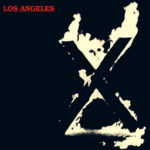 REISSUE/ARCHIVAL PICKS: X, Los Angeles (Fat Possum) The first full-length and one of the cornerstone LPs in LA punk, its music hasn’t aged a bit as it provides a glorious barrage of lessons on how to seamlessly integrate aspects of earlier root forms into the punk equation without weakening or betraying a thing. There are sharp but exquisite harmonies, elements from C&W, even more from rockabilly and early R&R, an expansion of the instrumental landscape to include keyboards, and even a brief plunge into the indigenous LA sound from a generation prior through a wonderful transformation of The Doors’ “Soul Kitchen.” Billy Zoom’s guitar is suitably crunchy, the rhythmic foundation is hefty but lithe, and I can’t think of a better male-female rock vocal duo than John Doe and Exene. This is it. A+
 Algebra Mothers, “Strawberry Cheesecake” b/w “Modern Noise” 7” (Third Man) Back in September, I gave a pick of the week and a grade of B+ to A-Moms = Algebra Mothers, Third Man’s archival collection of previously unissued material by these Detroit punks, noting that a repress of this 45, their sole prior released output, was forthcoming. Well, here it is. In September I called this baby superb, but that was based on memory. After getting reacquainted, I stand by that statement, but will confess that it’s not quite the double-sided monster that I recalled. I also said it was arty-wavy, and I really stand by that, and will elaborate that it’s a bit like Devo meets the Voidoids, though don’t go thinking it maximizes that description. Bottom line, this is an affordable way to own a worthwhile punk-era obscurity. A-
 Brownie McGhee & Sonny Terry, Sing (Smithsonian-Folkways) Guitarist McGhee and harmonica ace Terry (usually credited the other way around) recorded a ton, predominantly because their folk-blues recipe had just the right measurements of authenticity and accessibility. I haven’t heard all their LPs (not even close), but I haven’t heard a flat-out bad one, though obviously some are better than others (a few have struck me as uninspired, understandable given the prolificacy). This, their first for Folkways from ’58 with drummer Gene Moore on board, is one of the best. Cut not long after the duo were co-leading an R&B band that knocked out sides for a variety of labels, traces of this activity can still be heard, with a few tunes bringing Jimmy Reed to mind and “Old Jabo” nearer to Bo Diddley than John Hurt. A-
 Dave Van Ronk, Ballads, Blues and a Spiritual (Smithsonian-Folkways) Van Ronk is one of the indispensable figures in the ’60s NYC folk scene, and on his first album from ’59 he bursts forth with a booming, raw voice, fleet fingers and nary a trace of the tentative. Although the man’s rep has endured, his popularity was always limited, partly because he was more of a blues singer and songster than a protest folkie (though a solid lefty all the way). His singing style, gravelly and clearly derived from (some have said downright imitative of) African-American blues singers, was once considered controversial, but it steers far clear of minstrelsy and has held up well, mainly because of conviction; he felt it was the natural (and proper) way to tackle the material (and so, I disagree that he’s mimicking). A-
 NEW RELEASE PICK: V/A, SLR 30 Singles Subscription Series (Slumberland Records) Back in 1990, I scooped up Slumberland’s single of Velocity Girl’s “I Don’t Care If You Go” and I’ve been a fan of the label ever since. This series (copies will also be available in stores, all with download codes) kicked off back in October and is slated to finish near the end of 2019, and as it focuses on 45s (which have been something of a label specialty) it’s a fitting way to celebrate the 30th anniversary of Slumberland’s considerable achievement, while spotlighting artists that aren’t part of the endeavor’s historical or current scheme. Here’s a rundown of the first four, and we’ll keep track moving forward to December.
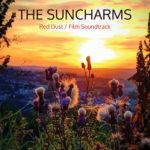 The Suncharms, “Red Dust” b/w “Film Soundtrack” Formed in ’89, this UK-based quintet knocked out a couple of records shortly after and played a handful of opening spots for notable acts of period (including Television Personalities, The Orchids, Cranes, and Catherine Wheel). This landed them a Peel Session and had Slumberland eager to get them on the roster, though a breakup occurred before that could happen. Due to the positive response to their eponymous 2016 retrospective CD the band reconvened and began working on new material. Here’s the first evidence, with the A-side starting out as nice mid-tempo guitar-pop before the amps kick in and the tempo picks up. The boost might register as inevitable, but it’s far from hackneyed, and the flip is a loud melodic fiesta of solos. A-
 Rat Columns, “Sometimes We’re Friends b/w “Astral Lover” & “Waiting to Die” When ponying up for a subscription series or singles club, a definite perk is receiving fresh exposure to previously unheard bands. That’s the case here with me and Rat Columns, though I am familiar with project leader David West’s other outfit Rank Xerox (he was also in Total Control). Diving into indie pop but with a decided Down Under feel (Down Undercurrent?), this is the Perth, Australia lineup of Rat Columns (the group has had US members), and it connects as distinct from his other stuff, with the A-side starting out a little moody with synth and then shifting into high-jangle gear (the synth sticks around). “Astral Lover” is a concise dose of chamber pop and “Waiting to Die” an unflustered, guitar-infused stroll. I dig. A-
 David Lance Callahan, “Strange Lovers” b/w “Waiting for the Cut-Off” Another cool aspect of subscriptions/ clubs is getting to catch up with new material from musicians that have made an impact on your consciousness for a long time. I’m that way with Callahan, who was in C86 act The Wolfhounds (their “Anti-Midas Touch” remains one of my favorite songs from the era) and in the ‘90s was part of the quite happenin’ Too Pure band Moonshake (The Wolfhounds reformed in 2010 and have released LPs since). These two cuts are Callahan’s first ever solo recordings ahead of a full LP planned for some time this year. “Strange Lovers,” while not twee, does attain a level of well-mannered sophistication (complete with fingerpicking and chimes) that’s as English as a crumpet. Flip’s a likeable strummer. B+
 Dolly Dream, “The Way to Heaven” b/w “Slip Thru Hell” And yet one more nifty facet of the sub/ club scenario is records that divert from expectations, and of these four short-players this one is the most surprising if not the strongest overall. Featuring Meg Remy of US Girls with assistance from members of Fucked Up, “The Way to Heaven” is ’60s throwback gal-pop that’s just off-kilter enough to have drawn comparisons to the dreamy-achy songs familiar to the soundtracks of David Lynch. I can hear that, but the considerably more wacked-out B-side is a bit like music Lynch might’ve used for a short film from around the time of Fire Walk with Me or Lost Highway. Its only shortcoming is that it’s over too quickly. Dolly Dream radiates like a one-off but is engagingly weird enough that I hope I’m wrong. B+
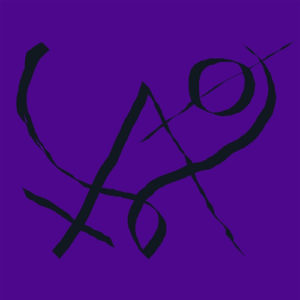 NEW RELEASE PICK: Xiu Xiu, Girl With a Basket of Fruit (Polyvinyl) It’s been 17 years of existence for Xiu Xiu with no lengthy gaps in activity, as this is the 11th album from the group formed by sole constant member Jamie Stewart, and what’s immediately impressive upon listening is the lack of creative fatigue. More to the point, Girl With a Basket of Fruit is an intense, at times in-your-face record, but unlike a lot of music of this temperament that ends up ringing hallow, Xiu Xiu’s latest (co-produced by member Angela Seo and Deerhoof’s Greg Saunier) is distinguished by its depth. Like a lot of experimental music, the LP’s contents can initially feel messy, but that’s just it; the record just feels messy. Art-rock with an abundance of emotion, of humanity, and maybe the best description that it’s just wonderfully poetic. A
  REISSUE/ ARCHIVAL PICKS: Sun Ra, Monorails & Satellites: Works for Solo Piano Vols. 1, 2, 3 (Cosmic Myth) Like Duke Ellington, Sun Ra has often been underrated as a pianist, with the largeness and vividness of the Arkestra’s endurance somewhat obscuring his brilliance as a player, though excursions into smaller groups, duos and solo settings did offer up evidence; it’s just that they could be obscured by the vastness of the overall discography. This 2CD/ 3LP set, fully authorized by the Sun Ra estate, collects two LPs of the man alone at the keyboard, originally issued on Saturn, Vol. 1 from ’68 and the follow-up from the next year, and adds a third album of previously unreleased material. The playing is consistently intense but also compositionally rich, blending beauty moves and thunder throughout. A
 Alex Chilton, From Memphis to New Orleans & Songs from Robin Hood Lane (Bar/None) If you’ve already burrowed deep into Chilton’s solo career, From Memphis to New Orleans offers no surprises, corralling material from the man’s ’80s comeback releases Feudalist Tarts, High Priest, the “No Sex” 12-inch, and Black Rain, but it is a solid overview of what the guy sounded like once he reemerged after his surly, boozy, wilderness period. Back in the day this era was regularly bagged on due to its relative togetherness, but I’ve always kinda dug it (as some of it was amongst the first solo Chilton I heard), and for casual fans who don’t need to own every album he ever did, this is a solid single LP overview this portion of Alex’s trajectory. I do miss “Tee Ni Nee Ni Noo/Tip on In,” though. A-
 In the early ’90s, Chilton took an unexpected turn toward the interpretation of pop standards with the album Clichés. I was underwhelmed at the time, even as the spare setting, just the man and his guitar, kinda safeguarded against schmaltz. I’ve enjoyed it more with subsequent listens, though never totally fell in love with it, so I consider it a plus that Songs from Robin Hood Lane cherry-picks five tunes from the set and combines them with three Alex-sung cuts from Rough Trade’s ’91 Chet Baker tribute Imagination, credited to Medium Cool, which also featured No Wavers Adele Bertei and James White, but in total inside jazz mode, like they were recording for late ’80s Verve or something. Four unreleased tracks seem to derive from the same session. Something of a curio, but the chutzpah levels are high. B+
 NEW RELEASE PICKS: Maurice Louca, Elephantine (Sub Rosa – Northern Spy) Cairo-born and based, pianist-guitarist-composer Louca has cut a prior LP under his own name, 2014’s Salute the Parrot, in addition to playing in Bikya, Alif, Lekhfa, Kharkhana (praised in this space a couple of weeks back as part of the Unrock split LP Carte Blanche), Orchestra Omar and Dwarves of East Agouza, the latter a trio with Sam Shalabi (of Shalabi Effect) and Alan Bishop (of Sun City Girls). Being hip to those two can provide a starting-point for what Louca achieves across Elephantine’s six tracks (totaling a gripping 38 minutes), but the whole is a highly distinctive blend of compositional fortitude and free jazz exploration. An instrumentally massive set, “The Palm of a Ghost” features exquisite vocals from Nadah El Shazly. A
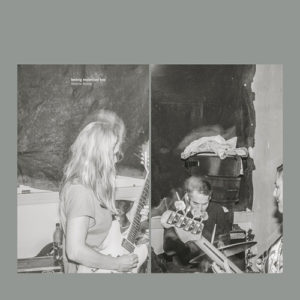 Hedvig Mollestad Trio, Smells Funny (Rune Grammofon) If you always felt Mahavishnu needed an injection of Black Sabbath-like oomph scorch, this is an asteroid of chocolate plunged into your personal store of peanut butter (the group has notably shared stages with McLaughlin and Sab). Mollestad’s the guitarist, and she tears into complex runs without sacrificing forward motion as bassist Ellen Brekken and drummer Ivar Loe Bjørnstad deliver much more than a rhythmic bedrock. ‘tis a true power trio thing. The Sabbath reference shouldn’t imply the doom-laden but rather just heaviness, with the record (their sixth in seven years) a fine locale for headbangers and jazzbos to joyously congregate. The title brings Zappa’s comment on jazz to mind, but Smells Funny makes plain that rock ain’t dead, either. A
 REISSUE/ ARCHIVAL PICK: Ran Blake & Jeanne Lee, The Newest Sound You Never Heard (A-Side) Along with teaching at the New England Conservatory in Boston for over 50 years, the great pianist Ran Blake has a voluminous discography; my introduction came through his sublime ’65 ESP Disk Ran Blake Plays Solo Piano. Four years prior, he debuted on record in duo with his Bard College classmate, the vocalist Jeanne Lee (and for two tracks bassist George Duvivier) on the RCA Victor LP The Newest Sound Around. Opening with “Blue Monk,” it stands amongst the most underrated of vocal jazz records, Lee not only impacted by but extending the grandness of Billie Holliday, Dinah Washington, and Abbey Lincoln as Blake, already more than just an accompanist, often recalled the sensitivity of Mal Waldron.
 While quirkiness and zaniness are both in evidence, that’s to be expected as dreams are rarely normal. But hearing people relate their sleep scenarios, particularly in groups, can sometimes register like a contest for who had the kookiest night before. Kortes keeps these qualities in check mainly through a non-sequential ordering of the dream entries, the lengths of which range from a few words to a few hundred (but mostly on the shorter side), so that uneventful unusualness offsets the more truly strange scenes. The next thing you know, many pages have turned, with Bob consistently enigmatic, sometimes pleasant, at other moments aloof; at a few spots, he’s even a little dickish. It’s not a mindblower of a read, but I laughed out loud and amazingly, was never annoyed. It’d make a terrific coffee table item. A-
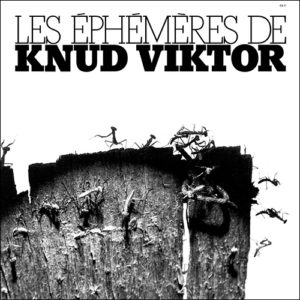 After graduating, Viktor moved to Provence with his wife so they could both subsist as painters (he met her at Academy), but directly due to the incessant sound of cicadas around their residence his energies were refocused toward sculpting with audio; insects, animals and nature was his domain, and by the mid-’70s via tape recorders, homemade parabolic microphones, and audio effect processing machines (also homemade) he was creating in quadraphonic sound. On Les Éphémères, which like Ambiances consists of two side-long pieces (here specified as parts of a whole), the sounds of the living creatures of Viktor’s surroundings are easy to discern, especially birdsong, though other passages are harder to peg; a distinctive aspect is poetry spoken by the artist. Altogether an immersive, delightful listen. A
 NEW RELEASE PICKS: Lisa/Liza, Momentary Glance (Orindal) Portland, ME’s Liza (pronounced Lisa) Victoria has a prior record out on Orindal, Deserts of Youth, where she goes it completely alone via acoustic guitar and vocals. On this follow-up she switches to electric and enlists some instrumentalist friends, though Victoria’s front-and-center presence is only intensified on a half-dozen selections (totaling 42 minutes) that radiate a magnificent late-night psych-folk vibe. Recorded and mixed by Efrim Manuel Menuck of Godspeed! You Black Emperor and Thee Silver Mt. Zion Memorial Orchestra during a brutal Montreal winter, the suicide of a friend greatly impacted Victoria’s creative process. My learning of this surely deepened the emotional heft, which hits its apex with the massive “Tea Kettle.” A
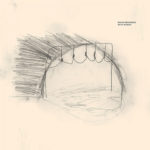 Machinefabriek, With Voices (Western Vinyl) Dutch composer Rutger Zuydervelt is Machinefabriek, and his work essentially resides in a neighborhood shared by ambient, drone, minimalism, modern classical, noise, field recordings, electronics, and a general spirit of avant-experimentation. The man wields an insanely loaded, completist-defeating discography, but With Voices is destined to be one of the gems in that expansive body of work, in part because it finds him collaborating with a variety of vocalists across eight Roman numeric tracks, including Chantal Acta, Peter Broderick, Marianne Oldenburg, Richard Youngs, and Marissa Nadler. Eschewing lyrics, with a high percentage of the utterances effectively wordless, the results are wildly varied and in the case of the Nadler-sung finale, quite beautiful. A
 REISSUE/ARCHIVAL PICKS: Caspar Brötzmann Massaker, The Tribe & Black Axis (Southern Lord) Originally released by Zenzor in 1988, The Tribe was the debut by guitarist Brötzmann’s trio with Eduardo Delgado Lopez on bass and Jon Beuth on drums, and it delivered a noisily intense yet rock solid heart punch and a wakeup call; the possibilities of amplified string mayhem had been broadened and the roster of u-ground guitar heroes deepened. Coming off at times a bit like Hendrix at his wildest if he’d lived and largely set aside bluesy grooving for Germanic Industrial pummel, the Massaker were a formidable beast, and that they didn’t make as may waves as the Experience ultimately speaks to the conservative atmosphere of the era from which they sprang. A few slightly lesser tracks do emerge. A-
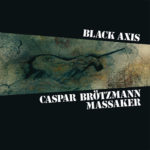 Caspar was the son of the German free jazz saxophone titan Peter Brötzmann (who designed The Tribe’s cover), which led to some speculation prior to hearing that the Massaker was going to be an excursion into skronk-rock fusion (like Last Exit, Jr., maybe). That wasn’t the case, though The Tribe and ’89’s follow-up Black Axis (originally on Marat Records) were both cut at FMP studio in Berlin, where many of the greatest German avant jazz recordings were made. Part of the reinforcement of a rock sensibility comes through the use of vocals, which serve roughly the same function as they did in the Experience. Black Axis finds the band (with fresh drummer Frank Neumeier) tapping into grooves a bit more (some near funky), but also kicking up clouds of pungent cacophony and launching into the stratosphere. A