“Somewhere in the discussion of vinyl media, there’s a roomy reverence for the physical space that records occupy. I’ve seen overstuffed bookcases in city apartments spilling over into tape-bandaged shipping boxes wedged between sofas and end tables. Or half a suburban garage devoted to a record collection and its associated memorabilia. Numerous or few, these albums are our personal effects, and decisions must be made about the actual space we wish to accord them in our lives.”
“As a boy growing up in a conductor’s household, I found the space granted to these objects to be significant. Whole walls of my father’s study were lined with vinyl records, stacked vertically, crammed densely, and held in place by the opposing cinder blocks of makeshift shelving.
In officious contrast to their pedestrian setting, each disc was distinguished by a serial number on the upper left-hand corner of its jacket, and all were kept (more or less) in numerical order. Information about each recording was kept on a Rolodex, close-at-hand; these were reference materials, kept to aid in the study of musical scores.
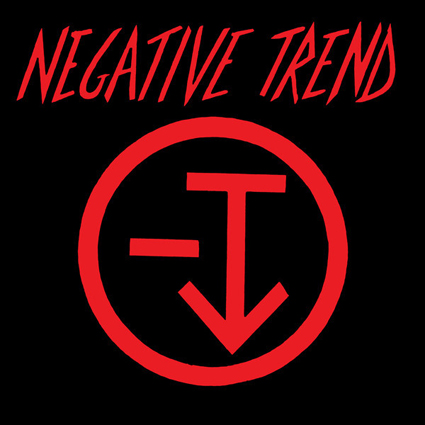
In the second half of the 1970s, the hilly West Coast burg of San Francisco was noted for some bands, and a few of them specialized in the creation of punk rock. Amongst the more illustrious names are The Avengers, Crime, The Dead Kennedys, and Flipper, but one of the less championed troops in the city’s early punk narrative was Negative Trend. Their terrific self-titled 1978 7-inch has just been repressed by the folks at Superior Viaduct, and it’s an essential purchase for anyone striving to build a comprehensive punk library.
By this point, the late-‘70s punk uprising has been examined from a multitude of angles, with the majority of the approaches offering at least some measure of substantive insight. Since the whole explosion proved to be such a complex beast, indeed so multifaceted that individual perspectives can frequently seem downright contradictory, the value found in such a large number of diverse viewpoints should really come as no surprise.
One particularly interesting outlook concerns how punk’s North American surge was inevitably doomed to initial failure due to the lack of an appropriate distribution network to service its burgeoning creativity as it was emerging. It’s a tempting idea, but it tends to sidestep the reality of what actually did occur after The Dictators’ Go Girl Crazy! (my pick as the starting point of the unhyphenated punk era) first hit the racks in early ’75.
Specifically, the impulse spread like wildfire, or better yet like a disease. In England, the situation grew into an epidemic that sent shockwaves through the country’s entire culture, but in the USA, the very land that gave the form its messy back-alley birth, the transmission remained either underground or largely disdained but the public at large.
The shockwaves of the ’77 punk explosion were so widespread and commercially underwhelming that it’s no great surprise a bevy of exceptional names ended up slipping through the cracks. One such band was Métal Urbain, Paris France’s influential and still potent kings of drum-box punk.
Before orthodoxy inevitably set in, the punk scene was far less rigid regarding what constituted the form. It was in this period that groups like Devo, Pere Ubu, Suicide, and The Fall were generally considered to be bands hanging out on the less rudimentary end of the punk spectrum. Once convention (and expectations) began taking hold in earnest, the legitimate post-punk movement did start shaping, but the retrospective tendency toward re-categorizing many of punk’s more refreshingly unusual acts as something other than enticingly unique selections in a diverse sonic smorgasbord is an impulse I just can’t cozy up with.
It’s in this early stage of wide-open possibility that Métal Urbain was born. Noted as not only the first band to use a drum-machine in the scheme of punk but also for being responsible for the inaugural release on the legendary Rough Trade label (RT 001), they are notable for so much more than just achieving a stylistic footnote and for providing the answer to a stumper in a music-nut trivia contest. For Métal Urbain shined, if only for a short while, as a beacon of punk rock’s expansive promise and if not vastly influential the group certainly proved crucial in shaping certain corners of the subsequent u-ground rock racket. They were for example the template from which Big Black managed to stir such a divisive storm.
“My first experience with music was via the record player.”
“My dad would put on anything from Vangelis to 2nd Chapter of Acts to Yes, and I learned to tread lightly when I danced so the record wouldn’t skip. It was a fun way to feel connected with the music in the moment, like it was happening in that room for the very first time, and I was part of it. I could make it stop and start with the lift of a needle.
http://youtu.be/L6WSwa-gd8g
It was all very physical, which I like, because music is this ethereal thing that affects us underneath the skin in all sorts of ways that we can’t explain, but with vinyl you can actually see it moving. You can see it in the grooves.
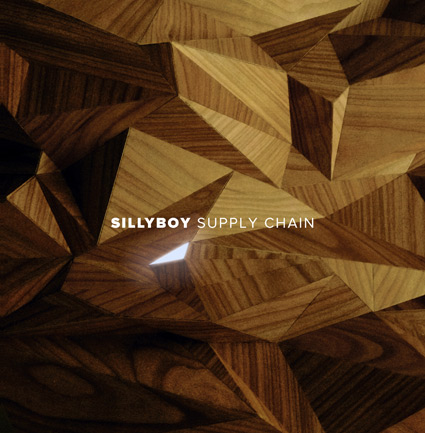
So yes, you’ve heard it before—last February we launched our most ambitious undertaking yet, TVD500—a recurring competition where we and our esteemed partners, Infrasonic Mastering,Furnace MFG, and Dorado Music Packaging mastered, pressed, designed, printed, packaged, and delivered 500 copies of a winning 7″ single—on us.
The winner of our competition, chosen by our celebrity panel of judges, was Sillyboy, the Athenian (as in Greek) tour de force whose full LP Nature of Things has quickly become a favorite.
http://youtu.be/RcaDJ3D2pI0
His winning single, “Supply Chain” is TVD Records’ very first release and Sillyboy’s first foray into US markets. Well, those 7″ singles of “Supply Chain” are presently in hand—and we’ve got a bunch to giveaway.
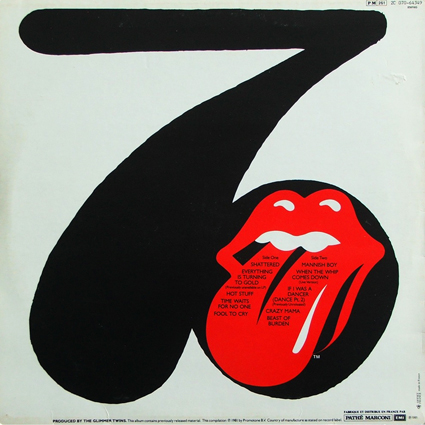
The Rolling Stones’Sucking in the Seventies: not only is it the most nakedly honest album title ever, it also proves that truth in advertising actually exists!
But before we give the Rolling Stones any consumer honesty awards, it should be borne in mind that Sucking in the Seventies is a colossal act of hubris. Not on did the Stones happily release a piece of swill, they actually announced right in the title that it was a piece of swill, that’s how confident they were that the great undiscerning herd would go out and plunk down their hard-earned shekels for it anyway.
And by God, the Stones were right. Sucking in the Seventies reached #15 on the U.S. album charts, which should discourage all those do-gooders who believe that a clear warning will deter people from buying products that are deleterious to their health. Just as I continue to smoke despite all those obviously bogus warnings on the cigarette packs saying that smoking causes cancer, gads of Stones’ fans went out and bought a product that blatantly declared that it sucked.
The Stones didn’t completely suck in the seventies; in fact the decade marked their high-water mark, what with those back-to-back gems Sticky Fingers (1971) and Exile of Main Street (1972), the latter of which may well be the greatest rock album ever made. But after that it all went to shit, with 1973’s disappointing Goat’s Head Soup, 1974’s lackluster It’s Only Rock’n’Roll, 1976’s execrable Black and Blue, and 1978’s respectable but seriously overrated Some Girls—their supposed return to greatness that wasn’t, except to those people so desperate to believe the Rolling Stones were still the World’s Greatest Rock’n’Roll Band they happily swallowed the inedible “Miss You” and didn’t even belch.
Press Play is our Monday morning recap of the new tracks received last week—provided here to inform your vinyl purchasing power. Click, preview, download.
And if you are up to date, fire up TVD’s Record Store Locator App and visit your local mom and pop retailer! Odds are you’ll find one of us right next to you.
Last February we launched our most ambitious undertaking yet, TVD500—a recurring competition where we and our esteemed partners, Infrasonic Mastering,Furnace MFG, and Dorado Music Packaging mastered, pressed, designed, printed, packaged, and delivered 500 copies of a winning 7″ single—on us.
The winner of our competition, chosen by our celebrity panel of judges, was Sillyboy, the Athenian (as in Greek) tour de force whose full LP Nature of Things has quickly become a favorite. His winning single, “Supply Chain” is TVD Records’ very first release and Sillyboy’s first foray into US markets.
Well, those 7″ singles of “Supply Chain” are presently in hand and we along with Sillyboy have decided to give back to the local Washington, DC, Maryland, and Virginia record stores and friends by giving 10 to the following list of shops for them to give away FREE—and to give a little back to the scene that nurtured and embraced us at the very outset.
And it’s a reminder that recurring holidays needn’t be overt cash grabs to nurture something as important as your local brick and mortar, mom and pop record shops—and small businesses of every stripe.
“There should be a couple here making out and dancing in front of us right now…and crying,” mused Nicole Atkins, before kicking into “The Way It Is” at Moscot Music last Thursday.
Among many other humorous insights throughout the set, Atkins embraced Moscot’s small size and kept the music strong, loud, and intimate, even playing to the fans who had to watch the show from outside the store windows.
Her new band (supposedly going under the name Groove Police) made sure the energy never died and kept the show tight and rocking all the way through.
Atkins’ new record, Slow Phaser comes out on February 4th, 2014 and fans—and yet-to-be fans—have plenty to look forward to.
In 1968 The Firesign Theatre, a comedy troop consisting of Phil Austin, Peter Bergman, David Ossman, and Philip Proctor, began an excellent string of releases with Waiting for the Electrician or Someone Like Him. While not their best work, it is the place any newbie should begin. The smart and surreal environments the disc offers remain unique in the comedy universe, and the rewards are sharply in tune with the long-playing vinyl format.
The comedy album’s rate of productivity remains strong enough in the present that one need not worry over the general health of the form. Yes, people still want to laugh, and to this day the desire of comedians to offer up their art through the medium of records remains, even as the status those performers acquire through the making of said documents has been lessened substantially.
Indeed, the heart of audio-only comedy continues to beat rather strongly, but what was once something like a cultural institution is now closer to a niche genre, largely because the market has always been dominated by the style known as stand-up. Commencing approximately in the 1960s, the boom for stand-up LPs lasted for decades, mainly because it was the easiest way to hear these comedians at extended length, and just as importantly, in uncensored form.
But comedy as performed in night-clubs, halls or auditoriums is also Performance Art, and by far the most widely accepted example of this often derided mode of expression. Throughout its peak years, comedy fans had three main options; the attendance of a show, catching a dose via television, most commonly on late-night talk shows and later premium cable services like HBO, and the purchase of LPs for home enjoyment.
Jerry Shirley was just seventeen years old when Steve Marriott plucked him out of (you can’t make these things up) a Small Faces cover band and asked him to play drums for Humble Pie. It was a brief, beautiful, rock and roll dream come true for Shirley and bandmates Peter Frampton (who was himself only eighteen at the time), Greg Ridley, and Marriott. Their hard-edged sound blended snarling R&B with precocious musicianship that overshadowed headliners, enthralled audiences, and set the tone for what hard rock would become.
Back when live albums could make a band, Performance: Rockin’ the Fillmore made Humble Pie. Rockin’ the Fillmore captured their intense energy so well that it quickly went gold. The original LP was essentially a sampler of songs from several raucous shows at the legendary Fillmore East. But our friends at Omnivore Recordings turned Performance: Rockin’ the Fillmore into a remastered box set that includes the seven original songs and fifteen previously unreleased performances (including the entire first show, none of which made it onto the original LP).
The remastering of Rockin’ the Fillmore was supervised by Shirley and Peter Frampton, and the result is a spectacular experience. In our conversation with Jerry Shirley, he talks about the legendary album, why he thinks the Fillmore East is so iconic, and what it was like to be part of one of the most underrated yet most influential hard rock bands of all time.
You were discovered playing in a Small Faces cover band by Steve Marriott. What was it like to be “discovered” by your hero?
It was wonderful, obviously. What was really strange about it, and this is not anything but the truth, but I’d actually dreamed that what happened…happened! I had a dream that I was opening up for them, they watched me from the side of the stage, and they smiled and gave me the “thumbs up.” After the show, they came up to me and said, “If ever Kenney (Jones) gets sick, you could be the stand-in.” I swear to you the next night… I found out after a little while that we had got a job opening up for [The Small Faces] and what I dreamed exactly happened. I found out years later that my father had a little bit of a hand in it, in as much as he was actually helping the guy promote the show. He was a local promoter who needed help booking a hall or something.
The guitarist from the British soul-jazz band will be playing with a variety of local musicians. This week he has Jermal Watson on drums, Nigel Hall on keys, and Eric Vogel on bass.
Roberts is part of a new generation of musicians who treat the music of the Meters as a stepping stone to other funky and soulful styles. His group has been developing a following in New Orleans after some wonderful performances over the past few years.
http://www.youtube.com/watch?v=BrmxPMNBOLw
The music on Wednesday nights at the Leaf will take a decidedly jazzier approach on December 4th when Roberts is joined by Khris Royal on sax and James Singleton on bass. Jermal Watson will return on drums.
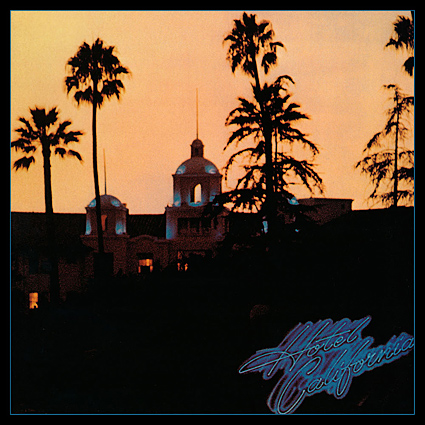
Everybody hates the Eagles. I hate the Eagles. You hate the Eagles. God hates the Eagles. Even the Eagles can’t stand the sight of each other, and as for real eagles, of the sort that soar majestically above the desert arroyos in the hopes of espying Don Henley and carrying him off to devour him and then pick the tequila-flavored gristle from their beaks at their leisure, they hate the Eagles too.
So why am I writing about the Eagles? Because much to my shame I’ve been lying through my teeth and sorta actually like the band, despite the fact that they’re poseurs (as Tom Waits once famously said, “Those guys grew up in L.A. and they don’t have cow-shit on their boots—just dog shit from Laurel Canyon”) and their music is pure product, like hair spray or shaving cream.
But haven’t you ever loved a product so much you’d travel to the furthest WalMart in the tri-state area to find it? True, I have a hard time thinking of a less authentic band—from their early country-schlock hits such as “Take It Easy,” “Peaceful Easy Feeling,” and “Easy Livin’” (which is actually by Uriah Heep, but who’s keeping score?) to their peripherally harder but equally soulless fare such as “Already Gone” and “Victim of Love”—but I too am a victim of love, the kind of love you might have for a vacuum cleaner or an air conditioner or even a sex toy, except there is absolutely nothing sexy about the Eagles, that is unless you fell into a coma in 1972 and suddenly awoke hot for a mustache ride from a guy dressed from neck to ankles in denim.
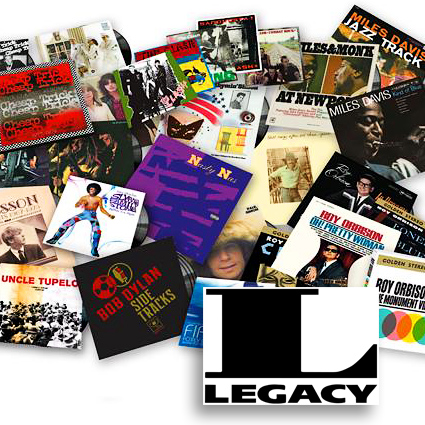
I’m not one to jump on the bandwagon over the Record Store Day Black Friday cash grab hullabaloo, but Legacy Recordings has some cool stuff in store that caught my eye for the busiest shopping day in these here United States of America.
And it would be much better to be packed into a local record store looking for these kind of things rather than camped out at Wal-Mart so that you can trample all kinds of women and children in order to get some unnatural deal on the new Play Station 33, or perhaps a set of decorative oven mitts.
Check out this pretty sweet list of stuff. If you’re buying for me, I should like the Bob Dylan, Cheap Trick, and Miles Davis stuff. Oh, and that Sly 7″ too. Thanks: