Songs written inside a prison cell. A producer chased down by hopping a fence, climbing a tree, and waiting outside a trailer with cash in hand. Collaborations that happened because the right people walked through the door at the right moment. There is nothing tidy about the way Not Free Money, the new album from Dale and the ZDubs, came into existence—and that is exactly what makes it worth your time.
The record itself is another matter. Produced by DENM and Surfer Girl, Not Free Money is deliberate, layered, and thoroughly modern, stretching well past the boundaries of reggae rock into pop, hip-hop, and punk. Underneath all of that production is something considerably more raw. Much of the material traces back to the three years Dale Rodman spent incarcerated, where he never stopped writing.
I’ve known Dale for about five years, and in that time, I’ve watched a tremendous amount of growth, personally and musically. The artist I first met was already driven, but the songwriter I spoke with for this interview has clearly been shaped by everything that’s happened since. He talked with The Vinyl District about writing behind bars, chasing down his producers, the record’s long list of features, and how a prison nickname became one of its most personal songs.
For people who may just be discovering Dale and the ZDubs for the first time, how would you describe who you are as a band and what you bring to the reggae-rock scene?
What makes us stand out is the amount of range we have. We’re a multi-genre band—rock-reggae-based, but we can get pretty poppy and downtempo, and we can also get heavy and hard-rocking. We focus on songwriting, and I think our lyrics stand out compared to other bands in the scene. In the reggae-rock scene, there’s a lot of predictable, linear songwriting. I think we sing about more than just smoking weed, sunshine, and girls.
You’ve been doing this for a while now. When you look back at your early days compared to where you are now, what do you think has changed the most, both musically and personally?
First, I want to say that we still feel—and know—that we’re a small band. But the sound evolves and the relationships within your band evolve. What’s changed is the caliber of the songwriting and the playing. We were pretty bad when we started. I was a mediocre-to-bad singer, and I was a pretty dismal songwriter too. But it’s been thousands of hours over 15 years, and a lot of those hours went into the craft—singing and songwriting—when I was incarcerated. There’s still a long way to go, but it comes down to putting those hours in.
Let’s get into the new album, Not Free Money. What does the title mean to you, and why did it feel like the right title for this particular record?
A lot of the songs were written in prison. “Not free money” is something we would say, kind of a colloquialism. Anytime it seemed like you were cutting a corner or beating the system, you’d say, “Not free money.” We released a record in 2024 called Off the Rip, and a handful of those were written in prison. But I had more, and I really wanted to get DENM to produce them. He’s one of my favorite producers and one of my favorite artists. I think he’s bending the boundaries of what it means to be an American reggae artist.
You had DENM and Surfer Girl produce the album. How did you first connect with both of them, and what made you say, “I want to work with them?”
This is probably one of the most fun parts of the interview. DENM was playing with Pepper, Iration, and Artikal Sound System in Pompano, Florida. It was an amphitheater show, and Iration was headlining. I actually hopped a fence and climbed into a tree. Eventually, they shooed me down, and I waited outside DENM’s trailer for a couple of hours with cash. Logan from Artikal Sound System knew who I was because we had played shows with them, and I was like, “Yo, I’m not leaving here until I talk to DENM.”
DENM finally came out, and I gave him a little bit of cash. He tried not to take it, and I told him, “This is a down payment. I wrote these songs in prison. You’re my favorite producer, and I want you to check these out and produce them. He could have been like, “Who is this crazy fucker?” But instead, he said, “Dude, let me know when you’re in California.” We did two songs at first, caught a vibe, and then did five more.
DENM and Surfer Girl are very different, but both are brilliant decision-makers—sonic building, cadence, songwriting. Surfer Girl has more of a pop appeal, DENM more of this raw, gritty sound. “Best That We Can,” the first song on the record, is a Surfer Girl production and a perfect fit. Then you have “Not Free Money,” one of the songs written in prison—I wrote every word of that one, including DENM’s verse. If the band blew up and ended tomorrow, I’d still be so proud of this record.
Did you have a clear idea of what you wanted the album to sound like, or did its identity reveal itself as you were writing and recording it?
I love Slum Beach Denny. DENM’s 2021 record has songs like “Blow It Up,” “My Wave,” “Badfish,” and “Life’s Too Short.” I think that record is a masterpiece. But one thing I’ve learned about producers is that you don’t go in saying, “I want it to sound like this.” A producer makes things sound the way that producer makes things sound. We picked the right songs for Surfer Girl±“Best That We Can,” “She’s the One,” “Rosie,” and “Bar.” Those are a little cleaner and poppier.
So no, I didn’t tell DENM how I wanted it to sound. I showed him my lyrics, we worked on melodies, and we made decisions together in real time. The whole reason I wanted him—and snuck backstage to get to him—is because I like how his drums sound. I like his peculiar, nontraditional sonic additions and how the vocals sit. “Bad Hippie” is so cool because of all the vocal layering he did. I lived with him for a week—four kids, dinner every night, his wife’s cool as hell. It was just an artistic energy exchange.
There’s so much cheese in our genre. If I hear one more song about smoking weed, the beach, or “don’t stress,” it’s just so predictable. I think we’ve got some sauce here. I also have to add that Justin Spaulding mixed the record. He’s an incredible mixing engineer, and he’s blowing up.

When you listen to the finished album, is there a song that you feel best represents where you are right now musically, and why that one?
No, there isn’t one song that represents where I am musically. I don’t think one song is enough. But the one that stands out is “Bad Hippie.” The lyrical direction, the production—Mihali came on the track and made it fire. It’s an autobiographical take, and “Bad Hippie” is such an interesting word duality.
That was actually my nickname in prison—I got it tattooed on my stomach. That’s what they called me, because I’d walk the yard singing with my little radio, and I had my hair as long as you could have it in there. The “bad” part was that I ran my time up. I was supposed to serve 34 months and ended up serving 37—unauthorized-area charges, fighting charges, contraband, and disrespecting an officer.
The guy who slept next to me started calling me that. Ford was his name, a 20-year sentence. I didn’t smoke or drink in there, and he was basically like, “You’re a hippie, but you’re bad. You don’t drink or smoke, but you’re fighting, and you’re always in trouble.” Nobody else was doing what I was doing. A lot of people probably thought I was crazy.
There are many collaborations on Not Free Money. How did you decide who you wanted to bring onto the record, and was there one that surprised you once you got into the studio?
I wanted to play the feature game because we’re still a really small band, and great features are a great way to get eyes on you. But I also love the process. Finding the right person to hop on your song is another part of the art form. Mihali’s verse on “Bad Hippie” is insane. It’s perfect.
Then, The Palmer Squares took “The Hooch” to a new place, and we got the actual original writer and singer from Everything, who wrote that ’90s hit, on the track. We got Christian artist Ryan Ellis on “Sunshine ‘N’ Spice”—I’m not religious or Christian, but I’m open, and it felt good. A few of them happened organically because DENM has all these heavy-hitters coming through his place. We’re making music, Ryan Ellis is around, Benny Ranks is in Slum Beach Posse—these guys are hanging out saying, “Yo, I’ve got something for this.”
With Surfer Girl, I asked him to produce the track first, then I was like, “Would you mind hopping on it?” We were hanging out with Shwayze a lot, too. I’m proud of the features, because good ones are hard to get—managers, schedules, so many chefs in the kitchen. You could say I went overboard with it, for sure.
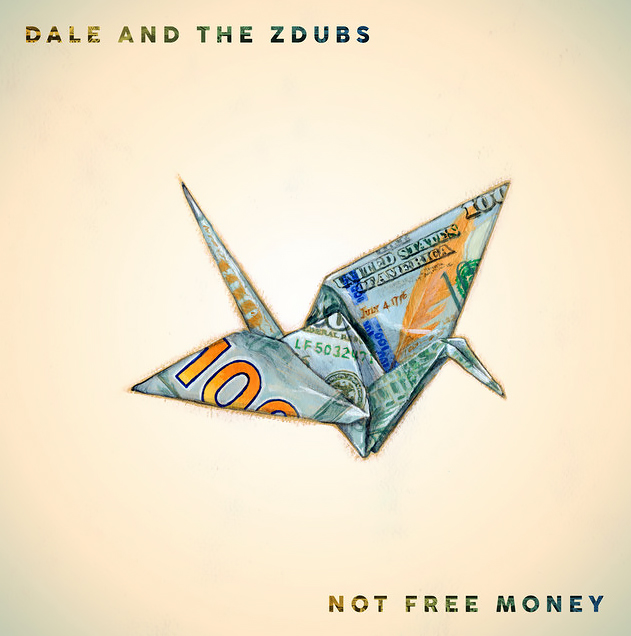
Let’s talk about vinyl. When you’re making an album like Not Free Money, do you ever think about it as a physical record—things like sequencing, side A and side B, the artwork, and how the whole album works as one experience rather than just individual tracks?
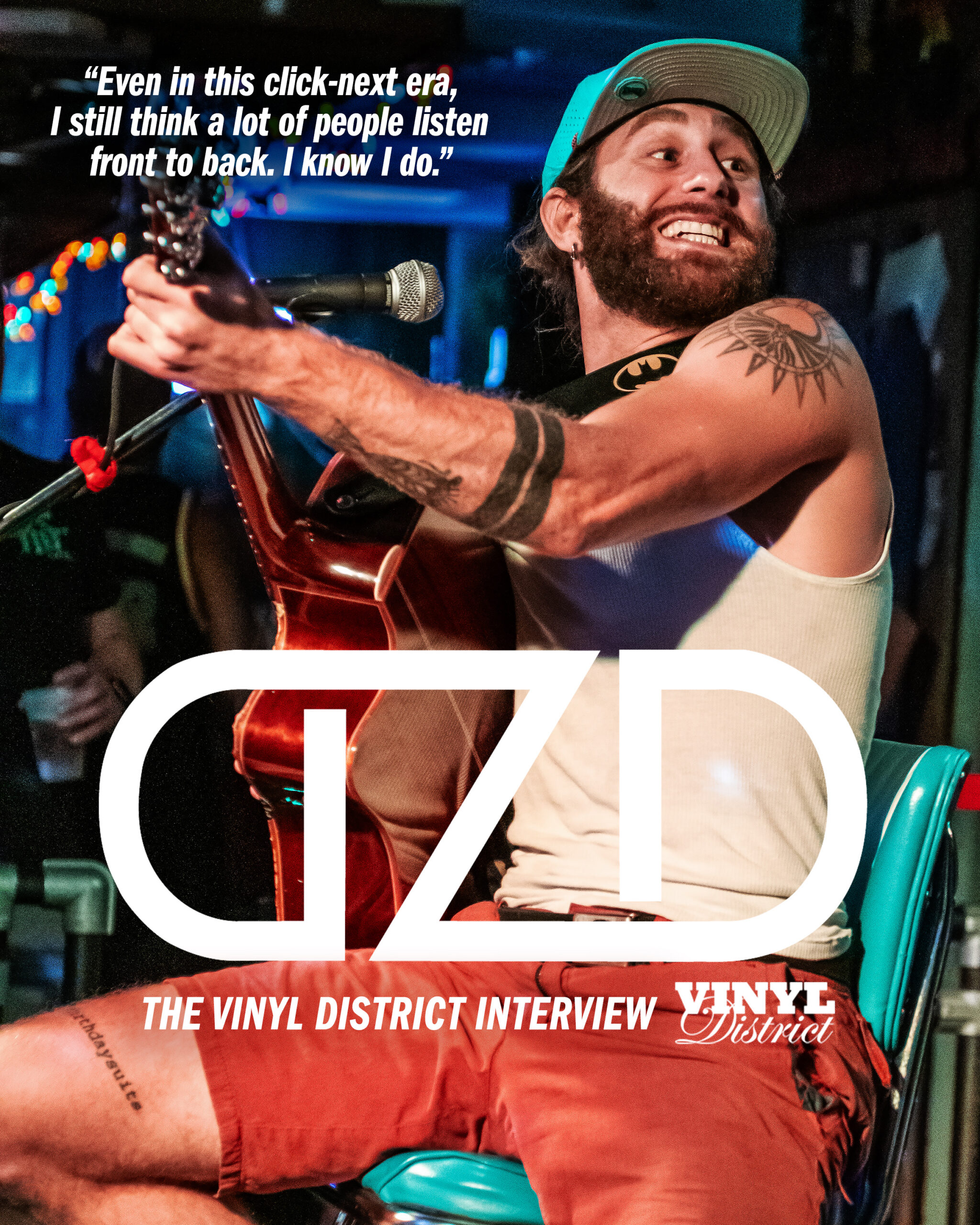
Definitely. We listen to the entire record all the way through with the track listing and make sure the way one song ends and another begins feels good. Even in this click-next era, I still think a lot of people listen front to back. I know I do. And the artwork? The artwork is like track 12 of the record. There are 11 songs, but we worked with John Swartz, an incredible surrealist painter out of Denver who’s done our last two records and hand-paints everything. He came up with this origami crane made from money, and I said, “Make it a hundred. Make it a $100 bill. That’s more interesting, right?”
It’s hard in 2026 to make people care about cover art. There’s so much AI-generated content, so much content, period. But this one moved people. A great song can mean different things to different people, and the cover does the same thing. The bird, the origami, the $100 bill, the way it’s sitting there—it’s not flying high, but it’s not down on its face either. It stirs conversation.
You mentioned when we were setting this up that you have a bit of a vinyl collection. If I went through your collection, what’s one record I’d find that might surprise people?
I really like my Incubus Morning View. That’s what we listened to a lot in high school. But if you go back earlier than that, I like classic rock too. The Mamas & the Papas, Jefferson Airplane, The Who, Led Zeppelin. I’m a big Tom Petty guy. And Little Feat—put Sailin’ Shoes on there.
Now that the album is out, what do you hope someone takes away from this record after listening to it from beginning to end?
I hope people feel that, yeah, we went with more modern soundscapes, but there’s still a rawness in the lyricism and the storytelling. Prison, punk, desperation, vulnerability, and pain, coupled with this pop, modern, buttoned-up sound. The album is produced, but we wrote every word. That’s a hard line to walk—sometimes when something is really produced, it loses the rawness. That’s why I like DENM so much. His stuff is produced, and it still has rawness. That’s what we wanted here, and I think we got it.
I don’t really understand where AI and songwriting are going. I’ve never released a produced record like this before, and now I’m doing it right at the start of the AI era. Does that devalue our record? We didn’t use any AI. But now AI can mimic things, and I don’t know how that makes me feel. I think if something is honest and real, people can feel it. There’s no AI here.
I have one last question. I finish every interview with the same one: If you could only listen to one album for the rest of your life, what would it be?
Mine would be The Presidents of the United States of America—the Ten Year Super Bonus Special Anniversary Edition. It has “Lump,” “Dune Buggy,” “Peaches,” “We Are Not Going to Make It,” “Kitty,” and “Naked and Famous.” And my number two, by the way, would be Cake’s Comfort Eagle.
Everybody always has to give me a second one! Before we finish, is there anything you want to add—something we didn’t mention?
The important thing is that I did those three years and never stopped singing and writing in there. That’s where all of this comes from. And I want to say thanks to DENM for not telling me to fuck off when I snuck backstage and sat outside his trailer for a couple of hours. If you had to sum up this whole conversation: I wrote the songs in prison, snuck backstage, and told DENM, “I need your help bringing this to life.” And then it happened.
One more thing. The sleeper track is track 11, “Sucker Punch,” with Academy. We did something completely different and wrote a pop song that’s a love song. It’s hard to write a love song that isn’t cheesy, and I think we did it. And don’t sleep on Evan Walsh of Academy. He’s quietly building a discography that is—what’s the word?—undeniable.
For Dale, Not Free Money comes back to that journey: songs born in a prison cell finding their way to California and into the hands of the producer he was willing to climb a fence and wait hours to meet. It would make a good story even if the album didn’t deliver. Fortunately, it does.
What makes it compelling is the contrast he keeps returning to—the rawness behind the lyrics set against the modern production of DENM and Surfer Girl. The features broaden the palette, but they never obscure the guy at the center of it: the self-described “Bad Hippie” who walked a prison yard with a radio, singing and writing songs while wondering where they might lead. Turns out, some of them led here.