Celebrating Cat Stevens on his 78th birthday. —Ed.
The singer-songwriter movement that began in the late ‘60s and blossomed in the ‘70s became one of the most dominant musical movements of that very rich era. Its influence seems to continue to grow, and the genre’s key music holds up remarkably well.
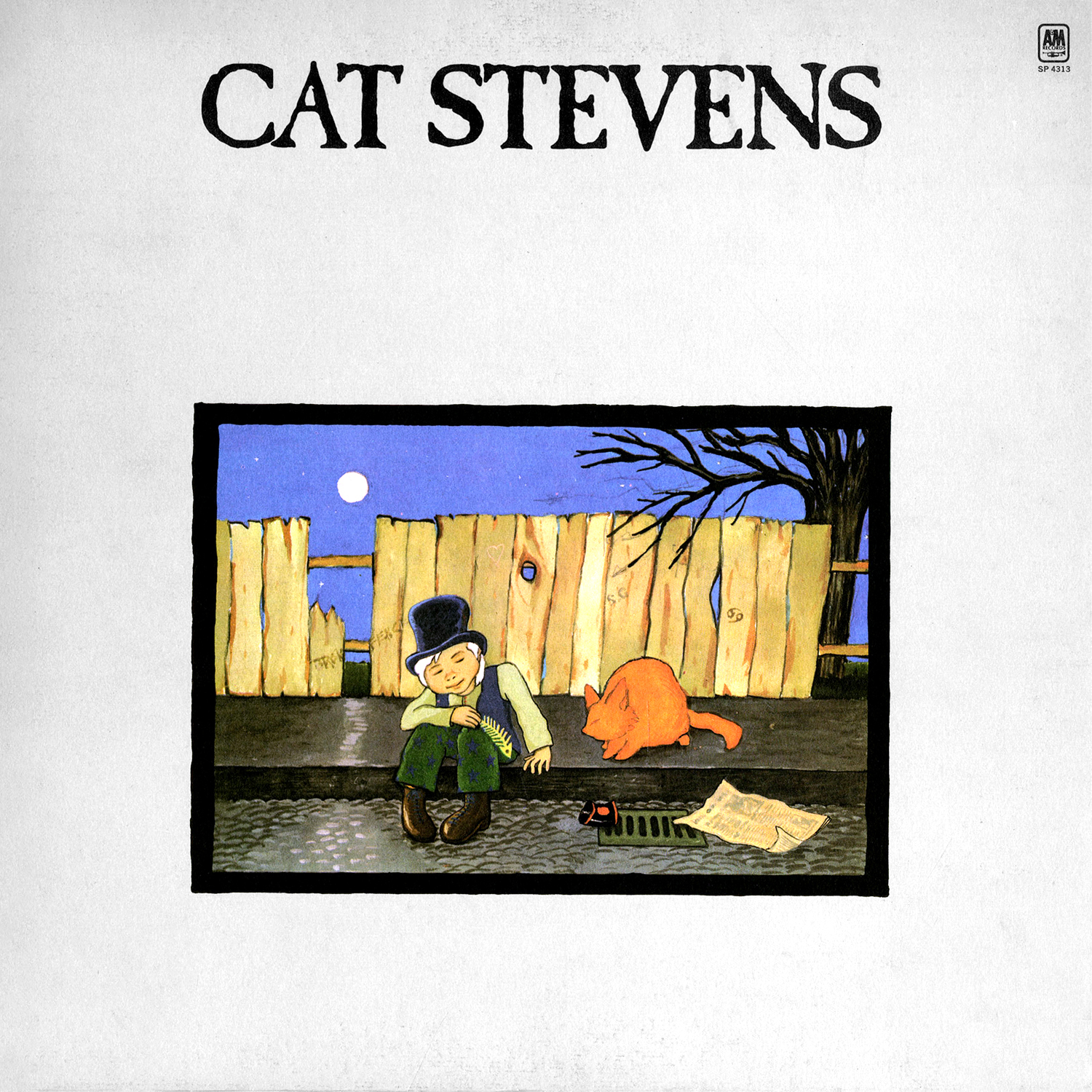
 While many think of American or Canadian artists as the dominant artists of the genre—Joni Mitchell, Carole King, James Taylor, Jackson Browne, Gordon Lightfoot, Carly Simon, and others—some British artists were also key to the sound, particularly Cat Stevens. His 1970 album Tea for the Tillerman became one of the most important and commercially successful albums of the era. A Super Deluxe 50th Anniversary Edition of the album was released in 2020, along with Mona Bone Jakon, his previous album, which was also released in 1970.
Mona Bone Jakon signaled a sea-change in Stevens’s music. He had previously written and recorded very pop-oriented music for the Deram label, which was often lumped in with the then-waning British Invasion sound. Mona Bone Jakon also began his relationship with Chris Blackwell and Island Records. Equally influential and as timeless as Tea for the Tillerman, his next album, Teaser and the Firecat, released in 1971, is now also available in a Super Deluxe 50th Anniversary Edition.
This set is as fulsome as the Tea set, including, for starters, four CDs. CD one is a 50th anniversary remaster of the original 10-track album. CD two includes 17 demos, alternate versions, rehearsals, bonus tracks, and new recordings of “The Wind” and “Bitterblue.” CD three, entitled Live On Air, UK 1970/71, includes 20 live radio and television performances, mostly from the BBC. CD four is a 12-song live performance from Montreux, Switzerland, on May 2, 1971.
The Blu-ray contains audio of the 50th anniversary remaster of the original 10-track album, two music videos, seven of the Montreux performances from Sweden’s RTS TV, seven performances from Yorkshire, England television, two performances from the Old Grey Whistle Test television show, and five performances from BBC television. There are also two 12-inch vinyl albums. They are Teaser and the Firecat: The Alternate Version, and Live 71, which includes five performances from Montreux and six from the BBC.
Some of the live material here contains pre-Mona Bone Jakon songs, including versions of “Matthew and Son.” There is also a seven-inch single of “Moonshadow,” with Spike Milligan’s narration from the 1977 animated Moonshadow film on the B-side. The set also includes a 108-page hardcover book that includes detailed liner notes, essays, memorabilia, press clippings, rare photos, and much more, along with a beautiful 44-page book illustrated and written by Stevens, available in 10 languages. The contents are housed in a linen-fabric box and are individually numbered; the set is limited to 5000 copies.
The differences between this Super Deluxe reissue and the previous two are that Mona Bone Jakon did not include a seven-inch single, had only one side of music on one of the vinyl records, featured less television material on the Blu-ray, and came with only one book. The Tea for the Tillerman set contained five CDs, fewer live television performances on the Blu-ray, no seven-inch single, not two full vinyl albums but one full album and an EP, and only one hardcover book. Neither of those boxes was individually numbered nor came with a wrap-around, obi-style sheet that covers the back, side, and part of the front. Those two had only a back page, which was visible through the shrink wrap.
While some might argue that Teaser and the Firecat is superior to Tea for the Tillerman, others might argue the opposite, or, better yet, that both are timeless classics. With Mona Bone Jakon, Stevens began his long relationship with not only Chris Blackwell and Island Records (and A&M in the U.), but also with Paul Samwell-Smith, who produced all three of those albums, as well as his next two albums after Teaser and the Firecat, Catch Bull at Four, and Foreigner.
Samwell-Smith, the former bassist and producer with the Yardbirds, brought just the right approach to the albums. The quiet, subtle, meditative, and childlike simplicity of the music was augmented by various instrumental colorings and, when needed, a solid, upfront, and forceful rhythmic punch that reinforced the deeper, fuller side of Stevens’s vocals. Tea for the Tillerman had the hit “Wild World.” Still, Teaser and the Firecat included the hits “Moonshadow,” “Morning Has Broken,” and “Peace Train,” and the album not only scored hits but was a staple of the dominant progressive FM radio format of the time.
What’s really exciting about this set is all the bonus live material. The only disappointment is that there is no vinyl album of the new mix of the original album included here, something that was included on the previous two sets. However, a production and packaging error includes a vinyl remaster of the new album mix rather than the alternate-mix disc. Universal Music has corrected the problem and is sending the correct vinyl disc to anyone who purchased the wrongly manufactured boxes.
Along with Tea for the Tillerman, Teaser and the Firecat must be included on a list of arguably the most important singer-songwriter albums of all time, with Blue from Joni Mitchell, Tapestry from Carole King, No Secrets from Carly Simon, Late for the Sky from Jackson Browne, Sweet Baby James from James Taylor, Sundown from Gordon Lightfoot, and other albums by these artists, as well as several from Elton John.
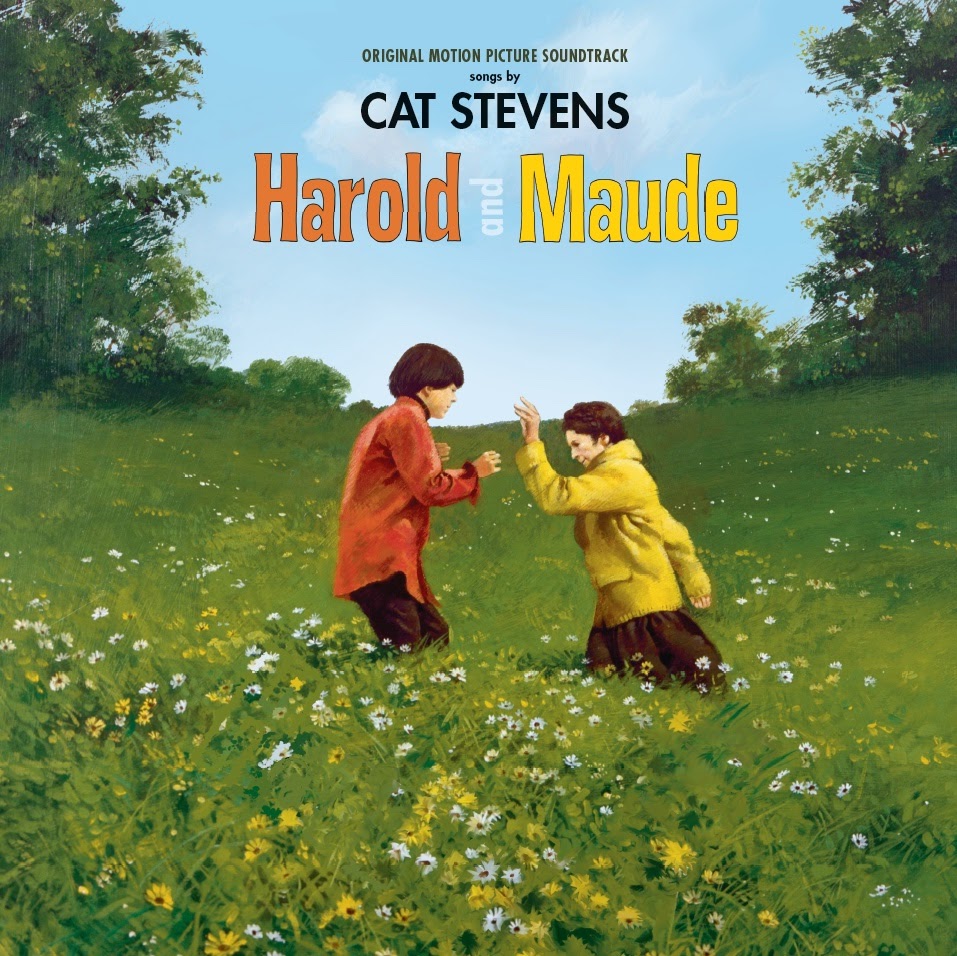
Also recently released was a reissue of the soundtrack for the film Harold and Maude. The film is a cult favorite, was Hal Ashby’s second film, and was released in 1971. Ashby was one of the most iconoclastic and emblematic American film directors of the ‘60s and ‘70s, and also had an extensive film resume that extended beyond directing. It features breakout performances by Bud Cort and Ruth Gordon.
Stevens actually stepped in to add his songs to the soundtrack after Elton John dropped out. It was John who suggested to Ashby that Stevens’ music be used. Stevens wrote the songs “If You Want to Sing Out, Sing Out” and “Don’t Be Shy” for the movie. Songs from Mona Bone Jakon and Tea for the Tillerman—“Miles from Nowhere,” “Where Do the Children Play?,” On the Road to Find Out,” “I Wish, I Wish,” “Tea for the Tillerman,” “I Think I See the Light,” and “Trouble”—appear in instrumental or reworked form.
There are also pre-rock instrumental passages from popular classical pieces on the soundtrack. The movie soundtrack album was initially only released in Japan in 1972, with several of the Stevens’ tracks omitted. It was then released as a limited-edition vinyl of 2500 copies in 2007 through Cameron Crowe’s Vinyl Films label, with more of Stevens’s songs from the film restored to the running order, bonus material, and a 30-page booklet.
In 2021, yet another limited-edition Record Store Day release came out on colored vinyl, but with no bonus material. The newest version, which is the first not to be a limited release, includes 19 tracks, a 36-page booklet, and a gatefold jacket; it was remastered at Abbey Road Studios, pressed on 180-gram vinyl, and housed in a polyvinyl sleeve. It is also available on CD.
This is one of the music soundtracks of the late ’60s and early ’70s that redefined how popular music could be used in film and other popular arts. Ashby was at the forefront of American directors who ushered in the golden period of American films of the 1970s, until the blockbuster films of the late ’70s brought the period’s film renaissance to a close in America.
GRADED ON A CURVE:
Teaser and the Firecat
A
Harold and Maude
B+