Plato famously said, “Whenever a horn band is born, there is more misery in the world.” He was speaking specifically about Blood, Sweat & Tears, but his words obviously applied to bands like Electric Flag and Chicago as well.
Big band horn section, pop rock band—aside from Emerson, Lake & Palmer’s wretched classical/rock fusion, I can’t think of a worse example of musical miscegenation. Chicago wasn’t the worst horn section offenders (my vote goes to Blood, Sweat & Tears), but they were certainly the most popular, for the simple reason that they wrote the best songs—1975’s Chicago IX: Chicago’s Greatest Hits is a must-own.
Which isn’t to say that Plato’s words don’t apply—the very existence of the band that began life as Chicago Transit Authority and prominently featured a horn section that included trombone, saxophones, flute, trumpet, and flugelhorn, playing together on meticulous arrangements, couldn’t avoid being a menace to society. As my brother Jeffers put it, “Chicago, horrid stage band bouillabaisse, with words.” And the words! Chicago may have considered themselves part of the counterculture, but their lyrics are a toothless, sloganeering muddle.
And they were dangerously ambitious—their first three releases were double albums, and their fourth, 1971’s Chicago at Carnegie Hall, was a FOUR-LP vinyl box set. Of the last-named Robert Christgau snidely wrote, “I’m not claiming actually to have listened to this four-record set—you think I’m a nut?” After which, he went on to complain about the box set’s lousy packaging.
And Chicago’s ambition extended to their songs, especially their pretentious progressive rock-school “song suites.” I count three of them on 1970’s Chicago II and two on 1971’s Chicago III. The six-part “Elegy” from Chicago III speaks volumes about the band’s belief in its philosophical depth and wisdom, starting as it does with “When All the Laughter Dies in Sorrow” and ending with “Man vs. Man: The End.” I’ve never listened to it—you think I’m a nut?
All of that said, Chicago had the goods when it came to musicians. Guitarist Terry Kath—he’s the guy who died playing Russian Roulette—and bassist Peter Cetera shared lead vocal duties, and Kath’s more muscular singing made a fine contrast to Cetera’s pop pipes. And Kath was a formidable guitarist who I suspect is underrated because of the company he kept.
Throw in the fact that they could write very good songs and the horn players—especially saxophonist Walter Parazader—were capable of some truly exciting playing when off the big band leash, and what you have is a band that might have done it all, had they just been willing to step out.
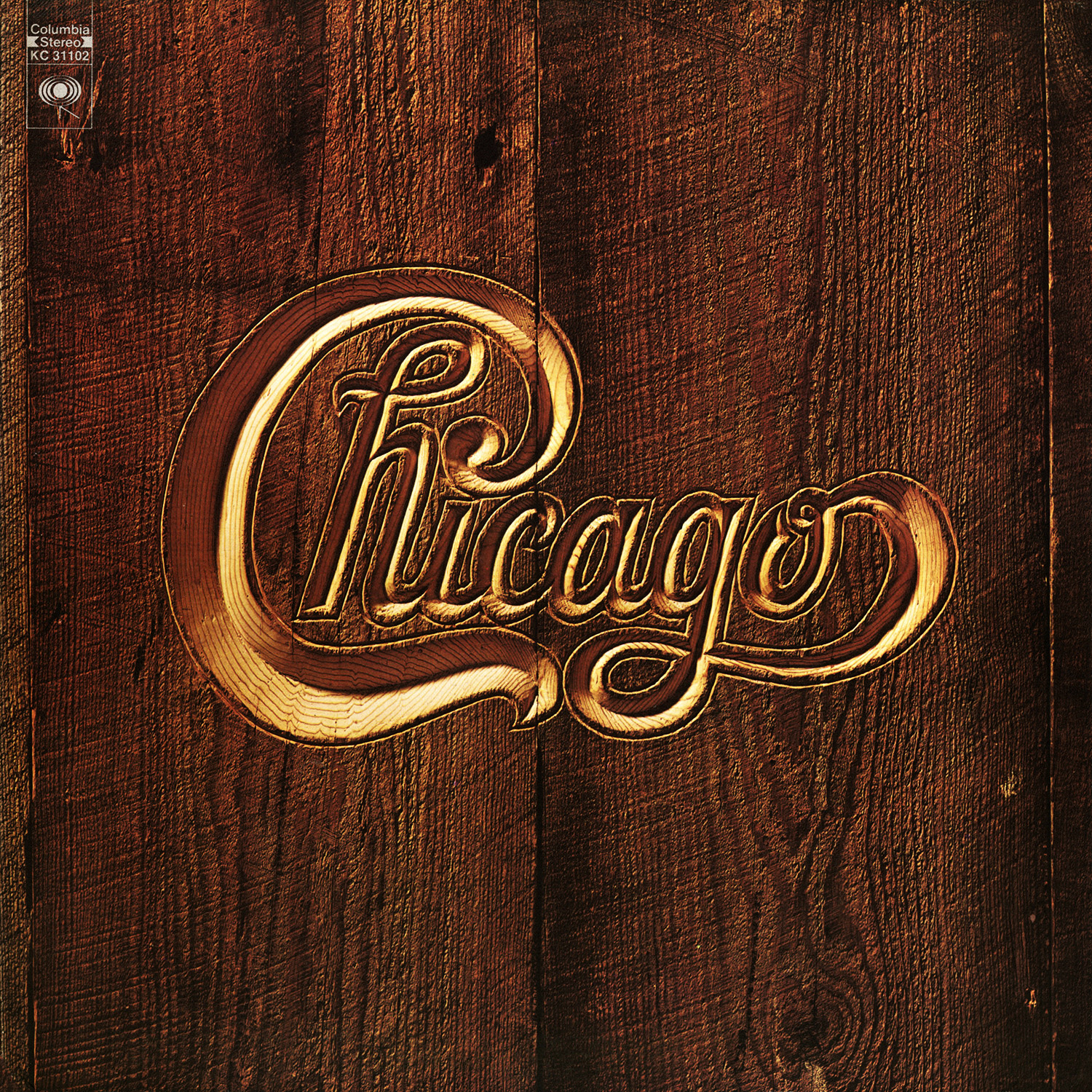
And lo and behold, they don’t fail to disappoint on 1972’s Chicago V—their first single-disc release. The lyrics are tame and muddleheaded attempts to be seen as revolutionary hip. Unfortunately, when all is said and done, all they really demonstrate is these guys were take-no-chances conformists. Musically, some, but hardly enough, of the pieces are in place. Some of the songs work or almost work, but I can’t do any better than “patchy.”
Opener “A Hit by Varese” is a mixed bag. Robert Lamm’s keyboards are second-rate Keith Emerson, Cetera’s vocals are anything but avant-garde, and the horns’ ensemble playing is the kind of thing that would have made poor Varese puke. Yet there are some truly exciting moments trapped therein, trying to get out. The band actually achieves dissonance; the horns work when they’re playing separately or against one another rather than in sync, and the breakneck pace helps keep the excitement level high. And Kath contributes some frenetic guitar.
“All Is Well” is a vapid sign of things to come—the big band arrangement and CSN&Y vocals make for some Nixon-approved easy listening and not much else. And that title! It never fooled anyone into thinking these guys were the type to burn their draft cards.
“Now That You’ve Gone” is funky jazz fusion that transcends the big-horn arrangement. Less impressive are the ensemble vocals, which are America (the band) lame. But things really kick into gear when the tempo does, and the band reaches this cool crescendo that has Kath interjecting his vocals over those of the other fellas, while Parazader actually freaks out on saxophone.
“Dialogue (Part I)” saddles good music with a hippie “Goofus & Gallant” skit that pits a radical (played by Kath) against a complacent, self-absorbed college student (played by Cetera). The music is upbeat, features some great Kath guitar, and has a great build-up. Added attraction for cynical types like yours truly—the song’s unintentionally funny lyrics. Cetera’s obliviousness and “everything is fine” attitude are hilarious, and exchanges like this one are typical:
Kath: “When it’s time to function as a feeling, human being/Will your bachelor of arts help you get by?”
Cetera: “I hope to study further, a few more years or so/I also hope to keep a steady high.”
That “hope to keep a steady high” gets me every time. And then there’s this:
Kath: “Are you optimistic ’bout the way that things are going?
Cetera: “No, I never, ever think of it at all.”
Kath: “Don’t you ever worry when you see what’s going down?”
Cetera: “Well, I try to mind my business, that is no business at all.”
That said, the lyrics (lame as they are) are timely, and your Cetera types are aiding and abetting the right-wing attempt to destroy America. And if you thought the song would come down on that note, you’re wrong: “Dialogue (Part II)” is a complete cop-out, with the band settling on an empty-headed optimistic note that ignores reality in favor of Age of Aquarius balderdash.
The music is anthemic, the vocals in synch, but listening to the band sing “We can make it better” and “We can change the world now” is simply irritating. How exactly does Chicago expect to change the world? The band offers no specifics because the band doesn’t have a clue. In the end, they remind me of John &Yoko—pie-in-the-sky dumb. Say what you will about the Weathermen, they had an actual agenda. Blow shit, including themselves, up!
“While the City Sleeps” opens on a prog/funk/jazz note, features lots of harmony vocals, syncopated horns, and—the only reason to listen to it—a take-no-prisoners Kath guitar solo. Overall, an unconscionable waste of precious vinyl—and the green in your wallet. “Saturday in the Park” was the album’s hit and difficult to dislike, especially with the lines that go “Can you dig it?” followed by “Yes, I can.” Cracks me up every time. No need to describe the song; unless you’ve been living in a bomb shelter for the past half-century, you know it.
But what I want to know is why there is no mention of getting high? Fuck the guys singing Italian songs! And how does the band not know whether it’s the Fourth of July? Because every day is July 4 in that park, including those January days in Chicago when it’s forty degrees below zero, the squirrels have frozen to the trees, and the guy playing guitar has frozen to a tree.
“State of the Union” is second-rate funk (with a decent trumpet solo) and is distinguished mainly by its lyrics, which have an evil voice coming from out of the darkness telling Cetera that the only way to save America is to “Tear the system down/Oh, tear it down/Down to the ground. Well, not on Cetera’s watch. He wants to build it up! More system, that’s the ticket! Does this mean he’s joining the Young Republican National Federation? The Ohio National Guard? Does he intend to narc on the Weathermen? He’s hopelessly vague.
“Goodbye”—with a title like that, shouldn’t it close the album?—is a sort of band history and jazz-lite bore, and features Cetera singing about how he “can see history.” Palatable trumpet solo, but mostly ensemble playing. Only the harmony vocals save it from being a total loss.
Closer “Alma Mater” is a piano dirge with gospel overtones and features Kath singing lead over a prominent piano line. Unfortunately, he’s mostly spouting cliches along the lines of
“We must set brand new goals
We must not lose control
Of the possibility
Of finding the discovery.”
Geesh.
Early Seventies Chicago offered no ideas for improving the world, which put it in the same category as almost all bands of the time. They were conservatives right down to the Vegas-ready square horn section. But behind all of that lurked some great musicians who released some great songs and might have released many more had they just been different people.
Chicago V is not a triumph. It is the opposite of a triumph. Had you bought it in 1972 at your local Woolworths, it would have set you back $2.99, or $7,396 in today’s dollars, accounting for inflation. That’s a lot of money to pay for a band capable of offering only platitudes.
So stick with Chicago IX: Chicago’s Greatest Hits. It has “Colour My World” on it!
GRADED ON A CURVE:
D