
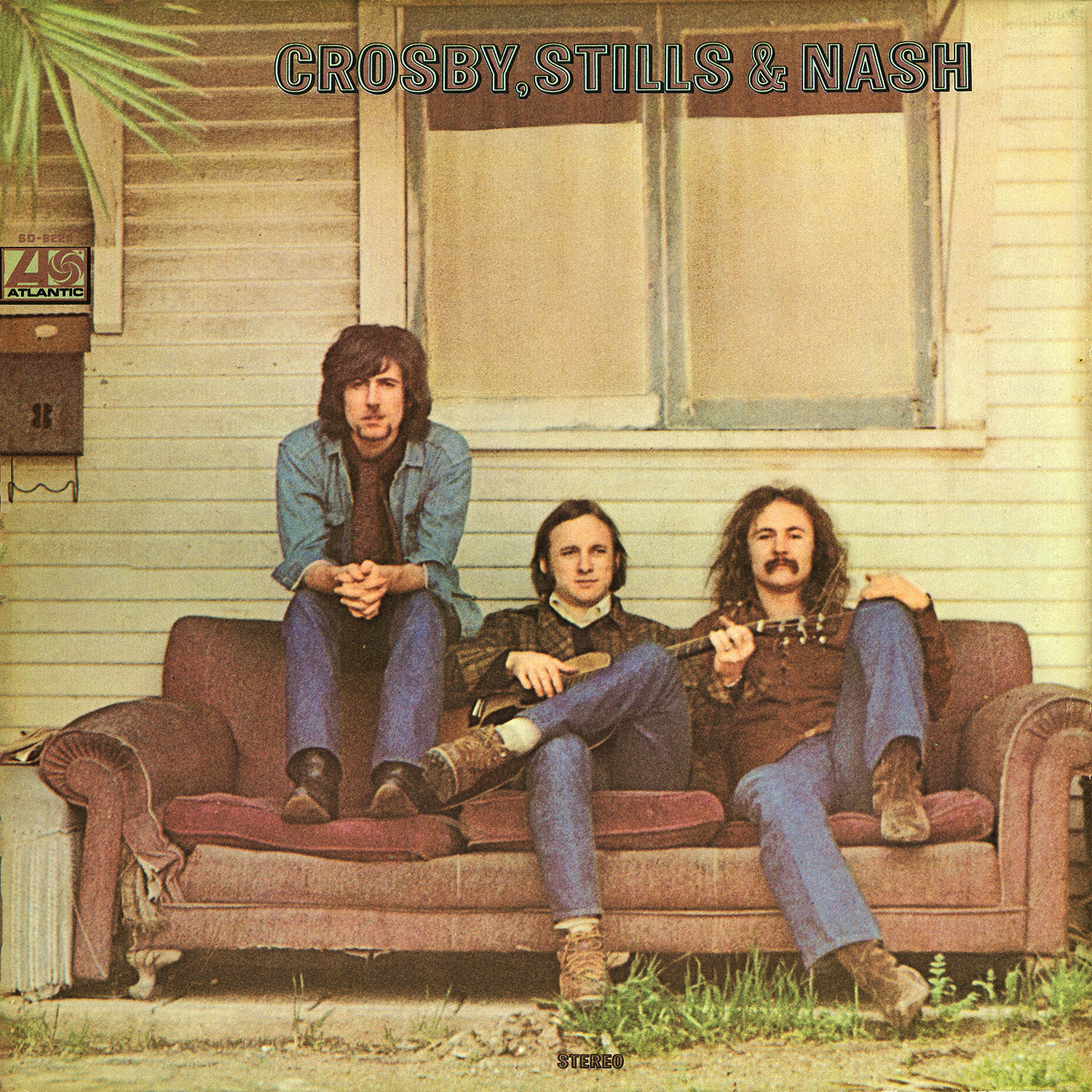
It may be hard for the music listeners of today to fathom the significance of the self-titled debut album in 1969 from Crosby, Stills and Nash. While genres like folk-rock and country rock fused very specific styles, in the 1960s, psychedelia may have been the only genre to emerge that was completely new.
The Beatles, of course, kicked off the British Invasion, and Sgt. Pepper’s Lonely Hearts Club Band was the crowning achievement of their career and the ’60s. That album was also the peak of psychedelia. All of the music mentioned above could easily be analyzed, and the musical antecedents that gave birth to it could be explained.
The debut CSN album, though borrowing from the folk- and country-influenced music of The Byrds (Crosby) and the Buffalo Springfield (Stills), featured an indescribable sound that could not be classified or put into any genre. It was a wholly new music. While some of the album’s success was attributed to the three’s excellent songwriting, the distinct blend of their voices truly made it special.
Though The Byrds, Buffalo Springfield, The Hollies (Nash), and others, such as The Beach Boys and the Bee Gees, all boasted soaring harmony singing, it was still, except in occasional moments, basically group choral harmonies. The CSN blend and the myriad ways the group arranged their vocals were completely new.
Of course, many British Invasion groups and other American groups influenced by the British Invasion made music with beautiful harmonies, but CSN created what could only be described as the West Coast’s best, first, and most original vocal music sound. The sound would become prevalent in the ’70s, reaching its commercial zenith with the Eagles. There would be no Eagles without CSN.
The other element that made this album click was that it truly sounded like a group album rather than a collection of solo tracks. On later albums from various permutations of CSN (and Neil Young), that was not often the case. While CSN was not the first supergroup—that was probably Cream in 1966—they succeeded in bringing three powerful musical forces together, making the whole greater than the sum of its parts.
Many of the songs here are classics and are still played regularly on rock radio, particularly “Suite: Judy Blue Eyes,” the Stills ode to Judy Collins. “Marrakesh Express” is Nash writing about the hippie ideal in an accessible way and is the counterpoint to Crosby’s “Long Time Gone,” which saw the darker, more revolutionary side of the 1960s, as did his apocalyptic “Wooden Ships.”Crosby did, however, write and sing the beautiful “Guinnevere.”
Stills, while contributing equally vocally and lyrically, was the group’s primary musical multi-instrumentalist, with his guitar-God chops. He also, of the three, was probably the most responsible for the overall production, although all three are listed as co-producers. The only other musicians here are drummer Dallas Taylor, drummer Jim Gordon on “Marrakesh Express,” and Cass Elliot, who provides backing vocals on “Pre-Road Downs.”
This album is made for a bespoke audiophile reissue. The music took full advantage of the recording studios of the day and served as an organic, analog masterclass. There are many nuances, shifting musical styles, and moods. The album defined the nebulous West Coast sound without hampering it and allowed it to be many things.
On this reissue, the gatefold album is faithfully reproduced and includes the original four-page insert. As is the case with these Rhino High Fidelity releases, an additional four-page insert, featuring photos and liner notes, is included and marks the first time this album has been reissued with such additional material. The dense mix of this album sounds just right on this audiophile reissue.
The album has been reissued many times by bespoke audiophile labels, including Nautilus (1982), Classic Records (2002, 2002, 2005), Mobile Fidelity Sound Lab (2021, 2022) and Analogue Productions (2024). For anyone who has access to all of these releases, it would be fun to compare and see which one sounds the best and even compare this one to original pressings.
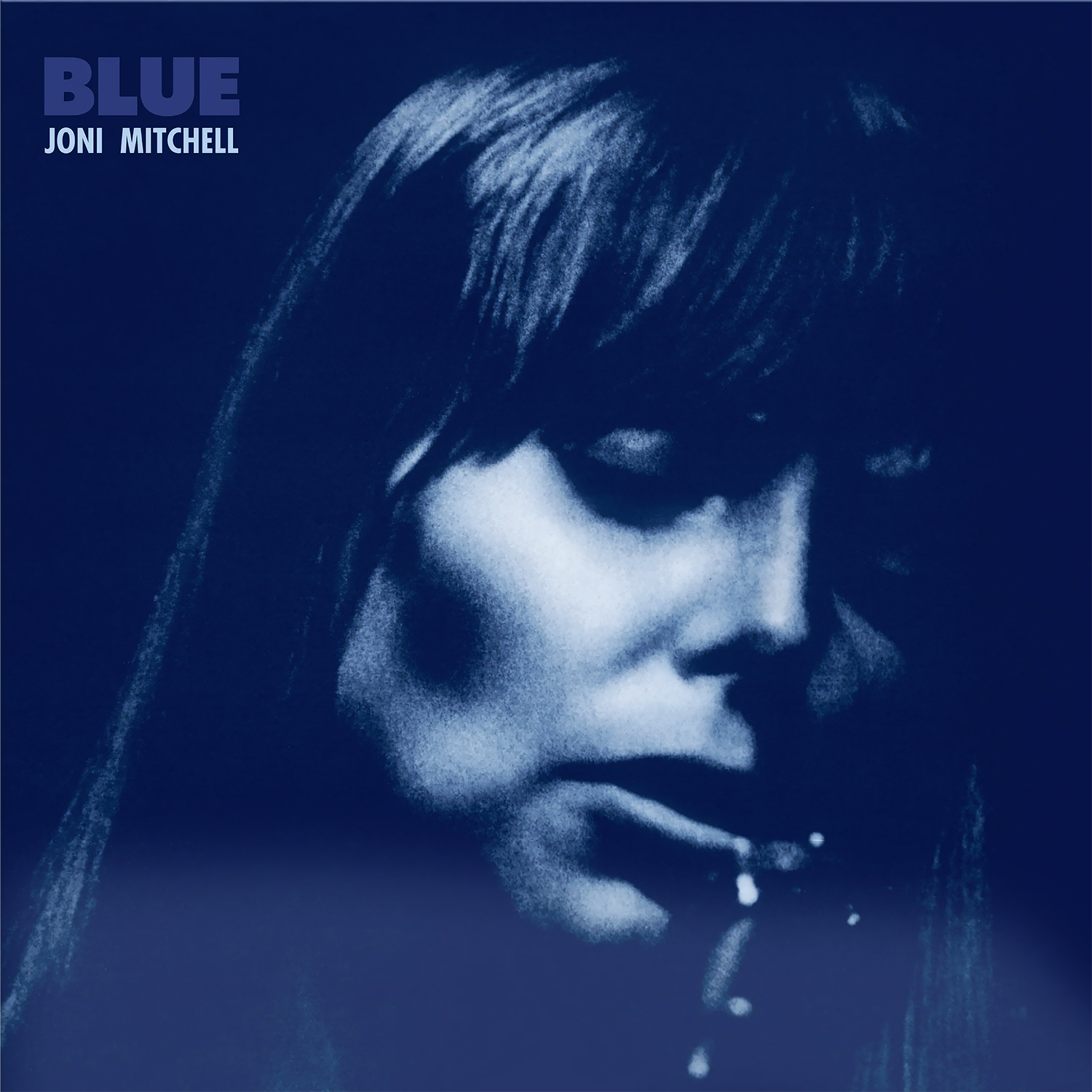
However influential and iconic the CSN album is, Joni Mitchell’s Blue is an even more important album. Of course, Mitchell, CSN, and Y have major connections. Like Mitchell, Young is Canadian. Crosby produced Mitchell’s debut album. Nash was Mitchell’s boyfriend, and they both wrote songs about each other, including Nash’s “Our House” and Mitchell’s “Willie.”
Blue, Mitchell’s fourth album, released in 1971, defined the confessional singer-songwriter movement and is a singular work of excellence. Carole King released her Tapestry album that same year, and it became a blockbuster. The two albums have many similarities and many differences. Carly Simon would have her own major moment as a singer-songwriter with No Secrets in 1973. All three would have long, fruitful, artistic, and commercially successful careers and, in fact, Carly Simon recently released a new album after a long absence.
Others would make singer-songwriter hay in that period, including James Taylor, Cat Stevens, Gordon Lightfoot, and Elton John, to name four. All had their brief singer-songwriter peak, but then moved on to explore other musical forms. Blue is the purest, most organic, most brutally raw of these singer-songwriter releases and is the most confessional.
Part of how that happened was that Mitchell and her producer, Henry Lewy, largely locked themselves away in A&M Studios in Hollywood to make the album, allowing Mitchell to let out all the deep emotions these songs unleashed freely. Mitchell plays acoustic guitar, Appalachian dulcimer, and piano. Steve Stills and Russ Kunkel play on “Carey” (Kunkel also plays on “A Case of You”), and Kunkel and Sneaky Pete play on “California.”
This is Mitchell’s show, and her vocals are right out front and center, and dramatically so on this reissue. Unlike King and, to a lesser degree, Simon, Mitchell is not telegraphing feminist identity consciousness here but instead unraveling the complexities of romantic relationships more timelessly, while still with an eye toward the changing mores of the boomer generation.
There is also, to some degree, an ode to that generation at that time, to its ground zero in “California,” and she writes a wholly new kind of Christmas song with “River.” Lovers and other strangers make appearances in her well-drawn portraiture pieces on men in “My Old Man,” “Carey,” “A Case of You,” and “The Last Time I Saw Richard,” a song clearly way ahead of its time.
There is a stark, unadorned beauty to this album, and Mitchell walks a tightrope between vulnerability and confidence that a lesser artist couldn’t pull off. When one considers all of the aforementioned singer-songwriters, as well as maybe even Lennon, McCartney, Dylan, and Paul Simon, Mitchell stands out as arguably nearly peerless, and the album sounds better than ever.
Much of that is attributable to the simplicity of the music and production in conveying very complex emotions. The insert with this release includes a new interview with Mitchell. The sound of this reissue is excellent, and an audiophile release of this kind suits the music perfectly.
Both of these albums come with an Obi strip, are limited to 5,000 numbered 180-gram copies pressed at Optimal, and were cut from the original analog master tapes by Kevin Gray at Coherent Audio.
GRADED ON A CURVE:
Crosby, Stills and Nash, Crosby, Stills and Nash
A
Joni Mitchell, Blue
A+