Of all of the members of The Beatles, George Harrison has had the most elusive life and career for casual fans of the group to understand. The youngest member of the group, the one least in the spotlight, and the one who was and often still is overshadowed by the powerhouse and peerless songwriting partnership of John Lennon and Paul McCartney, Harrison remains an enigma nearly 25 years after his untimely death.
Harrison became an ardent follower of Eastern religion from a short time after The Beatles broke around the world. As such, the concept of yin and yang can provide an easy shorthand to understand the man. Reclusive, borderline resentful of his fame as a Beatle, of all the members of the group, he wrote two touching and reflective looks back on the group with apparent fondness. While he was a man who could study the sitar with steely determination and meditate and pray as part of his Eastern religious practices, Harrison spent plenty of time partying and enjoying the company of women and also had a dry sense of humor that was a key to his personality.
Though he often struggled to get his songs onto albums by The Beatles, when he finally made a proper solo album after a soundtrack album in 1968 (Wonderwall Music) and an electronic album in 1969 (Electronic Sound), he released a triple set that many feel is the best solo album any of The Beatles released and maybe one of the greatest albums of all time: All Things Must Pass, in 1971.
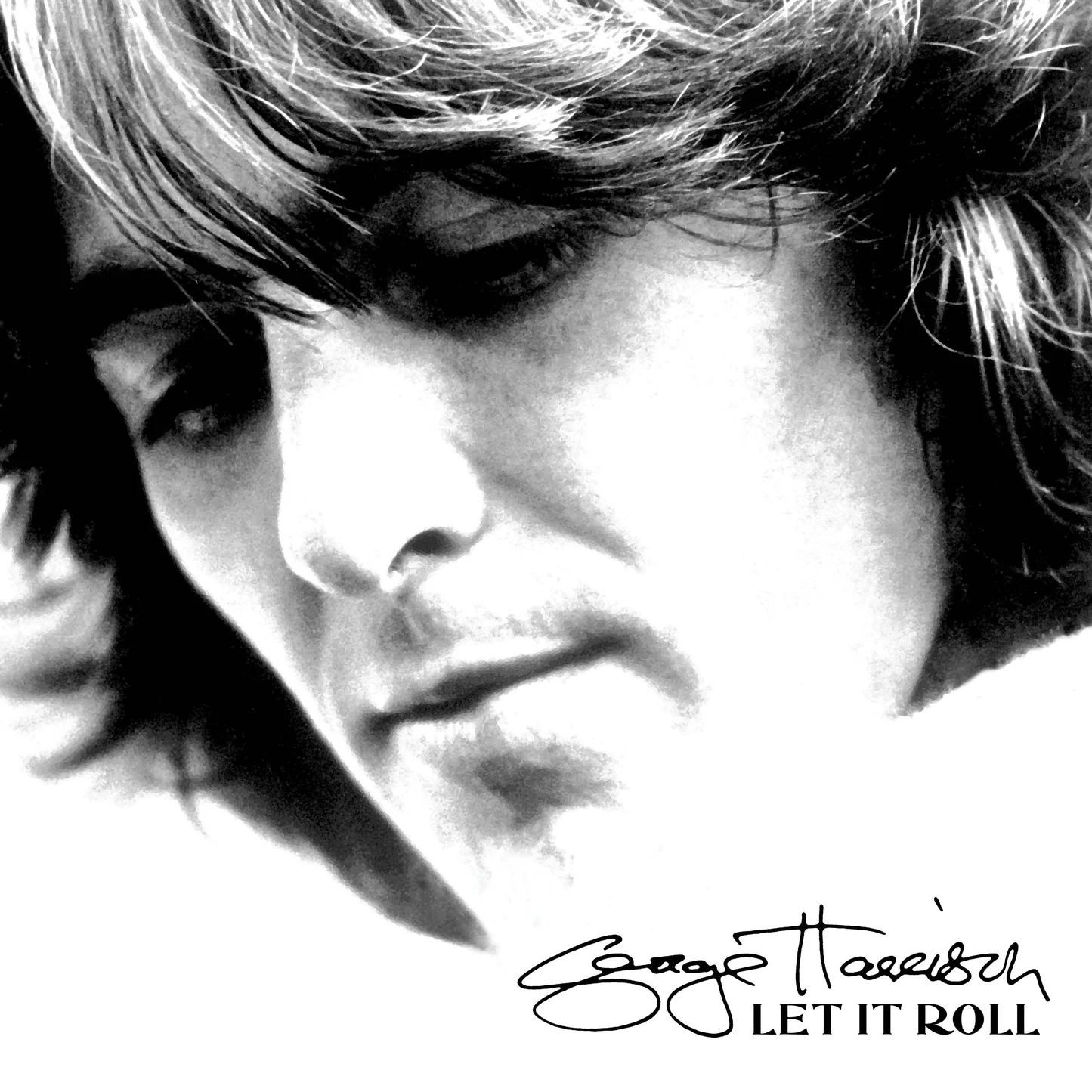
The recent release, Let It Roll, is the most fulsome album that collects what appears to be somewhat of a solo retrospective. Originally released on CD in 2009, the music is now available as a double vinyl set. There have been greatest hits and compilation albums before of his music including The Best of George Harrison in 1976, which also included half an album consisting of tracks from The Beatles, the Best of Dark Horse 1976–1989, Early Takes: Volume 1, two CD/DVD box sets The Dark Horse Years 1976–1992 and The Apple Years 1968–75 (which are both out of print) and George Harrison – The Vinyl Collection (which is sold out).
This set rectifies the poorly conceived and too short The Best of George Harrison. That album only included six Harrison solo tracks on side two and seven tracks from his time in The Beatles on side one. This set includes 19 tracks. Although there are three songs he wrote when he was with The Beatles and which were also recorded by The Beatles, those three songs included here are live versions from The Concert for Bangla Desh.
The two albums’ track list is sequenced almost more like a concert set list, except maybe for side four, than that of a compilation album. The track listing is not chronological. The two-album set begins with Harrison’s cover of Rudy Clark’s “Got My Mind Set on You,” Harrison’s big comeback hit from the 1987 album Cloud Nine. “Give Me Love,” maybe Harrison’s second biggest 1970s hit, follows, from the Living in the Material World album. An album cut from All Things Must Pass “Ballad of Sir Frankie Crisp (Let It Roll),” which the title of this album is taken from, is followed by that album’s biggest hit and maybe Harrison’s biggest solo hit ever, “My Sweet Lord.” Side one concludes with the live version of “While My Guitar Gently Weeps” from The Concert for Bangla Desh.
The title track from All Things Must Pass leads off side two, before the first of three Brainwashed tracks included here and a reminder of just how good that last album from Harrison sounds nearly 25 years after its release. “This Is Love” is another excellent Cloud Nine track, that shows off Harrison’s fruitful collaboration with Jeff Lynne. “All Those Years Ago” from Somewhere in England was one of Harrison’s biggest songs from the ’80s and a fond look back on his days in The Beatles. “Marwa Blues” from Brainwashed is perhaps the most obscure track on this entire set.
“What Is Life” opens side three, another powerhouse track from All Things Must Pass, before “Rising Sun,” the last track included here from Brainwashed. “When We Was Fab” from Cloud Nine is another poignant tribute to The Beatles and somewhat of a follow-up to “All Those Years Ago.” The live version of “Something” is from The Concert for Bangla Desh. “Blow Away” was Harrison’s last hit of the 1970s from the underrated self-titled album.
“Cheer Down” opens side four and is one of two studio soundtrack works included here, this one from the movie Lethal Weapon 2. “Here Comes The Sun” is the final live track, again from The Concert for Bangla Desh. “I Don’t Want to Do It” is a cover of a Bob Dylan song that was included on the soundtrack of Porky’s Revenge! The album closes with the magisterial “Isn’t It a Pity” from All Things Must Pass.
All and all, this is not a bad solo survey of Harrison’s post-Beatles years, but one with some omissions. It would have been nice to see at least two Traveling Wilburys songs. Tracks that were only released as singles, such as “Bangla Desh” and that single’s B-side “Deep Blue,” “Miss O’Dell,” the B-side of “Give Me Love” and “Shanghai Surprise,” would have been welcome additions. Other tracks that could have easily made better choices than some of the tracks included here such as “Ding Dong, Ding Dong,” “You,” “This Song,” “Crackerbox Palace,” “Love Comes to Everyone,” “Faster,” “Devil’s Radio,” and another Dylan cover, “If Not For You” from All Things Must Pass, just to name seven tracks.
This is a beautiful package, with the two vinyl albums pressed on 180 gram vinyl. The gatefold jacket, with photos and liner notes by Warren Zanes, includes custom printed inner sleeves and poly-lined sleeves.
In many ways this is another curious Harrison release. There has never been a reissue on vinyl of The Concert for Bangla Desh and the concert film has also yet to be released on Blu-ray. The DVD came out 20 years ago (and is out of print), which was also the last time the CDs were reissued, which are also out of print.
There were many Harrison fans who were disappointed with the Living In The Material World release, really only because the deluxe set sold out so quickly. Obviously, not enough were made available and there has been no repress in sight. It might have been worthwhile to give Harrison the due he deserves and to have recreated this release as a three-or even four-album box set, like the Gimme Some Truth box from John Lennon, released in 2020. There have been some excellent Harrison reissues, but there’s still plenty his fans would like to see and many that would be welcome if they were put back in print.
GRADED ON A CURVE:
B+