Harry Nilsson is best remembered for his once-in-a-lifetime voice and delicate and often quirky songs. Oh, and as the guy who sang “You’ve broken my heart/You’ve torn it apart/So fuck you.” And for being the instigator of much of John Lennon’s bad behavior during the ex-Beatles’ booze-fueled “Lost Weekend.” In short he was a bundle of contradictions, and it would have taken a Carl Jung to sort them out.
Nilsson made a name for himself with 1967’s Pandemonium Shadow Show, and reached his popular and critical pinnacle with 1971’s Nilsson Schmilsson, which included such songs as “Without You,” “Jump Into the Fire,” and “Coconut.” RCA Records understandably expected the follow-up to do as well, or better.
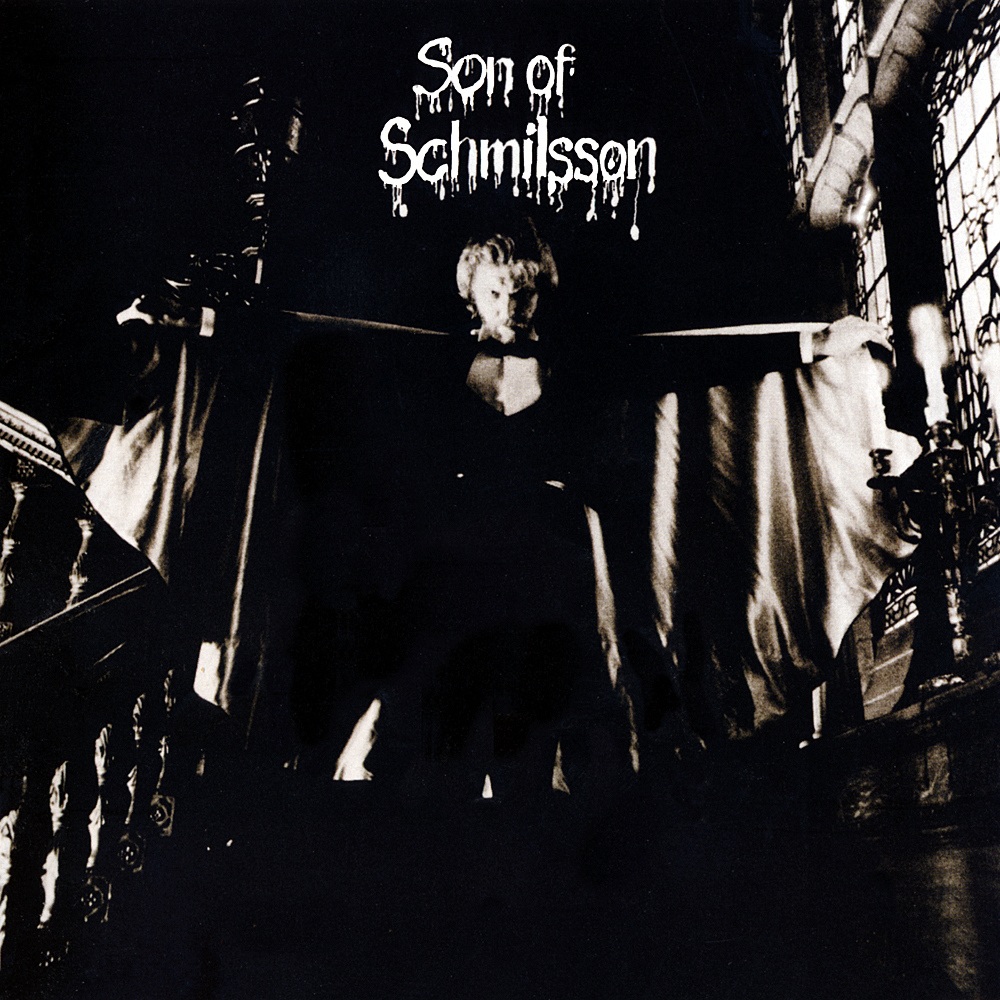
Instead they got 1972’s Son of Schmilsson, a knuckleball of an album that played down Nilsson’s knack for writing lovely and radio-friendly songs in favor of such outré numbers as “You’re Breakin’ My Heart” and “I’d Rather Be Dead.” And only a few put Nilsson’s remarkable voice on display. In short it was the worst possible move Nilsson could have made if he’d expected to up his number of Grammy Awards to four. As his daily intake of Brandy Alexanders reached elephant-stunning proportions, so did his disregard for the input of his trusty producer Richard Perry. Always a bit of an eccentric, on Son of Schmilsson he went gonzo.
But far from full gonzo. “Remember (Christmas)” is as lovely a song as any he ever wrote, and his voice is touching as he sings “Long ago, far away/Life was clear/Close your eyes.” “Turn on Your Radio” is what you’d get if Randy Newman collaborated with The Beatles; a wistful Nilsson sings “Turn on your radio, baby/Listen to my song/Turn on your night light baby/Baby I’m gone.” And the melody of “The Lottery Song” is every bit as light-hearted as its tale of ordinary people dreaming about the big payoff.
The upbeat “Spaceman” is closer in spirit to the Bonzo Dog Band’s “Urban Spaceman” than to Elton John’s “Rocket Man,” and boasts the drumming of Ringo Starr (who plays on much of the album) and an excellent orchestral arrangement by Paul Buckmaster. “At My Front Door” is a hard rocker in the spirit of “Jump Into the Fire” and features the excellent guitar work of Peter Frampton and Chris Spedding, as well as the raucous piano of Nicky Hopkins and a boppin’ saxophone solo by the legendary Bobby Keyes.
On the anti-war song “Ambush,” boys go off to battle singing a patriotic song only to return singing “Now, we ain’t gonna sing that song no more/Ain’t gonna sing that song no more/Just don’t pay to sing no more/Especially when you’re in a war.” On the bridge Nilsson bitterly sings, “Now, this time through, we want everybody to listen to the punch line!” the joke being, I assume, on the poor boys who sing when they should be weeping.
And from therein the going gets weird. “You’re Breakin’ My Heart” is perhaps the greatest song ever written about divorce, and while the song is funny, Nilsson’s bitterness sounds real enough. On the nursery rhyme sing-along “I’d Rather Be Dead,” Nilsson is accompanied by the Senior Citizens of the Stepney & Pinner Choir Club No. 6. The song includes lyrics along the lines of “I’d rather be dead/I’d rather be dead/I’d rather be dead/Than wet my bed.” I can only wonder what the choir’s seniors felt about the words coming out of their mouths.
Nilsson puts on a C&W accent and talks his way through “Joy,” a parody country song that isn’t very funny. Finally we have “Take 54,” a rollicking tale with a fantastic horn arrangement about a woman who strolls into the recording studio and steals Harry’s heart. “I sang my balls off for you baby,” he sings, “I almost broke the microphone.” But when she up and disappears he sings, “Baby, baby come back/I need you to make a good track.” Finally we have the Caribbean-flavored album closer “The Most Beautiful World in the World,” an otherwise good track that gives way to self-parody, from the gargle and spit to the sudden transition to the Crosby croon and heavenly choir and goodbye to Ringo at the end.
Harry Nilsson let his freak flag fly on Son of Schmilsson, and it’s hardly surprising that the LP’s idiosyncrasies confused and disappointed the fans who loved the man with the amazing voice and knack for writing lovely and unique songs like “Me and My Arrow” and “1941.” As it was, their Harry crawled into a bottle, only to emerge toward the end of his life a happy father with a coarsened voice who would never write another “Without You.” I wouldn’t know if you can go on four-day binges in Heaven, but if you can God has his hands full.
GRADED ON A CURVE:
B