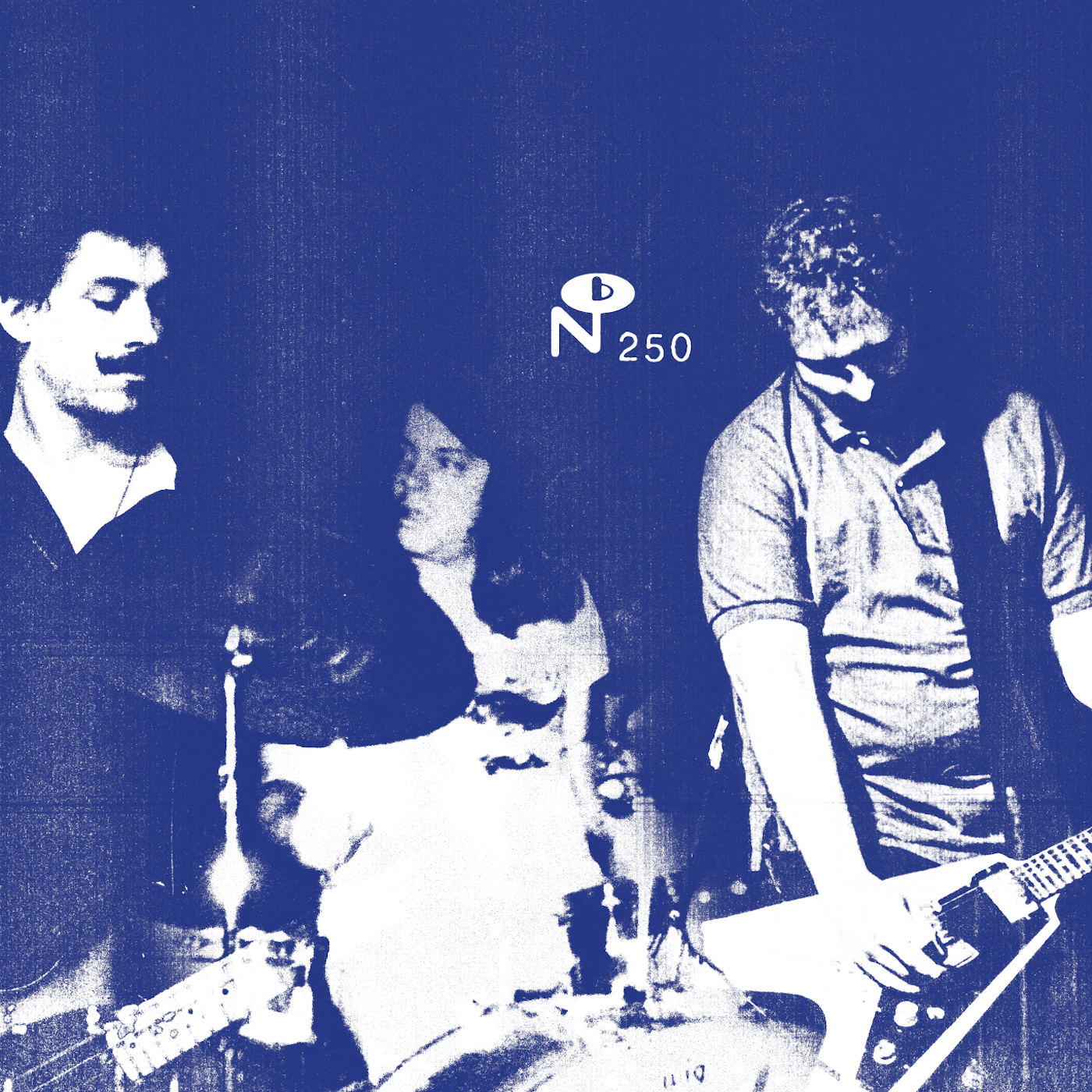
In late-’70s Minneapolis, guitarist Bob Mould, drummer Grant Hart, and bassist Greg Norton came together to form one of the great trios in rock music’s long history. Burning bright for most of the ensuing decade, Hüsker Dü exploded out of the hardcore scene with ferocious speed, only to incrementally increase the melody without turning down the amps. On November 7, Numero Group releases the 4LP live set 1985: The Miracle Year, which posits the smack-dab middle of the ’80s as the band’s peak in terms of productivity, execution, and songwriting acumen. Soaking up the 43 songs, it’s impossible to argue.
Consisting of a complete live set from the venue First Avenue in Minneapolis on January 30, 1985, spread across two LPs and then an additional batch of live songs from various locales during the same period sequenced onto two more LPs, 1985: The Miracle Year might appear to be an undertaking best suited for an intensely devoted listenership.
However, time spent with the collection establishes a gripping momentum that thrives on an extraordinary level of precision, the band dynamic taken to an extreme, and a ratcheting up of intensity that teeters on the brink of sheer mayhem. This is especially the case as the First Avenue set (dubbed the “Minnesota Miracle”) blazes forth, the trio in the throes of a particular, peculiar positive energy that can only really exist when a group endeavor explodes far beyond any reasonable expectations.
As part of the SST Records elite that changed rock music forever, alongside Minutemen, Meat Puppets, and Black Flag, Hüsker Dü succeeded through a defiant tenacity and a relentless desire to keep pushing the possibilities. These bands were never supposed to progress beyond a local phenomenon. It all gets a thorough examination in 1985: The Miracle Year’s booklet essay by Bob Mehr.
Of course, this wasn’t a situation specific to SST; the whole ’80s local goes national underground rock scenario has been detailed in print and through numerous prior reissues. But the SST bands had a unique approach that remained close to the punk/hardcore ethos, rather than maturing beyond it, even as they shunned orthodoxy.
1985: The Miracle Year illuminates Hüsker Dü’s ’60s-level frequency of output; while touring to promote their current album (Zen Arcade), they’d already completed another (New Day Rising) and were writing the next one (Flip Your Wig). It was productivity SST Records ultimately couldn’t handle, and so the booklet also documents the band’s transition to Warner Bros.
The major label lifestyle was uncomfortable for the band because, amongst the substance use and abuse and interpersonal frictions, Hüsker Dü’s particular brand of excess was a commitment to the work, and an attitude that was anti-rock star without being performative about it. 1985: The Miracle Year documents the band at their best, hitting peaks that are odds-defying and occasionally jaw-dropping.
GRADED ON A CURVE:
A