Since launching in October of 2020, the various Joni Mitchell archive releases have become among the better series to offer archival and reissue projects from a major artist. Mitchell’s peerless place in music is secure but these releases serve to bolster and enhance her lofty place in the pantheon of pop music from the past nearly 60 years.
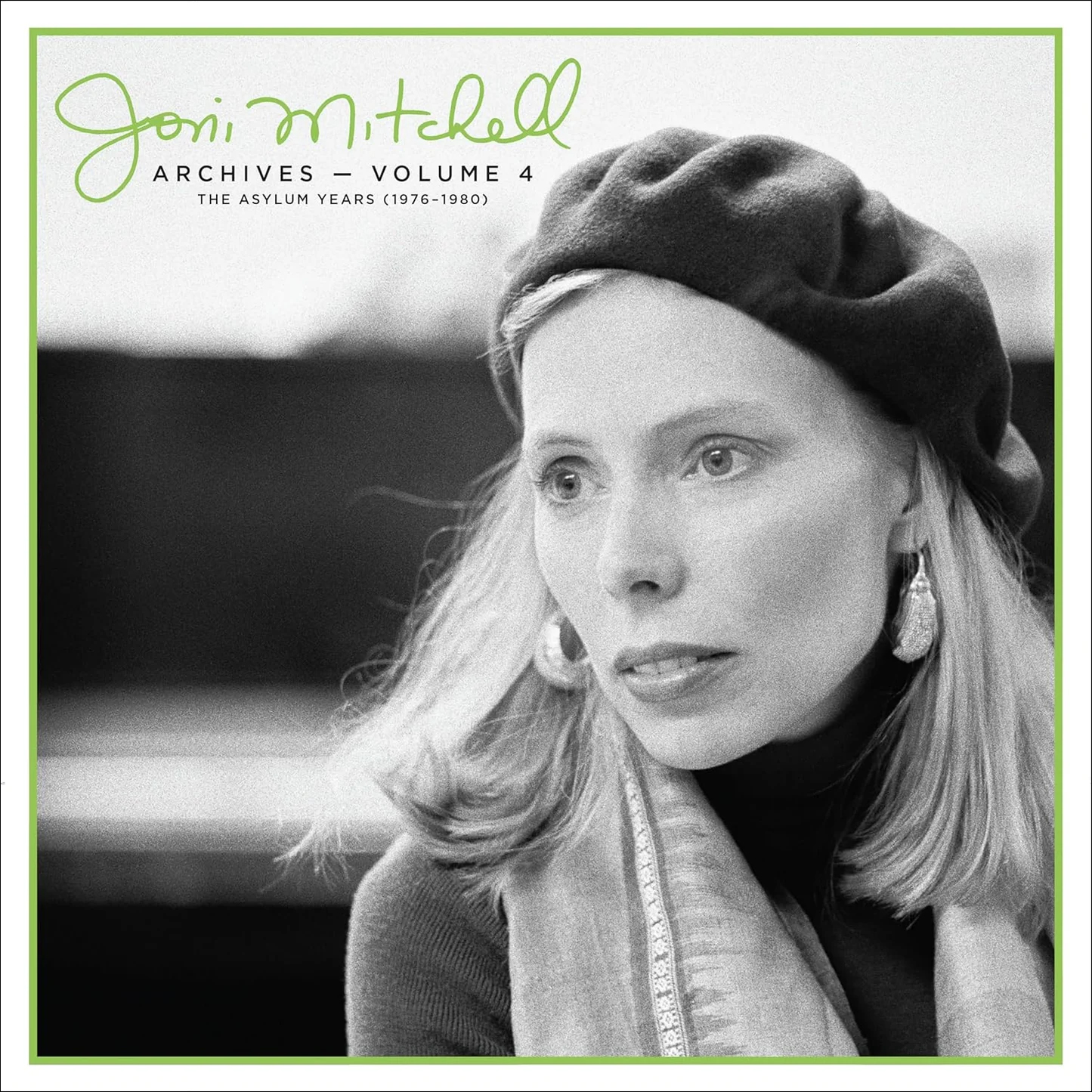
The latest release in the Joni Mitchell Archives box set series is the fourth volume. These releases feature mostly previously unreleased material, including primarily live performances and demos. This latest release, available on CD and vinyl, explores perhaps her most experimental period—1976–1980—and focuses for the most part on music from the albums Hejira, Don Juan’s Reckless Daughter, and Mingus, although some of the performances and songs pre-date 1976.
Mitchell’s previous album, The Hissing of Summer Lawns, actually signaled the beginning of this rich and fertile period of bold experimentation. Short-sighted critics (many primarily East Coast based male critics that at the time coalesced around the burgeoning New York and London-based punk scenes) were not kind to much of this music when it was first released, but listening to these live versions and demos from the period only reinforces just how extraordinary the music was and how well it has held up.
This is music from an artist with unparalleled compositional prowess and genre-defying musical dexterity. Her musical command is otherworldly. Mitchell operates on a musical plane that other artists couldn’t even imagine. These recordings are based on songs drawn on a wide canvas. And it is Mitchell’s other life as a painter that informs the full breadth of the music.
Going beyond folk, folk-rock, rock, and pop, Mitchell doesn’t merely use jazz as another color, but as an extraterrestrial home planet from which to experiment, improvise and collaborate, mostly with the cutting-edge jazz artists of the day (most edgily with bassist Jaco Pastorious), and to take her music and music in general in new directions.
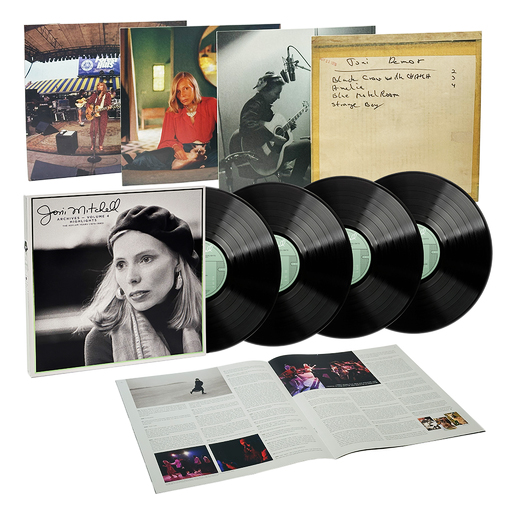
This fourth release is available in a 6CD edition and a 4LP vinyl edition. While the 6CD set offers 98 tracks and the 4LP only offers 41 (40 of which are previously unreleased), we will look at the 4LP set. Hearing this music on 180-gram vinyl really is the way to go. These recordings represent the end days of the analog era. Mitchell’s music is perfectly suited to analog vinyl listening.
The subtleties, the smoky and windswept atmosphere, the varying shades of musical colors, the tactile rhythmic resonance of Mitchell’s unmistakable chord structures, the musical interplay on the cuts that feature band setups and the visceral power of her music live swirl in majestic and magnetic vibrations and breath and pulsate on vinyl. Sometimes reissues and archival releases are tinkered with to the point of sterility or simply just sound off, but these albums sound natural and real.
Side one of the first album kicks off this set with a bang. We get an entire side of live music from Bob Dylan’s historic 1975 Rolling Thunder Revue traveling musical circus, with backing from Mick Ronson and T-Bone Burnett and musicians who would become The Alpha Band. There are two performances from the Harvard Square Theatre in Boston, Massachusetts, as well as one from the Music Hall in Boston and one recorded live in Bangor, Maine, with her performances from the first two venues introduced by Dylan’s running buddy Bob Neuwirth. Other than “A Case of You,” the rest are all from her 1976–1980 output.
Side two includes more live music from the Rolling Thunder Revue, along with live music from her own show at the Music Hall in Boston from 1976 and a performance from the Nassau Coliseum also from 1976, with backing from many of the musicians who were with her since the historic 1974 tour which was chronicled on the double Miles Of Aisles album. Much of the music throughout all four of these albums, however includes solo Mitchell performances.
Side three adds four more performances from the 1976 Music Hall of Boston date and demos of “Traveling (Hejira),” “Black Crow,” and “Amelia” from 1976. Side four closes with another performance from the Rolling Thunder Review from the Tarrant County Convention Center in Ft. Worth, Texas in 1976.
On side five, there are two songs from the Hejira sessions, one from the Don Juan’s Reckless Daughter sessions and one from the Mingus sessions. Nearly all of side six is taken up with three songs performed from Mitchell’s appearance at the 1978 Bread and Roses Festival from September 2nd and 3rd. The last track on the side is an alternate version of “God Must Be a Boogie Man” from Mingus.
The Seventh side opens with a Mingus outtake, “Sue and the Holy River.” The side also includes two songs from rehearsals at SIR in Manhattan from July of 1979 and three performances from Forest Hills Tennis Stadium from August of 1979 attended by your humble narrator, that feature the jazz group she assembled at that time who would be her backing band on the live Shadows and Light double album and video. That band featured Pastorious, drummer Don Alias, guitarist Pat Metheny, keyboardist Lyle Mays, and saxophonist Randy Brecker.
Side eight, which only has two songs, another Forest Hills performance and one from later in the tour from the Greek Theatre in Los Angeles, “A Chair in the Sky,” which features special guest Herbie Hancock, who was possibly going to be part of the entire 1979 tour.
Like all the releases from Mitchell’s archives, this is a beautiful package. The vinyl albums, which come with poly-lined sleeves, are housed in a slip-case box along with a 12-page booklet of photos, art, extensive liner notes, and a Q&A between Mitchell and Cameron Crowe.
GRADED ON A CURVE:
A+