
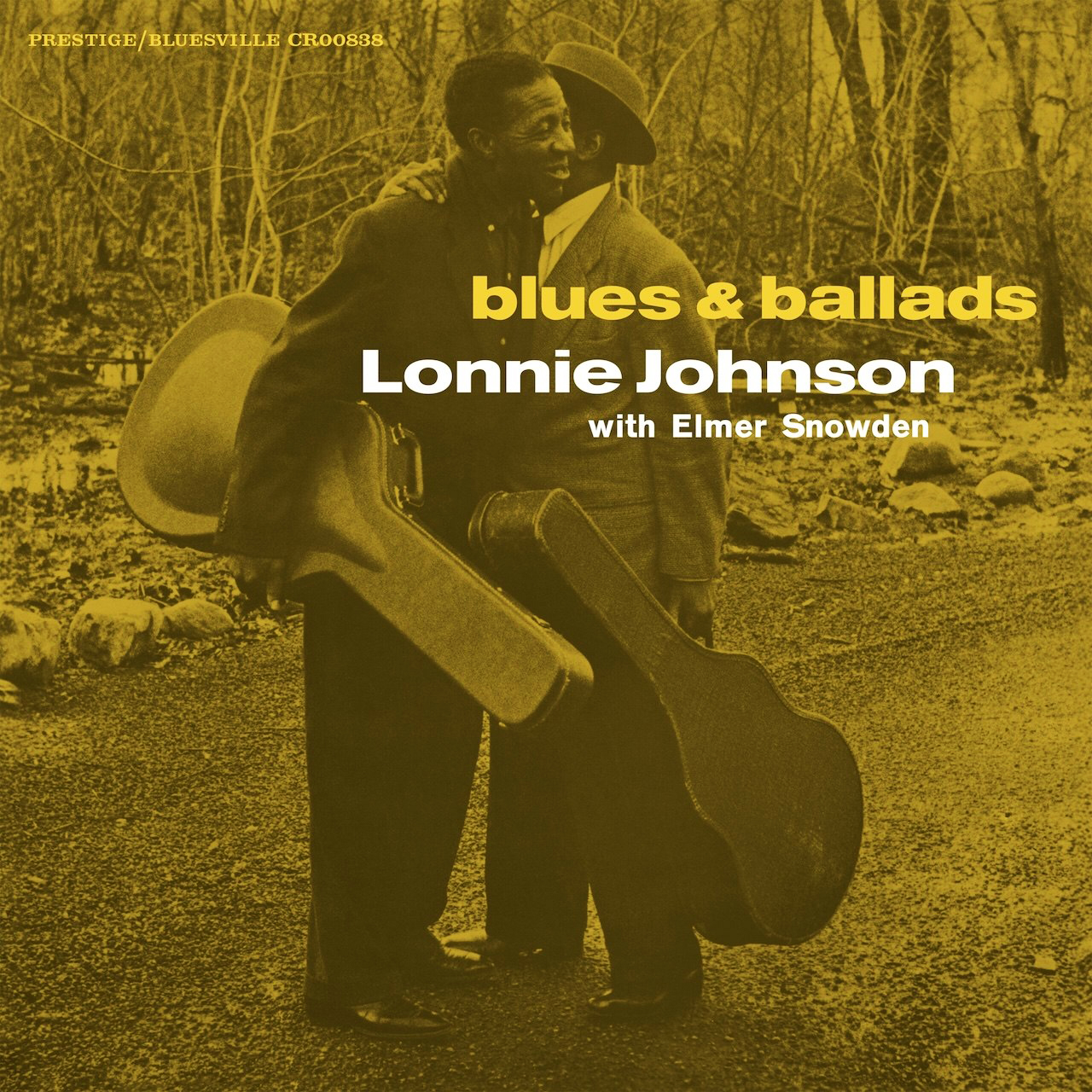
On March 14, Craft Recordings serves up a double dose of prime 1960s rediscovery blues with Lonnie Johnson’s Blues & Ballads, originally released in 1960, and Mississippi John Hurt’s Today!, which first hit record store racks in 1966. The albums offer a study in contrasts, with Hurt exemplifying the country blues style and Johnson specializing in a citified sound. Both albums are pressed onto 180 gram vinyl and are available as a bundle or separately.
As the title Blues & Ballads makes clear, Lonnie Johnson wasn’t strictly a bluesman, though when it came to the blues, he had considerable range and polish. It’s fair to say that when he played the countrified stuff, he did so like a city slicker. It’s notable that when historical jazz surveys devote space to the blues, Johnson name is often included. Johnson toured with Bessie Smith and recorded with Louis Armstrong and His Hot Five and Duke Ellington. He’s also noted as an innovator of the guitar solo.
Blues & Ballads was cut for the Bluesville label, the name of which Craft Recordings has repurposed for their current blues reissue line, a program that pulls from assorted catalogs, including Vanguard, the enterprise responsible for Hurt’s Today! The original Bluesville was a subsidiary of Bob Weinstock’s Prestige label, an association that surely strengthens the jazz connection, though the Bluesville roster spanned from Victoria Spivey and Memphis Slim to Lightnin’ Hopkins and Robert Pete Williams.
For Blues & Ballads, Johnson’s accompanists are guitarist Elmer Snowden, a major early jazz figure, and double bassist Wendell Marshall, who played on dozens of jazz albums including works by Ellington, Jimmy Guiffre, and Grant Green. Marshall understood the assignment here, giving the 10-song set a solid foundation, and Snowden is in strong form, his interaction with Johnson elevating the record considerably; he also brought two songs to the session, “Blues for Chris” (a co-write with producer Chris Albertson) and “Elmer’s Blues.”
But far from getting propped up with choice backing, Johnson doesn’t disappoint here. Certain voices will reliably say that Johnson’s not as sharp as his younger self, but the clarity of the recording, engineered by Rudy Van Gelder, more than compensates for any slippage, and it’s honestly not easy to discern that Johnson’s slipped all that much. His playing on Kid Ory’s “Savoy Blues” is a delight, and his original compositions, in particular opener “Haunted House” and spicy closer “He’s a Jelly Roll Baker,” hold up well alongside the numerous covers
Now, some blues hardliners will surely knock this album down a few pegs due to the ballad portion, which includes the chestnut “Memories for You” and another Johnson original, “I Found a Dream,” but Johnson’s dulcet tones, if surely agreeable to grannies on porch swings, establish Johnson as a pure entertainer of urbane versatility.
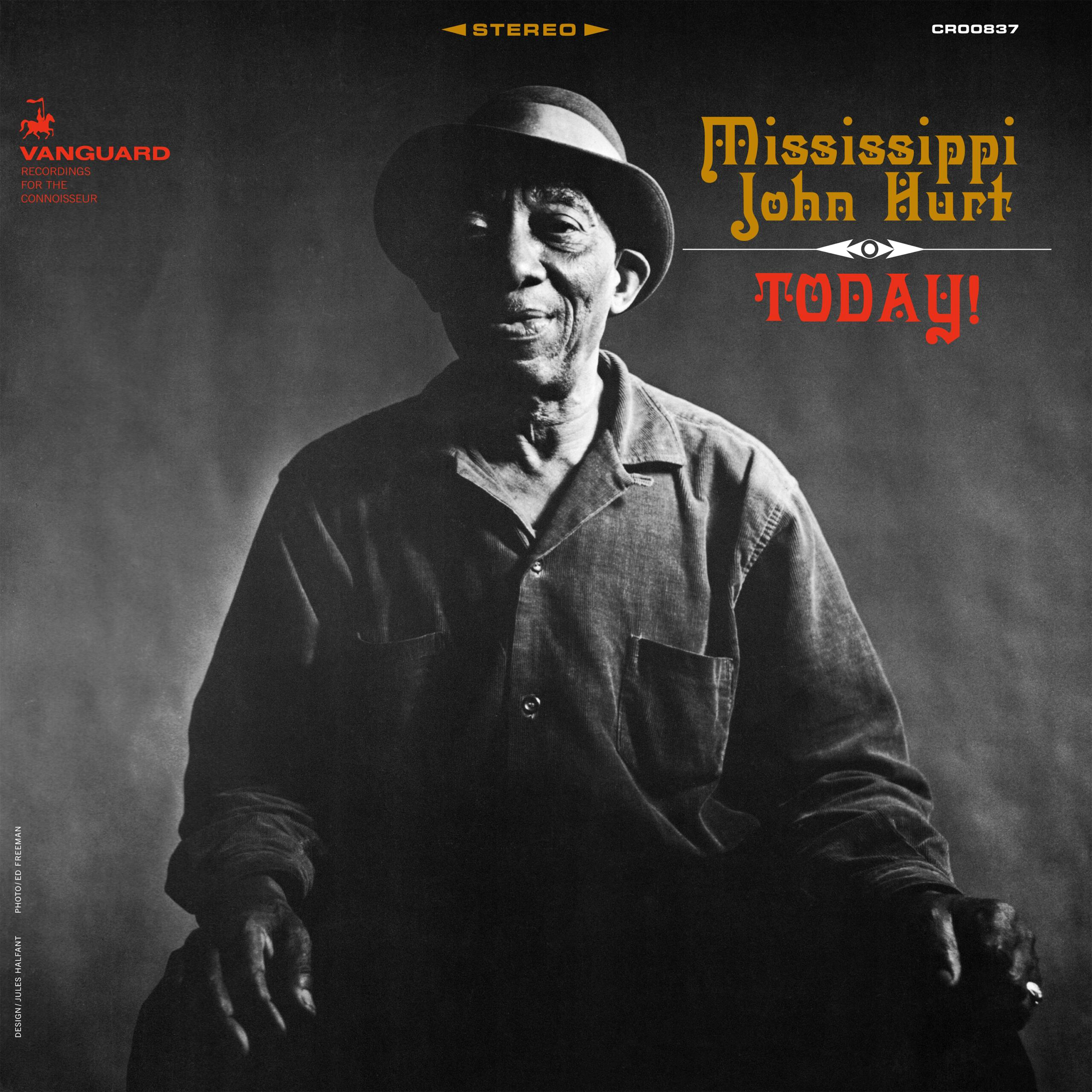
Johnson is correctly described as a blues rediscovery, although he was only out of action for a few years in the 1950s. For Mississippi John Hurt, the period was much longer, and it was the folk scene, sparked in part by Hurt’s inclusion on the Anthology of American Folk Music as compiled by Harry Smith, that spurred him back to activity in the early ’60s.
There’s a gentleness in Hurt’s fingerpicking and singing that’s perhaps matched by only Elizabeth Cotten and surpassed only by Washington Phillips. But similar to Cotten and Phillips, Hurt’s lived experience strengthens his music, which earned him a celebrated reputation in his lifetime as he influenced many, prime among them John Fahey (the American Primitive guitar style is unthinkable without Hurt) and Bob Dylan (e.g. Today!’s “Candy Man”).
There’s even less slippage in evidence in Hurt’s work on Today!, as the sheer dexterousness of his picking (playing unaccompanied) remains one of music’s richest expressions of beauty, even as he’s sharing stories of violence and woe; “Louis Collins” is one of the great gangster songs, and it’s far from the best-known song on the album. Those would be his steelworker ruminations “Talking Casey” and “Spike Driver Blues.”
There’s an undeniable attractiveness to the mysteriousness of Hurt’s 1928 recordings for Okeh (the label that recorded Johnson during the same period), but the intimacy of Today! has its own appeal. Hurt stands alongside Skip James and Son House as a superstar of the blues revival.
GRADED ON A CURVE:
Lonnie Johnson, Blues & Ballads
A-
Mississippi John Hurt, Today!
A