Jazz trumpeter Miles Davis died in 1991 at the age of 65. Even before his death, music from various stages of his career had been reissued. From 1955 to 1976, Davis recorded for Columbia, and most of the reissues of his music over the years, in various formats, have been drawn from his fruitful time with the label.
From roughly 1951 to 1961, he had a nearly equally critically successful stretch with Prestige Records. His time with them began during the era when 10-inch vinyl records, from 1951 through 1954, were still a widespread format, and some of those 10-inch albums on Prestige were later released in various ways on 12-inch vinyl records. There is an overlap between the end of the music Davis recorded and released on Prestige and his initial recordings for Columbia.
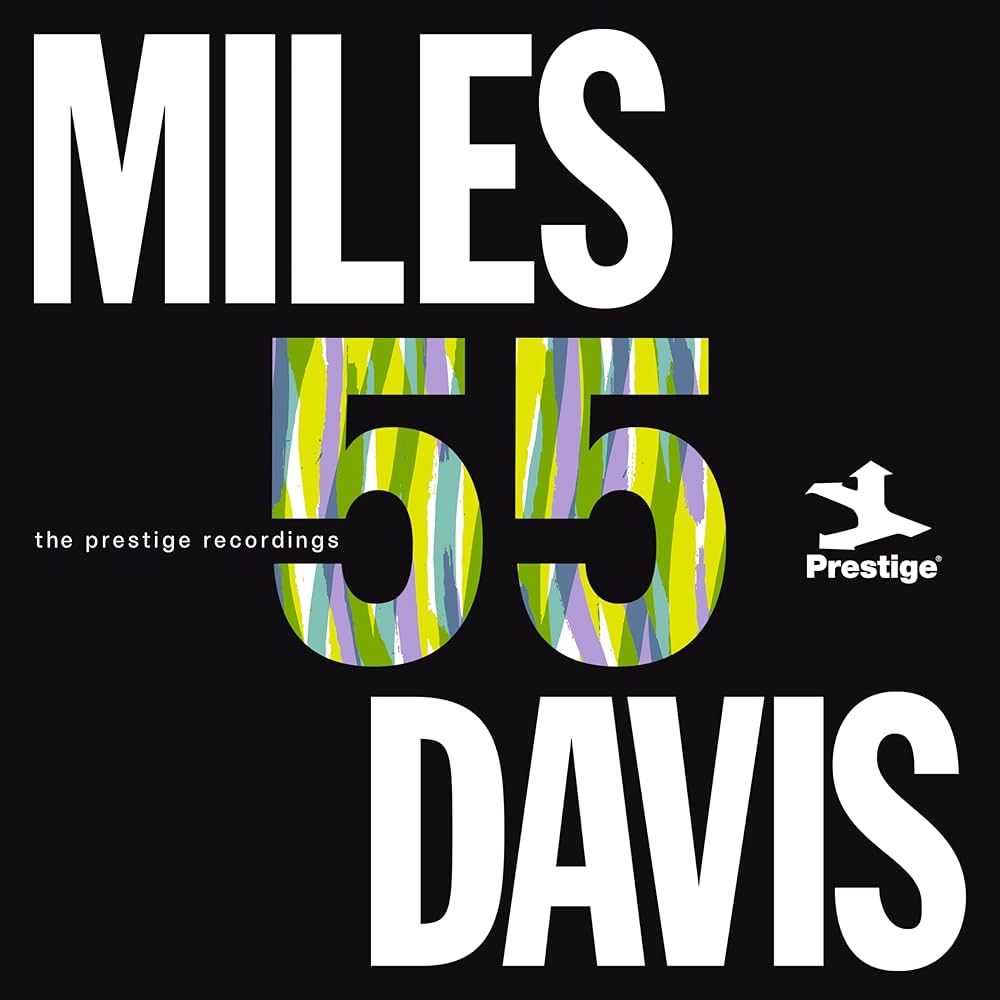
Last year, Craft Recordings released the acclaimed and bespoke 4-LP box Miles ’54: The Prestige Recordings. The period covered in the box represented a rebirth for Davis, after a time of substance abuse and recovery, which resulted in confident new recordings. The era marked the beginning of his initial key period as a solo artist and group leader, which lasted well into the 1970s. The ’54 sessions served as the springboard for the music he created later, referred to as his first great quintet (Davis, John Coltrane, Red Garland, Paul Chambers, and Philly Joe Jones) recordings, which is more reflected in the music on the new ‘55 box set.
Due to the way much of the music Davis recorded during that period was initially released on 10-inch and then 12-inch vinyl, in addition to overlapping with his first recordings for Columbia, it can be a bit tricky to follow a purely linear recording history. Add to that the reissues of the massive Chronicle: The Complete Prestige Recordings in 1988, The Legendary Prestige Quintet Sessions in 2006, The Complete Prestige 10-Inch LP Collection in 2016, and the recent spate of OJC (Original Jazz Classics) Prestige single album releases, and it becomes downright confusing.
The ‘54 and new 3-LP ‘55 release are primarily boxes presenting the music chronologically. What’s truly welcome about these boxes is the impeccable sound quality of the mastering and pressing, something Craft has been synonymous with since its inception. The lacquers were cut by Kevin Gray at Cohearent Audio, and Paul Blakemore did the mastering. The vinyl albums were pressed at Optimal in Germany. Nick Philips produced the project. Bob Weinstock produced the original sessions.
The ‘54 box is significant in that it contains music wherein Davis began using the cup mute on his trumpet. The musicians who initially joined Davis for these recordings include Horace Silver on piano and Percy Heath from the Modern Jazz Quartet on bass. Drummer Kenny Clarke replaced Art Blakey, and this combination of musicians was indispensable in creating a new, relaxed, sophisticated, and airy sound, with Heath and especially Clarke helping Davis craft an almost entirely new kind of international and worldly jazz that was more than just post-bop or a new Davis take on cool jazz.
Clarke, often underrated and sometimes not seen as significant as some of the others on this box and on ‘55, was also part of the historic Birth of the Cool sessions on Capitol from the late 1940s. Others are part of the ‘54 box, most notably Thelonious Monk, Sonny Rollins, and another member of MJQ, Milt Jackson. The year also marked the beginning of Davis recording at Rudy Van Gelder’s famed New Jersey studio. Other musicians on that box include Lucky Thompson, Dave Schildkraut, and another holdover from the Birth of the Cool sessions, J.J. Johnson.
‘55 presents Davis moving from his cup mute to a Harmon mute. The musicians include the four members (mentioned above) who, along with Davis, comprise the first great Davis quintet, among others, including Jackie McLean, Ray Bryant, Oscar Pettiford, and Arthur Taylor, with Percy Heath and Milt Jackson returning from the 1954 sessions.
The first album of the ‘55 box begins with two Davis compositions, bracketing the Dennis-Adair “Will You Still Be Mine,” highlighted by “Green Haze,” a particularly significant composition from this period that has a cool, late-night feel. Two Arthur Schwartz co-writes flip the script, with a sprawling cover of “A Night In Tunisia” taking that groundbreaking track and adding much to it. The expansiveness of these tracks is another feature that makes this music such an important new phase, similar to the 54 sessions, with tracks that are often between six and nine minutes long.
The second album further reflects the way Davis and his sidemen were expanding their sound with two brilliant compositions by Jackie McLean. “Changes” is another track with a haunting late-night feel. “Dr. Jackie” and “Minor March” reflect the new Davis sound while still being in a bop framework. The third album features the third Davis composition on this box and some reimagining of standards. The songs are at times rollicking and peppy, and it’s clear Davis is effortlessly blending his trumpet playing with his sidemen.
The interplay between the musicians sounds so relaxed and natural, and it has been said that Davis felt the music came together quite quickly and often required minimal direction, a preference that was characteristic of him as a leader and at times could unsettle some of his sidemen. Davis also gave the musicians plenty of space, and often piano or drums became the more dominant instrument in a given song, like the drumming on “I Didn’t” and the piano on “Green Haze,” along with the bass on “The Theme” and Milt Jackson’s vibes.
The format of this box is exactly like that of the ‘54 box. The 180-gram vinyl records are packaged individually in poly-lined sleeves in jackets. The sturdy box features a die-cut front, a removable top, and a 10-inch booklet that includes photos and essays with text by Ashley Kahn, as well as excerpts of Dan Morgenstern’s original liner notes from the 1988 Prestige box.
While the booklet slides into an opening that adds color to the primarily black and white box through the die-cut, the booklet is one of the few disappointing aspects of this box. It would have been nice to have a 12-inch booklet. And a detailed sessionography, matching the players to the tracks and identifying which tracks appeared on the main previous 10-inch and 12-inch Davis albums on Prestige, would have clarified things for many people.
Regardless of the minor quibbling about the booklet, this is an exquisite box, befitting the musical and historic place these Davis recordings deserve and presented with style, something Davis always did as a man and a musician.
1926 was the year Davis was born, and to mark his 100th birthday, there will be a slew of reissues to commemorate the occasion, beginning with The Complete Live at the Plugged Nickel 1965 box from Sony/Legacy in January.
GRADED ON A CURVE:
B+