With our previous article on Miles Davis, we kicked off commemorating the jazz trumpeter’s 100th birthday year with a review of an excellent audiophile stereo reissue of Kind of Blue. While the album is the biggest-selling album in jazz history and a seminal modal jazz masterpiece, Davis is more known in jazz circles for his various periods of unprecedented innovation.
Davis shares the watershed breakthroughs with the musicians he plays with, and in many cases, some or all of them contribute equally to his many new phases. While it is the iconic studio albums that are the canvas on which Davis and his sidemen make musical history, sometimes there are historic live dates and/or tours that serve as the incubator for some of his cornerstone musical breakthroughs. One of the most celebrated groups of musicians he ever played with is what is referred to as his second great quintet.
The first great quintet lasted roughly from 1955 to 1958 and included Red Garland on piano, Paul Chambers on bass, Philly Joe Jones on drums, and, completing the group, John Coltrane, who replaced Sonny Rollins, who had to leave the band because he was dealing with drug problems. The group eventually became a sextet with the addition of Cannonball Adderley.
It would be roughly six years before the second great quintet began in 1964. The lineup would last roughly until 1969. The group originally included Herbie Hancock (piano), Ron Carter (bass), and Tony Williams (drums), with Wayne Shorter (saxophone) being the last to join. The group relied on a more acoustic sound, often took an almost avant-garde approach, which was never quite free jazz, and, without anyone really noticing early on, began laying the foundation for fusion-jazz.
The studio albums the group recorded include E.S.P. (1965), Miles Smiles (1967), Sorcerer (1967), Nefertiti (1968), and Filles de Kilimanjaro (1968). That last album was the most electronic of the five studio albums and also the most embracing of what would become jazz fusion, and was loosely the transformational step to the next Davis phase.
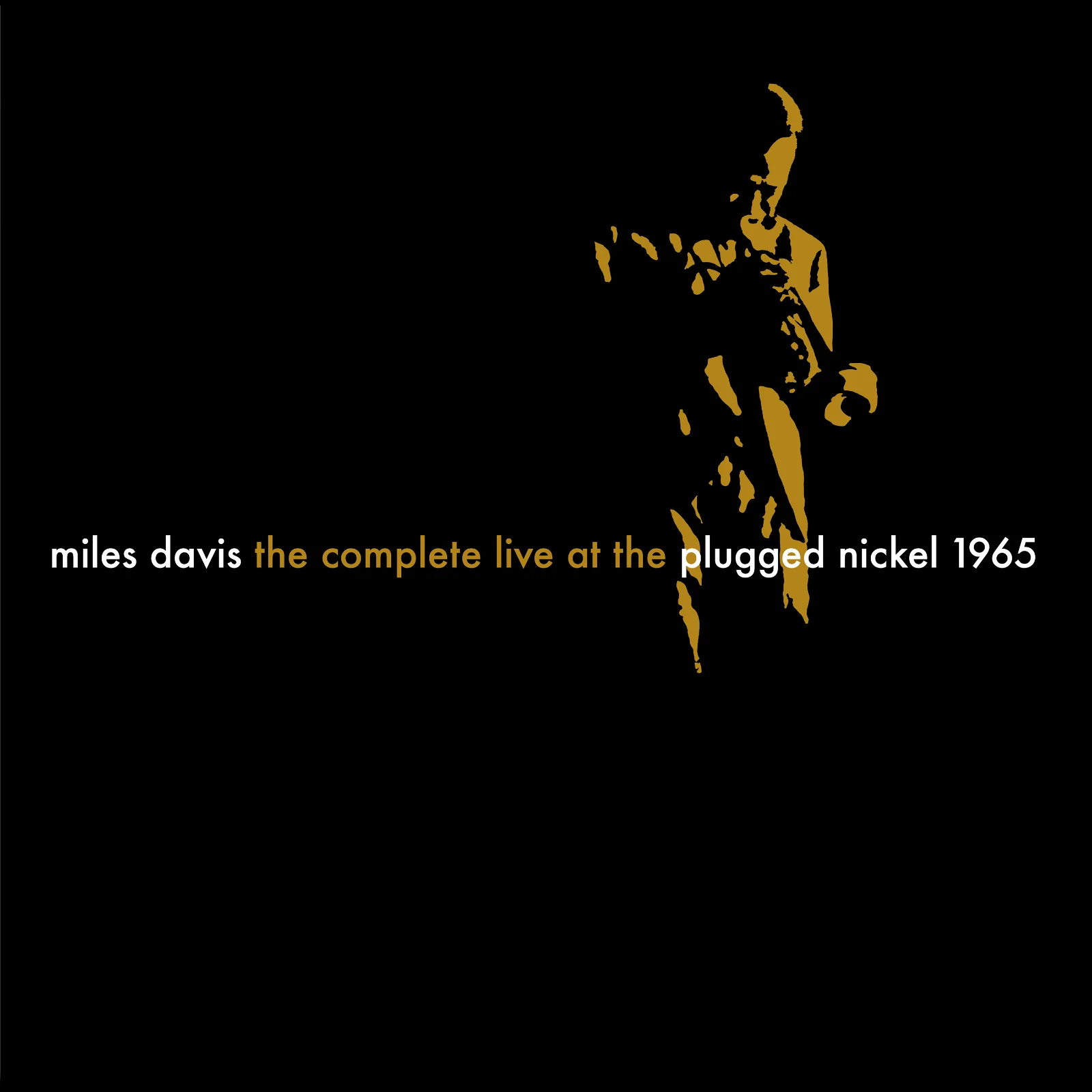
There are also many albums with live material released from different stages of the second quintet. On several albums, historic recordings from the tiny Chicago jazz club the Plugged Nickel were released, featuring performances from the end of 1965. In 1995, a CD box set was released that gathered together Plugged Nickel live performances from these shows, and it became a major event. Now, thirty years later, a 10-LP box set has been released, and it is also a cause for celebration, as all seven sets from the two nights are included.
Miles in Europe, released in 1963 and including George Coleman, and Miles in France 1963 & 1964: The Bootleg Series, Vol. 8, which features Coleman and then Shorter, offer the earliest live glimpse of the group. Live in Europe 1967: The Bootleg Series Vol. 1 offers a later look, but it is the ‘65 Chicago dates that offer the first fiery, unadorned, intimate look at the early peak of one of the most important groups in jazz history.
The way in which this quintet deconstructs, reinvents, and freshens up jazz and American songbook standards, particularly on “Stella By Starlight,” “My Funny Valentine,” “Round Midnight,” and “On Green Dolphin Street,” was revolutionary. Add to this such original compositions as “Walkin’,” “The Theme,” “Agitation,” “Milestones,” “No Blues,” “All Blues,” and especially “So What,” which was on Kind of Blue, and one has the perfect live sets that mix the old with the new and present them in bold, fresh ways. And, it’s so obvious that all the players are enjoying the freedom they have here to take things in any direction they like.
These live dates distill and crystallize the genius and unconventional methods that are the core of Davis’s ability to reinvent himself and jazz over and over again. The performances come long after Bill Evans became Davis’s main collaborator on Kind of Blue, with Gil Evans serving in that role on Sketches of Spain. Then, much later, Tony Williams would, seemingly without anyone realizing it at the time, be the catalyst for In A Silent Way. Finally, while Wayne Shorter’s compositional skills are not evident here, the heights of which would come on later work with Davis, it is his nascent intuitive musical interplay with Herbie Hancock that is often at the heart of the success of these dates.
This 10-LP set is in a beautiful slipcase box. The perfect-bound, 44-page booklet is a major upgrade from the original 1995 CD box set’s initial release. There are new liner notes by Syd Shwartz, including detailed song annotations in a song-key format that provide insights into the genesis of the standards, how the tunes fit into Davis’s orbit, how the songs are transformed for these historic live dates, their cultural resonance, and some anecdotes.
There are also photos, album jacket art, and an overall stunning visual presentation. Bob Blumenthal’s original 1995 notes are also included. The only minor quibble about the package is that the sleeves are die-cut paper. Archival sleeves would have been more appropriate for a project this lavish and so historically significant, especially since the sound of these vinyl records is such a step up from the original CD box. Regardless, this is a must-have not only for Davis fans but also for jazz fans, and is easily one of the best vinyl box sets of Davis’s music ever.
GRADED ON A CURVE:
A