The music world lost Robert Flack in February of 2025. Flack began her singular career in 1969 and released her 15th and final album in 2012. Her Atlantic Records albums make up the bulk of her recorded output and easily represent her best music. It’s no surprise that an iconic artist whose music was initially rooted in jazz and R&B, and later in pop and soul, would record for Atlantic Records. She is one of the key artists who made the label the undisputed supreme record company of the music business during its heyday of the 1960s and 1970s.
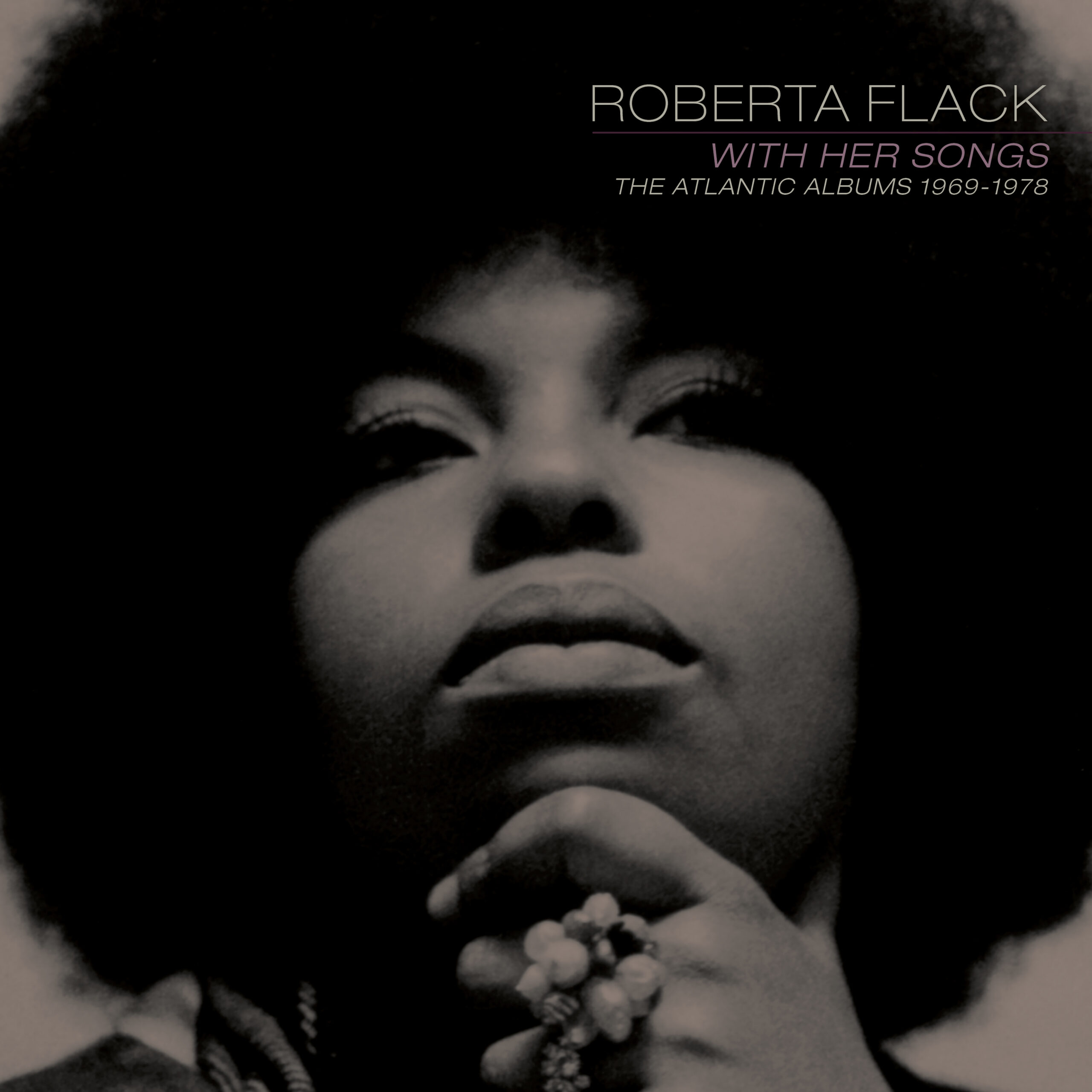
A new box set includes the first eight albums she recorded, all on Atlantic. Two more Atlantic albums are not included in this box. Flack’s beautiful, silky, smoky, and sultry style evolved slowly over these eight albums. This is the sound of a singer fully in command of her art and life, who sings with an understated yet powerful, mature grace unmatched.
Many may not know that her debut album, First Take, released in 1969, was the result of her being discovered by jazz pianist and vocalist Les McCann. Joel Dorn, veteran producer of many legendary jazz recordings, produced the album. It begins with her singular interpretation of the jazz classic “Compared to What.”
Flack was also adept at interpreting folk-based material at this time, with a Leonard Cohen cover and the album’s big hit, “The First Time Ever I Saw Your Face,” written by English folk artist Ewan MacColl. The song, in its earlier folk incarnation, was popularized by Peggy Seeger. Flack’s version was featured in the Clint Eastwood film Play Misty for Me. It was her commercial breakthrough.
Flack carried her heady stew of jazz, R&B, folk, and even soul onto her next album, Chapter Two, released in 1970—but this time she delved even deeper into the emerging singer-songwriter songbook of the time with covers of songs by Jimmy Webb, Bob Dylan, and Buffy Sainte-Marie, while still maintaining a jazzy R&B groove. The album is a little more lush and full-bodied than her previous outing, thanks to Eumir Deodato’s conducting and horn and string arrangements. Like her previous album, it also included a songwriting credit by Donny Hathaway and was produced by Dorn.
Quiet Fire, released in 1971, brought a more gospel-soul approach to the music, emphasizing a choir of background vocalists arranged by Atlantic Records honcho Arif Mardin, who also handled string arrangements, with Dorn again producing. Any folk feel had been almost entirely replaced by the kind of studio pop-soul, jazz groove that was beginning to become dominant at this time. The album also proved that Flack was creatively going from strength to strength across her first three solo albums.
Her next album, Roberta Flack & Donny Hathaway, released in 1972, was another leap forward and a major breakthrough. The album featured her and her discovery in one of the great duet albums of all time. Hathaway was a major talent, and the album included their smash hit “Where Is the Love.” The track crossed over and received widespread airplay across many formats, sounds as fresh and jubilant today as it did upon release. This time, Mardin shared producing credits with Dorn, and his work with Flack was just another instance of the magic he has worked with female vocalists over the years.
Following up her album with Hathaway should have been difficult, but instead it yielded one of her best, which included her other signature hit, the title track, “Killing Me Softly,” released in 1973. The album’s second track, “Jesse,” was also a turntable hit, adding to the emotional heft of the album. Dorn returned as sole producer, with Flack herself doing most of the arrangements. This is easily one of the biggest albums of the first half of the 1970s.
Again, faced with following up another classic album, Flack returned after a two-year hiatus to the kind of easy-going pop soul of her album with Donny Hathaway, and went to the top of the charts with the title track “Feel Like Makin’ Love,” a defining hit of the classic smooth soul mid-’70s sound. The album would mark Flack’s debut as her own producer.
Once again, Flack followed an album containing a big hit with another two-year hiatus and another winning album, 1977’s Blue Lights in the Basement. The hit duet, “The Closer I Get to You,” a natural follow-up to “Where Is the Love,” solidified the unmistakable chemistry between Flack and Donnie Hathaway. Unfortunately, in a little over a year, Hathaway would be dead at the age of 33 from suicide. Flack produced again, but this time along with Joe Ferla and Gene McDaniels, who contributed at least one song to every one of her albums.
In 1978, she quickly returned with a self-titled album that featured highlights, including “You Are Everything,” a cover of the Stylistics’ 1971 hit and the theme song from the movie “If Ever I See You Again.” But due to weaker material and, at times, a too slick, unimaginative production approach, the album sometimes seemed a bit uninspired compared to the miraculous run of her first seven albums. It would be her last album of all new material for four years, when she would release the final Atlantic album of her first stint with the label, I’m The One. There was, however, a 1980 release that featured posthumous Donny Hathaway recordings.
The package features a slip-case box with CD replicas of the original album jackets. There is also a four-page booklet. It would have been a truly outstanding package with a more expansive book and the option to choose vinyl instead of CDs. Regardless, this is a very affordable package considering how much music is included.
This is powerful music. Flack was a formidable talent who never needed to rely on an image or shout to be heard. The way she blended various styles created a truly unique sound that quickly became popular. This is a perfect time to relive these timeless recordings, and this box set does the trick.
GRADED ON A CURVE:
A-