
Three recent releases, two reissues, and one soundtrack album spotlight guitar gods who, in varying degrees, fuse rock, jazz, and blues to create their own unique musical vision.
John McLaughlin remains one of the most innovative and relevant guitarists to first emerge in the 1960s. In fact, his guitar prowess, insatiable search for new sounds, and penchant for playing music that seems light-years ahead of his peers may have been matched only by Jeff Beck in the 21st century. Like many British guitarists, he began in the London blues scene. Unlike his contemporaries, however, he detoured away from the rock god road and pursued a jazz journey.
His work with Miles Davis, his solo albums, and his formation of both the Mahavishnu Orchestra, which defined the jazz-fusion movement, and Shakti, which, while crossing jazz and Indian music, were forerunners of world music, are peerless. Now, McLaughlin tackles another musical realm with startling results. His latest release, Music for Abandoned Heights, is the soundtrack album for a movie that never happened.
As a standalone album, it’s a rare gem. Influenced by the Miles Davis soundtrack for the 1958 Louis Malle film Elevator to the Gallows, Abandoned Heights began in 2019 and, unlike the Paris-set Malle film, was set in New York. McLaughlin began working on the score, which was eventually recorded in London, after reading the script, even before he saw any film footage.
The drummer and keyboardist (Gary Husband) and electric bassist (Etienne Mbappé) are both members of McLaughlin’s group, The 4th Dimension. Saxophonist Julian Siegel is a member of Husband’s jazz group Drive. Misha Mullov-Abbado is an acoustic bass player based in Europe. Along with the Davis influence, other acknowledged influences here include Ramsey Lewis, Bill Evans, Narada Michael Walden, Tony Williams, Wayne Shorter, and previous solo McLaughlin and Mahavishnu Orchestra works.
The music rarely leans on McLaughlin’s more electronic and dense jazz-fusion side, instead evoking the film’s urban setting, featuring atmospheric, evocative playing that emphasizes keyboards and, to a lesser degree, horns, and standing as a piece to be enjoyed separate from its cinematic origins.
This is as bespoke an audiophile release as one is likely to encounter and goes a long way toward introducing listeners to an audiophile label (Impex) that many may not know much about. This is truly a beautiful package. It is a gatefold, with Stoughton jackets, includes an archival sleeve, resealable flip-top plastic outer sleeve with a gold-foil seal, and an 8-page booklet, and is a 180-gram RTI pressing. The sound is immaculate, and the quality of the music befits being released by such a distinguished label. I can’t think of a jazz-inspired “soundtrack” audiophile release in recent memory that can match the dizzying heights of this release.
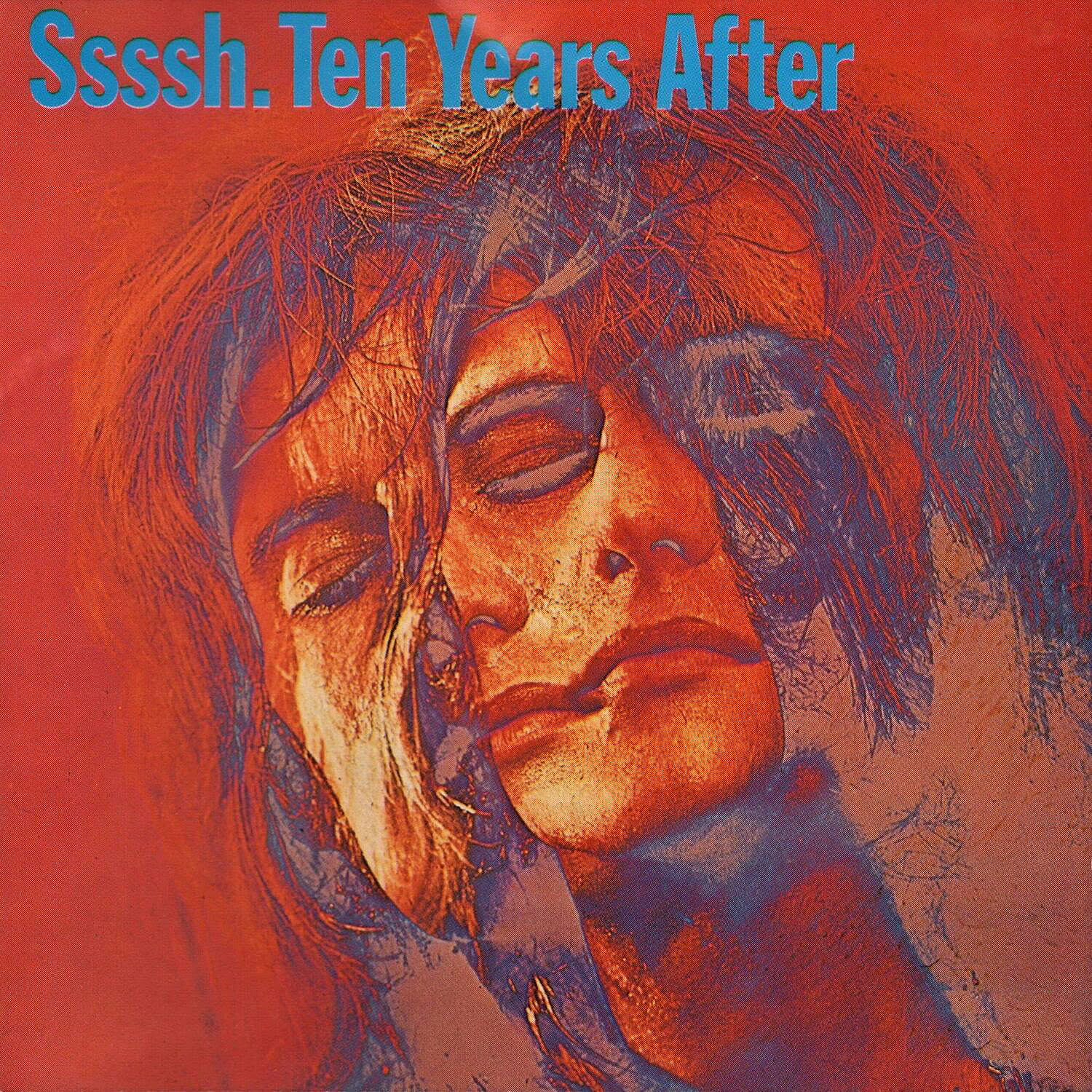
Ssssh, by Ten Years After (Alvin Lee, Ric Lee, Leo Lyons, Chick Churchill) wasn’t so much the album that broke the group wide open, but the album they had already recorded that was scheduled to come out after their breakthrough performance at Woodstock in late August of 1969, immortalized by their performance of “I’m Going Home” in the Woodstock film and soundtrack released in 1970, particularly lead guitarist Alvin Lee’s electrifying guitar playing.
Much has been said about how Ten Years After struggled to establish themselves with record buyers because they didn’t immediately find a way to capture the excitement and raw energy of their blistering live shows in the studio. This may have been an overwrought comparison. The fact is, several of their albums have been given audiophile reissues over the years, and their 1971 album A Space in Time yielded the FM staple “I’d Love to Change the World,” which was released in quad.
Mobile Fidelity Sound Labs also reissued other Ten Years After albums, including Cricklewood Green, the follow-up to Ssssh, together with Ssssh. Ssssh is one of those guitar rock classics that has often been overshadowed by albums in the same period from groups like Cream. Thankfully, this new reissue will go a long way toward what should amount to a full-fledged Ten Years After revival. The album was the group’s second album in ‘69, fourth album overall, and third studio album. Credited as being produced by Alvin Lee and the group, the album also received the more than able assistance in the studio of Andy Johns and Roy Thomas Baker.
This reissue is a gatefold package with an OBI strip, custom photo sleeves, and liner notes. There is also a bonus album of a previously unreleased concert recorded in Helsinki in December 1969. The studio album was newly mixed and mastered and cut at half-speed at George Martin’s Air Studios.
Ssssh is a surprisingly nuanced album for what is perceived as a heavy guitar-rock outing. The keyboards and Alvin Lee’s tasty guitar bring subtle jazz shadings to many moments, and the group’s bluesy side is evident throughout. This is also true of the bonus live album. Check out the inspired cover of “I Can’t Keep from Crying Sometimes,” written by Al Kooper and most known from the Blues Project version from Projections, released in November of 1966, but which also appeared on the What’s Shakin’ compilation album, released in May of 1966, from tracks recorded between 1964 and 1966.
Many Ten Years After albums, particularly their earlier, more psychedelic ones, are hard to find in good condition at reasonable prices. All of their albums through 1974 should be reissued.
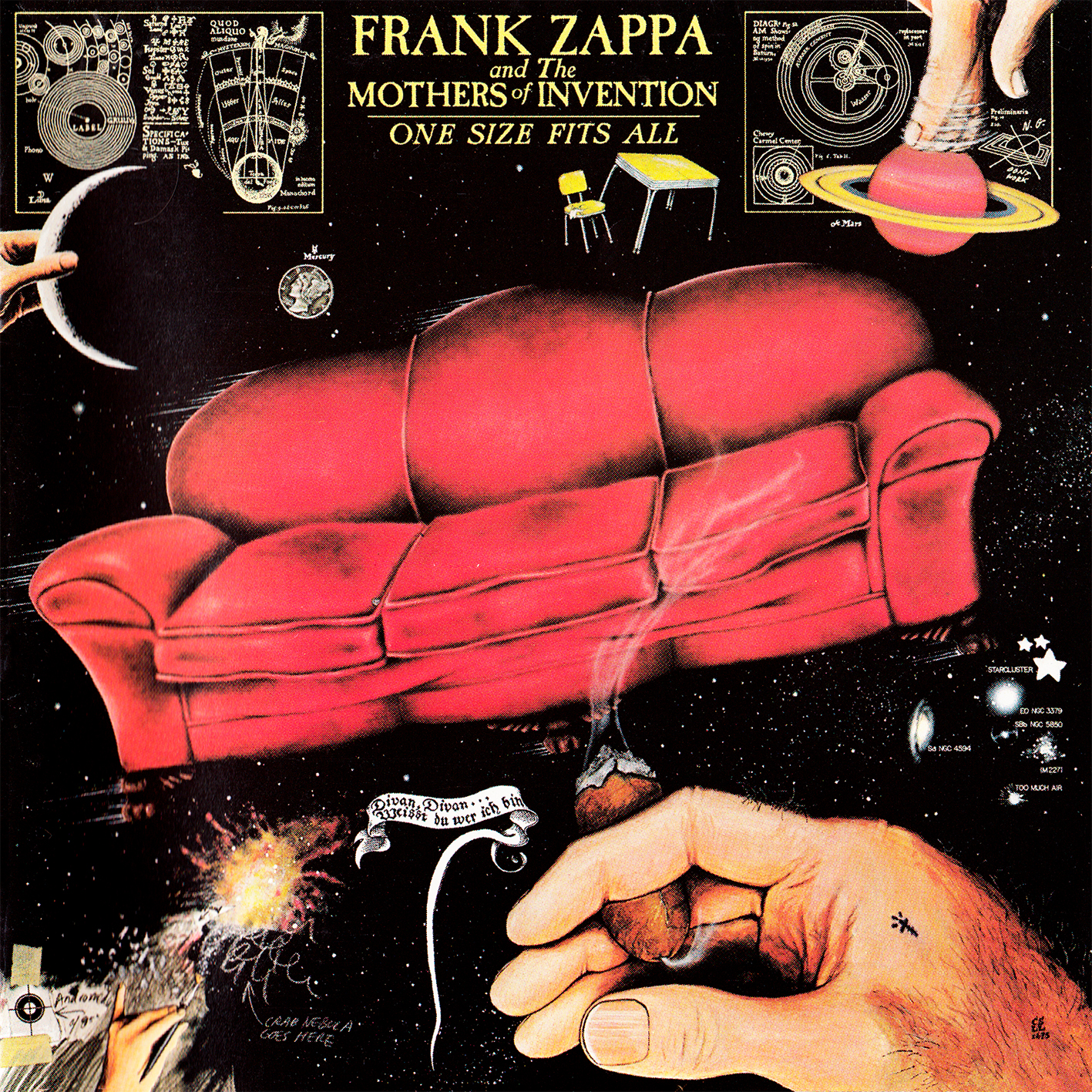
Reissues of the music of Frank Zappa continue at a breakneck pace. For all of Zappa’s anarchy and underground appeal, the man was a tireless worker. One Size Fits All, released in 1975, is very much a product of his industry, but that prodigious productivity also contributed to the end of what was perhaps the most beloved lineup of his group, The Mothers of Invention.
One Size Fits All would be the last album Zappa released in his lifetime under the Mothers moniker. It would also be the last album on which Mothers stalwarts Ruth Underwood and Chester Thompson worked with Zappa in this period. Thompson would join Weather Report and eventually fill the drum stool of Phil Collins, after Peter Gabriel left Genesis.
Recorded at Caribou Studios, The Record Plant in Los Angeles, KCET TV Studios in Los Angeles, and in Helsinki, on 24 tracks for the first time, the album was the follow-up to Zappa’s most successful album, Apostrophe. Although it would sell well and contained such classics as “Po-Jama People” and the autobiographical “San Ber’dino,” Zappa felt the album should have done better. The album should have come out on Warner Bros. Still, the label execs once again didn’t get it, and it ended up on DiscReet, Zappa’s sub-label, without the corporate marketing and publicity that could have pushed it to Apostrophe levels.
Like almost every Zappa reissue, this 50th anniversary reissue is an exceptional package. The sound quality is immaculate, and the music was mastered from the original analog tapes by Chris Bellman at Bernie Grundman Mastering, with both discs on black glitter vinyl, in a gatefold, with poly-lined sleeves. The bonus disc doesn’t provide any real revelations, other than take one of “Bitch, Bitch, Bitch” and a rough mix of “Something/Anything,” but it is good.
There’s a beautiful 20-page book with essays, interviews, tape box photos, and liner notes. Like a couple of his other albums, Zappa attempted a quad mix of this album, but it never happened. Some of the uncredited guests include Captain Beefheart and Johnny Guitar Watson. Before this album was even finished, Zappa began recording with Beefheart for what would become his next album, Bongo Fury, set for the deluxe reissue treatment in March.
GRADED ON A CURVE:
John McLaughlin, Music for Abandoned Heights
A+
Ten Years After, Ssssh
A
Frank Zappa & The Mothers Of Invention, One Size Fits All
B+