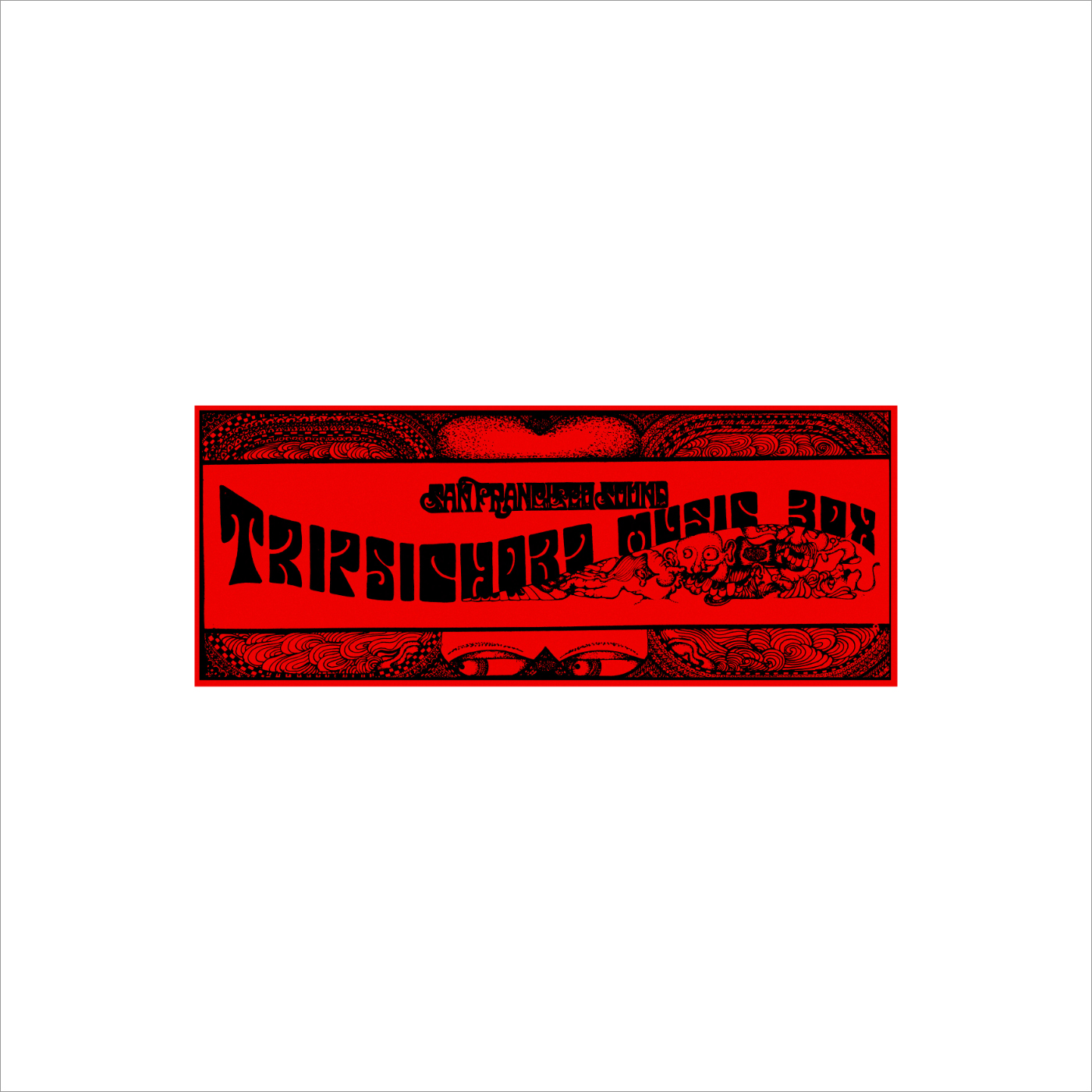
Tripsichord Music Box’s sole album was released in 1970 to essentially zilch in the way of fanfare, but over time the underappreciated slab has become a storied piece of the San Francisco scene’s jagged jigsaw. If not a masterpiece, the contents certainly merit a place on shelves devoted to the far-out excursions of its era. The latest reissue of Tripsichord is out on November 20 through Guerssen Records.
The name Tripsichord Music Box will possibly ring bells of recognition for those with an unquenchable thirst for all things psychedelic, especially those San Franciscan outbursts circa the late 1960s. The band is indeed legendary, as much for associations with more prominent figures in the Cali rock scenario and for some questionable decision-making as they are for the obscure LP they cut for Matthew Katz’s San Francisco Sound label. Initially a minuscule edition, it saw wider release in 1971 through the Janus imprint.
But first there was The Ban, a Lompoc, CA band who cut the pretty nifty “Now That I’m Hoping” b/w “Bye Bye” 45 in 1965 for Brent, a label operated by noted producer Bob Shad. After the Vietnam-era draft usurped The Ban’s vocalist-guitarist Tony McGuire, the remaining members, keyboardist Oliver McKinney, bassist Frank Straight, and drummer Randy Gordon brought in David Zandonatti to sing and play bass as Straight switched to guitar.
Moving to Los Angeles and renaming themselves The Now, this eager bunch cut the more accomplished but less impressive “I Want” b/w “Like a Flying Bird” for Embassy, a label run by Jack Berle, the brother of notorious asshole comedian Milton Berle. The A-side is teen dance party-ready pop-rock, boldly produced but not slick. The flip is a baroque-tinged number, Left Banke-ish but decidedly lesser.
The Now became Tripsichord Music Box after crossing paths with Matthew Katz, the impresario who became their manager as the band moved to the Bay Area. Katz is best known today for his involvement with the budding Jefferson Airplane, Moby Grape, and It’s a Beautiful Day, but there were additional acts under his battered umbrella that included West Coast Natural Gas, Black Swan, and Indian Puddin’ and Pipe.
The notes for Guerssen’s reissue make a point of presenting Katz in a fair light, but the reality is that he was involved in numerous questionable actions, to say the least. Most relevant to this story was Katz’s insistence that Tripsichord Music Box, which by 1969 included vocalist-guitarist Bill Carr, play shows under the name Moby Grape since Katz held the legal rights to the name. Not cool, man.
Many know Tripsichord Music Box only as one of Katz’s handful of “fake Grapes” and have investigated no further, but the LP’s nine tracks are considerably better than much of what emerged from the San Francisco scene from second- and third-tier bands, in large part due to an avoidance of R&B-influenced, vamp-laden crud. With nary a horn in the mix, Tripsichord stays closer to a Grape-like (and by extension, Byrds-ian) model with a few hints of the Grateful Dead in the recipe.
This has resulted in evaluations of the album that conclude Tripsichord was bordering on old hat at the time of its first release, but after a few fresh spins, it seems more appropriate to claim that the album documents a band that remained on the right track. If not consistently first-rate, the songwriting is better than expected, the guitar playing is a strong suit (even the jazzy twists), and the singing, if occasionally gruff and impassioned, avoids noxious soul-boy wailing.
In short, the album is much better than anything Cold Blood ever did. Tripsichord ends with a gospelized stretch that somehow doesn’t muck matters up with an anticlimax. The album really does deserve a bigger audience than it’s gotten over the years.
GRADED ON A CURVE:
B+