
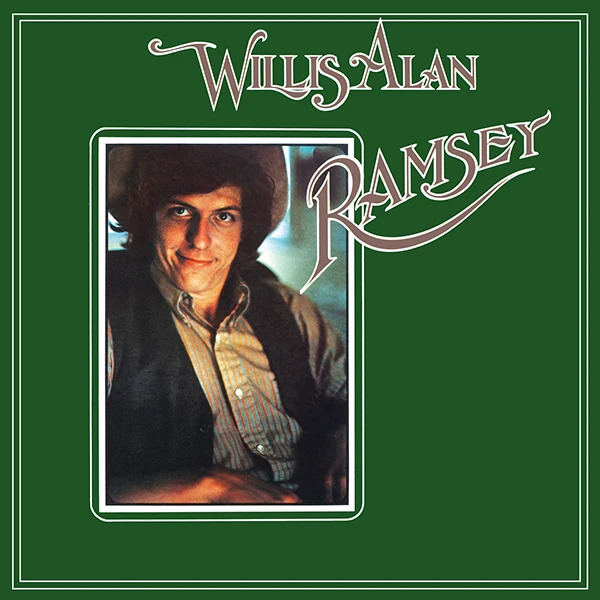
The sole studio album (thus far) by Willis Alan Ramsey was released in 1972 by Shelter Records, the label of musician Leon Russell. The lack of a follow-up should hopefully provide adequate insight into the album’s commercial reception, although it did inspire numerous other artists through better-known cover versions. But Willis Alan Ramsey holds up in its own right as yet another undersung artifact of folky, country-tinged singer-songwriter goodness from an era abundant with the stuff, the early 1970s. A first-time vinyl reissue is freshly out by Superior Viaduct subsidiary Antarctica Starts Here.
Some of these rediscovered folky singer-songwriters are total obscurities that cut records for small, often regional labels, or even self-released their stuff. Even when the albums have an aura of excellence about them, the chances these musicians would’ve found “success” in an already overcrowded field were infinitesimally small.
Willis Alan Ramsey’s percentages were much higher. That he cut a record for Shelter in itself is evidence of a considerable level of achievement. It’s just too bad the album didn’t sell. That a few of the LP’s songs were recorded by other artists, and with “Muskrat Love” a sizable hit for Captain & Tennille, underscores that Ramsey could’ve easily sold some records had the chips fallen just a little bit differently.
That “Muskrat Love,” which was titled “Muskrat Candlelight” on the original pressing of Willis Alan Ramsey, should reinforce a level of soft-rock in its composer’s disposition. And that’s alright. Before Captain & Tennille skyrocketed the song, America had a smaller hit with it as it landed on their 1973 album Hat Trick. That Waylon Jennings chose to cut a version of this album’s “Satin Sheets” for his 1977 album Ol’ Waylon highlights the country side of Ramsey’s personality.
Among the personnel that fortify Willis Alan Ramsey is Red Rhodes on pedal steel. He joins session heavyweights like Jim Keltner, Russ Kunkel, Eddie Hinton, Kenneth Buttrey, Tim Drummond, and Leland Sklar to give the album an overall feel that would’ve fit right into the early Asylum Records scheme of things. Shelter boss Russell plays on the album, too.
Some will recognize “Ballad of Spider John” from the version found on Jimmy Buffett’s 1974 album Living and Dying in 3/4 Time. Ramsey’s original is preferable, with its folky bedrock infused with flourishes of saxophone and accordion by Nick DeCaro, plus a string section (the album’s string arrangements are also by DeCaro).
“Muskrat Candlelight” comes next, and it is essentially a template ripe for America’s exploitation, if obviously not intended as such. The way Russell’s vibraphone mingles with the bass by presumably Carl Radle (of Derek and the Dominos fame) brings a touch of Tim Buckley-esque flavor.
With “Geraldine and the Honeybee,” Ramsey delivers a bluesy groove complete with harmonica that saunters right up to the border of country-funk. Although other pianists are credited on the album, it’s safe to speculate that Russell is playing on “Wishbone,” as Ramsey’s sideways swagger is a bit reminiscent of the guy who signed him.
“Satin Sheets” is loaded with fingerpicking and ripe with Ramsey’s vocal panache as the album just keeps on rolling. “Goodbye Old Missoula” is downright Gram Parsons-like, and that’s sweet. With its rich fiddling and Ramsey’s singing, “Painted Lady” delivers just a hint of Have Moicy! to come. It’s a particular highlight.
“Watermelon Man” has a sharp, bluesy edge; “Boy from Oklahoma” is one of the better Woody Guthrie tributes from the singer-songwriter scene; and, undergirded by strings, “Angel Eyes” really shows that Ramsey had the goods. Closer “Northwest Texas Woman” posits that a place in the Heartworn Highways scheme was a legit possibility. That didn’t happen, but Willis Alan Ramsey surely did. It’s a total treat for those on its wavelength.
GRADED ON A CURVE:
A-