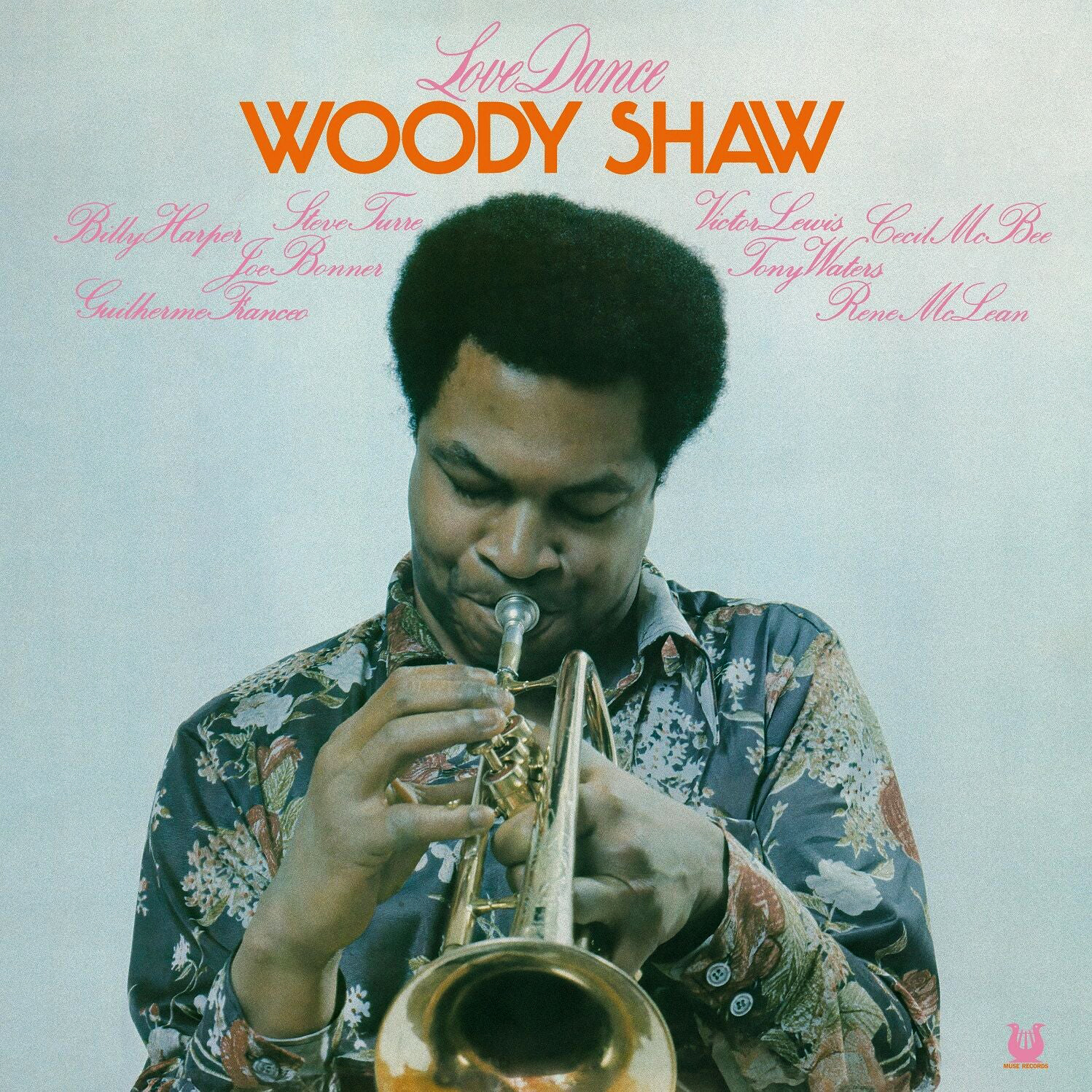
October the last was the kickoff for Zev Feldman’s Time Traveler Recordings, which began by putting back into print albums by Roy Brooks, Kenny Barron, and Carlos Garnett on 180-gram analog-mastered vinyl as part of the Muse Master Edition series. On January 30, this program really hits its stride by reissuing Love Dance by trumpeter Woody Shaw and Double Exposure by drummer-pianist Joe Chambers. These two underrated sets are connected in interesting ways, as we detail below.
Woody Shaw should’ve been huge. For many who’ve spent much rewarding time soaking up his discography as a leader and sideman, Shaw is huge, indeed one of the defining trumpeters in post-bop jazz. But as alluded to by Bob Blumenthal in his notes for this edition of Love Dance, Shaw just didn’t get the deserved accolades when he was up and coming.
Eric Dolphy’s Iron Man was Shaw’s recording debut, after which he played in Europe for a spell before returning to the USA to join Horace Silver’s band just in time for Cape Verdean Blues, cut in October 1965 for Blue Note. European touring partner Larry Young’s Unity followed in November, and then Shaw cut material for his own set as a leader in December with Young (on piano) and such august names as Joe Henderson (who played on Cape Verdean Blues), Herbie Hancock, Paul Chambers, Ron Carter, and Joe Chambers.
Those sessions stayed in the can until Muse released them in 1983, titled first In the Beginning and for one 1989 CD edition Cassandranite, the opening cut on the album. Track two is the Young composition “Obsequious,” which gets a reprise as the second selection on Love Dance.
Shaw didn’t get his debut as leader out until 1970, but when he did, it was a total killer. Blackstone Legacy, a double album, was released by Contemporary and features Gary Bartz, Bennie Maupin, George Cables, Ron Carter, Clint Houston, and Lenny White. It’s often described as a fusion record, and that’s fair, as Cables plays electric piano and Houston electric bass.
But there’s a lot of heavy breathing on Blackstone Legacy, which basks at the crossroads of Bitches Brew (Bartz, Maupin, and Carter all played on Miles’ groundbreaker) and the classic Coltrane Quartet at their freest. There are also solid stretches of advanced-bop warmth that foreshadow Love Dance’s arrival three albums later.
For Love Dance, trombonist Steve Turre, bassist Cecil McBee, and drummer Victor Lewis all returned from Shaw’s prior album The Moontrane. Filling out the large group is René McLean on alto and soprano sax, Billy Harper on tenor, Joe Bonner on acoustic and electric piano, Guilherme Franco on percussion, Tony Waters on congas, and, of course, Shaw on trumpet.
If allowing electricity into the scheme, Love Dance is an essentially inside affair, although one that’s considerably rich in solo verve and interactive flair. The opening title track, a Bonner composition, was certainly well-known during the period, the band flowing on it with groove assurance that brings to mind certain late ’60s Blue Note cuts (specifically “Hipnosis” by Jackie McLean and “Grass Roots” by Andrew Hill, the latter featuring Shaw in the band).
But “Love Dance” is a little slicker and brighter, as if producer Michael Cuscuna was teeing Shaw up for his Columbia run. “Obsequious” is a burner where Shaw absolutely shines, though McBee and Lewis also get their licks in. “Sunbath,” a piece by pianist Peggy Stern, finds the group laying down another groove anchored by Turre’s bass trombone and Bonner’s nods toward McCoy Tyner. “Zoltan,” the sole Shaw composition, is the set’s true smoker. It and Harper’s piece “Soulfully I Love You (Black Spiritual of Love),” which concludes the album, capture Shaw in exquisite form.
In a decade when jazz was supposedly floundering creatively and commercially, it was smaller labels like Muse, Strata-East, Steeplechase, Pablo, Xanadu, and Douglas that provided the recording opportunities that prove the fallacy that jazz died in the 1970s.
These labels also gave great instrumentalists the opportunity to record as leaders, which is what Muse did with Joe Chambers and the album The Almoravid, released in 1974 from a pair of separate sessions and including such major cats of the era as Cables, McBee, Richard Davis, and on two tracks, Shaw on trumpet. And once established as leaders, these player-composers were occasionally given room to expand their instrumental palette.
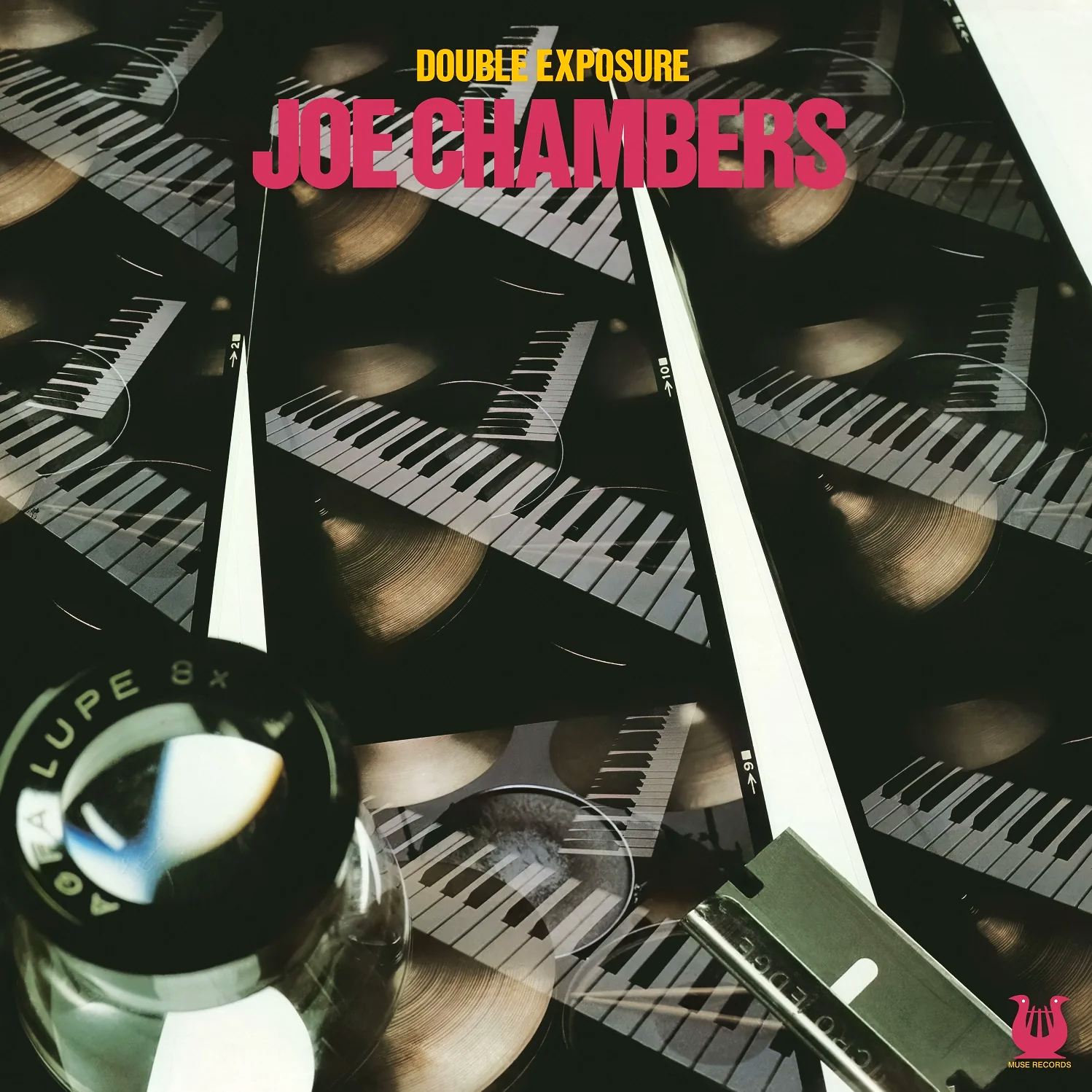
That was the case with New World, released in 1976 by the Finite label, where Chambers, who was previously recorded almost exclusively as a drummer-percussionist, debuted on vibraphone (along with the marimba, which he’d played before on Bobby Hutcherson’s Happenings). And for his third disc as leader, Chambers returned to Muse for Double Exposure, a duo record with Young where Chambers plays acoustic piano (tracks one through four) and electric piano (track two), along with drums.
Young plays organ on five of the six tracks and synthesizer on track two, his own composition, “The Orge.” The rest of the tracks are pieces by Chambers, with opener “Hello to the Wind,” contemplative and pretty. The intensity of “The Orge” gradually rises (through overdubbing, as Chambers is heard on tabla) and is briefly reprised at the start of the expansive “Mind Rain.”
This suite of sorts concludes on side two with “After the Rain,” which gets followed by a pair of prog-fusion doozies, “Message from Mars” and “Rock Pile,” Chambers thundering forth in an undeniably Cobham-like mode and Young positively Emerson-esque, but with a jazzy undercurrent that can be traced back to Milt Buckner. The key to success lies in how these cuts roll but never noodle in their note spillage. Double Exposure is a fine final chapter to Young’s impressive discography.
GRADED ON A CURVE:
Woody Shaw, Love Dance
A-
Joe Chambers, Double Exposure
A-