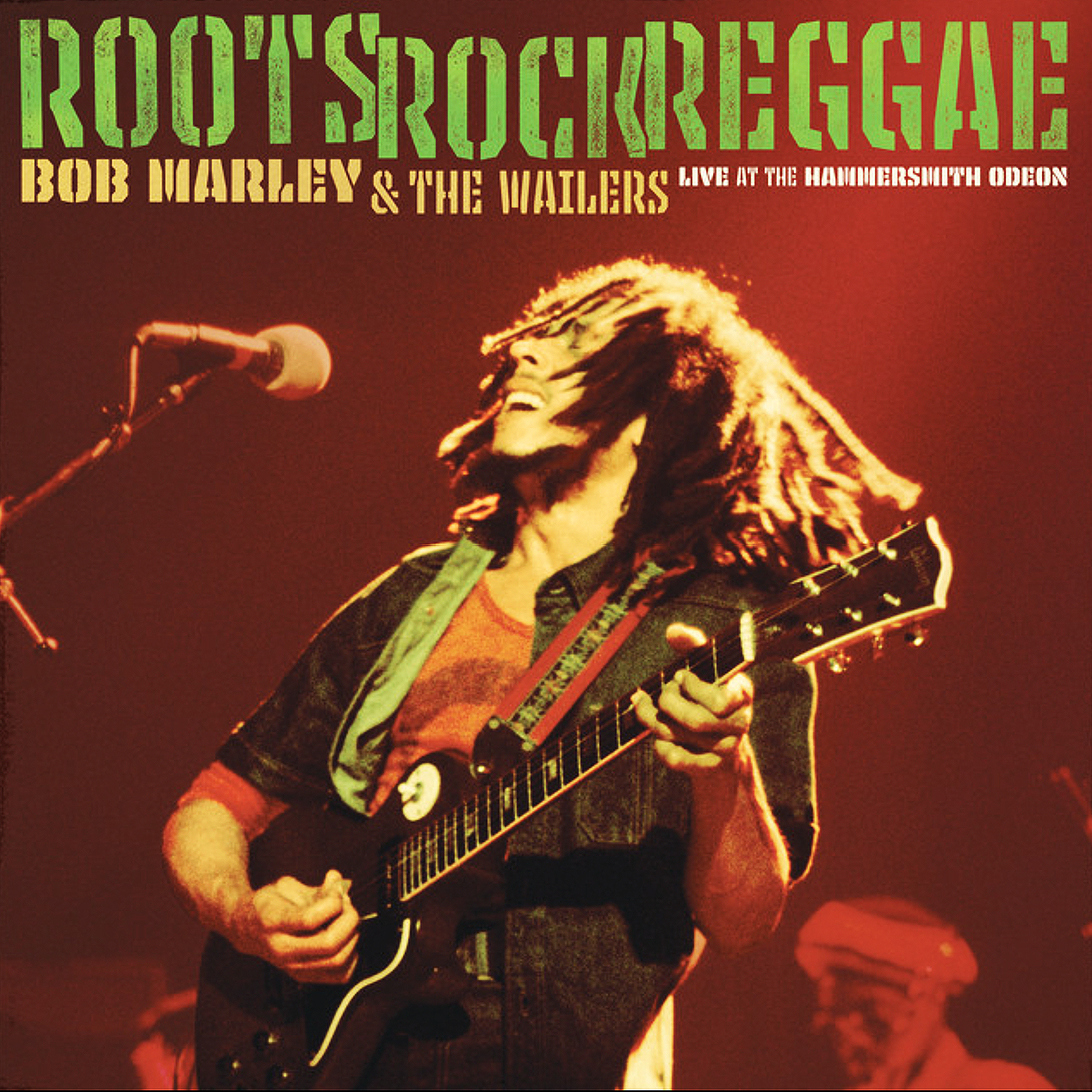
I could have listened to Roots, Rock, Reggae: Live at the Hammersmith Odeon the moment it hit streaming services. Instead, I waited. For me, there is simply no better way to listen to Bob Marley & The Wailers than on vinyl. The warmth of the bass, the space between the instruments, the physical act of lowering the needle, and those few seconds of anticipation before the music begins all somehow feel right with Marley. So when this long-buried piece of Wailers history was finally released, I wanted my first complete listen to come from the records themselves.
And this is not just another archival Marley release. Recorded during the band’s four-night residency at London’s Hammersmith Odeon from June 15–18, 1976, Roots, Rock, Reggae catches Marley at one of the most important transition points of his career. The shows opened the second leg of the Rastaman Vibration tour and represented an enormous step up for the band. Hammersmith held roughly five times the audience of a typical Wailers venue at the time, yet all four nights sold out.
The timing was perfect. Eric Clapton’s “I Shot the Sheriff” had introduced Marley’s songwriting to a massive American audience, while the 1975 live version of “No Woman, No Cry” had become Marley’s breakthrough UK hit. Marley was no longer simply reggae’s most important international ambassador. He was rapidly becoming a global star. Rather than documenting a single night, the 18-track album pulls together standout performances from across the Hammersmith run, creating an 87-minute portrait of the Wailers at their best.
There is also a story behind why we can hear it at all. Except for an incomplete bootleg, it was never clear that anything from the residency had been properly captured. The multitrack tapes had been sitting in the Island archives for decades, scattered across different facilities, and were only recently gathered back together and mixed into a complete document of the run. Considering how easily recordings like these disappear for good, the clarity of what eventually emerged is remarkable.
The physical release adds another dimension. Archival photographs from the shows and a cover that folds out to a full-body shot of Marley mid-performance make this feel like something assembled with collectors in mind, and the limited-edition color vinyl goes further with a reproduction of the original Island Records advertisement promoting the Rastaman Vibration album and the European tour that opened at Hammersmith. Best of all are new liner notes from filmmaker and longtime Marley associate Don Letts. His eyewitness account is fantastic, adding a personal sense of time and place to the Hammersmith shows.
As the needle hits side A, we first hear the band tuning up during a brief introduction. Then “Trenchtown Rock” kicks in, and for me, the chills start. The bass is the heartbeat of the recording, while the I-Threes’ harmonies come through beautifully, and Marley’s voice sits naturally above the band. Considering how long these tapes waited, the sound is remarkable—slightly more subdued than some other Marley live recordings, yet incredibly crisp and clear.
“Burnin’ and Lootin'” showcases Carlton Barrett’s drums, while the I-Threes shine again on “Them Belly Full (But We Hungry).” Then “Rebel Music (3 O’Clock Roadblock)” takes the side to another level. Vocals, bass, drums, and keys lock together, but it is the emotion that hits hardest. Marley doesn’t simply sing the song; he inhabits it. Side A closes with “I Shot the Sheriff,” and despite how many times the song has been recorded and performed, this version immediately ranks among the best live renditions I have heard.
By the time the needle reaches the runout groove, one thing is clear: Roots, Rock, Reggae isn’t important simply because these recordings survived. It’s important because the performances deserve to survive.

Side B begins with Aston “Family Man” Barrett’s bass driving “Crazy Baldhead,” but Marley’s vocal quickly takes over. He sounds loose and playful, changing cadences and stretching the song considerably longer than familiar versions. Then comes one of the album’s biggest surprises, “Bend Down Low.” Played only on the final night of the run and not typically associated with the Wailers’ live sets, its appearance feels fresh. The music is more subdued, allowing Marley’s voice to lead.
The bass pulls “Want More” forward as the I-Threes beautifully answer Marley, with Donald Kinsey’s subtle guitar work adding another layer. But the emotional centerpiece of the side is “No Woman, No Cry.” The Hammersmith crowd recognizes it immediately, and their voices gradually begin joining Marley’s. The song has been captured live many times, but there is something unusually emotional about this performance. Hearing the audience quietly singing along makes it different. For a few minutes, the separation between performer and crowd seems to disappear.
It is another chill-inducing moment. Fifty years later, you aren’t simply hearing Bob Marley & The Wailers perform “No Woman, No Cry.” You are hearing thousands of people inside Hammersmith experience it together.
The energy rises as side C opens with “Lively Up Yourself.” Kinsey’s guitar flows back and forth with Marley’s vocals as the performance stretches out, giving the band room to groove and have some fun. Kinsey and Earl “Chinna” Smith work the guitars, Family Man drives the bass, Tyrone Downie fills the spaces with keyboards, Alvin “Seeco” Patterson adds percussion, and Carlton Barrett holds it all together from behind the drums. Yet Marley remains at the center, trading vocals with the I-Threes, changing his delivery, scatting, and seemingly using his voice as another instrument.
“Roots, Rock, Reggae” couldn’t be more fitting as the apparent end of the main set. Marley sings about reggae bubbling on the Top 100, and here he is proving it inside a sold-out Hammersmith Odeon. Reggae was no longer simply fighting to be heard outside Jamaica—it was filling major concert halls in London.
But the night isn’t finished. Following a brief encore introduction, the Wailers return with “Positive Vibration,” Marley’s voice riding beautifully over that deep bass. “Rat Race” follows, with the I-Threes playing off Marley as he stretches words, changes his phrasing, and slips into scat. It feels completely improvised, yet somehow completely perfect, like Marley and the I-Threes are communicating in the moment and simply seeing where the song takes them.
Flipping to side D brings three of Marley’s most powerful songs: “War,” “No More Trouble,” and “Get Up, Stand Up.” Together, they feel less like an encore than a final statement. The crowd cheers as Marley begins “War” with no music behind him, just his voice. The audience immediately recognizes the words and responds before the keyboards slowly enter, followed by drums and bass. Rather than exploding into the song, the Wailers gradually build around Marley. It is unlike any version I can remember hearing, and the buildup is incredible. Marley eventually slips into improvised vocalizations that carry the performance into “No More Trouble,” where Family Man’s bass again becomes the driving force beneath Marley’s commanding vocal.
Then comes “Get Up, Stand Up.” At 12:15, it is the longest version of the song I can remember hearing—and somehow it never feels too long. If anything, you don’t want it to end. Marley turns Hammersmith into a conversation. He sings, scats, chants, and throws melodic phrases toward the audience, with thousands of voices answering him. There is tremendous power in the performance but also playfulness, as Marley continually finds new ways to work the crowd while the Wailers remain locked into the groove.
Eventually, Marley tells the audience that he has to go. Judging by their response, they aren’t ready to let him. Neither was I.
With so many Bob Marley & The Wailers live recordings already available, it is fair to ask what makes Roots, Rock, Reggae: Live at the Hammersmith Odeon essential. The story of how these tapes were tracked down and reassembled is part of the answer. But after sitting with all four sides, that isn’t what makes this album so special to me. It is Marley.
His passion, improvisation, and playfulness aren’t new to his live recordings, but at Hammersmith, they seem pushed further to the surface. He changes cadences, stretches words, scats, chants, interacts with the I-Threes, and feeds off the audience. One moment, he delivers a lyric with incredible seriousness and emotion; the next, you can almost hear the smile in his voice. The Wailers are nearly flawless. Family Man’s bass is the heartbeat; Carlton Barrett’s drums hold everything together; the guitars and keyboards add color; and the I-Threes sound beautiful. But Marley’s voice is what I keep coming back to.
For me, Roots, Rock, Reggae captures Marley at a vocal peak—not necessarily because his voice is technically better than anywhere else, but because of everything he does with it. There is power, vulnerability, anger, spirituality, joy, humor, and spontaneity. He isn’t simply singing these songs; he is living inside them.
Fifty years after these performances were captured, I finally lowered the needle and heard them come back to life. By the time it lifted from side D, I wasn’t thinking about lost tapes or archive boxes. I was thinking about how remarkable Bob Marley sounded. And once again, I was reminded why there is no better way to hear him than on vinyl.