
Jorma Kaukonen doesn’t turn 85 until next month, but the celebrations have already begun, with the first of a handful of concerts that cover his lengthy career alongside a half dozen notable and rotating guest stars. His hometown show at the Warner Theatre in DC brought his longtime collaborator Jack Casady on bass, along with Jim Lauderdale, Steve Kimock, Cindy Cashdollar, harmonica player Ross Garren, and drummer Justin Guip in various configurations.
Kaukonen is the giant around whom all the music revolved, though he began the show solo. With his white hair and beard, he resembles something of a sage of the guitar by now. And though the world got to know him as the wild-haired young electric guitarist that powered Jefferson Airplane, he sat to exclusively fingerpick his acoustic guitar, as he did when he started the offshoot Hot Tuna with his old high school buddy and Airplane mate Casady more than half a century ago.

Kaukonen’s vocals aren’t as smooth or supple as they once were—indeed, he’s prone to adding little grunts and un-huhms at the end of a lot of lines in the manner of the old country blues players he so emulates. The clear emphasis, though, is on the finger work, which is nimble as ever, flying through songs that inspired him—particularly those from the bluesman Reverend Gary Davis, three of whose songs he performed, including “Death Don’t Have No Mercy.” “I first started playing this song at 19 or 20,” he said with a smile. “It has a lot more meaning to me today.”
It was something he included on Hot Tuna’s debut album 55 years ago, and featured the same kind of rich interplay between him and Casady that was a highlight of the performance. While Casady held back for a lot of the show, he returned to his role as the sublime counterpoint to Kaukonen on the instrumental “Mann’s Fate.”
It was also a joy to hear them reminisce about playing DC nightclubs as teens here in the late 1950s, lying to their parents about their whereabouts and opening for local giants like Link Wray. With the younger Garren on harmonica, they recreated the “Uncle Sam Blues” from that earliest Hot Tuna era well.
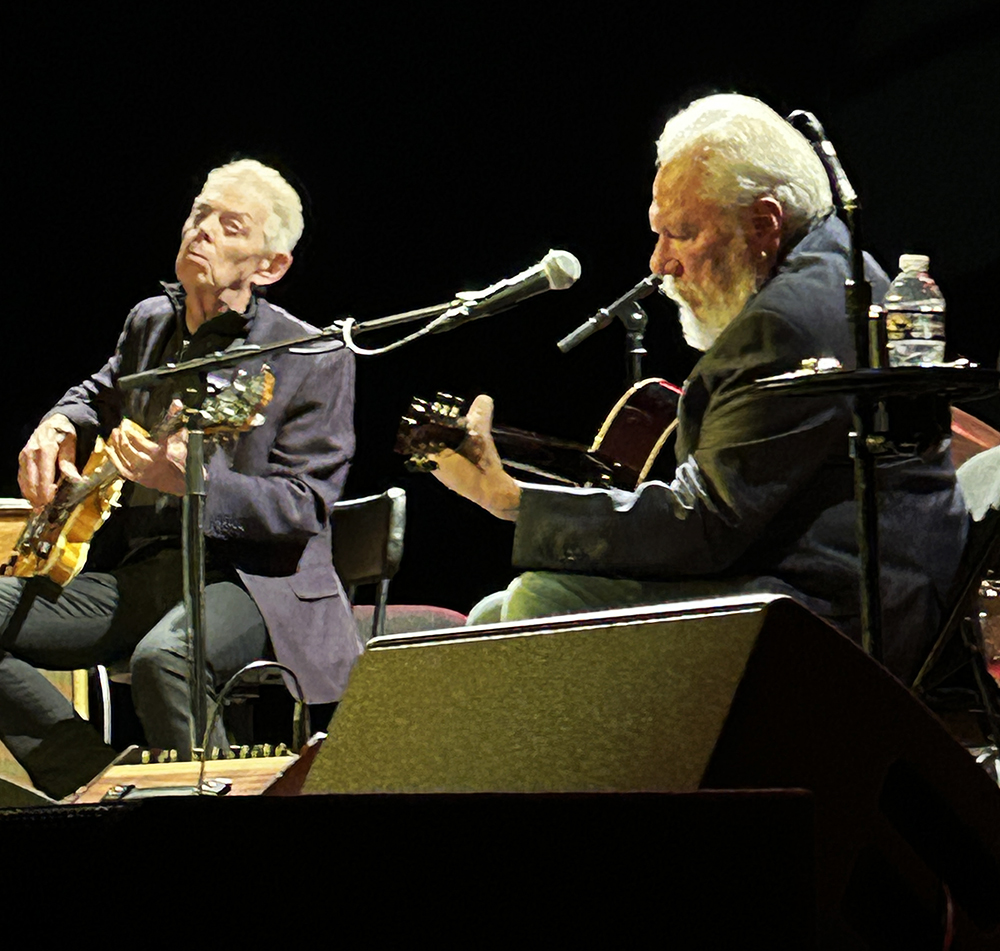
Lauderdale, for his part, joined Kaukonen on a couple of songs he’d written with Robert Hunter, the mention of whom got a rise out of an older audience certainly attuned to the San Francisco sound. The Dead themselves got a tasty cover as well, of the nifty acoustic “Operator.” And Kimock, the guitarist who has played in a number of post-Dead outfits from the Other Ones to RatDog and Phil Lesh and Friends, added that ringing sound on his guitar that some associate with Jerry Garcia.
Kimock played on four songs, alongside Cashdollar, who added color on dobro and lap steel on seven songs. Still, with that many guitarists, it meant a lot of solos to go around, each indicated with a nod from the man of honor. Just one song from the Airplane was wheeled out to end the main set, Kaukonen’s gospel adaptation of “Good Shepherd” from Volunteers. In some ways, it was a disappointment minus Kaukonen’s keening electric guitar over the top, but good to hear the Airplane represented in any form from two of the three surviving members of the band’s classic lineup.
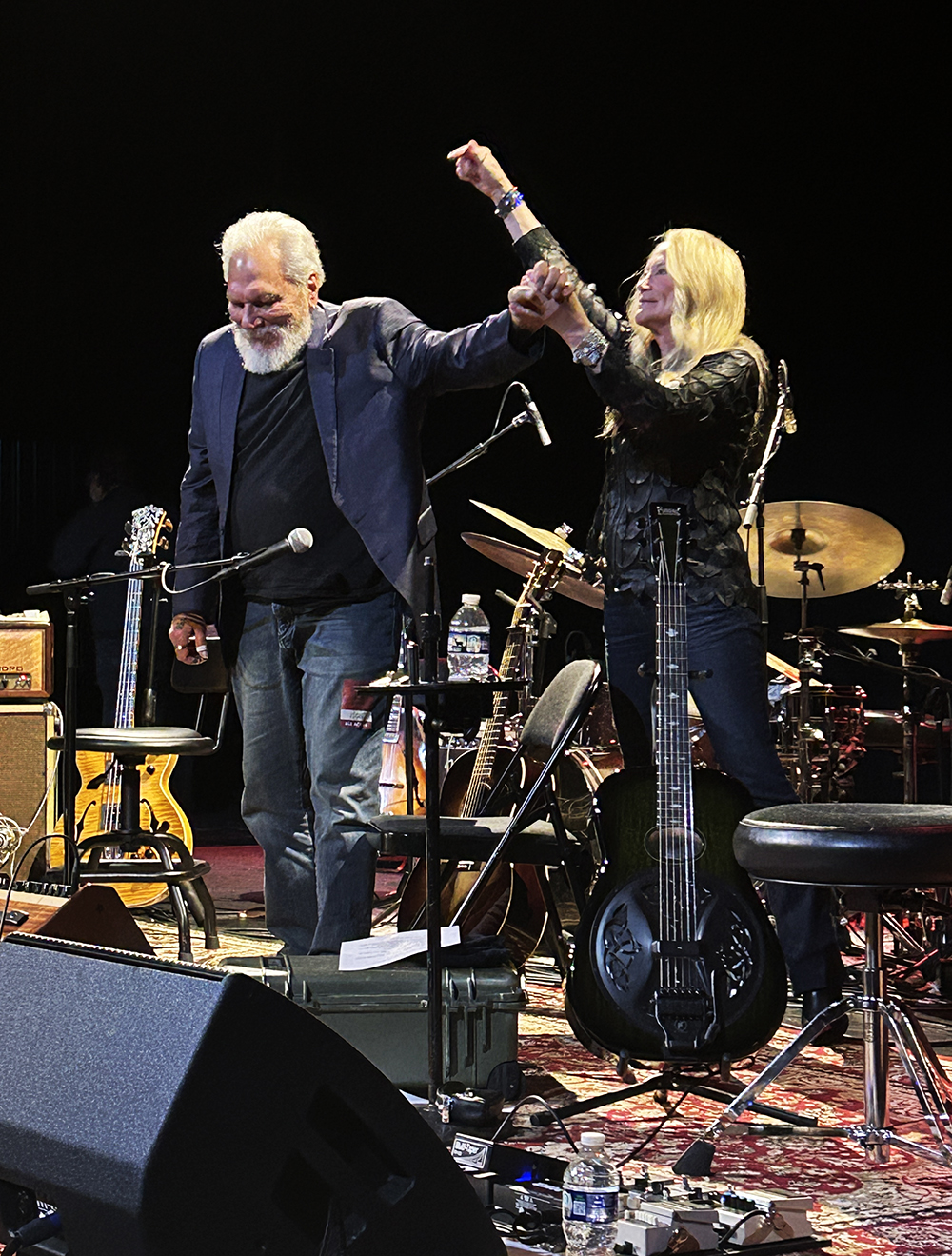
In the end, Kaukonen stayed on stage for the single encore, a song he wrote for his daughter, who he said told him, “It’s not my kind of music, but you’re pretty good.”
The birthday celebrations continue at Carnegie Hall on November 29 with guests GE Smith, Larry Campbell, Teresa Williams, and Steve Earle; and on December 5 in San Francisco with Bruce Cockburn, Susan Tedeschi, Derek Trucks, Peter Kaukonen, and John Hurlbut.