
In the pulsating heart of Los Angeles’ underground music scene, where beats once echoed through warehouses and transformed nights into euphoric odysseys, Ron D. Core carved his legacy.
A trailblazer in the world of electronic music, Ron’s journey began in the early days of DJing, where his raw passion for sound collided with the burgeoning rave culture of the 1990s. As a pioneer of hardcore and techno, he didn’t just spin records—he shaped a movement, becoming a revered figure in a scene that redefined the boundaries of music and community.
But Ron’s influence didn’t stop at the turntables. As the owner of Dr. Freecloud’s Record Store, a haven for vinyl enthusiasts, he has been instrumental in preserving the soul of analog sound in an increasingly digital world. From the gritty warehouses of LA to the resurgence of vinyl as a cultural touchstone, Ron’s story is one of resilience, innovation, and an unwavering love for the tangible magic of records. Join us as we delve into his extraordinary journey, exploring the evolution of electronic music, the enduring allure of vinyl, and the insights of a man who continues to inspire generations of music lovers.
Can you take us back to the moment you first fell in love with music?
I was around 6 or 7 years old when I got my first records and actually started listening to music. Full credit really goes to my father who was a pretty big record collector back in the ’70s. His collection gave me exposure to so many different types of music. And then of course, there was this babysitter we used to have. She loved music and used to give me records to help me build my collection. Both of these experiences fueled my love for music and initial addiction to vinyl.
What drew you to electronic music specifically?
While in high school, I dabbled in a lot of music and found myself liking too many things. In my early years, I was more of a metalhead—I was really, really big into ’80s metal. Then towards my junior year, I started to hang out with a different group of friends that were more into industrial music.
My love of electronic music was a direct result of those industrial roots. I was really into industrial at the time, which wasn’t dance friendly, along with early techno and house. Those were essentially the three genres that were available to us in the ’80s. And many today probably would find it shocking that the dancing actually started with just small handful of genres.
But industrial eventually turned dance friendly, morphing into EBM—which is the acronym for Electronic Body Music. And that finally pushed me over the edge into all the electronic and dance stuff because they were starting to make really cool industrial sounds while simultaneously putting a dance beat behind it. The EBM and the danceable industrial stuff ultimately drew me into collecting 12-inch vinyl.
Who were some of your earliest influences as a DJ, and how did they shape your style and approach to music?
In my early years, my first major influence was the legendary Frankie Bones. He was truly the first real out-of-town DJ that I can remember being flown in for our kind of music. I could tell from the first time I watched him spin he was special.
So, after seeing him perform live, and meeting him for the very first time, I was thoroughly impressed by his music selection, overall mixing techniques and undeniable style. He was eye-opening to say the least, and I took from him some tips and tricks that allowed me to evolve as a young DJ.
As for non-DJ influences, groundbreaking bands Nitzer Ebb and Front 242 were at the top of my list. The had very unique industrial sounds that were hard yet danceable. With their top-notch production, and they were truly tops in class and well ahead of their time.
What was your first experience behind the decks, and how did it feel to connect with an audience through your music?
My initial experience as a DJ occurred unexpectedly. I was invited by a long-time friend, Steve Hauptfuhr—also known as Mr. Koolaid—to assist with organizing a party. I guess it was my huge collection of dance records that drew him in. At the time, my familiarity with the equipment and mixing techniques was quite limited. Nevertheless, I found myself performing for the first time at a warehouse event in Vernon.
Steve provided a brief introduction to the fundamental aspects of DJing and encouraged me to focus on playing records I loved to the best of my ability. While my mixing skills were at that time nonexistent, I was able to quickly engage with a wide range of dance music that seemed to connect with the party’s growing crowd. It was a magical experience.
Following that party, I became committed to pursuing DJing professionally rather than as a hobby. I dedicated significant amounts of time to expanding my record collection, mastering mixing skills, and immersing myself in the scene that was exploding here in Southern California.
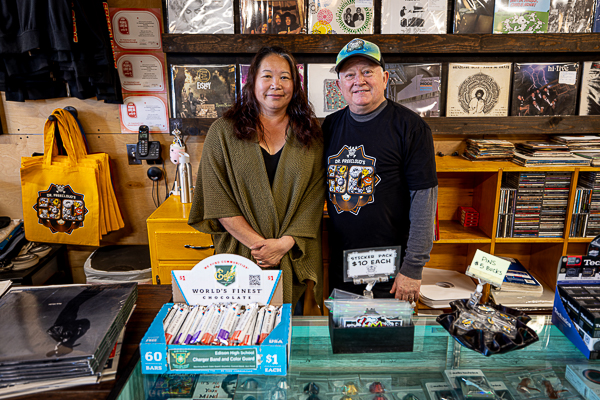
The early ’90s rave scene in Los Angeles was a cultural phenomenon. What was it like to be at the forefront of that movement?
Based on what was happening at the time, I wasn’t really thinking of it as being at the forefront of anything. We loved playing records, dancing, and our scene here in LA. The renegade part of what we did took it to a whole new level. Think about it, breaking into warehouses, throwing together a sound system, and having friends show up was for these events was special. Fast forward to now, and that scene has evolved into a complete beast. It’s nice to reminisce and see what it’s ultimately grown into. From those humble beginnings, technically 1989–1993, those times were undeniably one-of-a-kind that those who experienced it would never forget.
How did the underground nature of the rave scene influence the way you approached your sets as a professional DJ?
DJing became my full-time career as I left college to pursue rising opportunities in the industry, driven by increasing demand for DJs. Many of my friends formed their own crews and started putting on independent events. By adopting unique production names, we promoted ourselves while building recognition through organizing and headlining parties.
This ongoing self-promotion was vital—hosting our own events gave us chances to demonstrate our abilities and attract additional bookings. We set ourselves apart by making mixtapes, which acted like business cards, and producing original music to distribute at these gatherings. These steps were key for establishing our reputations and gaining visibility in the DJ community.
Back then, it was usual for DJs to take charge of both producing and promoting events. Although some promoters focused solely on event organization, much of the scene’s growth and sense of community came from DJs who understood both artistic performance and event management.
As competition grew fiercer, new challenges emerged. Some promoters entered the scene seeking quick profits but failed to uphold high standards, causing instability. Over time, only a few earned a reputation for delivering excellent shows by working closely with talented DJs who could ensure large turnouts.
In such a competitive environment, an event’s success depended on securing DJs with proven audience appeal—the lineup often made or broke an event. Ultimately, proactive DJs shaped the scene by combining creativity with entrepreneurial skills, driving innovation and collaboration in a highly contested space.
If you transported yourself back to Los Angeles in ’90—’93, who were your favorite DJ’s of that time?
Among my favorite DJs, two stand out. Barry Weaver impressed me with his thoughtful track selection and distinctive performance style. DJ Robin, whom I met through our involvement with the Funny Farm club, is a technically skilled DJ and a valued friend. His mixing technique is remarkably precise, reminiscent of artists like Sasha and Digweed who are renowned for seamless, in-key transitions with no errors. Both Barry Weaver and DJ Robin deserve recognition for their exceptional mixing abilities along with being just incredible humans.

What were hands down the best parties of that era?
Do you remember those parties—Aphrodite Temple or Shiva’s Erotic Banquet? To this day, they’re still my two favorite events in LA; nothing else has quite matched them for me. Both were organized by the same promoter—and I was involved with both as well. Ask any raver from back then, and they’ll likely tell you those two parties stood out in a class all by themselves. On top of that, having someone like Timothy Leary host your event is pretty remarkable; it definitely gives you some bragging rights, doesn’t it?
Dr. Freecloud’s Record Store has become an iconic institution not just in Southern California, but worldwide. What inspired you to open the store, and how did it evolve over the years?
This part of the store’s story is always fun to share, though not everyone knows it. I have to give full credit for the idea to my wife’s father. Back when I first started dating Helen—my wife now—her dad knew I when I was working at DMC Records. At that time, I commuted from Orange County to LA a few days each week, not really for the money but because it worked out well—the record store owner liked having DJs with name recognition on staff, and I ended up trading work for records, which I bought often anyway.
Eventually, though, the long drive became tedious—an hour or more each way just to trade for records wasn’t sustainable. That’s when my wife’s father stepped in with a suggestion: “Is there a record store closer to home, in Orange County, where you could work?” When I told him there wasn’t, he simply said, “Why don’t you open your own? Then you won’t have to drive to L.A.”
That idea struck me—how hard could it be to rent a space and start my own shop? So, I took his advice, and to this day I give him all the credit. We took his suggestion, and through all the ups and downs over the years, we’ve managed to make a good living running our incredible little record store, Dr. Freecloud’s.
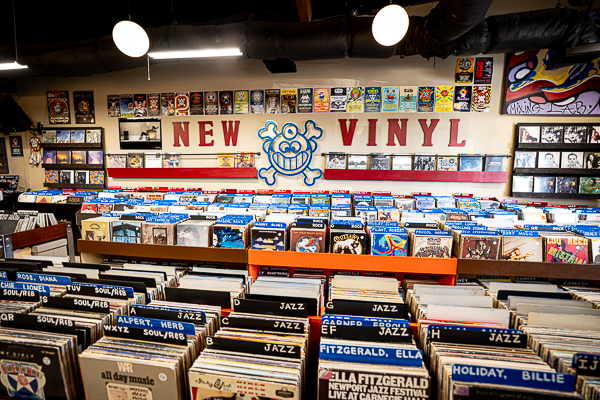
Vinyl records have always been central to your career. What about vinyl that makes it so special to you, both as a record store owner, DJ, and collector?
Vinyl records offer a tangible and sensory experience; their physical presence allows for tactile interaction, and even the distinctive scent of vinyl can evoke a sense of happiness for enthusiasts browsing in record stores. My passion for collecting has at times required personal sacrifices, such as foregoing meals in my early days to purchase the records I wanted. The excitement of acquiring new records and the anticipation of playing them generates in me an indescribable sense of fulfillment. This deep connection to vinyl persists among many collectors, whether they are DJs or enthusiasts, though for some—like myself—the relationship extends to both professional and personal realms.
Initially, my collection comprised singles, EPs, and LPs spanning various musical genres, which grew increasingly complex and costly as I pursued DJing. Balancing my interests required maintaining separate collections for listening pleasure and professional use. Despite the rise of digital formats like CDs and digital DJ setups—which prompted many colleagues to transition and sell their vinyl collections—I remained committed to traditional turntable setups. On rare occasions when events lacked vinyl equipment, I declined to perform, affirming my dedication to the medium.
Although the financial challenges of operating within the record store industry have been significant, perseverance and belief in the value of vinyl have sustained my career. Over the past 10 years, there has been a resurgence of interest in vinyl among newer generations of DJs, who actively seek out records from earlier periods to incorporate into their sets. This revival has brought the culture full circle, allowing vinyl DJs to thrive once more. Having never transitioned to digital formats, I now take pride in my enduring commitment to vinyl and continue to rely on a substantial record collection for all my performances.
What’s the most unique or rare record you’ve ever come across at the store, and is there a story behind it?
In my early years—and even now—I’ve gradually moved toward harder and more intense music, but I still treasure my acid house and hip house records, especially those that came before old school techno. These records, mostly from the mid-to-late ’90s, are some of my most valued possessions. There are a few groups whose releases I made sure to collect completely, one being Coldcut. They produced some of my favorite acid house remixes, which I continue to play today.
Some of these acid records were unique, often rubber-stamped on plain white labels—making it hard to identify what was on them until you played them. The specific 12-inch I consider a favorite is “You, Me and Everything” by The Shamen. In fact, I have five copies of it and people frequently ask if I’d sell one. I always refuse. If I ever find more, I still wouldn’t sell them.
The remix work on this record was done by “Evil” Eddie Richards, and his mixes are incredible. The track features an interesting blend of indie music vibes, vocals, heavy acid, and awesome breakbeats. If you ever get a chance to listen to it online, I highly recommend it—you’ll really enjoy it.
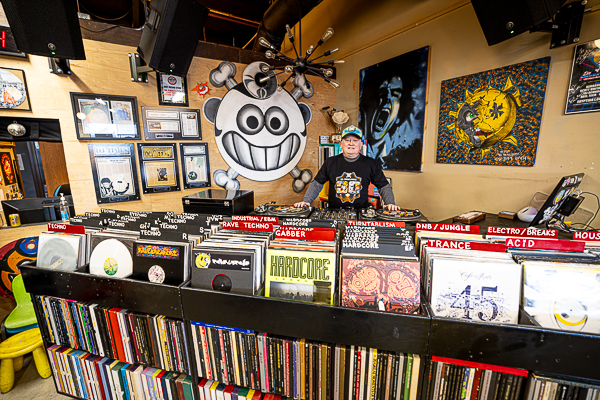
You’ve been a mentor and inspiration to countless DJs and producers. How does it feel to know you’ve had such a lasting impact on the electronic music community?
Honestly, if anything, this experience is deeply humbling. I never really took a break; I’ve been at it non-stop. It’s always surprising to people when they realize how few of us from my age group are still around—we’re a small crowd compared to the early house giants, many of whom are no longer with us. Again, it’s very humbling. But it’s also exciting because, even though I was never drawn to the commercial side or big festivals, witnessing the scene grow so rapidly into what it is now is incredible.
Back then, we called large parties “massives.” The first time we had over a thousand or two thousand people, which eventually led to much larger festivals. I’ve always preferred smaller gatherings over festivals, but I admire how things actually began. It feels great to still be here DJing and getting invited to play. I enjoy sharing stories about where it all started—with just five or six DJs and a couple of crews throwing parties. Fast forward, and it has blossomed into a phenomenon, not seen since the rise of hip hop.
We were seen as the new version of hip hop, often laughed at and told our music wouldn’t last, with comments calling it “drug music” or just “weird sounds.” Even some friends doubted it. Today, though, dance music is appreciated by all kinds of people—even those my parents’ age. People often don’t realize how widespread electronic music has become. Everything was once called “techno,” before the term “EDM” emerged—which I personally dislike. Now, there are thousands of genres and subgenres within electronic music, offering something for everyone—hardcore, down tempo, chill house, groovy house, you name it. All of this grew out of simple beginnings: basic drum machines and effects. Seeing what it has become is truly mind-blowing and it feels fantastic.
Looking back on your career, what do you consider your proudest achievement?
My record store, Dr. Freecloud’s. It all began as a college marketing project that I worked on with my wife’s father. That collaboration sparked what eventually became Dr. Freecloud’s—the name that has come to represent everything we’ve done over the years.
Before we opened the shop, my wife and I would sell music and merchandise at our booth, which was a common sight in the ’90s. Even before meeting her, I was already running booths at parties. After we met in 1992, we started setting up booths at our own events—like Funny Farm in Laguna Canyon every Friday—where people could buy tapes, T-shirts, stickers, and other merchandise. Those were the early days when our shows proudly carried the Dr. Freecloud’s moniker.
We even ventured into the nightclub business with Digital Clinic in Fullerton, which lasted just under two years—an expensive lesson but one we’re glad we tried. We also got into distributing records and launched a clothing line at one point.
And then of course, there were the record labels. Essentially, Dr. Freecloud’s became an umbrella for all these ventures and helped build my DJ career, sponsoring my work, marketing, products, and merchandise. And 30 years later, Dr. Freecloud’s is still here. We’re so proud of how far we’ve come, and our journey isn’t over yet.
How do you see the role of vinyl evolving in the future of electronic digital music?
I see things a little differently. To me, it’s more about coexistence. There will always be people who prefer digital formats, as that’s what they became accustomed to when they started, and that’s their norm. Then there are people like me who have been into vinyl from the very beginning.
There’s also a new generation—plenty of young people. We sell a lot of dance 12-inches to high schoolers and college-aged kids in their twenties, and they’re the ones carrying the torch forward for DJs who play vinyl. So, you’ll have distinct groups. Some people aspire to be popular festival DJs—that’s one crowd, representing the commercial side and gravitating toward that format.
Then you have purists who value the physical medium—they’ll continue with vinyl. In essence, these different preferences will exist side by side, and everyone will choose their own “weapon,” so to speak, as the scene evolves in the future.
What advice would you give others aspiring to follow in your footsteps?
If you want to start your own business, you need passion and commitment—don’t do things halfway. Invest in yourself rather than others and keep striving to improve. Take calculated risks, plan carefully, and use your skills wisely. For example, I dedicated semesters in school to develop ideas and test market concepts.
Early on, offer free samples and host small events to promote your brand. Choose a memorable name and design a logo with staying power, whether you’re selling products or branding yourself as an artist, these elements matter. For DJs, pick a unique, meaningful stage name and share mixes online through platforms like SoundCloud and MixCloud, offering free downloads to build your audience.
Practice your sets, know your music well, and aim for quality—even while live streaming from home. Team up with friends to organize events and pool resources for bar takeovers or group performances. Use stickers and download codes as promotional tools but remember, success requires genuine dedication. If you don’t truly love what you’re doing, it’s better to stick to being a hobbyist at home.