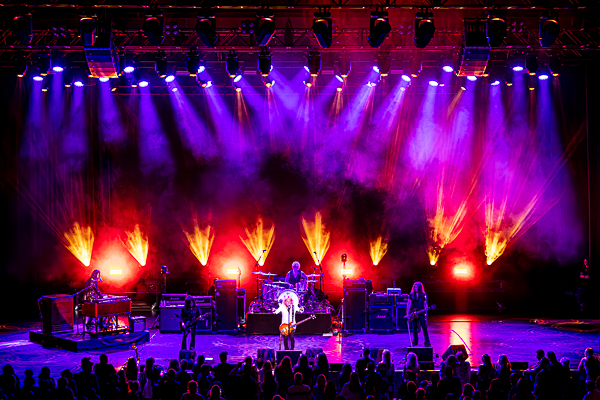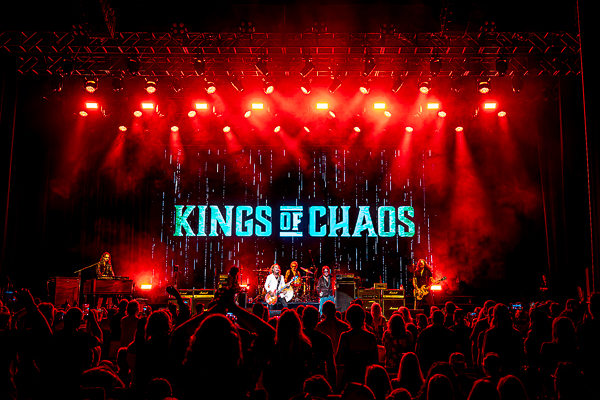

Nobody in that room knew what they were watching. Not the couple beside me who had flown in from England. Not the guy two rows up in a faded Trapeze shirt. Not me, camera in hand, working a Saturday night in the desert.
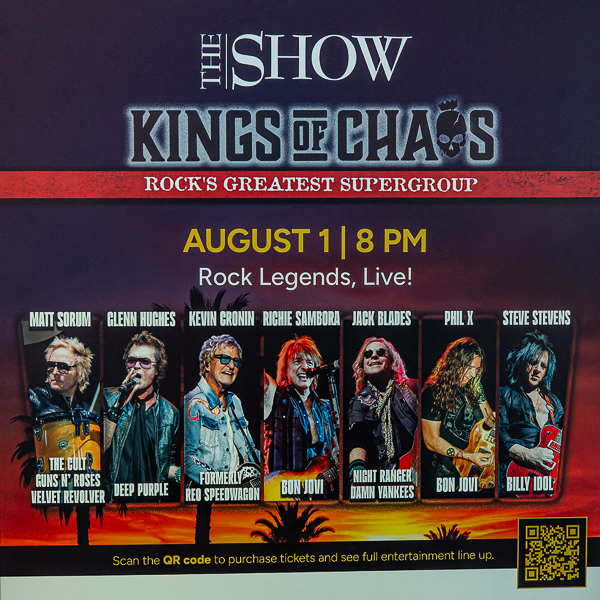
On August 1, we all thought we were going to be seeing a killer rock and roll show courtesy of Kings of Chaos. Three days later, Glenn Hughes announced his retirement from touring and live performances, revealing that his medical team had told him he needs another open-heart surgery—and just like that, the seventeen songs I had spent the evening photographing became the last public performance of one of the most extraordinary voices rock has ever produced.
I have been sitting with that for a week. Here is what I saw.
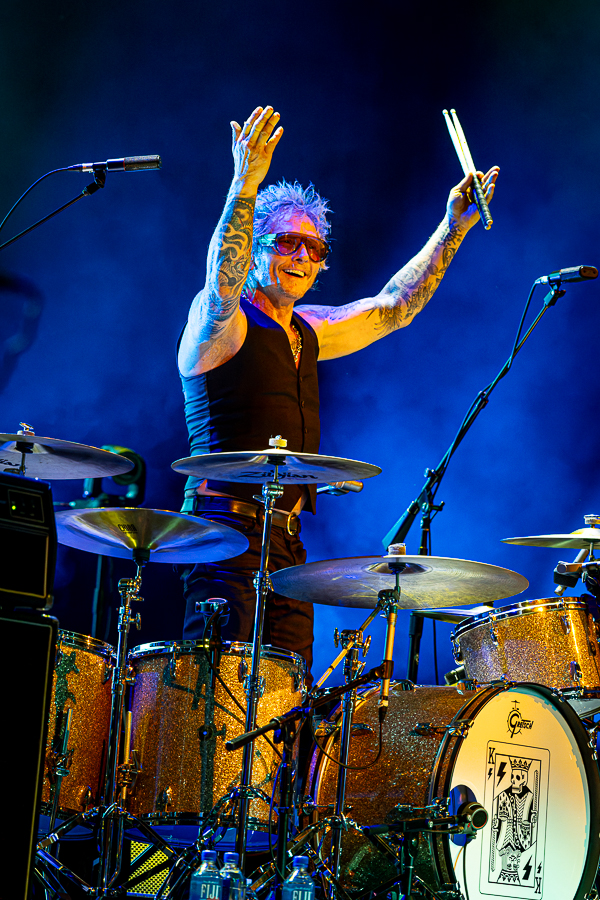
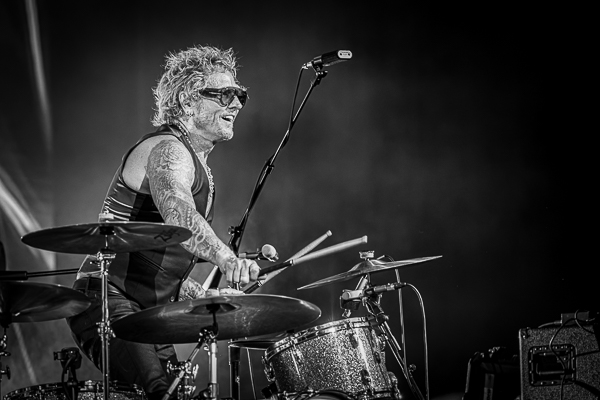
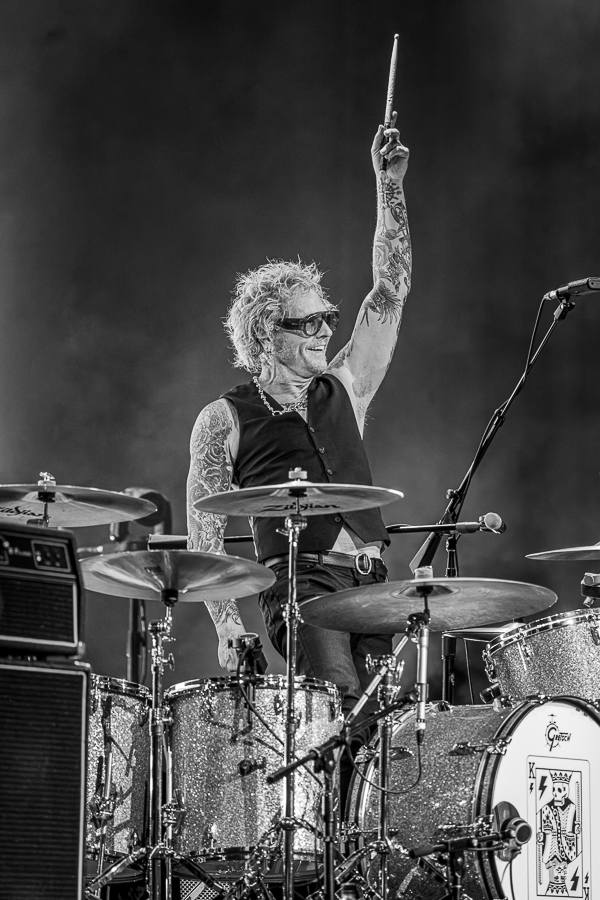
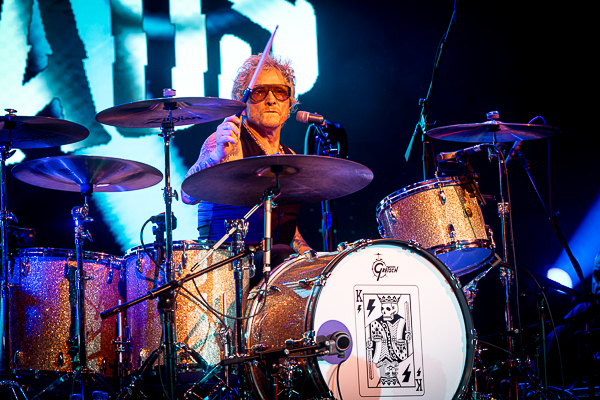
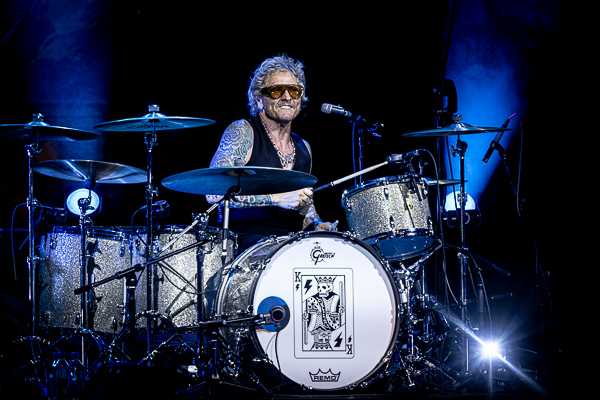
Kings of Chaos is Matt Sorum’s idea, and it is a deceptively simple one. Take the drummer’s chair—Sorum has occupied some of the best ones in rock, from Guns N’ Roses to Velvet Revolver to The Cult—build a bulletproof house band around it, then rotate in rock’s upper tier from who is willing and available.
There is no new album to promote. There is no narrative arc. There are just great songs played by the people who actually made them, in whatever configuration the calendar allows. On paper, it reads like a casino package. In practice, on this night, it was closer to a summit.
The room was near capacity without quite selling out, and the fans I spoke with had come in from all over Southern California and from as far away as England and Australia. That tells you something about how thin the ground has gotten for shows like this one.
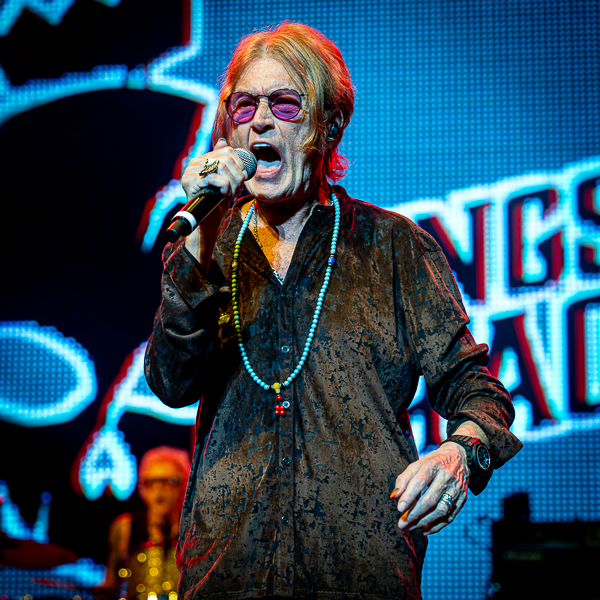
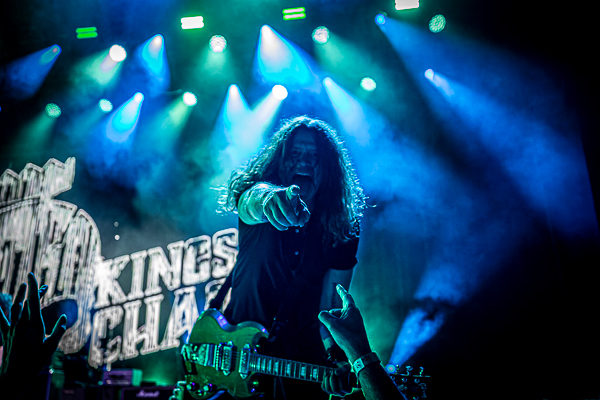
Hughes opened with Deep Purple. “Highway Star, then “Stormbringer,” “Smoke on the Water,” and “Burn”—a run pulled almost entirely from his own Mark III and IV tenure, the Burn and Stormbringer era that earned him the Voice of Rock title before anyone needed a shorthand for it. I had never seen Hughes live. I had never photographed him. At 74, he walked out and did the thing that should not still be possible: that full-throated, gospel-inflected scream, landing clean, no hedging, nothing dropped down a key to make it easier. “Stormbringer” was my favorite thing I heard all night, and I would have said so before I understood what it was going to mean.
Then the news broke. Multiple outlets have since confirmed that Rancho Mirage was his final show. Hughes wrote that a run of MRIs, CT scans, and an echocardiogram had decided for him that his health had to come first and that he was grateful for a life filled with music. Wishing him and his family the best hardly covers it, but I will say it anyway—and I will add that if you have to leave a stage for the last time, leaving it after “Burn” with a room on its feet is not a bad way to go.
Jack Blades took the baton next and was, without exaggeration, on fire. Grinning ear to ear, bouncing around like a man half his age, and singing Night Ranger material with his top end fully intact: “Don’t Tell Me You Love Me,” a detour into Damn Yankees’ “Coming of Age,” then “Sister Christian”—Kelly Keagy’s song, written for his younger sister, and my pick of the entire Night Ranger catalog—before closing with “(You Can Still) Rock in America.”
That last one came with a piece of trivia I somehow reached adulthood without knowing. Hughes came back out for backing vocals because he sang backing harmonies on the original 1983 Midnight Madness recording. Blades pointed it out from the stage. I have owned that record for decades. Learning it in real time and watching the man actually do it forty-three years later was one of those small, perfect moments that only happen live.
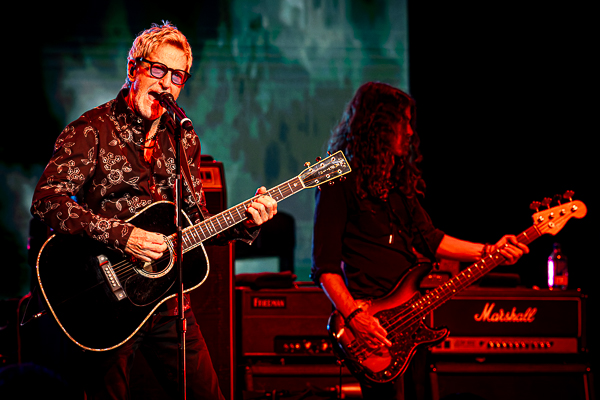
Kevin Cronin brought a different kind of energy—less kinetic, more locked in. His voice was clean and precise, and the conviction that defined REO Speedwagon’s biggest records was fully present across “Take It on the Run,” “Keep Pushin’,” “Ridin’ the Storm Out,” and “Roll With the Changes.”

There is a personal footnote here. My uncle Jim introduced me to REO, and “Take It on the Run” has been in permanent rotation ever since. Hearing it in a theater rather than an arena, with Cronin close enough to read, hit differently. It is also worth noting that REO Speedwagon stopped touring on January 1, 2025, and that Cronin now performs under his own name, making a stage like this one of the few places left where those songs are sung by the man who wrote them.
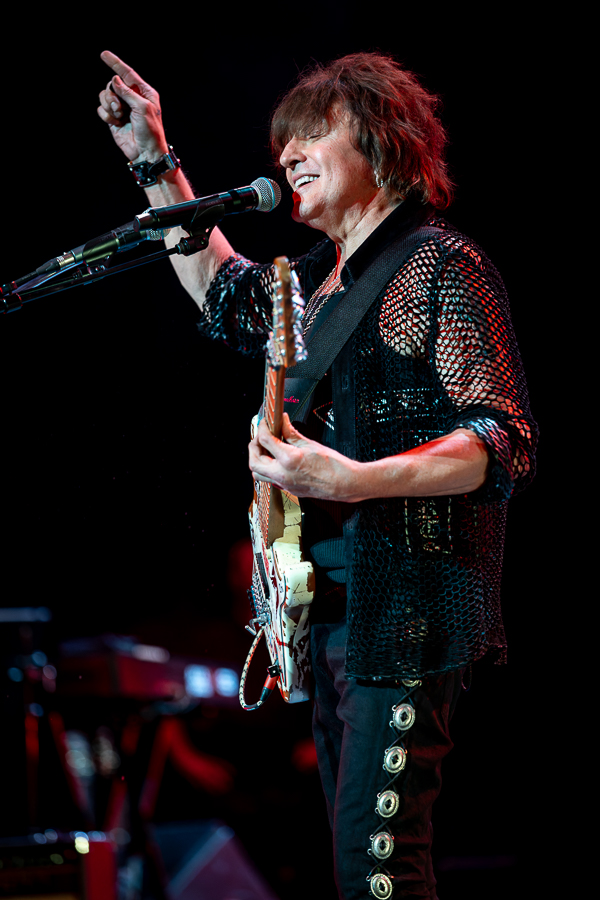
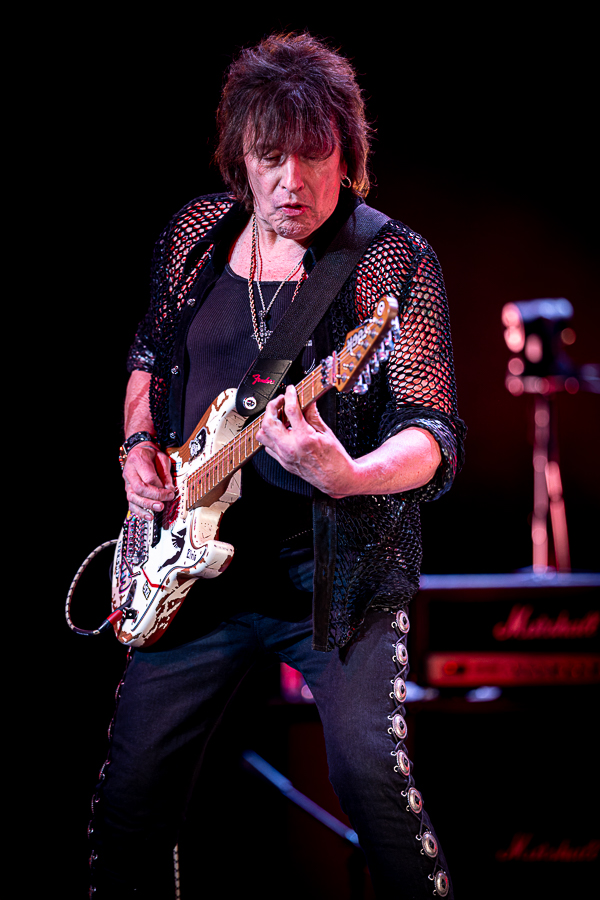
Then Richie Sambora—this was the set I was least certain about going in. Sambora was never Bon Jovi’s lead vocalist. He was the harmony, the riff, and the co-writer on a startling share of that catalog, “Livin’ on a Prayer,” “Wanted Dead or Alive,” and “You Give Love a Bad Name,” among them. I had never heard him carry a full lead. I was surprised—he was genuinely good, delivering a rougher and bluesier read of “It’s My Life” and “I’ll Be There for You,” and leaning into the talk box on “Wanted Dead or Alive” like a man who has earned the right.
The guitar playing is what got me, though. Opportunities to see him play these songs anywhere have been rare since he left the band in 2013. About thirty seconds into “Livin’ on a Prayer,” I was sixteen again at the Orange Pavilion in San Bernardino, watching Bon Jovi on the Slippery When Wet tour and feeling certain that nothing in my life would ever be that loud again. I was wrong.

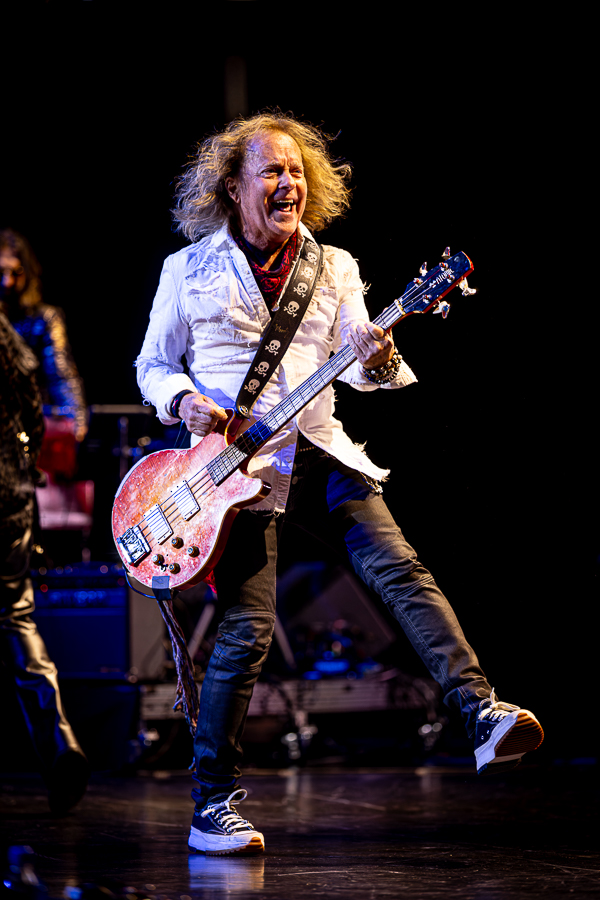
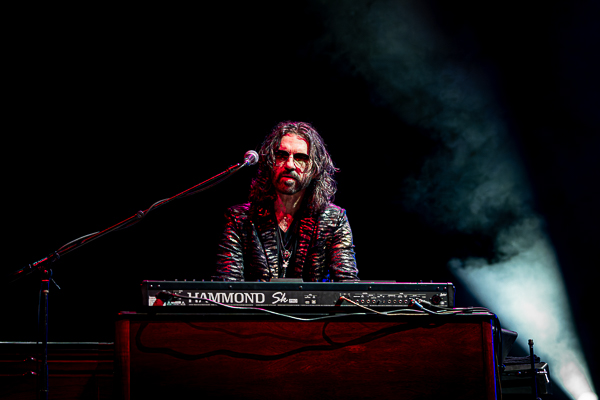
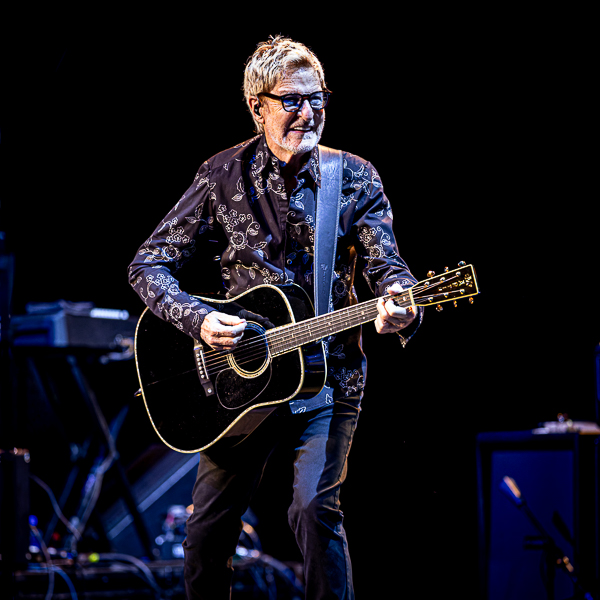
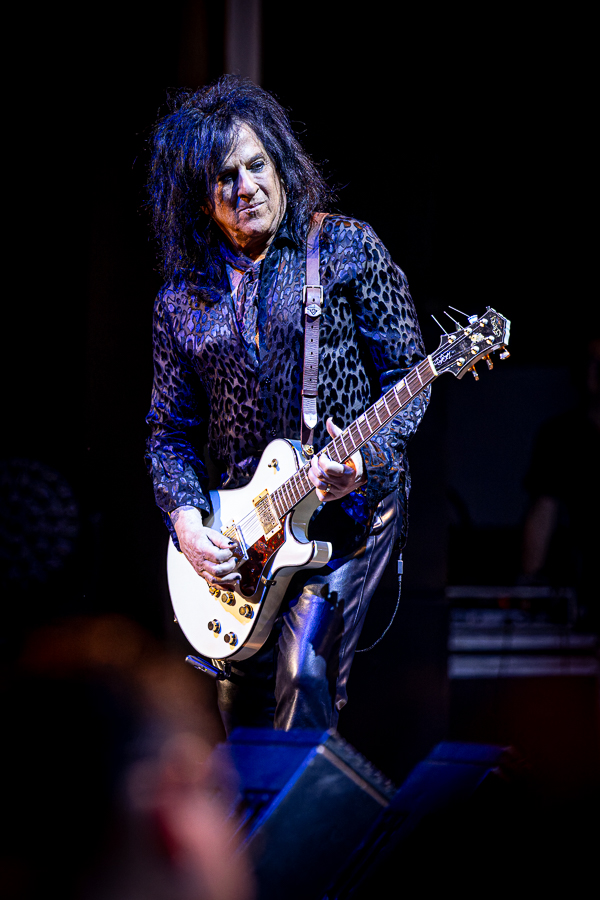
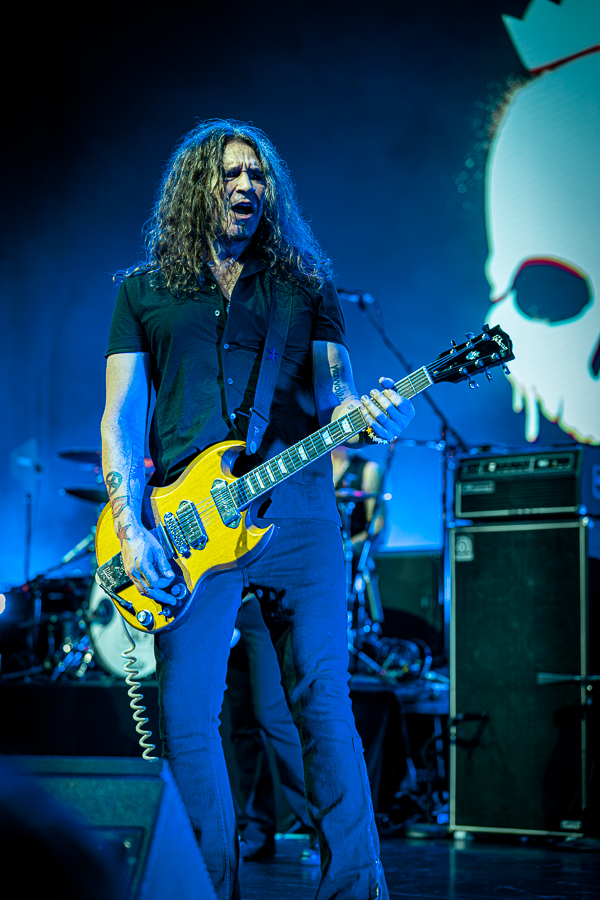
The supporting cast deserves its own paragraph because supergroups live or die on the players who do not get marquee billing. Phil X was dialed in from the first downbeat—the antics are real, but so is his total command of four different bands’ catalogs. Steve Stevens is simply a legend, and seeing him live for the first time, trading with Phil X, was a highlight I did not expect to be writing about. Mike Mangan on keyboards and Eliot Lorango on bass held it all together with the kind of chemistry you cannot fake or rehearse into existence. No wonder Sorum picked them to round out this lineup.
Everyone came back for the finale and encore: Led Zeppelin’s “Whole Lotta Love,” with the vocal passed around the stage. Four frontmen, three guitarists, and Sorum driving the whole thing from behind the kit. It is the obvious closer, and it absolutely landed.
A word on the venue, because it earned one. The Show has genuinely good acoustics—clear rather than mushy, with no boom in the low end even at full volume. The staff, from the door greeters to production to concessions, were friendly and accommodating to an unusual degree. I would recommend the room without hesitation. And yes, the casino afterward was its own kind of fun.
What stays with me is Sorum’s vision. Kings of Chaos should not work as well as it does. By design, it is a moving target, a different band every time out, assembled around whoever can make the date. That is exactly the point. This particular lineup existed for one night and will never exist again, and on August 1, it produced something none of us understood the weight of until three days later.
If you get the chance to catch whatever configuration comes next, take it. You never know which songs you might be hearing live for the last time.