Before Elvis Costello became the dullest Renaissance Man of the Western World, gadflying about with the likes of Burt Bacharach, the Brodsky Quartet, some Swedish mezzo-soprano whose name escapes me at the moment, the Netherlands’ Metropole Orkest, jazz pianist Marian McPartland, T-Bone Barnett, the London Symphony Orchestra and others, including for all I know the Men’s Choir of Barracks 22 of the Toksong Political Prison Camp in North Korea, he was a punk fellow-traveler and one of the angriest young men in England this side of Johnny Lydon.
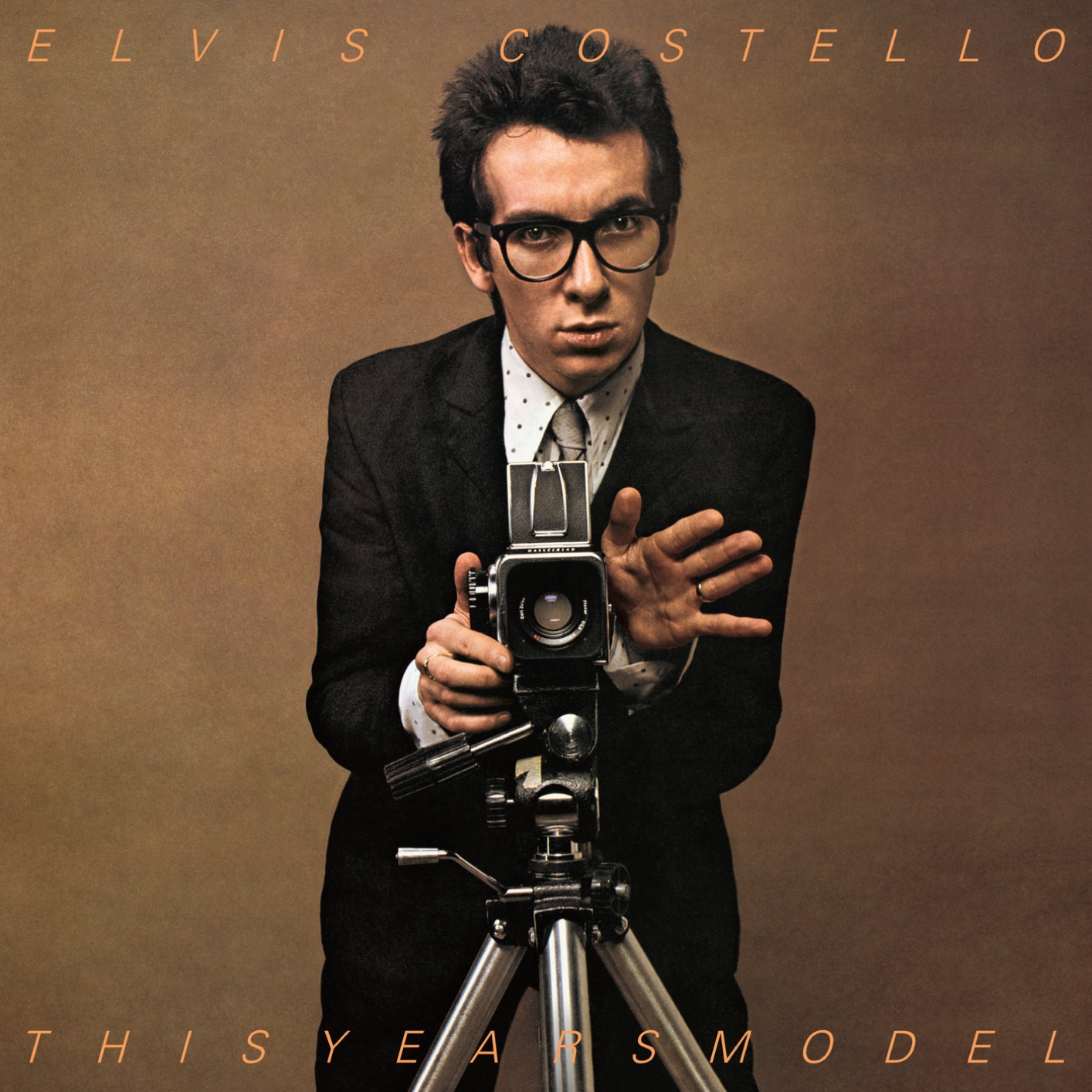
Everybody grows up, but do you have to grow up to be a sophisticated dabbler and bore? In Costello’s case it was the Paul Weller Komplex times ten, and when it came to wanton genre-hopping, Elvis made Neil Young look like a piker. Even the early Costello was a hybrid of sorts—a singer-songwriter in spirit, a punk in attitude. The Village Voice’s Robert Christgau summed this up by comparing him to Jackson Browne in his review of Costello’s 1977 debut My Aim Is True, then turning around and complimenting him on his snarl come the following year’s This Year’s Model.
Costello famously recorded My Aim Is True with, yes it’s true, a California-based country rock act (Clover, whose members would later go on to play, variously, with Huey Lewis and the News, the Doobie Brothers, and Lucinda Williams) as his backing band. A very singer-songwriter thing to do, that, but by the time he got around to recording This Year’s Model (again with Nick Lowe as producer) he recruited a band of his own that could produce music to mirror his adamantine misanthropy (and some would say misogyny).
Costello would never be a true-blue punk—too much clever wordplay and a musical vocabulary that pre-dated the Sex Pistols—but he was a punk in spirit, much like the 1966 Dylan. Indeed, “Like a Rolling Stone” is a template of sorts for Costello, with its catchy wordsmithing, laser focus on the personal and themes of (to use words Costello would himself employ and would stick to him like glue throughout his career) “revenge and guilt.” Unlike the post-protest Dylan, Costello was not apolitical—his disgust extended to goings-on in Great Britain, but rarely went in for punk sloganeering. No anarchy in the UK for the former computer operator from Bootle.
 UK | The UK music industry is reporting record revenues. The reality is much gloomier. If the record business has learned anything during those brutal years between 2000 and 2014 when the CD market wobbled and then went into such sharp decline that it halved, it is to seek out good news stories wherever you can. The Entertainment Retailers Association (ERA), the UK trade body for music, video and games retailers, has just issued its numbers for recorded music revenues in 2024. The sell is that this marks “a 20-year high and an all-time record, exceeding the pinnacle of the CD era”. Let joy be unconfined. Bonuses all round. But trade numbers can only ever capture what the recorded music business is worth in toto. They tell us
  Cardiff, UK | Vinyl galore at Kellys Records in Cardiff Central Market, South Wales: It’s been over ten years since we last sung the praises of Kellys Records in Cardiff Central Market, and it’s great to see the place riding the wave of the vinyl resurgence. The store was founded by Eddie and Phyllis Kelly back in 1969, with nephew Allan Parkins taking over in the 1990s. The store found itself perfectly poised to capitalise on the vinyl revival, as their website explains: The 2010s marked a renaissance for vinyl records, much to the delight of Kellys Records. Streaming services like Spotify initially seemed like a threat but ended up complementing the resurgence of vinyl. As music became more accessible online, people began to appreciate the unique experience that vinyl offered.



 Had Scott Walker’s recording career been somehow curtailed before the release of his 1967 solo-debut Scott, he’d still be remembered as one-third of the sneakily non-sibling trio The Walker Brothers, an American group that flipped the script to become a UK teen-pop sensation right in the midst of the British Invasion. They even scored a pair of US hits in the process.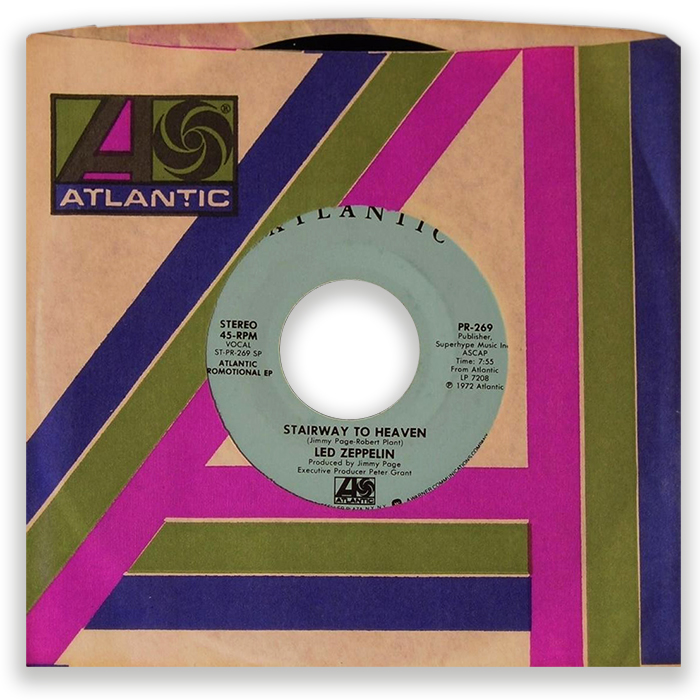
 “Stairway to Heaven” is both an architectural folly and the fullest and most baroque realization of the rock’n’roll dream–if Chuck Berry’s songs are street-ready hot rods, “Stairway”’s the fucking Sistine Chapel set down on the chassis of an Oldsmobile 442.


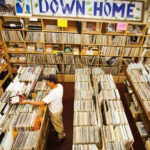 El Cerrito, CA | Saving El Cerrito’s Down Home Music Store: The holidays brought glad tidings to El Cerrito’s Down Home Music Store after a looming threat that the legendary property might go up for sale and be taken over by the highest bidder. …Down Home had for years served as a shrine for Joel Selvin, longtime pop music critic and writer for the San Francisco Chronicle and the author of a 2023 book compiling Strachwitz’s musical travelogues and photographs. “Any time a new trend emerged and I needed to beef up my information, Down Home was the place I had to go to,” recounted Selvin. “They were always
  The Rebirth of The Record Store: Why Your Humble Local Music Shop Is Thriving Despite Streaming Sites Like Spotify. The way we listen to music has changed repeatedly over the past 40 years, moving from vinyl, to tape, to CD, and now digital. However, one thing has stayed constant and weathered the storm—the humble record store. Despite the majority of people now listening to their favorite artists via digital streaming services, there are still many record stores to be found in any city you visit. Despite the big music outlets closing by the day, the indie record store is still going strong. In 2023, vinyl outsold CDs for the second year in a row in the US. The year reported 34.9M sales, with a further increase of 6.2% in 2024. This signifies a massive comeback for vinyl sales, making the record store



 Montreal, CA | Return to Analog’s Pierre Markotanyos: …Pierre Markotanyos, the owner of the reissue label Return to Analog and Montreal record store Aux 33 Tours (which refers to the speed at which an LP spins), has noticed a distinct change in the makeup of who’s buying vinyl these days. “In the late 2000s,” Markotanyos reflects, “it was mostly 55-to-70-year-old guys who were coming in, buying records to play on their high-end stereos that they bought at the audio show in Montreal.” [Sound familiar, Stereophile readers?] “They were the purists and the true believers.” “And then 2010, 2011, the hipsters started really getting hardcore into it. And then, about four or five years ago, we started noticing 15-, 17-, 18-year-olds and a lot of girls. I’d stand in the middle of the store on Saturday and go, “Hey, 10 years ago there were just guys in here and now it’s like 30% women. Today, it’s more like
  New York, NY | The Music Is Too Loud. That’s the Point. Vinyl-focused listening bars inspired by ones in Japan are opening across New York, attracting audiophiles and city dwellers looking for a respite from the cacophony outside their doors. On one Friday evening, the conversation in the back room of All Blues in TriBeCa, where about two dozen people sat in leather chairs, was overtaken by the music streaming from three large, mid-20th-century speakers. Behind a D.J. booth, Yuji Fukushima, 62, the owner of the bar, spun a set that included 1980s funk and late-career Dizzy Gillespie, which played from a pair of German-made turntables. Around the room were rare McIntosh amplifiers, a tape recorder from a Swiss audio company and the three speakers—JBL products that altogether cost tens of thousands of dollars. The bar’s patrons were enjoying what Mr. Fukushima called